327 Results for "

corresponding

" in MedChemExpress (MCE) Product Catalog:
Products (327)

327 Results for "corresponding" in MCE Product Catalog:

Cat. No.: HY-163223
Research Areas:  

Cancer

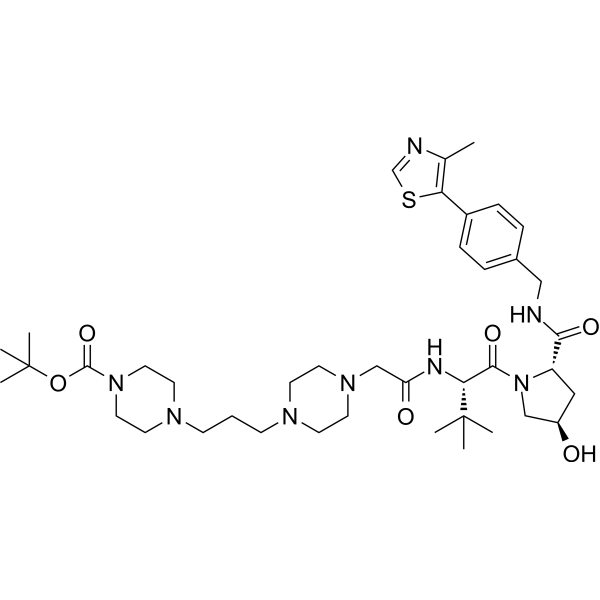
(S,R,S)-AHPC-CO-CH2-piperazine-C3-piperazine-Boc is a conjugate of E3 ligase ligand and linker, consisting of (S,R,S)-AHPC (HY-125845) and the corresponding Linker. (S,R,S)-AHPC is a VH032-based von Hippel-Lindau (VHL) ligand that recruits VHL proteins. (S,R,S)-AHPC-CO-CH2-piperazine-C3-piperazine-Boc can be used as a key intermediate for the synthesis of complete PROTAC molecules.
loading...
    loading...
Cat. No.: HY-163231
Research Areas:  

Cancer

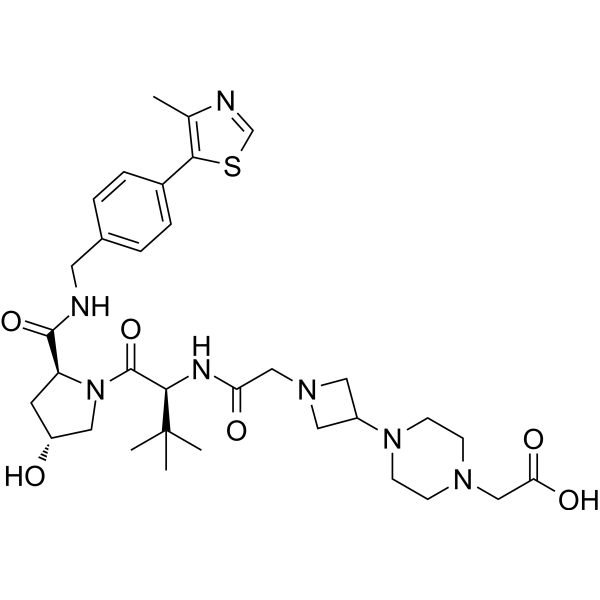
(S,R,S)-AHPC-CO-CH2-azetidine-piperazine-CH2-COOH is a conjugate of E3 ligase ligand and linker, consisting of (S,R,S)-AHPC (HY-125845) and the corresponding Linker. (S,R,S)-AHPC is a VH032-based von Hippel-Lindau (VHL) ligand that recruits VHL proteins. (S,R,S)-AHPC-CO-CH2-azetidine-piperazine-CH2-COOH can be used as a key intermediate for the synthesis of complete PROTAC molecules.
loading...
    loading...
Cat. No.: HY-P1055
CAS No.: 1315378-76-7
Target:  

iGluR

Research Areas:  

Neurological Disease

Pep2-SVKE is an inactive control peptide for pep2-SVKI (HY-P1056). Pep2-SVKE is an inhibitory peptide corresponding to the last 10 amino acids of the C-terminus of the GluR2 AMPA receptor subunit. Pep2-SVKE does not block AMPA-mediated [ 3H]DA exocytosis. Pep2-SVKE does not bind to GRIP or PICK43 and does not block retention of PICK1 by GST-GluR2 and LTD [1] [2] [3] [4] [5].
loading...
    loading...
Cat. No.: HY-11108R
CAS No.: 841290-80-0
R406 free base (Standard) is the analytical standard of R406 (free base) (HY-11108). This product is intended for research and analytical applications. R406 free base is an orally available and competitive Syk/FLT3 inhibitor for ATP binding with a Ki of 30 nM, potently inhibits Syk Kinase activity in vitro with an IC50 of 41 nM, measured at an ATP concentration corresponding to its Km value. R406 free base reduces immune complex-mediated inflammation . R406 free base also inhibits Lyn (IC50=63 nM) and Lck (IC50=37 nM) .
loading...
    loading...
Cat. No.: HY-115489A
Research Areas:  

Cancer

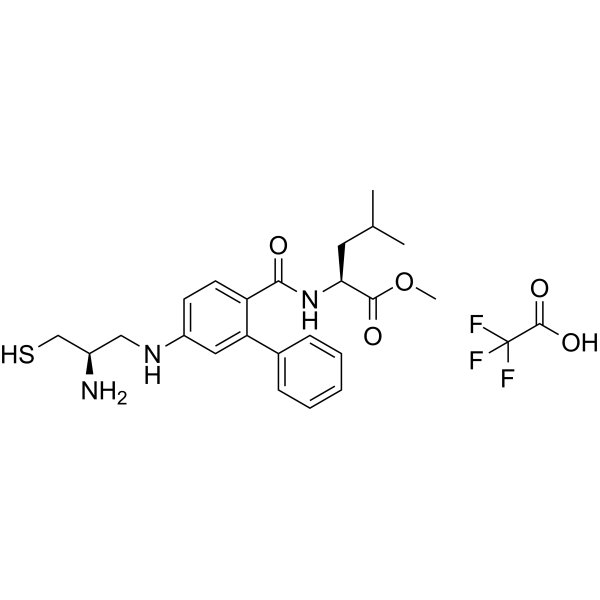
GGTI-286 TFA, a potent and cell-permeable GGTase I inhibitor, is 25-fold more potent (IC50=2 μM) than the corresponding methyl ester of FTI-276 (HY-15873A). GGTI-286 TFA selectively inhibits geranylgeranylation of Rap1A over farnesylation of H-Ras in NIH3T3 cells (IC50s=2 and >30 μM, respectively). GGTI-286 TFA also potently inhibits oncogenic K-Ras4B stimulation with an IC50 of 1 μM .
loading...
    loading...
Cat. No.: HY-P3070
CAS No.: 132326-74-0
Target:  

MHC

Research Areas:  

Infection Others

H2-D b restricted epitopes VSV Nucleoprotein (52-59) is a 9-mer peptide derived from the nucleoprotein of Vesicular Stomatitis Virus (VSV). H2-D b restricted epitopes VSV Nucleoprotein (52-59) binds to MHC class I molecules and presents itself to CD8+ T cells, thereby activating cytotoxic T lymphocytes (CTLs), which can recognize and kill cells expressing the corresponding antigen. H2-D b restricted epitopes VSV Nucleoprotein (52-59) can be used in the development of CTL vaccines against Ebola virus .
loading...
    loading...
Cat. No.: HY-W014316
CAS No.: 30007-47-7
Target:  

Bacterial Fungal

Research Areas:  

Infection

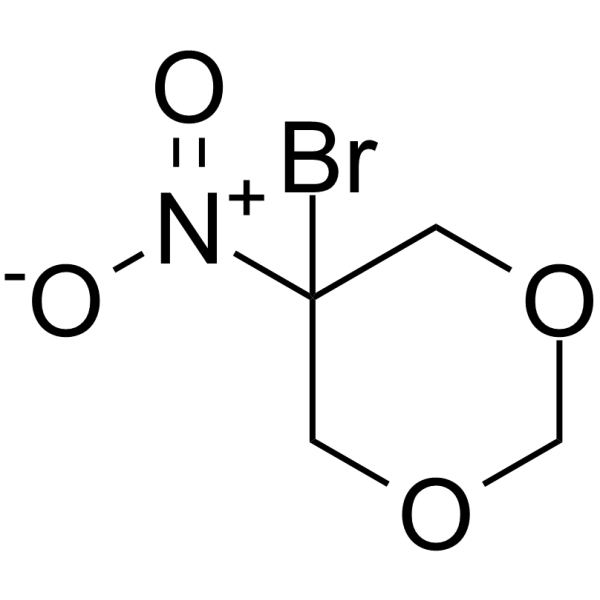
5-Bromo-5-nitro-1,3-dioxane is a broad-spectrum antimicrobial agent active against Gram-positive bacteria, Gram-negative bacteria and fungi. 5-Bromo-5-nitro-1,3-dioxane oxidizes free thiol groups to their corresponding disulfides. 5-Bromo-5-nitro-1,3-dioxane induces intracellular substance leakage in Escherichia coli and Staphylococcus aureus. 5-Bromo-5-nitro-1,3-dioxane modulates the oxygen consumption of Escherichia coli and Staphylococcus aureus .
loading...
    loading...
Cat. No.: HY-117063
CAS No.: 145204-80-4
Target:  

5-HT Receptor

Research Areas:  

Endocrinology

LEK 8841 methanesulfonate is a gastrointestinal calming agent with strong selective 5-HT2 receptor antagonist activity. The antipsychotic potential of LEK 8841 has made it the focus of research into alternative medicines. LEK 8841 behaves as a pure competitive antagonist in response to 5-HT and norepinephrine, with pA2 values of 7.93 and 6.45, respectively. The selectivity of LEK 8841 is better than that of the comparative drug ketanserin, making it an important reference value in corresponding receptor research. Studies related to structural modifications have shown that LEK 8841 exhibits high affinity for 5-HT2 receptors and low alpha-adrenergic receptor activity .
loading...
    loading...
Cat. No.: HY-161093
Research Areas:  

Cancer

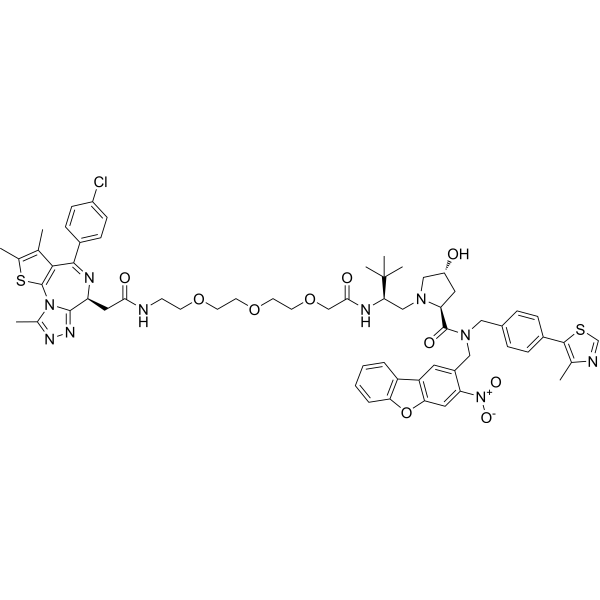
PROTAC BRD4 Degrader-23 is a visible light-regulated BRD4 PROTAC degrader, with DC50 values of 6871 nM and < 30 nM in the dark and under light exposure, respectively; its IC50 values are 1172 nM and 140 nM under the corresponding conditions. PROTAC BRD4 Degrader-23 shows inhibited activity in dark environments, and recovers BRD4 degradation ability upon irradiation with 405 nm visible light. PROTAC BRD4 Degrader-23 inhibits tumor cell proliferation in a visible light-dependent manner. PROTAC BRD4 Degrader-23 can be used in studies of BRD4-dependent B-cell lymphoma .
loading...
    loading...
Cat. No.: HY-161183
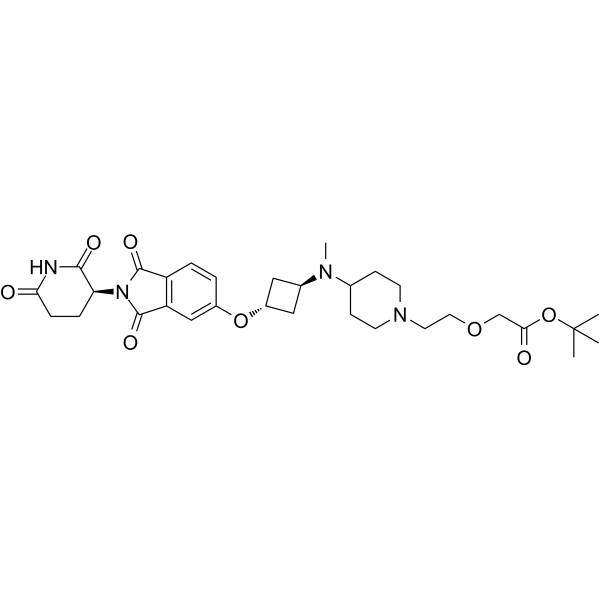
(S)-Thalidomide-O-(1S,3r)-C4H4-N(Me)-Pip-C2-O-C-boc is a conjugate of E3 ligase ligand and linker, consisting of Thalidomide (HY-14658) and the corresponding Linker. (S)-Thalidomide-O-(1S,3r)-C4H4-N(Me)-Pip-C2-O-C-boc can serve as a Cereblon ligand to recruit CRBN protein and serve as a key intermediate for the synthesis of complete PROTAC molecules.
loading...
    loading...
Cat. No.: HY-163226
(1R,5S)-Thalidomide-3,8-diazabicyclo[3.2.1]octane-(1R,4r)-cyclohexane-NH-Boc is a conjugate of E3 ligase ligand and linker, consisting of Thalidomide (HY-14658) and the corresponding Linker. (1R,5S)-Thalidomide-3,8-diazabicyclo[3.2.1]octane-(1R,4r)-cyclohexane-NH-Boc can serve as Cereblon ligand to recruit CRBN protein and serve as a key intermediate for the synthesis of complete PROTAC molecules.
loading...
    loading...
Cat. No.: HY-163227
(1R,4R)-Thalidomide-2,5-diazabicyclo[2.2.1]heptane-(1R,4r)-cyclohexane-NH-Boc is a conjugate of E3 ligase ligand and linker, consisting of Thalidomide (HY-14658) and the corresponding Linker. (1R,4R)-Thalidomide-2,5-diazabicyclo[2.2.1]heptane-(1R,4r)-cyclohexane-NH-Boc can serve as a Cereblon ligand to recruit CRBN protein and serve as a key intermediate for the synthesis of complete PROTAC molecules.
loading...
    loading...
Cat. No.: HY-173250
Target:  

PROTACs Ras Apoptosis

Research Areas:  

Cancer

YN14-H is a potent mutant KRAS G12C PROTAC degrader. The DC50 values of YN14-H in NCI-H358 and MIA PaCa-2 cells are 28.9 nM and 18.1 nM, respectively, with corresponding IC50 values of 42 nM and 21 nM. YN14-H degrades KRAS G12C in a ubiquitin-proteasome system-dependent manner, thereby significantly inducing apoptosis and inhibiting cell migration. YN14-H can be used for targeting tumors with KRAS G12C mutations (such as non-small cell lung cancer, pancreatic cancer, etc.) .
loading...
    loading...
Cat. No.: HY-E70104
CAS No.: 37288-35-0
Synonyms: α-L-Rhamnosidase
Target:  

Glycosidase Bacterial

Research Areas:  

Infection Cancer

α-Rhamnosidase (α-L-Rhamnosidase) is a kind of glycoside hydrolase. α-Rhamnosidase exhibits activity against Naringin (HY-N0153), 4-NRP, flavonoid glycosides and flavanone rhamnosides, and can hydrolyze the corresponding glycosidic bonds to release L-Rhamnose (Rhamnose) (HY-N1420) and other products. α-Rhamnosidase promotes the release of total flavonoids, ginkgolides and aroma components from ginkgo tea, while also enhancing the free radical scavenging capacity of the leachate, inhibiting inflammatory cell activation and increasing its cytotoxicity against tumor cells. α-Rhamnosidase can be used in research related to bacillary dysentery and cancer .
loading...
    loading...
Cat. No.: HY-P990941
CAS No.: 2853518-94-0
Synonyms: F131; GEN1184 antibody

Target:  

Antifolate

Research Areas:  

Inflammation/Immunology

Rinatabart (F131) is an IgG1-κ human antibody targeting FOLR1, with its corresponding isotype control being Human IgG1 kappa, Isotype Control (HY-P99001). The Fc region of Rinatabart is engineered to reduce antibody-dependent cellular cytotoxicity (ADCC) and complement-dependent cytotoxicity (CDC) activities. The KD values of Rinatabart binding to human FOLR1 in two sets of BLI assays are 1.528 nM and 5.296 nM, respectively. Rinatabart shows significantly lower affinity for FOLR2 and mouse FOLR1, and no reliable specific binding to FOLR3 and rat FOLR1. Rinatabart can be used in studies of FOLR1 targeting and antibody-drug conjugates .
loading...
    loading...
Cat. No.: HY-P992146
CAS No.: 3060218-90-5
Synonyms: MYTX-011 Antibody; Q-397

Research Areas:  

Cancer

Zevontabart (MYTX-011 Antibody; Q-397) is a pH-dependent anti-c-MET antibody. Zevontabart regulates the trafficking process of c-MET to reduce receptor recycling, and enhances its own endocytosis and accumulation in c-MET-expressing cells. Zevontabart induces cytotoxicity in solid tumor cells and exerts anti-tumor activity in a non-small cell lung cancer xenograft mouse model. Zevontabart can be used to synthesize ADC, such as: MYTX-011. Zevontabart can be used in studies related to non-small cell lung cancer, with its corresponding isotype control being Human IgG1 kappa, Isotype Control (HY-P99001) .
loading...
    loading...
Cat. No.: HY-E70104A
Target:  

Glycosidase Bacterial

α-Rhamnosidase, Penicillium sp. is a kind of glycoside hydrolase. α-Rhamnosidase, Penicillium sp. exhibits activity against Naringin (HY-N0153), 4-NRP, flavonoid glycosides and flavanone rhamnosides, and can hydrolyze the corresponding glycosidic bonds to release L-Rhamnose (Rhamnose) (HY-N1420) and other products. α-Rhamnosidase, Penicillium sp. promotes the release of total flavonoids, ginkgolides and aroma components from ginkgo tea, while also enhancing the free radical scavenging capacity of the leachate, inhibiting inflammatory cell activation and increasing its cytotoxicity against tumor cells. α-Rhamnosidase, Penicillium sp. can be used in research related to bacillary dysentery and cancer .
loading...
    loading...
Cat. No.: HY-P5429
CAS No.: 146064-85-9
Target:  

Inhibitory Antibodies

Research Areas:  

Others

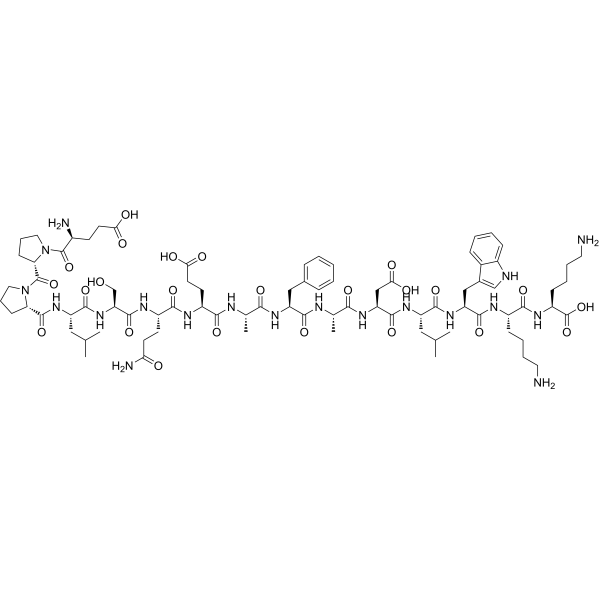
DNA-PK Substrate is a biological active peptide. (A substrate for DNA-dependent protein kinase (DNA-PK), phosphorylation. DNA-PK is essential for the repair of DNA double-strand breaks. This peptide corresponding to 11–24 amino acids of human p53 with threonine 18 and serine 20 changed to alanine is used as a substrate for the assay of DNA-PK activityPyroglutamyl (pGlu) peptides may spontaneously form when either Glutamine (Q) or Glutamic acid (E) is located at the sequence N-terminus. The conversion of Q or E to pGlu is a natural occurrence and in general it is believed that the hydrophobic γ-lactam ring of pGlu may play a role in peptide stability against gastrointestinal proteases. Pyroglutamyl peptides are therefore considered a normal subset of such peptides and are included as part of the peptide purity during HPLC analysis.)
loading...
    loading...
Cat. No.: HY-P991000
CAS No.: 2919583-43-8
Synonyms: AU-007; BD-8; BDG8
Imneskibart (AU-007) is a human monoclonal antibody that binds to the CD25-binding epitope of interleukin-2 (IL-2), blocking the binding of IL-2 to the trimeric IL-2 receptor while retaining the ability to bind to the dimeric IL-2 receptor. Imneskibart expands effector T cell and NK cell populations, reduces regulatory T cells, increases the effector T cell/regulatory T cell ratio, and alleviates vascular leakage. Imneskibart can be used in research related to melanoma and non-small cell lung cancer. The corresponding isotype control is: Human IgG1 kappa, Isotype Control (HY-P99001) .
loading...
    loading...
Cat. No.: HY-W012282
CAS No.: 7057-27-4
Target:  

HCV

Research Areas:  

Infection

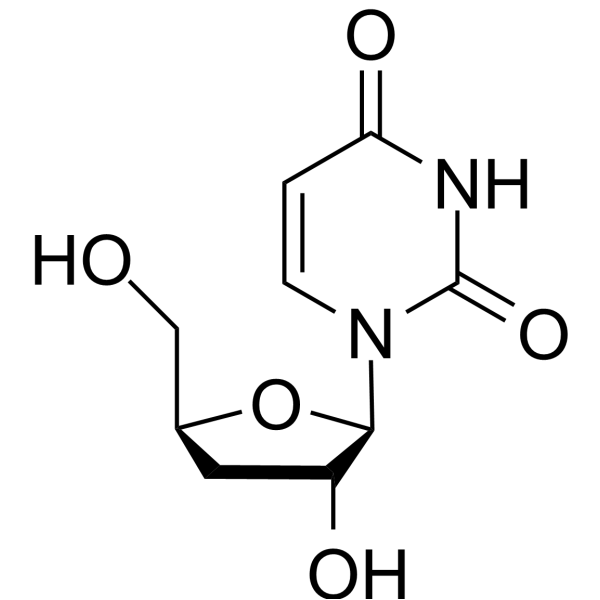
3′-Deoxyuridine is a 3'-deoxynucleoside analog and a 2',3'-dideoxynucleoside. 3′-Deoxyuridine does not inhibit the replication of HCV-like RNA templates or luciferase levels in human cells at the tested concentrations. 3′-Deoxyuridine serves as a substrate for microbial dideoxyribosylation reactions to generate various 2',3'-dideoxynucleosides, but cannot be converted into 2',3'-dideoxycytidine by resting E. coli AJ 2595 cells. 3′-Deoxyuridine can be formed by the deamination of 3'-deoxycytidine by E. coli BM-11 cytidine deaminase, and can also undergo phosphorolytic cleavage to produce uracil and the corresponding pentose phosphate. 3′-Deoxyuridine has been used in research related to HCV and other relevant fields .
loading...
    loading...