306 Results for "

anticancer effect

" in MedChemExpress (MCE) Product Catalog:
Products (306)

306 Results for "anticancer effect" in MCE Product Catalog:

Cat. No.: HY-N14116
CAS No.: 8000-78-0
Garlic oil is an orally effective anti-inflammatory, antioxidant, and anticancer agent. Garlic oil inhibits the activation of NF-κB, NFκB2 and NLRP3 inflammasome, and induces the expression of GSTA1, HO-1 and NQO-1. Garlic oil reduces the Bcl-2/Bax protein ratio and activates NNK-induced apoptosis (apoptosis) in lung tissues. Garlic oil attenuates NNK-induced apoptosis in MRC-5 cells and reduces excessive ROS production. Garlic oil alleviates pyroptosis (pyroptosis) and exerts a protective effect against acute lung injury in mice. Garlic oil inhibits lung tumorigenesis in mice and improves small intestinal motility in rats with type 2 diabetes . Garlic oil can be used in research related to acute lung injury, lung cancer, peptic ulcer, type 2 diabetes and hypertension .
loading...
    loading...
Cat. No.: HY-N14116A
CAS No.: 8000-78-0
Garlic oil (synthetic) is an orally effective anti-inflammatory, antioxidant, and anticancer agent. Garlic oil (synthetic) inhibits the activation of NF-κB, NFκB2 and NLRP3 inflammasome, and induces the expression of GSTA1, HO-1 and NQO-1. Garlic oil (synthetic) reduces the Bcl-2/Bax protein ratio and activates NNK-induced apoptosis (apoptosis) in lung tissues. Garlic oil (synthetic) attenuates NNK-induced apoptosis in MRC-5 cells and reduces excessive ROS production. Garlic oil (synthetic) alleviates pyroptosis (pyroptosis) and exerts a protective effect against acute lung injury in mice. Garlic oil (synthetic) inhibits lung tumorigenesis in mice and improves small intestinal motility in rats with type 2 diabetes . Garlic oil (synthetic) can be used in research related to acute lung injury, lung cancer, peptic ulcer, type 2 diabetes and hypertension .
loading...
    loading...
Cat. No.: HY-N3097
CAS No.: 18836-52-7
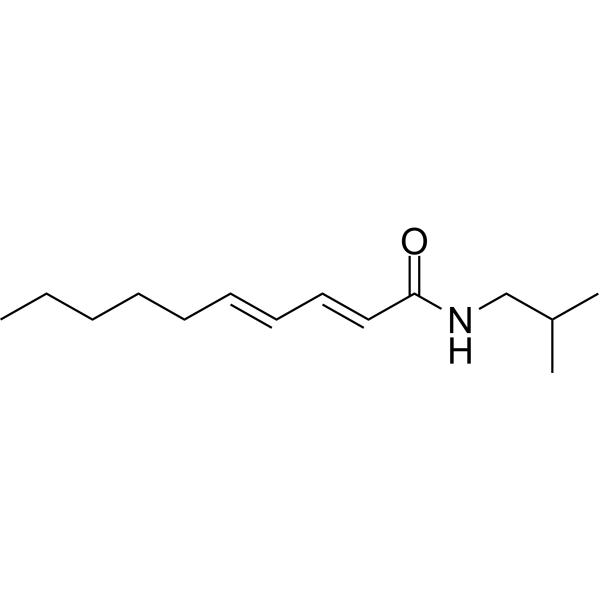
Pellitorine is a bioactive natural amide compound. Pellitorine can competitively antagonize the activation of TRPV1 by Capsaicin (HY-10448), thereby reducing pain signal transmission. Pellitorine improves cognitive dysfunction by upregulating the BDNF-ERK1/2-CREB and Nrf2-HO-1 pathways. Pellitorine exerts anti-inflammatory and anti-sepsis effects by inhibiting the release of high mobility group protein B1 (HMGB1) and the expression of RAGE/TLR4. Pellitorine exerts its antithrombotic effect by prolonging the clotting time, inhibiting the activity of clotting factors and thrombin. Pellitorine inhibits lipid peroxidation and resists ferroptosis by upregulating GPX4 and DHODH. Pellitorine kills Aedes aegypti mosquito larvae by inhibiting V-type H⁺-ATPase and aquaporin 4 (AaAQP4). Pellitorine exhibits anti-cancer activity (e.g., leukemia and breast cancer) and has inhibitory effects on certain bacteria .
loading...
    loading...
Cat. No.: HY-N3097R
CAS No.: 18836-52-7
Pellitorine (Standard) is the analytical standard of Pellitorine (HY-N3097). Pellitorine is a bioactive natural amide compound. Pellitorine can competitively antagonize the activation of TRPV1 by Capsaicin (HY-10448), thereby reducing pain signal transmission. Pellitorine improves cognitive dysfunction by upregulating the BDNF-ERK1/2-CREB and Nrf2-HO-1 pathways. Pellitorine exerts anti-inflammatory and anti-sepsis effects by inhibiting the release of high mobility group protein B1 (HMGB1) and the expression of RAGE/TLR4. Pellitorine exerts its antithrombotic effect by prolonging the clotting time, inhibiting the activity of clotting factors and thrombin. Pellitorine inhibits lipid peroxidation and resists ferroptosis by upregulating GPX4 and DHODH. Pellitorine kills Aedes aegypti mosquito larvae by inhibiting V-type H⁺-ATPase and aquaporin 4 (AaAQP4). Pellitorine exhibits anti-cancer activity (e.g., leukemia and breast cancer) and has inhibitory effects on certain bacteria.
loading...
    loading...
Cat. No.: HY-Y0790R
CAS No.: 122-03-2
Synonyms: p-Isopropylbenzaldehyde (Standard)
Cuminaldehyde Standard is the analytical standard of Cuminaldehyde. This product is intended for research and analytical applications. Cuminaldehyde is the main component of Cuminum cyminum and has multiple biological activities, including anti-inflammatory, anti-cancer, anti-diabetic, anti-injury, anti-neuropathy and antibacterial effects. Cuminaldehyde is an inhibitor of aldose reductase (IC50= 0.00085 mg/mL) and α-glucosidase (IC50=0.5 mg/mL). Cuminaldehyde also inhibits the fibrillation of α-synuclein and prevents its aggregation Cuminaldehyde can induce apoptosis in colon adenocarcinoma cells by targeting topoisomerase I and II. In addition, Cuminaldehyde also exerts anti-inflammatory activity by inhibiting lipoxygenase. Cuminaldehyde has a strong inhibitory effect on the growth of Aspergillus flavus and the biosynthesis of aflatoxin B1 (AFB1). Cuminaldehyde can exert anti-injury and anti-neuropathy effects by participating in opioid receptors, L-arginine/NO/cGMP pathways and anti-inflammatory effects. Cuminaldehyde has potential application value in the research of neurodegenerative diseases, cancer, diabetes and neuropathic pain diseases .
loading...
    loading...
Cat. No.: HY-L065
3,276 compounds

Chinese herbal therapy is an important part of Traditional Chinese Medicine (TCM). It has been used for centuries in China, where herbs are considered fundamental therapy for many acute and chronic conditions. Many studies indicated TCM exerted an overall regulatory effect via multi-component and multi-target network. Active components from Traditional Chinese Medicine possess many medicinal properties such as antioxidant, anti-cancer, and anti-bacterial effects, which makes it an important source of new drugs. Nearly 200 modern medicines have been developed either directly or indirectly from the plants used as medicines in China. For example, artemisinin, used in multidrug resistant malaria, was first isolated from the Chinese herb Artemisia annua L. Today, scientists continue to identify compounds in Chinese herbal remedies that may be useful in the development of new therapeutic agents applicable in Western medicine.

MCE designs a unique collection of 3,276 active compounds of Chinese Herbal Medicines. MCE Traditional Chinese Medicine Active Compound Library is a useful tool for discovery new drugs from TCM.

