381 Results for "

driven

" in MedChemExpress (MCE) Product Catalog:
Products (381)

381 Results for "driven" in MCE Product Catalog:

Cat. No.: HY-183070
Target:  

PROTACs CDK Apoptosis

Research Areas:  

Cancer

CXJ2080 is a selective PROTAC-based CDK7 degrader with a DC50 of 0.88 nM. CXJ2080 recruits VHL E3 ligase to induce ubiquitin-proteasome-dependent CDK7 degradation, disrupts the CDK7-cyclin H-MAT1 complex, suppresses CDK7-dependent phosphorylation of RNA polymerase II CTD Ser5, CDK1 Thr161, and CDK2 Thr160. CXJ2080 activates the p53-p21 axis, suppresses MYC-driven signaling, induces leukemia cell cycle arrest, apoptosis, and differentiation, reduces CD117 expression, spares platelets and normal PBMCs, maintains sustained CDK7 degradation post-washout. CXJ2080 can be used for the research of acute leukemia .
loading...
    loading...
Cat. No.: HY-186224
CAS No.: 118458-58-5
Research Areas:  

Cancer

GW296115 is a multi-target inhibitor with the following IC50 values against its targets: 8.4 nM for BRSK2, 21 nM for BRSK1, 1.8 μM for PDGFRβ, 5.5 nM for STK17B/DRAK2, 28 nM for DRAK1, 20 nM for PHKG1, and 89 nM for DCAMKL3. GW296115 downregulates the phosphorylation of S317 site on ULK1 and S351 site on P62, which are AMPK substrates driven by BRSK2. GW296115 does not alter the phosphorylation level of AMPK at T172, reduces nutrient deprivation-mediated Autophagy and autophagosome formation, and enhances Apoptosis. GW296115 exhibits anticancer activity against triple-negative breast cancer. GW296115 is applicable for breast cancer-related research .
loading...
    loading...
Cat. No.: HY-D3391
RMR-Tre is a fluorescent probe targeting the mycobacterial acyltransferase Ag85. Under the catalysis of Ag85, RMR-Tre undergoes 6-position mycoloylation and anchors to the mycobacterial membrane, while achieving fluorescence activation by inhibiting the intramolecular twisted charge transfer state transition. RMR-Tre can distinguish live mycobacteria from dead ones through metabolism-driven labeling, enabling rapid, wash-free, low-background detection of viable bacteria. RMR-Tre reports the drug resistance of Mycobacterium tuberculosis via the trehalose catalytic shift activity readout associated with TreS. In addition, RMR-Tre can be combined with flow cytometry or high-content imaging techniques to visualize and quantitatively analyze the metabolic heterogeneity of Mycobacterium tuberculosis related to persistence and drug resistance. RMR-Tre is widely used in tuberculosis-related research .
loading...
    loading...
Cat. No.: HY-N11262
CAS No.: 4281-28-1
Sudachitin is an orally active compound that potently inhibits mouse PDE1C and human PDE4B, with IC50 values of 5.0 μM and 15.0 μM, respectively. Sudachitin upregulates Sirt1 and PGC‑1α expression in skeletal muscle to regulate energy metabolism and promote mitochondrial biogenesis. Sudachitin improves lipid metabolism, glucose tolerance, insulin sensitivity, energy expenditure, and fatty acid β‑oxidation. Sudachitin activates p38MAPK signaling, induces HSP27 phosphorylation and caspase‑dependent apoptosis, and blocks EGF‑driven keratinocyte migration and proliferation. Sudachitin suppresses LPS‑induced TNF‑α, NO, and iNOS expression in macrophages and shows potent anti‑inflammatory activity. Sudachitin can be used for the research of metabolic syndrome, type 2 diabetes, and psoriasis. .
loading...
    loading...
Cat. No.: HY-L941
4,236 compounds

Orthosteric sites are highly conserved, leading to poor subtype selectivity, off-target toxicity and drug resistance in traditional drugs. By contrast, allosteric sites show low conservation, high hydrophobicity, weak polarity, confined geometry and dynamic cryptic properties, granting modulators high selectivity, functional tunability and safety. Thus, allosteric therapy has become a major focus in drug discovery.

MCE curated nearly 1,000 clinical-stage allosteric modulators, analyzed PDB complex structures to identify key pharmacophores and privileged scaffolds, then designed and filtered compounds using rational “scaffold derivation + physicochemical screening” with strict property criteria. The resulting compounds show high rigidity and shape complementarity to shallow, dynamic, hydrophobic allosteric pockets.

This library comprises 4,315 diverse, lead-like compounds ideal for allosteric drug discovery and target screening, covering kinases, GPCRs and more. All are analogs of clinical-stage molecules with similarity > 0.6, combining high druggability and allosteric binding potential to support efficient early-stage R&D.

Cat. No.: HY-L942
1,626 compounds

Unlike highly conserved orthosteric sites, allosteric sites exhibit low conservation, high hydrophobicity, weak polarity, confined geometry, and dynamic cryptic properties. Rather than rigid keyhole-like cavities, they typically appear as flexible grooves, subunit interface clefts, or shallow depressions formed by protein conformational changes.

Based on the dynamic, hydrophobic, and elongated nature of allosteric pockets, MCE has carried out targeted fragment modification and screening under strict physicochemical criteria: MW 120–280 Da, HBD ≤ 2, HBA ≤ 3, PSA 30–80 Ų, rotatable bonds ≤ 2, cLogP 1–3.5. High 3D diversity was further ensured by PMI analysis, yielding fragments with excellent shape complementarity to allosteric pockets.

This library contains 1,800 structurally diverse, drug-like fragments, this library supports allosteric drug development and pocket optimization. It significantly improves screening hit rates and enables efficient, precise early-stage R&D of allosteric drugs.

Cat. No.: HY-108486
CAS No.: 70563-58-5
Purity:  99%
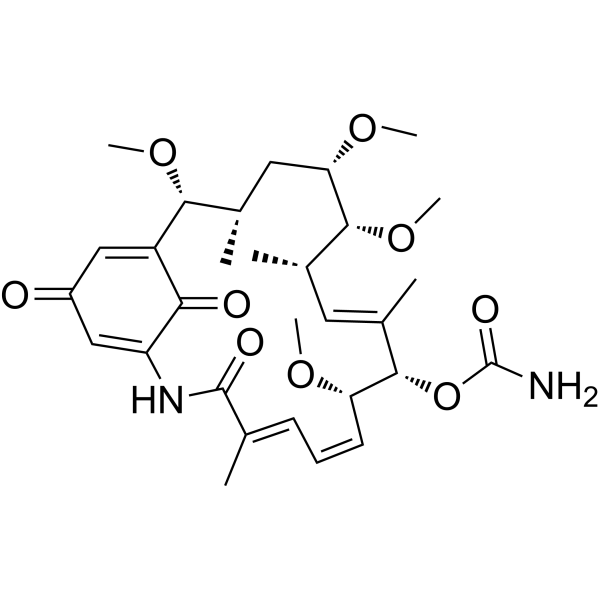
Herbimycin A is an antibiotic and protein tyrosine kinase inhibitor. Herbimycin A directly inhibits the autophosphorylation of p210 BCR-ABL with an IC50 of approximately 5 μM, and reduces Src kinase activity. Herbimycin A also induces the degradation of receptor tyrosine kinases such as insulin-like growth factor 1 receptor (IGF-1R), insulin receptor (IR) and epidermal growth factor receptor (EGFR) via the ubiquitin-20S proteasome pathway. Herbimycin A directly modifies NF-κB p50, with the main target site involving Cys62, thereby blocking the DNA binding of p50 and NF-κB-driven gene expression. Herbimycin A can be used in studies related to tyrosine kinase signaling, chronic myeloid leukemia, NF-κB signaling, osteoclast function, apoptosis and cellular stress .
loading...
    loading...
Cat. No.: HY-145149S
Duostatin 5- 13C,d3 is the 13C-labeled Duostatin 5 (HY-145149). Duostatin 5 is a ADC Cytotoxin designed based on MMAF (HY-15579) and can be used to synthesize ADCs. The preparation of Duostatin 5 has the advantages of fewer synthetic steps, simple operation, less difficulty in quality control, and more stable chemical synthesis process. Duostatin 5 can be linked to the antibody targeting 5T4 (ZV05) by cross-linking with interchain cysteines through a disubstituted C-Lock linker. Duostatin 5 is a click chemistry reagent. It contains an azide group and can undergo copper-catalyzed azide-alkyne cycloaddition (CuAAc) with molecules containing alkyne groups. It can also undergo ring strain-driven alkyne-azide cycloaddition (SPAAC) with molecules containing DBCO or BCN groups[1][2].
loading...
    loading...
Cat. No.: HY-148837
CAS No.: 2883535-99-5
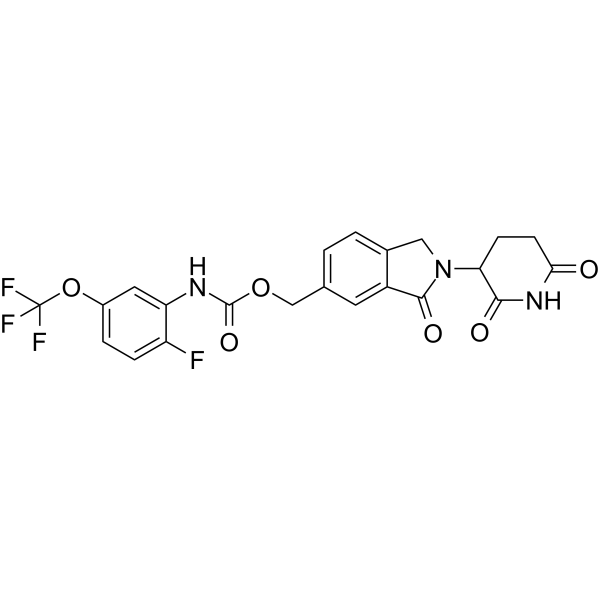
GT19630 is an orally active c-Myc PROTAC targeted degrader based on the cereblon E3 ubiquitin ligase, with an IC50 of 1.5 nM against human c-Myc. GT19630 mediates the degradation of MYC, GSPT1, GSPT2, CK1 alpha, N-Myc, B7-H3 and XIAP, and disrupts the MYC-GSPT1 synergistic regulatory feedback loop. GT19630 inhibits cell proliferation, blocks S-phase progression of the cell cycle, promotes cell apoptosis, reduces cell migration capacity, induces integrated stress response, and blocks oxidative phosphorylation by inhibiting the TCA cycle. GT19630 can be used in the research of Myc-driven hematological cancers, small cell lung cancer, breast cancer, TP53-mutant cancers, and venetoclax-resistant cancers .
loading...
    loading...
Cat. No.: HY-153356
CAS No.: 2803881-11-8
Purity:  99.91%
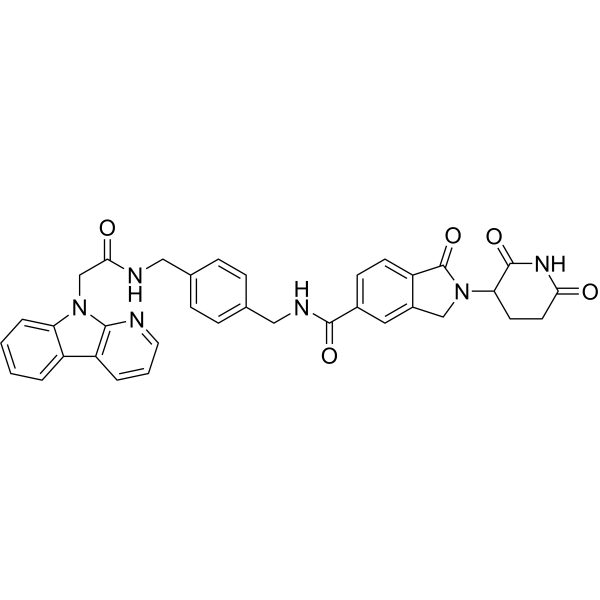
MRT-2359 is an orally active and selective GSPT1 molecular glue degrader, with a DC50 of 5 nM. MRT-2359 induces CRBN/GSPT1 ternary complex formation to drive CRBN- and degron-dependent proteasomal GSPT1 degradation, with selectivity for wild-type GSPT1 over the GSPT1G575N mutant. MRT-2359 disrupts protein translation, induces ribosome stalling, downregulates MYC family proteins and their transcriptional output, reduces proliferation, and induces apoptosis in cancer cells. MRT-2359 can be used for the research of non-small cell lung cancer (NSCLC), small cell lung cancer (SCLC), neuroendocrine lung cancer, high grade neuroendocrine cancers, diffuse large B-cell lymphoma, prostate cancer, and MYC-driven solid tumors .
loading...
    loading...
Cat. No.: HY-178786
CAS No.: 2491726-04-4
Research Areas:  

Cancer

RET-IN-31 (Compound 13) is an orally active, selective RET inhibitor (IC50s: 1.4 nM, 1.9 nM, 3.8 nM for RET WT, RET V804L, RET V804M, respectively). RET-IN-31 inhibits hERG and Cytochrome P450 (IC50s: 13.6 μM, 7.9 μM, 12.8 μM, 16.9 μM, 8.9 μM, 13.0 μM for CYP1A2, CYP2C9, CYP2C19, CYP2D6, CYP3A4-M, CYP3A4-T, respectively). RET-IN-31 has anti-cancer effects against activated RET mutations and gene fusion-driven cancers .
loading...
    loading...
Cat. No.: HY-180119
Target:  

IKK NF-κB Autophagy

Research Areas:  

Cancer

IKKβ-IN-5 is an orally active and selective IKKβ inhibitor with an IC50 of 7.5 nM. IKKβ-IN-5 directly inhibits IKKβ phosphorylation and attenuates NF κB mediated inflammatory and survival signals while promoting autophagy flux. IKKβ-IN-5 exhibits a 6-fold selectivity forIKKβ over the homologous kinase IKKα. IKKβ-IN-5 exerts robust antiproliferative effects through a dual mechanism involving G₂/M phase cell cycle arrest and autophagy activation, even under inflammatory stimulation in vitro. IKKβ-IN-5 demonstrates favorable pharmacokinetics and suppresses tumor growth in vivo. IKKβ-IN-5 can be used for colorectal cancer and potentially other inflammation driven malignancies research .
loading...
    loading...
Cat. No.: HY-189129
Target:  

Ras

Research Areas:  

Cancer

RAS GTPase-IN-3 is a RAS GTPase inhibitor that targets multiple KRAS-Q61 mutant variants. RAS GTPase-IN-3 binds to the switch II pocket of GTP-bound KRAS-Q61R, positions its side-chain imidazole group near the GTP γ-phosphate, and accelerates GTP hydrolysis of KRAS-Q61. RAS GTPase-IN-3 inhibits Sos-catalyzed nucleotide exchange on GTP-bound KRAS. RAS GTPase-IN-3 only activates GTP hydrolysis of HRAS-Q61R/Q95H and NRAS-Q61R/L95H mutant proteins. RAS GTPase-IN-3 can be applied in research related to cancers driven by KRAS-Q61 mutations .
loading...
    loading...
Cat. No.: HY-P990774
CAS No.: 2768386-15-6
Synonyms: ASP-7266; TRAB-1; UPB-101

Target:  

Interleukin Related

Research Areas:  

Inflammation/Immunology

Verekitug (ASP-7266; TRAB-1; UPB-101) is a human monoclonal antibody targeting the thymic stromal lymphopoietin receptor (TSLPR), with a mean half-life of approximately 20 days. At doses of Verekitug ≥100 mg, complete and sustained TSLPR-specific occupancy is achieved, and the antibody does not bind to IL-7Rα. By inhibiting TSLP-driven inflammatory responses, Verekitug blocks TSLP-induced cell proliferation and TARC expression, while reducing fractional exhaled NO levels, blood eosinophil counts, and levels of IL-5 and IgE. Verekitug significantly improves scores for nasal polyps, nasal congestion and olfactory dysfunction, with favorable safety and good tolerability; potential adverse reactions include headache, upper respiratory tract infection, sinusitis and nasopharyngitis. Verekitug is used in relevant studies on asthma, chronic rhinosinusitis with nasal polyps and chronic obstructive pulmonary disease .
loading...
    loading...
Cat. No.: HY-L940
5,818 compounds

Owing to the widespread transmission and frequent mutation of viral diseases, as well as the continuous emergence of new viruses and drug-resistant strains, antiviral drug development is facing increasingly stringent requirements. Antiviral compound libraries serve as important tools for drug screening, mechanism research and development, enabling the discovery and investigation of various antiviral drugs.

These compounds act through diverse antiviral mechanisms, targeting key steps in viral replication, assembly and invasion. They exert antiviral effects by inhibiting viral nucleic acid synthesis, blocking viral protein processing, and preventing viral binding to host cells. This library covers various types of antiviral compounds, including nucleosides, non-nucleosides, protease inhibitors and integrase inhibitors. It supports research on influenza virus, herpes virus, hepatitis virus, emerging respiratory viruses and other pathogens, and enables high-throughput screening of novel antiviral candidates to rapidly identify potential active compounds against diverse viruses. It also facilitates mechanistic studies to elucidate drug-target interactions and viral resistance mechanisms, and supports the screening of effective compounds against mutant strains for research on viral variation and drug resistance.

This antiviral library consists of 6,804 compounds with lead-like physicochemical properties. The core sources of the compounds include analogs of known antiviral molecues with a similarity score ≥ 0.6. MCE has collected more than 1450 antiviral molecules. As a small-molecule collection with both activity potential and structural modifiability, it provides strong support for antiviral drug research and development.

Cat. No.: HY-L938
8350 compounds

Currently,the incidence and mortality rates of clinical fungal infections remain high. Existing antifungal drugs are limited in variety and associated with numerous adverse effects, creating an urgent demand for the development of novel antifungal agents. Antifungal compound libraries can support the screening and development of new antifungal drugs.

The mechanisms of action of antifungal drugs cover key processes such as fungal cell membrane synthesis, cell wall synthesis, and cell division. They exert fungicidal or fungistatic effects by specifically targeting different molecular pathways. This library includes a variety of core analogs of antifungal drugs, making it adaptable to antifungal research in diverse scenarios. It can be used for the high-throughput screening of novel antifungal drug candidates, enabling the rapid identification of compounds with potential antifungal activity and facilitating the elucidation of drug-target interactions and resistance mechanisms. Additionally, it supports the screening of compounds and combinations that reverse drug resistance, thereby uncovering the novel antifungal potential of existing compounds.

The library comprises 8350 compounds with a well-defined screening strategy. The core sources of the compounds include analogs of known antifungal active moleculeswith a similarity score of ≥ 0.6 MCE has collected more than 500 antifungal molecules.All screened compounds conform to lead-like physicochemical properties, exhibiting both structural diversity and drug-like characteristics, and providing valuable support for the research and development of novel antifungal drugs.

Cat. No.: HY-L939
10855 compounds

The rising prevalence of multidrug-resistant and extensively drug-resistant bacteria, combined with emerging resistance mechanisms and the limitations of existing antibacterial drugs, creates an urgent need for novel antibacterial agents. Antibacterial compound libraries serve as key tools to support antibacterial drug screening and development.

This library features structurally diverse compounds, including small-molecule scaffolds and natural product derivatives, and exhibits diverse antibacterial mechanisms of action. For example, these compounds exert antibacterial effects by disrupting bacterial cell structures, interfering with bacterial metabolic processes, and inhibiting nucleic acid synthesis. The derivation of scaffold structures enhances their activity against drug-resistant bacteria and their selectivity against different types of bacteria. This library can be used for the high-throughput screening of novel antibacterial drug candidates and the identification of potent compounds against drug-resistant and multidrug-resistant bacteria. Additionally, it provides a reference for compound structural modification, enabling further in-depth research on the structure-activity relationships(SARs) of antibacterial drugs. It can also be applied to the exploration of bacterial resistance mechanisms and reversal strategies, as well as the discovery of antibacterial molecules that inhibit efflux pumps and restore drug susceptibility.

The library contains 10855 structurally diverse drug-like compounds. Its core compound sources include analogs of known antifungal active moleculeswith a similarity score of ≥ 0.6. MCE has collected more than 1900 antibacterial molecules. All screened compounds conform to lead-like physicochemical properties, providing valuable support for the research and development of novel antibacterial drugs.

Cat. No.: HY-113225S2
Synonyms: GTP-13C dilithium
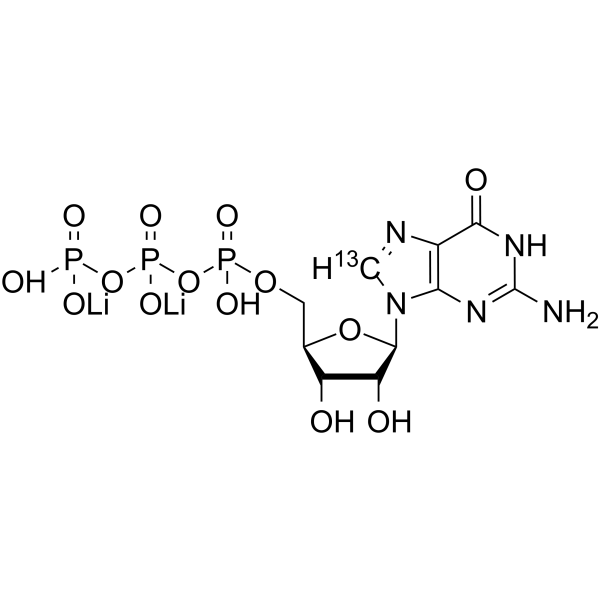
Guanosine triphosphate- 13C dilithium (GTP- 13C dilithium) is the 13C-labeled Guanosine triphosphate (HY-113225). Guanosine triphosphate (GTP) is a critical nucleotide and regulator of cellular metabolism. Guanosine triphosphate promotes ribosomal DNA localization, pre-rRNA transcription and ribosome biogenesis by binding to RNA polymerase I and GPN proteins (GPN1/3). Guanosine triphosphate links MYC-dependent ribosome biogenesis to nucleotide sufficiency, acts as a metabolic gatekeeper supporting protein synthesis, DNA/RNA synthesis and cellular signal transduction, while also participating in the physiological activities of pancreatic β-cells and serving as an oxidative substrate for reactive oxygen species. In small cell lung cancer with high MYC expression, Guanosine triphosphate accumulates through the IMPDH-driven synthetic pathway, thereby affecting apoptosis and mitotic processes. Guanosine triphosphate is used in the research of small cell lung cancer, hepatoblastoma and cellular metabolism .
loading...
    loading...
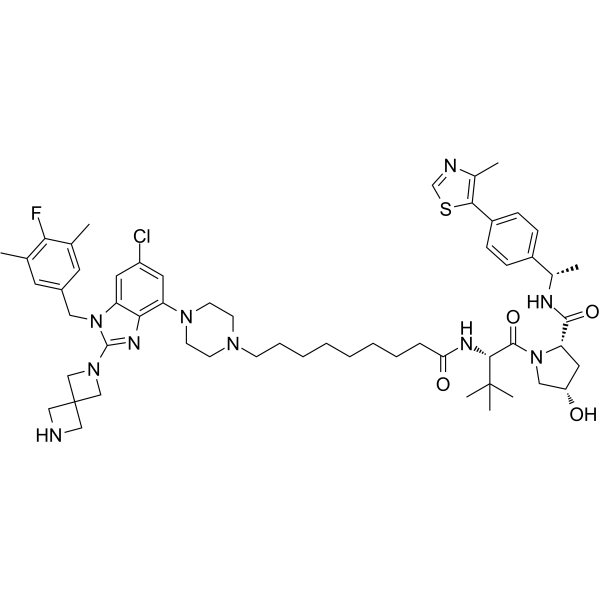
Cat. No.: HY-144657
CAS No.: 2913176-81-3
Target:  

PROTACs SOS1 Drug Isomer Ras

Research Areas:  

Cancer

(4S)-PROTAC SOS1 degrader-1 is a stereoisomer of PROTAC SOS1 degrader-1 (HY-145737). PROTAC SOS1 degrader-1 (Compound 9d) is a degrader of SOS1 PROTAC, with a DC50 of 98.4 nM and a Kd value of 44 nM. PROTAC SOS1 degrader-1 induces the formation of a ternary complex with SOS1 and the VCB E3 ubiquitin ligase complex, thereby promoting the ubiquitination and proteasomal degradation of SOS1. PROTAC SOS1 degrader-1 reduces KRAS-GTP levels, inhibits the phosphorylation of ERK in the RAS-RAF-MEK-ERK pathway, and suppresses the proliferation of cancer cells carrying KRAS mutations. PROTAC SOS1 degrader-1 inhibits tumor growth in mouse xenograft models. PROTAC SOS1 degrader-1 can be used for the research of KRAS-driven cancers .
loading...
    loading...
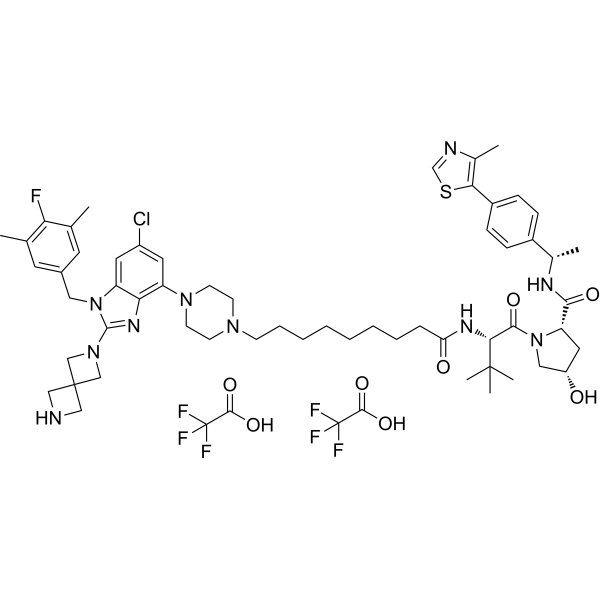
Cat. No.: HY-144657A
Purity:  98.09%
Target:  

PROTACs SOS1 Drug Isomer Ras

Research Areas:  

Cancer

(4S)-PROTAC SOS1 degrader-1 diTFA is a stereoisomer of PROTAC SOS1 degrader-1 (HY-145737). PROTAC SOS1 degrader-1 (Compound 9d) is a degrader of SOS1 PROTAC, with a DC50 of 98.4 nM and a Kd value of 44 nM. PROTAC SOS1 degrader-1 induces the formation of a ternary complex with SOS1 and the VCB E3 ubiquitin ligase complex, thereby promoting the ubiquitination and proteasomal degradation of SOS1. PROTAC SOS1 degrader-1 reduces KRAS-GTP levels, inhibits the phosphorylation of ERK in the RAS-RAF-MEK-ERK pathway, and suppresses the proliferation of cancer cells carrying KRAS mutations. PROTAC SOS1 degrader-1 inhibits tumor growth in mouse xenograft models. PROTAC SOS1 degrader-1 can be used for the research of KRAS-driven cancers .
loading...
    loading...

