351 Results for "

sarcoma

" in MedChemExpress (MCE) Product Catalog:
Products (351)

351 Results for "sarcoma" in MCE Product Catalog:

Cat. No.: HY-L260
82 compounds

KRAS (Kirsten Rat Sarcoma Viral Oncogene Homolog) is one of the most important oncogenic driver genes in oncology, with high mutation frequencies in pancreatic cancer, non‑small cell lung cancer, and colorectal cancer. For a long time, KRAS was considered "undruggable" due to the lack of suitable small‑molecule binding pockets on its protein surface. In recent years, with the discovery of the switch‑II pocket and the successful approval of KRAS G12C inhibitors, KRAS‑targeted research has achieved groundbreaking progress, which has also spurred a wave of development targeting non‑G12C mutants such as G12D and G12V, as well as upstream and downstream regulatory factors including SOS1 and SHP2.

MCE KRAS Targeted Compound Library contains 82 small‑molecule compounds targeting the KRAS, serving as high‑quality research tools for mechanistic studies of KRAS‑mutant tumors, combination therapy development, resistance mechanism exploration, and high‑throughput drug screening, thereby providing robust support for KRAS‑targeted drug discovery.

Cat. No.: HY-P705880
Purity:  ≥ 90%, as determined by reducing SDS-PAGE.
Synonyms: ROS1; Proto-Oncogene C-Ros-1; ROS Proto-Oncogene 1, Receptor Tyrosine Kinase; V-Ros UR2 sarcoma Virus Oncogene Homolog 1 (Avian); MCF3; ROS Proto-Oncogene 1 , Receptor Tyrosine Kinase; ROS; Transmembrane Tyrosine-Specific Protein Kinase; C-Ros-1; Receptor
Species:  
Human
Source:  
sf9 insect cells
loading...
    loading...
Cat. No.: HY-N7695
CAS No.: 23133-56-4
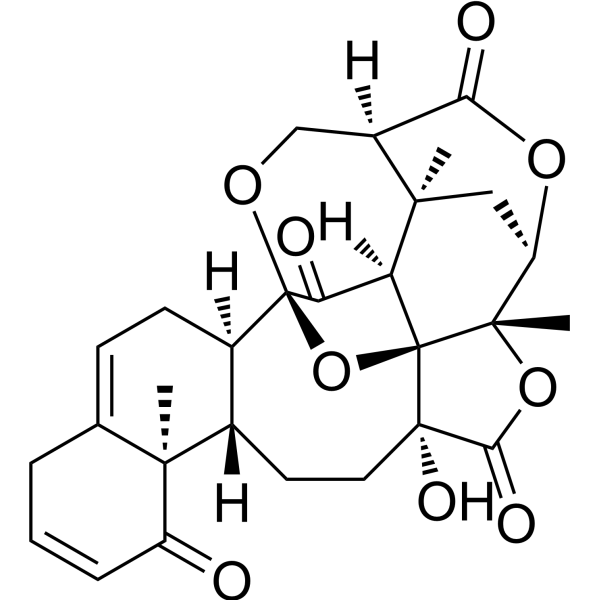
Physalin B is an orally active anti-inflammatory and anticancer agent. Physalin B can be isolated from Physalis alkekengi L. var. Franchetii. Physalin B inhibits the activation of the NF-κB, NLRP3 inflammasome, STAT3, PI3K/Akt and Hedgehog signaling pathways, regulates the phosphorylation levels of GSK-3β, p38 MAPK, ERK1/2 and JNK, and promotes the nuclear translocation of NRF2. Physalin B reduces the levels of pro-inflammatory cytokines and factors, induces mitochondrial reactive oxygen species (mito-ROS) production, Apoptosis, G2/M cell cycle arrest and incomplete Autophagy, alters cytoskeleton structure and alleviates oxidative stress. Physalin B reduces cancer cell viability, ameliorates liver and lung tissue damage and alleviates liver fibrosis. Physalin B can be used in research related to ulcerative colitis, breast cancer, acute lung injury, colon cancer, non-alcoholic steatohepatitis, liver fibrosis, lung cancer, pancreatic cancer, lymphoma, ovarian cancer, sarcoma and leukemia .
loading...
    loading...
Cat. No.: HY-145514R
CAS No.: 2624313-15-9
Research Areas:  

Cancer

dTAGV-1 TFA (Standard) is the analytical standard of dTAGV-1 TFA (HY-145514). This product is intended for research and analytical applications. dTAGV-1 TFA is a selective FKBP12 F36V PORTAC degrader. dTAGV-1 TFA induces rapid degradation of FKBP12 F36V-tagged oncogenic fusion proteins, triggering collapse of downstream cellular signaling pathways, reduced proliferative capacity of cancer cells, and decreased levels of target proteins. dTAGV-1 TFA is applicable to functional validation studies of cancer and undegradable oncoproteins .
loading...
    loading...
Cat. No.: HY-186196
CAS No.: 3095435-04-1
Research Areas:  

Cancer

Fentomycin-1 is a ferroptosis inducer. Fentomycin-1 activates lysosomal iron 2+ under acidic conditions with hydrogen peroxide to form a reactive iron-oxo species, which induces oxidative degradation, oxidation, and lipolysis of membrane phospholipids, triggering ferroptosis. Fentomycin-1 can be used for the research of pancreatic ductal adenocarcinoma, breast cancer metastasis, and melanoma .
loading...
    loading...
Cat. No.: HY-N0566
CAS No.: 85999-40-2
Synonyms: Anemosapogenin
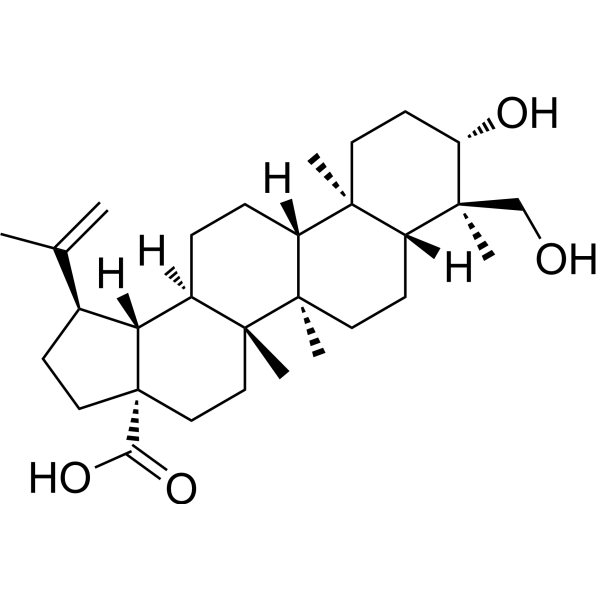
23-Hydroxybetulinic acid (Anemosapogenin) is an orally active triterpenoid with broad-spectrum anticancer activity. 23-Hydroxybetulinic acid reduces the levels of Bcl-2 and survivin, elevates the level of Bax, promotes the cleavage/activation of caspase-3 and caspase-9, and induces apoptosis via the endogenous mitochondrial pathway involving cytochrome C release and mitochondrial membrane potential disruption. 23-Hydroxybetulinic acid arrests the cell cycle at S and G1 phases, inhibits cancer cell proliferation, blocks the MAPK signaling pathway, regulates MMP2, and induces autophagic apoptosis by upregulating beclin-1. 23-Hydroxybetulinic acid inhibits the activity and efflux function of P-gp, increases the intracellular accumulation of chemotherapeutic drugs, and synergistically enhances cytotoxicity with Doxorubicin (HY-15142). 23-Hydroxybetulinic acid inhibits the phosphorylation and nuclear translocation of STAT6, blocks M2 macrophage polarization, and reduces M2 macrophage-mediated apoptosis resistance of colon cancer cells. 23-Hydroxybetulinic acid can be used in related studies on chronic myeloid leukemia, hepatocellular carcinoma, sarcoma 180, multidrug-resistant breast cancer, leukemia, Doxorubicin-induced cardiotoxicity, and colorectal cancer .
loading...
    loading...
Cat. No.: HY-N0566R
CAS No.: 85999-40-2
Synonyms: Anemosapogenin (Standard)
23-Hydroxybetulinic acid (Standard) is the analytical standard of 23-Hydroxybetulinic acid (HY-N0566). This product is intended for research and analytical applications. 23-Hydroxybetulinic acid (Anemosapogenin) is an orally active triterpenoid with broad-spectrum anticancer activity. 23-Hydroxybetulinic acid reduces the levels of Bcl-2 and survivin, elevates the level of Bax, promotes the cleavage/activation of caspase-3 and caspase-9, and induces apoptosis via the endogenous mitochondrial pathway involving cytochrome C release and mitochondrial membrane potential disruption. 23-Hydroxybetulinic acid arrests the cell cycle at S and G1 phases, inhibits cancer cell proliferation, blocks the MAPK signaling pathway, regulates MMP2, and induces autophagic apoptosis by upregulating beclin-1. 23-Hydroxybetulinic acid inhibits the activity and efflux function of P-gp, increases the intracellular accumulation of chemotherapeutic drugs, and synergistically enhances cytotoxicity with Doxorubicin (HY-15142). 23-Hydroxybetulinic acid inhibits the phosphorylation and nuclear translocation of STAT6, blocks M2 macrophage polarization, and reduces M2 macrophage-mediated apoptosis resistance of colon cancer cells. 23-Hydroxybetulinic acid can be used in related studies on chronic myeloid leukemia, hepatocellular carcinoma, sarcoma 180, multidrug-resistant breast cancer, leukemia, Doxorubicin-induced cardiotoxicity, and colorectal cancer.
loading...
    loading...
Cat. No.: HY-184508
Target:  

Ligands for E3 Ligase

Research Areas:  

Cancer

E3 ligase Ligand 81 is a VHL E3 ubiquitin ligase ligand and constitutes the VHL ligand moiety of R4VPL3-1 (HY-184506). R4VPL3-1 is a PROTAC-like bifunctional degrader linking RNF4 and VHL; it binds to and modifies GPX4, thereby inhibiting its anti-ferroptotic function. R4VPL3-1 induces iron-dependent lipid peroxidation and rapid ferroptosis-mediated cell death in cancer cells. E3 ligase Ligand 81 can be used in research related to targeted protein degradation and tumors such as melanoma .
loading...
    loading...
Cat. No.: HY-126778
CAS No.: 15228-71-4
Synonyms: Leurosidine
Vinrosidine (Leurosidine) is a mitotic spindle microtubule inhibitor with antitumor activity. Vinrosidine regulates tubulin dynamics at microtubule plus ends, disrupts mitotic spindle function, and blocks cell cycle progression at metaphase. Vinrosidine exhibits antitumor activity in multiple in vivo xenograft models. Vinrosidine can be used in cancer-related research .
loading...
    loading...
Cat. No.: HY-136618
CAS No.: 283-60-3
Silatrane is a functionalized reagent. Silatrane stimulates the biosynthesis of DNA and proteins. Silatrane functionalizes oligonucleotides. Silatrane is applicable to the finishing of glass fibers. Silatrane can be used in research related to malignant tumors .
loading...
    loading...
Cat. No.: HY-P87054
Synonyms: c ros 1 antibody; c ros antibody; c ros oncogene 1 receptor tyrosine kinase antibody; c Ros receptor tyrosine kinase antibody; c ros1 antibody; MCF 3 antibody; MCF3 antibody; Oncogene ROS antibody; OTTHUMP00000017814 antibody; OTTHUMP00000017815 antibody; c ros 1 antibody; c ros antibody; c ros oncogene 1 receptor tyrosine kinase antibody; c Ros receptor tyrosine kinase antibody; c ros1 antibody; MCF 3 antibody; MCF3 antibody; Oncogene ROS antibody; OTTHUMP00000017814 antibody; OTTHUMP00000017815 antibody; OTTHUMP00000040389 antibody; Proto oncogene c ros 1 protein antibody; Proto oncogene c Ros antibody; Proto oncogene tyrosine protein kinase ROS antibody; Proto oncogene tyrosine protein kinase ROS precursor antibody; Proto-oncogene c-Ros-1 antibody; Proto-oncogene tyrosine-protein kinase ROS antibody; Receptor tyrosine kinase c ros oncogene 1 antibody; Ros 1 antibody; ROS 1C antibody; ROS antibody; ROS proto oncogene 1 , receptor tyrosine kinase antibody; ROS_HUMAN antibody; ROS1 antibody; ROS1C antibody; Transmembrane tyrosine specific protein kinase antibody; v ros avian UR2 sarcoma virus oncogene homolog 1 antibody; v ros UR2 sarcoma virus oncogene homolog 1 antibody;

Host:  

Rabbit

Application:  

IHC-P

Reactivity:  

Human

loading...
    loading...

