80 Results for "

AD model

" in MedChemExpress (MCE) Product Catalog:
Products (80)

80 Results for "AD model" in MCE Product Catalog:

Cat. No.: HY-P991570
CAS No.: 2378046-35-4
Synonyms: AD5-10; oba-01 Antibody

Research Areas:  

Cancer

Zaptuzumab (AD5-10) is a DR5-specific humanized monoclonal antibody that selectively binds to DR5 with high affinity. Zaptuzumab specifically induces cancer cell death by both caspase-apoptosis and autophagic cell death (ACD). Zaptuzumab activates both ADCC and CDC. Zaptuzumab induces ROS generation and GSH level reduction. Zaptuzumab shows a significant suppression of the tumor growth and good safety in various xenografts mice tumor models .
loading...
    loading...
Cat. No.: HY-149589
CAS No.: 5598-38-9
Purity:  ≥98.0%
Target:  

Endogenous Metabolite

Research Areas:  

Neurological Disease

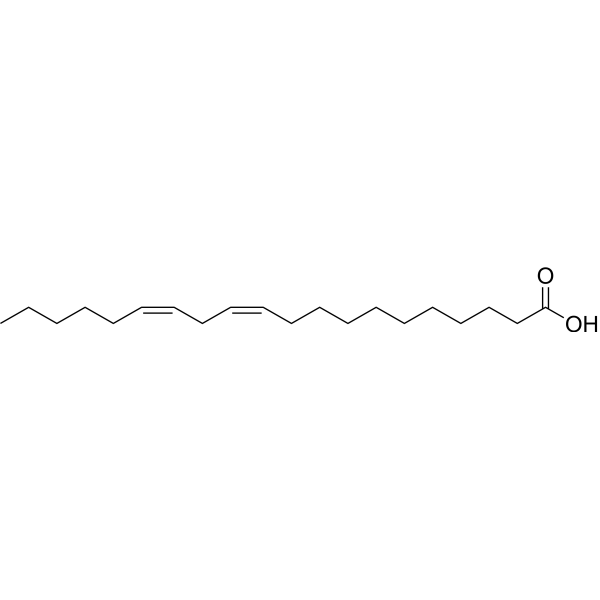
11(Z),14(Z)-Eicosadienoic acid is an unsaturated fatty acid that can serve as a biomarker for Alzheimer's disease. 11(Z),14(Z)-Eicosadienoic acid is downregulated in the feces and upregulated in the hippocampus of Alzheimer's disease model mice. 11(Z),14(Z)-Eicosadienoic acid can be used for research on Alzheimer's disease .
loading...
    loading...
Cat. No.: HY-175022
CAS No.: 2432992-21-5
PROTAC IRAK4 degrader-13 (Degrader 1) is a selective IRAK4 PROTAC degrader with DC50s of 0.86 and 1.1 nM for monocytes and lymphocytes in PBMCs, respectively. PROTAC IRAK4 degrader-13 significantly induces TIR signal activation, and inhibits the expression of circulating proinflammatory cytokines in Imiquimod (HY-B0180) induced psoriasis mice model. PROTAC IRAK4 degrader-13 can be used for TLR- and IL-1R-driven driven neutrophilic inflammation diseases like hidradenitis suppurativa (HS) and atopic dermatitis (AD) research . Pink: IRAK4 ligand; Blue: E3 ligase ligand; Black: linker
loading...
    loading...
Cat. No.: HY-W611371
CAS No.: 61694-81-3
Target:  

TRP Channel iGluR

Research Areas:  

Neurological Disease

FP802 is an orally active potent TwinF interface inhibitor that disrupts and detoxifies the NMDAR/TRPM4 death complex. FP802 exerts powerful neuroprotective effects in the 5xFAD mouse model of Alzheimer’s disease (AD) by preventing cognitive decline, preserving neuronal structural integrity, reducing amyloid-β plaque formation, and mitigating mitochondrial pathology . FP802 stops loss of motor neurons, reduces serum neurofilament light chain (NfL) levels, improves motor performance, and extends life in a mouse model of amyotrophic lateral sclerosis (ALS). FP802 can be used for AD and ALS research .
loading...
    loading...
Cat. No.: HY-117710B
CAS No.: 1531586-64-7
AD-35 is an orally active, blood-brain barrier-permeable acetylcholinesterase inhibitor with an IC50 of 793 nM. AD-35 inhibits metal-induced amyloid-β aggregation and disassembles preformed amyloid-β aggregates. In rat models of cognitive impairment, AD-35 attenuates Aβ25-35-induced astrocyte activation, TNF-α and IL-1β release, inhibits ERK phosphorylation, and alleviates learning and memory deficits. AD-35 can be used for research on Alzheimer's disease .
loading...
    loading...
Cat. No.: HY-178323
CAS No.: 3048608-87-0
Target:  

5-HT Receptor Arrestin

Research Areas:  

Neurological Disease

MW073 is a highly selective and orally active 5-HT2BR antagonist (IC50 =70 nM). MW073 exerts its effects by concentration-dependently inhibiting receptor activity and β-arrestin-1 recruitment. MW073 ameliorates synaptic plasticity and behavioral deficits, including aggression, in Alzheimer’s disease (AD) mouse models. MW073 can be used for Alzheimer’s disease (AD) research [1][2].
loading...
    loading...
Cat. No.: HY-176036
CAS No.: 3070323-06-4
MS1262 is a blood-brain barrier-permeable, selective inhibitor of histone methyltransferases G9a (EHMT2) and GLP (EHMT1), with an IC50 of 19 nM and a Kd of 74 nM against G9a, and an IC50 of 6 nM and a Kd of 19 nM against GLP. MS1262 reduces the dimethylation level of histone H3 lysine 9 and decreases the size of plaques. MS1262 restores hippocampal long-term potentiation (LTP) and miniature excitatory postsynaptic current (sEPSC) frequency, ameliorates spatial memory deficits, and reverses anxiety-like and depression-like behaviors in AD model mice. MS1262 reverses the expression/phosphorylation levels of early AD biomarkers, providing support for stage-specific diagnosis of AD. MS1262 reduces the risk of thrombus rupture. MS1262 can be used in research related to Alzheimer's disease, colorectal cancer, and triple-negative breast cancer .
loading...
    loading...
Cat. No.: HY-105998
CAS No.: 1173103-84-8
Target:  

5-HT Receptor

Research Areas:  

Neurological Disease

AVN-211 (CD-008-0173) is a selective and orally active 5HT6R antagonist with an IC50 of 2.34 nM and a Ki of 1.09 nM. AVN-211 exhibits 5K-fold higher 5HT6R selectivity over other 65 receptors, enzymes, and ion channels. AVN-211 significantly improves cognitive and anxiety behaviors in various AD animal models, and has good safety profiles. AVN-211 can be used for the study of Alzheimer's dementia .
loading...
    loading...
Cat. No.: HY-174984
CAS No.: 3098437-66-9
Target:  

p97 Caspase p62

Research Areas:  

Cancer

VCP/p97 IN-3 is a VCP/p97 allosteric inhibitor. VCP/p97 IN-3 shows the inhibitory activity against the VCP proteins with an IC50 of 9 nM and the mutant VCP proteins with IC50 of 12 nM (N660K) and 19 nM (V474A/D649A). VCP/p97 IN-3 increases K48-linked ubiquitination and the level of cleaved caspase-3. VCP/p97 IN-3 activates ER-stress and the UPR. VCP/p97 IN-3 inhibits tumor growth in RPMI-8226 cell subcutaneous xenograft mouse models. VCP/p97 IN-3 can be used for the study of multiple myeloma .
loading...
    loading...
Cat. No.: HY-D0186R
CAS No.: 951-78-0
2'-Deoxyuridine (Standard) is the analytical standard of 2'-Deoxyuridine. This product is intended for research and analytical applications. 2’-deoxyuridine is a brain-penetrant pyrimidines nucleotide that is associated with nervous system diseases. 2'-Deoxyuridine could increase chromosome breakage and results in a decreased thymidylate synthetase activity. 2'-Deoxyuridine is a precursor in the synthesis of Edoxudine (HY-B1011) and also an analogue of 5-ethynyl-2'-deoxyuridine, EdU (HY-118411). 2’-deoxyuridine reduces microglial activation and improve oxidative stress damage by modulating glycolytic metabolism on the Aβ25-35-induced brain injury, which is promising for research of Alzheimer’s disease (AD) . In Vitro:The interaction between the 2-deoxyuridine and the column increases the duration of retention of 2-deoxyuridine .
Gradient elution with sodium acetate buffer-ACN eluent on two ZIC-HILIC homemade columns separates 2-deoxyuridine in under 9 min .
In Vivo:2'-Deoxyuridine (34.42 ng/mL, gavage, 15 min) passes the blood-brain barrier (BBB) to enter the hippocampus of mice brain .
2'-Deoxyuridine (20 mg/kg, gavage, daily for 4 weeks) improves cognition and memory loss and attenuates the damage to the hippocampus in Aβ25-35-induced mice model .
loading...
    loading...
Cat. No.: HY-W841438
CAS No.: 5266-20-6
Target:  

Amyloid-β Tau Protein

Research Areas:  

Neurological Disease

Lithium orotate is an orally active lithium supplement with reduced binding that can bypass amyloid sequestration in AD mice models. Lithium orotate can prevent Aβ plaque deposition and phospho-tau accumulation and reverse AD pathology, neuroinflammatory changes and memory loss in AD mice models and ageing wild-type mice. Lithium orotate can be used for the research of alcoholism and Alzheimer’s disease .
loading...
    loading...
Cat. No.: HY-105321A
CAS No.: 648896-70-2
Synonyms: PBT 2 hydrochloride
Target:  

Bacterial

Research Areas:  

Neurological Disease

PBT 1033 hydrochloride is an orally active copper/zinc ionophore. PBT 1033 hydrochloride restores cognition in mouse models of Alzheimer's disease (AD). PB 1033 also has antibacterial activity against Gram-positive bacteria .
loading...
    loading...
Cat. No.: HY-W611371A
CAS No.: 2490401-57-3
Target:  

TRP Channel iGluR

Research Areas:  

Neurological Disease

FP802 dihydrochloride is an orally active potent TwinF interface inhibitor that disrupts and detoxifies the NMDAR/TRPM4 death complex. FP802 dihydrochloride exerts powerful neuroprotective effects in the 5xFAD mouse model of Alzheimer’s disease (AD) by preventing cognitive decline, preserving neuronal structural integrity, reducing amyloid-β plaque formation, and mitigating mitochondrial pathology . FP802 dihydrochloride stops loss of motor neurons, reduces serum neurofilament light chain (NfL) levels, improves motor performance, and extends life in a mouse model of amyotrophic lateral sclerosis (ALS) . FP802 dihydrochloride can be used for AD and ALS research .
loading...
    loading...
Cat. No.: HY-179337
Research Areas:  

Neurological Disease

PDE2-IN-1 is a potent and orally active PDE2 inhibitor with an IC50 of 0.6 μM, demonstrating neuroprotective effects. PDE2-IN-1 modulates the PKA/CREB/BDNF signaling pathway by inhibiting PDE2. PDE2-IN-1 improves memory deficits and cognitive impairment in an okadai acid (OKA)-induced Alzheimer’s disease (AD) mouse model. PDE2-IN-1 can be used for the research of AD .
loading...
    loading...
Cat. No.: HY-175758
Research Areas:  

Neurological Disease

AChE-IN-94 is an orally active and blood-brain barrier penetrable AChE inhibitor with an IC50 of 0.40 μM and Ki of 0.28 μM. AChE-IN-94 prevents self-induced and AChE-mediated1-42 aggregation. AChE-IN-94 alleviates cognitive/memory deficits in Scopolamine (HY-N0296)-induced amnesic model. AChE-IN-94 can be used for the study of Alzheimer's disease (AD) .
loading...
    loading...
Cat. No.: HY-172941
Research Areas:  

Neurological Disease

VEN-02XX is an orally active and brain-permeable NLRP3 inhibitor. VEN-02XX inhibits the release of IL-1β and IL-18 (IC50 0.3 and 0.28 μM, respectively). VEN-02XX restores memory and cognition, inhibits microgliosis, and reduces neuroinflammation and tau pathology in the 5XFAD/Rubicon KO mouse model. VEN-02XX may be used in the study of Alzheimer's disease (AD) .
loading...
    loading...
Cat. No.: HY-179459
CAS No.: 1210357-06-4
Target:  

Wnt LDLR Amyloid-β

Research Areas:  

Neurological Disease

SJ-300 is a potent and selective, orally active and brain-penetrat DKK3-LRP1 interaction inhibitor. SJ-300 restores clearance in AD models. SJ 300 binds to mLRPIV with a Kd of 7.9 μM, inhibits the DKK3 mLRPIV complex with an IC50 of 3.2 μM, and does not disrupt the binding of to LRP1. SJ 300 rescues cognitive function and ameliorates neuropathology ( plaque reduction ≈ 73.3 %) in vivo. SJ 300 can be employed for research in Alzheimer’s disease .
loading...
    loading...
Cat. No.: HY-148807A
CAS No.: 2908753-10-4
Synonyms: QC8222; TACH 101
Research Areas:  

Cancer

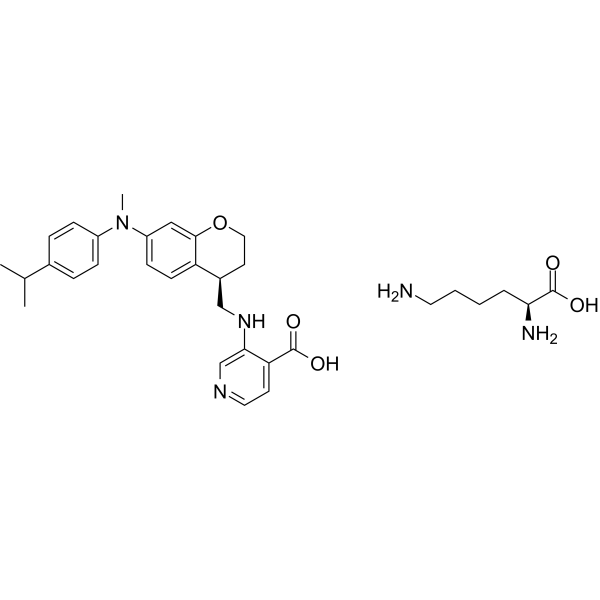
Zavondemstat (QC8222; TACH 101) L-lysine is an orally active pan-KDM4 inhibitor, with a IC50 ≤ 0.08 μM against human KDM4A-D and a Kᵢ of 0.52 μM against human KDM4C. Zavondemstat L-lysine induces cell apoptosis, causes S-phase cell cycle arrest, reduces the population of tumor-initiating cells and inhibits cancer cell proliferation. Zavondemstat L-lysine suppresses tumor growth and induces tumor regression in mouse xenograft models. Zavondemstat L-lysine can be used for the research of various cancers including colorectal cancer, esophageal squamous cell carcinoma and triple-negative breast cancer .
loading...
    loading...
Cat. No.: HY-178356
BChE-IN-44 is a potent, brain-penetrant, highly selective BChE inhibitor [equine BChE IC50 = 18.00 pM, human BChE IC50 = 1.50 nM]. BChE-IN-44 shows neuroprotective effects against the Aβ1-42-induced injury model and inhibitory effects on Aβ1-42 self-aggregation. BChE-IN-44 reduces the levels of inflammatory factors (NO, IL-6, and TNF-α) in Lipopolysaccharides (HY-D1056)-induced BV2 cells. BChE-IN-44 can significantly ameliorate Scopolamine (HY-N0296)-induced cognition impairment. BChE-IN-44 exhibits capacity in the regulation of BChE and acetylcholine levels in the mouse hippocampus. BChE-IN-44 can be used for the study of Alzheimer’s disease (AD) .
loading...
    loading...
Cat. No.: HY-114234
CAS No.: 365276-12-6
Research Areas:  

Neurological Disease

TAK-070 hydrochloride hydrate is a noncompetitive and orally active BACE1 inhibitor (IC50 = 3.15 μM). TAK-070 hydrochloride hydrate can be used for research of Alzheimer’s disease (AD). TAK-070 hydrochloride hydrate inhibits brain levels of soluble , and improves cognitive impairments in AD model .
loading...
    loading...

