
80 Results for "

AD model

" in MedChemExpress (MCE) Product Catalog:
Products (80)

80 Results for "AD model" in MCE Product Catalog:

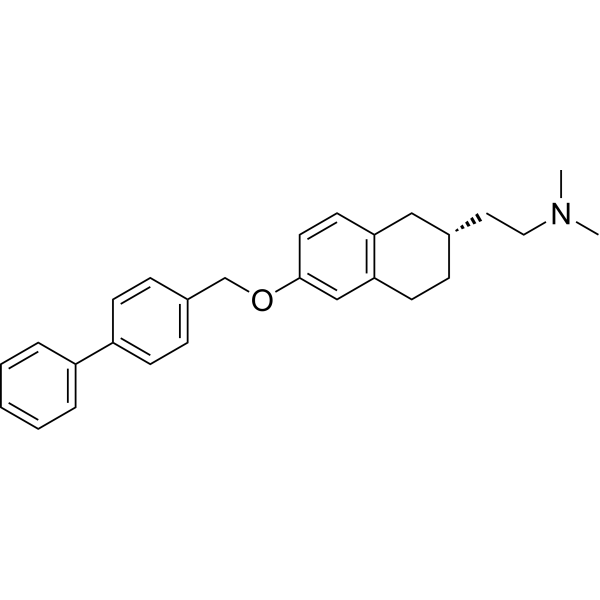
Cat. No.: HY-114234A
CAS No.: 212571-56-7
Research Areas:  

Neurological Disease

TAK-070 Free base is a noncompetitive and orally active BACE1 inhibitor (IC50: 3.15 μM). TAK-070 Free base can be used for research of Alzheimer’s disease (AD). TAK-070 Free base inhibits brain levels of soluble Aβ, and improves cognitive impairments in AD model .
loading...
    loading...
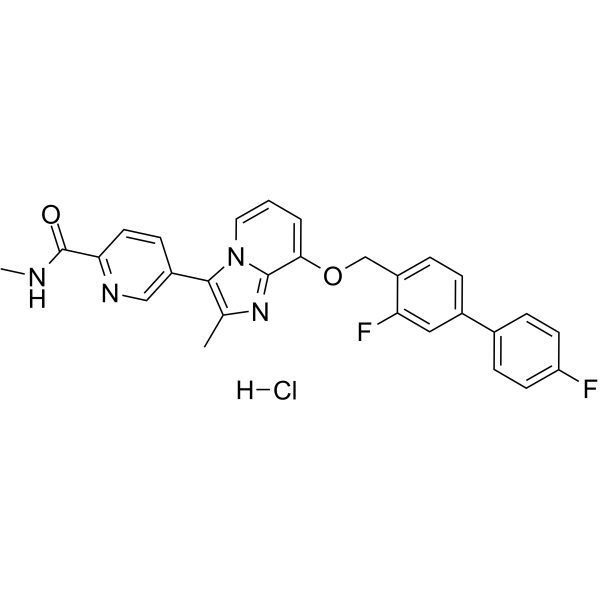
Cat. No.: HY-147720A
CAS No.: 2434630-30-3
Target:  

γ-secretase

Research Areas:  

Neurological Disease

γ-Secretase modulator 11 hydrochloride (compound 1o) is a potent and orally active γ-secretase modulator with an IC50 of 0.029 µM. γ-Secretase modulator 11 hydrochloride induces a robust reduction in brain Aβ42 levels. γ-Secretase modulator 11 hydrochloride rescues cognitive deficits exhibited by AD model mice. γ-Secretase modulator 11 hydrochloride has the potential for the research of alzheimer's disease .
loading...
    loading...
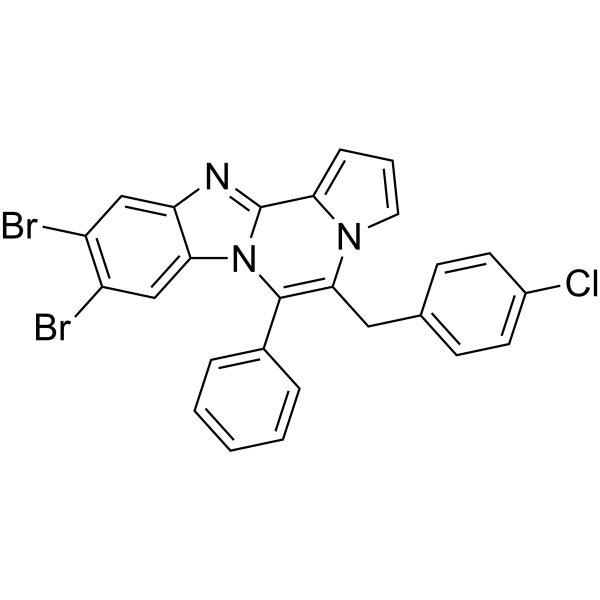
Cat. No.: HY-159997
Target:  

Sigma Receptor

Research Areas:  

Neurological Disease

AD353 is a selective sigma-1 receptor ligand with antiallodynic activity. AD353 exhibits high potency both in a model of Capsaicin (HY-10448)-induced allodynia and in PGE2-induced mechanical hyperalgesia. AD353 exhibits a favorable pharmacokinetic profile .
loading...
    loading...
Cat. No.: HY-149430
CAS No.: 2446054-34-6
Target:  

Amyloid-β

Research Areas:  

Neurological Disease

YIAD-0205 is an orally available Aβ(1?42) aggregation inhibitor. YIAD-0205 demonstrated in vivo efficacy in an AD transgenic mouse model with five familial AD mutations (5XFAD) .
loading...
    loading...
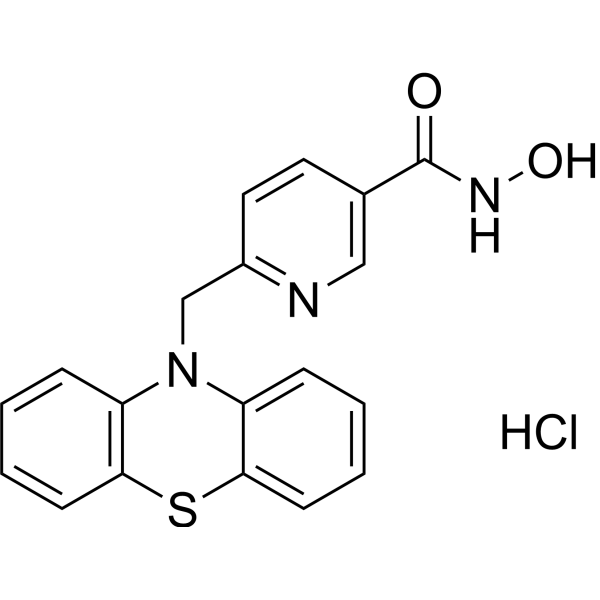
Cat. No.: HY-158030
CAS No.: 2986486-82-0
Target:  

HDAC

Research Areas:  

Neurological Disease

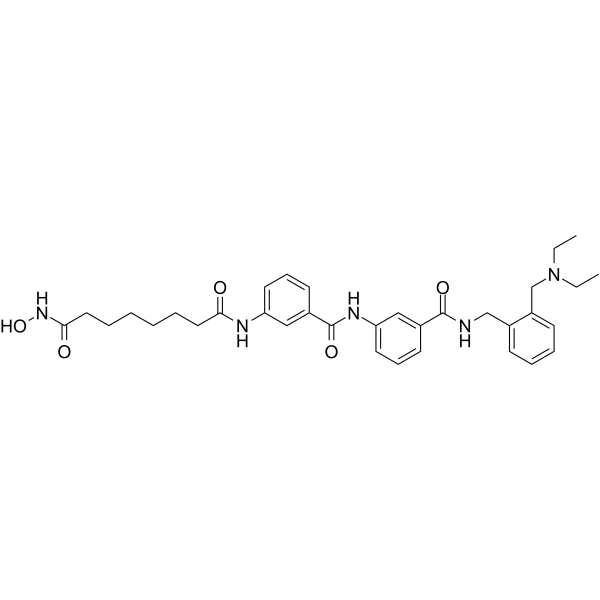
HDAC6-IN-37 (compound W5) is an inhibitor of HDAC6 and has neuroprotective effects. HDAC6-IN-37 can restore the morphology of hippocampal neurons, reduce the expression of Aβ, Tau, and p-Tau proteins in the hippocampus of AD rats, and inhibit the formation of senile plaques and neurofibrillary tangles. Thus, HDAC6-IN-37 improves the Aβ/Cu 2+-induced AD model in rats, regulates oxidative stress status, and balances neurotransmitter disorders in brain tissue .
loading...
    loading...
Cat. No.: HY-P10796
Target:  

MAPKAPK2 (MK2)

Research Areas:  

Inflammation/Immunology

YARA peptide, a cell-penetrating peptide, is a MK2 inhibitor. YARA-loaded nanoparticles decreases the levels of inflammatory cytokines (IL-1β, IL-6, and TNF-α) in an ex vivo skin culture model. YARA peptide is promising for research of atopic dermatitis (AD) .
loading...
    loading...
Cat. No.: HY-147720
CAS No.: 2434630-29-0
Target:  

γ-secretase

Research Areas:  

Neurological Disease

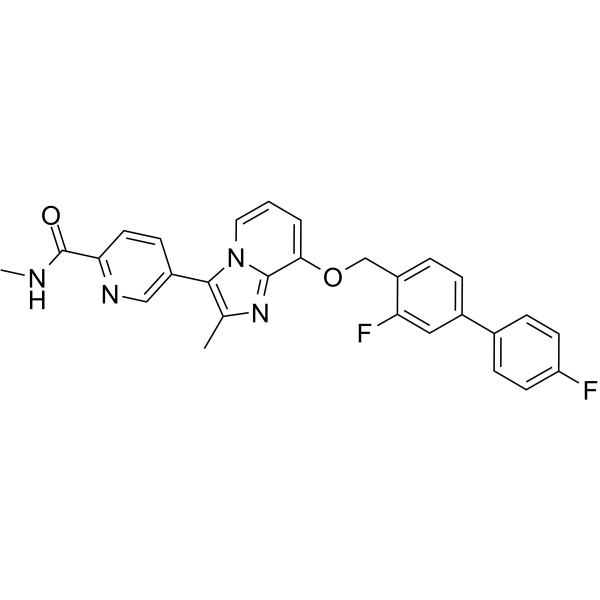
γ-Secretase modulator 11 (1o) showed high potency in vitro and brain exposure, inducing brain a β 42 levels were significantly reduced and showed undetectable inhibition of cytochrome P450 enzymes. In addition, compound 1o showed excellent anti cognitive deficit effect in AD model mice.
loading...
    loading...
Cat. No.: HY-158978
Multitarget AD inhibitor-2 (Compound VN-19) is a multitargeting inhibitor acetylcholinesterase (AChE, IC50=0.14 μM), butyrylcholinesterase (BChE, IC50=11.6 μM), monoamine oxidase B (MAO B, IC50=0.45 μM). Multitarget AD inhibitor-2 inhibits self-induced aggregation of amyloid beta protein Aβ1-42 (inhibition rate is 47.3% at 20 μM), and downregulates the level of ROS in SH-SY5Y (80 inhibition rate at 25 μM). Multitarget AD inhibitor-2 ameliorates the cognitive decline in Scopolamine (HY-N0296)-induced Alzheimer’s Disease zebrafish models .
loading...
    loading...
Cat. No.: HY-105321R
CAS No.: 747408-78-2
Synonyms: PBT 2 (Standard)
Research Areas:  

Neurological Disease

PBT 1033 (Standard) is the analytical standard of PBT 1033. This product is intended for research and analytical applications. PBT 1033 (PBT 2) is an orally active copper/zinc ionophore. PBT 1033 restores cognition in mouse models of Alzheimer's disease (AD). PB 1033 also has antibacterial activity against Gram-positive bacteria .
loading...
    loading...
Cat. No.: HY-P3340
CAS No.: 189224-35-9
Target:  

iGluR

Research Areas:  

Neurological Disease

Leptin (116-130) is a bioactive leptin fragment. Leptin (116-130) promotes AMPA receptor trafficking to synapses and facilitate activity-dependent hippocampal synaptic plasticity. Leptin (116-130) prevents hippocampal synaptic disruption and neuronal cell death in models of amyloid toxicity. Leptin (116-130) has the potential for the research of Alzheimer's disease (AD) .
loading...
    loading...
Cat. No.: HY-149417
CAS No.: 2925457-27-6
Research Areas:  

Neurological Disease

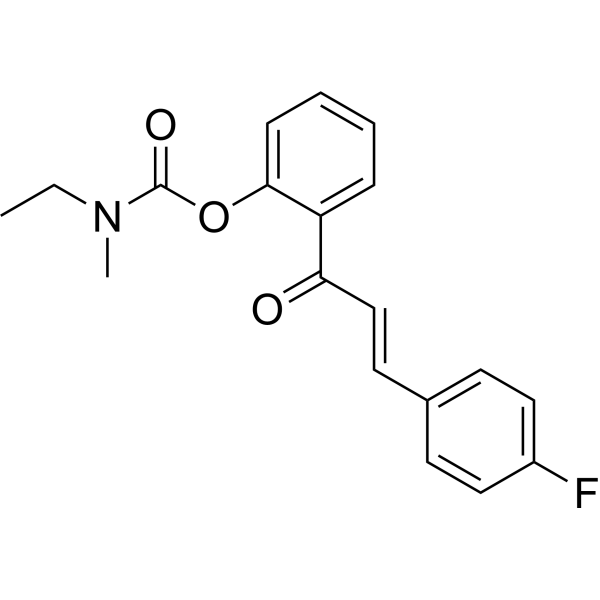
BChE/HDAC6-IN-1 is a potent and selective dual BChE/HDAC6 inhibitor with IC50 values of 4 and 8.9 nM, respectively. BChE/HDAC6-IN-1 ameliorates the cognitive impairment in an Aβ1–42-induced mouse model and has the potental for AD research .
loading...
    loading...
Cat. No.: HY-113354R
CAS No.: 584-85-0
Anserine (Standard) is the analytical standard of Anserine. This product is intended for research and analytical applications. Anserine, a methylated form of Carnosine, is an orally active, natural Histidine-containing dipeptide found in skeletal muscle of vertebrates. Anserine is not cleaved by serum carnosinase and act as biochemical buffers, chelators, antioxidants, and anti-glycation agents. Anserine improves memory functions in Alzheimer's disease (AD)-model mice[1][2].
loading...
    loading...
Cat. No.: HY-113354S1
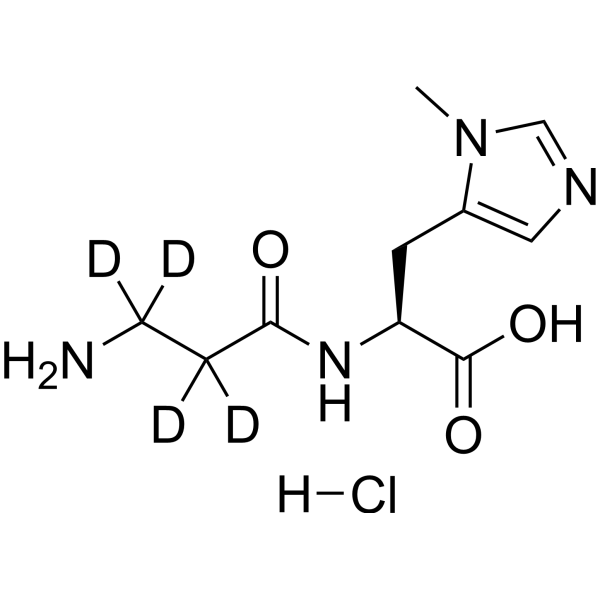
Anserine-d4 hydrochloride is the deuterium labeled Anserine (HY-113354). Anserine, a methylated form of Carnosine, is an orally active, natural Histidine-containing dipeptide found in skeletal muscle of vertebrates. Anserine is not cleaved by serum carnosinase and act as biochemical buffers, chelators, antioxidants, and anti-glycation agents. Anserine improves memory functions in Alzheimer's disease (AD)-model mice .
loading...
    loading...
Cat. No.: HY-149090
CAS No.: 3044829-88-8
AChE/BuChE/MAO-B-IN-2 (compound 4b) is a potent AChE/BuChE inhibitor and showed good blood brain barrier (BBB) permeability in vitro with an IC50 value of 5.3 μM, 12.4 μM, 1.9±0.08 μM, for AChE, BuChE, huMAO-B, respectively. AChE/BuChE/MAO-B-IN-2 (compound 4b) can inhibit excess AChE/BuChE in Alzheimer's disease (AD) brain. AChE/BuChE/MAO-B-IN-2 (compound 4b) can be used in anti-Alzheimer's research .
loading...
    loading...
Cat. No.: HY-B1328R
CAS No.: 65-23-6
Synonyms: Pyridoxol (Standard)
Pyridoxine (Standard) is the analytical standard of Pyridoxine. This product is intended for research and analytical applications. Pyridoxine (Pyridoxol) is a pyridine derivative. Pyridoxine exerts antioxidant effects in cell model of Alzheimer's disease via the Nrf-2/HO-1 pathway. In Vitro: Pyridoxine exerts a protective potential against AD, attenuates ROS levels, decreases the expressions of cytoplasmic Nrf2, and upregulates whole-cell HO-1 expression .
loading...
    loading...
Cat. No.: HY-175841
CAS No.: 3075165-36-2
Tau Protein Phosphorylation-IN-1 is a tau protein phosphorylation inhibitor that potently protects PC12 cells against Aβ25–35-induced cytotoxicity (EC50 = 1.93 μM), and can penetrate the blood-brain barrier (BBB).Tau Protein Phosphorylation-IN-1 reverses the hyperphosphorylation of tau, significantly inhibits the expression of certain immune-related cytotoxic factors, suppresses the MAPK and NF-κB signaling pathways, and significantly inhibits the expression of RAGE and the apoptosis factors Bax/Bcl-2, both in vitro and in vivo. Tau Protein Phosphorylation-IN-1 relieves nerve damage, and improves learning and memory in an Alzheimer’s disease (AD) mouse model. Tau Protein Phosphorylation-IN-1 can be used for AD research .
loading...
    loading...
Cat. No.: HY-149246
CAS No.: 3043752-01-5
Aβ-IN-6 reduces pro-inflammatory cytokine release from microglia cells. Aβ-IN-6 significantly induces Nrf2 nuclear translocation and hamperes Aβ oligomers formation. Aβ-IN-6 exerts a consistent neuroprotective effect by modulating the redox-sensitive signalling pathways in vivo oxidative stress model. Aβ-IN-6 is an orally active and has antiinflammatory, Antioxidant and Anti-oligomeric activity. Aβ-IN-6 has the potential for Alzheimer's disease (AD) research .
loading...
    loading...
Cat. No.: HY-175658
AChE/BChE-IN-29 is an AChE/BChE inhibitor. AChE/BChE-IN-29 exhibits balanced dual cholinesterase inhibitory activity with IC50 values of 2.1 μM for Electrophorus electricus AChE (eeAChE) and 6.3 μM for equine serum butyrylcholinesterase (eqBChE). AChE/BChE-IN-29 effectively inhibits amyloid-β (42) aggregation and tau protein aggregation in E. coli cell models. AChE/BChE-IN-29 can be used for the study of Alzheimer’s disease (AD) .
loading...
    loading...
Cat. No.: HY-158696
BChE/MAO-B-IN-1 (compound 7) is a dual BChE/MAO-B inhibitor with IC50 values ​​of 375 nM and 20 nM, respectively. BChE/MAO-B-IN-1 protects against oxidative damage induced by H2O2 and 6-OHDA in SH-SY5Y cells. BChE/MAO-B-IN-1 can penetrate the central nervous system in a cell model that mimics the blood-brain barrier. BChE/MAO-B-IN-1 can be used in the study of neurological diseases such as Alzheimer's disease (AD) .
loading...
    loading...
Cat. No.: HY-158695
Dual AChE-MAO B-IN-4 (compound 7) is a dual AChE/MAO-B inhibitor, with IC50 values ​​of 261 nM and 15 nM, respectively. Dual AChE-MAO B-IN-4 protects against oxidative damage induced by H2O2 and 6-OHDA in SH-SY5Y cells. Dual AChE-MAO B-IN-4 can penetrate the central nervous system in a cell model that mimics the blood-brain barrier. Dual AChE-MAO B-IN-4 can be used in the study of neurological diseases such as Alzheimer's disease (AD) .
loading...
    loading...

