42 Results for "

Immunomodulation

" in MedChemExpress (MCE) Product Catalog:
Products (42)

42 Results for "Immunomodulation" in MCE Product Catalog:

Cat. No.: HY-170564
CAS No.: 3098277-62-1
Target:  

Phosphatase

Research Areas:  

Inflammation/Immunology

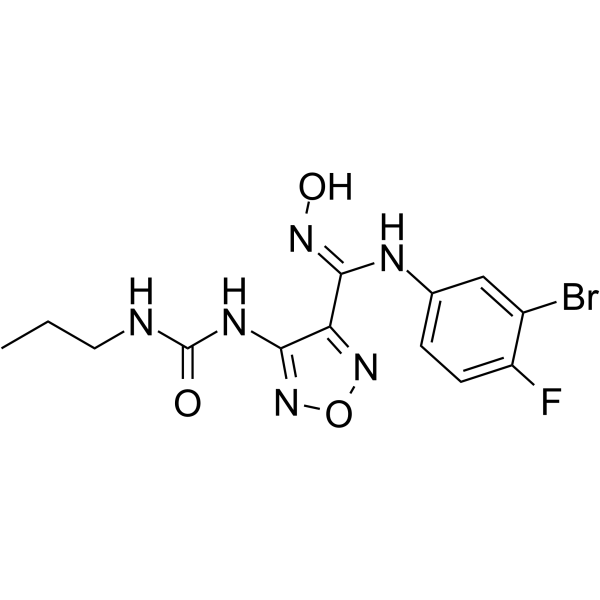
PTPN22-IN-2 (Compound 8b-19) is a PTPN22 inhibitor with an IC50 of 250 nM. PTPN22-IN-2 can be used for research in the field of immunomodulation .
loading...
    loading...
Cat. No.: HY-179009
NOD2 agonist 4 (Compound 12b) is a potent NOD2 agonist with an EC50 of 44.1 nM. NOD2 agonist 4 induces cytokine production (MCP-1, IL-6 and IL-8) in peripheral blood mononuclear cells (PBMCs), both alone and in combination with Lipopolysaccharide (LPS) (HY-D1056). NOD2 agonist 4 can be used for the studies of NOD2-targeted immunomodulator or vaccine adjuvant .
loading...
    loading...
Cat. No.: HY-P5724
Target:  

Bacterial

Research Areas:  

Infection

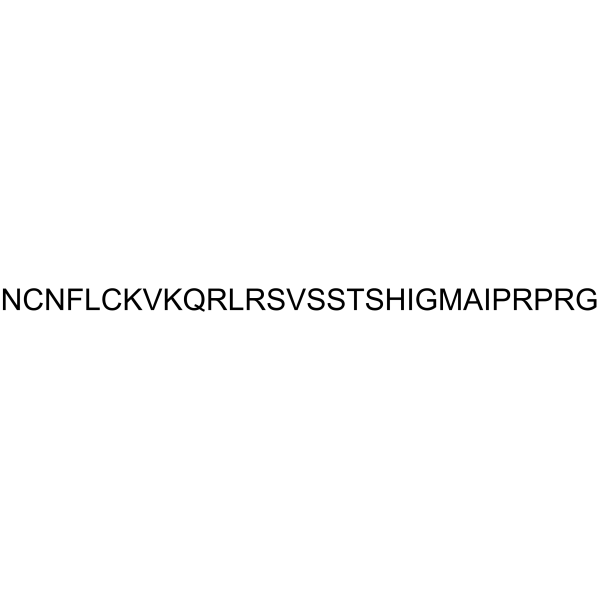
Nv-CATH is an antibacterial peptide of frog origin. Nv-CATH has broad-spectrum antibacterial activity against gram-positive and gram-negative bacteria. Nv-CATH significantly protects mice from fatal infections caused by Staphylococcus aureus. Nv-CATH protects mice from bacterial infection through antimicrobial immunoregulatory duality .
loading...
    loading...
Cat. No.: HY-129577
CAS No.: 6790-63-2
Aplysin is a brominated sesquiterpene with an isoprene backbone that exhibits hepatoprotective, immunomodulatory, and antitumor activities. Aplysin effectively prevents spontaneous pancreatic necrosis and inflammatory responses in NOD mice .
loading...
    loading...
Cat. No.: HY-106981
CAS No.: 137109-78-5
Synonyms: OR 1384
Orazipone (OR 1384) is a small molecule immunomodulator with strong anti-inflammatory properties. Orazipone exerts its immunomodulatory effect by forming reversible thiol complexes, which bind to intracellular signaling proteins and the thiol groups of glutathione. Orazipone exhibits potent anti-eosinophilic activity by inducing apoptosis. Orazipone inhibits activation of inflammatory transcription factors NF-kB and STAT 1 and decreases inducible iNOS expression and NO production in response to inflammatory stimuli. Orazipone reduces NADPH oxidase activity and thereby decreases ROS production. Orazipone has a protective effect in intestinal radiation injury .
loading...
    loading...
Cat. No.: HY-179875
CAS No.: 22154-46-7
Target:  

Endogenous Metabolite

Research Areas:  

Metabolic Disease

N-Cholyl-L-leucine is a bile acid-amino acid conjugate, mainly produced by intestinal microorganisms. N-Cholyl-L-leucine can be used as a biomarker for premature infants and is also employed in the study of bile acid metabolism .
loading...
    loading...
Cat. No.: HY-144465
CAS No.: 2126853-17-4
Research Areas:  

Cancer

IDO1-IN-15 is a potent IDO1 inhibitor (IC50=127 nM). IDO1-IN-15 has comparable potency against IDO1 enzyme in vitro with Epacadostat .
loading...
    loading...
Cat. No.: HY-164073
Research Areas:  

Others

Allylate Dextran is an allyl dextran with good biocompatibility and stability, which can be used for research on immune modulation and targeted delivery .
loading...
    loading...
Cat. No.: HY-170770
CAS No.: 3080931-00-3
Research Areas:  

Inflammation/Immunology

TLR7/8 agonist 12 (compound 9) is an hTLR7/8 agonist, with EC50 values of 11 nM (hTLR7) and 150 nM (hTLR8), respectively. TLR7/8 agonist 12 has the potential for immunomodulation .
loading...
    loading...
Cat. No.: HY-168091
CAS No.: 2585015-90-1
YM-I-26 is a selective NLRP3 inflammasome inhibitor. YM-I-26 enhances the phagocytosis of β-amyloid protein by mouse microglial BV2 cells and inhibits the production of IL-1β and IL-10. YM-I-26 can be used to study the immunomodulatory activity associated with inflammation .
loading...
    loading...
Cat. No.: HY-B1637S
CAS No.: 1261395-23-6
Synonyms: Sodium diethyldithiocarbamate-d10 sodium
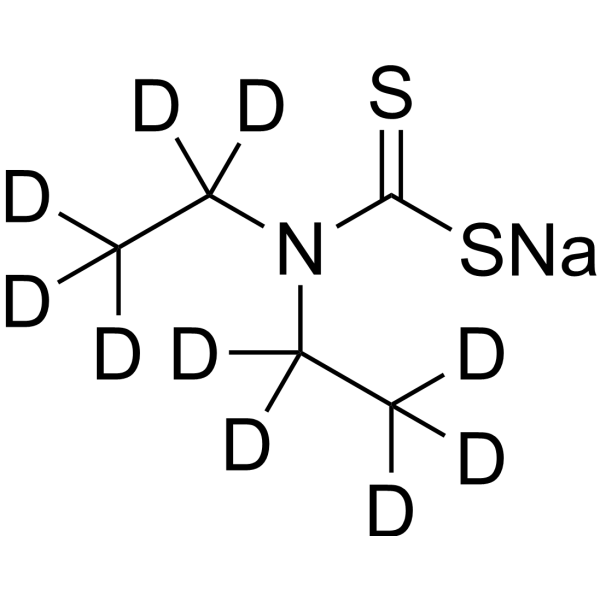
Ditiocarb-d10 sodium (Sodium diethyldithiocarbamate-d10) is the deuterium labeled Ditiocarb sodium (HY-B1637). Ditiocarb sodium (Sodium diethyldithiocarbamate) is an orally active copper reagent. Ditiocarb sodium exhibits activities such as antioxidation, chelation, anti-tumor effects, immunomodulation, and anti-HIV properties. Ditiocarb sodium can be used in the research of tumors, inflammatory, and immune-related diseases .
loading...
    loading...
Cat. No.: HY-N12198
CAS No.: 68455-09-4
Target:  

Others

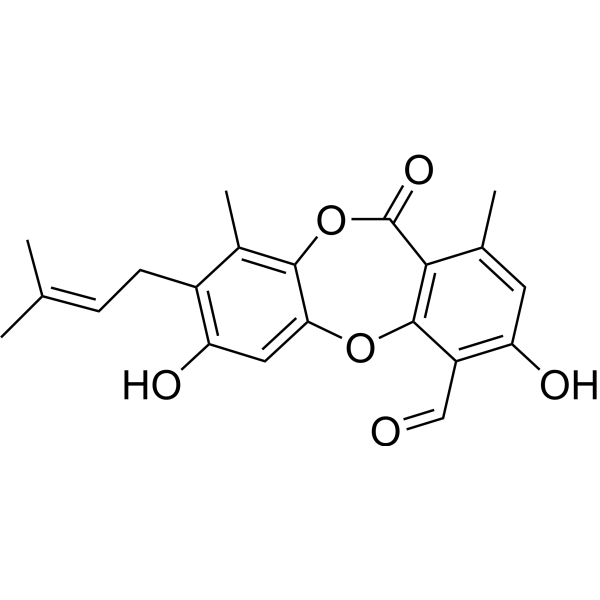
Mollicellin H is a secondary metabolite of the fungus C. brasiliense and has a wide range of biological activities, including immunomodulation, cytotoxicity and anti-tumor effects. The growth inhibitory effects (GI50s) of Mollicellin H on human breast cancer (Bre04), human lung (Lu04) and human neuroma (N04) cell lines are 5.1 μg/mL, 6.5 μg/mL and 2.5 μg/mL respectively .
loading...
    loading...
Cat. No.: HY-N12834
CAS No.: 1887196-18-0
Ecdysoside B (compound 6b) is a pregnanoside compound isolated from the plant Ecdysanthera rosea. Ecdysoside B and its derivatives and isomers shows anticancer, immunosuppressive and anti-inflammatory activities. Ecdysoside B shows cytotoxicity to a variety of human tumor cell lines, including PANC-1 (human pancreatic cancer cells), A375 (human melanoma cells) and U87 (brain glioma U87 cells). Ecdysoside B can be used for research in the areas of cancer, immunomodulation and anti-inflammato .
loading...
    loading...
Cat. No.: HY-16621
CAS No.: 911412-31-2
Target:  

SphK

Research Areas:  

Inflammation/Immunology

PPI-4955 is a subtype 1 (S1P₁) agonist of sphingosine-1-phosphate receptor with an EC50 of 1.62 nM. PPI-4955-P (the active phosphorylated form) exhibits excellent receptor selectivity and affinity, and the IC50 values for hS1P₁, hS1P₃, hS1P₄, and hS1P₅ are 0.23, 2000, 6.5, and 184 nM respectively. PPI-4955 has significantly improved in vivo phosphorylation efficiency, which can reduce lymphocytes and improve cardiovascular risk. PPI-4955 can be used in immunomodulation research .
loading...
    loading...
Cat. No.: HY-P11220
Research Areas:  

Infection

Hs02 is a cationic amphiphilic antibacterial peptide derived from human proteins, and it is the membrane-active module of the core chimeric peptide Chim2. Hs02 exhibits broad-spectrum and potent antibacterial activity against various human pathogenic bacteria with the MIC for Staphylococcus aureus and Escherichia coli of as low as 2 μM, and the MBC is 2-4 μM. Hs02 primarily kills bacteria by disrupting the integrity of the bacterial cell membrane, and it has a relatively low selectivity for eukaryotic cell membranes. Hs02 induces the release of IL-12 but does not induce the release of IL-6, indicating its potential for pro-inflammatory or immune activation. Hs02 can be used in antibacterial and immunomodulatory research .
loading...
    loading...
Cat. No.: HY-W679754R
CAS No.: 72629-94-8
Synonyms: PFTrDA (Standard)
Pentacosafluorotridecanoic Acid (Standard) is the analytical standard of Pentacosafluorotridecanoic Acid (PFTrDA) (HY-W679754). This product is intended for research and analytical applications.Pentacosafluorotridecanoic Acid is a long-chain perfluoroalkyl carboxylic acid with strong endocrine-disrupting activity. Pentacosafluorotridecanoic Acid exhibits estrogenic effects and disrupts vtg1 transcription as well as sex hormone homeostasis in male Danio rerio. Pentacosafluorotridecanoic Acid disturbs steroidogenesis and HPG axis function in a sex-dependent pattern. Pentacosafluorotridecanoic Acid inhibits CYP17A and CYP11A1 to reduce testosterone and increase E2/T ratio in H295R cells. Pentacosafluorotridecanoic Acid triggers gender-specific immunomodulation after prenatal exposure. Pentacosafluorotridecanoic Acid correlates with lower eczema risk in female infants. Pentacosafluorotridecanoic Acid can be used for the research of endocrine disruption and eczema .
loading...
    loading...
Cat. No.: HY-180580
CAS No.: 3113739-61-7
SMU-C409 is a TLR1/2 agonist with an EC50 of 65 nM in HEK-Blue hTLR2 Cells. SMU-C409 activates the TLR1/2MyD88NF-κB pathway, inducing TNF-α/IL-1β secretion and robust immune cell activation for antitumor immunomodulation. SMU-C409 shows low toxicity in virto. SMU-C409 can be used for cancer immunotherapy research .
loading...
    loading...
Cat. No.: HY-N21624
CAS No.: 199925-44-5
Pleioside A is a flavonoid glycoside with immunomodulatory activity that is found in the leaves of Pleioblastus amarus. Pleioside A exerts differential regulatory effects on adaptive immune lymphocyte proliferation by inhibiting mouse T cell proliferation and promoting B lymphocyte proliferation. Pleioside A can be used for research on adaptive immunity and immunomodulation .
loading...
    loading...
Cat. No.: HY-163747
Target:  

VEGFR

Research Areas:  

Cancer

VEGFR-2-IN-47 (compound 7g) is a potent VEGFR-2 inhibitor with an IC50 value of 0.072 µM. VEGFR-2-IN-47 can induce G2 / M phase cell cycle arrest, promote apoptosis, and boost immunomodulation by downregulating TNF-α expression and upregulating IL-2 levels in MCF-7 cells. VEGFR-2-IN-47 has the potential to be used for the research of cancer such as breast cancer and liver carcinoma .
loading...
    loading...
Cat. No.: HY-181472
10 (11)-Cl-BBQ is a high-affinity aryl hydrocarbon receptor (AhR) agonist. 10 (11)-Cl-BBQ is a mixture of 10-Cl-BBQ and 11-Cl-BBQ, among which 11-Cl-BBQ exhibits higher AhR activation potency than 10-Cl-BBQ. Low-dose/short-term AhR activation by 10 (11)-Cl-BBQ promotes IL-17 production, while high-dose/sustained activation induces regulatory T cells and suppresses immune responses. 10 (11)-Cl-BBQ can be used in immunomodulation research .
loading...
    loading...

