35 Results for "

PD-1 CD8 T cells

" in MedChemExpress (MCE) Product Catalog:
Products (35)

35 Results for "PD-1 CD8 T cells" in MCE Product Catalog:

Cat. No.: HY-157055
CAS No.: 2413100-40-8
Target:  

PD-1/PD-L1

Research Areas:  

Cancer

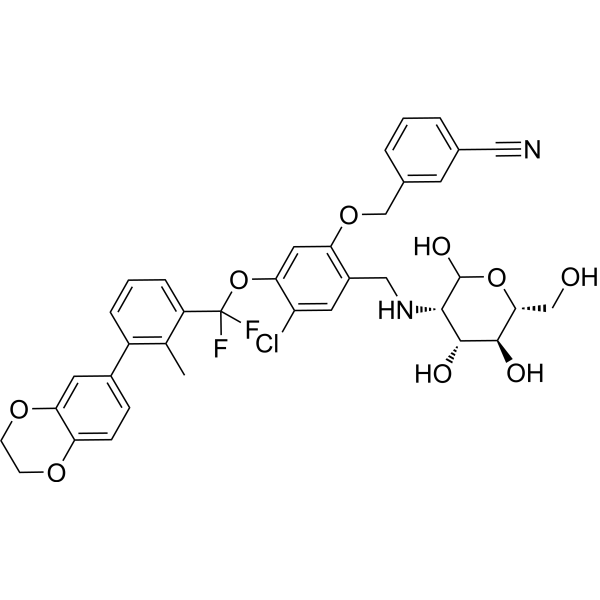
PD-1-IN-25 (compound 43) is a potent PD-1/PD-L1 interaction inhibitor with an IC50 value of 10.2 nM in the HTRF assay. PD-1-IN-25 can promote CD8+ T cell activation through inhibiting PD-1/PD-L1 cellular signaling. PD-1-IN-25 delays the tumor growth .
loading...
    loading...
Cat. No.: HY-162415
CAS No.: 2760585-35-9
Target:  

c-Fms Apoptosis

Research Areas:  

Cancer

CSF1R-IN-22 (Compound C19) is an orally effective CSF-1R selective inhibitor (IC50<6 nM). CSF1R-IN-22 enhances the secretion of CXCL9 from M2 macrophages, increases CD8 + T cell infiltration. CSF1R-IN-22 boosts anti-tumor immune responses of anti-PD-1, and induces apoptosis in tumor cells. CSF1R-IN-22 can effectively reprogram M2-like TAMs (tumor-associated macrophages) to the M1 phenotype and reshape the TME by inducing the recruitment of CD8 + T cells into tumors and reducing the infiltration of immunosuppressive Tregs and MDSCs .
loading...
    loading...
Cat. No.: HY-N12537A
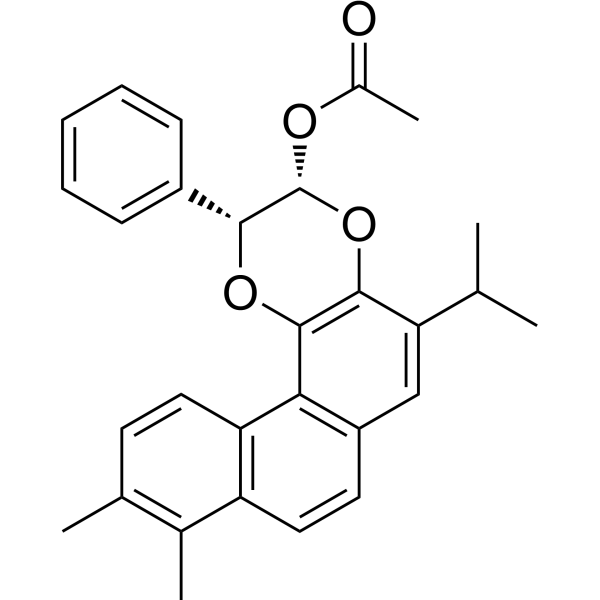
(2R,3S)-PD-1/PD-L1-IN-38 (Compound (±)-13e) is an orally active Ah receptor (AhR) antagonist with in vivo and in vitro anticancer activity. (2R,3S)-PD-1/PD-L1-IN-38 promotes the secretion of INF-γ by CD8 +T cells and inhibits the signal transduction of PD-1/PD-L1 .
loading...
    loading...
Cat. No.: HY-185098
CAS No.: 2007110-15-6
Research Areas:  

Cancer

PD1-PDL1-IN-4 (compound 19) is a potent and orally active PD1-PDL1 inhibitor that modulates TIGIT and PD-1 signalling pathways. PD1-PDL1-IN-4 can rescue CD8 + T cell and mouse splenocyte proliferation. PD1-PDL1-IN-4 inhibits tumor growth in a CT26 syngeneic colon adenocarcinoma mouse model. PD1-PDL1-IN-4 can be used for research on colon cancer .
loading...
    loading...
Cat. No.: HY-P992351

Target:  

Inhibitory Antibodies

Research Areas:  

Infection Cancer

ELB021 is an antibody inhibitor targeting the CD160 checkpoint. ELB021 specifically binds to CD160 on the cell surface and blocks its immune checkpoint pathway, thereby stimulating innate and adaptive anti-tumor immune responses. ELB021 effectively eliminates CD160-expressing cancer cells by enhancing T cell proliferation and CD8 + T cell-mediated cytotoxicity. Independent of PD-1 regulation, ELB021 is applicable to research related to B-cell leukemia and HIV-1 infection .
loading...
    loading...
Cat. No.: HY-P992062

Target:  

PD-1/PD-L1

Research Areas:  

Inflammation/Immunology

Anti-Mouse CD80 Antibody (TKMG48) is an antibody that targets mouse CD80. By specifically binding to and disrupting the CD80:PD-L1 complex to release PD-L1, Anti-Mouse CD80 Antibody (TKMG48) functions as an indirect PD-1 agonist without blocking CD28 co-stimulation or CD80-CTLA4 binding. Anti-Mouse CD80 Antibody (TKMG48) inhibits T cell activation, reduces T cell effector functions and antigen-specific CD8 + T cell populations, and does not interfere with the differentiation, migration, antigen presentation or surface marker expression of dendritic cells. Anti-Mouse CD80 Antibody (TKMG48) significantly attenuates disease severity in mouse models of arthritis, spondyloarthritis, multiple sclerosis and Sjögren's syndrome, and its activity depends on the expression of PD-1 and PD-L1 .
loading...
    loading...
Cat. No.: HY-P11490
Target:  

MDM-2/p53

Research Areas:  

Inflammation/Immunology Cancer

DPMI-ω is a dual-specificity d-peptide antagonist of oncogenic proteins MDM2 and MDMX. DPMI-ω, upon fabrication on gold nanoparticles, efficiently traverses tumor cells and kills them by reactivating the p53 signaling pathway. DPMI-ω can disrupte the p53-MDM2/MDMX complex. DPMI-ω can inhibit B16 melanoma growth and induce cells G0/G1 phase arrest. DPMI-ω can augment the efficacy of immunotherapy by expanding CD3 +/CD8 + cytotoxic T cells and suppressing CD4 +/CD25 + regulatory T cells companied with anti-PD1 antibody. DPMI-ω can be used for research of melanoma .
loading...
    loading...
Cat. No.: HY-184918
CAS No.: 3097045-01-4
Target:  

PD-1/PD-L1 NAMPT

Research Areas:  

Cancer

NAMPT/PD-1/PD-L1-IN-1 is a potent the PD-1/PD-L1 interaction and NAMPT dual inhibitor with IC50s of 7.5 nM and 18.8 nM, respectively. NAMPT/PD-1/PD-L1-IN-1 enhances T cell-mediated tumor cell killing, promotes T cell proliferation and CD8 + T cell proportion and depletes intracellular NAD + biosynthesis. NAMPT/PD-1/PD-L1-IN-1 suppresses tumor progression in a mouse LLC xenograft model by disrupting tumor metabolism and activating the tumor immune microenvironment. NAMPT/PD-1/PD-L1-IN-1 can be used in research on tumor immunotherapy for non-small cell lung cancer .
loading...
    loading...
Cat. No.: HY-P992454

Target:  

Tim3

Research Areas:  

Cancer

S095018 (Sym023) is a human IgG2-type inhibitor targeting T cell immunoglobulin and TIM-3. S095018 competitively blocks the binding of multiple ligands such as Gal-9 and phosphatidylserine to TIM-3. S095018 stimulates the anti-tumor activity of T cells, dendritic cells and macrophages, and exhibits good safety both as a monotherapy and in combination with the anti-PD-1 antibody Sym021. S095018 also induces an increase in the density of CD8 + T cells in the tumor microenvironment, and upregulates gene signatures associated with IFN-γ signaling, antigen presentation and T cell activation. S095018 can be used for the research of advanced/metastatic recurrent biliary tract cancer .
loading...
    loading...
Cat. No.: HY-182048
Target:  

PD-1/PD-L1 mTOR

Research Areas:  

Cancer

PD-1/PD-L1-IN-62 is a PD-L1 inhibitor and mTOR modulator. PD-1/PD-L1-IN-62 inhibits PD-L1 with an IC50 of 6.9 nM and abrogates immune suppression mediated by the PD-1/PD-L1 pathway. By inhibiting mTOR phosphorylation and downregulating the downstream target SREBP1, PD-1/PD-L1-IN-62 significantly reduces cholesterol and triglyceride levels to decrease lipid accumulation. PD-1/PD-L1-IN-62 promotes the infiltration of CD3 +CD8 + T cells into tumor tissues, thereby effectively inhibiting tumor growth. PD-1/PD-L1-IN-62 can be used for the research of hepatocellular carcinoma .
loading...
    loading...
Cat. No.: HY-N20707
CAS No.: 24312-00-3
Castalagin is an orally active natural product with multiple biological activities including antibacterial activity against bacteria and anti-leishmanial activity against Leishmania aethiopica. Castalagin exhibits inhibitory activity against PARP1 and DNA topoisomerase II, with an IC50 of 0.86 μM for bovine PARP1. Castalagin reduces poly (ADP-ribosyl) ation modification in cells. Castalagin binds to the cell envelope of Ruminococcus bromii, increases the ratio of CD8+/FOXP3+CD4+ T cells in the tumor microenvironment, and acts as a prebiotic to enhance the activity of anti-PD-1 therapy. Castalagin induces morphological changes in Leishmania aethiopica promastigotes and inhibits their proliferation. Castalagin inhibits PBP2a-mediated peptidoglycan layer stabilization, disrupts bacterial peptidoglycan assembly, and inhibits and disintegrates bacterial biofilms. Castalagin can be used in research related to diseases such as cancer, leishmaniasis, and bacterial infections .
loading...
    loading...
Cat. No.: HY-181924
CAS No.: 3078477-58-1
Research Areas:  

Inflammation/Immunology Cancer

HPK1-IN-68 (Compound 39) is a HPK1 inhibitor with an IC50 of 2.8 nM. HPK1-IN-68 blocks HPK1 signaling, inhibits HPK1-mediated phosphorylation of SLP76, and promotes the production of the IL-2 cytokine. HPK1-IN-68 antagonizes the immunosuppressive effect mediated by PGE2. HPK1-IN-68 enhances the infiltration of CD3 +/CD8 + T cells into tumor tissues. HPK1-IN-68 exerts T cell-dependent antitumor efficacy in a mouse colon cancer model. HPK1-IN-68 exhibits significant synergistic antitumor effects when used in combination with anti-PD-1. HPK1-IN-68 is applicable to research related to colon cancer .
loading...
    loading...
Cat. No.: HY-184555
Research Areas:  

Cancer

TP-18 is a potent and orally active dual EP2/EP4 antagonist with IC50 values of 9.5 nM (EP2) and 3.3 nM (EP4). TP-18 effectively depletes a highly immunosuppressive VSIG4high tumor-associated macrophage (TAM) subset and enhances cytotoxic CD8+ T cell-mediated colorectal cancer (CRC) tumor elimination. TP-18 dampens the expression of VSIG4 by blunting EP2/EP4-Gαs-PKA signaling. TP-18 enhances the sensitivity of anti-PD-1 therapy in CRC mouse models and in patient-derived tumor immune organoids. TP-18 can be used to study colorectal cancer .
loading...
    loading...
Cat. No.: HY-179476
CAS No.: 847232-54-6
3-Oxochol-5-en-24-oic acid is a rare bile acid produced by the intestinal microbiota. 3-Oxochol-5-en-24-oic acid is a potent antagonist of the human androgen receptor (hAR), with an IC50 of 119.4 nM. 3-Oxochol-5-en-24-oic acid has no significant agonistic or antagonistic effects on estrogen receptors (ER) or glucocorticoid receptors (GR). 3-Oxochol-5-en-24-oic acid effectively inhibits the growth of prostate cancer cells. In animal models, it enhances the efficacy of anti-PD-1 therapy by regulating the differentiation of CD8 + T cells. 3-Oxochol-5-en-24-oic acid can be used for research on regulating host immunity and anti-tumor studies .
loading...
    loading...
Cat. No.: HY-P991896
Synonyms: AT14-012
AT1412 is a CD9-binding antibody. AT1412 binds to the tetraspanin protein CD9 and modulates CD9 function by enhancing T cell adhesion to endothelial cells (HUVECs) and transendothelial migration. AT1412 binds to B-ALL cell lines but not to T-ALL. AT1412 induces antibody-dependent cellular cytotoxicity in B-ALL cell lines. AT1412 binds to melanoma cells, B-ALL, gastric cancer, colorectal cancer, and pancreatic cancer cells [1] .
loading...
    loading...

