
76 Results for "

covalent modification

" in MedChemExpress (MCE) Product Catalog:
Products (76)

76 Results for "covalent modification" in MCE Product Catalog:

Cat. No.: HY-119390
CAS No.: 1869921-96-9
Target:  

DNA Methyltransferase

Research Areas:  

Cancer

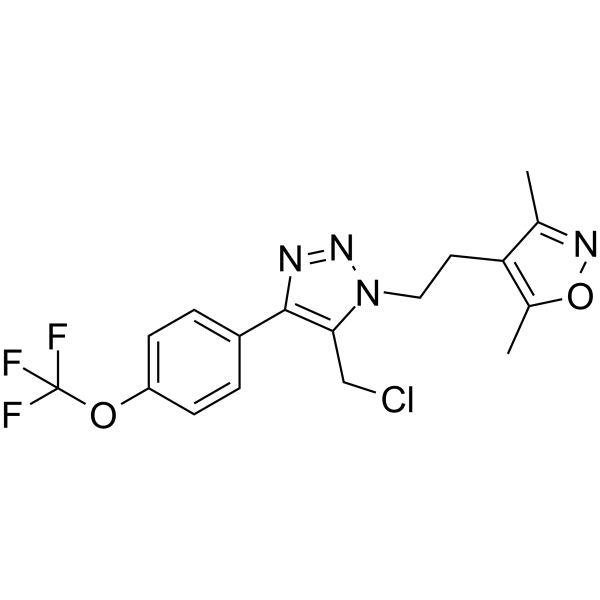
AA-CW236 is a MGMT (O6-methylguanine DNA methyltransferase) inhibitor. AA-CW236 targets MGMT active site Cys145 for covalent modification .
loading...
    loading...
Cat. No.: HY-125273
CAS No.: 2196245-98-2
DNS-pE is a 3-phosphoglycerate dehydrogenase (PHGDH) inhibitor with a Ki of 7.4 μM. DNS-pE selectively and irreversibly covalently modifies endogenous PHGDH in live mammalian cells, its vinyl sulfone moiety acts as a fluorescence quencher that becomes highly fluorescent upon covalent modification of PHGDH. DNS-pE can be used as a fluorescent dye for live-cell imaging .
loading...
    loading...
Cat. No.: HY-W012166
CAS No.: 42014-51-7
Synonyms: NHS-Bromoacetate
Research Areas:  

Infection

N-Succinimidyl bromoacetate (NHS-Bromoacetate) is a heterobifunctional crosslinking reagent, mainly used to modify the ɛ-amino group of lysine side chains. By covalently linking its bromoacetyl moiety to the ɛ-amino group of lysine in peptidomimetics, N-Succinimidyl bromoacetate enables their conjugation with thiol-modified nanoparticles via thioether bonds. N-Succinimidyl bromoacetate also performs bromoacetylation modification on carrier proteins, which then forms stable thioether bonds with the thiol groups of cysteine in peptides, thus efficiently preparing soluble peptide-protein conjugates with high substitution ratios. N-Succinimidyl bromoacetate can be used to prepare activated Sepharose derivatives for affinity chromatography, protein affinity labeling reagents, and peptide-protein immunogen conjugates with non-immunogenic linkages. N-Succinimidyl bromoacetate is applicable to studies related to HIV-1 infection and glioblastoma multiforme .
loading...
    loading...
Cat. No.: HY-D2871
CAS No.: 1866495-46-6
DAyne is a Dopamine (DA)-mimetic probe. DAyne covalently binds to proteins modified by dopamine oxidation products (e.g., dopaquinone, DQ) to form adducts. DAyne is promising for research of Parkinson’s disease (PD), particularly neurotoxicity, protein modification, and related pathways (e.g., endoplasmic reticulum stress, cytoskeletal instability) caused by dopamine dysregulation .
loading...
    loading...
Cat. No.: HY-W009048
CAS No.: 16069-36-6
Synonyms: DCH18C6; Perhydrodibenzo-18-crown-6
Dicyclohexano-18-crown-6-ether (DCH18C6) is an excellent strontium chelating agent. Dicyclohexano-18-crown-6-ether exhibits favorable extraction capacity and selectivity toward Sr (II). After chemical modification, Dicyclohexano-18-crown-6-ether is covalently bonded to an organosilicon matrix via co-condensation. DCH18C6-functionalized organosilicon materials are expected to be applied to the extraction and separation of strontium from radioactive waste liquid .
loading...
    loading...
Cat. No.: HY-148776
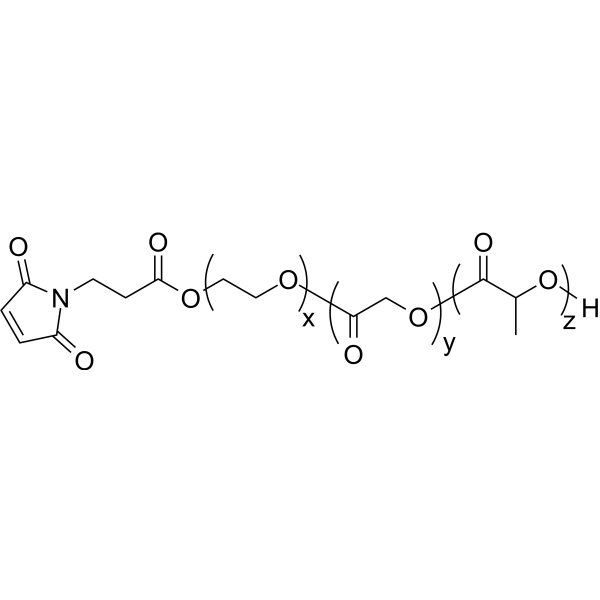
PLGA-PEG-MAL (20kDA-5.0kDA, LA:GA ratio 50:50) is a degradable amphiphilic polymer nanocarrier of poly (lactic acid-co-glycolic acid)-block-poly (ethylene glycol) (PLGA-PEG-Mal) that allows covalent modification of functional molecules. PLGA-PEG-MAL (20kDA-5.0kDA, LA:GA ratio 50:50) serves as a core polymer for nanoparticle synthesis, and also acts as a nanoparticle component for site-specific antibody conjugation to construct artificial antigen-presenting cells. PLGA-PEG-MAL (20kDA-5.0kDA, LA:GA ratio 50:50) is applicable for drug delivery-related research .
loading...
    loading...
Cat. No.: HY-179403
CAS No.: 2966924-23-0
Target:  

Ras

Research Areas:  

Cancer

KRASG12C IN-17 is an orally active covalent KRAS G12C inhibitor, showing strong inhibitory activity in KRAS G12C-mutant cancer cells (NCI-H23 IC50 = 0.7 nM; NCI-H358 IC50 = 0.5 nM). KRASG12C IN-17 covalently and irreversibly binds to KRAS G12C with > 96% modification efficiency in both GDP-bound and GMPPNP-bound conformations. KRASG12C IN-17 can be used for studies of KRAS-driven cancers, including colorectal cancer .
loading...
    loading...
Cat. No.: HY-148775
Purity:  ≥95.0%
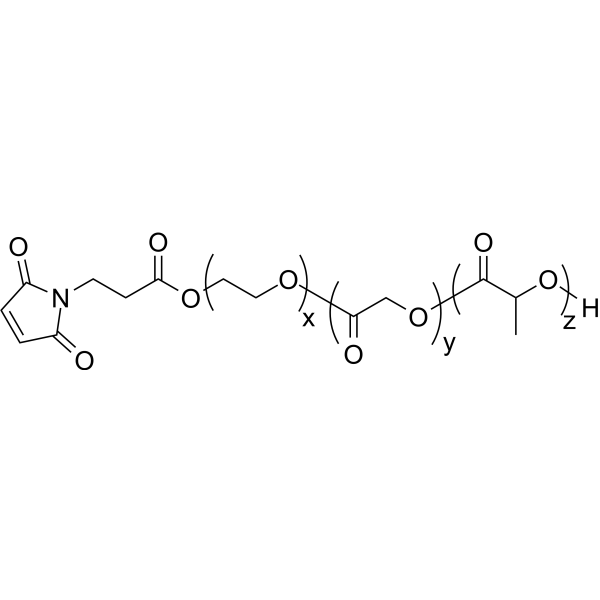
PLGA-PEG-MAL (60kDa-3.4kDa, LA:GA ratio 75:25) is a biodegradable amphipathic polymeric nanocarrier of poly (lactic-co-glycolic acid)-block-poly (ethylene glycol) (PLGA-PEG-Mal) that allows covalent modification of functional molecules. PLGA-PEG-MAL (60kDa-3.4kDa, LA:GA ratio 75:25) modified with Angiopep-2 can cross the blood-brain barrier and exhibits targeting selectivity for glioblastoma cells. PLGA-PEG-MAL (60kDa-3.4kDa, LA:GA ratio 75:25) can capture tumor-derived protein antigens, and exerts immunomodulatory effects when conjugated with anti-OX40 antibody; when used in combination with A2-CL/Dbait nanoparticles and radiotherapy, it prolongs survival time and reduces tumor volume in glioblastoma mouse models. PLGA-PEG-MAL (60kDa-3.4kDa, LA:GA ratio 75:25) can be used for studies related to bacterial wound infections and glioblastoma .
loading...
    loading...
Cat. No.: HY-W671129
CAS No.: 68930-68-7
Frenolicin B is a covalent enzyme inhibitor and an orally active antiparasitic agent, with an IC50 of 0.2 μM against human Prx1. Frenolicin B selectively inhibits Glutaredoxin 3 via covalent modification of the active-site cysteines Cys159/Cys261. Frenolicin B selectively inhibits Peroxiredoxin 1 via covalent modification of the active-site cysteines Cys83/Cys173. Frenolicin B can be used in research related to colon cancer, breast cancer, lung cancer and malaria .
loading...
    loading...
Cat. No.: HY-137028
CAS No.: 136904-69-3
Synonyms: PD157432
Target:  

EGFR

Research Areas:  

Cancer

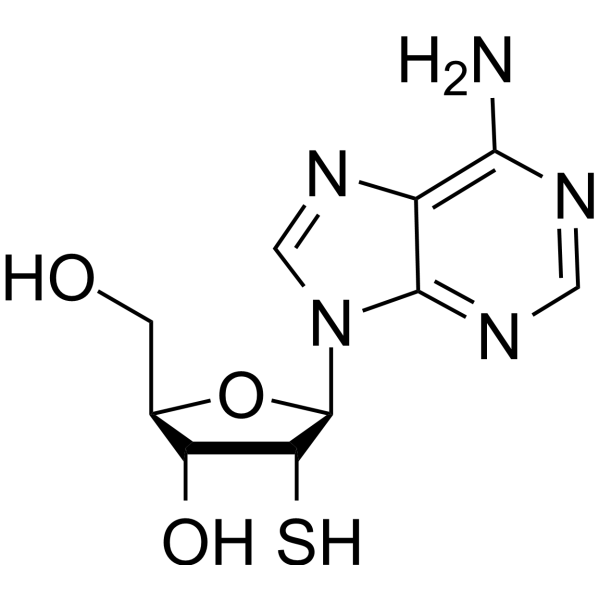
2'-Thioadenosine (PD157432) is a selective and irreversible inhibitor of ErbB-1 and ErbB-2, with an IC50 of 45 µM for ErbB-2. 2'-Thioadenosine covalently inactivates ErbB-1 via modification of a cysteine residue at the active site .
loading...
    loading...
Cat. No.: HY-176000
CAS No.: 307345-51-3
Target:  

Dipeptidyl Peptidase

Research Areas:  

Inflammation/Immunology Cancer

Sulphostin is a covalent inhibitor of dipeptidyl peptidase 4 (DPP4), dipeptidyl peptidase 9 (DPP9), and dipeptidyl peptidase 8 (DPP8) with IC50 values of 79, 1392, 6930 nM, respectively. Sulphostin causes phosphosulfamate modification, irreversibly inhibits the enzyme activity. Sulphostin can be used for inflammation and cancer study .
loading...
    loading...
Cat. No.: HY-163105
CAS No.: 3072778-26-5
Target:  

Microtubule/Tubulin

Research Areas:  

Cancer

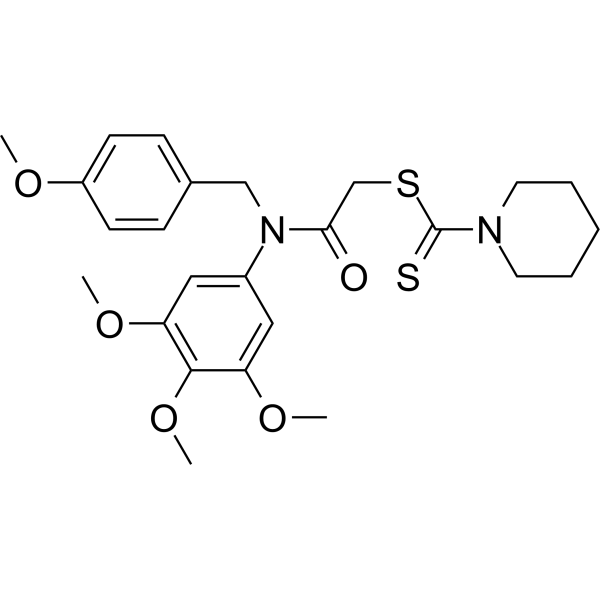
Tubulin/NEDDylation-IN-1 (compound C11) is a dual inhibitor of tubulin (Microtubule/Tubulin)-NEDDylation (IC50 for tubulin=2.40 μM), which has strong anti-proliferative activity. Neddylation is a protein post-translational modification that covalently tags the ubiquitin-like protein NEDD8 to target proteins. Tubulin/NEDDylation-IN-1 forms hydrogen bonds with residues of tubulin and E1 NEDD8 activating enzyme (NAE) through methoxy and dithiocarbamate groups and inhibits NEDDylation and microtubulin in an ATP-dependent manner. tube polymerization .
loading...
    loading...
Cat. No.: HY-L909
8,569 compounds

Covalent inhibitors are small molecules that can bind specifically to target proteins through covalent bonds and inhibit their biological functions. Although for a long time, covalent targeting has been playing a subordinate role in drug discovery, with an increasing number of reports on successful clinical applications of such drugs, the potential of these agents is now being acknowledged.

Covalent ligands rely on reactive groups (“warheads”), and new warheads are key to expanding the scope of covalent modalities. Through careful selection, we constructed a structural filter containing over 110 electrophilic groups. By analyzing the electrophilic fragments selected by the structural filter, we removed any molecules with trivial or undesirable structural features. Ultimately, we obtained 8,900 fragment molecules with covalent modification potential, which can target various reactive amino acid residues and can be used for fragment-based covalent drug discovery.

Cat. No.: HY-185225
CAS No.: 163069-97-4
Target:  

Drug Derivative

Research Areas:  

Others

cis-Vaccenic acid NHS ester is an N-hydroxysuccinimide (NHS)-activated ester derivative of cis-vaccenic acid (HY-113427A) (C18:1 n-7), which is commonly used as a fatty acid labeling reagent or covalent modification reagent .
loading...
    loading...
Cat. No.: HY-W451415
CAS No.: 122375-06-8
Research Areas:  

Others

NHS-PEG-NHS is a derivative of activated polyethylene glycol (PEG) that can modify functional groups on protein surfaces via covalent binding. NHS-PEG-NHS serves as a bioconjugation modification reagent for modifying proteins, enzymes, peptides and antibodies .
loading...
    loading...
Cat. No.: HY-181989
Research Areas:  

Cancer

CAIF is an irreversible, selective allosteric covalent inhibitor of ucosyltransferase 8 (FUT8) with an IC50 of 5.7 μM. CAIF inhibits core fucosylation modification in cancer cells, and suppresses the invasion and migration of cancer cells. CAIF is applicable for cancer research .
loading...
    loading...
Cat. No.: HY-L945
74 compounds

Sulfonyl fluoride (-SO₂F) overcomes the poor target selectivity of traditional covalent warheads that rely heavily on cysteine. With high stability and tunable electrophilicity under physiological conditions, it targets multiple nucleophilic residues including Lys, Tyr, Ser and His, offering expanded druggable space, lower off-target risks and prolonged efficacy. It is widely used in covalent inhibitors, molecular glues, PROTACs and chemical probes.

MCE has built a highly diverse sulfonyl fluoride fragment library with 1,162 structurally diverse, drug-like fragments. Designed for balanced reactivity, stability and compatibility, these molecules feature tunable electrophilicity, simple scaffolds and high derivatization potential. Combined with SuFEx click chemistry, the library enables efficient modular modification and rapid structure optimization.

Ideal for targeting non-cysteine residues, this library improves covalent screening and probe development efficiency, serving as a precise tool for early-stage covalent drug discovery and chemical biology research.

Cat. No.: HY-182744
Target:  

MDM-2/p53

Research Areas:  

Cancer

LLQ-45 is a covalent p53 Y220C mutant protein agonist with an EC50 of 24.97 μM. LLQ-45 activates the anti-tumor function of p53 Y220C through covalent modification, restores its DNA-binding ability and enhances its thermal stability. LLQ-45 selectively inhibits the proliferation of p53 Y220C mutant tumor cells, suppresses cell growth and upregulates the expression of CDKN1A. LLQ-45 can be used in studies related to p53 Y220C mutant cancers .
loading...
    loading...
Cat. No.: HY-W1052523
Target:  

Liposome

Research Areas:  

Others

DPPE-PEG2000-NH2 is a conjugate composed of DPPE, a PEG chain, and a terminal primary amino group (-NH2). The primary amino group in DPPE-PEG2000-NH2 can be covalently linked to functional groups such as carboxylic acids, NHS esters, and isocyanates for targeted modification of liposomes/nanoparticles.
loading...
    loading...
Cat. No.: HY-W1052523A
Target:  

Liposome

Research Areas:  

Others

DPPE-PEG3400-NH2 is a conjugate composed of DPPE, a PEG chain, and a terminal primary amino group (-NH2). The primary amino group in DPPE-PEG3400-NH2 can be covalently linked to functional groups such as carboxylic acids, NHS esters, and isocyanates for targeted modification of liposomes/nanoparticles.
loading...
    loading...

