


338 Results for "

repeat

" in MedChemExpress (MCE) Product Catalog:
Products (338)

338 Results for "repeat" in MCE Product Catalog:

Cat. No.: HY-12282
CAS No.: 1536200-31-3
Purity:  99.72%
Target:  

LRRK2

Research Areas:  

Neurological Disease

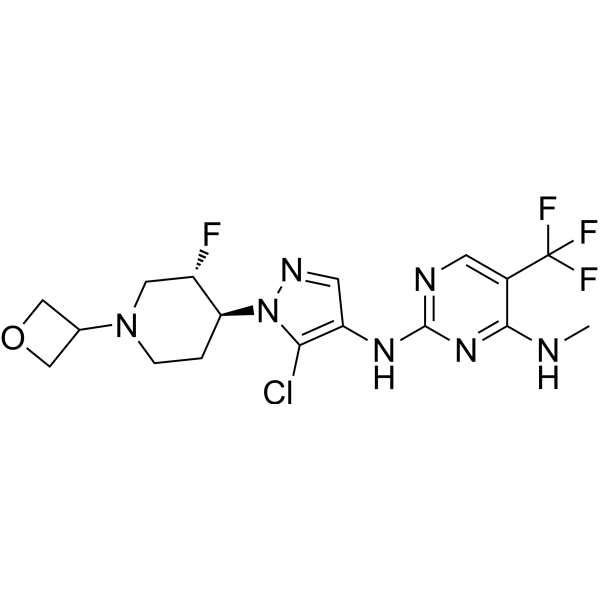
GNE-9605 is a potent, orally active, selective Leucine-rich repeat kinase 2 (LRRK2) inhibitor with an IC50 value of 18.7 nM. GNE-9605 inhibits LRRK2 Ser1292 autophosphorylation. GNE-9605 can be used in research of Parkinson's disease (PD) .
loading...
    loading...
Cat. No.: HY-P99899
CAS No.: 2052591-32-7
Synonyms: PR-1498487

Target:  

ADC Antibodies

Research Areas:  

Cancer

Samrotamab (PR-1498487) is a humanized IgG1-κ chimeric monoclonal antibody targeting LRRC15, with a Kd of 5.42 nM for human LRRC15. Samrotamab can be used to synthesize antibody-drug conjugates (ADC). Samrotamab disrupts the LRRC15-SCG5 signaling module, binds to a membrane-proximal conformational epitope within the C-terminal leucine-rich repeat region of LRRC15, and binds to the lateral edge of the LRR solenoid while leaving the canonical concave β-sheet surface fully exposed. Samrotamab reduces the viability of bladder cancer cells, inhibits clonogenic growth, impairs cell migration, and compromises cell invasion. Samrotamab induces compensatory upregulation of LRRC15 transcripts while suppressing the expression of SCG5 mRNA. Samrotamab is applicable to research related to urothelial carcinoma, sarcoma, osteosarcoma, and undifferentiated pleomorphic sarcoma .
loading...
    loading...
Cat. No.: HY-P99237
CAS No.: 1615692-28-8
Synonyms: MMUC 1206A

Target:  

Mucin

Research Areas:  

Others Cancer

Sofituzumab (MMUC 1206A) is an anti-MUC16 antibody with a Kd of 0.3-0.9 nM. Sofituzumab can bind multiple adjacent antibody molecules to the repeat sequences of the same MUC16 molecule. Sofituzumab exhibits no anti-tumor activity in the HPAC pancreatic adenocarcinoma xenograft model .
loading...
    loading...
Cat. No.: HY-153804
CAS No.: 864627-58-7
Purity:  99.68%
Synonyms: NCD
Target:  

Molecular Glues

Research Areas:  

Neurological Disease Cancer

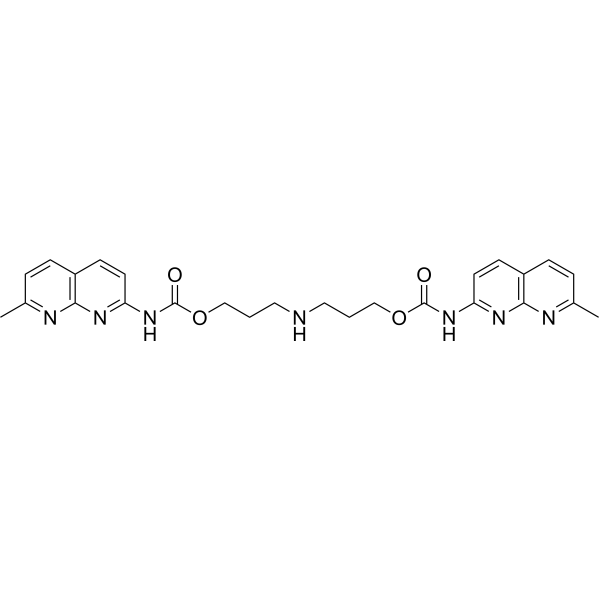
Naphthyridine carbamate dimer (NCD) is a molecular glue. Naphthyridine carbamate dimer induces designed structural changes in target functional DNA, thereby regulating its function. As a molecular glue, naphthyridine carbamate dimer stabilizes non-spontaneously formed GG homologous mismatched double-stranded DNA. Naphthyridine carbamate dimer reduces the formation of toxic RNA foci and regulates CGG repeat instability associated with fragile X syndrome and spinocerebellar ataxia type 31. Naphthyridine carbamate dimer can be used in research related to fragile X syndrome and spinocerebellar ataxia type 31 .
loading...
    loading...
Cat. No.: HY-153898
CAS No.: 1332175-56-0
Purity:  99.10%
Target:  

Amyloid-β

Research Areas:  

Neurological Disease

rTRD01 is an orally active, specific TDP-43 binder that targets the RRM1 and RRM2 domains of TDP-43. rTRD01 partially disrupts the interaction between TDP-43 and c9orf72 repeat RNA, but does not affect the binding of TDP-43 to canonical binding sequences. rTRD01 exhibits significant neuroprotective effects in zebrafish models, improves motor function and protects against paraquat (a widely used herbicide)-induced neurodegeneration, with no teratogenicity at high concentrations. rTRD01 is not a general antioxidant and cannot counteract Rotenone (HY-B1756)-induced neuronal death. rTRD01 can be used to study amyotrophic lateral sclerosis and other TDP-43 proteinopathies .
loading...
    loading...
Cat. No.: HY-P5979
CAS No.: 1071466-49-3
Target:  

LRRK2

Research Areas:  

Neurological Disease

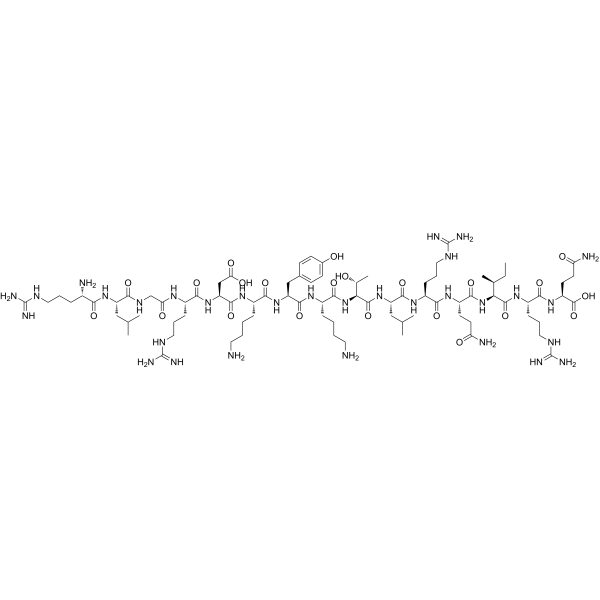
LRRKtide is a polypeptide substrate. LRRKtide is a specific phosphorylation substrate of LRRK2, a kinase associated with Parkinson's disease, and its phosphorylation site is a threonine residue. LRRKtide can be used for characterization of the catalytic properties of LRRK2, as well as studies on kinase activity and inhibition. LRRKtide is applicable to research related to Parkinson's disease .
loading...
    loading...
Cat. No.: HY-141878
CAS No.: 2767983-76-4
Research Areas:  

Neurological Disease

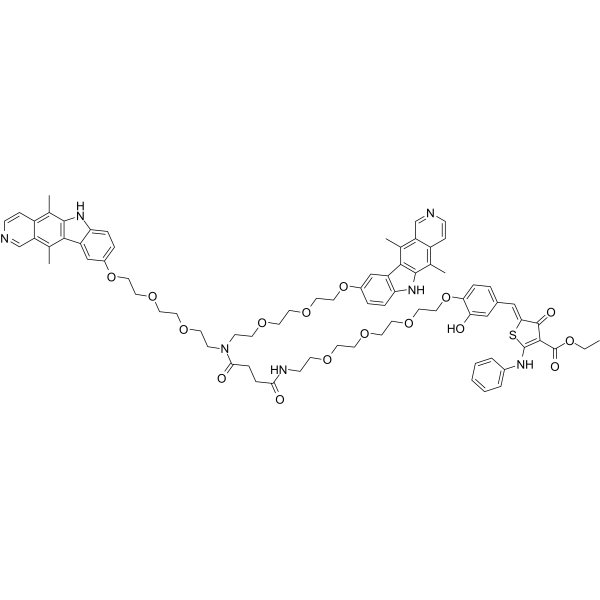
di-Ellipticine-RIBOTAC is a RNase recruiting chimera (RIBOTAC) degrader, capable of specifically binding and degrading expanded G4C2 RNA repeat (r(G4C2) exp). di-Ellipticine-RIBOTAC selectively binds the three-dimensional (3D) structure formed by r(G4C2) exp and that recruits an endogenous ribonuclease (RNase) to cleave r(G4C2) exp. di-Ellipticine-RIBOTAC selectively degrades the mutant chromosome 9 open reading frame 72 (C9orf72) allele and reduces quantities of toxic dipeptide repeat proteins (DPRs) translated from r(G4C2) exp. di-Ellipticine-RIBOTAC significantly improves the pathological phenotype of amyotrophic lateral sclerosis/ frontotemporal dementia (c9ALS/FTD) in cells and mouse models. di-Ellipticine-RIBOTAC can be used for the study of amyotrophic lateral sclerosis (ALS) and frontotemporal dementia (FTD) .
loading...
    loading...
Cat. No.: HY-P1985
CAS No.: 2408730-51-6
Target:  

Notch

Research Areas:  

Cardiovascular Disease Cancer

Notch 1 (Notch homolog 1, translocation-associated) can encode a member of the NOTCH family of proteins. Members of this Type I transmembrane protein family share structural characteristics including an extracellular domain consisting of multiple epidermal growth factor-like (EGF) repeats, and an intracellular domain consisting of multiple different domain types .
loading...
    loading...
Cat. No.: HY-P10100
Target:  

CDK

Research Areas:  

Others

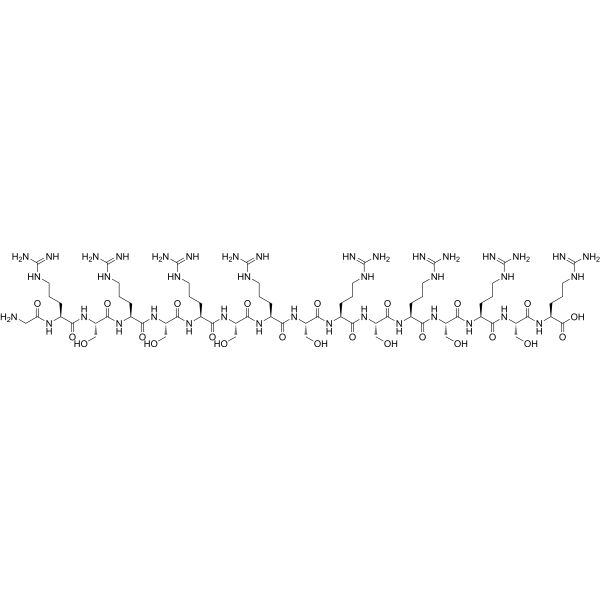
RS Repeat peptide is a substrate peptide for Clk1 .
loading...
    loading...
Cat. No.: HY-P4933
CAS No.: 2022995-68-0
Synonyms: Tau-F protein (255-314)
Target:  

Tau Protein

Research Areas:  

Neurological Disease

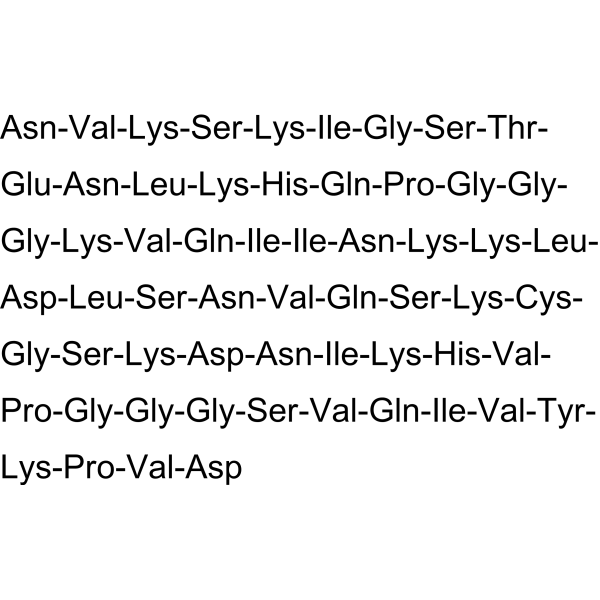
Tau Peptide (255-314) (Repeat 2 Domain) (human) (Tau-F protein (255-314)) is a polypeptide. Tau Peptide (255-314) (human) is the 255-314 fragment of Tau-F (also known as Tau-4, the 2N4 isoform), a major isoform of the Tau protein. Tau Peptide (255-314) (human) contains two core driving sequences for Tau aggregation, namely PHF6* (275-280, VQIINK) and PHF6 (306-311, VQIVYK), and spans the C-terminal half of repeat domain R1, the entire repeat domain R2, and the N-terminal half of repeat domain R3 within the microtubule-binding region (MTBR).
loading...
    loading...
Cat. No.: HY-157332
CAS No.: 3032761-31-9
Target:  

WDR5

Research Areas:  

Cancer

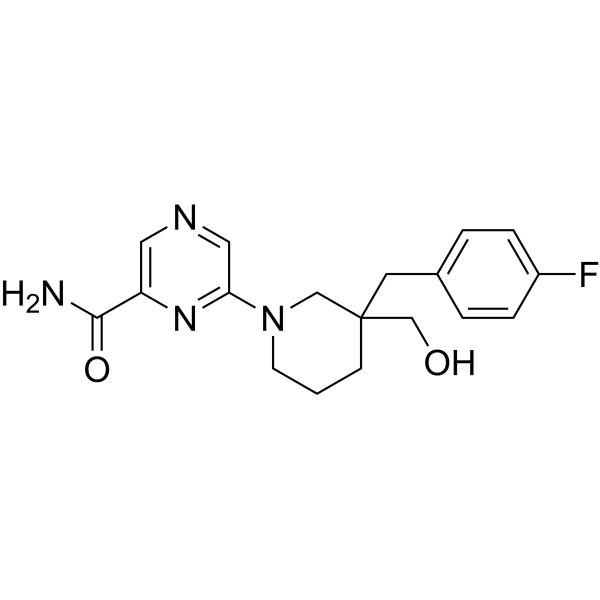
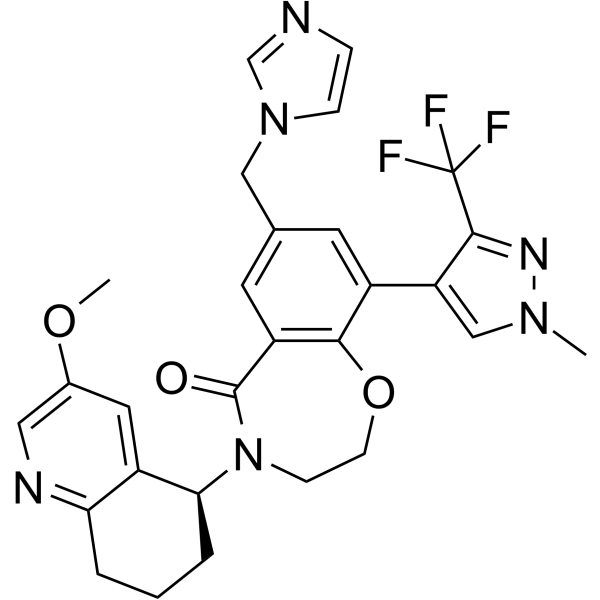
WDR5-IN-7 (Compound 22) is an orally bioavailable benzoxazepinone-based WD repeat domain 5 (WDR5) inhibitor. WDR5-IN-7 can be used for the research of anti-cancer .
loading...
    loading...
Cat. No.: HY-160227A
Research Areas:  

Inflammation/Immunology

ORN 06 (sodium) s a synthetic single-stranded U-rich RNA and contains 6 repeats of the UUGU sequence motif. The GU-rich oligoribonucleotides (ORNs) are able to stimulate TLR7 .
loading...
    loading...
Cat. No.: HY-P4808A
Target:  

Amyloid-β Autophagy

Research Areas:  

Neurological Disease

PHF6 (VQIVYK) TFA is a self-assembly sequence capable of initiating the full-length tau protein aggregation. PHF6 TFA is mapped to the third microtubule-binding repeat region of the tau protein .
loading...
    loading...
Cat. No.: HY-134562
CAS No.: 1622291-81-9
Target:  

LRRK2

Research Areas:  

Neurological Disease

PF-06371900 is a potent and highly selective leucine rich repeat kinase 2 (LRRK2) inhibitor .
loading...
    loading...
Cat. No.: HY-P1861A
Target:  

Inhibitory Antibodies

Research Areas:  

Inflammation/Immunology

Interphotoreceptor Retinoid Binding Protein Fragment (IRBP) TFA, a 20-residue peptide and a major pathogenic epitope, is present in the first homologous repeat of the interphotoreceptor retinoid binding protein peptide (IRBP 161–180), which can induce posterior uveitis (EAU) .
loading...
    loading...
Cat. No.: HY-100869
CAS No.: 2097887-20-0
Target:  

WDR5

Research Areas:  

Cancer

MM-589 is a potent inhibitor of WD repeat domain 5 (WDR5) and mixed lineage leukemia (MLL) protein-protein interaction. MM-589 binds to WDR5 with an IC50 of 0.90 nM and inhibits the MLL H3K4 methyltransferase activity with an IC50 of 12.7 nM .
loading...
    loading...
Cat. No.: HY-P2516
CAS No.: 330456-25-2
Target:  

Tau Protein

Research Areas:  

Neurological Disease

Tau Peptide (275-305) (Repeat 2 domain) is the Alzheimer's Tau fragment R2, corresponding to the second repeat unit of the microtubule-binding domain, which is believed to be pivotal to the biochemical properties of full tau protein. Tau Peptide (275-305) specifically coordinates with group IIB metal ions (Zn²⁺, Cd²⁺, Hg²⁺), which can induce their conformational changes and significantly promote their pathological accumulation. Tau Peptide (275-305) can be used to study the role of heavy metals in neurodegenerative diseases .
loading...
    loading...
Cat. No.: HY-19820
CAS No.: 739301-85-0
Target:  

Akt Ser/Thr Protease

Research Areas:  

Neurological Disease Cancer

NSC45586 is an inhibitor of pleckstrin homology domain and leucine-rich repeat protein phosphatase (PHLPP). NSC45586 targets the PP2C phosphatase domain in PHLPP1 and PHLPP2. NSC45586 can activate AKT in neurons .
loading...
    loading...
Cat. No.: HY-148353
CAS No.: 1527474-15-2
Target:  

LRRK2

Research Areas:  

Neurological Disease

PF-06455943 is a leucine rich repeat kinase 2 (LRRK2) inhibitor with IC50 value of 3 nM. PF-06455943 also is a PET radioligand. PF-06455943 can be used for the research of ADME/neuro PK characterization and Parkinson disease (PD) .
loading...
    loading...
Cat. No.: HY-P1917A
Target:  

Inhibitory Antibodies

Research Areas:  

Inflammation/Immunology

Uty HY Peptide (246-254) TFA, derived from the ubiquitously transcribed tetratricopeptide repeat gene on the Y chromosome (UTY) protein as an H-Y epitope, H-YD b, is a male-specific transplantation antigen H-Y .
loading...
    loading...

