
191 Results for "

tea

" in MedChemExpress (MCE) Product Catalog:
Products (191)

191 Results for "tea" in MCE Product Catalog:

1
1 Cited Publications
Cat. No.: HY-Y0319B1
CAS No.: 127-08-2
Potassium acetate, for molecular biology is an acetate salt commonly used as a deicing agent, food preservative and potassium source. Potassium acetate, for molecular biology can serve as an activator for preparing waste tea-based activated carbon, and is applied to the adsorption of Acid Blue 25 dye .
loading...
    loading...
1
1 Cited Publications
Cat. No.: HY-B1890
CAS No.: 7295-85-4
Synonyms: rel-Cianidanol; rel-Catechuic acid
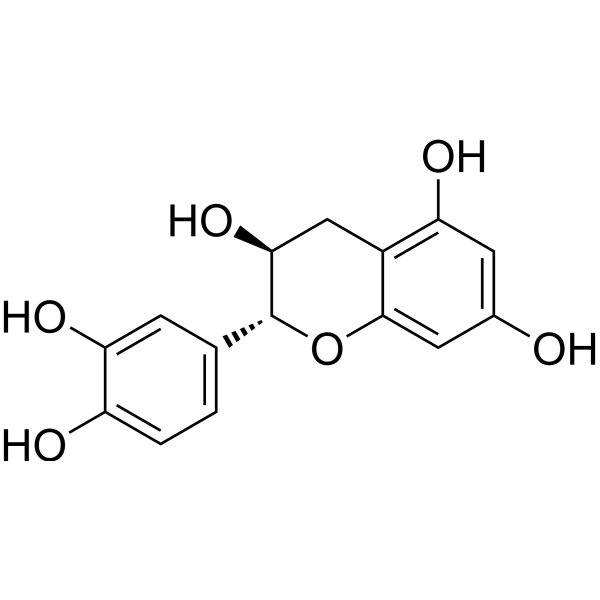
(±)-Catechin (rel-Cianidanol) is the racemate of the green tea polyphenol Catechin. Catechin has anticancer activity and induces apoptosis. (±)-Catechin has two forms, (+)-Catechin and its enantiomer (-)-Catechin. (+)-Catechin inhibits cyclooxygenase-1 (COX-1) with an IC50 of 1.4 μM. (-)-Catechin can effectively promote hBM-MSC adipocyte differentiation and increase adiponectin and PPARγ levels. (±)-Catechin has anti-tumor, anti-obesity, anti-diabetic, anti-cardiovascular, anti-infectious, hepatoprotective and neuroprotective effects .
loading...
    loading...
Cat. No.: HY-N0521
CAS No.: 3371-27-5
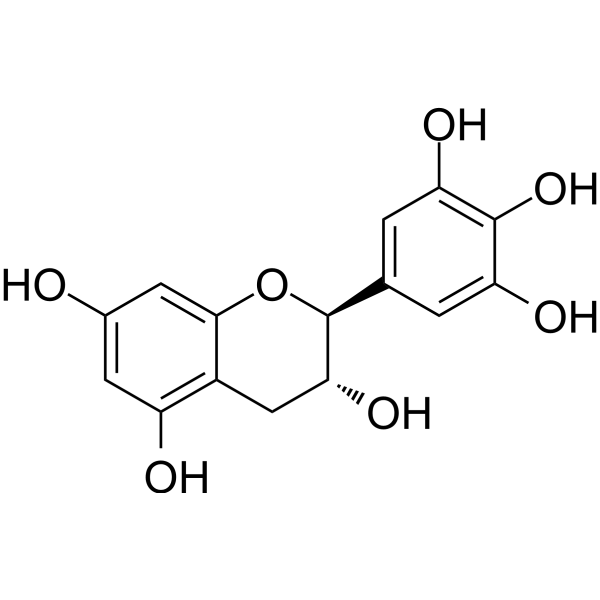
(-)-Gallocatechin, an epimer of (-)-Epigallocatechin (EGC) (HY-N0225), is contained in various tea products. (-)-Gallocatechin demonstrates antioxidant activity in vitro, including inhibition of LDL oxidation and DPPH radical scavenging .
loading...
    loading...
Cat. No.: HY-122924
CAS No.: 17365-11-6
Purity:  99.93%
Synonyms: 3-Galloylquinic acid
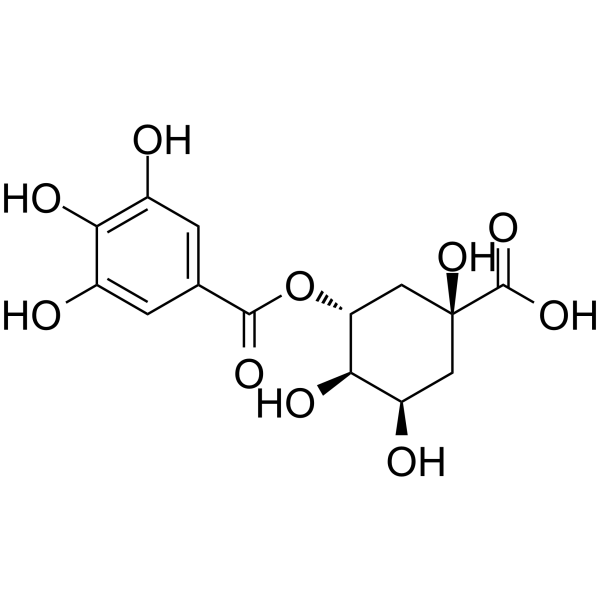
Theogallin (3-Galloylquinic acid) is an active ingredient in decaffeinated green tea extract. Theogallin has antidepressive and cognition enhancing effect .
loading...
    loading...
Cat. No.: HY-W041301
CAS No.: 15356-74-8
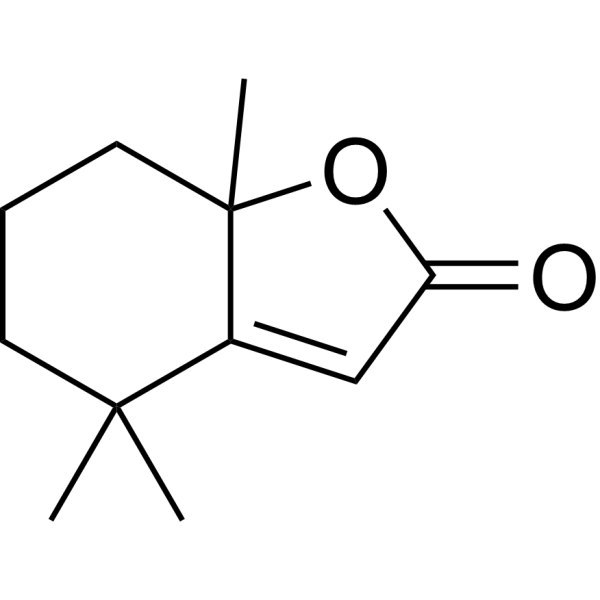
(±)-Dihydroactinidiolide is the dextrorotatory form of Dihydroactinidiolide (HY-107805). (±)-Dihydroactinidiolide has a strong, pleasant musky, tea-like and tobacco-like aroma and is mainly found in black tea, tobacco and fruits. (±)-Dihydroactinidiolide has antioxidant activity and can be derived from β-carotene.or light adaptation in Arabidopsis .
loading...
    loading...
Cat. No.: HY-N2605
CAS No.: 131573-90-5
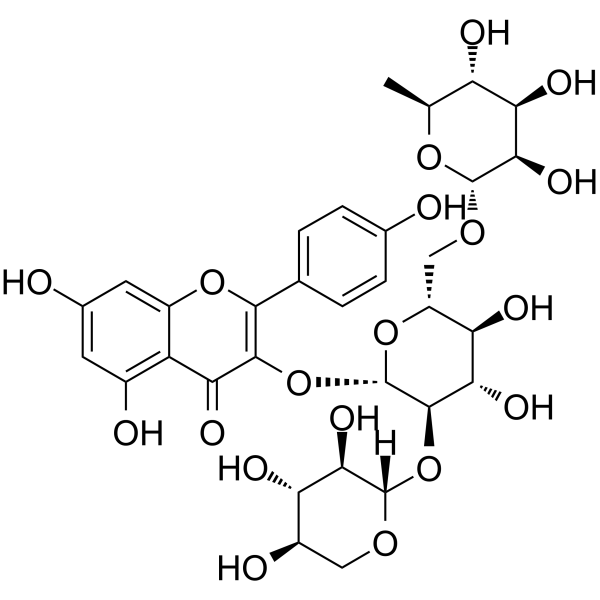
Camelliaside B is a flavonoid from the methanol extract of tea (Camellia oleifera) seed pomace .
loading...
    loading...
Cat. No.: HY-164247A
Research Areas:  

Cancer

UnyLinker 12 TEA is a universal linker that can be used for the synthesis of oligoribonucleotides .
loading...
    loading...
Cat. No.: HY-D2001A
TTO 488 NHS ester TEA is a new fluorescent marker based on the Rhodamine structure. It has strong absorption, high fluorescence quantum yield, high thermal stability and photochemical stability, and is suitable for single molecule detection and high-resolution microscopy. TTO 488 NHS ester TEA is an NHS ester derivative of ATTO 488 that can be used to label proteins or antibodies.
loading...
    loading...
Cat. No.: HY-W014408
CAS No.: 71-91-0
Synonyms: tea bromide
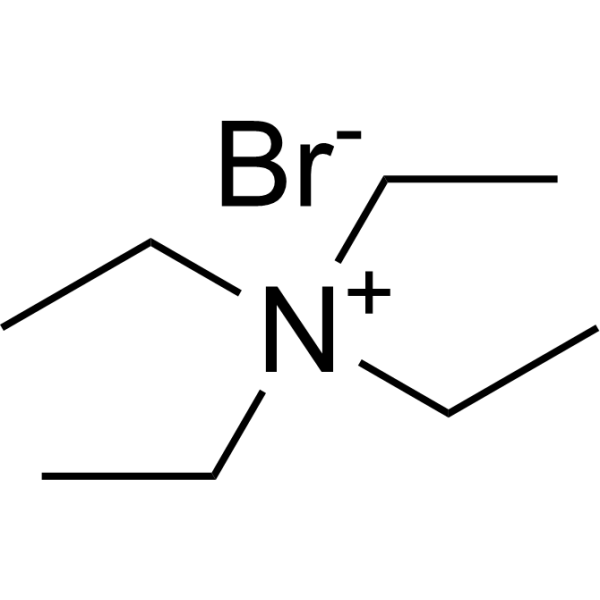
Tetraethylammonium bromide is a quaternary ammonium salt consisting of a positively charged tetraethylammonium cation and a negatively charged bromide anion. This compound is commonly used as a phase transfer catalyst in organic chemical reactions, facilitating the transfer of reactants between immiscible phases. It can also be used as a reagent for the synthesis of various organic compounds, an electrolyte in electrochemical experiments, and a source of tetraethylammonium ions in biochemical and pharmacological research.
loading...
    loading...
Cat. No.: HY-159627A
CAS No.: 1122489-97-7
Target:  

Bacterial

Research Areas:  

Infection

Met-AMS TEA (compound 50), a sulfamate analogue of methionyl adenylate, is a potent Escherichia coli methionyl-tRNA synthetase (MetRS) inhibitor (IC50 of 7 nM) .
loading...
    loading...
Cat. No.: HY-140307A
Target:  

PROTAC Linkers

Research Areas:  

Others

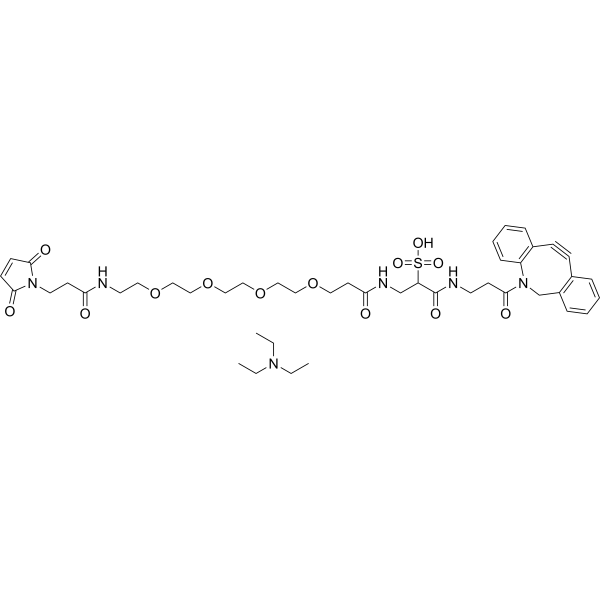
Sulfo DBCO-PEG4-Maleimide TEA is a PEG-based PROTAC linker that can be used in the synthesis of PROTACs . Sulfo DBCO-PEG4-Maleimide (TEA) is a click chemistry reagent, it contains a DBCO group that can undergo strain-promoted alkyne-azide cycloaddition (SPAAC) with molecules containing Azide groups.
loading...
    loading...
7-Deaza-7-propargylamino-dATP TEA
0 Images
7H-Pyrrolo[2,3-d]pyrimidin-4-amine, 5-(3-amino-1-propyn-1-yl)-7-[2-deoxy-5-O-[hydroxy[[hydroxy(phosphonooxy)phosphinyl]oxy]phosphinyl]-β-D-erythro-pentofuranosyl]- (TEA)
Cat. No.: HY-132143B
7-Deaza-7-propargylamino-dATP TEA is an analog of deoxyadenosine triphosphate (dATP) that can be used for gene sequencing .
loading...
    loading...
Cat. No.: HY-N15663
CAS No.: 224434-07-5
Synonyms: EGCG4′′Me
(-)-Epigallocatechin-3-O-(4-O-methyl)gallate is an orally active catechin derivative found in Taiwanese oolong tea. (-)-Epigallocatechin-3-O-(4-O-methyl)gallate can inhibit histamine release and exhibits anti-inflammation and anti-allergic effect. (-)-Epigallocatechin-3-O-(4-O-methyl)gallate can be used for the researches of immunology and inflammation, such as type I allergic .
loading...
    loading...
Cat. No.: HY-N13229
Target:  

Apoptosis

Research Areas:  

Others

Green Tea Extract is the extract of Green Tea, with content of 30% -98% Tea Polyphenol.
loading...
    loading...
Cat. No.: HY-110089
CAS No.: 1309871-50-8
Target:  

P2Y Receptor

Research Areas:  

Inflammation/Immunology

mrs 4062 (TEA) is a selective P2Y4 receptor agonist with an EC50 of 23 nM. mrs 4062 (TEA) has EC50s of 640 nM and 740 nM for P2Y2 and P2Y6, respectively .
loading...
    loading...
Cat. No.: HY-N0521R
CAS No.: 3371-27-5
(-)-Gallocatechin (Standard) is the analytical standard of (-)-Gallocatechin. This product is intended for research and analytical applications. (-)-Gallocatechin, an epimer of (-)-Epigallocatechin (EGC), is contained in various tea products. (-)-Gallocatechin has antioxidant activities. (-)-Gallocatechin is the main active component in green tea extract (HTP-GTE) responsible for its effect of improving age-related cognitive impairments involving protein kinase A (PKA) pathway .
loading...
    loading...
Cat. No.: HY-157504
CAS No.: 2638447-50-2
Research Areas:  

Others

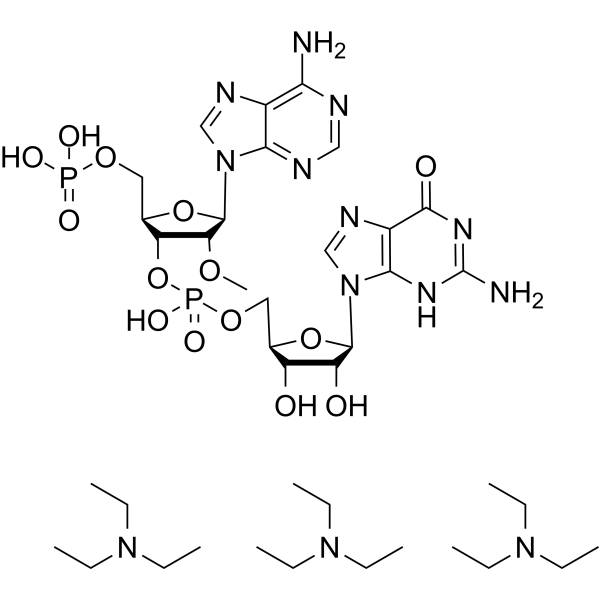
2’-O-Methyl-5’-O-phosphonoadenylyl-(3’→5’)-guanosine (TEA) is a trinucleotide cap analogue that regulates protein expression in living cells .
loading...
    loading...
loading...
    loading...
Cat. No.: HY-173189B
CAS No.: 72351-33-8
Synonyms: 2′,5′-ApApA tea; 2′,5′-trioligoadenylate tea; 5'-O-Triphosphoryladenylyl-(2'→5')-adenylyl-(2'→5')-adenosine tea
Target:  

RSV DNA/RNA Synthesis

Research Areas:  

Infection Cancer

2-5A TEA (2′,5′-ApApA TEA) is a 5'-triphosphorylated (2',5') oligoadenylate. When covalently linked to an antisense molecule complementary to the target sequence, 2-5A TEA activates RNase L, which subsequently degrades the target RNA bound to the 2-5A TEA chimera. 2-5A TEA can be used in research related to respiratory syncytial virus infection, colorectal adenocarcinoma and melanoma .
loading...
    loading...
Cat. No.: HY-135782A
Research Areas:  

Cancer

iso-ADP ribose TEA is the small-molecule ligand for protein nucleic acid modification, comprising parts of two consecutive ADP-ribosyl units within the PAR chain. iso-ADP ribose TEA specifically binds WWE, FHA and OB-fold domains, enabling PAR-dependent functional responses like ubiquitylation and supporting DNA damage signaling and repair. iso-ADP ribose TEA can be used for cancer research .
loading...
    loading...

