
39 Results for "

Cognitive behavior

" in MedChemExpress (MCE) Product Catalog:
Products (39)

39 Results for "Cognitive behavior" in MCE Product Catalog:

Cat. No.: HY-11056
CAS No.: 1010382-72-5
Target:  

Dopamine Receptor

Research Areas:  

Neurological Disease

PF-04363467 is a highly preferring D3R antagonist. PF-04363467 produces dose-dependent changes in the EEG profile of freely moving rats. PF-4363467 attenuates opioid drug-seeking behavior without concomitant D2 side effects. PF-04363467 can be used for the study of addiction, cognitive and mental illness .
loading...
    loading...
Cat. No.: HY-P3355
CAS No.: 2883747-74-6
Target:  

iGluR

Research Areas:  

Neurological Disease

p-fin4 is a peptide inhibitor of STEP Phosphatase-GluA2 AMPA receptor interaction with a Ki of 0.4 μM. p-fin4 restores the memory deficits and displays anxiolytic and antidepressant effects in a scopolamine-treated rat model. p-fin4 is a promising lead compound for novel cognitive enhancers and/or behavioral modulators .
loading...
    loading...
Cat. No.: HY-167824
CAS No.: 298198-52-4
Target:  

Endogenous Metabolite

Research Areas:  

Neurological Disease

SSR180711 is a potent and subtype-selective α7 agonist with activity in Alzheimer's disease and schizophrenia research. SSR180711 can be used to study subtypes of intracerebral hemorrhage associated with cerebral small vessel disease. SSR180711 shows potential in electrophysiological and behavioral studies to evaluate its effects on cognitive function. SSR180711 also has potential for studying cerebrovascular lesions and their effects .
loading...
    loading...
Cat. No.: HY-103552
CAS No.: 353229-59-1
Target:  

mGluR

Research Areas:  

Neurological Disease

LY487379 hydrochloride is a selective human mGluR2 positive allosteric modulator (PAM). LY487379 hydrochloride potentiates glutamate-stimulated [ 35S]GTPγS binding with EC50 values of 1.7 μM and >10 μM for mGlu2 and mGlu3 receptors respectively. LY487379 hydrochloride promotes cognitive flexibility and facilitates behavioral inhibition in a rat model. LY487379 hydrochloride can be used for schizophrenia research .
loading...
    loading...
Cat. No.: HY-171472
CAS No.: 171961-95-8
Target:  

Dopamine Receptor

Research Areas:  

Neurological Disease

A-86929 is a highly potent and selective dopamine D1 receptor agonist with a pKi value of 7.3. In the 6-OHDA (HY-B1081)-induced unilateral nigrostriatal lesion rat model, A-86929 significantly induces rotational behavior. It also improves motor function in the MPTP (HY-15608)-induced Parkinson's disease marmoset model. Additionally, A-86929 demonstrates potential therapeutic value in reducing cocaine-seeking behavior in rats and reversing Haloperidol (HY-14538)-induced cognitive deficits in rhesus monkeys. A-86929 can be used for research in neurological disorders .
loading...
    loading...
Cat. No.: HY-P3354
Target:  

iGluR

Research Areas:  

Neurological Disease

p3Ysh-3 is a peptide inhibitor of STEP Phosphatase-GluA2 AMPA receptor interaction with a Ki of 1.09 μM. p3Ysh-3 restores the memory deficits and displays anxiolytic and antidepressant effects in a scopolamine-treated rat model. p3Ysh-3 is a promising lead compound for novel cognitive enhancers and/or behavioral modulators .
loading...
    loading...
Cat. No.: HY-148115
CAS No.: 1354908-17-0
Target:  

LPL Receptor

Research Areas:  

Inflammation/Immunology

S1p receptor agonist 2 (compound 1) is an agonist of S1P5 receptor, exhibits selectivity over the S1P1 and/or S1P3 receptors. S1p receptor agonist 2 can be used for endogenous SIP signaling system research, and alleviating or preventing CNS disorders research, such as neurodegenerative disorders .
loading...
    loading...
Cat. No.: HY-165492
CAS No.: 103233-65-4
OPC-14117 is an orally active superoxide radical scavenger that can cross the blood-brain barrier. OPC-14117 inhibits the oxidative stress cascade reaction, significantly reducing the increase in tissue osmotic pressure and alleviating brain edema in the brain contusion model. OPC-14117 blocks the NF-κB-dependent apoptotic pathway in the striatum neuron apoptosis model induced by Quinolinic acid (HY-100807). OPC-14117 can reduce the necrotic volume, protect hippocampal CA3 neurons and restore cognitive function. OPC-14117 can be used to study secondary brain injury and improve neurological prognosis .
loading...
    loading...
Cat. No.: HY-W017424R
CAS No.: 136-95-8
2-Aminobenzothiazole (Standard) is the analytical standard of 2-Aminobenzothiazole. This product is intended for research and analytical applications. 2-Aminobenzothiazole acts as a caspase 3/7 activator, an anticancer cytotoxic agent, and also exhibits neurotoxicity. 2-Aminobenzothiazole drives the apoptotic pathway by activating caspase 3/7, induces mitochondrial inner membrane depolarization, and triggers both early and late apoptosis via a caspase-dependent pathway. In zebrafish models, 2-Aminobenzothiazole induces oxidative damage in brain tissues and inhibits genes related to GABA and 5-HT synthesis pathways. Long-term exposure to 2-Aminobenzothiazole impairs motor ability, social behavior, anxiety-like state and cognitive function. 2-Aminobenzothiazole can be used in studies of human laryngeal carcinoma and related neurotoxicity .
loading...
    loading...
Cat. No.: HY-120657R
CAS No.: 1481636-31-0
Flumethrin (Standard) is the analytical standard of Flumethrin. This product is intended for research and analytical applications. 9-PAHSA is an orally active endogenous GPR120 agonist (EC50=18 μM). 9-PAHSA significantly inhibits LPS-induced inflammatory responses by blocking the NF-κB pathway. 9-PAHSA induces adipocyte browning, enhances glucose uptake and reduces lipid accumulation, while improving mitochondrial function and the survival rate of steatotic hepatocytes. In terms of neuroprotection, 9-PAHSA regulates the expression of REST and BDNF in the prefrontal cortex of diabetic mice, and effectively prevents spatial working memory deficits and abnormal social behaviors. 9-PAHSA does not directly regulate insulin secretion or improve systemic insulin sensitivity, and possesses specific anti-inflammatory, metabolic regulatory and neuroprotective properties. 9-PAHSA can be used in the research of diabetes-related cognitive impairment, obesity and non-alcoholic fatty liver disease .
loading...
    loading...
Cat. No.: HY-120657S1
CAS No.: 2748208-06-0
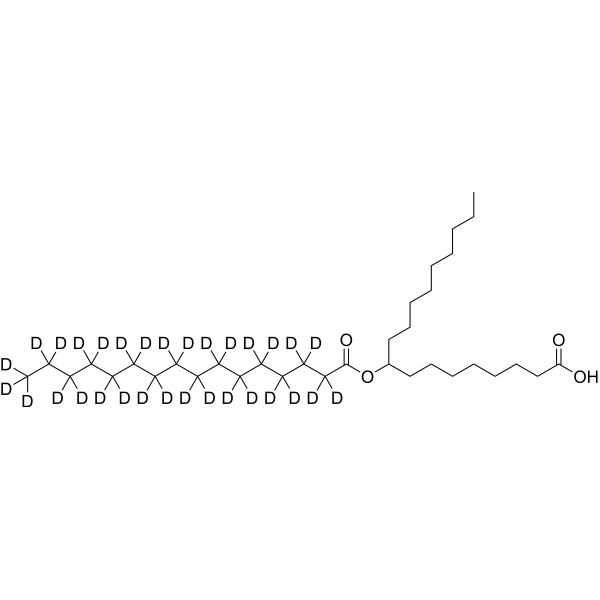
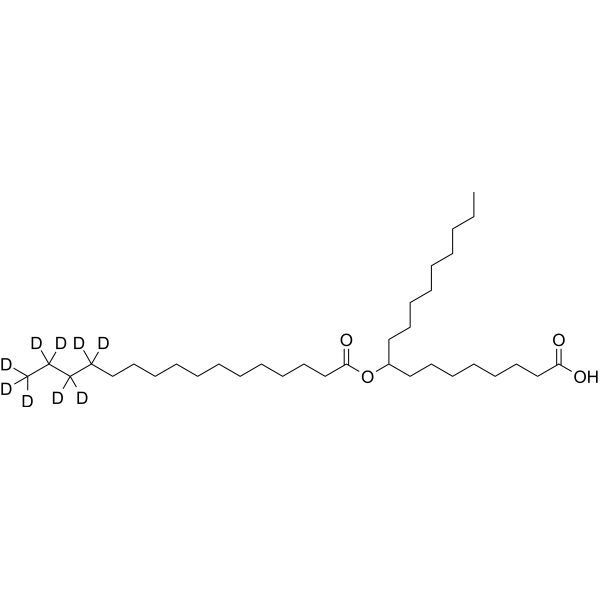
9-PAHSA-d31 is the deuterium labeled 9-PAHSA. 9-PAHSA is an orally active endogenous GPR120 agonist (EC50=18 μM). 9-PAHSA significantly inhibits LPS-induced inflammatory responses by blocking the NF-κB pathway. 9-PAHSA induces adipocyte browning, enhances glucose uptake and reduces lipid accumulation, while improving mitochondrial function and the survival rate of steatotic hepatocytes. In terms of neuroprotection, 9-PAHSA regulates the expression of REST and BDNF in the prefrontal cortex of diabetic mice, and effectively prevents spatial working memory deficits and abnormal social behaviors. 9-PAHSA does not directly regulate insulin secretion or improve systemic insulin sensitivity, and possesses specific anti-inflammatory, metabolic regulatory and neuroprotective properties. 9-PAHSA can be used in the research of diabetes-related cognitive impairment, obesity and non-alcoholic fatty liver disease .
loading...
    loading...
Cat. No.: HY-144026S
CAS No.: 1809222-43-2
9-PAHSA-d9 is the deuterium labeled 9-PAHSA (HY-120657). 9-PAHSA is an orally active endogenous GPR120 agonist (EC50=18 μM). 9-PAHSA significantly inhibits LPS-induced inflammatory responses by blocking the NF-κB pathway. 9-PAHSA induces adipocyte browning, enhances glucose uptake and reduces lipid accumulation, while improving mitochondrial function and the survival rate of steatotic hepatocytes. In terms of neuroprotection, 9-PAHSA regulates the expression of REST and BDNF in the prefrontal cortex of diabetic mice, and effectively prevents spatial working memory deficits and abnormal social behaviors. 9-PAHSA does not directly regulate insulin secretion or improve systemic insulin sensitivity, and possesses specific anti-inflammatory, metabolic regulatory and neuroprotective properties. 9-PAHSA can be used in the research of diabetes-related cognitive impairment, obesity and non-alcoholic fatty liver disease .
loading...
    loading...
Cat. No.: HY-103111R
CAS No.: 1215566-78-1
Research Areas:  

Neurological Disease

MMPIP hydrochloride (Standard) is the analytical standard of MMPIP hydrochloride (HY-103111). This product is intended for research and analytical applications. MMPIP hydrochloride is an allosteric metabotropic glutamate receptor 7 (mGluR7) selective antagonist (KB values 24 -30 nM). MMPIP hydrochloride acts as a pharmacological tool for elucidating the roles of mGluR7 on central nervous system functions. MMPIP hydrochloride alleviates pain and normalizes affective and cognitive behavior in neuropathic mice .
loading...
    loading...
Cat. No.: HY-115511
CAS No.: 1370527-16-4
Research Areas:  

Neurological Disease

PyP-1 is a highly selective and potent PDE10 inhibitor. PyP-1 has a strong inhibitory effect on human PDE10A2 enzyme (Ki = 0.32 nM). PyP-1 can improve cognitive behavior. PyP-1 commonly used in research on conditions such as schizophrenia and cognitive impairment .
loading...
    loading...
Cat. No.: HY-181703
CAS No.: 1415931-33-7
4-PSQ is an orally active neuroprotective agent. 4-PSQ possesses both antioxidant and anti-inflammatory activities. 4-PSQ improves cognitive impairment and depressive- and anxiety-like emotional abnormalities in mice by regulating the activity of Na +, K +-ATPase, the NFκB signaling pathway, and the expression of p21. 4-PSQ can be used for the research of neurological diseases .
loading...
    loading...
Cat. No.: HY-183489
CAS No.: 1357266-44-4
TAAR1-agonist-4 is a TAAR1 agonist and oral hypoglycemic agent with an EC50 of 0.0046 μM for TAAR1. TAAR1-agonist-4 alleviates antipsychotic-related metabolic side effects, improves negative and cognitive symptoms, and reduces drug abuse behaviors. TAAR1-agonist-4 is applicable to research on schizophrenia, acute manic episodes associated with bipolar disorder, and glucose intolerance .
loading...
    loading...
Cat. No.: HY-108942
CAS No.: 851087-60-0
ASP5854 is an orally active, blood-brain barrier permeable adenosine A1/A2a dual receptor antagonist. ASP5854 blocks receptor activity and agonist-induced intracellular calcium elevation, and exhibits the characteristic of slow dissociation from striatal A2a receptors in primates. ASP5854 reverses catalepsy, enhances cognitive ability, improves motor function and exerts neuroprotective effects, while also alleviating dyskinesia and increasing contralateral turning behavior. ASP5854 is mainly used in studies related to ischemic stroke and Parkinson's disease .
loading...
    loading...
Cat. No.: HY-125447
CAS No.: 145941-07-7
Artemisinin B is an orally active sesquiterpene natural product with anti-neuroinflammatory activity, which can be found in Artemisia annua Linn.. Artemisinin B suppresses the TLR4-MyD88-NF-κB signaling pathway by reducing the protein levels of TLR4 and MyD88, as well as inhibiting the mRNA expression of NF-κB p65. Artemisinin B reduces the expression of pro-inflammatory cytokines and attenuates synaptic loss, which can be used for the research of cognitive and behavioral impairments in Alzheimer's disease. Artemisinin B shows no cytotoxicity against human cardiomyocytes and exhibits very weak binding to hERG, suggesting its potential for cardioprotective property research .
loading...
    loading...
Cat. No.: HY-186105A
CAS No.: 1597443-57-6
Research Areas:  

Neurological Disease

(-)-P7C3-S243 is an orally active, blood-brain barrier permeable neuroprotective agent. (-)-P7C3-S243 binds to μ-opioid Receptor and TSPO. (-)-P7C3-S243 inhibits the premature apoptosis death of newborn hippocampal neurons, protects mature nigral dopaminergic neurons, promotes neuronal survival and prevents cognitive impairment. (-)-P7C3-S243 ameliorates depression-like behaviors in rat models. (-)-P7C3-S243 is applicable to research related to Parkinson's disease and Alzheimer's disease .
loading...
    loading...

