




61 Results for "

complement activation

" in MedChemExpress (MCE) Product Catalog:
Products (61)

61 Results for "complement activation" in MCE Product Catalog:

Art. -Nr.: HY-P990025
CAS. Nr.: 2579031-19-7
Synonyms: ARGX-117

Target:  

Complement System

Forschungsgebiete:  

Inflammation/Immunology

Empasiprubar (ARGX-117) is a humanized inhibitory monoclonal antibody targeting complement C2. Empasiprubar binds to the Sushi-2 domain of C2, preventing the formation of C3 pre convertase and inhibiting the activation of classical and lectin pathways upstream of C3 activation. Empasiprubar can prevent complement mediated autoimmune hemolytic anemia and antibody mediated organ transplant rejection. Empasiprubar can prevent neuroglial lymphoconjunctival injury in GM1 antibody mediated mouse models .
loading...
    loading...
Art. -Nr.: HY-141667
CAS. Nr.: 33984-50-8
Reinheit:  98.93%
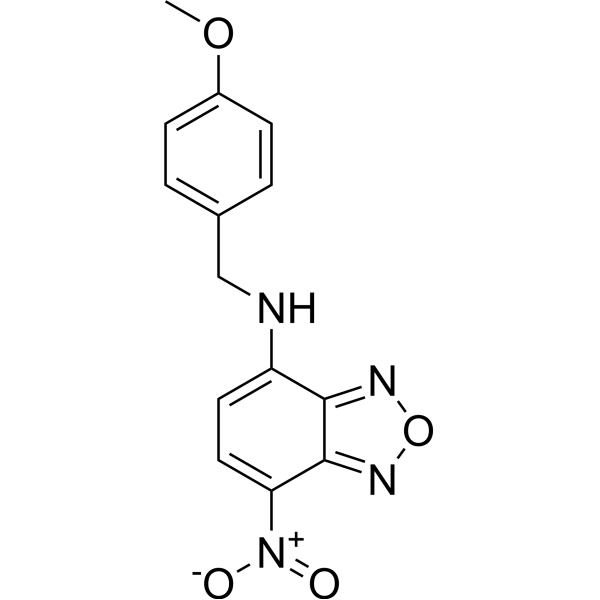
Synonyms: 7-(p-Methoxybenzylamino)-4-nitrobenz-2,1,3-oxadiazole
Target:  

Fluorescent Dye

Forschungsgebiete:  

Others

MBD (7-(p-Methoxybenzylamino)-4-nitrobenz-2,1,3-oxadiazole) is a hydrophobic fluorescent probe that is used to detect conformational changes of the complement subcomponent C1r during its autoactivation process. MBD acts by selectively binding to exposed hydrophobic regions on the C1r macromolecule. The detection wavelength of MBD in the free unbound state is Ex/Em = 490/560 nm, whereas the maximum emission wavelength of MBD upon binding to C1r exhibits a blue shift of approximately 20 nm relative to 560 nm .
loading...
    loading...
Art. -Nr.: HY-P99757
CAS. Nr.: 2278244-14-5
Synonyms: Hu3F8-BsAb

Target:  

CD3

Forschungsgebiete:  

Cancer

Nivatrotamab (Hu3F8-BsAb) is a bispecific antibody targeting GD2 and CD3, with KD values of 5.8 nM and 194 nM, respectively. Nivatrotamab redirects T cells to tumor sites and activates immune synapses, thereby mediating antibody-dependent T cell-mediated cytotoxicity. Nivatrotamab induces specific tumor cytotoxicity, stimulates the release of Th1 cytokines and promotes immune cell infiltration into tumors. In addition, its Fc segment deglycosylation design effectively prevents complement activation and cytokine storm. Nivatrotamab can be widely used in research related to various solid tumors, including melanoma, neuroblastoma, osteosarcoma, small cell lung cancer, breast cancer, Ewing's sarcoma, colon cancer, ovarian cancer and rhabdomyosarcoma .
loading...
    loading...
Art. -Nr.: HY-160901
CAS. Nr.: 1349637-14-4
Target:  

Complement System

Forschungsgebiete:  

Inflammation/Immunology

CP-289,503 is an inhibitor of the complement C5a receptor with an IC50 of 1 μM. C5a acts as an activator of leukocytes and phagocytes during complement system activation. The C5a receptor can bind to C5a, which can stimulate the upregulation of cell surface integrins and degranulation of inflammatory cells, leading to endothelial cell damage. C5a receptor inhibitors can block C5a signaling and inhibit a variety of inflammatory diseases .
loading...
    loading...
Art. -Nr.: HY-P1121A
CAS. Nr.: 1435781-74-0
Forschungsgebiete:  

Inflammation/Immunology

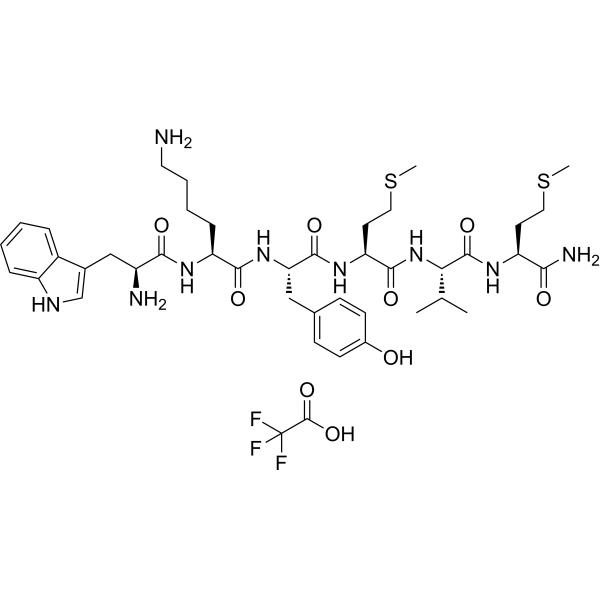
WKYMVM-NH2 TFA is a potent N-formyl peptide receptor (FPR1) and FPRL1/2 agonist, also activates several leukocyte effector functions such as chemotaxis, mobilization of complement receptor-3, and activation of the NADPH oxidase .
loading...
    loading...
Art. -Nr.: HY-P991513

Target:  

TNF Receptor

Forschungsgebiete:  

Inflammation/Immunology

BI-655064, a humanised anti-CD40 antibody with has fragment crystallisable (Fc) regions with two mutations that prevent Fc-mediated antibody-dependent or complement-mediated cellular cytotoxicity and platelet activation. BI-655064 can be used for the study of autoimmune disease, such as lupus nephritis and rheumatoid arthritis (RA) .
loading...
    loading...
Art. -Nr.: HY-46846
CAS. Nr.: 69011-20-7
Forschungsgebiete:  

Others

Styrene-divinylbenzene sulfonated copolymer is a cation exchange resin prepared from sulfonic acid group-containing microporous styrene/divinylbenzene (DVB) copolymer. Styrene-divinylbenzene sulfonated copolymer serves as the core matrix material for most bilirubin adsorbents. It also acts as a hydrophilic cell immobilization carrier, whose porous structure provides an ideal environment for microbial growth and biochemical reactions .
loading...
    loading...
Art. -Nr.: HY-P10868
CAS. Nr.: 2056232-82-5
Synonyms: RLS-0071
Pegtarazimod (RLS-0071) is a dual-target anti-inflammatory peptide that exerts its effects by simultaneously regulating the complement system and neutrophil-associated inflammatory pathways. Pegtarazimod reduces ROS production both in vitro and in vivo, and decreases the level of neutrophil elastase, a marker of neutrophil extracellular traps (NETs), in vivo, thereby alleviating inflammatory responses. Pegtarazimod significantly improves the survival rate of mice in multiple in vivo models of acute graft-versus-host disease (aGVHD). Pegtarazimod inhibits the activation of the C1 complex, reduces the herpes zoster-like spread of herpes simplex virus type 1 skin infection, and improves the survival rate of infected mice . Pegtarazimod can be used in research related to acute graft-versus-host disease, acute pulmonary diseases, and skin herpes simplex virus type 1 infection .
loading...
    loading...
Art. -Nr.: HY-P10827A
Target:  

Complement System

Forschungsgebiete:  

Inflammation/Immunology

PIC1 PA TFA is the trifluoroacetate salt form of PIC1 PA (HY-P10827). PIC1 PA TFA is a 15-amino acid peptide that is a potent PIC1 analog that inhibits classical complement activation .
loading...
    loading...
Art. -Nr.: HY-P1345
CAS. Nr.: 869988-94-3
Target:  

Complement System

Forschungsgebiete:  

Neurological Disease Endocrinology

TLQP-21, a VGF-derived peptide endowed of endocrine and extraendocrine properties, is a potent G-protein-coupled receptor complement-3a receptor 1 (C3aR1) agonist (EC50: mouse TLQP-21=10.3 μM; human TLQP-21=68.8 μM). TLQP-21 activates C3aR1 to induce an increase of intracellular Ca 2+. TLQP-21 is used for the research in regulation of nociception and other relevant physiologic functions .
loading...
    loading...
Art. -Nr.: HY-P10827
CAS. Nr.: 1356469-36-7
Target:  

Complement System

Forschungsgebiete:  

Inflammation/Immunology

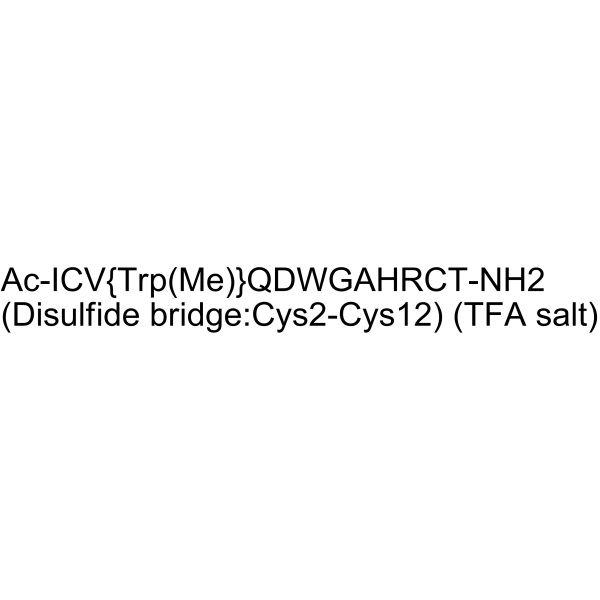
PIC1 PA, a 15 amino-acid peptide, is a potent PIC1 analog that inhibits classical pathway mediated complement activation. PIC1 PA functionally disrupts the C1s-C1r-C1r-C1s/MASPs interaction with collagen-like region (CLR) of C1q/MBL, respectively. PIC1 PA specifically binds to the CLR of C1q and bounds to purified C1q with a mean equilibrium dissociation constant (KD) of 33.3 nM .
loading...
    loading...
Art. -Nr.: HY-153406
CAS. Nr.: 956139-30-3
Reinheit:  99.64%
Forschungsgebiete:  

Others

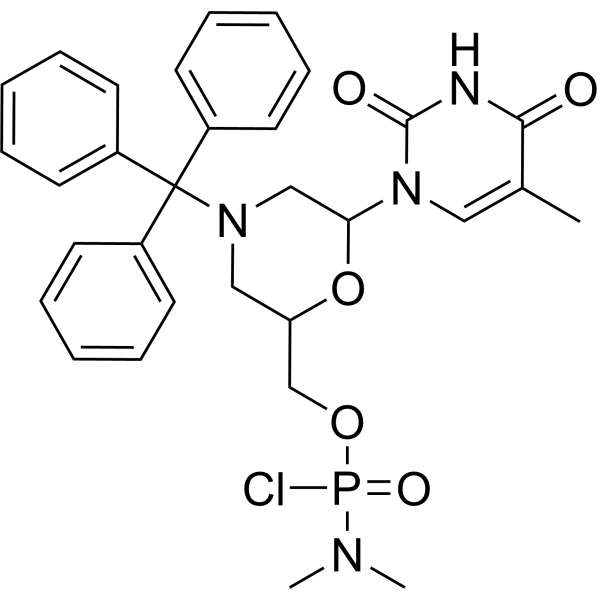
Activated T Subunit can be used in the synthesis of exon jumping oligomer conjugates. The oligomer conjugates complement selected target sites in the human anti-muscular atrophy protein gene and induce exon 51 jumping. Activated T subunit can be used for research of muscular dystrophy .
loading...
    loading...
Art. -Nr.: HY-153405
CAS. Nr.: 1155309-89-9
Reinheit:  ≥95.0%
Forschungsgebiete:  

Others

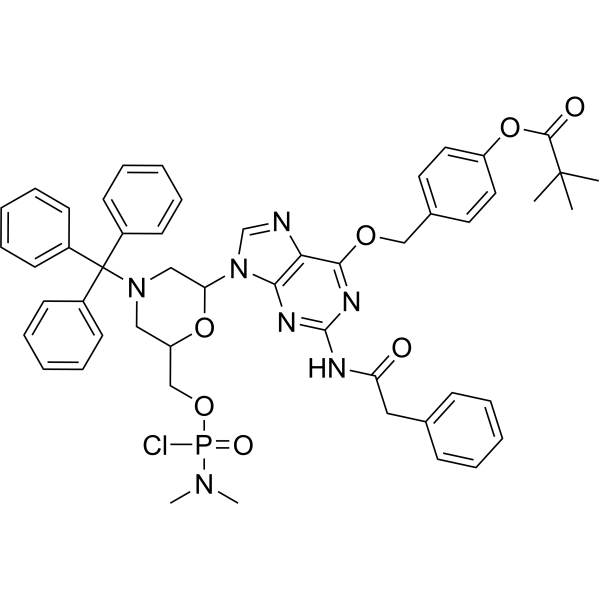
Activated DPG Subunit can be used in the synthesis of exon jumping oligomer conjugates. The oligomer conjugates complement selected target sites in the human anti-muscular atrophy protein gene and induce exon 51 jumping. It can be used for research of muscular dystrophy .
loading...
    loading...
Art. -Nr.: HY-W130878
CAS. Nr.: 1806-26-4
4-Octylphenol is a hormone disruptor that has gender-specific effects on male reproductive cells, significantly reducing the mitotic index and the number of spermatogonia. 4-Octylphenol can cause inflammatory damage to fish gills by activating the complement system through the C3a/C3aR axis and the C5a/C5aR1 axis, this leads to complement activation and causes immune suppression due to the imbalance between Th1/Th2 cells and regulatory T cells (Treg)/Th17 cells, as well as inflammatory damage via the Toll-like receptor 7 (Toll-like Receptor (TLR))/IκBα/NF-κB pathway .
loading...
    loading...
Art. -Nr.: HY-153098
ARC186 (sodium) is an unconjugated 40KDa PEG aptamer with a sequence identical to HY-147080 Avacincaptad pegol (ARC1905) sodium. ARC1905 is highly potent complement inhibitors that function by blocking the convertase-catalyzed activation of C5.
loading...
    loading...
Art. -Nr.: HY-P3204A
Synonyms: AL-78898A TFA
Target:  

Complement System

Forschungsgebiete:  

Metabolic Disease

POT-4 TFA (AL-78898A TFA), a Compstatin derivative, is a potent inhibitor of complement factor C3 activation. POT-4 TFA can be used for age-related macular degeneration research .
loading...
    loading...
Art. -Nr.: HY-P991886
Target:  

Complement System

Forschungsgebiete:  

Neurological Disease

ANX-M1 is a blood-brain barrier-permeable anti-C1q antibody. ANX-M1 can slow down the progression of retinal degeneration following photo-oxidative damage. ANX-M1 has been incorporated into nanocarriers to evaluate its brain delivery efficacy in a mouse model of Alzheimer's disease. ANX-M1 is applicable for research on age-related macular degeneration and Alzheimer's disease [1] .
loading...
    loading...
Art. -Nr.: HY-E70389
Human Kallikrein is a serine protease that can be found in plasma and tissue. Human Kallikrein has the potential for the research of blood pressure, complement activation, and mediation and maintenance of inflammatory responses .
loading...
    loading...
Art. -Nr.: HY-P2830
CAS. Nr.: 37213-56-2
Target:  

Ser/Thr Protease

Forschungsgebiete:  

Inflammation/Immunology

Complement factor D is a serine protease. Complement factor D activates C3 convertase by specifically cleaving complement Factor B. Complement factor D is promising for research of autoimmune diseases (e.g., paroxysmal nocturnal hemoglobinuria, C3 glomerulopathy), age-related macular degeneration, and thrombotic microangiopathies .
loading...
    loading...
Art. -Nr.: HY-E70390
Synonyms: masp-2, c1 esterase, c1-esterase
Target:  

Wnt

C1s Enzyme is a subunit of the complement C1 complex, which activates the complement as a serine protease. C1s Enzyme cleaves LRP5 and LRP6, and thus activates the Wnt/β-Catenin signaling pathway. C1s Enzyme promotes the macrophage M2 polarization and inhibits M1 polarization. C1s Enzyme enhances efferocytosis, exhibits anti-inflammatory activity .
loading...
    loading...

