5240 Results for "

functional groups

" in MedChemExpress (MCE) Product Catalog:
Products (5240)

5240 Results for "functional groups" in MCE Product Catalog:

Cat. No.: HY-151754
CAS No.: 2109751-74-6
Target:  

ADC Linkers

Research Areas:  

Others

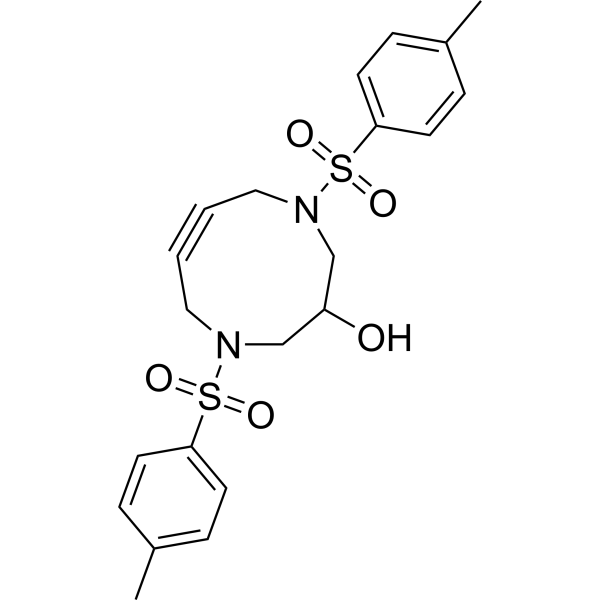
DACN(Tos2,6-OH) is a click chemistry reagent containing an Azide. The alkyne moiety within the ring has a unique bent structure and high reactivity toward cycloaddition reactions. The reactivity of an alkyne heavily depends on the electronic and steric characteristics of the substituents as well as structural strain. In comparison to nonbent acyclic alkynes, cyclononyne alkynes show remarkably high reactivity. Such strain-promoted azide-alkyne cycloadditions (SPAAC) using cycloalkynes have served for reliable molecular conjugation in a broad range of fields. The nitrogens are used as connection points for a variety of functional units. In comparison to cyclooctynes, DACNs possess high thermal and chemical stability along with comparable click reactivity . DACN(Tos2,6-OH) is a click chemistry reagent, it contains an Alkyne group and can undergo copper-catalyzed azide-alkyne cycloaddition (CuAAc) with molecules containing Azide groups.
loading...
    loading...
Cat. No.: HY-187243
Synonyms: DMG-PEG1000-Cys-SRNLIDC
Research Areas:  

Cancer

DMG-PEG1000-LyP-1 (DMG-PEG1000-Cys-SRNLIDC) is a functionalized PEGylated lipid conjugate composed of three modular components: dimyristoylglycerol (DMG) as the lipid anchoring group, PEG, and LyP-1 peptide (CGNKRTRGC) (HY-P2526) as the terminal targeting/functional ligand. LyP-1 is a cyclic 9-amino acid peptide that specifically binds to p32/gC1qR protein, which is highly expressed on tumor-associated macrophages, lymphatic endothelial cells, and certain tumor cells. DMG-PEG1000-LyP-1 can be incorporated into liposomes, lipid nanoparticles (LNPs), or other nanocarriers to confer ligand-directed targeting capability against p32/gC1qR protein on the surface of lymphatic vessels, tumor-associated macrophages, and tumor cells.
loading...
    loading...
Cat. No.: HY-187243A
Synonyms: DMG-PEG2000-Cys-SRNLIDC
Research Areas:  

Cancer

DMG-PEG2000-LyP-1 (DMG-PEG2000-Cys-SRNLIDC) is a functionalized PEGylated lipid conjugate composed of three modular components: dimyristoylglycerol (DMG) as the lipid anchoring group, PEG, and LyP-1 peptide (CGNKRTRGC) (HY-P2526) as the terminal targeting/functional ligand. LyP-1 is a cyclic 9-amino acid peptide that specifically binds to p32/gC1qR protein, which is highly expressed on tumor-associated macrophages, lymphatic endothelial cells, and certain tumor cells. DMG-PEG2000-LyP-1 can be incorporated into liposomes, lipid nanoparticles (LNPs), or other nanocarriers to confer ligand-directed targeting capability against p32/gC1qR protein on the surface of lymphatic vessels, tumor-associated macrophages, and tumor cells.
loading...
    loading...
Cat. No.: HY-187243B
Synonyms: DMG-PEG3400-Cys-SRNLIDC
Research Areas:  

Cancer

DMG-PEG3400-LyP-1 (DMG-PEG3400-Cys-SRNLIDC) is a functionalized PEGylated lipid conjugate composed of three modular components: dimyristoylglycerol (DMG) as the lipid anchoring group, PEG, and LyP-1 peptide (CGNKRTRGC) (HY-P2526) as the terminal targeting/functional ligand. LyP-1 is a cyclic 9-amino acid peptide that specifically binds to p32/gC1qR protein, which is highly expressed on tumor-associated macrophages, lymphatic endothelial cells, and certain tumor cells. DMG-PEG3400-LyP-1 can be incorporated into liposomes, lipid nanoparticles (LNPs), or other nanocarriers to confer ligand-directed targeting capability against p32/gC1qR protein on the surface of lymphatic vessels, tumor-associated macrophages, and tumor cells.
loading...
    loading...
Cat. No.: HY-187243C
Synonyms: DMG-PEG5000-Cys-SRNLIDC
Research Areas:  

Cancer

DMG-PEG5000-LyP-1 (DMG-PEG5000-Cys-SRNLIDC) is a functionalized PEGylated lipid conjugate composed of three modular components: dimyristoylglycerol (DMG) as the lipid anchoring group, PEG, and LyP-1 peptide (CGNKRTRGC) (HY-P2526) as the terminal targeting/functional ligand. LyP-1 is a cyclic 9-amino acid peptide that specifically binds to p32/gC1qR protein, which is highly expressed on tumor-associated macrophages, lymphatic endothelial cells, and certain tumor cells. DMG-PEG5000-LyP-1 can be incorporated into liposomes, lipid nanoparticles (LNPs), or other nanocarriers to confer ligand-directed targeting capability against p32/gC1qR protein on the surface of lymphatic vessels, tumor-associated macrophages, and tumor cells.
loading...
    loading...
Cat. No.: HY-187318
Synonyms: DOPE-PEG1000-Cys-SRNLIDC
Research Areas:  

Cancer

DOPE-PEG1000-LyP-1 (DOPE-PEG1000-Cys-SRNLIDC) is a functionalized PEGylated lipid conjugate composed of three modular components: dioleoylphosphatidylethanolamine (DOPE) as the lipid anchoring group, PEG, and LyP-1 peptide (CGNKRTRGC) (HY-P2526) as the terminal targeting/functional ligand. LyP-1 is a cyclic 9-amino acid peptide that specifically binds to p32/gC1qR protein, which is highly expressed on tumor-associated macrophages, lymphatic endothelial cells, and certain tumor cells. DOPE-PEG1000-LyP-1 can be incorporated into liposomes, lipid nanoparticles (LNPs), or other nanocarriers to confer ligand-directed targeting capability against p32/gC1qR protein on the surface of lymphatic vessels, tumor-associated macrophages, and tumor cells.
loading...
    loading...
Cat. No.: HY-187318A
Synonyms: DOPE-PEG2000-Cys-SRNLIDC
Research Areas:  

Cancer

DOPE-PEG2000-LyP-1 (DOPE-PEG2000-Cys-SRNLIDC) is a functionalized PEGylated lipid conjugate composed of three modular components: dioleoylphosphatidylethanolamine (DOPE) as the lipid anchoring group, PEG, and LyP-1 peptide (CGNKRTRGC) (HY-P2526) as the terminal targeting/functional ligand. LyP-1 is a cyclic 9-amino acid peptide that specifically binds to p32/gC1qR protein, which is highly expressed on tumor-associated macrophages, lymphatic endothelial cells, and certain tumor cells. DOPE-PEG2000-LyP-1 can be incorporated into liposomes, lipid nanoparticles (LNPs), or other nanocarriers to confer ligand-directed targeting capability against p32/gC1qR protein on the surface of lymphatic vessels, tumor-associated macrophages, and tumor cells.
loading...
    loading...
Cat. No.: HY-187318B
Synonyms: DOPE-PEG3400-Cys-SRNLIDC
Research Areas:  

Cancer

DOPE-PEG3400-LyP-1 (DOPE-PEG3400-Cys-SRNLIDC) is a functionalized PEGylated lipid conjugate composed of three modular components: dioleoylphosphatidylethanolamine (DOPE) as the lipid anchoring group, PEG, and LyP-1 peptide (CGNKRTRGC) (HY-P2526) as the terminal targeting/functional ligand. LyP-1 is a cyclic 9-amino acid peptide that specifically binds to p32/gC1qR protein, which is highly expressed on tumor-associated macrophages, lymphatic endothelial cells, and certain tumor cells. DOPE-PEG3400-LyP-1 can be incorporated into liposomes, lipid nanoparticles (LNPs), or other nanocarriers to confer ligand-directed targeting capability against p32/gC1qR protein on the surface of lymphatic vessels, tumor-associated macrophages, and tumor cells.
loading...
    loading...
Cat. No.: HY-187318C
Synonyms: DOPE-PEG5000-Cys-SRNLIDC
Research Areas:  

Cancer

DOPE-PEG5000-LyP-1 (DOPE-PEG5000-Cys-SRNLIDC) is a functionalized PEGylated lipid conjugate composed of three modular components: dioleoylphosphatidylethanolamine (DOPE) as the lipid anchoring group, PEG, and LyP-1 peptide (CGNKRTRGC) (HY-P2526) as the terminal targeting/functional ligand. LyP-1 is a cyclic 9-amino acid peptide that specifically binds to p32/gC1qR protein, which is highly expressed on tumor-associated macrophages, lymphatic endothelial cells, and certain tumor cells. DOPE-PEG5000-LyP-1 can be incorporated into liposomes, lipid nanoparticles (LNPs), or other nanocarriers to confer ligand-directed targeting capability against p32/gC1qR protein on the surface of lymphatic vessels, tumor-associated macrophages, and tumor cells.
loading...
    loading...
Cat. No.: HY-113466R
CAS No.: 75899-68-2
Synonyms: 4-HNE (Standard)
4-Hydroxynonenal (Standard) is the analytical standard of 4-Hydroxynonenal. This product is intended for research and analytical applications. 4-Hydroxynonenal (4-HNE) is an α,β unsaturated hydroxyalkenal and an oxidative/nitrosative stress biomarker. 4-Hydroxynonenal is a substrate and an inhibitor of acetaldehyde dehydrogenase 2 (ALDH2). 4-Hydroxynonenal can modulate a number of signaling processes mainly through forming covalent adducts with nucleophilic functional groups in proteins, nucleic acids, and membrane lipids. 4-Hydroxynonenal plays an important role in cancer through mitochondria .
loading...
    loading...
Cat. No.: HY-D1555
CAS No.: 2692677-77-1
Synonyms: Cy7 DBCO
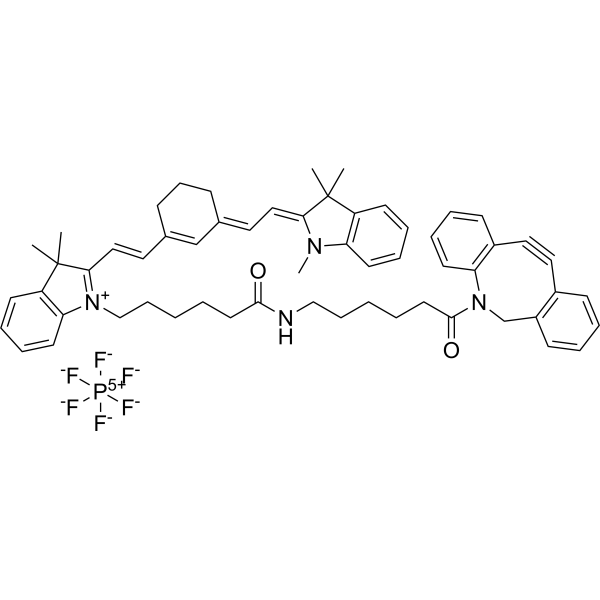
Cyanine7 DBCO (Cy7 DBCO) is a near-infrared fluorescent dye and an efficient bio-orthogonal quencher. Cyanine7 DBCO is formed by covalent connection of the near-infrared fluorescent dye Cy7 and the dibenzocyclooctyne (DBCO) functional group. After reacting with N3-Cy5-COOH, the fluorescence of Cy5 decreases by 90% within 90 minutes, and rapid signal attenuation can be observed within 2-5 minutes. Cyanine7 DBCO can be used for the study of deep tissue imaging and receptor-targeted therapeutic strategies .
loading...
    loading...
Cat. No.: HY-D1861
CAS No.: 2144762-62-7
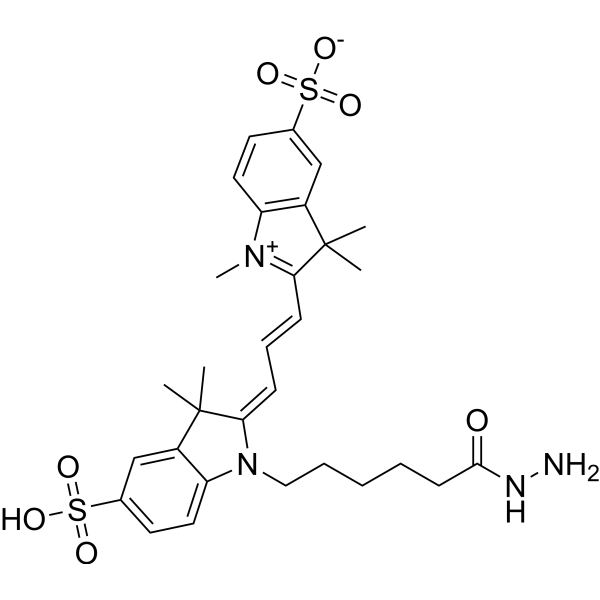
Sulfo-Cy3 hydrazide is a Cyanine 3 (Cy3) (HY-D0822) dye derivative with hydrazine functionality. The sulfonate ion increases the water solubility of the compound, making it suitable for use in aqueous solutions. Cy3 is a fluorescent dye with a fluorescence spectrum typically in the green to orange wavelength range. The hydrazide group of Sulfo-Cy3 hydrazide can form hydrazinone coupling with molecules containing aldehydes or ketones to form covalent bonds. Therefore, Cy3 azide plus can bind to biomolecules such as proteins and antibodies to track their location and dynamic changes in biological samples.
loading...
    loading...
Cat. No.: HY-D1866
CAS No.: 2760599-02-6
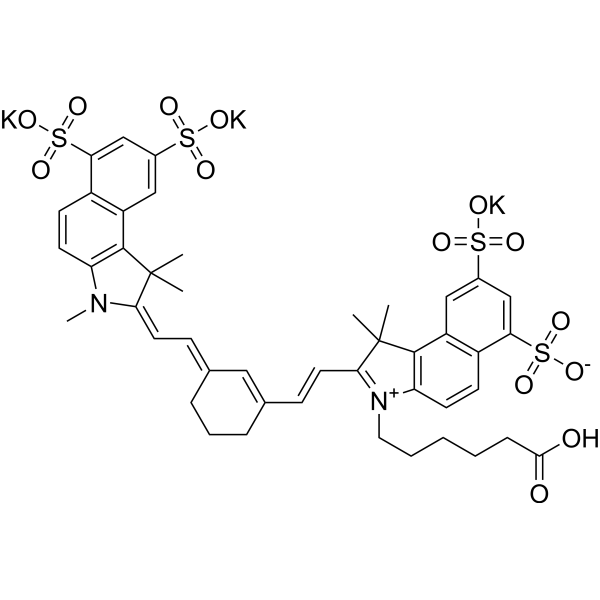
Sulfo-Cy7.5 carboxylic acid is a dye derivative of Cyanine 7.5 (Cy7.5) (HY-D0926) with carboxylic acid and sulfonate ion (sulfonate) functional groups. The sulfonate ion increases the water solubility of the compound, making it suitable for use in aqueous solutions. Cy7.5 is a near-infrared fluorescent dye commonly used in biomedical research areas such as biomarkers and cell imaging. Sulfo-Cy7.5 carboxylic acid can be covalently bound to some biomolecules (especially antibodies, proteins, etc.) to track their location and dynamic changes in biological samples.
loading...
    loading...
Cat. No.: HY-D3581
Target:  

Fluorescent Dye

Research Areas:  

Others

AF594 Picolyl Azide is a composite fluorescent probe formed by covalent linkage of the Alexa Fluor 594 fluorophore and the Picolyl Azide functional group via chemical bonds. AF594 Picolyl Azide contains a copper chelation domain, and through the copper-catalyzed azide-alkyne cycloaddition click chemistry reaction, it can covalently label alkyne-bearing target molecules and generate fluorescent detection signals. AF594 Picolyl Azide can be used for the detection of alkyne-modified sialylated glycoconjugates, and can also label nascent bacterial polypeptides to determine bacterial protein synthesis rates .
loading...
    loading...
Cat. No.: HY-W1061685
Research Areas:  

Others

Dithiol Serinol Phosphoramidite is a phosphoramidite reagent for dithiol modification of oligonucleotides. Dithiol Serinol Phosphoramidite contains a serinol linker arm, which keeps the dithiol groups away from the phosphate backbone and allows the sequential introduction of multiple Dithiol Serinol units without the need for additional spacer arm phosphoramidites. Dithiol Serinol Phosphoramidite can be incorporated into oligonucleotides via standard oligonucleotide synthesis and deprotection procedures, and can be introduced sequentially multiple times without adding intermediate spacer arms. Dithiol Serinol Phosphoramidite can be used to prepare multi-dithiol modified oligonucleotides and for surface functionalization studies of gold nanoparticles (AuNPs) .
loading...
    loading...
Cat. No.: HY-L021L
15,445 compounds

Natural products are an attractive source with varied structures that exhibit potent biological activities, and desirable pharmacological profiles. The core scaffold of a natural product can also provide a biologically validated framework upon which to display diverse functional groups. Inspired by bioactive natural products, natural product-like compounds, occupying the same chemical space, are ideally suited to explore and to facilitate understanding of biological pathways.

MCE provides a unique collection of 15,445 natural product-like compounds that are structurally like Steroids, Tannins, Flavonoids, Quinones, Isoquinolines, etc. This library is an important source of lead compounds for drug discovery.

Cat. No.: HY-L057
1,299 compounds

Phenolic compounds are usually referred to as a diverse group of naturally occurring compounds with multiple medical properties, such as antioxidants, antimicrobial properties. Those compounds are commonly found in food and plants. They have high synthetic, medicinal and industrial values. Polyphenols are compounds with multiple phenolic functionalities. Naturally occurring polyphenols are known to have biological activities for use as drugs, for example, in diseases like AIDS, heart ailments, ulcer formation, bacterial infection, mutagenesis and neural disorders.

MCE offers a unique collection of 1,299 natural phenol compounds which is a useful tool for drug discovery as an important source of lead compounds.

Cat. No.: HY-113817
CAS No.: 1000010-33-2
Target:  

Phosphatase

Research Areas:  

Inflammation/Immunology

SHIP1 activator 1 is an SH3 domain-containing inositol 5-phosphatase regulator with SHIP1 activating activity. SHIP1 activator 1 retains its SHIA-1 activating ability by removing unnecessary functional groups. SHIP1 activator 1 is able to activate SHIP1 in vitro, inhibit Akt phosphorylation in MOLT-4 cells, and show dose-dependent activity in a mouse model of inflammation. SHIP1 activator 1 is an important chemical tool for evaluating the potential of SHIP1 activators as inhibitors of hematopoietic diseases involving abnormal PI3K cell signaling .
loading...
    loading...
Cat. No.: HY-P11428
CAS No.: 2425606-55-7
Research Areas:  

Others

DBCO-cyclo (RGDfK) is a clickable DBCO-modified cyclic RGD peptide, and also a DBCO derivative of cyclo (RGDfK) (HY-P0023). DBCO-cyclo (RGDfK) is synthesized via an amide coupling reaction between DBCO-NHS ester and cyclo (RGDfK). DBCO-cyclo (RGDfK) can react with azide groups through copper-free click chemistry (SPAAC) to immobilize RGD peptides onto biomaterials or hydrogels. The RGD sequence in DBCO-cyclo (RGDfK) is recognizable by cellular integrins and promotes cell adhesion. DBCO-cyclo (RGDfK) can be used in studies related to tissue engineering, 3D cell culture, and surface functionalization of biomaterials .
loading...
    loading...
Cat. No.: HY-W615095
CAS No.: 2227450-68-0
Target:  

PROTAC Linkers

Research Areas:  

Others

Biotin-PEG2-alkyne is a click chemistry PEG linker based on copper (I)-catalyzed azide-alkyne cycloaddition (CuAAC), as well as a biotinylation reagent. In solution-phase and click labeling systems, Biotin-PEG2-alkyne efficiently conjugates biotin groups to azide-functionalized streptavidin amplicons. Biotin-PEG2-alkyne is also widely applicable in fixed cells and mouse intestinal tissue sections to achieve specific biotinylation of various azide-labeled biomolecules (such as proteins, lipids, DNA, and Afatinib (HY-10261)), thereby effectively promoting signal amplification and precise detection of targets .
loading...
    loading...

