94 Results for "

HDAC Activators

" in MedChemExpress (MCE) Product Catalog:
Products (94)

94 Results for "HDAC Activators" in MCE Product Catalog:

  • Targets Recommended:
Cat. No.: HY-175021
HDAC-IN-91 is a multiple inhibitor of HDAC (IC50 = 134.22 nM for HDAC1, 66.29 nM for HDAC2), carbonic anhydrase (CA) (Ki = 72.03 nM for CA IX, 50.76 nM for XII), and tubulin polymerization ( IC50 = 2.56 μM). HDAC-IN-91 inhibits PARP1 and increases the Bax/Bcl-2 ratio. HDAC-IN-91 blocks the cell cycle at the G2/M phase and induces apoptosis through a mitochondrial apoptosis activation mechanism. HDAC-IN-91 can exert potent cytotoxic activity through tubulin polymerization inhibition. HDAC-IN-91 can be used in breast, colorectal, cervical and lung cancer research .
loading...
    loading...
Cat. No.: HY-10585AS1
Pureté:  96.45%
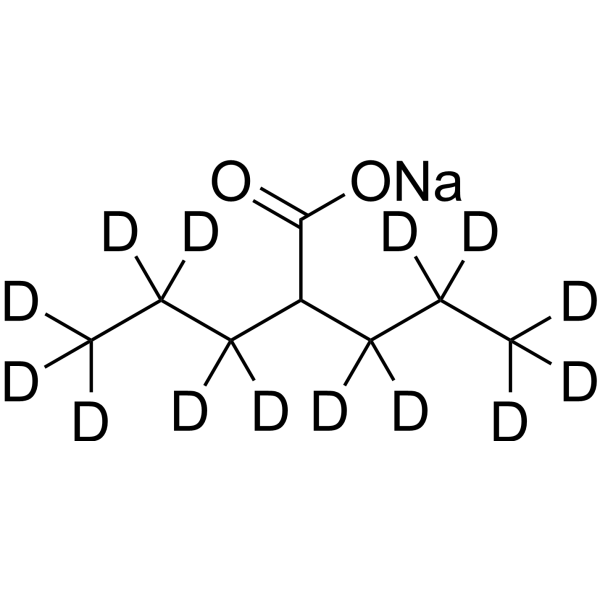
Synonyms: Sodium Valproate-d14; VPA-d14 sodium; 2-Propylpentanoic acid-d14 sodium
Valproic acid-d14 (sodium) is deuterium labeled Valproic acid (sodium). Valproic acid sodium salt (Sodium Valproate) is an HDAC inhibitor, with IC50 in the range of 0.5 and 2 mM, also inhibits HDAC1 (IC50, 400 μM), and induces proteasomal degradation of HDAC2. Valproic acid sodium salt activates Notch1 signaling and inhibits proliferation in small cell lung cancer (SCLC) cells. Valproic acid sodium salt is used in the treatment of epilepsy, bipolar disorder and prevention of migraine headaches.
loading...
    loading...
Cat. No.: HY-10585AS
CAS No.: 1189994-89-5
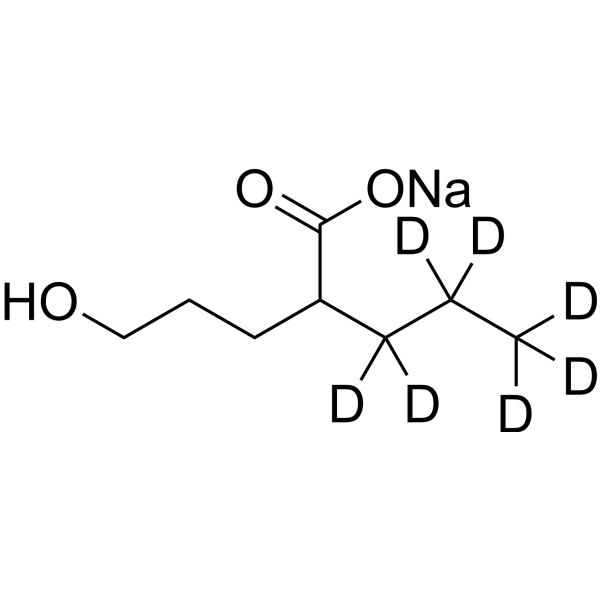
Synonyms: Sodium Valproate-d7; VPA-d7 sodium; 2-Propylpentanoic acid-d7 sodium
Valproic acid-d7 (sodium) is the deuterium labeled Valproic acid (sodium salt). Valproic acid sodium salt (Sodium Valproate) is an HDAC inhibitor, with IC50 in the range of 0.5 and 2 mM, also inhibits HDAC1 (IC50, 400 μM), and induces proteasomal degradation of HDAC2. Valproic acid sodium salt activates Notch1 signaling and inhibits proliferation in small cell lung cancer (SCLC) cells. Valproic acid sodium salt is used in the treatment of epilepsy, bipolar disorder and prevention of migraine headaches .
loading...
    loading...
Cat. No.: HY-179421
PROTAC HDAC6 degrader 7 is an orally active, highly efficient, and selective PROTAC degrader targeting histone deacetylase 6 (HDAC6) (IC50 = 118 nM). PROTAC HDAC6 degrader 7 can eliminate both the catalytic and zinc-finger ubiquitin-binding domain. PROTAC HDAC6 degrader 7 inhibits NLRP3 inflammasome assembly and activation, as well as blocks NF-κB signaling, thereby reducing the transcription and release of key inflammatory factors. PROTAC HDAC6 degrader 7 can reduce the mRNA levels of NLRP3, pro-IL-1β, TNF-α, and IL-6. PROTAC HDAC6 degrader 7 can be used for the study of inflammatory bowel disease (IBD) .
loading...
    loading...
Cat. No.: HY-10585S3
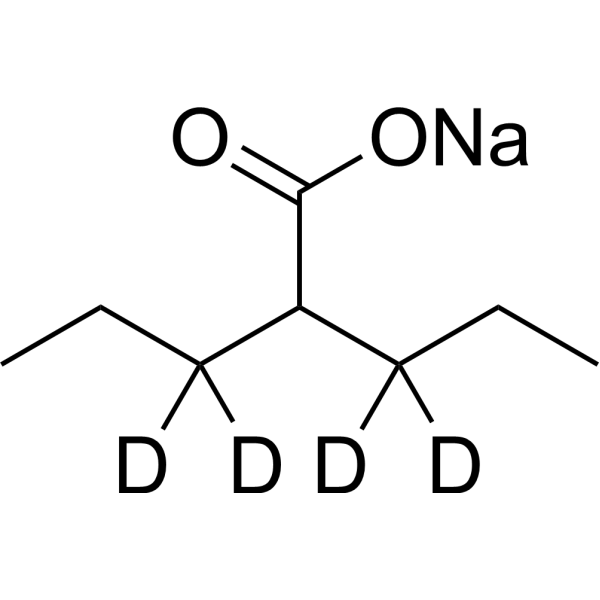
Synonyms: Sodium Valproate-d4; VPA-d4 sodium; 2-Propylpentanoic acid-d4 sodium
Valproic acid-d4 (sodium) is the deuterium labeled Valproic acid. Valproic acid (VPA; 2-Propylpentanoic Acid) is an HDAC inhibitor, with IC50 in the range of 0.5 and 2 mM, also inhibits HDAC1 (IC50, 400 μM), and induces proteasomal degradation of HDAC2. Valproic acid activates Notch1 signaling and inhibits proliferation in small cell lung cancer (SCLC) cells. Valproic acid sodium salt is used in the treatment of epilepsy, bipolar disorder and prevention of migraine headaches.
loading...
    loading...
Cat. No.: HY-10585AG
CAS No.: 1069-66-5
Synonyms: Sodium Valproate (GMP); VPA sodium (GMP); 2-Propylpentanoic acid sodium (GMP)
Valproic acid (Sodium Valproate) sodium is an orally active HDAC inhibitor, with IC50 in the range of 0.5 and 2 mM, also inhibits HDAC1 (IC50, 400 μM), and induces proteasomal degradation of HDAC2. Valproic acid sodium activates Notch1 signaling and inhibits proliferation in small cell lung cancer (SCLC) cells. Valproic acid sodium is used in the treatment of epilepsy, bipolar disorder, metabolic disease, HIV infection and prevention of migraine headaches .
loading...
    loading...
Cat. No.: HY-W794759
CAS No.: 62959-43-7
Synonyms: Magnesium valproate; VPA magnesium; 2-Propylpentanoic acid magnesium
Valproic acid magnesium (Magnesium valproate) is an orally active HDAC inhibitor, with IC50 in the range of 0.5 and 2 mM. Valproic acid magnesium inhibits HDAC1 (IC50, 400 μM), and induces proteasomal degradation of HDAC2. Valproic acid magnesium activates Notch1 signaling and inhibits proliferation in small cell lung cancer (SCLC) cells. Valproic acid magnesium is used in the epilepsy, bipolar disorder, metabolic disease, HIV infection and prevention of migraine headaches .
loading...
    loading...
Cat. No.: HY-12926
CAS No.: 1428535-92-5
Target:  

HIV HDAC DNA/RNA Synthesis

Domaines de recherche:  

Infection

ST7612AA1 is a histone deacetylase (HDAC) inhibitor that controls chromatin condensation and DNA transcription by removing acetyl groups from histones. ST7612AA1 is also a potent HIV reactivation inducer, and its reactivation activity is exerted without activating or proliferating CD4+T cells, and can be used in the study of HIV reactivation strategies and elimination of viral reservoirs .
loading...
    loading...
Cat. No.: HY-149577
CAS No.: 394668-43-0
Pureté:  98.27%
Target:  

EBV

Domaines de recherche:  

Cancer

Epstein-Barr virus (EBV) lytic cycle inducer-1 Dp44mT (compound C7) is an iron-chelatoe-like compound. Dp44mT cooperates with HDAC inhibitor Romidespin (HY-15149) and SAHA to induce EBV lytic cycle. Dp44mT reactivates EBV lytic cycle by activating the ERK1/2-autophagy axis in epithelial cancers .
loading...
    loading...
Cat. No.: HY-163535
CAS No.: 2116468-11-0
Domaines de recherche:  

Inflammation/Immunology Cancer

J208 is a dual inhibitor for histone deacetylase (HDAC) and DNA methyltransferase (DNMT). J208 inhibits proliferation of cancer cells, as well as the migration/invasion of triple-negative breast cancer (TNBC) cells. J208 induces apoptosis, arrests the cell cycle at G0/G1 phase. J2008 activates the innate immune signalling pathway in TNBC, by inducing the expression of endogenous retroviruses (ERVs) .
loading...
    loading...
Cat. No.: HY-W701218
CAS No.: 836682-32-7
Sulforaphane-d8 is the deuterium labeled Sulforaphane (HY-13755). Sulforaphane is an orally active inducer of the Keap1/Nrf2/ARE pathway. Sulforaphane promotes the transcription of tumor-suppressing proteins and effectively inhibits the activity of HDACs. Through the activation of the Keap1/Nrf2/ARE pathway and further induction of HO-1 expression, Sulforaphane protects the heart. Sulforaphane suppresses high glucose-induced pancreatic cancer through AMPK-dependent signal transmission. Sulforaphane exhibits both anticancer and anti-inflammatory properties .
loading...
    loading...
Cat. No.: HY-163290
Domaines de recherche:  

Cancer

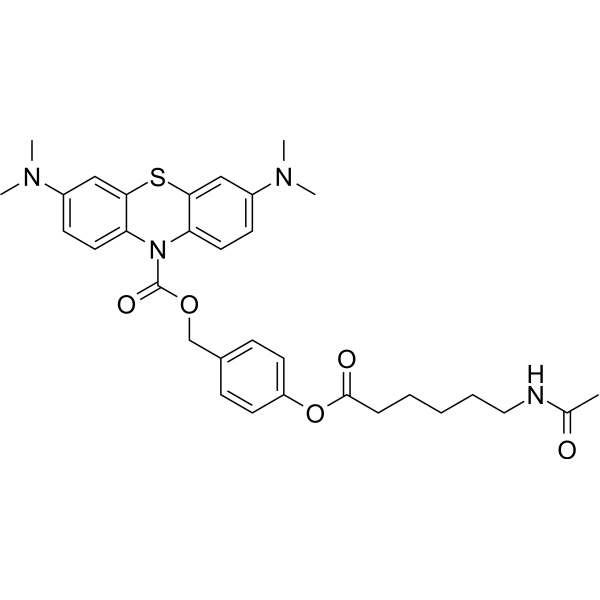
HDAC-MB a probe that is activated by HDAC6 and can detect and eliminate glioma cells through activation by HDAC6. HDAC-MB reveals antimetastatic and antiproliferative properties, inhibits glioma invasion and induces cellular apoptosis .
loading...
    loading...
Cat. No.: HY-155182
Target:  

HDAC Autophagy

Domaines de recherche:  

Neurological Disease Inflammation/Immunology

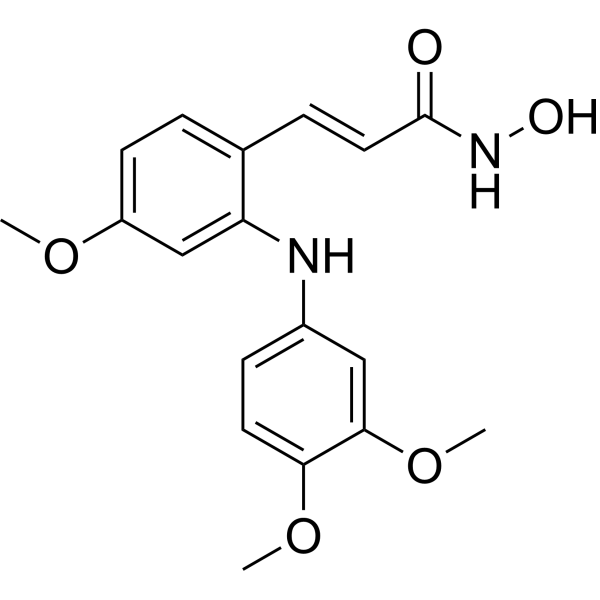
HDAC-IN-62 (Compound 5) a HDAC inhibitor, with IC50s of 0.78, 1.0, 1.2? μM for HDAC6/8/11 respectively. HDAC-IN-62 inhibits-induced microglial activation by the initiation of autophagy, and inhibits nitric oxide production. HDAC-IN-62 has anti-inflammatory and anti-depressant effects. HDAC-IN-62 inhibits microglial activation in mouse brain .
loading...
    loading...
Cat. No.: HY-161287
Target:  

HDAC

Domaines de recherche:  

Cancer

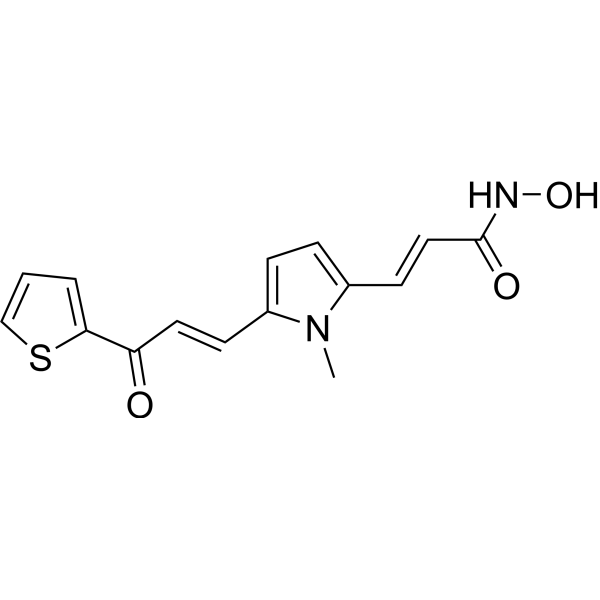
HDAC6-IN-32 (compound 25202) is a selective and potent inhibitor of HDAC6. HDAC6-IN-32 blocks HDAC6 activity and interferes with microtubule dynamics, leading to SAC activation and prolonged mitotic arrest, ultimately leading to apoptosis in CRPC cells .
loading...
    loading...
Cat. No.: HY-161465
Target:  

HDAC

Domaines de recherche:  

Inflammation/Immunology

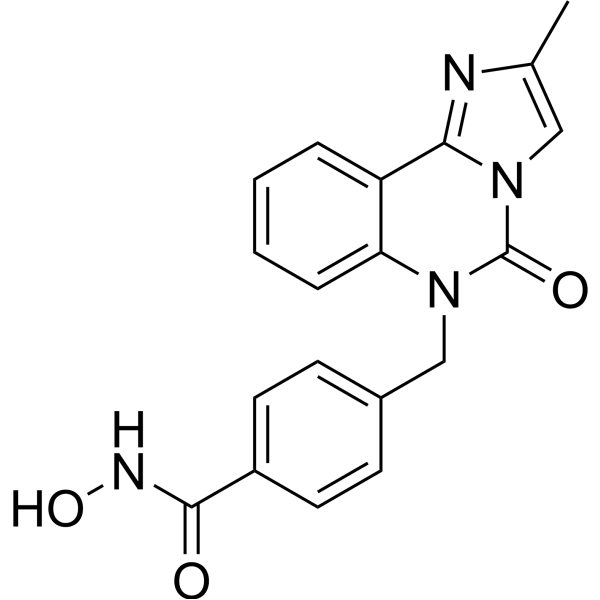
HDAC8-IN-7 (H7E), a HDAC8 inhibitor, exerts retinoprotective effects against glaucomatous injury via ameliorating aberrant Müller glia activation and oxidative stress. HDAC8-IN-7 alleviates functional and structural defects within the inner retina .
loading...
    loading...
Cat. No.: HY-151153
Domaines de recherche:  

Cancer

HDAC1-IN-5 is a potent HDAC1 inhibitor with IC50 values of 15 nM and 20 nM for HDAC1 and HDAC6, respectively. HDAC1-IN-5 can enhance the acetylation of histone H3 and α-tubulin, as well as promote the activation of caspase 3 in cancer cells, thereby inducing apoptosis. HDAC1-IN-5 induces chromatin damage by binding with DNA. HDAC1-IN-5 has strong inhibitory activity against tumor growth in xenograft mice .
loading...
    loading...
Cat. No.: HY-161155
Target:  

HDAC

Domaines de recherche:  

Inflammation/Immunology

HDAC6-IN-31 (compound 8m) is a selective HDAC6 inhibitor, with the IC50 value of 0.026 μM, that significantly inhibits the production and release of pro-inflammatory cytokines. While HDAC6 is critically involved in the activation of inflammasomes, HDAC6-IN-31 has the potential to inhibit NLRP3 inflammasome-driven inflammatory diseases. HDAC6-IN-31 also inhibits glioblastoma cell migration .
loading...
    loading...
Cat. No.: HY-169923
Target:  

HDAC

Domaines de recherche:  

Cancer

HDAC-IN-83 (compound 9D) is an inhibitor of deacetylases (HDACs) (IC50=0.01 μM/0.44 μM HDAC1/HDAC6) with anticancer, antiproliferative and caspase 3/7 activation activities. HDAC-IN-83 inhibits Cal27, HepG2 and MRC-5 with IC50s of 0.693 μM, 0.427 μM and 3.19 μM, respectively .
loading...
    loading...
Cat. No.: HY-162086A
Target:  

HDAC

Domaines de recherche:  

Cancer

HDAC-IN-68 (hydrochloride) (Compound 29) has inhibitory activity against HDACs (IC50=0.04 μM) and fragments microtubules by activating katanin, a microtubule-severing protein. HDAC-IN-68 (hydrochloride) can be used in cancer research .
loading...
    loading...
Cat. No.: HY-169922
Target:  

HDAC Parasite Caspase

Domaines de recherche:  

Cancer

HDAC-IN-82 (Compound 18b) is a histone deacetylase (HDAC) inhibitor with selective antiplasmodial and anticancer activity. HDAC-IN-82 shows potent antiproliferative activity and caspase 3/7 activation in cancer cells. HDAC-IN-82 causes hyperacetylation of histone H3 and α-tubulin .
loading...
    loading...

