101 Results for "

morphological changes

" in MedChemExpress (MCE) Product Catalog:
Products (101)

101 Results for "morphological changes" in MCE Product Catalog:

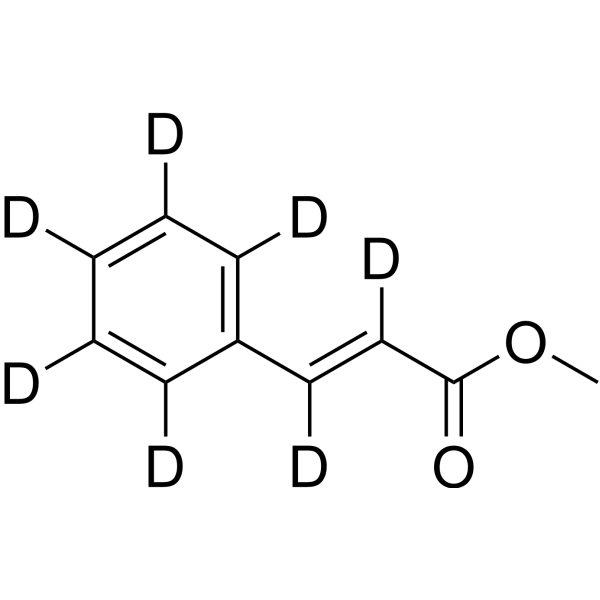
Cat. No.: HY-W067056S1
CAS No.: 2022152-96-9
Synonyms: Methyl(E)-3-phenylpropenoate-d7
Methyl(E)-cinnamate-d7 is the deuterium labeled Methyl (E)-cinnamate. Methyl (E)-cinnamate (Methyl (E)-3-phenylpropenoate) is a natural flavor compound with anti-inflammatory properties found in Alpinia katsumadai Hayata. Methyl (E)-cinnamate induces apoptosis via reduced anti-apoptotic protein expression, increased TUNEL-positive cells, and apoptotic morphological changes. Methyl (E)-cinnamate can be used for the research of abnormalities of osteoblast function in bone diseases .
loading...
    loading...
Cat. No.: HY-U00449A
CAS No.: 2319838-82-7
Target:  

RAR/RXR

Research Areas:  

Cancer

AGN 193109 sodium is the sodium salt form of AGN 193109 (HY-U00449). AGN 193109 sodium is the pan antagonist for retinoic acid receptor (RAR), with Kd of 2, 2 and 3 nM, for RARα, RARβ and RARγ, respectively. AGN 193109 sodium reverses TTNPB-induced morphology changes and all-trans retinoic acid (tRA)/9-cis RA/13-cis RA-induced proliferation suppression in ECE16-1 cell. AGN 193109 sodium is the antidote for retinoic acidosis, that ameliorates the skin and mucosal toxicity .
loading...
    loading...
Cat. No.: HY-N6801R
CAS No.: 23282-20-4
Nivalenol (Standard) is the analytical standard of Nivalenol (HY-N6801). This product is intended for research and analytical applications. Nivalenol, a trichothecene mycotoxin that can be produced by Fusarium graminearum, is a fungal metabolite present in agricultural product. Nivalenol modulates apoptotic pathway, cell cycle regulation, Bax, ERK, caspase-3, and poly-ADP-ribose synthase activity in macrophages. Nivalenol inhibits ribosomal peptidyltransferase site, protein synthesis, DNA synthesis, and cell proliferation. Nivalenol induces late-stage apoptotic morphological changes, reduces cellular metabolism, and decreases cell proliferation in erythroleukemia cells. Nivalenol induces lymphocyte apoptosis in murine thymus, spleen, and Peyer's patches. Nivalenol can be used for the research of erythroleukemia.
loading...
    loading...
Cat. No.: HY-P10371
CAS No.: 1505523-99-8
Synonyms: txCD47
PKHB1 (txCD47) is a CD47 agonist and Thrombospondin-1 peptide mimetic. PKHB1 activates CD47 and triggers Caspase-independent, calcium-dependent cell death via mitochondrial alterations, ROS production, endoplasmic reticulum morphological changes, and dissipation of mitochondrial membrane potential. PKHB1 induces the exposure of Calreticulin, HSP70, and HSP90, thereby driving immunogenic cell death. PKHB1 promotes intratumoral CD8 + T cell infiltration and inhibits breast tumorigenesis. PKHB1 reduces HSV-1 levels and alleviates the severity of herpes simplex keratitis. PKHB1 can be used in research related to breast cancer, herpes simplex keratitis, and T-cell acute lymphoblastic leukemia .
loading...
    loading...
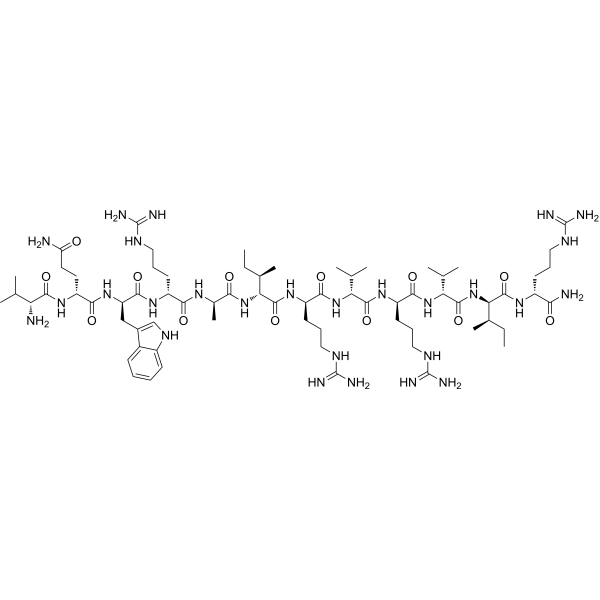
Cat. No.: HY-P10159
CAS No.: 1809102-71-3
Target:  

Antibiotic Bacterial

Research Areas:  

Infection

DJK-5 is an antimicrobial peptide that targets and degrades guanosine pentaphosphate and tetraphosphate (pppGpp and ppGpp). DJK-5 kills bacteria within dentinal tubules, dental plaque and preformed oral biofilms, delays biofilm recovery, reduces the abundance of extracellular polysaccharides and the structural integrity of biofilm matrices, and inhibits the formation and biomass accumulation of dental plaque biofilms. DJK-5 permeabilizes bacterial membranes, induces bacterial morphological changes, inhibits bacterial growth, and exerts a synergistic effect on bacterial biofilms when used in combination with traditional antibiotics and Colistin (HY-113678). DJK-5 exhibits protease resistance and broad-spectrum antibiofilm activity, though its activity decreases in fetal bovine serum. DJK-5 can be used in studies of pulpitis, mixed biofilm infections, skin abscesses, dental caries, infections associated with failed root canal therapy, and Pseudomonas aeruginosa biofilm-related respiratory tract infections .
loading...
    loading...
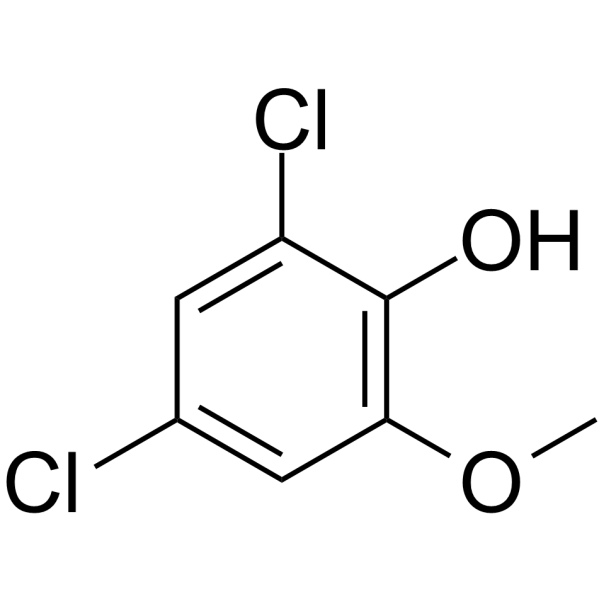
Cat. No.: HY-133608
CAS No.: 16766-31-7
Target:  

DNA/RNA Synthesis

Research Areas:  

Inflammation/Immunology

4,6-Dichloroguaiacol induces biochemical and morphological changes in human peripheral blood lymphocytes in vitro .
loading...
    loading...
Cat. No.: HY-P11021
CAS No.: 2659258-28-1
Target:  

Fungal Antibiotic

Research Areas:  

Infection

ToAP2 is a potent antimicrobial peptide. ToAP2 affects C. albicans membrane permeability and produces changes in fungal cell morphology .
loading...
    loading...
Cat. No.: HY-P11021A
Target:  

Fungal Antibiotic

Research Areas:  

Infection

ToAP2 TFA is a potent antimicrobial peptide. ToAP2 TFA affects C. albicans membrane permeability and produces changes in fungal cell morphology .
loading...
    loading...
Cat. No.: HY-111190
CAS No.: 89550-93-6
Thiotropocin is a tropothione Antibiotic with antibacterial activities against Gram-positive and Gram-negative bacteria, some phytopathogens and mycoplasma. Thiotropocin causes morphological changes of Proteus mirabilis and Escherichia coli .
loading...
    loading...
Cat. No.: HY-120883
CAS No.: 150346-23-9
Rhizopodin is a new cytostatic compound isolated from the culture fluid of the slime mold Myxococcus stipitatus. Rhizopodin inhibits the growth of various animal cell cultures without killing the cells, with an ID50 value of 12 to 30 ng/ml, depending on the cell line. In particular, fibroblast-like cells show typical morphological changes, with cells becoming larger and forming long branched reticular extensions within hours, and these morphological changes are irreversible. Rhizopodin inhibits bleb formation in K-562 cells, possibly through interaction with protein phosphorylation.
loading...
    loading...
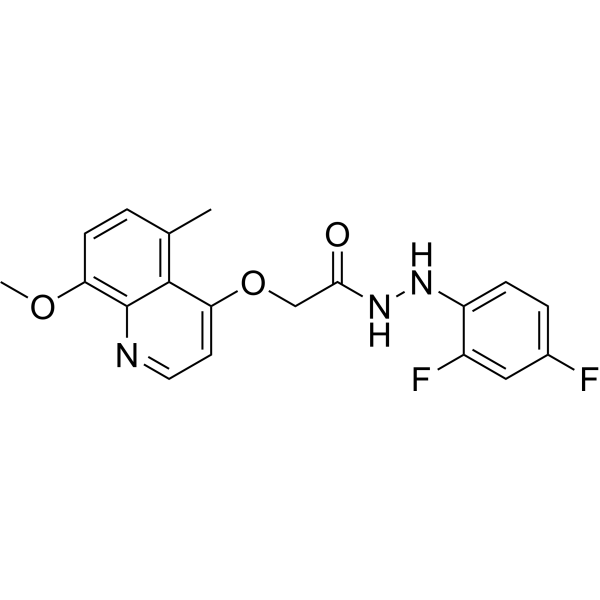
Cat. No.: HY-155769
Target:  

Fungal

Research Areas:  

Infection

Antimicrobial agent-24 (compound E8) is a hydrazide compound with excellent and broad-spectrum fungicidal activities. Antimicrobial agent-24 affects the normal function of the plasma membrane, further generating changes in the morphology and subcellular structure of mycelia .
loading...
    loading...
Cat. No.: HY-108553
CAS No.: 126463-64-7
Target:  

Proteasome Apoptosis

Research Areas:  

Cancer

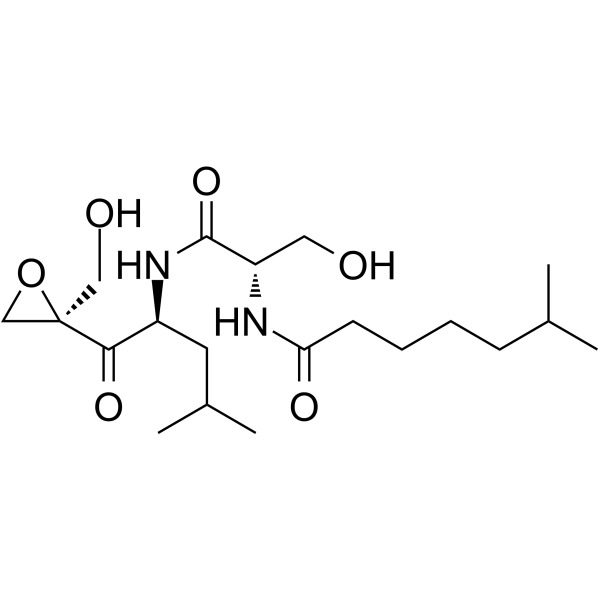
Dihydroeponemycin, an analogue of the antitumor and antiangiogenic natural product eponemycin, selectively targets the 20S proteasome. Dihydroeponemycin covalently modifies a subset of catalytic proteasomal subunits, binding preferentially to the IFN-gamma-inducible subunits LMP2 and LMP7. Dihydroeponemycin-mediated proteasome inhibition induces a spindle-like cellular morphological change and apoptosis .
loading...
    loading...
Cat. No.: HY-W721681
CAS No.: 59875-58-0
Target:  

Amyloid-β

Research Areas:  

Neurological Disease

Dehydro nicardipine is a dihydropyridine metabolite of Nicardipine (HY-12515) and belongs to the dihydropyridine class of compounds. Dehydro nicardipine can selectively inhibit the aggregation of Aβ monomers, specifically regulate the extension and binding of Aβ soluble aggregates, change the morphology of Aβ aggregates, and inhibit the growth of aggregate length. Dehydro nicardipine can be used in the study of Alzheimer's disease (AD) .
loading...
    loading...
Cat. No.: HY-168260
Target:  

Apoptosis Ferroptosis MMP

Research Areas:  

Cancer

CQ-Mito is a Coumarin-Quinazolinone (CQ)-based derivative that targets mitochondria and exhibits profound phototherapeutic performances with an Phototoxic Index (PI) value of 167. CQ-Mito causes cell death by both apoptosis and ferroptosis. CQ-Mito mediates mitochondrial dysfunction, including mitochondrial morphology changed and the loss of MMP. CQ-Mito can efficiently inhibit the tumor growth in organoid tumor models .
loading...
    loading...
Cat. No.: HY-172259
Target:  

PI3K Akt mTOR

Research Areas:  

Cancer

Toyaburgine is a unique isoquinoline compound that exhibits anti-tumor activity. It packs a punch by disrupting the PI3K/AKT/mTOR signaling pathway, causing significant morphological changes and cell death in MIA PaCa-2 cells. On top of that, it puts the brakes on cell migration and colony formation. This compound is showing a lot of promise in the realm of pancreatic cancer research .
loading...
    loading...
Cat. No.: HY-178781
Target:  

Bacterial

Research Areas:  

Infection

Antibacterial agent 297 (Compound A40), an antibacterial agent, is a Lsrk inhibitor (IC50: 0.40 μM; KD: 3.79 μM). Antibacterial agent 297 inhibits biofilm formation and bacterial motility and changes biofilm morphology through AI-2 QS inhibition rather than direct antibacterial effects. Antibacterial agent 297 has favorable oral PK properties .
loading...
    loading...
Cat. No.: HY-176413
Target:  

Fungal

Research Areas:  

Infection

SDH-IN-27 (Compound Q18) is a succinate dehydrogenase inhibitor (SDHI) (IC50: 9.7 mg/L). SDH-IN-27 induces mycelial morphology changes and lipid peroxidation, and exhibits antifungal activity against C. camelliae (EC50: 6.0 mg/L). SDH-IN-27 is an ergosterol biosynthesis inhibitor (EBI) that binds to the active site of CYP51, ultimately leading to cell death of pathogenic fungi .
loading...
    loading...
Cat. No.: HY-156348
CAS No.: 38470-71-2
MAO-B-IN-26 (Compound IC9) is a MAO-B and acetylcholinesterase inhibitor. MAO-B-IN-26 protects SH?SY5Y cells against Aβ induced cytotoxicity, morphological changes, ROS generation and membrane damage. MAO-B-IN-26 also inhibits Aβ induced autophagy and apoptosis. MAO-B-IN-26 can be used as a neuroprotective agent against Alzheimer’s disease .
loading...
    loading...
Cat. No.: HY-168720
Target:  

Apoptosis

Research Areas:  

Cancer

Apoptosis inducer 32 (Compound 7g) is an apoptosis inducer with a KD of 42 μM, showing anti-tumor activity. Apoptosis inducer 32 caused significant cellular morphological changes in MDA-MB-231 cells, including membrane bubbling, nuclear fragmentation, and apoptotic body formation. The IC50 of Apoptosis inducer 32 in MCF-7, MDA-MB-231, and HEK cells is 4.77, 6.56 and 337.8 μM respectively .
loading...
    loading...
Cat. No.: HY-B0113AR
CAS No.: 95510-70-6
Synonyms: H 16868 sodium (Standard)
Omeprazole (sodium) (Standard) is the analytical standard of Omeprazole (sodium). This product is intended for research and analytical applications. Omeprazole sodium (H 16868) is an orally active H +,K +-ATPase inhibitor and a proton pump inhibitor. Omeprazole sodium competitively inhibits CYP2C19, CYP3A4, and CYP2C9 activity. Omeprazole sodium inhibits gastric acid secretion and can be used for acid-related gastrointestinal disorders. Omeprazole sodium inhibits pancreatic cancer cell proliferation, induces apoptosis, autophagosome accumulation (elevated LC3-I and LC3-II levels), oxidative stress, and cytogenetic imbalance, modulates lysosomal transport, reduces inflammatory cytokines. Omeprazole sodium alters small intestinal morphology and magnesium absorption, and induces gastric mucosa morphologic changes. Omeprazole sodium aslo has neuroprotective and antibacterial effects .
loading...
    loading...

