101 Results for "

morphological changes

" in MedChemExpress (MCE) Product Catalog:
Products (101)

101 Results for "morphological changes" in MCE Product Catalog:

Cat. No.: HY-187203
Target:  

ROCK

Domaines de recherche:  

Neurological Disease

RX-021 is a ROCK1 and ROCK2 inhibitor with IC50 values of 30.01 nM and 34.31 nM, respectively. RX-021 induces reversible morphological changes in human trabecular meshwork cells, maintains the survival of retinal ganglion cells, restores electroretinogram responses, and improves retinal histopathological changes. RX-021 achieves sustained reduction of intraocular pressure in a mouse model of ocular hypertension. RX-021 can be used for the research of glaucoma .
loading...
    loading...
Cat. No.: HY-182637
CAS No.: 1809863-68-0
Domaines de recherche:  

Inflammation/Immunology

ACT-774312 is a potent and selective CRTH2 antagonist with an IC50 of 4 nM. ACT-774312 blocks the activity and internalization of the CRTH2 receptor, and inhibits PGD2-induced morphological changes in eosinophils. ACT-774312 can be used in the research of nasal polyps and type 2 inflammatory diseases.
loading...
    loading...
Cat. No.: HY-189257
CAS No.: 848488-07-3
Target:  

Fungal

Domaines de recherche:  

Infection

Antifungal agent 178 is an indole-oxazole alkaloid analog and a fungal cell membrane disruptor that exhibits low phytotoxicity toward plants. Antifungal agent 178 disrupts the integrity of hyphal cell membranes, leading to cytoplasmic leakage and inhibition of hyphal growth, and induces morphological changes in hyphae. Antifungal agent 178 can be used in research related to fungal plant diseases .
loading...
    loading...
Cat. No.: HY-K0606

MCE Methenamine Silver Stain Kit For Basement Membrane (PASM) is developed based on the classical staining principle. Through an optimized staining system and standardized reagent combination, it enables clear visualization of basement membranes and related reticular structures in tissue sections. This method is particularly widely used in renal pathology research, where it is commonly applied to examine morphological alterations of the glomerular capillary basement membrane, such as thickening, rupture, folding, double-contour (tram-track) appearance, or abnormal proliferation caused by inflammatory injury. In addition, this method can also be applied to the histological investigation and morphological observation of glomerular diseases, diabetic nephropathy, and other basement membrane–associated pathological changes.

loading...
    loading...
Cat. No.: HY-W581798
CAS No.: 17375-41-6
Domaines de recherche:  

Metabolic Disease Cancer

Iron(II) sulfate hydrate is an iron(II) salt with oral activity, acting as an iron supplier, and is easily oxidized to iron(III) in water. Iron(II) sulfate hydrate induces apoptotic morphological changes in cancer cells, and promotes dose‑dependent iron accumulation in rats. Iron(II) sulfate hydrate can be used in studies of leukemia, breast cancer, iron deficiency, anemia, and restless legs syndrome .
loading...
    loading...
Cat. No.: HY-N19782
CAS No.: 851278-60-9
Striatisporolide A is an antibacterial agent. Striatisporolide A exhibits antibacterial activity against Escherichia coli in vitro. Striatisporolide A damages the cell wall and cell membrane of Escherichia coli, and induces changes in protein levels and morphology. Striatisporolide A reduces the level of apoptosis (apoptosis) in HUVECs, inhibits excessive production of ROS, and possesses pro-proliferative and mild cytoprotective effects. Striatisporolide A can be used in studies related to bacterial infections and degenerative diseases .
loading...
    loading...
Cat. No.: HY-P992513
Target:  

TREM receptor

Domaines de recherche:  

Neurological Disease

Anti-Mouse TREM2 Antibody (4D9) is a monoclonal antibody targeting TREM2. Anti-Mouse TREM2 Antibody (4D9) enhances microglial signaling, induces reversible morphological changes in microglia, converts microglia into a metabolically responsive state, and increases the state diversity of microglia. Anti-Mouse TREM2 Antibody (4D9) can be used in studies related to Alzheimer's disease .
loading...
    loading...
Cat. No.: HY-183059
Target:  

MAP4K

Domaines de recherche:  

Neurological Disease

TNIK-IN-11 is a TNIK inhibitor with a human TNIK pIC50 of 7.80. TNIK-IN-11 inhibits TNIK kinase activity and promotes neurite outgrowth. TNIK-IN-11 activates AKT signaling via increased phosphorylated AKT levels, and induces gene expression changes including upregulation of neuronal differentiation and morphological remodeling genes. TNIK-IN-11 can be used for the research of dup15q syndrome .
loading...
    loading...
Cat. No.: HY-117208
CAS No.: 748786-57-4
Domaines de recherche:  

Cancer

TLSC702 is a human glyoxalase I (hGLO I) inhibitor with an IC50 of 2.0 μM. TLSC702 inhibits the activity of human glyoxalase I, thereby leading to the accumulation of methylglyoxal and its derived advanced glycation end products. TLSC702 inhibits tumor cell proliferation, induces apoptotic morphological changes, internucleosomal DNA fragmentation and PARP cleavage in tumor cells. TLSC702 can be used in research related to leukemia and lung cancer .
loading...
    loading...
Cat. No.: HY-W259575
CAS No.: 70035-83-5
Domaines de recherche:  

Cancer

CDKi free base is a CDK inhibitor. CDKi free base induces morphological changes, DNA fragmentation, and cell death in vestibular schwannoma cells. CDKi free base downregulates pRb, EGF-R, PI3K, NF-κB, and Shh levels, while upregulating JNK, ASK1, Caspase 3, and p21, and induces PARP-1 cleavage. CDKi free base can be used in research related to vestibular schwannoma .
loading...
    loading...
Cat. No.: HY-W067056R
CAS No.: 1754-62-7
Synonyms: Methyl (E)-3-phenylpropenoate (Standard)
Methyl (E)-cinnamate (Standard) is the analytical standard of Methyl (E)-cinnamate. This product is intended for research and analytical applications. Methyl (E)-cinnamate (Methyl (E)-3-phenylpropenoate) is a natural flavor compound with anti-inflammatory properties found in Alpinia katsumadai Hayata. Methyl (E)-cinnamate induces apoptosis via reduced anti-apoptotic protein expression, increased TUNEL-positive cells, and apoptotic morphological changes. Methyl (E)-cinnamate can be used for the research of abnormalities of osteoblast function in bone diseases .
loading...
    loading...
Cat. No.: HY-W067056S
CAS No.: 61764-82-7
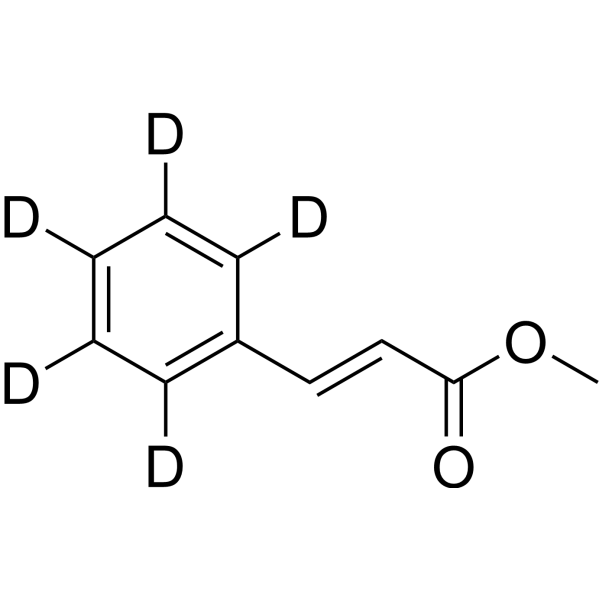
Synonyms: Methyl(E)-3-phenylpropenoate-d5
Methyl (E)-cinnamate-d5 is the deuterium labeled Methyl (E)-cinnamate . Methyl (E)-cinnamate (Methyl (E)-3-phenylpropenoate) is a natural flavor compound with anti-inflammatory properties found in Alpinia katsumadai Hayata. Methyl (E)-cinnamate induces apoptosis via reduced anti-apoptotic protein expression, increased TUNEL-positive cells, and apoptotic morphological changes. Methyl (E)-cinnamate can be used for the research of abnormalities of osteoblast function in bone diseases .
loading...
    loading...
Cat. No.: HY-187437
CAS No.: 3133348-60-1
Target:  

Cytochrome P450 Fungal

Domaines de recherche:  

Infection

CYP51-IN-33 is a CYP51 inhibitor with an IC50 of 0.35 μM against the sterol 14α-demethylase activity of Rhizoctonia solani CYP51. CYP51-IN-33 interferes with CYP51-associated ergosterol biosynthesis, accompanied by changes in hyphal morphology, increased membrane permeability and intracellular ROS accumulation. CYP51-IN-33 can be used in studies on CYP51-targeted antifungal activity and rice sheath blight .
loading...
    loading...
Cat. No.: HY-184894
Domaines de recherche:  

Infection

RK-1205-I is a protein phosphatase 2A (PP2A) inhibitor and fungal growth inhibitor. RK-1205-I inhibits PP2A activity in fungal cells, leading to the accumulation of Ser/Thr phosphorylated proteins. RK-1205-I acts as a morphoregulator and induces unique morphological changes in filamentous fungi. RK-1205-I inhibits the growth of various fungi, including Aspergillus oryzae, Aspergillus fumigatus and Candida auris. RK-1205-I can be used for the research of fungal infections .
loading...
    loading...
Cat. No.: HY-183980
Domaines de recherche:  

Cancer

MJ-NR-27 is a bifunctional small molecule of ribonuclease-targeting chimera (RIBOTAC) that targets NRAS mRNA containing a G-quadruplex structure. MJ-NR-27 uses RNase L ligand 3 (HY-177030) as the RNase L ligand, RNA binder 4 (HY-183981) as the RNA binder, and Bis-PEG3-acid (HY-126891) as the linker. MJ-NR-27 achieves target RNA degradation by recruiting ribonuclease RNase L, and significantly induces morphological changes in tumor cells. MJ-NR-27 can be used in cancer research .
loading...
    loading...
Cat. No.: HY-D3068
CAS No.: 3077446-86-4
Target:  

Fluorescent Dye

Domaines de recherche:  

Metabolic Disease

LDs-BCA is a BF2-chelated AIE fluorescent probe with a positive solvatochromic effect, which can specifically target intracellular lipid droplets (Ex/Em = 565/620-730 nm). LDs-BCA monitors the dynamic changes in the morphology, size and quantity of intracellular lipid droplets under oleic acid induction and starvation stress. LDs-BCA, after intraperitoneal injection, accumulates in the gastric fat of living obese mice, allowing continuous monitoring via its fluorescent signal. LDs-BCA is applicable to studies related to intracellular lipid droplet polarity imaging and in vivo gastric fat visualization .
loading...
    loading...
Cat. No.: HY-189346
Target:  

Myosin Fungal

Domaines de recherche:  

Infection

Myosin I-IN-1 is an Antifungal agent and Myosin I inhibitor with a Kd of 0.14 μM for FgMyoI. Myosin I-IN-1 inhibits mycelial growth, sporulation, spore germination, and Deoxynivalenol (HY-N6684) biosynthesis. Myosin I-IN-1 disrupts cell wall and cell membrane integrity and induces hyphal morphological changes. Myosin I-IN-1 exhibits broad-spectrum antifungal activity against plant pathogenic fungi. Myosin I-IN-1 shows protective efficacy against Fusarium head blight in wheat and maize. Myosin I-IN-1 can be used for research on Fusarium head blight .
loading...
    loading...
Cat. No.: HY-N21802
CAS No.: 1922084-93-2
Dendrocandin U is a bibenzyl compound found in Dendrobium officinale that exhibits anti-inflammatory activity and α-glucosidase inhibitory effect (IC50 = 9.46 mM). Dendrocandin U inhibits the expression of TLR4 and MyD88 in the TLR4/MyD88/NF-kB pathway, suppresses the phosphorylation of NF-kB p65 and I-kBα, and blocks the nuclear translocation of NF-kB p65. Dendrocandin U inhibits M1 polarization, NO secretion, and TNF-α release in alveolar macrophages, and reduces inflammatory morphological changes in macrophages. Dendrocandin U promotes neurite outgrowth in PC12 cells. Dendrocandin U can be used for research on inflammation-related diseases and type 2 diabetes .
loading...
    loading...
Cat. No.: HY-N20707
CAS No.: 24312-00-3
Castalagin is an orally active natural product with multiple biological activities including antibacterial activity against bacteria and anti-leishmanial activity against Leishmania aethiopica. Castalagin exhibits inhibitory activity against PARP1 and DNA topoisomerase II, with an IC50 of 0.86 μM for bovine PARP1. Castalagin reduces poly (ADP-ribosyl) ation modification in cells. Castalagin binds to the cell envelope of Ruminococcus bromii, increases the ratio of CD8+/FOXP3+CD4+ T cells in the tumor microenvironment, and acts as a prebiotic to enhance the activity of anti-PD-1 therapy. Castalagin induces morphological changes in Leishmania aethiopica promastigotes and inhibits their proliferation. Castalagin inhibits PBP2a-mediated peptidoglycan layer stabilization, disrupts bacterial peptidoglycan assembly, and inhibits and disintegrates bacterial biofilms. Castalagin can be used in research related to diseases such as cancer, leishmaniasis, and bacterial infections .
loading...
    loading...
Cat. No.: HY-181953
CAS No.: 2196106-61-1
STIM1-TFR1-IN-1 is an orally active stromal interaction molecule 1 (STIM1)-transferrin receptor 1 (TFR1) protein complex inhibitor with a Kd of 2.18 μM for STIM1-CD protein. STIM1-TFR1-IN-1 blocks STIM1-TFR1 interaction and reduce TFR1-mediated iron uptake activity. STIM1-TFR1-IN-1 inhibits ferroptosis, lipid peroxidation and ROS production, enhances glutathione peroxidase 4 (GPX4) activity and glutathione/oxidized glutathione ratio, and rescues ferroptosis-associated mitochondrial morphological changes. STIM1-TFR1-IN-1 exhibits neuroprotective
effects and reduces brain injury. STIM1-TFR1-IN-1 can be used for the research of intracerebral hemorrhage .
loading...
    loading...

