
78 Results for "

neurological function

" in MedChemExpress (MCE) Product Catalog:
Products (78)

78 Results for "neurological function" in MCE Product Catalog:

Cat. No.: HY-177785
iDeg-6 is a molecular glue degrader that selectively targets IDO1, with a DC50 of 6.5 nM, an IC50 of 16 nM, and a Kd of 1.46 μM. iDeg-6 competes to bind the heme-binding site of apoprotein IDO1, promoting CRL2 KLHDC3-mediated polyubiquitination of IDO1 and neddylation-modification-dependent proteasomal degradation. iDeg-6 reduces kynurenine production, abrogates the non-enzymatic pro-tumor migration function of IDO1, and inhibits tumor growth in immunodeficient mice. iDeg-6 can be used in studies of cancer, infection, and neurological diseases (such as melanoma) .
loading...
    loading...
Cat. No.: HY-160548
CAS No.: 2170358-67-3
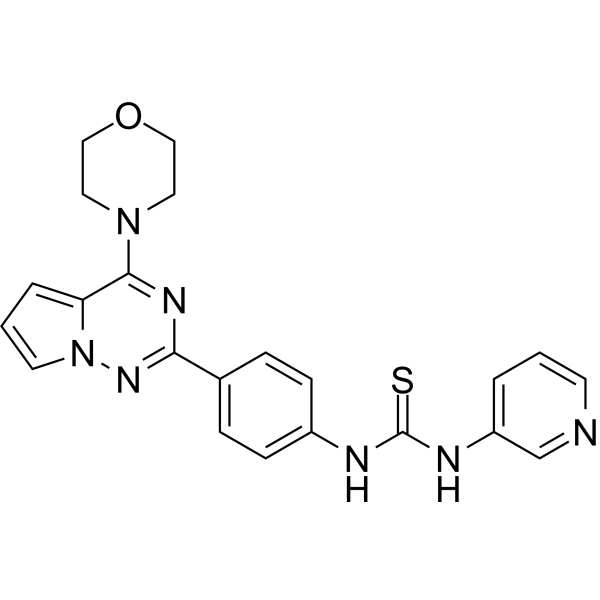
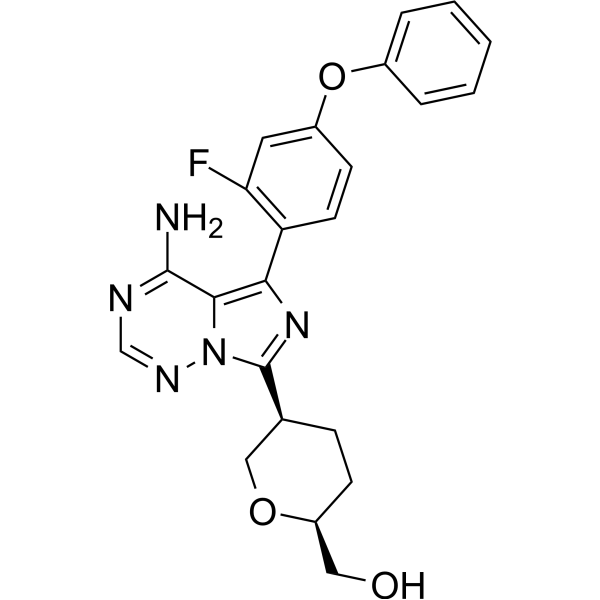
mTOR inhibitor-18 (Example 106) is a mTOR inhibitor. mTOR inhibitor-18 can be used for mTOR related research, such as cancer, immune disorders, cardiovascular disease, viral infection, inflammation, metabolism/endocrine function disorders and neurological disorders .
loading...
    loading...
Cat. No.: HY-P5947
Target:  

HIV

Research Areas:  

Neurological Disease

Tat-HA-NR2B9 contains a fragment of the cellmembrane transduction domain of HIV-1 Tat, a influenza virus hemagglutinin (HA) epitope-tag, and the C-terminal 9 amino acids of NR2B (NR2B9c). Tat-HA-NR2B9 reduces infarct size and improves neurological functions in ischemia-induced cerebral injury in the rats
loading...
    loading...
Cat. No.: HY-17629R
CAS No.: 54863-37-5
Research Areas:  

Inflammation/Immunology Cancer

Dapansutrile (Standard) is the analytical standard of Dapansutrile. This product is intended for research and analytical applications. Dapansutrile is a potent, orally active and selective NLRP3 inflammasome inhibitor. Dapansutrile has anti-inflammatory activity and decreases immune factor levels. Dapansutrile can be used for research of inflammatory diseases .
loading...
    loading...
Cat. No.: HY-167934
CAS No.: 1542205-84-4
Target:  

Endogenous Metabolite

Research Areas:  

Neurological Disease

Isomer-CM 352 is a new antifibrinolytic agent with inhibitory activity against matrix metalloproteinases. Isomer-CM 352 effectively reduced hematoma expansion and promoted functional and neurological recovery in a model of intracerebral hemorrhage. Isomer-CM 352 improved neurological function by preventing hematoma growth and showed potential in the suppression of acute neurological diseases .
loading...
    loading...
Cat. No.: HY-134458A
Synonyms: Lysyltyrosine TFA
Target:  

P2X Receptor

Research Areas:  

Neurological Disease

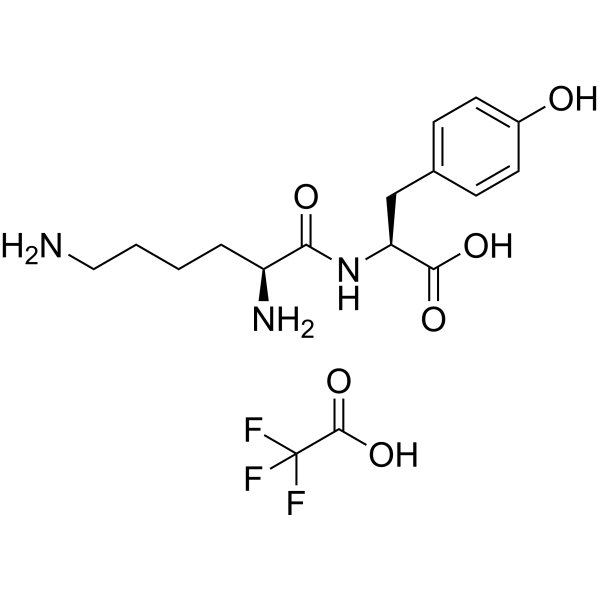
H-Lys-Tyr-OH TFA (Lysyltyrosine TFA) is a dipeptide composed of lysine and tyrosine. H-Lys-Tyr-OH TFA prevents neurological diseases or improves brain function by promoting the release of noradrenaline and tyrosine into the brain .
loading...
    loading...
Cat. No.: HY-125095
CAS No.: 804519-64-0
Purity:  99.43%
Synonyms: Tunodafil hydrochloride
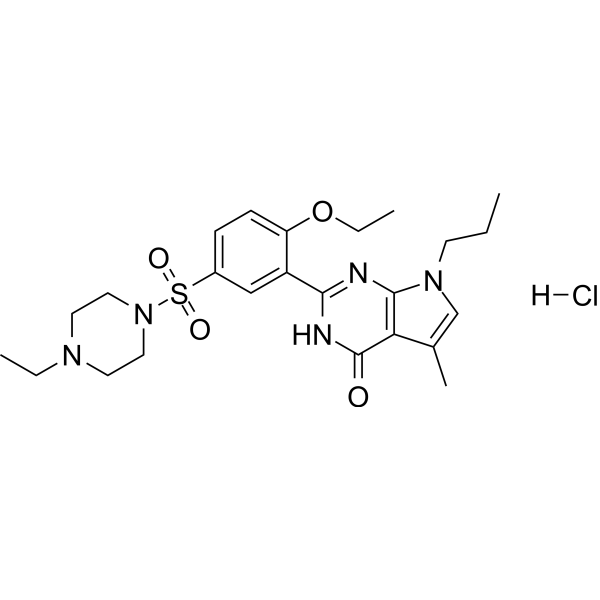
Yonkenafil (Tunodafil) hydrochloride, a novel phosphodiesterase 5 (PDE5) inhibitor, is effective in reducing cerebral infarction, neurological deficits, edema, and neuronal damage in the infarcted area. Yonkenafil (Tunodafil) hydrochloride may improve cognitive function by modulating neurogenesis and has a potential therapeutic effect on Alzheimer's disease .
loading...
    loading...
Cat. No.: HY-114270
CAS No.: 1408054-46-5
Target:  

GSK-3

Research Areas:  

Neurological Disease

JGK-263 is an orally active Glycogen synthase kinase-3β (GSK-3β) inhibitor. JGK-263 exhibits neuroprotective effect and can improve motor function. JGK-263 can be used for the research of neurological disease, such as amyotrophic lateral sclerosis (ALS) .
loading...
    loading...
Cat. No.: HY-114555
CAS No.: 1007109-16-1
Target:  

GlyT

Research Areas:  

Neurological Disease

TASP0315003 is a glycine transporter 1 (GlyT1) inhibitor. TASP0315003 potentiates NMDA receptor function by increasing synaptic glycine levels. TASP0315003 can improve cognitive dysfunction and the negative symptoms of schizophrenia without having undesirable central nervous system side effects. TASP0315003 can be used for the research of neurological disease .
loading...
    loading...
Cat. No.: HY-168028
CAS No.: 1639898-35-3
Target:  

mGluR

Research Areas:  

Neurological Disease

mGluR2 modulator 5 (Compound 11) is an orally active, selective mGluR2 negative allosteric modulator with an IC50 of 8.9 nM. Pharmacokinetic studies in rats show that mGluR2 modulator 5 can effectively cross the blood-brain barrier. It can modulate cognitive and neurological functions in mood disorders and is suitable for research in the field of neurodegenerative diseases .
loading...
    loading...
Cat. No.: HY-177557
CAS No.: 2033173-20-3
IDO-IN-19 (Compound I) is a free base of an imidazole-isoindole derivative. IDO-IN-19 can inhibit the activity of Indoleamine 2,3-Dioxygenase (IDO). IDO-IN-19 can block the decomposition of tryptophan and restore the function of T cells. IDO-IN-19 can be used for the researches of cancer, immunology, infection and neurological disease, such as breast cancer and Alzheimer's disease .
loading...
    loading...
Cat. No.: HY-108157
CAS No.: 150358-76-2
Target:  

mAChR

Research Areas:  

Neurological Disease

A-72055 is a partial agonist of muscarinic receptors. A-72055 has binding activity to both M1 and M2 receptors, with Ki values of 32 nM and 30 nM, respectively. A-72055 can enhance cognitive function and improve learning and memory deficits. A-72055 has better security. A-72055 can be used for research on neurological disorders such as cognitive impairment .
loading...
    loading...
Cat. No.: HY-103405
CAS No.: 178928-68-2
Target:  

Dopamine Receptor

Research Areas:  

Neurological Disease

NGD94-1 is a potent and selective dopamine D4 receptor antagonist. NGD94-1 shows high affinity for the cloned human D4.2 receptor (Ki = 3.6 nM). NGD94-1 modulates the cognitive functions of the frontostriatal system and regulates dopaminergic transmission in Phencyclidine (PCP)-induced monkeys. NGD94-1 can be used for neurological disease research [1][2].
loading...
    loading...
Cat. No.: HY-142932
Target:  

Btk

BTK-IN-6 is a potent inhibitor of Bruton's Tyrosine Kinase (BTK). BTK is a member of the Tec family of tyrosine kinases and plays an important role in the regulation of early B-cell development and mature B-cell activation and survival. BTK-IN-6 has the potential for the research of immune disorders, cancer, cardiovascular diseases, viral infections, inflammation, metabolism/endocrine function disorders, and neurological disorders (extracted from patent WO2021136219A1, compound 8) .
loading...
    loading...
Cat. No.: HY-D0195R
CAS No.: 55589-62-3
Acesulfame potassium (Standard) is the analytical standard of Acesulfame potassium (HY-D0195). This product is intended for research and analytical applications. Acesulfame potassium is a synthetic sweetener. Long-term use of Acesulfame potassium can affect cognitive function, possibly by altering the neurometabolic functions in mice. Acesulfame potassium can suppress autophagic degradation of PD-L1 in RIL-175 and SK-Hep1 cells through the ERK1/2-mTORC1-ULK1 pathway, which may be related to immune evasion in cancer cells. Acesulfame potassium can be used in research on neurological diseases, metabolic disorders, cancer, and immune evasion .
loading...
    loading...
Cat. No.: HY-17417AR
CAS No.: 465-65-6
Naloxone Standard is the analytical standard of Naloxone (HY-17417A). This product is intended for research and analytical applications. Naloxone is an opioid receptor antagonist. Naloxone attenuates spinal cord stimulation‑associated anti‑hyperalgesic effects, antagonizes physiologic effects of endogenous opioid peptides linked to central nervous system injury sequelae, functions as a pressor agent to induce modest elevations in mean arterial blood pressure, exerts neuroprotective effects to improve post‑traumatic neurologic motor function, blocks opioid receptor‑mediated amnesic pathways, enhances memory consolidation, reverses Adrenocorticotropic hormone (ACTH) (HY-106373)‑ and epinephrine‑induced amnesia, and potentiates the memory‑facilitatory effects of ACTH and epinephrine .
loading...
    loading...
Cat. No.: HY-173307
Nrf2 activator 19 is a BBB-penetrable NRF2/HO-1 activator. Nrf2 activator 19 exerts potent antioxidant and neuroprotective effects. Nrf2 activator 19 can also effectively reduce brain damage, reduce Reactive Oxygen Species (ROS) accumulation. Nrf2 activator 19 inhibits neuronal apoptosis. Nrf2 activator 19 promotes the recovery of neurological function and motor ability. Nrf2 activator 19 shows significant potential in ischemic stroke research .
loading...
    loading...
Cat. No.: HY-W550739
CAS No.: 33665-90-6
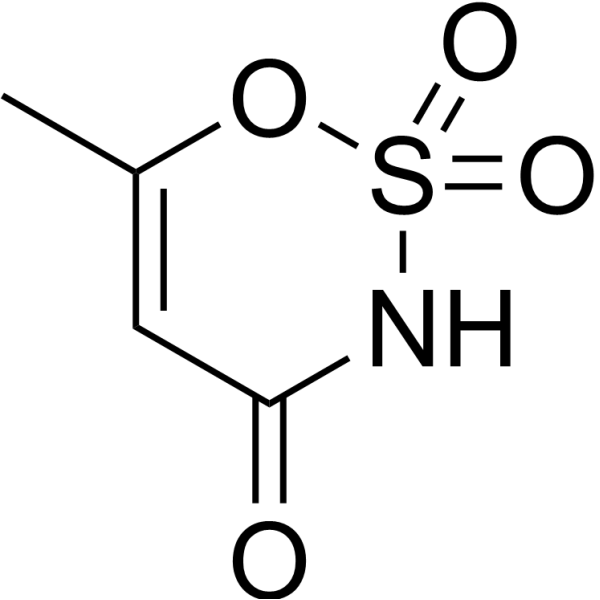
Acesulfame is a synthetic sweetener. Long-term use of Acesulfame can affect cognitive function. Acesulfame potassium can suppress autophagic degradation of PD-L1 in RIL-175 and SK-Hep1 cells through the ERK1/2-mTORC1-ULK1 pathway, which may be related to immune evasion in cancer cells. Acesulfame can be used in research on neurological diseases, metabolic disorders, cancer, and immune evasion .
loading...
    loading...
Cat. No.: HY-176712
Target:  

GSNOR Apoptosis

Research Areas:  

Neurological Disease

GSNOR-IN-1, a prodrug of GSNOR-IN-2 (HY-176275), is a BBB-penetrable S-nitrosoglutathione reductase (GSNOR) inhibitor. GSNOR-IN-1 has significant protective activity against OGD/R-induced injury. GSNOR-IN-1 regulates calcium signaling and synaptic function via Clstn1 S-nitrosation and inhibits neuronal apoptosis. GSNOR-IN-1 significantly reduces infarct volume while improving neurological deficits in ischemic stroke rat models. GSNOR-IN-1 has neuroprotective activity, promising for ischemic stroke research .
loading...
    loading...
Cat. No.: HY-106769B
CAS No.: 105182-47-6
Synonyms: (3aR,9aR)-GR50360
Target:  

Adrenergic Receptor

Research Areas:  

Neurological Disease

(3aR,9aR)-Fluparoxan ((3aR,9aR)-GR50360) is a highly selective and potent α2B adrenaline receptor antagonist with the activity of preventing, improving or inhibiting neurodevelopmental disorders and neurodegenerative diseases. As an α2B receptor antagonist, (3aR,9aR)-Fluparoxan can promote the recovery of neurological function. The mechanism of action of (3aR,9aR)-Fluparoxan makes it have important application potential in neuroscience research .
loading...
    loading...

