673 Results for "

K-Ras

" in MedChemExpress (MCE) Product Catalog:
Products (673)

673 Results for "K-Ras" in MCE Product Catalog:

Cat. No.: HY-186283
CAS No.: 2719667-13-5
Target:  

Raf p38 MAPK MEK ERK

Research Areas:  

Cancer

GNE-0749 is an orally active pan-RAF inhibitor with a Ki value of 0.061 nM against CRAF. GNE-0749 inhibits RAF dimer signaling via a DFG-out/αC-helix-in binding mode, prevents paradoxical activation of the MAPK pathway, and suppresses downstream MEK/ERK/RSK signal transduction. GNE-0749 can be used in studies related to KRAS G12C mutation-driven cancers .
loading...
    loading...
Cat. No.: HY-P10436
CAS No.: 2411851-64-2
Target:  

Raf

Research Areas:  

Cancer

Braftide is an allosteric inhibitor for BRAF kinase by targeting the dimer interface of BRAF kinase and inhibiting the formation of BRAF dimers. Braftide inhibits wild-type BRAF and oncogenic BRAF G469A with IC50 of 364 nM and 172 nM, respectively. Braftide inhibits MAPK signaling pathway, inhibits proliferation of KRAS mutant tumor cells (EC50 is 7.1 and 6.6 μM, for HCT116 and HCT-15), in combination of TAT sequence. Braftide can be used for cancer research .
loading...
    loading...
Cat. No.: HY-W095672A
CAS No.: 2097518-76-6
Target:  

Drug Intermediate

Research Areas:  

Others

(2R,7aS)-2-Fluorotetrahydro-1H-pyrrolizine-7a(5H)-methanol is a drug intermediate for synthesis of various active compounds. (2R,7aS)-2-Fluorotetrahydro-1H-pyrrolizine-7a(5H)-methanol is a core structural framework of the compounds targeting KRAS G12D mutation.
loading...
    loading...
Cat. No.: HY-177731
Research Areas:  

Cancer

MG-Lin1 is a Lin28/Lin28A molecular glue degrader with a DC50 of approximately 0.7 μM. It induces Lin28 degradation via the ubiquitin-proteasome pathway by forming a ternary complex, thereby upregulating the levels of let-7 miRNA and reducing the expression of its downstream oncogenic targets KRAS and PDK1, and inhibiting cancer cell migration. MG-Lin1 can be used in studies of ovarian cancer and choriocarcinoma .
loading...
    loading...
Cat. No.: HY-181020
Research Areas:  

Cancer

Deltafluorine is a phosphodiesterase delta (PDEδ) inhibitor with an IC50 of 27 nM, a KD of 148 nM. Deltafluorine covalently modifies the specific glutamate residue p.E88 in the ligand binding site of PDEδ, interfering with its chaperone function. Deltafluorine inhibits signaling through the MAPK and Akt-mTOR pathway, reduces ERK1/2 expression. Deltafluorine reduces tumor volume in an autochthonous mouse model of Kras-driven lung adenocarcinoma. Deltafluorine can be used for the research of lung adenocarcinoma .
loading...
    loading...
Cat. No.: HY-179480
G-quadruplex ligand 4 is a chromenone derivative and is a human telomerase reverse transcriptase (hTERT) G4 ligand. G-quadruplex ligand 4 downregulates hTERT expression and exhibits notable cytotoxicity towards triple-negative breast cancer (TNBC) cell lines. G-quadruplex ligand 4 can cause S/G2 cell cycle arrest and induce apoptosis. G-quadruplex ligand 4 downregulates the expression of hTERT, KRAS, and BCL-2. G-quadruplex ligand 4 can be used for the research of TNBC .
loading...
    loading...
Cat. No.: HY-175673
CAS No.: 2211175-99-2
LCB-2151 (Compound 2), a nucleoside analogue, is an anticancer agent. LCB-2151 disrupts the two primary sources of ATP production (glycolysis and mitochondrial oxidative phosphorylation), reducing the bioenergetic capacity of KRAS-mutated pancreatic cancer cells and inducing ROS formation. LCB-2151 effectively inhibits key enzymes (such as CACT and CPT2) in glycolysis, the TCA cycle and fatty acid β-oxidation. LCB-2151 has significant cytotoxicity and induces cells apoptosis. LCB-2151 can be used for radiation therapy of cancers research .
loading...
    loading...
Cat. No.: HY-174379
Research Areas:  

Cancer

NTLiverTac PDE6D degrader-1 is a PDE6D NTLiverTac degrader with a DC50 of 4.09 μM. NTLiverTac PDE6D degrader-1 is formed by conjugating a PDE6D PROTAC degrader with the NTCP ligand Cholic acid (HY-N0324). NTLiverTac PDE6D degrader-1 triggers the ubiquitin-proteasome system-mediated degradation process by forming a complex with PDE6D and MDM2, inducing proteasome-dependent and NTCP-dependent degradation. NTLiverTac PDE6D degrader-1 inhibits PDE6D-dependent KRAS trafficking and suppresses KRAS-related oncogenic signaling cascades. NTLiverTac PDE6D degrader-1 inhibits the activation of the PI3K/AKT/mTOR signaling pathway and induces cellular Apoptosis. NTLiverTac PDE6D degrader-1 enters cancer cells via NTCP-mediated endocytosis. NTLiverTac PDE6D degrader-1 can be used in the research of hepatoblastoma (MDM2 ligand: (4R,5S)-Nutlin carboxylic acid (HY-128836); NTCP ligand: Cholic acid (HY-N0324); PDE6D ligand: Sorafenib (HY-10201)) .
loading...
    loading...
Cat. No.: HY-106381
CAS No.: 12244-57-4
Purity:  ≥98.0%
Target:  

PKC NF-κB TrxR

Research Areas:  

Inflammation/Immunology Cancer

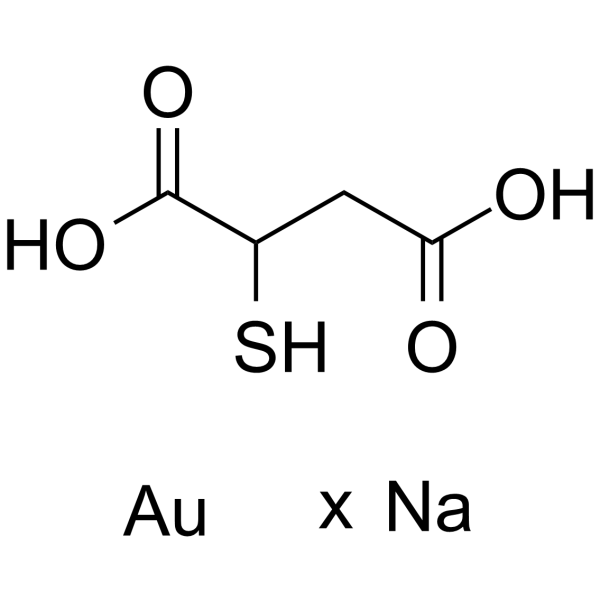
Aurothiomalate sodium acts as an inhibitor of PKCI and TrxR1. Aurothiomalate sodium disrupts the PKCI-Par6-Rac1 signaling pathway, and also inhibits TrxR1 activity, TNFα-induced NF-κB activation, and the expression of pro-inflammatory genes. Aurothiomalate sodium blocks Kras-mediated BASC expansion and lung tumor growth, inhibits anchorage-independent growth and tumorigenicity of lung cancer cells, and suppresses neutrophil chemotaxis, phagocytosis, and leukocyte extravasation. Aurothiomalate sodium can be used in research related to rheumatoid arthritis and non-small cell lung cancer .
loading...
    loading...
Cat. No.: HY-180200
CAS No.: 3032602-44-8
Target:  

Ras ERK

Research Areas:  

Cancer

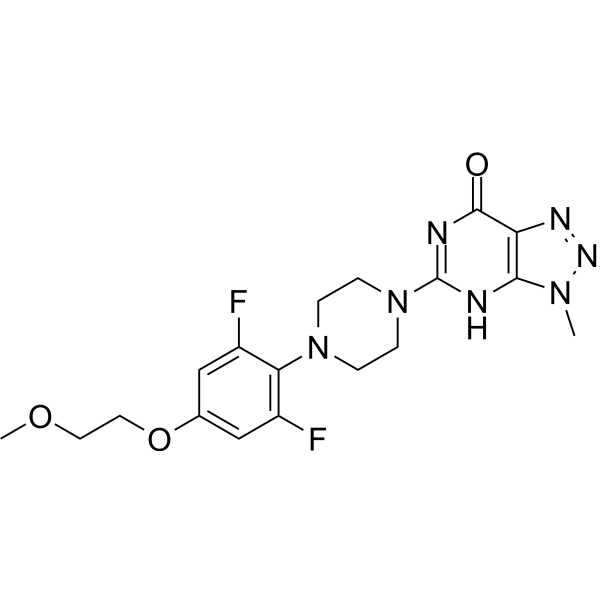
RNK08954 is an orally active KRASG12D inhibitor with a Kd of 0.0395 nM. RNK08954 selectively binds the inactive GDP-bound KRASG12D form, suppresses downstream KRAS-mediated signaling pathways p-ERK1/2 experssion. RNK08954 inhibits KRASG12D-mutant cell proliferation, induces G0-G1 cell cycle arrest, and inhibits tumor growth in mouse xenograft models. RNK08954 can be used for the research of non-small cell lung cancer, pancreatic ductal adenocarcinoma .
loading...
    loading...
Cat. No.: HY-185205
CAS No.: 3055745-21-3
Target:  

PI3K Akt

Research Areas:  

Cancer

VVD-484 is a PI3K p110α inhibitor with an IC50 of 0.59 μM against human targets.,VVD-484, classified as a "silent ligand", forms a covalent bond with Cys242 of PI3K p110α without disrupting the p110α-KRAS G12C interaction. VVD-484 inhibits phosphorylation (S473) of AKT via a RAS-independent pathway. VVD-484 can be used in the research of HER2-overexpressing cancers .
loading...
    loading...
Cat. No.: HY-148409
CAS No.: 352693-80-2
Purity:  99.58%
Research Areas:  

Cancer

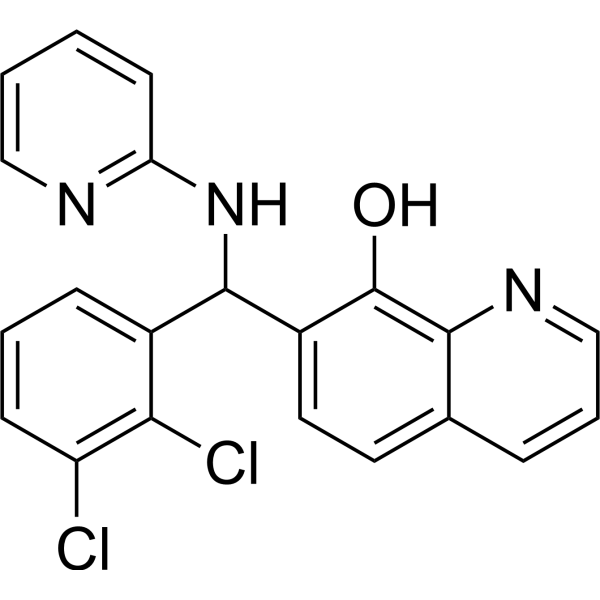
MMRi62, a ferroptosis inducer targeting MDM2-MDM4 (negative regulators of tumor suppressor p53). MMRi62 shows a P53-independent pro-apoptotic activity against pancreatic ductal adenocarcinoma (PDAC) cells and induce autophagy. MMRi62 inducesferroptosis, resulting in a increase of reactive oxygen and lysosomal degradation of ferritin heavy chain (FTH1). MMRi62 also leads to proteasomal degradation of mutant p53, also inhibits orthotopic xenograft PDAC mouse model in vivo with high frequency mutation characteristics of KRAS and TP53.12 .
loading...
    loading...
Cat. No.: HY-W010270A
CAS No.: 74916-57-7
Target:  

PKC NF-κB TrxR

Research Areas:  

Inflammation/Immunology Cancer

Aurothiomalate disodium acts as an inhibitor of PKCI and TrxR1. Aurothiomalate disodium disrupts the PKCI-Par6-Rac1 signaling pathway, and also inhibits TrxR1 activity, TNFα-induced NF-κB activation, and the expression of pro-inflammatory genes. Aurothiomalate disodium blocks Kras-mediated BASC expansion and lung tumor growth, inhibits anchorage-independent growth and tumorigenicity of lung cancer cells, and suppresses neutrophil chemotaxis, phagocytosis, and leukocyte extravasation. Aurothiomalate disodium can be used in research related to rheumatoid arthritis and non-small cell lung cancer .
loading...
    loading...
Cat. No.: HY-106381A
Purity:  ≥98.0%
Target:  

PKC TrxR NF-κB

Research Areas:  

Inflammation/Immunology Cancer

Aurothiomalate tetramer sodium is the tetrameric form of Aurothiomalate sodium (HY-106381). Aurothiomalate sodium acts as an inhibitor of PKCI and TrxR1. Aurothiomalate sodium disrupts the PKCI-Par6-Rac1 signaling pathway, and also inhibits TrxR1 activity, TNFα-induced NF-κB activation, and the expression of pro-inflammatory genes. Aurothiomalate sodium blocks Kras-mediated BASC expansion and lung tumor growth, inhibits anchorage-independent growth and tumorigenicity of lung cancer cells, and suppresses neutrophil chemotaxis, phagocytosis, and leukocyte extravasation. Aurothiomalate sodium can be used in research related to rheumatoid arthritis and non-small cell lung cancer .
loading...
    loading...
Cat. No.: HY-P992366

Target:  

Galectin Tim3

Research Areas:  

Cancer

HFB200901 is a galectin LGALS9 inhibitor and immunostimulant that can be used in studies related to pancreatic adenocarcinoma, pancreatic intraepithelial neoplasia, KRAS G12C-mutant colon cancer, and prostate cancer. HFB200901 disrupts the LGALS9/TIM-3 axis, while blocking the internalization and vacuolization of recombinant LGALS9. HFB200901 reduces the proportion of regulatory T cells (Treg) and enhances dendritic cell activation, thereby inducing polyfunctional and memory CD8 + T cell responses. HFB200901 inhibits the progression of pancreatic neoplastic lesions and effectively improves the efficacy of PSMA-based vaccination .
loading...
    loading...
Cat. No.: HY-132844
CAS No.: 1801756-06-8
Purity:  98.25%
Synonyms: HL-085
Target:  

MEK

Research Areas:  

Cancer

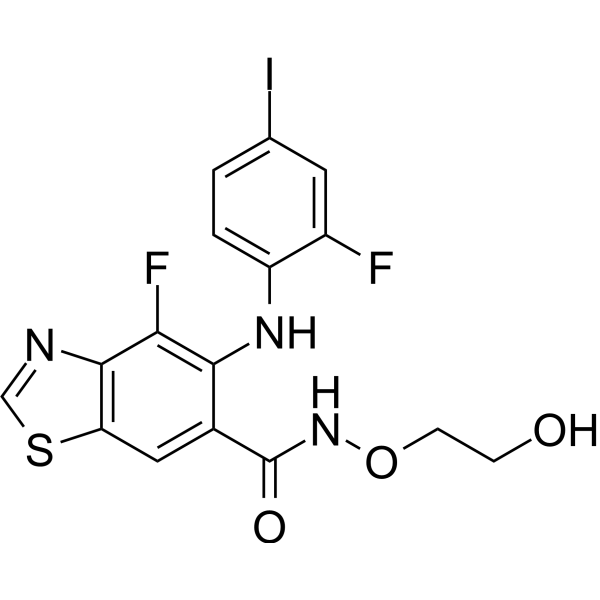
Tunlametinib is a highly selective, orally active MEK1/2 inhibitor (IC50=1.9 nM, MEK1). Tunlametinib blocks the RAS-RAF-MEK-ERK signaling pathway, arrests tumor cell cycle and promotes apoptosis. Tunlametinib potently inhibits the proliferation of RAS/RAF mutant cancer cells (such as BRAF V600E, KRAS G12C mutant cells). Tunlametinib shows synergistic anti-tumor effects with BRAF/KRASG12C/SHP2 inhibitors, Docetaxel (HY-B0011). Tunlametinib can be used to study targeted therapy for RAS/RAF mutation-driven malignancies (such as melanoma, colorectal cancer, and non-small cell lung cancer) .
loading...
    loading...
Cat. No.: HY-147245
CAS No.: 1858179-75-5
Purity:  98.49%
Synonyms: STP1002
Target:  

PARP

Research Areas:  

Cancer

Basroparib (STP1002) is a selective, orally active inhibitor of tankyrase (TNKS1/TNKS2) with IC50 of 29.94 nM and 3.68 nM for TNKS1 and TNKS2, respectively. Basroparib has an IC50 of >10 μM for PARP1. Basroparib binds to TNKS, stabilizes AXIN1/2 proteins, blocks Wnt/β-catenin signaling pathway, inhibits tumor cell proliferation and induces apoptosis, while reducing cancer stem cell properties. Basroparib can be used in colorectal cancer (CRC) studies with KRAS mutations (such as G12V/G12D) to overcome acquired resistance to MEK inhibitors. STP1002 has synergistic antitumor activity with MEK inhibitors .
loading...
    loading...
Cat. No.: HY-164529
CAS No.: 2121503-76-0
Target:  

Raf Ras MEK ERK VEGFR Tie c-Fms

Research Areas:  

Cancer

SJ-C1044 is an orally available pan-RAF inhibitor with immunomodulatory and anti-tumor activities. SJ-C1044 inhibits wild-type BRAF, wild-type CRAF, and BRAF (V600E) with IC50 values ??of 331, 257, and 187 nM, respectively. SJ-C1044 inhibits tumor cell proliferation by inhibiting kras activation and MEK-ERK phosphorylation. In addition, SJ-C1044 also has a certain inhibitory effect on VEGFR2, TIE2, and CSF1R, with IC50 values ??of 100, 23, and 235 nM, respectively. SJ-C1044 improves the tumor immune microenvironment by inhibiting angiogenesis and regulating macrophage function. SJ-C1044 can be used in the study of colorectal cancer .
loading...
    loading...
Cat. No.: HY-181284
CAS No.: 2563902-57-6
BYBC‑1 is a selective G4‑RNA‑targeting ligand with high affinity forKRAS and NRAS G4‑RNAs (Kd = 0.05-0.28 μM). BYBC‑1 stabilizes G4‑RNA structures in KRAS and NRAS mRNA, blocks thePI3K/AKT and MAPK/ERK pathways, activates the DNA damage response (DDR), suppresses energy metabolism, and induces S‑phase arrest and apoptosis. BYBC‑1 exhibits high selectivity over non‑malignant fibroblasts and significantly inhibits the growth of HCT‑116 xenograft tumors in vivo. BYBC‑1 can be used for the study of colorectal cancer .
loading...
    loading...
Cat. No.: HY-182055
Research Areas:  

Cancer

Anticancer agent 309 (Compound HZ-1) is an anticancer agent and G-quadruplex binder, with Kd values of 2.46 μM and 1.61 μM for c-Myc G4 and KRAS G4, respectively. Anticancer agent 309 promotes the formation of intranuclear G4. Anticancer agent 309 shows higher selectivity for parallel G4 than for non-parallel G4. Anticancer agent 309 inhibits the NRF2 signaling pathway and reduces the expression of XCT and GPX4. Anticancer agent 309 induces Ferroptosis, Apoptosis and immunogenic cell death in cells. Anticancer agent 309 exerts antitumor efficacy against breast cancer. Anticancer agent 309 is applicable for the research of breast cancer .
loading...
    loading...

