89 Results for "

STING pathway

" in MedChemExpress (MCE) Product Catalog:
Products (89)

89 Results for "STING pathway" in MCE Product Catalog:

Cat. No.: HY-N2616R
CAS No.: 125-15-5
Vomicine (Standard) is the analytical standard of Vomicine. This product is intended for research and analytical applications. Vomicine modulates cGAS-STING-TBK1 signaling pathway, and exhibits anti-inflammatory activity. Vomicine is an alkaloid that can be isolated from Strychnos nux-vomica seeds .
loading...
    loading...
Cat. No.: HY-158126
Target:  

DNA/RNA Synthesis

Research Areas:  

Cancer

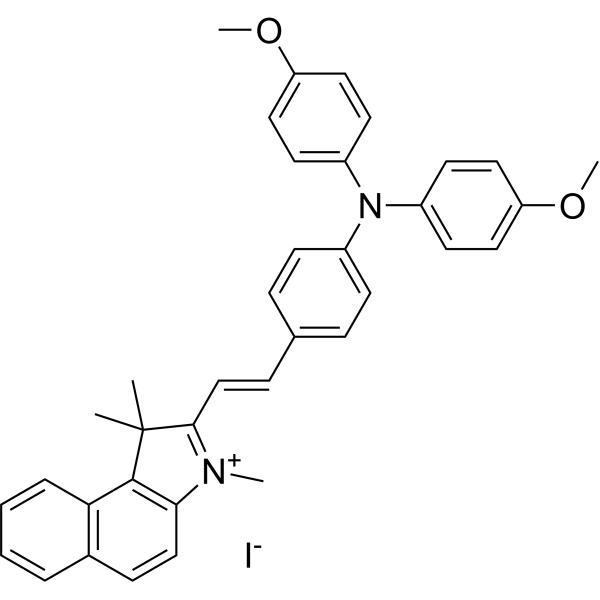
G-quadruplex ligand 2 (compound A3) is a triphenylamine-based ligand that targets mitochondrial DNA G4s. G-quadruplex ligand 2 activates the cGAS-STING pathway. G-quadruplex ligand 2 inhibits tumor growth and metastasis via regulation of TME .
loading...
    loading...
Cat. No.: HY-163461
Target:  

PARP

Research Areas:  

Cancer

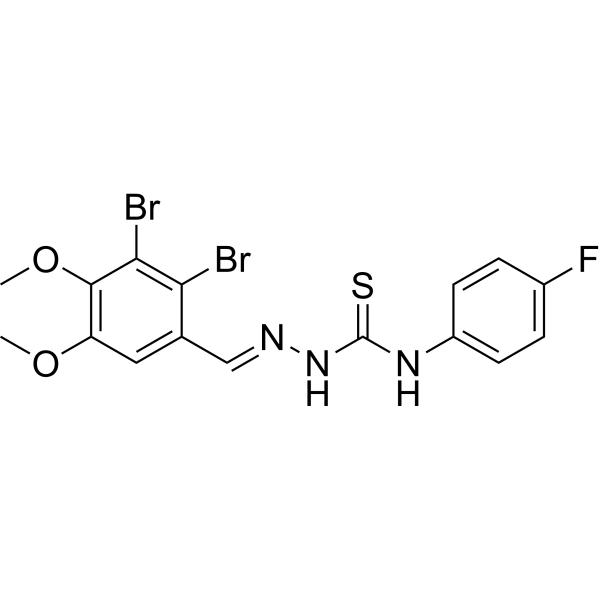
4F-DDC is a novel PARP1 inhibitor with an IC50 value of 82 nM. 4F-DDC induces DNA damage and activates the cGAS–STING pathway. 4F-DDC inhibits the growth of HCC-1937-derived tumor xenografts .
loading...
    loading...
Cat. No.: HY-175472
Target:  

Phosphatase Apoptosis

Research Areas:  

Cancer

(GalNAc)3-CPT is a glycoconjugate prodrug that targets the asialoglyco-protein receptor (ASGR) overexpressed on hepatocytes. (GalNAc)3-CPT exhibits significant antitumor activity (IC50 value of 3.07 μM in HepG2 cells) by activating the cGAS-STING pathway and promoting CD8+ T cell infiltration into tumors, thereby inducing tumor cell apoptosis .
loading...
    loading...
Cat. No.: HY-13735H
CAS No.: 78901-94-7
Synonyms: Acriquine acetate
Research Areas:  

Cancer

Quinacrine (Acriquine) acetate is a small molecule modulator of the cGAS-STING-TBK1 signaling pathway, possessing immune stimulatory activity. Quinacrine acetate has been explored for its potential therapeutic applications in enhancing anti-tumor immunity. Quinacrine acetate can improve the effectiveness of cancer immunotherapies by addressing the poor immunogenicity of various tumors. Quinacrine acetate also presents a promising strategy for overcoming the limitations associated with immune checkpoint inhibitors in cancer treatment.
loading...
    loading...
Cat. No.: HY-162944
CAS No.: 3031762-97-4
Research Areas:  

Cancer

NA-Ir is a Ferroptosis inducer. NA-Ir targets mitochondrial DNA (mtDNA) and activates the cGAS-STING pathway to induce ferritinophagy (Autophagy), while also generating reactive oxygen species (ROS) through photodynamic therapy (PDT), depleting glutathione (GSH), and downregulating glutathione peroxidase 4 (GPX4), thereby triggering lipid peroxidation and Ferroptosis. NA-Ir exhibits higher anticancer activity under light exposure and selectively inhibits cancer cells with high H2S levels .
loading...
    loading...
Cat. No.: HY-168491
CAS No.: 3067908-20-4
Research Areas:  

Cancer

Enpp-1-IN-25 (Compound 30) is an ENPP1 inhibitor with an IC50 of 8.05 nM and low oral bioavailability. Enpp-1-IN-25 can effectively activate the intracellular STING pathway by inhibiting cGAMP degradation. Enpp-1-IN-25 can enhance immune cell infiltration in the tumor microenvironment and type I interferon responses, and potentiate the antitumor efficacy of the anti-PD-L1 antibody. Enpp-1-IN-25 can be used in the research of cancer immunotherapy .
loading...
    loading...
Cat. No.: HY-181484
CAS No.: 3058842-90-0
Research Areas:  

Cancer

STING agonist-50 is an orally active STING agonist with an IC50 of 3.457 μM. STING agonist-50 activates the STING signaling pathway and promotes the phosphorylation of downstream TBK1 and IRF3. STING agonist-50 induces the expression of IFN-β, CXCL10 and IL-6. STING agonist-50 inhibits tumor growth in syngeneic mouse models. STING agonist-50 can be used for the research of colorectal cancer .
loading...
    loading...
Cat. No.: HY-184797
Zp17 is a PROTAC degrader that targets the STING protein for degradation by recruiting cereblon, with a DC50 of 956 nM in THP-1 cells. Zp17 induces proteasome-dependent STING protein degradation and inhibits the activity of the STING signaling pathway. Zp17 alleviates renal function injury in a mouse model of acute kidney injury induced by Cisplatin (HY-17394). Zp17 exhibits STING-degrading activity in human monocytes and STING-inhibiting activity in mouse macrophage reporter cells. Zp17 can be used for research on inflammation and acute kidney injury .
loading...
    loading...
Cat. No.: HY-184200
Research Areas:  

Cancer

Enpp-1-IN-32 is an orally active, selective ENPP-1 inhibitor with an IC50 of 9.5 nM. Enpp-1-IN-32 shows selectivity over ENPP2/ENPP3. Enpp-1-IN-32 blocks cGAMP hydrolysis, and activates the STING pathway. Enpp-1-IN-32 exhibits antitumor effects in syngeneic mouse models. Enpp-1-IN-32 can be used for the research of triple-negative breast carcinoma .
loading...
    loading...
Cat. No.: HY-184535
CAS No.: 3008320-14-4
PDIC-DPC is a HMGA1 inhibitor and lung-targeting agent. PDIC-DPC upregulates STING expression and enhances STING-mediated immune signaling. PDIC-DPC inhibits the TGFβ-Smad pathway and activates AMPK. PDIC-DPC forms nanocomplexes with fibrinogen β chain and vitronectin, and achieves lung-specific accumulation by binding to pulmonary endothelial receptors. PDIC-DPC reverses established pulmonary fibrosis, reduces collagen deposition, restores alveolar structure, improves pulmonary function, and inhibits in situ ESCC growth. PDIC-DPC can be used for the research of esophageal squamous cell carcinoma and idiopathic pulmonary fibrosis .
loading...
    loading...
Cat. No.: HY-181667
Research Areas:  

Cancer

Enpp-1-IN-30 (compound 44a) is an orally active ENPP1 inhibitor with a human IC50 of 13.1 nM. Enpp-1-IN-30 prevents cGAMP degradation, activates the STING pathway. Enpp-1-IN-30 induces cytokine release to enhance innate immune response. Enpp-1-IN-30 exerts antitumor efficacy in syngeneic mouse models. Enpp-1-IN-30 can be used for the research of colon carcinoma .
loading...
    loading...
Cat. No.: HY-181057
STING-IN-18 is an orally active STING inhibitor. STING-IN-18 exhibits an IC50 of 86 nM against STING in murine RAW-Lucia TM ISG cells. STING-IN-18 inhibits STING activation and blocks downstream signaling pathways. STING-IN-18 suppresses kidney injury and inflammation. STING-IN-18 can be used for the research of autoimmune and inflammatory diseases .
loading...
    loading...
Cat. No.: HY-178049A
Target:  

STING

Research Areas:  

Cardiovascular Disease

UM-259 hydrochloride is a STING inhibitor with activity against both murine and human STING (including the STING R232 mutant). UM-259 hydrochloride inhibits STING-dependent signaling pathways, blocks STING oligomerization, and acts on human primary CD14 + monocytes. UM-259 hydrochloride can be used for research on amyotrophic lateral sclerosis, lupus erythematosus, Aicardi-Goutières syndrome, and infant-onset STING-associated vasculopathy .
loading...
    loading...
Cat. No.: HY-187227
STING-IN-19 is a STING inhibitor with a Kd value of 2.31 μM for human STING. STING-IN-19 inhibits the activation of TBK1 and IRF3 by binding to STING, thereby suppressing the activation of downstream signaling pathways. STING-IN-19 reduces the levels of key inflammatory cytokines IL-1β, IL-6 and TNF-α in colonic tissues and serum of mice with ulcerative colitis. STING-IN-19 can be used in studies related to ulcerative colitis .
loading...
    loading...
Cat. No.: HY-182923
Target:  

STING

Research Areas:  

Inflammation/Immunology

UM-200 is a covalent STING inhibitor with an EC50 of 1.10 μM. UM-200 covalently modifies the cysteine residues C292 or C309 of STING, thereby blocking its oligomerization and downstream signal transduction. UM-200 inhibits STING-dependent phosphorylation of TBK1 and IRF3. UM-200 inhibits the STING signaling pathway in mouse models. UM-200 can be used for research on STING-driven inflammatory and autoimmune diseases .
loading...
    loading...
Cat. No.: HY-184502
CAS No.: 3034295-80-9
Target:  

STING

DDO-88109 is a STING inhibitor with a Kd value of 317 nM for hSTING and 0.625 μM for mSTING. DDO-88109 competitively occupies the CDN-binding pocket of STING, thereby maintaining STING in an inactive state. It inhibits cGAS-STING signaling—including STING translocation from the endoplasmic reticulum to the Golgi apparatus, STING oligomerization, and the phosphorylation of IRF3, p65, TBK1, and STING—and attenuates the production of inflammatory cytokines and tissue inflammation in mouse models of TREX1-deficiency-driven autoinflammation and cisplatin (HY-17394)-induced acute kidney injury. DDO-88109 is suitable for research on inflammatory diseases, autoimmune disorders, and acute kidney injury driven by the cGAS-STING pathway .
loading...
    loading...
Cat. No.: HY-180120
UM-203 is a reversible covalent STING antagonist. UM-203 is effective against both mouse and human STING, and in particular, it inhibits the most common human STING R232 variant. UM-203 can inhibit STING oligomerization and reduce phosphorylation of downstream TBK1 and IRF3, thereby blocking the IRF3 and NF-κB-mediated signaling pathways and inhibiting IFNβ and IL-6 secretion. UM-203 can be used for the research of inflammation and immunology, such as systemic lupus erythematosus .
loading...
    loading...
Cat. No.: HY-189280
CAS No.: 2718206-92-7
Research Areas:  

Inflammation/Immunology

S-570 is an orally active selective STING antagonist. S-570 inhibits the secretion of the cytokines IFN-β and IL-6. S-570 can be used for research on inflammation .
loading...
    loading...
Cat. No.: HY-160225F
Research Areas:  

Inflammation/Immunology

Biotin-labeled ISD sodium is a biotin-labeled form of ISD sodium (HY-160225). ISD sodium is an interferon-stimulatory DNA, a 45 bp non-CpG double-stranded oligonucleotide derived from the Listeria monocytogenes genome. ISD sodium can potently induce type I interferon production via the cGAS‑STING‑TBK1‑IRF3 pathway .
loading...
    loading...

