75 Results for "

difficile

" in MedChemExpress (MCE) Product Catalog:
Products (75)

75 Results for "difficile" in MCE Product Catalog:

Cat. No.: HY-150045
CAS No.: 2245693-15-4
Target:  

Topoisomerase Bacterial

Research Areas:  

Infection

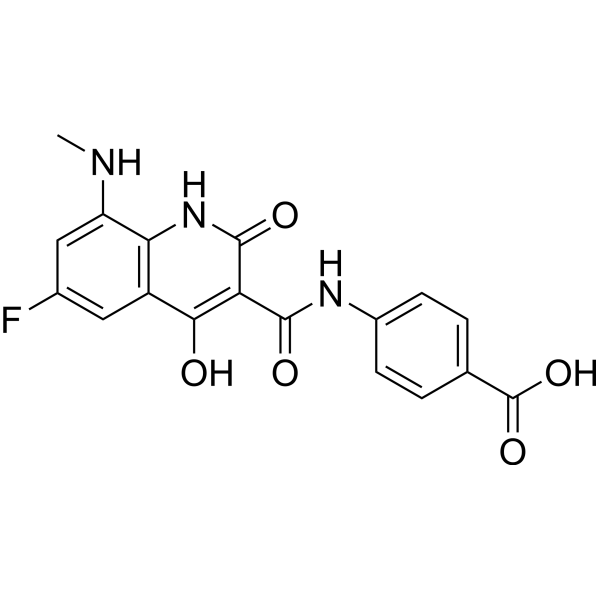
TP0480066 is a selective topoisomerase II inhibitor with IC50s of 1.10 and 62.89 nM for DNA gyrase and topo IV, respectively. TP0480066 shows good activity of againsting various bacterial species including drug-resistant strains. TP0480066 also exhibits potent inhibitory activity to N. gonorrhoeae, can be used in study of gonorrhea .
loading...
    loading...
Cat. No.: HY-B1127R
CAS No.: 3440-28-6
Synonyms: N-Benzoyl-β-alanine (Standard)
Betamipron (Standard) is the analytical standard of Betamipron (HY-B1127). This product is intended for research and analytical applications. Betamipron (N-benzoyl-β-alanine) is a carbapenem β-lactam antibiotic with antibacterial activity against most Gram-positive and Gram-negative aerobic and anaerobic bacteria. Betamipron can target and inhibit renal organic anion transporters, alleviate renal injury caused by Cisplatin (HY-17394), without interfering with the biological activity of cisplatin. Betamipron is often used in combination with panipenem, which can attenuate the renal effects induced by panipenem and slightly promote the proliferation of Clostridium difficile in the cecum. Betamipron can be used in studies related to renal injury and bacterial infection .
loading...
    loading...
Cat. No.: HY-P10914
CAS No.: 1426227-11-3
Target:  

MDM-2/p53 Autophagy

Research Areas:  

Inflammation/Immunology Cancer

D-CopA3 is the inhibitor for MDM2 and the activator for p53 signaling pathway. D-CopA3 exhibits cytotoxicity in colorectal cancer cells HCT-116, LoVo, and RKO (IC50=15-18 μM), induces JNK/Beclin-1 mediated autophagy. D-CopA3 downregulates the expression of cell cycle inhibitory protein p21Cip1/Waf1, enhances the mucosal barrier function and reduces penetration of inflammatory mediators. D-CopA3 exhibits anti-inflammtory activity in mouse C. difficile toxin A-induced acute enteritis models and DSS (HY-116282)-induced chronic colitis models. D-CopA3 exhibits antitumor efficacy in mouse HCT-116 xenograft models .
loading...
    loading...
Cat. No.: HY-N21879
CAS No.: 88192-99-8
Myxopyronin B is an α-pyrone natural product derived from Myxococcus fulvus and acts as an inhibitor of the switch region of bacterial RNA polymerase (RNAP) (IC50 = 24 μM). Myxopyronin B binds to the switch region of RNA polymerase, locking the polymerase clamp into a closed conformation and thereby inhibiting transcription initiation. Myxopyronin B exhibits antibacterial activity against Staphylococcus aureus and Clostridioides difficile, inhibits the early synthesis of toxins A and B, and reduces the abundance of proteins in the branched-chain amino acid fermentation pathway. Myxopyronin B is useful for research related to bacterial infections .
loading...
    loading...
Cat. No.: HY-138135
CAS No.: 1030825-28-5
Synonyms: Fidaxomicin metabolite OP-1118
Research Areas:  

Infection

OP-1118 (Fidaxomicin metabolite OP-1118) is an orally active dual inhibitor of NF-κB and ERK1/2, with low systemic plasma exposure, no accumulation, and primary excretion via feces. By inhibiting the phosphorylation of NF-κB and ERK1/2 and reducing the expression of pro-inflammatory cytokines, OP-1118 exerts significant anti-inflammatory, cytoprotective, anti-apoptotic and antibacterial activities. In Clostridium difficile infection models, OP-1118 effectively blocks toxin-mediated intestinal inflammation, cell rounding, histological damage and apoptosis, and its protective effect can be reversed by PMA (HY-18739) .
loading...
    loading...
Cat. No.: HY-P992123
CAS No.: 3054523-85-9
Synonyms: AZD-5148

Target:  

Bacterial

Research Areas:  

Infection

Ombetoxabart is a humanized IgG1-κ monoclonal antibody targeting TcdB (Clostridioides difficile toxin B), which exerts its function by neutralizing the toxicity of TcdB. Ombetoxabart can be used for the study of Clostridioides difficile infection .
loading...
    loading...
Cat. No.: HY-187837
CAS No.: 1426216-93-4
Synonyms: OPS-2071
Abimufloxacin (OPS-2071) is a broad-spectrum quinolone antibacterial agent. Abimufloxacin inhibits the supercoiling activity of DNA gyrase, the decatenation activity of topoisomerase IV, the activation and proliferation of T cells, macrophage activity, as well as the production of TNF-α and IFN-γ. Abimufloxacin exhibits activity against enteropathogenic Gram-positive bacteria, Gram-negative bacteria, quinolone-resistant bacteria, and Crohn's disease-associated bacteria (including Clostridioides difficile and Campylobacter jejuni). Abimufloxacin alleviates colonic inflammation in a mouse model of T cell-mediated colitis. Abimufloxacin can be used in research related to diseases such as intestinal infections and Crohn's disease .
loading...
    loading...
Cat. No.: HY-17580S1
Synonyms: OPT-80-d6; PAR-101-d6
Fidaxomicin-d6 (OPT-80-d6) is the deuterium labeled Fidaxomicin (HY-17580). Fidaxomicin (OPT-80), a macrocyclic antibiotic, is an orally active and potent RNA polymerase inhibitor. Fidaxomicin has a narrow spectrum of antibacterial activity and a good anti-Clostridium difficile activity (MIC90=0.12 μg/mL). Fidaxomicin can be used for Clostridium difficile infection (CDI) research .
loading...
    loading...
Cat. No.: HY-181819
CAS No.: 1311163-39-9
Target:  

Bacterial Topoisomerase

Research Areas:  

Infection

Antibacterial agent 327 (Compound 6f) is an Antibacterial agent. Antibacterial agent 327 potently inhibits the supercoiling activity of Staphylococcus aureus DNA gyrase with an IC50 of 0.28 μM. It also inhibits the ATPase activities of DNA gyrase and Topoisomerase IV, as well as the decatenation activity of Topoisomerase IV (IC50: 0.43 μM, 0.73 μM, and 2.31 μM, respectively). Antibacterial agent 327 potently inhibits Clostridioides difficile and methicillin-resistant Staphylococcus aureus (HY-121544), with an MIC of 0.78 μg/mL for both. Antibacterial agent 327 inhibits Escherichia coli with an MIC50 of 0.78 μg/mL .
loading...
    loading...
Cat. No.: HY-116880
CAS No.: 2092352-48-0
Research Areas:  

Infection

DS-2969b is an orally active GyrB inhibitor with antibacterial activity. DS-2969b is is active against Clostridium difficile infection (MIC90: 0.06 μg/mL), which is 2-, 16-, and 32-fold lower than those of Fidaxomicin (HY-17580), Metronidazole (HY-B0318), and Vancomycin (HY-B0671), respectively. DS-2969b inhibits the supercoiling activity of C. difficile DNA gyrase. DS-2969b also exhibits activity against other Gram-positive anaerobes, including strict and facultative anaerobes. DS-2969b is safe and well tolerated in preclinical toxicology studies .
loading...
    loading...
Cat. No.: HY-131476
CAS No.: 1426209-02-0
Target:  

Bacterial

Research Areas:  

Infection

NAI-802 is a new lantibiotic. NAI-802 can be produced by Actinoplanes sp. NAI-802 shows a significant activity against Gram-positive anaerobic bacteria, such as Clostridium difficile, C. butyricum, C. perfringens and Peptostreptococcus asaccharolyticus with MIC ranges of 0.25-2 μg/mL .
loading...
    loading...
Cat. No.: HY-E71085
Research Areas:  

Others

(R)-2-Hydroxy-4-methylpentanoate CoA-transferase (EC 2.8.3.24) , characterized from the bacterium Peptoclostridium difficile, participates in an L-leucine fermentation pathway. The reaction proceeds via formation of a covalent anhydride intermediate between a conserved aspartate residue and the acyl group of the CoA thioester substrate.
loading...
    loading...
Cat. No.: HY-E71088
Research Areas:  

Others

(R)-2-Hydroxyisocaproyl-CoA dehydratase (EC 4.2.1.157) , isolated from the bacterium Peptoclostridium difficile, is involved in the reductive branch of L-leucine fermentation. It catalyses an α/β-dehydration, which depends on the reductive formation of ketyl radicals on the substrate generated by injection of a single electron from the ATP-dependent activator protein HadI.
loading...
    loading...
Cat. No.: HY-182464
CAS No.: 893603-33-3
Target:  

Potassium Channel

Research Areas:  

Infection Others

DABMA is a TMEM175 channel activator with a human EC50 of 17.9 μM. DABMA directly increases TMEM175 channel current via interaction with intracellular, transmembrane, or endosomal lumen-associated domains, and does not alter TMEM175 mRNA or protein levels. DABMA delays endolysosomal substrate degradation, modulates endolysosomal trafficking, increases acidic organelle accumulation, induces cholesterol accumulation and altered late endosome morphology. DABMA can be used for the research of coronavirus disease, Clostridium difficile infection, Pseudomonas aeruginosa infection, rabies, and influenza virus infection .
loading...
    loading...
Cat. No.: HY-Y0823
CAS No.: 532-55-8
Research Areas:  

Infection

Benzoyl isothiocyanate is an aromatic isothiocyanate derivative with antibacterial and acaricidal activities. Benzoyl isothiocyanate inhibits the growth of specific oral bacteria, and also serves as an intermediate for the synthesis of heterocyclic compounds such as thiazolidine and quinazoline derivatives. Benzoyl isothiocyanate exhibits acaricidal activity against Dermatophagoides farina (dust mite) and D. pteronyssinus (house dust mite). Benzoyl isothiocyanate can be used in research related to bacterial infection, pest control and organic synthesis .
loading...
    loading...

