190 Results for "

membrane structures

" in MedChemExpress (MCE) Product Catalog:
Products (190)

190 Results for "membrane structures" in MCE Product Catalog:

Cat. No.: HY-W009877
CAS No.: 92-91-1
4-Acetylbiphenyl (ACBP) is a biphenyl compound that can be used as a probe molecule to study the structure and function of proteins and to study the properties of lipid membranes .
loading...
    loading...
Cat. No.: HY-D2317
HaloFlipper 30 is a fluorescent probe that covalently reacts with HaloTag fusion proteins to form an ester bond, which allows the probe to be stably attached to membrane structures. HaloFlipper 30 has high specificity, precision and good cell permeability .
loading...
    loading...
Cat. No.: HY-W250181
CAS No.: 148616-91-5
Synonyms: Octyl β-D-thiomaltopyranoside
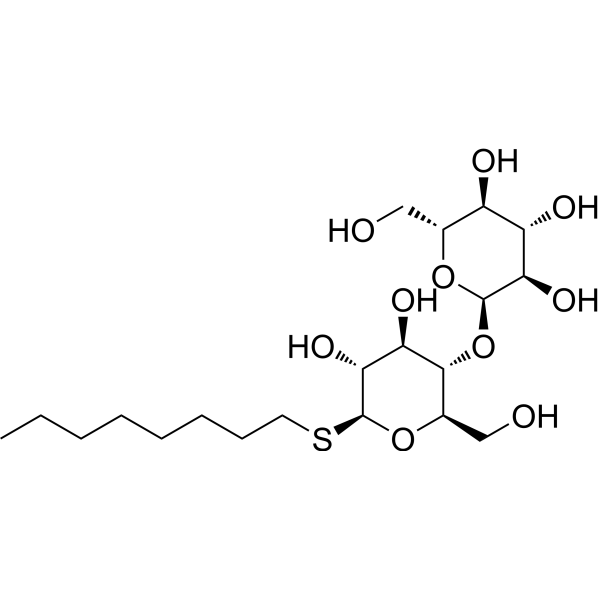
Octyl thiomaltoside (OTM) is a nonionic detergent commonly used in the purification and crystallization of membrane proteins. It belongs to the family of maltoside detergents and has a hydrophilic head group and a lipophilic tail group, enabling it to interact with water-soluble and membrane-bound proteins. OTMs are known for their ability to solubilize integral membrane proteins without disrupting their structure or function, making them an invaluable tool in biochemical and biophysical research. In addition to protein research, OTMs are used in a variety of other applications, including drug delivery systems, nanotechnology, and diagnostic analysis.
loading...
    loading...
Cat. No.: HY-166257
CAS No.: 38621-58-8
Synonyms: Psychosine 3′-O-sulfate; Psychosine 3′-sulfate
Research Areas:  

Metabolic Disease

Lyso-sulfatide (bovine) is a phospholipid component derived from sphingolipid catabolism and a potent factor Xa inhibitor and anticoagulant. Lyso-sulfatide (bovine) binds directly to factor Xa and inhibits prothrombin activation mediated by the prothrombinase complex, thereby prolonging factor Xa-induced plasma clotting time and suppressing thrombin generation. Lyso-sulfatide (bovine) serves as a reliable lipid membrane mimic for studying cell membrane structure, function, and molecular interactions .
loading...
    loading...
Cat. No.: HY-N5034A
CAS No.: 10389-08-9
Synonyms: Monoaminoethyl phosphate calcium; NSC 254167 calcium; O-Phosphoethanolamine calcium
Target:  

Liposome

Research Areas:  

Others

Phosphoethanolamine (calcium) (Monoaminoethyl phosphate (calcium); NSC 254167 (calcium); O-Phosphoethanolamine (calcium)) is a precursor to phosphatidylethanolamine and can be used in the synthesis of phosphatidylcholine. Phosphoethanolamine (calcium) is used in the study of phospholipid metabolism and cell membrane structure .
loading...
    loading...
Cat. No.: HY-156252
CAS No.: 3013580-23-6
Target:  

Fungal

Research Areas:  

Infection

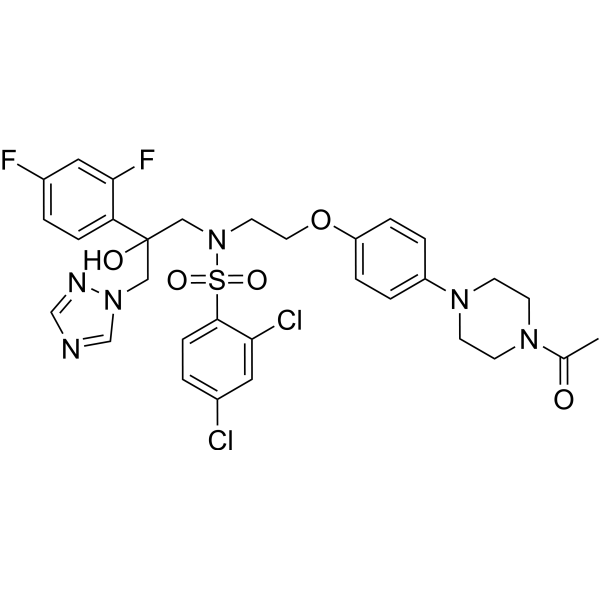
Antifungal agent 75 (compound 6r) is a potent antifungal agent against Candida albicans. Antifungal agent 75 significantly inhibits the formation of C. albicans biofilm, increases the permeability of the cell membrane, reduces the ergosterol level of the cell membrane, damages the membrane structure, and destroys the integrity of the cell structure to exert excellent antifungal activity .
loading...
    loading...
Cat. No.: HY-D1074
CAS No.: 53213-79-9
Synonyms: 3,3'-Dipropyloxacarbocyanine iodide
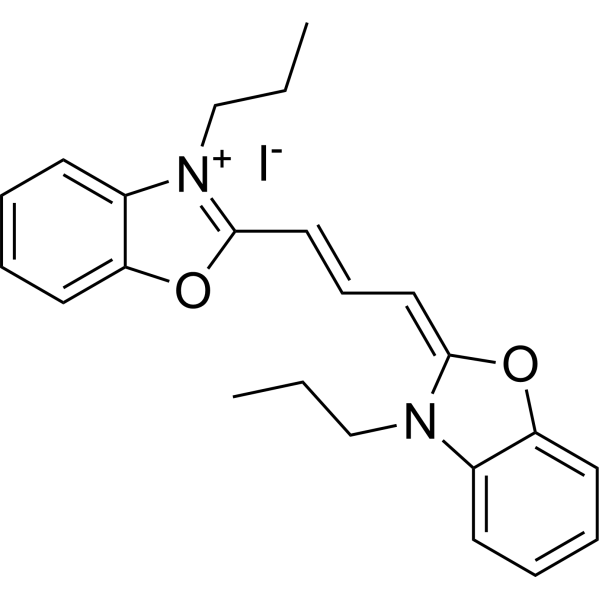
DiOC3(3) (3,3'-Dipropyloxacarbocyanine iodide) is a green fluorescent lipophilic dye with cell membrane permeability. DiOC3(3) can be used to stain cell membranes and other lipid-soluble biological structures .
loading...
    loading...
Cat. No.: HY-B1248A
CAS No.: 206986-79-0
Research Areas:  

Infection

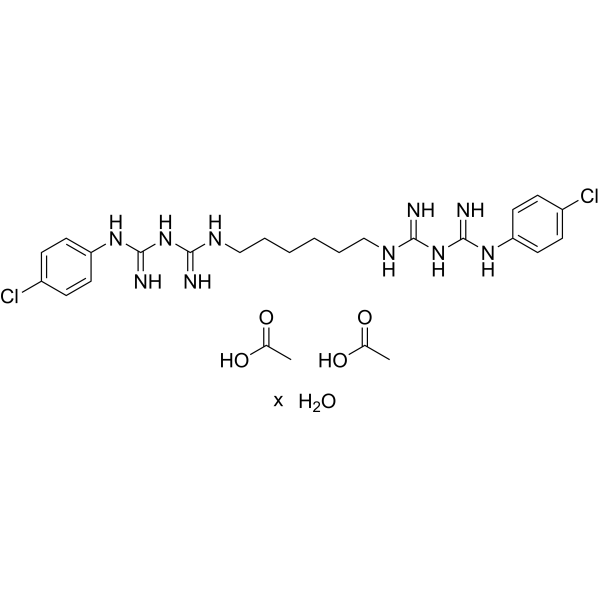
Chlorhexidine acetate hydrate is a orally active cationic antimicrobial agent that targets microbial cell membranes. Chlorhexidine acetate hydrate binds to cell membrane phospholipids non-specifically, destroys membrane structure and induces leakage of cell contents. Chlorhexidine acetate hydrate has broad-spectrum bactericidal activity against both Gram-positive and Gram-negative bacteria. Chlorhexidine acetate hydrate can interfere with membrane permeability, cause protein precipitation and energy metabolism disorders, such as rapid inhibition of microbial growth and induction of cell death (necrosis or apoptosis) .
loading...
    loading...
Cat. No.: HY-179396
CAS No.: 1884551-35-2
Target:  

Bacterial

Research Areas:  

Infection

T-1228 is a highly selective LpxC inhibitor. T-1228 can effectively block the synthesis of LPS (HY-D1056), causing defects in the bacterial outer membrane structure, increasing membrane permeability, and ultimately leading to bacterial cell death. T-1228 can be used for the study of Gram-negative bacterial infections .
loading...
    loading...
Cat. No.: HY-W013699R
CAS No.: 56-95-1
Chlorhexidine diacetate (Standard) is the analytical standard of Chlorhexidine diacetate (HY-W013699). This product is intended for research and analytical applications. Chlorhexidine diacetate is a orally active cationic antimicrobial agent that targets microbial cell membranes. Chlorhexidine diacetate binds to cell membrane phospholipids non-specifically, destroys membrane structure and induces leakage of cell contents. Chlorhexidine diacetate has broad-spectrum bactericidal activity against both Gram-positive and Gram-negative bacteria. Chlorhexidine diacetate can interfere with membrane permeability, cause protein precipitation and energy metabolism disorders, such as rapid inhibition of microbial growth and induction of cell death (necrosis or apoptosis) .
loading...
    loading...
Cat. No.: HY-160203
CAS No.: 64069-64-3
Target:  

Endogenous Metabolite

Research Areas:  

Others

18:0 Cardiolipin (CL) is a polyglycerophospholipid synthesized in mitochondria, playing a crucial role in mitochondrial bioenergetics and signaling. Exclusively found in the inner mitochondrial membrane of eukaryotes, 18:0 CL exhibits a complex structure characterized by its unique chain length and degree of saturation, along with the specific arrangements of its four fatty acid substituents.
loading...
    loading...
Cat. No.: HY-121461
CAS No.: 50686-98-1
Synonyms: 15-Azasterol
Target:  

Fungal

Research Areas:  

Infection

A25822B is an antifungal agent, with a MIC of 1 μM for Ascosphaera apis. A25822B causes conformational changes in mitochondria and disruption of spore membrane structure. A25822B can be used for the research of bee chalk disease .
loading...
    loading...
Cat. No.: HY-155769
Target:  

Fungal

Research Areas:  

Infection

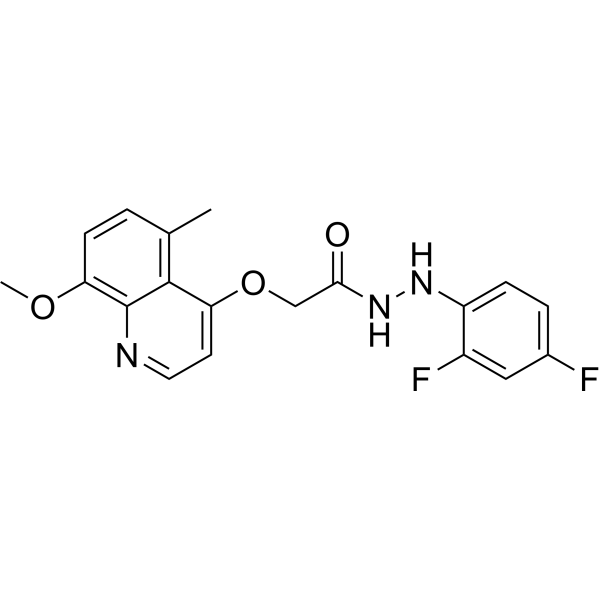
Antimicrobial agent-24 (compound E8) is a hydrazide compound with excellent and broad-spectrum fungicidal activities. Antimicrobial agent-24 affects the normal function of the plasma membrane, further generating changes in the morphology and subcellular structure of mycelia .
loading...
    loading...
Cat. No.: HY-130772
CAS No.: 38620-77-8
Filipin II is an antibiotic, which exhibits antifungal efficacy. Filipin II interacts with membrane sterols, leads to changes in membrane structure, inhibits Candida utilis and Saccharomyces cerevisiae with the MIC of 0.03 mg/L and 0.2 μg/L .
loading...
    loading...
Cat. No.: HY-167808
CAS No.: 5070-03-1
Cis-9,12-Hexadecadienoic acid is a polyunsaturated fatty acid that has the activity of regulating the physical properties of cell membranes. The presence of Cis-9,12-Hexadecadienoic acid can enhance the fluidity and flexibility of cell membranes. Cis-9,12-Hexadecadienoic acid participates in a variety of physiological processes in the body, affecting cell signal transduction and membrane structure stability.
loading...
    loading...
Cat. No.: HY-P10708A
Target:  

Inhibitory Antibodies

Research Areas:  

Cancer

SVS-1 peptide acetate is an anticancer peptide. SVS-1 peptide acetate can selectively recognize cancer cells through electrostatic interactions, disrupt the cell membrane structure, and lead to cell death. Unlike antimicrobial peptides, the efficacy of SVS-1 peptide acetate occurs before complete neutralization of the membrane charge .
loading...
    loading...
Cat. No.: HY-P10708
CAS No.: 1370453-04-5
Target:  

Inhibitory Antibodies

Research Areas:  

Cancer

SVS-1 peptide is an anticancer peptide. SVS-1 peptide can selectively recognize cancer cells through electrostatic interactions, disrupt the cell membrane structure, and lead to cell death. Unlike antimicrobial peptides, the efficacy of SVS-1 peptide occurs before complete neutralization of the membrane charge .
loading...
    loading...
Cat. No.: HY-W553514
CAS No.: 4539-70-2
DL-α-Phosphatidylcholine, distearoyl is a synthetic form of phosphatidylcholine that has the activity of spontaneously forming bilayer membranes in aqueous environments. DL-α-Phosphatidylcholine, distearoyl is an important component of biological membranes and provides support for the integrity of cell structures. DL-α-Phosphatidylcholine, distearoyl plays a key role in the preparation of compound delivery systems to improve the solubility and biocompatibility of compounds.
loading...
    loading...
Cat. No.: HY-139784
CAS No.: 182370-45-2
Synonyms: (R)-2-Hydroxyoleic acid; (R)-2-OHOA; (R)-LAM561
Target:  

Endogenous Metabolite

Research Areas:  

Cancer

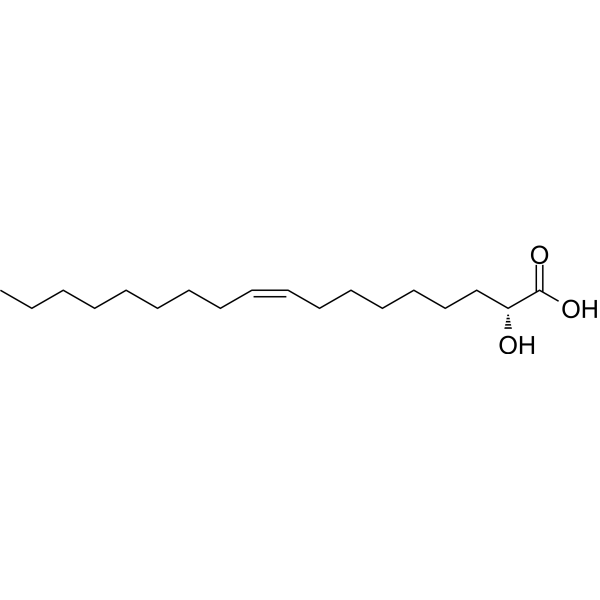
Idroxioleic acid ((R)-2-Hydroxyoleic acid; (R)-2-OHOA), the R enantiomer of (Rac)-Idroxioleic acid, is an orally active fatty acid that modulates the lipid composition and structure of the membranes. Idroxioleic acid has antitumor activities .
loading...
    loading...
Cat. No.: HY-174158
Target:  

Bacterial

Research Areas:  

Infection

Antibacterial agent 270 (Compound 3e) is an antibacterial agent that acts on bacterial membrane components phosphatidylglycerol (PG), cardiolipin (CL), and bacterial DNA. Antibacterial agent 270 disrupts bacterial membrane structure and binds to DNA to interfere with genetic information transmission. Antibacterial agent 270 is promising for research of infections caused by methicillin-resistant Staphylococcus aureus (MRSA) .
loading...
    loading...

