
879 Results for "

binding affinity

" in MedChemExpress (MCE) Product Catalog:
Products (879)

879 Results for "binding affinity" in MCE Product Catalog:

Cat. No.: HY-120247
CAS No.: 1520893-08-6
Research Areas:  

Others

TASP0434299 (Compound 10) is a labeled ligand for the vasopressin V1b receptor. TASP0434299 exhibits high binding affinity for human and murine V1B receptors, with IC50 values of 0.526 nM and 0.641 nM, respectively, and shows potent antagonistic activity against the human V1B receptor with an IC50 of 0.639 nM. TASP0434299 is a substrate for human and rhesus monkey P-glycoprotein, resulting in low brain uptake in rhesus monkeys. TASP0434299 binds to V1B receptors in rat and monkey pituitary tissues in a saturable and specific manner both in vitro and in vivo. When radiolabeled with tritium or 11C, TASP0434299 serves as a prototype V1B receptor radiotracer to visualize V1B receptor in the pituitary gland of anesthetized monkeys via positron emission tomography .
loading...
    loading...
Cat. No.: HY-153169R
CAS No.: 2754428-18-5
6PPD-Q (Standard) is the analytical standard of 6PPD-Q (HY-153169). This product is intended for research and analytical applications. 6PPD-Q (6PPD-Quinone) is an environmental pollutant that can be detected in human urine and is widely present in the environment. 6PPD-Q targets and binds to CNR2, CNR1, AA2AR, LCAT, and TRPA1, with CNR2 exhibiting the highest binding affinity, potentially acting as a CNR2 receptor agonist to activate cannabinoid receptors. 6PPD-Q induces intestinal inflammation and barrier damage by disrupting mitochondrial function, reducing neuronal glycolysis metabolites and TCA cycle intermediates, and exacerbating α-synuclein (α-syn) aggregation. 6PPD-Q is applicable in research on environmental toxicology, neurodegenerative diseases, and inflammation-related disorders .
loading...
    loading...
Cat. No.: HY-D0996
CAS No.: 181885-68-7
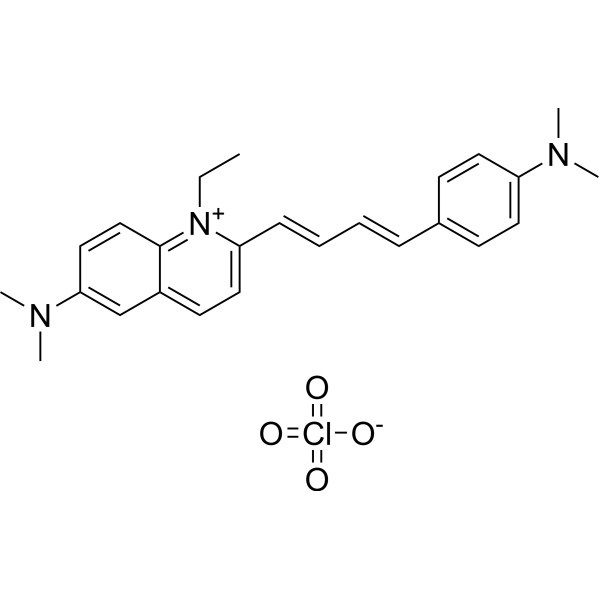
Lds-751 is a nucleic acid stain that mainly detects DNA. Lds-751 is a nucleic acid stain that mainly detects DNA. Lds-751 has a high affinity for DNA and fluorescence is enhanced after binding, but the maximum emission wavelength is 670nm. Lds-751 and Thiazole orange can be used for the differentiation of red blood cells, platelets, reticulocytes, and nucleated cells and can be stimulated at 488nm. Studies have shown that LDS-751 binds almost exclusively to mitochondria when incubated with nucleated living cells. After nucleated Acridine Orange (HY-101879) staining and LDS-751 treatment of cells, confocal microscopy revealed almost no co-location of the cells. Staining with Rhodamine 123 (HY-D0816), a dye known to bind polarized mitochondria, was almost identical to the pattern observed with LDS-751 .
loading...
    loading...
Cat. No.: HY-P991641
Synonyms: LY3012218

Target:  

FLT3 p38 MAPK STAT PI3K Akt

Research Areas:  

Cancer

IMC-EB10 (LY3012218) is an anti-FLT3 monoclonal antibody. IMC-EB10 binds to FLT3 with high affinity (Kd = 158 pM) and blocks the binding of FLT3 ligand to FLT3 (IC50 ≈ 10 nM), thereby inhibiting MAPK, STAT5, and PI3K/Akt signaling in leukemia cells. IMC-EB10 can enhance the anti-leukemic effect of Methotrexate (HY-14519) and inhibit leukemias expressing wild-type or ITD-mutated FLT3 receptors. IMC-EB10 prolongs the survival of acute lymphoblastic leukemia (ALL) cells and primary leukemia samples and reduces engraftment in non-obese diabetic/severe combined immunodeficiency patients. IMC-EB10 is indicated for leukemia research .
loading...
    loading...
Cat. No.: HY-L932V0
2,000,000 compounds

Macrocyclic compounds (≥12-atom cyclic small molecules/peptides) have unique physicochemical properties. They form preorganized conformations with high binding affinity/selectivity, target traditional small-molecule-inaccessible proteins, and bridge small-molecule drugs and biological agents. As key protein phosphorylation enzymes, kinases are linked to tumors, COPD, etc., and are critical therapeutic targets. Traditional small-molecule kinase inhibitors lack selectivity, causing off-target toxicity, low bioavailability, and acquired resistance. Macrocycles’ semi-rigid structure restricts conformations, boosts binding selectivity, optimizes pharmacokinetics, and makes macrocyclization a core kinase inhibitor optimization strategy.

Thousands of bioactive macrocycles were curated from ChEMBL. Via Transformer, macrocyclization was converted into a chemical language translation task, enabling end-to-end macrocycle generation from linear precursors with simplified inputs. Macformer achieves efficient, automated linear molecule macrocyclization via deep learning; generated macrocycles have diversity, novelty, biocompatibility, and cover broader chemical space.

MCE collected thousands of marketed/clinical kinase inhibitors, using their fragments for macrocyclization to generate derivatives. After evaluating synthetic accessibility and physicochemical properties, a million-scale virtual macrocyclic library was built for kinase-related virtual and AI-driven screening.

Cat. No.: HY-L932V
2,000,000 compounds

Macrocyclic compounds (≥12-atom cyclic small molecules/peptides) have unique physicochemical properties. They form preorganized conformations with high binding affinity/selectivity, target traditional small-molecule-inaccessible proteins, and bridge small-molecule drugs and biological agents. As key protein phosphorylation enzymes, kinases are linked to tumors, COPD, etc., and are critical therapeutic targets. Traditional small-molecule kinase inhibitors lack selectivity, causing off-target toxicity, low bioavailability, and acquired resistance. Macrocycles’ semi-rigid structure restricts conformations, boosts binding selectivity, optimizes pharmacokinetics, and makes macrocyclization a core kinase inhibitor optimization strategy.

Thousands of bioactive macrocycles were curated from ChEMBL. Via Transformer, macrocyclization was converted into a chemical language translation task, enabling end-to-end macrocycle generation from linear precursors with simplified inputs. Macformer achieves efficient, automated linear molecule macrocyclization via deep learning; generated macrocycles have diversity, novelty, biocompatibility, and cover broader chemical space.

MCE collected thousands of marketed/clinical kinase inhibitors, using their fragments for macrocyclization to generate derivatives. After evaluating synthetic accessibility and physicochemical properties, a million-scale virtual macrocyclic library was built for kinase-related virtual and AI-driven screening.

Cat. No.: HY-175001
Research Areas:  

Neurological Disease

D1/D5 Receptor agonist-1 is a highly brain-penetrant and orally active D1/D5 receptor agonist. D1/D5 Receptor agonist-1 maintains considerable efficacy in the cAMP pathway and in β-arrestin recruitment, with EC50s of 3.7 nM (D1R cAMP), 91 nM (D1R β-arrestin), 129 nM (D1R internalization) and a Ki of 111 nM (D1R binding affinity). D1/D5 Receptor agonist-1 inhibits β-arrestin signaling in a rat with L-DOPA (HY-N0304) induced dyskinesias. D1/D5 Receptor agonist-1 can be used for the study of Parkinson’s disease .
loading...
    loading...
Cat. No.: HY-175532
CAS No.: 3062458-27-6
Target:  

mAChR

Research Areas:  

Neurological Disease

M4 mAChR Modulator-2 is an orally active, selective, brain-penetrant positive allosteric modulator (PAM) of the M4 muscarinic acetylcholine receptor (M4 mAChR) (EC50 = 513 nM). M4 mAChR Modulator-2 exhibits high target selectivity, showing negligible affinity and low inhibition rates for non-target receptors (D1R/D2R/D3R, 5-HT subtypes, κ/δ/μ opioid receptors, H1, M1/M2) while specifically binding to M4 mAChR with a Ki of 377 nM and an inhibition rate of 62.8%. M4 mAChR Modulator-2 reverses Dizocilpine (MK-801) (HY-15084B)-induced hyperlocomotion in mice. M4 mAChR Modulator-2 can be used for the study of schizophrenia
loading...
    loading...
Cat. No.: HY-P991525
CAS No.: 2923542-55-4

Target:  

Fc Receptor (FcR)

Research Areas:  

Cancer

2141-V11 is an Fc-engineered agonistic antibody against human CD40 with selectively enhanced binding affinity for human FcγRIIB. 2141-V11 drives CD40 multimerization and agonistic signal transduction, activates dendritic cells, promotes antigen cross-presentation and CD8 + T cell priming, induces tertiary lymphoid structure formation, increases leukocyte infiltration, and mediates local and abscopal anti-tumor effects, systemic immune activation and immune memory. 2141-V11 exhibits extremely low systemic toxicity upon intratumoral or intravesical administration, with no dose-limiting toxicity observed at the tested intratumoral doses, whereas high-dose systemic administration induces thrombocytopenia and elevated transaminases. 2141-V11 can be used in research related to breast cancer, melanoma, BCG-unresponsive non-muscle invasive bladder cancer, and recurrent malignant glioma .
loading...
    loading...
Cat. No.: HY-128866
CAS No.: 2332841-25-3
Target:  

Bacterial

Research Areas:  

Infection

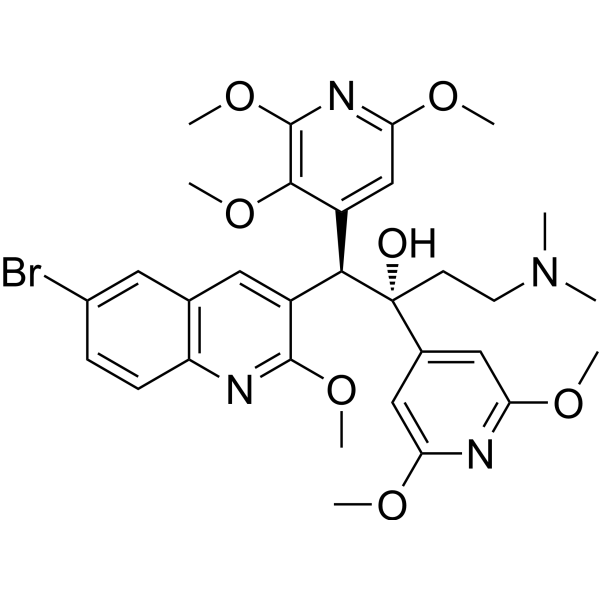
TBAJ-876 is an orally active diarylquinoline anti-Mycobacterium agent. TBAJ-876 regulates energy metabolism by targeting the c and ε subunits of Mycobacterium tuberculosis F-ATP synthase, exerts bactericidal activity against replicating Mycobacterium tuberculosis, and retains activity against strains carrying the Rv0678 mutation. TBAJ-876 undergoes N-demethylation in vivo to form its major active metabolite TBAJ-876-M3, which has lower lipophilicity and hERG potassium channel binding affinity. TBAJ-876 is well tolerated in BALB/c mice and significantly reduces the colony-forming units of Mycobacterium tuberculosis in the lungs. In addition, TBAJ-876 exhibits inhibitory activity against Mycobacterium abscessus, reduces bacterial loads in the lungs and spleens of infected mice, and shows no antagonistic effect when used in combination with common antibiotics. TBAJ-876 can be used in studies related to tuberculosis and Mycobacterium abscessus pulmonary diseases .
loading...
    loading...
Cat. No.: HY-169798
CAS No.: 23481-50-7
Target:  

Fluorescent Dye VSV

Research Areas:  

Infection

1,9-Dimethylmethylene blue is a photosensitizer, virus inactivator and hemoglobin oxidant derived from methylene blue. When activated, 1,9-Dimethylmethylene blue generates reactive oxygen species including singlet oxygen, and acts as a metachromatic dye. When activated in monomeric or dimeric form, 1,9-Dimethylmethylene blue induces photoinactivation of R17 phage and vesicular stomatitis virus and oxidizes hemoglobin via non-singlet oxygen reactive oxygen species or singlet oxygen-mediated pathways, respectively. The monomeric form, with higher nucleic acid affinity, achieves virus inactivation under specific conditions without forming methemoglobin. 1,9-Dimethylmethylene blue binds to substances such as glycosaminoglycans to produce color changes. Although it is susceptible to interference from non-glycosaminoglycan components in urine, it is still applicable to spectrophotometric analysis for glycosaminoglycan quantification. With these unique photochemical and binding properties, 1,9-Dimethylmethylene blue is widely used in studies of viral infections and related biochemical analyses .
loading...
    loading...
Cat. No.: HY-180503
CAS No.: 284041-36-7
Target:  

VD/VDR

Research Areas:  

Endocrinology

19-Nor-22-oxa-1a,25(OH)2-VD3 is a vitamin D₃ analogue. 19-Nor-22-oxa-1a,25(OH)2-VD3 has an extremely low affinity for the vitamin D receptor (VDR) and hardly binds to the vitamin D binding protein (DBP). 19-Nor-22-oxa-1a,25(OH)2-VD3 can effectively induce the differentiation of HL-60 cells and cause G₀-G₁ phase cell cycle arrest. 19-Nor-22-oxa-1a,25(OH)2-VD3 can be used to study diseases such as excessive hyperparathyroidism .
loading...
    loading...
Cat. No.: HY-177578
NN3201 is a c-Kit-targeting antibody-drug conjugate (ADC) with high affinity (KD = 0.19 pM). NN3201 is composed of 4-(3-Tosyl-2-(tosylmethyl)propanoyl)benzoic acid-glu(PEG24-Me)-val-cit-NH-benzyloxyformic acid-MMAE (HY-178219) and an anti-c-Kit human monoclonal antibody NN2101 (HY-P991293). NN3201 rapidly internalizes and inhibits stem cell factor (SCF)-driven signaling, thereby delivering its payload to induce cell cycle arrest and apoptosis. NN3201 exhibits no Fc-mediated effector functions antibody-dependent cell-mediated cytotoxicity (ADCC)/complement-dependent cytotoxicity (CDC) due to reduced FcγR binding. NN3201 exhibits significant c-Kit-dependent anti-tumor efficacies in various tumor models. NN3201 can be used in small cell lung cancer (SCLC) and gastrointestinal stromal tumor (GIST) and acute myeloid leukemia (AML) research [1][2].
loading...
    loading...
Cat. No.: HY-P4776
CAS No.: 202463-00-1
Research Areas:  

Metabolic Disease

Acetyl-(D-Phe2,Lys15,Arg16,Leu27)-VIP (1-7)-GRF (8-27) is a high-affinity, selective VPAC1 receptor antagonist, with IC50 values of 10 nM and 2000 nM for binding to human VPAC1 and VPAC2, respectively. Acetyl-(D-Phe2,Lys15,Arg16,Leu27)-VIP (1-7)-GRF (8-27) inhibits VIP-induced VPAC1/Gs/adenylate cyclase signaling with a Ki of 2 nM, and its VPAC1 selectivity is mainly determined by the N-terminal extracellular domain of the receptor. Acetyl-(D-Phe2,Lys15,Arg16,Leu27)-VIP (1-7)-GRF (8-27) can be used in studies related to VPAC1 receptor pharmacology, VIP signaling, and the structure and function of class B GPCRs .
loading...
    loading...
Cat. No.: HY-N20747
CAS No.: 28363-70-4
Synonyms: 4-Hydroxy-N-methyltryptamine; 4-HO-NMT
Norpsilocin (4-hydroxy-N-methyltrypt amine; 4-HO-NMT) is a natural tryptamine alkaloid isolated from the hallucinogenic mushroom Psilocybe cubensis. Norpsilocin activates human 5-HT2 receptors (5-HT2A: EC50 = 8.4 nM; 5-HT2B = 12.8 nM; 5-HT2C = 39.6 nM) and displays binding affinity toward 5-HT1 receptors (5-HT1B: Ki = 212 nM; 5-HT1D = 48.9 nM; 5-HT1E = 81.7 nM). Norpsilocin induces β-arrestin recruitment at the 5-HT1B receptor. Norpsilocin fails to produce psychedelic-like effects in mice, whereas high doses can induce hypothermia in vivo. Norpsilocin acts as an important research tool for exploring the structure–activity relationship of tryptamine hallucinogens and the pharmacology of serotonin receptors .
loading...
    loading...
Cat. No.: HY-L950
2,787 compounds

Seven-membered rings are privileged medium-sized scaffolds with distinct twist-chair conformations and greater 3D diversity than five- and six-membered rings. Their flexible conformations allow induced-fit protein binding and precise pharmacophore positioning. They also modulate Fsp³, pKa and logP to enhance solubility and permeability. Azepanes, oxepanes and benzodiazepines serve as bioisosteres for hit discovery against GPCRs, ion channels and kinases.

Widely found in plant and microbial alkaloids, seven-membered heterocycles show excellent biocompatibility and target affinity. They underpin many approved drugs for CNS, cancer and infectious diseases, including diazepam, imipramine and carbamazepine. Clinical candidates further highlight their unique value. However, high transannular strain and synthetic difficulty limit their availability, leaving them rare in standard screening libraries.

MCE 7 Membered Scaffold Library contains 2,792 structurally diverse, lead-like molecules covering azepanes, oxepanes, benzodiazepines and dibenzazepines. With varied substitutions, chiral centers and synthetic accessibility, it fills the shortage of medium-ring scaffolds. Ideal for HTS, virtual screening and SAR studies, these novel, patent-clear compounds offer a distinctive starting point for drug discovery in CNS disorders, oncology, antivirals and challenging targets such as PPIs.

Cat. No.: HY-134483
CAS No.: 851375-22-9
Target:  

5-HT Receptor

Research Areas:  

Neurological Disease

5-HT7/5-HT2A receptor antagonist 1 is a high-affinity, orally active, brain-penetrant 5-HT7 and 5-HT2A receptor ligand having a pKi = 8.1 at both receptors. 5-HT7/5-HT2A receptor antagonist 1 behaves as an antagonist in an in vitro functional assay for 5-HT2A and as an inverse agonist in an in vitro functional assay for 5-HT7. 5-HT7/5-HT2A receptor antagonist 1 blockade of 5-Carboxamidotryptamine (5-CT) (HY-135555) induced hypothermia in rats, and blockade of 2,5-dimethoxy-4-iodoamphetamine (DOI) induced head-twitches in mice. 5-HT7/5-HT2A receptor antagonist 1 occupied 5-HT2A receptor binding sites in the frontal cortex of the rat brain. 5-HT7/5-HT2A receptor antagonist 1 can be used for the study of Neurological diseases .
loading...
    loading...
Cat. No.: HY-L935
1039 compounds

POI (Protein of Interest) refers to the target protein, namely the disease-causing protein or key functional protein that undergoes degradation or functional modulation in molecular glue-mediated processes. The Molecular Glue POI Library consists of a series of fragments that can specifically bind to different types of POIs. As key components of molecular glues, these ligands form stable interactions with target proteins, laying the foundation for molecular glues to induce the interaction between POIs and E3 ubiquitin ligases. The covered POIs include various types such as cancer-associated GSPT1, androgen receptors, and abnormally aggregated proteins linked to neurodegenerative diseases.

This fragment library can be applied to the screening and optimization of targeted protein degraders. By screening ligands with high affinity and strong selectivity for specific POIs from the library, core structures can be identified to develop novel molecular glues. For instance, optimization of ligands targeting GSPT1 has yielded molecular glue degraders with enhanced degradation activity. Since many POIs are difficult to drug due to the lack of traditional small-molecule binding pockets, some ligands in the POI Ligand Library can modulate such POIs by inducing protein-protein interactions, thereby further expanding the scope of drug discovery for undruggable targets.

MCE has compiled a POI Fragment Library comprising thousands of POI fragments with molecular weights ranging from 150 to 400. This compound library can be widely applied in Molecular Glue research and development.

Cat. No.: HY-L949
1279 compounds

Spirocyclic compounds, with rigid 3D structures, high Fsp³ and strong conformational restriction, are highly privileged scaffolds in small-molecule drug screening. They overcome drawbacks of planar aromatic compounds such as poor solubility, high off-target risks and weak druggability. Their orthogonal bicyclic geometry fits well into protein pockets, improving target affinity, subtype selectivity, metabolic stability and membrane permeability, making them ideal for hit identification against kinases, GPCRs, PPIs and other targets.

Spirocyclic scaffolds have been widely applied in oncology, antivirals, hypertension and CNS diseases, leading to many approved drugs and clinical candidates. SAR studies show that spiro-atom chirality, ring size and heteroatom substitution dominate bioactivity and selectivity, with the scaffold mainly serving as a conformational anchor. Azaspirocycles, spirooxindoles and spirosteranes target GPCRs, kinases, MDM2-p53 and PPIs. Approved drugs including irbesartan, spironolactone and rolapitant confirm their druggability, while revumenib and SAR405838 show promise against undruggable targets.

The MCE Spirocyclic Druglike Library contains over 1,000 diverse, stereospecific molecules selected by Lipinski’s rules. It covers privileged cores such as azaspirocycles, oxaspirocycles and spirooxindoles. These molecules bear rich chiral centers and distinct 3D orientations, reducing non-specific binding and enhancing screening efficiency. Featuring novel scaffolds, the library offers a highly innovative starting point for drug discovery.

