

886 Results for "

binding affinity

" in MedChemExpress (MCE) Product Catalog:
Products (886)

886 Results for "binding affinity" in MCE Product Catalog:

Cat. No.: HY-187185
CAS No.: 3050643-44-9
Sigma-1 receptor antagonist 7 is a selective sigma-1 receptor antagonist capable of crossing the blood-brain barrier, with an IC50 of 12.7 nM against guinea pig σ1R. Sigma-1 receptor antagonist 7 binds to σ1R, and its binding affinity decreases in the presence of Phenytoin (HY-B0448). Sigma-1 receptor antagonist 7 alleviates mechanical and thermal hyperalgesia induced by acute inflammation in rats. Sigma-1 receptor antagonist 7 can be used for research related to hyperalgesia .
loading...
    loading...
Cat. No.: HY-P990742
CAS No.: 2762499-30-7
Synonyms: TJ-CD4B; ABL111; TJ033721

Target:  

TNF Receptor Claudin

Research Areas:  

Inflammation/Immunology Cancer

Givastomig (ABL111, TJ033721) is a bispecific antibody (BsAb) inhibitor. Givastomig can specifically binds to Claudin18.2 (CLDN 18.2) on the surface of cancer cells and 4-1BB (CD137, TNFRSF9) on the surface of activated T cells and natural killer (NK) cells. Givastomig is engineered to contain a single Fc-domain mutation (asparagine to alanine) to eliminate Fc-effector function. Givastomig-bound cell lines expressing a range of CLDN18.2 levels with high affinity and induced 4-1BB activation only in the context of CLDN18.2 binding. Givastomig can be used for the study of colon carcinoma .
loading...
    loading...
Cat. No.: HY-P992389

Target:  

LILRB

Research Areas:  

Cancer

IO-202 is a high-affinity LILRB4/ILT3 binder and myeloid checkpoint inhibitor. IO-202 blocks APOE binding and LILRB4 activation to reverse T-cell suppression and enhance T-cell cytotoxicity, while eliminating LILRB4-high-expressing leukemic blasts via ADCC and ADCP mechanisms. IO-202 promotes dendritic cell maturation and antigen presentation, reshapes the phenotype of tumor-associated macrophages, and reduces myeloid-derived suppressor cells. IO-202 is widely applicable to research on relapsed/refractory acute myeloid leukemia (AML), chronic myelomonocytic leukemia (CMML), and solid tumors .
loading...
    loading...
Cat. No.: HY-P992434

Research Areas:  

Cancer

OSE-279 is a high-affinity humanized monoclonal bivalent antibody targeting PD-1, the recommended isotype control is HY-P99003. OSE-279 blocks PD-1 ligand binding, inhibits PDL1-induced SHP1 phosphorylation, restores T cell activation, and promotes reactivation of primary T cell effector functions. OSE-279 binds hFcRn receptor, predicts long half-life, induces CD4 and CD8 T cell proliferation, and promotes interleukin 2 and interferon gamma secretion. OSE-279 can be used for the research of advanced malignancies, colon cancer, hepatocarcinoma, mesothelioma .
loading...
    loading...
Cat. No.: HY-P99292
CAS No.: 326859-36-3
Synonyms: HuZAF; Anti-Human IFNG Recombinant Antibody

Target:  

IFNAR

Research Areas:  

Inflammation/Immunology

Fontolizumab (HuZAF) is a human monoclonal antibody targeting interferon γ (IFN-γ). Fontolizumab binds specifically and with high affinity to secreted IFN-γ, neutralizes its activity, blocks receptor binding, and inhibits downstream signal transduction and the expression of IFNγ-responsive genes. Fontolizumab reduces serum C-reactive protein levels, inhibits the expression of IL-1α, IL-1β and IL-12Rβ2, and decreases the number of IFNγ-producing T cells in activated peripheral blood mononuclear cells. Fontolizumab can be used in research related to Crohn's disease .
loading...
    loading...
Cat. No.: HY-103164A
CAS No.: 148589-13-3
Synonyms: CSC
Target:  

Endogenous Metabolite

Research Areas:  

Neurological Disease

8-(3-Chlorostyryl)caffeine (CSC) is an adenosine antagonist with selective activity at the A2a adenosine receptor. 8-(3-Chlorostyryl)caffeine showed 520-fold selectivity in radioligand binding experiments in rat brain. Antagonism of adenylylase by 8-(3-Chlorostyryl)caffeine shows 22-fold selectivity in rat chromaffin cells When 8-(3-Chlorostyryl)caffeine is co-administered with the A1-selective antagonist CPX, It can also further increase exercise activity. 8-(3-Chlorostyryl)caffeine exhibits good MAO-B inhibitory activity in primate mitochondria. 8-(3-Chlorostyryl)caffeine also has excellent A2A receptor affinity .
loading...
    loading...
Cat. No.: HY-116982
CAS No.: 21102-94-3
BMY 7378 (free base) is a selective antagonist of α1D-adrenoceptor (α1D-AR). BMY 7378 (free base) binds to membranes expressing the cloned rat α1D-AR with a >100-fold higher affinity (Ki=2 nM) than binding to either the cloned rat α1A-AR (Ki=800 nM) or the hamster α1B-AR (Ki=600 nM). BMY 7378 (free base) is a 5-HT1A receptor partial agonist .
loading...
    loading...
Cat. No.: HY-121944R
CAS No.: 524-40-3
Ricinine (Standard) is the analytical standard of Ricinine (HY-121944). This product is intended for research and analytical applications. Ricinine is a central nervous system stimulant found in Ricinus communis. Ricinine binds near the benzodiazepine site of the GABAA receptor, reducing benzodiazepine binding affinity through an allosteric effect, and shows no interaction with AMPA, 5-HT1A, muscarinic receptors, or α1 adrenergic receptors. Ricinine improves memory consolidation in mice at low doses, while at high doses it induces seizures, an effect that is selectively inhibited by diazepam. Ricinine shortens the lifespan of Anopheles mosquitoes through sugar feeding and promotes the development of Plasmodium falciparum in mosquitoes . Ricinine is used in research related to epilepsy, amnesia, and malaria .
loading...
    loading...
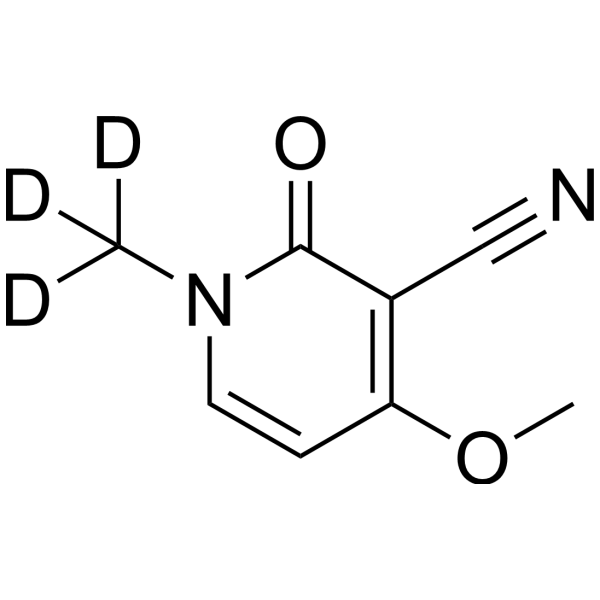
Cat. No.: HY-121944S
CAS No.: 1313734-77-8
Ricinine-d3 is the d3-labeled Ricinine (HY-121944). Ricinine is a central nervous system stimulant found in Ricinus communis. Ricinine binds near the benzodiazepine site of the GABAA receptor, reducing benzodiazepine binding affinity through an allosteric effect, and shows no interaction with AMPA, 5-HT1A, muscarinic receptors, or α1 adrenergic receptors. Ricinine improves memory consolidation in mice at low doses, while at high doses it induces seizures, an effect that is selectively inhibited by diazepam. Ricinine shortens the lifespan of Anopheles mosquitoes through sugar feeding and promotes the development of Plasmodium falciparum in mosquitoes . Ricinine is used in research related to epilepsy, amnesia, and malaria .
loading...
    loading...
Cat. No.: HY-128574
CAS No.: 2253733-37-6
Purity:  99.71%
Synonyms: DS11252927
Target:  

GLUT PI3K Akt

Research Areas:  

Metabolic Disease

D927 (DS11252927) is an orally active glucose transporter type 4 (GLUT4) translocation activator with an EC50 of 0.14 μM. D927 enhances the binding affinity of PI3Kα catalytic subunit p110α to canonical RAS proteins (KRAS4A, KRAS4B) and RRAS, RRAS2, MRAS. D927 activates the PI3Kα-AKT pathway (increasing phosphorylation of AKT, p70S6 kinase) without affecting the RAF-ERK1/2 pathway. D927 improves hyperglycemia in type 1 and type 2 diabetes mice model. D927 can be used for the study of glucose homeostasis disorders and diabetes .
loading...
    loading...
Cat. No.: HY-133240
CAS No.: 1109241-72-6
trans-AzoTAB is a photoresponsive potassium/sodium/calcium channel modulator and DNA-binding agent. trans-AzoTAB undergoes trans-cis isomerization driven by light, with variable polarity and DNA affinity. trans-AzoTAB also enhances voltage-gated potassium currents and inhibits sodium and calcium currents in cardiomyocytes, thereby reducing spontaneous electrical activity and excitation conduction velocity. In addition, trans-AzoTAB induces compaction and frozen conformation of λ-phage DNA, and non-sequence-dependently inhibits transcription and translation processes in the dark; its activity can be reversed and restored by visible light after activation with ultraviolet irradiation. trans-AzoTAB can serve as a probe for two-photon optical regulation of myocardial excitability, and is used to construct photoresponsive interfacial polymer structures .
loading...
    loading...
Cat. No.: HY-152161
CAS No.: 2834087-82-8
Research Areas:  

Infection

HIV-1 inhibitor-51, a non-nucleoside reverse transcriptase inhibitor (NNRTI), exhibits outstanding antiviral activity against WT HIV-1 (IIIB) and a panel of mutant strains. HIV-1 inhibitor-51 has high binding affinity (KD=2.50 μM) and inhibitory activity (IC50=0.03 μM) to WT HIV-1 RT. HIV-1 inhibitor-51 has EC50s of 2.22-53.3 nM for mutant strains (L100I, K103N, Y181C, Y188L, E138K, F227L + V106A, RES056) .
loading...
    loading...
Cat. No.: HY-171216
CAS No.: 278598-52-0
Target:  

Integrin

Research Areas:  

Neurological Disease

GW559090 is a selective, competitive, and high-affinity α4 integrin antagonist with a Kd of 0.19 nM for α4β1. GW559090 can effectively block the binding of α4β1 to vascular cell adhesion molecule 1 (VCAM-1) and fibronectin with IC50 values of 7.72 and 8.04 nM. GW559090 also inhibits the interaction between α4β7 and mucosal addressin cell adhesion molecule 1 (MAdCAM-1) (IC50 = 23 nM). GW559090 can inhibit inflammatory infiltration in the eyes, repair the corneal barrier and restore the function of goblet cells. GW559090 can be used for research of Sjögren's syndrome associated dry eye .
loading...
    loading...
Cat. No.: HY-172113
Target:  

PROTACs YAP c-Myc Apoptosis

Research Areas:  

Cancer

H122 is a PROTAC degrader for TEAD that degrades TEAD1 with a DC50 of 3 nM. H122 exhibits good affinity to TEAD2, TEAD3, and TEAD4 with Ki values of 2.0, 3.6 and 1.6 nM, respectively. H122 relies on binding to TEAD1 and CRBN, functional E3 ligase activity, and a functional proteasome for degradation.H122 induces degradation of TEAD3 and forms a ternary complex with TEAD4 and CRBN/DDB1 to mediate degradation.H122 downregulates expression of Myc target genes. H122 exhibits antitumor efficacy in MSTO-211H mouse xenograft models.H122 can be used for the research of malignant mesothelioma .
loading...
    loading...
Cat. No.: HY-179502
Anti-inflammatory agent 107 is an orally active anti-inflammatory agent. Anti-inflammatory agent 107 inhibits and NF-κB with a superior binding affinity of -9.4578 kcal/mol. Anti-inflammatory agent 107 reduces levels of inflammatory biomarkers (TNF-α, IL-6, INF-γ, NF-κβ, C-reactive protein and Erythrocyte Sedimentation Rate) and enhances the endogenous antioxidant defense system by elevating SOD (Superoxide Dismutase), CAT (Catalase) and GSH (Glutathione) activities. Anti-inflammatory agent 107 not induces liver toxicity and demonstrates hepatoprotective effects. Anti-inflammatory agent 107 dose-dependently ameliorates leukocyte infiltration and tissue edema. Anti-inflammatory agent 107 can be used for anti-inflammatory research .
loading...
    loading...
Cat. No.: HY-183324
Research Areas:  

Neurological Disease

AMPA receptor modulator-12 is an orally acrive AMPA receptor positive allosteric modulator. AMPA receptor modulator-12 also exhibits moderate binding affinity for the human dopamine transporter with a Kd of 1.57 μM. AMPA receptor modulator-12 enhances AMPA receptor-mediated ion currents, delays channel deactivation. AMPA receptor modulator-12 prolongs sleep latency, reduces sleep duration, extends forced swimming time, improves rotarod endurance, and alleviates acute sleep deprivation-related behavioral deficits. AMPA receptor modulator-12 does not increase spontaneous locomotion. AMPA receptor modulator-12 can be used for the research of narcolepsy and fatigue-related conditions .
loading...
    loading...
Cat. No.: HY-184680
CAS No.: 3109318-04-6
Research Areas:  

Inflammation/Immunology

β2AR agonist 6 is a MABA with both muscarinic acetylcholine M3 receptor antagonistic activity and β2 adrenergic receptor agonistic activity, with a Ki of 1.95 nM against hM3 and an EC50 of 0.266 nM against hβ2. β2AR agonist 6 binds to the M3 muscarinic receptor with high affinity and exhibits long-lasting binding, while displaying subnanomolar agonist activity at the β2 adrenergic receptor. β2AR agonist 6 induces smooth muscle relaxation and provides long-lasting bronchoprotective effects. β2AR agonist 6 can be used in research related to asthma and chronic obstructive pulmonary disease .
loading...
    loading...
Cat. No.: HY-P11246
CAS No.: 3057097-31-8
Target:  

RXFP Receptor

Research Areas:  

Metabolic Disease

A13:B7-24-GG is an engineered analogue of insulin-like peptide 5 (INSL5), a selective RXFP4 agonist with a Ki value of 2.29 nM. A13:B7-24-GG has an extremely low binding affinity for RXFP3 (Ki = 602.56 nM) and an inhibitory effect on cAMP (EC50) of 1.17 nM. Activation of RXFP4 by A13:B7-24-GG leads to the recruitment of β-Arrestin2, with an EC50 of 22.39 nM. A13:B7-24-GG can be used for research on chronic constipation .
loading...
    loading...
Cat. No.: HY-P991092A

Target:  

EGFR CD276/B7-H3

Research Areas:  

Cancer

IBI-334 (FUT8-KO) is a bispecific B7-H3 and EGFR antibody that has knocked out the fucosyltransferase 8 gene (FUT8). IBI-334 (FUT8-KO) has an EGFR arm for signal blocking and is coupled with a fine-tuned B7-H3 arm with the best affinity and binding domain. IBI-334 (FUT8-KO), compared to IBI-334 (HY-P991092), has enhanced antibody-mediated cytotoxicity (ADCC) effect. IBI-334 (FUT8-KO) has wide applications in many EGFR-driven solid tumors .
loading...
    loading...
Cat. No.: HY-P99313
CAS No.: 1228538-47-3
Synonyms: Anti-Human IGHE Recombinant Antibody; 47H4; MEMP1972A
Quilizumab (Anti-Human IGHE Recombinant Antibody; 47H4; MEMP1972A) is a monoclonal antibody that targets FcγRIIIa and the M1 prime segment of human membrane-bound IgE. Quilizumab has enhanced FcγRIIIa binding affinity and activity against IgE class-switched B cells, and reduces serum IgE levels by inducing antibody-dependent cell-mediated cytotoxicity and apoptosis through cross-linking of membrane-bound IgE receptors. Quilizumab depletes IgE-producing cells; it also directly binds the membrane-bound M1 prime domain on IgE class-switched cells to inhibit IgE production. Quilizumab is used in research on allergic asthma and allergic diseases (asthma, allergic rhinitis) .
loading...
    loading...

