140 Results for "

Quorum

" in MedChemExpress (MCE) Product Catalog:
Products (140)

140 Results for "Quorum" in MCE Product Catalog:

Cat. No.: HY-W040220
CAS No.: 853799-77-6
Target:  

Bacterial

Research Areas:  

Infection

N-(3-Hydroxyoctanoyl)-DL-homoserine lactone (Compound 40) is a competitive inhibitor of the quorum sensing receptor LuxR with an IC50 value of 4 μM. N-(3-Hydroxyoctanoyl)-DL-homoserine lactone shows selective inhibition toward quorum sensing systems in Gram-negative bacteria like Pseudomonas aeruginosa. N-(3-Hydroxyoctanoyl)-DL-homoserine lactone is promising for research of bacterial infections .
loading...
    loading...
Cat. No.: HY-158124
CAS No.: 1421464-74-5
Target:  

Bacterial

Research Areas:  

Infection

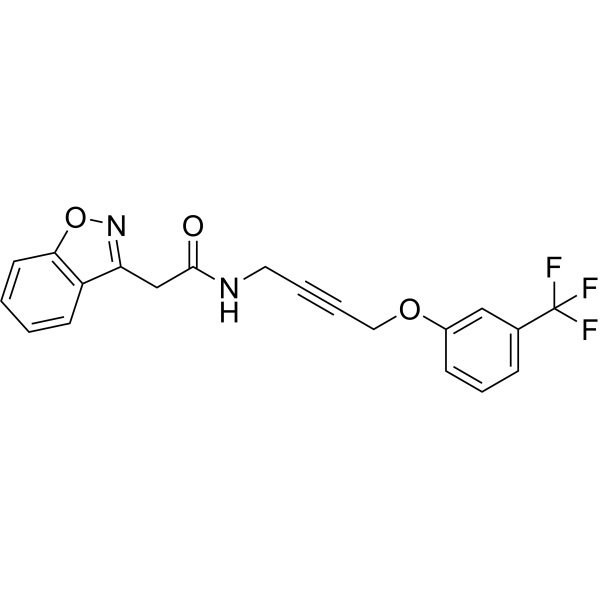
LasR antagonist 1 (Compound 7) is an antagonist for LasR with an IC50 of 0.4 μM, that modulates the quorum sensing (QS) in the opportunistic pathogen Pseudomonas aeruginosa .
loading...
    loading...
Cat. No.: HY-N7788
CAS No.: 55928-65-9
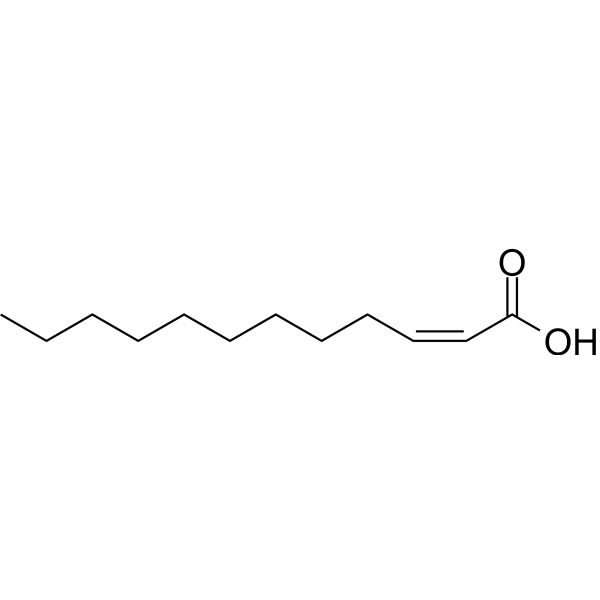
cis-2-Dodecenoic acid, originally discovered in Burkholderia cenocepacia, can interfere with the bacterial quorum sensing system and inhibit bacterial biofilm formation and virulence factor production .
loading...
    loading...
Cat. No.: HY-146705
CAS No.: 2982271-62-3
Target:  

Bacterial

Research Areas:  

Infection

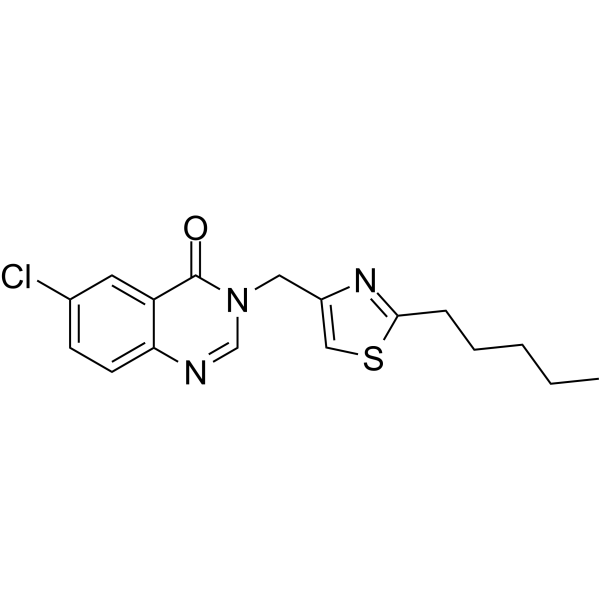
PqsR-IN-1 (Compound 18) is a potent PqsR (Pseudomonas aeruginosa quorum sensing transcriptional regulator) inhibitor. PqsR-IN-1 attenuates pyocyanin production and has very low cytotoxicity .
loading...
    loading...
Cat. No.: HY-146706
CAS No.: 2982271-63-4
Target:  

Bacterial

Research Areas:  

Infection

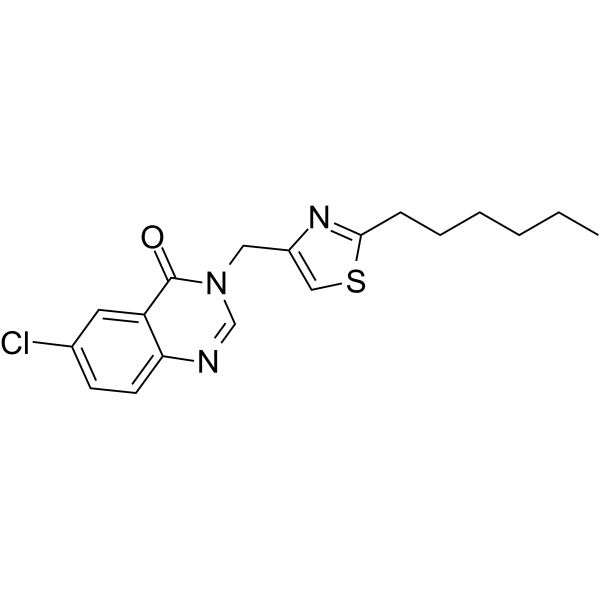
PqsR-IN-2 (Compound 19) is a potent PqsR (Pseudomonas aeruginosa quorum sensing transcriptional regulator) inhibitor. PqsR-IN-1 attenuates pyocyanin production and has very low cytotoxicity .
loading...
    loading...
Cat. No.: HY-164128
CAS No.: 942296-18-6
Target:  

Bacterial

Research Areas:  

Infection

AHL modulator-1 is a N-acylated L-homoserine lactone (AHL) modulator that modulating bacteria quorum sensing (QS). AHL modulator-1 can be used for the research of plant soft rot .
loading...
    loading...
Cat. No.: HY-114773
CAS No.: 216596-71-3
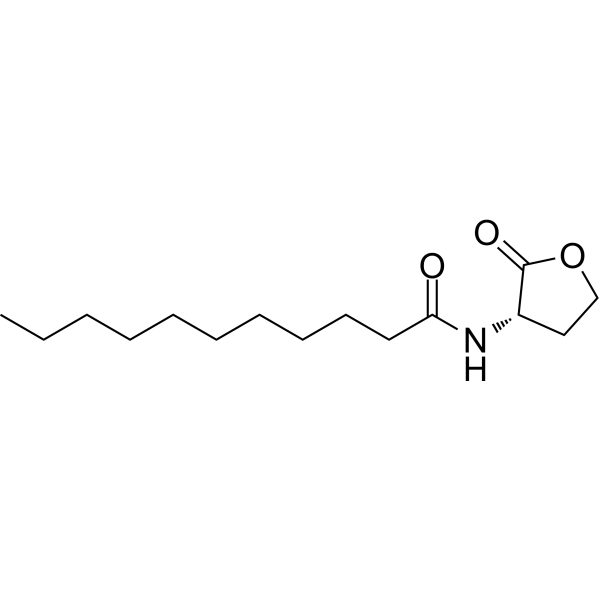
Quorum sensing is a regulatory system used by bacteria to control gene expression in response to increased cell density. This regulatory process manifests itself in a variety of phenotypes, including biofilm formation and virulence factor production. Coordinated gene expression is achieved through the production, release and detection of small diffusible signaling molecules called autoinducers. N-acylated homoserine lactones (AHLs) comprise a class of such autoinducers, each of which generally consists of a fatty acid coupled to a homoserine lactone (HSL). Modulation of bacterial quorum-sensing signaling systems to suppress pathogenesis represents a new approach to antimicrobial research for infectious diseases. AHLs differ in acyl length (C4-C18), C3 substitution (hydrogen, hydroxyl, or oxo group), and the presence or absence of one or more carbon-carbon double bonds in the fatty acid chain. These differences confer signaling specificity through the affinity of the LuxR family of transcriptional regulators. C11-HSL has a rare odd-numbered acyl carbon chain and may be a minor quorum-sensing signaling molecule in Pseudomonas aeruginosa strains.
loading...
    loading...
Cat. No.: HY-163111
CAS No.: 2764797-36-4
Target:  

Bacterial

Research Areas:  

Infection

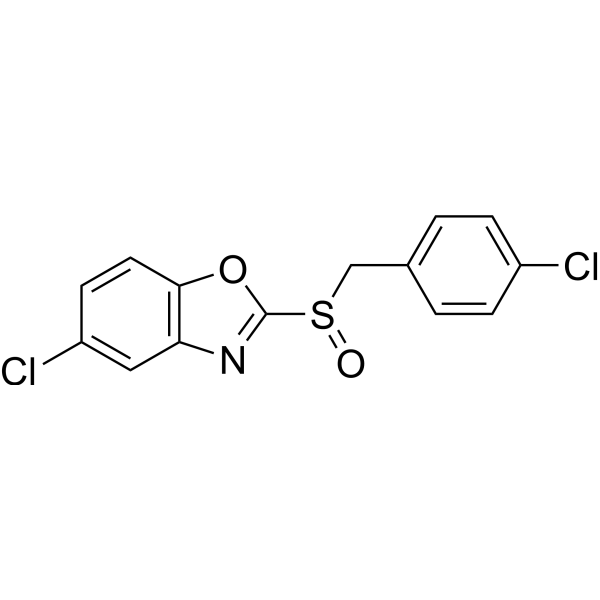
Antibacterial agent 170 (compound 6b) is a potent antibacterial agent which inhibits the formation of P. aeruginosa PAO1 biofilm. Antibacterial agent 170 exhibits quorum sensing inhibitor effect by the las system. Antibacterial agent 170 can used in study microbial resistance .
loading...
    loading...
Cat. No.: HY-N2867
CAS No.: 82209-76-5
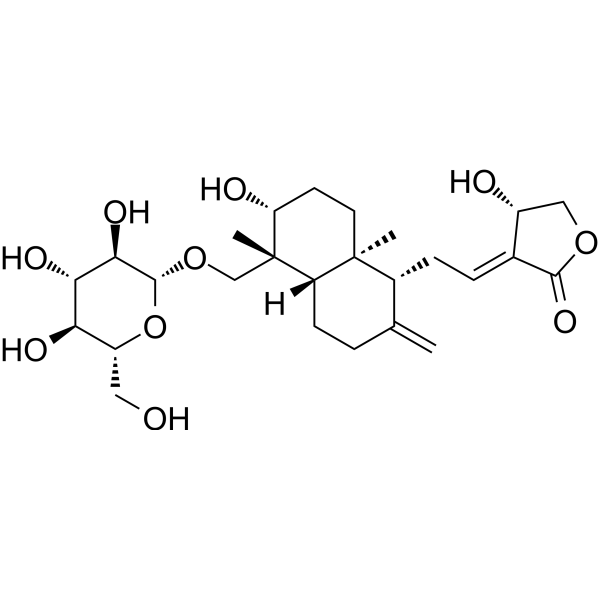
Andrographiside is a labdane diterpenoid glucoside that can be isolated from the leaves of Andrographis paniculata Nees. Andrographiside has antihepatotoxic and antioxidative effects. Andrographiside shows protective effects on mice with hepatotoxicity induced by carbon tetrachloride or tert-butylhydroperoxide (tBHP) . Andrographiside is a novel biofilm inhibitor of Pseudomonas aeruginosa PAO1 by modulating quorum-sensing proteins .
loading...
    loading...
Cat. No.: HY-W012572R
CAS No.: 351-50-8
D-Histidine (Standard) is the analytical standard of D-Histidine (HY-W012572). This product is intended for research and analytical applications. D-Histidine is an anti-biofilm agent that targets bacterial quorum sensing systems (such as RhlI/RhlR pathway) and has antibacterial activity. D-Histidine works by non-covalently binding to bacterial regulatory factors or copper ion complexes, selectively inhibiting bacterial biofilm formation and motility. D-Histidine downregulates quorum sensing-related gene expression, reduces the synthesis of virulence factors (such as alginate and proteases), and interferes with bacterial membrane stability, inhibiting biofilm formation, promoting the disintegration of mature biofilms, and enhancing antibiotic sensitivity. D-Histidine is also an efficient catalyst for the salt-induced peptide formation (SIPF) reaction, which promotes the condensation of amino acids to form dipeptides (such as dialanine and dilysine) by forming a complex with copper ions (Cu 2+) .
loading...
    loading...
Cat. No.: HY-130317
CAS No.: 677354-24-4
Synonyms: trans-δ2-11-Methyl-dodecenoic acid
Target:  

Fungal

Research Areas:  

Infection

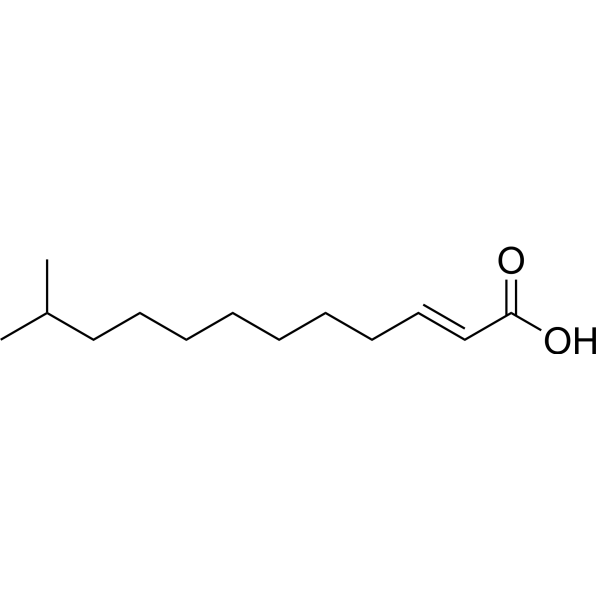
trans-11-Methyl-2-dodecenic acid is a isomer of cis-11-Methyl-2-dodecenoic acid (HY-134215). cis-11-Methyl-2-dodecenoic acid is a quorum sensing (QS) signal that acts as a diffusion signaling factor (DSF) in extracellular microbial and fungal communication systems .
loading...
    loading...
Cat. No.: HY-163508A
CAS No.: 65937-49-7
Target:  

Drug Isomer

Research Areas:  

Infection

(E)-Antibacterial agent 210 is the isomer of Antibacterial agent 210 (HY-163508). Antibacterial agent 210 is a Pseudomonas aeruginosa quorum sensing inhibitor (QSI). Antibacterial agent 210 inhibits the quorum sensing systems by binding with LasR and PqsR, especially PqsR .
loading...
    loading...
Cat. No.: HY-133161
CAS No.: 1061591-41-0
Target:  

Bacterial

Research Areas:  

Infection

RhlR agonist-1 is a N-acylated L-homoserine lactone and is a selective quorum sensing receptor RhlR agonist. RhlR agonist-1 can be used for the research of bacterial infections .
loading...
    loading...
Cat. No.: HY-182505
CAS No.: 887833-49-0
Target:  

Bacterial

Research Areas:  

Infection

QS-IN-1 (Compound 10 in Table 2 on page 18) is a quorum sensing (QS) inhibitor with an IC50 of 1.22 μM against agr-type QS. QS-IN-1 is applicable to the research of bacterial infections .
loading...
    loading...
Cat. No.: HY-187556
CAS No.: 2581199-68-8
Target:  

Bacterial

Research Areas:  

Infection

Antibiofilm agent-23 is a PqsR-targeting agent, iron chelator, biofilm inhibitor, biofilm dispersant, and anti-virulence agent. Antibiofilm agent-23 selectively binds to PqsR, disrupts the pqs quorum sensing pathway, restricts bacterial iron acquisition, induces intracellular iron deficiency, reduces pyocyanin, elastase, and rhamnolipid production, impairs biofilm formation, and disperses mature biofilms. Antibiofilm agent-23 exhibits low cytotoxicity and shows antibacterial synergy with Ciprofloxacin (HY-B0356) in Caenorhabditis elegans infection models. Antibiofilm agent-23 can be used for the research of biofilm-associated Pseudomonas aeruginosa infections .
loading...
    loading...
Cat. No.: HY-184715
CAS No.: 872546-39-9
Target:  

Bacterial

Research Areas:  

Infection

LasR-IN-6 is a LasR inhibitor with an IC50 of 0.261 μM, and exhibits antibacterial activity against Pseudomonas aeruginosa. LasR-IN-6 stably binds to the active site of LasR via hydrophobic interactions, disrupts receptor dimerization, and interferes with quorum sensing. LasR-IN-6 inhibits protease production, biofilm formation, twitching motility and swarming motility in Pseudomonas aeruginosa. LasR-IN-6 can be used in studies related to Pseudomonas aeruginosa infection .
loading...
    loading...
Cat. No.: HY-181835
CAS No.: 1448066-54-3
Target:  

Bacterial

Research Areas:  

Infection

AgrC-IN-1 is an AgrC inhibitor with an IC50 of 3.5 μM against Staphylococcus aureus AgrC. AgrC-IN-1 competitively binds to AgrC, inhibiting its autophosphorylation activity in Staphylococcus aureus. AgrC-IN-1 inhibits quorum sensing in Staphylococcus aureus, blocking virulence factor production. AgrC-IN-1 can be used for the research of Staphylococcus aureus infections .
loading...
    loading...
Cat. No.: HY-N17297
CAS No.: 2293113-73-0
Leotiomycene C is an isoprenylated bisresorcinol natural product present in the freshwater fungus Helotiales sp. Leotiomycene C inhibits the quorum sensing system of methicillin (HY-121544)-resistant Staphylococcus aureus (MRSA), with an IC₅₀ of 6.3-12.5 μM. Leotiomycene C is applicable to research related to MRSA infections .
loading...
    loading...
Cat. No.: HY-182942
CAS No.: 3112321-20-4
Target:  

Bacterial Elastase

Research Areas:  

Infection

PV-DPD-19 is an autoinducer-2 (AI-2) quorum sensing inhibitor. PV-DPD-19 reduces AI-2 production and inhibits the expression of multiple MSCRAMMs. In co-culture systems with Staphylococcus aureus, PV-DPD-19 decreases the production of pyocyanin and Elastase in Pseudomonas aeruginosa. PV-DPD-19 impairs the adhesion ability of Staphylococcus aureus to lung epithelial cells. PV-DPD-19 inhibits biofilm formation of Pseudomonas aeruginosa (MBIC50 = 27 μg/mL) and Staphylococcus aureus (MBIC50 = 35 μg/mL). PV-DPD-19 shows no cytotoxicity in both in vitro lung epithelial cell models and in vivo Galleria mellonella larva models .
loading...
    loading...
Cat. No.: HY-P11323
Target:  

Bacterial

Research Areas:  

Infection

XIPSve peptide is a ComRSve receptor agonist. XIPSve peptide is promising for research of streptococcal quorum-sensing systems and antibiotic .
loading...
    loading...

