

114 Results for "

ExoS

" in MedChemExpress (MCE) Product Catalog:
Products (114)

114 Results for "ExoS" in MCE Product Catalog:

Cat. No.: HY-181517
CAS No.: 3108305-08-1
Target:  

Bacterial

Research Areas:  

Infection Cancer

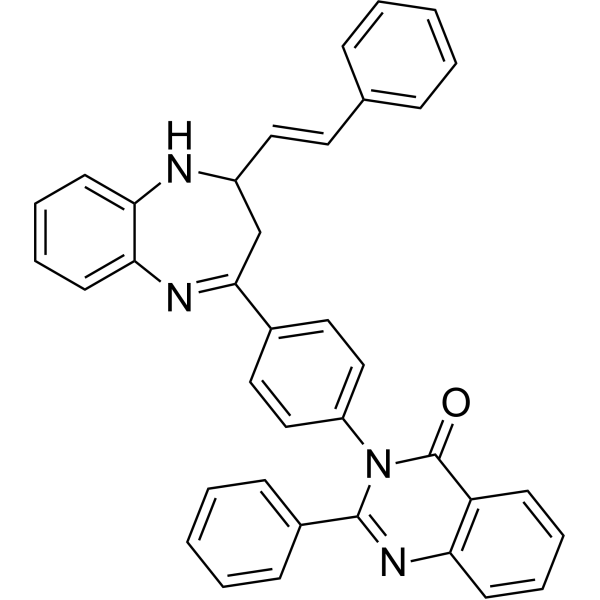
Antitumor agent-212 is a α-exo-methylene-selenolactone derivative with prominent selective antitumor activity. Antitumor agent-212 exhibits an MIC value of 128 μg/mL against Gram-positive bacteria. Antitumor agent-212 exhibits significant antitumor effects in the U87 human glioma xenograft model. Antitumor agent-212 can be used for the study of glioma, breast cancer and non-small cell lung cancer, and antibacterial study .
loading...
    loading...
Cat. No.: HY-N5132R
CAS No.: 7787-20-4
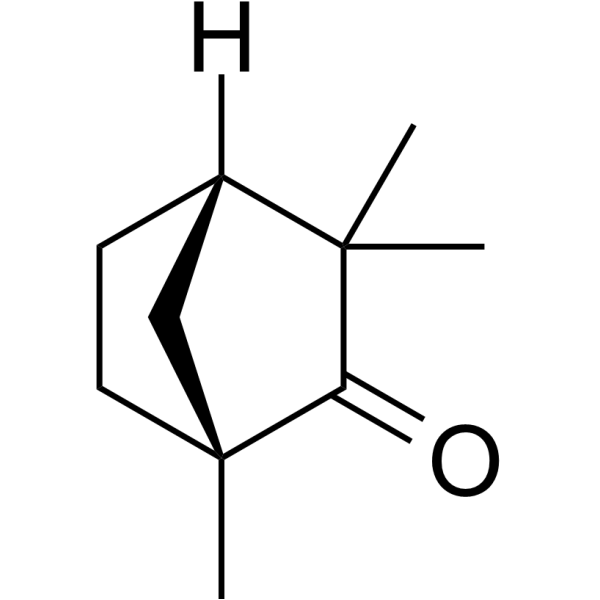
(-)-Fenchone (Standard) is the analytical standard of (-)-Fenchone. This product is intended for research and analytical applications. (-)-Fenchone, a bicyclic monoterpene, is widely distributed in plants and found in essential oils from Foeniculum vulgare. (-)-Fenchone is oxidized to 6-endo-hydroxyfenchone, 6-exo-hydroxyfenchone and 10-hydroxyfenchone derivatives by CYP2A6 and CYP2B6 in human liver microsomes with CYP2A6 playing a more important role than CYP2B6 .
loading...
    loading...
Cat. No.: HY-162273
Target:  

Bacterial Smo Gli

Research Areas:  

Infection Cancer

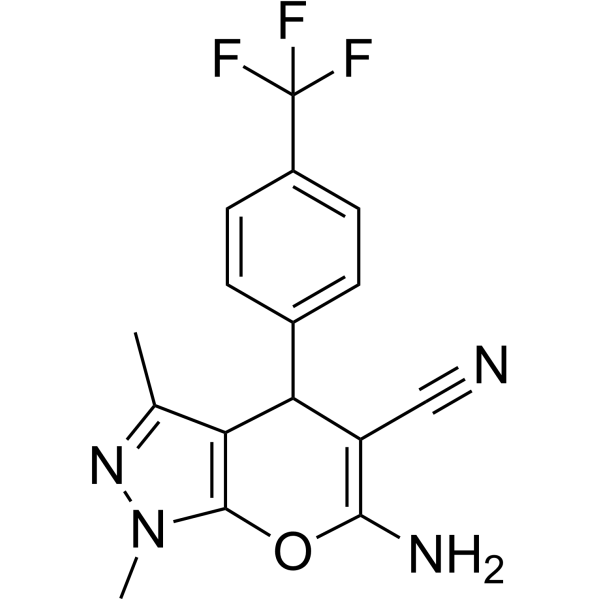
Antibacterial agent 189 (compound 3a) is a potent antimicrobial agent. Antibacterial agent 189 offers high binding energy against the target OMPA/exo-1,3-beta-glucanase proteins. Antibacterial agent 189 exhibits the potent antimicrobial activities against E. coli, P. aeruginosa, S. aureus, B. subtilis, C. Albicans and A. flavus. Antibacterial agent 189 shows high binding energy against target SMO and SUFU/GLI-1 proteins .
loading...
    loading...
Cat. No.: HY-P2858
CAS No.: 9025-43-8
Target:  

Glycosidase

Research Areas:  

Metabolic Disease

β-Mannosidase is a lysosomal exo‑acting enzyme. β-Mannosidase catalyzes hydrolysis of β‑1,4‑linked mannosides, non‑reducing terminal mannoses in N‑glycoproteins, and Man‑β‑1,4‑GlcNAc linkages to release mannose. β-Mannosidase contributes to glycoprotein catabolism and supports Bifidobacteria colonization via N‑glycan depolymerization. β-Mannosidase can be used for the research of β-mannosidosis and β-mannosidase deficiency .
loading...
    loading...
Cat. No.: HY-177512
CAS No.: 3098173-17-9
Target:  

FLAP

Research Areas:  

Cancer

MSC778 is an effective and orally active flap endonuclease 1 (FEN1) inhibitor with an IC50 of 3 nM and a KD of 2.9 nM. MSC778 exhibits 145-fold, 516-fold, and 65-fold selectivity over EXO1, GEN1, and XPG, respectively. MSC778 selectively kills BRCA2-deficient cells and potentiates the activity of Niraparib (HY-10619) to induce tumor stasis in a BRCA2 KO DLD-1 mouse xenograft. MSC778 can be used in the research of colorectal cancer .
loading...
    loading...
Cat. No.: HY-E70118
CAS No.: 9032-15-9
Target:  

Glycosidase

Research Areas:  

Others

oligo-α-1,6-Glucosidase, Bacillus cereus ATCC7064 is a hydrolase that mainly hydrolyzes oligosaccharides with α-1,6-glycosidic bonds. oligo-α-1,6-Glucosidase, Bacillus cereus ATCC7064 can catalyzes the exo hydrolysis of α-1,6-glucoside bonds from the nonreducing ends of panose, palatinose, α-limit dextrins, and isomaltooligosaccharides. oligo-α-1,6-Glucosidase, Bacillus cereus ATCC7064 participates in the degradation pathway of starch and glycogen, assisting enzymes such as α-amylase to completely hydrolyzes amylopectin .
loading...
    loading...
Cat. No.: HY-185057
CAS No.: 41656-56-8
Synonyms: S-Lactylglutathione; (R)-S-Lactoylglutathione
S-D-Lactoylglutathione (S-Lactylglutathione; (R)-S-Lactoylglutathione) is a multifunctional metabolic intermediate of the glyoxalase system. S-D-Lactoylglutathione activates K + efflux in bacteria by displacing inhibitory glutathione from KefGB channels, thereby acidifying the cytoplasm. In eukaryotic cells, S-D-Lactoylglutathione mediates S-glutathionylation as a substrate of glyoxalase 2. S-D-Lactoylglutathione serves as a sensitive metabolic biomarker for neodymium nitrate neurotoxicity; when used in combination with MSCs-exo, it upregulates glutathione levels, downregulates lactate dehydrogenase and Glo2 levels, and inhibits cellular inflammatory responses and pyroptosis. S-D-Lactoylglutathione can be used in research related to prostate cancer, breast cancer, non-small cell lung cancer, sepsis-associated encephalopathy, and neurotoxicity .
loading...
    loading...
Cat. No.: HY-185274
CAS No.: 219607-49-5
Target:  

DNA/RNA Synthesis

Research Areas:  

Others

3'-O-(2-Nitrobenzyl)-dTTP acts as a reversible terminator for DNA chain elongation. 3'-O-(2-Nitrobenzyl)-dTTP interacts with 9°N polymerase (exo-) A485L/Y409V, gets recognized and incorporated into the elongating DNA chain, thereby temporarily terminating the polymerase reaction. 3'-O-(2-Nitrobenzyl)-dTTP carries a 3'-O-(2-nitrobenzyl) blocking group, which can be removed by laser irradiation to regenerate the free 3'-OH group and restore polymerase activity. 3'-O-(2-Nitrobenzyl)-dTTP is applicable in DNA sequencing studies .
loading...
    loading...
Cat. No.: HY-N5132
CAS No.: 7787-20-4
(-)-Fenchone is a bicyclic monoterpene and serves as a substrate for human liver microsomal cytochrome P450 enzymes CYP2A6 and CYP2B6. (-)-Fenchone is not metabolized by human CYP1A1, CYP1A2, CYP1B1, CYP2C8, CYP2C9, CYP2C19, CYP2D6, CYP2E1, or CYP3A4 enzymes. (-)-Fenchone undergoes hydroxylation to produce 6-exo-hydroxyfenchone, 6-endo-hydroxyfenchone, and 10-hydroxyfenchone. During the metabolism of (-)-Fenchone, CYP2A6 may play a more important role than CYP2B6 .
loading...
    loading...
Cat. No.: HY-12875
CAS No.: 1637739-82-2
Purity:  99.45%
Target:  

Ras

Research Areas:  

Cancer

BQU57 is a selective inhibitor of RalA/RalB small GTPases, with a binding potency (Kb) of 7.7 μM for RalB-GDP. BQU57 can block its interaction with effector proteins (such as SEC5 and EXO84), inhibiting tumor cell migration, invasion and non-adherent growth. BQU57 downregulates the NF-κB signaling pathway, reduces the expression of IL-6, IL-8 and MMP-13, and inhibits apoptosis by regulating the Bcl-2/Bax balance. BQU57 also protects the extracellular matrix by inhibiting the Ral/NF-κB pathway and can be used for the study of degenerative diseases. BQU57 exhibits significant antitumor activity in triple-negative breast cancer (TNBC) models, inhibiting orthotopic tumor growth and lung metastasis and enhancing paclitaxel chemotherapy sensitivity .
loading...
    loading...
Cat. No.: HY-159803
CAS No.: 128201-92-3
Synonyms: 6-O-(3-Ethoxypropionyl)-3',4'-O-exo-benzylidenechartreusin
Target:  

Endogenous Metabolite

Research Areas:  

Cancer

IST-622 (6-O-(3-Ethoxypropionyl)-3',4'-O-exo-benzylidenechartreusin) is an anti-tumor agent with significant growth inhibitory activity. IST-622 exhibits significant anti-tumor effects against a variety of mouse tumors such as P388 and L1210 leukemias, B16 melanoma, Lewis lung carcinoma, Colon 26 and Colon 38 adenocarcinomas, and M5076 reticulum cell sarcoma. IST-622 was orally administered and the results showed efficacy in different tumor types. In addition, IST-622 provided significant inhibitory effects against two human tumor xenograft models: large cell lung carcinoma (Lu-116) and gastric adenocarcinoma (St-4). IST-622 also exhibited significant growth inhibitory activity against P388 leukemia in vitro, with a half inhibitory concentration (IC50) more than 20 times lower than CT .
loading...
    loading...
Cat. No.: HY-112624H
CAS No.: 9004-54-0
Synonyms: Dextran 2; Dextran D2; Dextran T2(MW 1600-2400)
Dextran T2 (Dextran 2; Dextran T2(MW 1600-2400)) is a natural high molecular weight polysaccharide, the glycosidic bonds in its structure can be recognized by endo-dextranase and exo-dextranase. Dextran T2 (MW 2,000) breaks the glycosidic bonds in the enzymatic hydrolysis mechanism, releasing products such as D-glucose, Isomaltose (IM2), and Isomaltotriose (IM3). Dextran T2 (MW 2,000) can be used as a model substrate to characterize the catalytic properties of dextranase (such as optimal pH, temperature and product specificity), and to study enzymatic mechanism research and polysaccharide degradation pathways in glycobiology. The Dextran series of compounds are also a natural polysaccharide drug carrier, which can be connected to drugs through covalent bonding methods such as ester bonds, amide bonds or click chemistry, or self-assembled to form carriers such as nanoparticles and hydrogels. Dextran is biodegradable and biocompatible, and can achieve targeted delivery and controlled release of drugs. Dextran derivatives can prolong drug half-life, increase local concentration and reduce immune clearance activity .
loading...
    loading...
Cat. No.: HY-W011725
CAS No.: 2002-35-9
Synonyms: m6dA
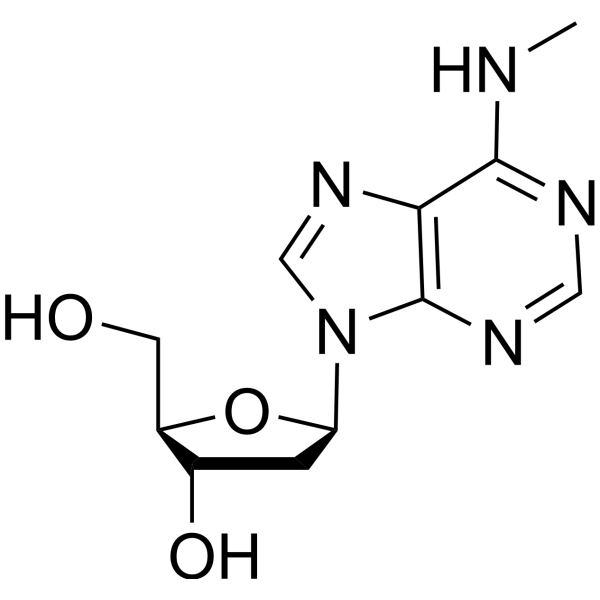
N-6-Methyl-2-deoxyadenosine (m6dA) is an adenine nucleoside analogue. N-6-Methyl-2-deoxyadenosine targets nuclear processes and DNA replication machineries including WER, SATB1, TFAM, Jumu, SSBP1, DNA polymerase η and phage polymerase Gp90 exo . N-6-Methyl-2-deoxyadenosine acts as a multifunctional epigenetic regulator that modulates transcription, DNA damage response, cell cycle, transposon silencing, stress adaptation, epigenetic crosstalk, and nucleosome organization in both prokaryotes and eukaryotes. N-6-Methyl-2-deoxyadenosine regulates mitochondrial epigenetic inheritance and is required for fear extinction memory in mice. N-6-Methyl-2-deoxyadenosine exhibits dysregulated levels in cancers. N-6-Methyl-2-deoxyadenosine can be used for the research of glioblastoma, triple negative breast cancer, and conditioned fear (fear extinction impairment) .
loading...
    loading...
Cat. No.: HY-184501
CAS No.: 486440-74-8
Research Areas:  

Cancer

UE01 is an orally active, selective small-molecule modulator targeting both ULK1/ERK1/2. UE01 activates hULK1 with an EC50 of 695.30 nM and a KD of 114.3 nM for ULK1; it inhibits hERK1 with an IC50 of 179.90 nM and a KD of 114 nM for ERK1; it shows weak binding to ERK2 with a KD of 2.8 mM. UE01 induces the conformational transition of ULK1 from an inactive to an active state, enhances the phosphorylation of ULK1 Ser317 and mAtg13 Ser355, and reduces the phosphorylation of ULK1 Ser757. UE01 competitively occupies the ATP-binding pocket of ERK1, inhibits ERK1 kinase activity, and reduces the activity of the ERK1/2 signaling pathway. UE01 induces complete autophagy flux and apoptosis, upregulates Atg5, Atg7, LC3-II/LC3-I, Bax, cytochrome C (Cyt c), Cleaved-Caspase 3, Cleaved-PARP1 and E-cadherin, downregulates p62, Bcl-2, MMP-2 and MMP-9, reduces the phosphorylation of Exo70 Ser250, and promotes the proteasome-dependent degradation of Cav-1, thereby inhibiting EMT-related phenotypes and extracellular matrix degradation. UE01 can be used in studies related to triple-negative breast cancer .
loading...
    loading...

