140 Results for "

Quorum

" in MedChemExpress (MCE) Product Catalog:
Products (140)

140 Results for "Quorum" in MCE Product Catalog:

Cat. No.: HY-W035904R
CAS No.: 539-80-0
Synonyms: Cycloheptatrienone (Standard)
Tropone (Standard) (Cycloheptatrienone (Standard)) is the analytical standard of Tropone (HY-W035904). This product is intended for research and analytical applications. Tropone (Cycloheptatrienone) is a non-benzenoid aromatic natural product that acts as a membrane reverse transporter and metal chelator. Tropone disrupts the proton motive force by affecting the transmembrane proton gradient and functions as a quorum sensing signal through LuxR-type transcriptional regulators. Tropone exhibits broad-spectrum antibiotic, anticancer, algicidal, and probiotic activities. As a virulence factor toxic to rice seedlings, Tropone promotes biofilm formation in Burkholderia plantarii and induces neurotoxicity involving mitochondrial and cytoskeletal damage, increased Ca 2+ influx, and oxidative stress. Tropone is used in the study of bacterial infections .
loading...
    loading...
Cat. No.: HY-E71703
Research Areas:  

Others

3-Hydroxy-5-phosphonooxypentane-2,4-dione thiolase (EC 2.3.1.245) participates in a degradation pathway of the bacterial quorum-sensing autoinducer molecule AI-2.
loading...
    loading...
Cat. No.: HY-E71072
Research Areas:  

Others

(4S)-4-Hydroxy-5-phosphonooxypentane-2,3-dione isomerase (EC 5.3.1.32) participates in a degradation pathway of the bacterial quorum-sensing autoinducer molecule AI-2.
loading...
    loading...
Cat. No.: HY-W788542
CAS No.: 205514-29-0
Target:  

Bacterial

Research Areas:  

Infection

Quoromycin is an orally active SmcR inhibitor with a Kd of 0.697 μM for Vibrio vulnificus SmcR. Quoromycin binds directly to SmcR, reduces its DNA-binding affinity, and inhibits the quorum sensing signaling pathway. Quoromycin is applicable to the research of Vibrio vulnificus infection .
loading...
    loading...
Cat. No.: HY-W904855
CAS No.: 177562-78-6
Research Areas:  

Infection

Apicidin D2 (Compound 4), a fungal metabolite, is a Accessory gene regulator A (AgrA) quorum-sensing inhibitor. Apicidin D2 has anti-virulence activity. Apicidin D2 suppresses MRSA agr activation and shows potent inhibitory activities against all agr types in a nonbiocidal manner. Apicidin D2 can be used for MRSA infections research .
loading...
    loading...
Cat. No.: HY-N3043A
CAS No.: 56973-65-0
(E/Z)-Platyphyllenone is a diarylheptanoid compound that can be found in Alnus viridis ssp. viridis. (E/Z)-Platyphyllenone inhibits the biosynthesis of violacein, but stimulates the production of AHL and AHQ quorum-sensing signal molecules as well as the synthesis of pyocyanin in Pseudomonas aeruginosa PAO1, and exhibits strong cytotoxicity against human lung fibroblasts. (E/Z)-Platyphyllenone can be used in studies on Pseudomonas aeruginosa .
loading...
    loading...
Cat. No.: HY-Y0248AS
CAS No.: 166447-71-8
Synonyms: trans,trans-Farnesol-d6; (2E,6E)-Farnesol-d6
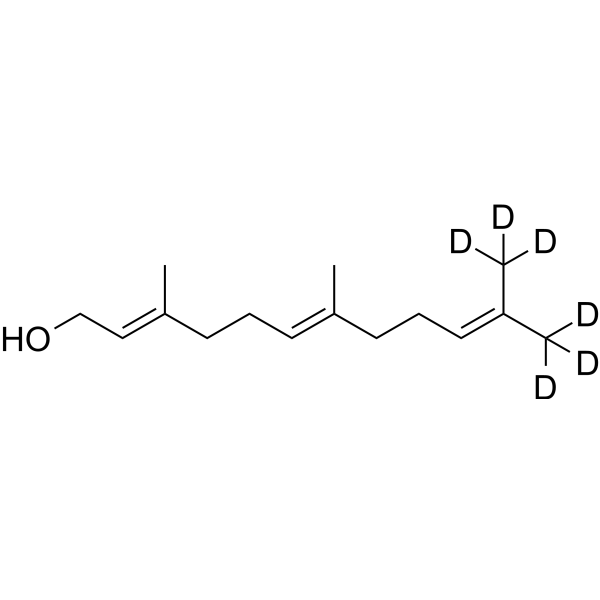
(E,​E)​-​Farnesol-d6 (trans,trans-Farnesol-d6) is deuterium labeled (E,​E)​-​Farnesol (HY-Y0248). (E,E)-Farnesol (trans,trans-Farnesol) is a quorum-sensing molecule of Candida species. (E,E)-Farnesol can inhibit the growth, metabolism and biofilm formation of various Candida species, and affect their morphology and invasiveness .
loading...
    loading...
Cat. No.: HY-Y0248R
CAS No.: 106-28-5
Synonyms: trans,trans-Farnesol (Standard); (2E,6E)-Farnesol (Standard)
(E,​E)​-​Farnesol (Standard) (trans,trans-Farnesol (Standard)) is the analytical standard of (E,​E)​-​Farnesol (HY-Y0248). This product is intended for research and analytical applications. (E,E)-Farnesol (trans,trans-Farnesol) is a quorum-sensing molecule of Candida species. (E,E)-Farnesol can inhibit the growth, metabolism and biofilm formation of various Candida species, and affect their morphology and invasiveness .
loading...
    loading...
Cat. No.: HY-W008270R
CAS No.: 497-23-4
Synonyms: γ-Crotonolactone (Standard)
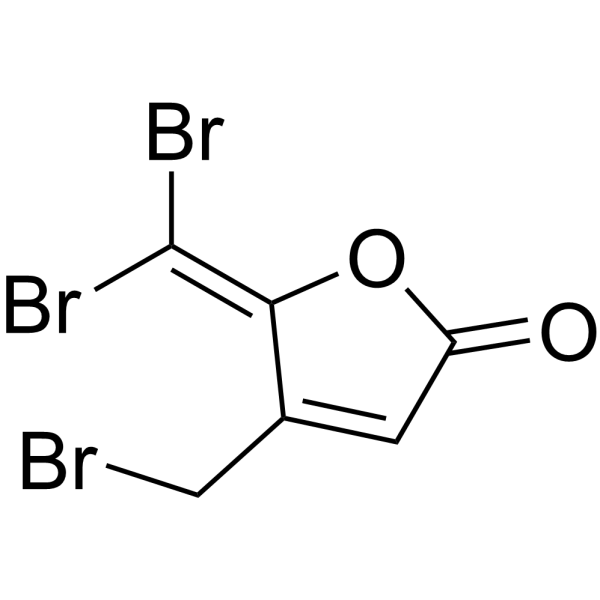
2(5H)-Furanone (Standard) is the analytical standard of 2(5H)-Furanone. This product is intended for research and analytical applications. 2(5H)-Furanone (γ-Crotonolactone) is an endogenous metabolite. 2(5H)-Furanone mimics N-acyl homoserine lactone signals, occupies the binding site of LuxR homologs, and interferes with quorum sensing-mediated gene regulation. 2(5H)-Furanone inhibits quorum sensing mediated by AHLs with different acyl chain lengths. 2(5H)-Furanone inhibits biofilm formation of environmental Aeromonas hydrophila strains on polystyrene plates. 2(5H)-Furanone suppresses spike-and-wave discharges in a rat model of generalized absence seizures and exhibits selective activity against absence seizures. 2(5H)-Furanone can be used in studies related to bacteria infections and generalized absence seizures.
loading...
    loading...
Cat. No.: HY-N10572
CAS No.: 2831355-88-3
Antibacterial synergist 2 (compound 27) is a biofilm inhibitor. Antibacterial synergist 2 shows inhibitory effects to S. enterica, S. aureus, P. aeruginosa and C. albicans. Antibacterial synergist 2 can be used for the research related to biofilm-forming pathogens .
loading...
    loading...
Cat. No.: HY-124352
CAS No.: 1259944-03-0
Purity:  ≥98.0%
Target:  

Bacterial

Research Areas:  

Others

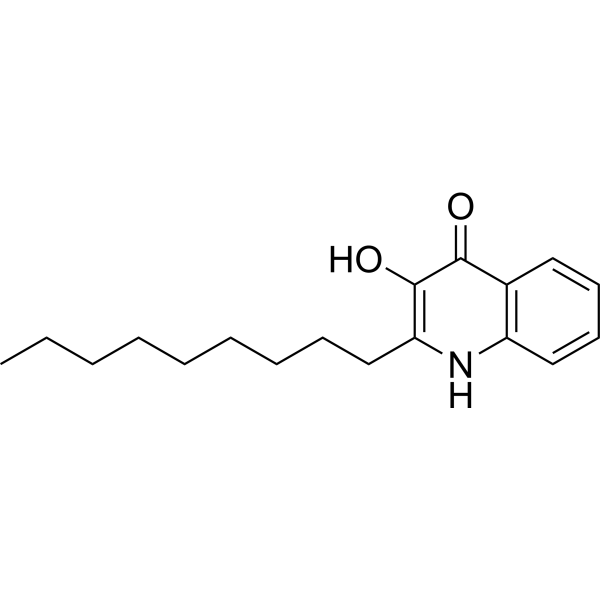
2-nonyl-3-hydroxy-4-Quinolone (C9-PQS) is a quinolone compound produced by P. aeruginosa and other related bacterias. 2-nonyl-3-hydroxy-4-Quinolone is a quorum sensing (QS) signal molecule that controls the expression of many virulence genes as a function of cell population density .
loading...
    loading...
Cat. No.: HY-W127487
CAS No.: 479050-96-9
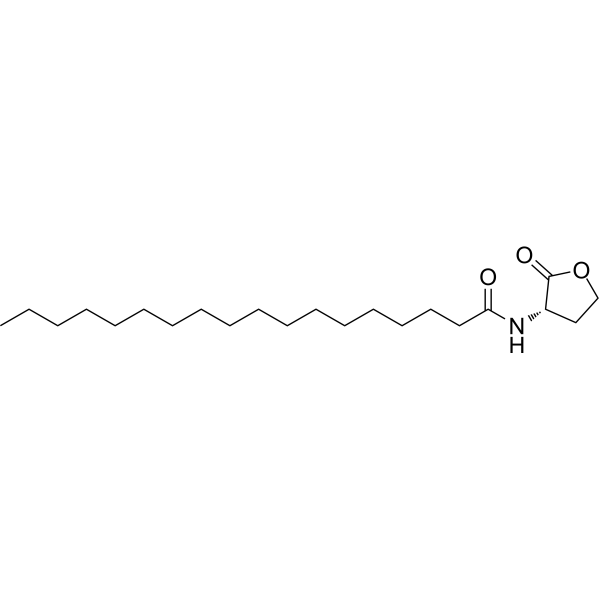
Quorum sensing is a regulatory system used by bacteria to control gene expression in response to increased cell density. This regulatory process manifests itself in a variety of phenotypes, including biofilm formation and virulence factor production. Coordinated gene expression is achieved through the production, release and detection of small diffusible signaling molecules called autoinducers. N-acylated homoserine lactones (AHLs) comprise a class of such autoinducers, each of which generally consists of a fatty acid coupled to a homoserine lactone (HSL). Modulation of bacterial quorum-sensing signaling systems to suppress pathogenesis represents a new approach to antimicrobial research for infectious diseases. AHLs differ in acyl length (C4-C18), C3 substitution (hydrogen, hydroxyl, or oxo group), and the presence or absence of one or more carbon-carbon double bonds in the fatty acid chain. These differences confer signaling specificity through the affinity of the LuxR family of transcriptional regulators. C18-HSL, one of four lipophilic long acyl side chain AHLs produced by the LuxI AHL synthase homolog SinI, is involved in quorum-sensing signaling in strains of Rhizobium meliloti (a nitrogen-fixing bacterial symbiont of the legume M. sativa) . C18-HSL and other hydrophobic AHLs tend to localize in the relatively lipophilic environment of bacterial cells and cannot diffuse freely across the cell membrane. Long-chain N-acyl homoserine lactones can be exported from cells by efflux pumps, or can be transported between communicating cells by extracellular outer membrane vesicles.
loading...
    loading...
Cat. No.: HY-189260
Research Areas:  

Infection

FNT12 is a synthetic heterocyclic derivative of 1,2,4-triazolo[1,5-a]pyrimidine that exhibits narrow-spectrum antibacterial activity against Pseudomonas aeruginosa. FNT12 possesses antibiofilm activity and free radical-scavenging antioxidant activity. FNT12 is predicted to bind to the Pseudomonas aeruginosa quorum-sensing protein LasR. FNT12 can be used in research on Pseudomonas aeruginosa infection .
loading...
    loading...
Cat. No.: HY-N8261
CAS No.: 77674-99-8
Amicoumacin B can be produced by actinomycete, strain 04-5195 T.. Amicoumacin B increases the expression of bone morphogenetic protein 2 (BMP-2). Amicoumacin B has inhibitory effect against C. violaceum (MIC = 250 µg/mL). Amicoumacin B has quorum sensing inhibitory activity, and reduces the expression of the C. violaceum operons vioA, vioB, vioD, and vioE, but increases the expression of vioC .
loading...
    loading...
Cat. No.: HY-W010608R
CAS No.: 3188-00-9
2-Methyltetrahydrofuran-3-one (Standard) is the analytical standard of 2-Methyltetrahydrofuran-3-one. This product is intended for research and analytical applications. 2-Methyltetrahydrofuran-3-one is a quorum sensing inhibitor that can inhibit biofilm formation by H. alvei. 2-Methyltetrahydrofuran-3-one is one of the volatile constituents of roasted coffee[1][2].
loading...
    loading...
Cat. No.: HY-175254
Target:  

Bacterial

Research Areas:  

Infection

Antibiofilm agent-17 is a dual-action biofilm inhibitor against Pseudomonas aeruginosa (IC50 = 0.33 μM). Antibiofilm agent-17 inhibits biofilm growth by reducing quorum sensing-mediated virulence production and iron ion acquisition. Antibiofilm agent-17 exhibits synergistic antimicrobial effects in a mouse wound infection model. Antibiofilm agent-17 can be used in research on combating Pseudomonas aeruginosa infections .
loading...
    loading...
Cat. No.: HY-N12165
CAS No.: 213547-11-6
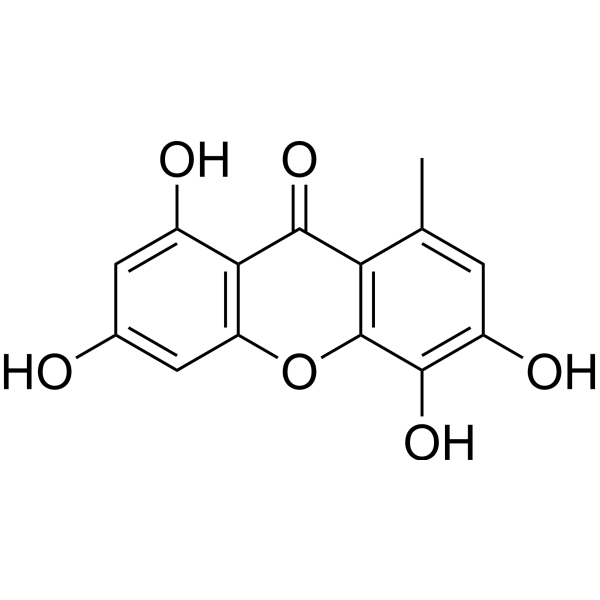
1,3,5,6-Tetrahydroxy-8-methylxanthone (compound 8) is a dimeric 1,4-benzoquinone derivative isolated from the marine-derived fungus Penicillium genus .
loading...
    loading...
Cat. No.: HY-118697R
CAS No.: 137173-46-7
Synonyms: C12-HSL (Standard)
Research Areas:  

Infection

N-dodecanoyl-L-Homoserine lactone (Standard) (C12-HSL (Standard)) is the analytical standard of N-dodecanoyl-L-Homoserine lactone (HY-118697). This product is intended for research and analytical applications. N-dodecanoyl-L-Homoserine lactone (C12-HSL) is a quorum sensing (QS) signaling molecule. N-dodecanoyl-L-Homoserine lactone (C12-HSL) aptamers blocks qurom sensing and inhibits biofilm formation in Pseudomonas aeruginosa.
loading...
    loading...
Cat. No.: HY-124237
CAS No.: 106983-30-6
Purity:  99.17%
Target:  

Bacterial

Research Areas:  

Others

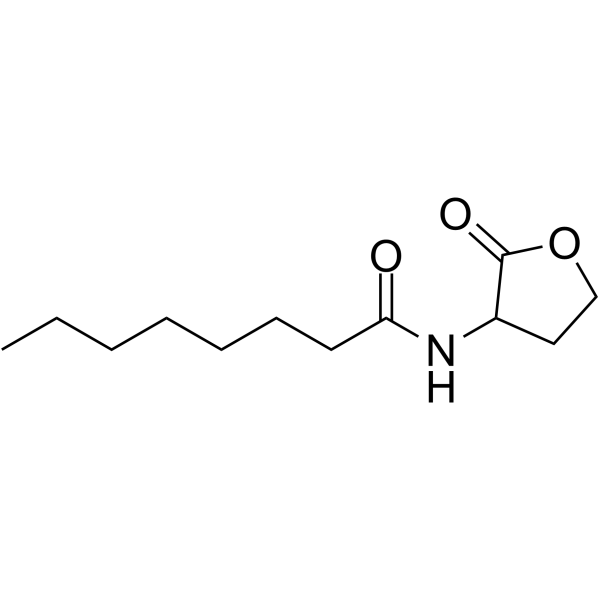
N-Octanoyl-DL-homoserine lactone is a member of N-acyl homoserine lactones (AHLs) family, also one of the signal molecule of quorum-sensing (QS) signals. N-Octanoyl-DL-homoserine lactone can regulate the production of siderophores and present positive correlation in Aeromonas sobria strain AS7. N-Octanoyl-DL-homoserine lactone can also regulate the secretion of proteases and stimulate the production of total volatile basic nitrogen (TVB-N) .
loading...
    loading...
Cat. No.: HY-W008806S
Synonyms: OHHL-d3; N-(3-Oxohexanoyl)homoserine lactone-d3
N-(3-Oxohexanoyl)-L-homoserine lactone-d3 (OHHL-d3) is the deuterated-labeled N-(3-Oxohexanoyl)-L-homoserine lactone (HY-W008806). N-(3-Oxohexanoyl)-L-homoserine lactone (OHHL; N-(3-Oxohexanoyl)homoserine lactone) is a specific agonist of LuxR-type transcription factor CarR with a Kd of 1.8 μM. N-(3-Oxohexanoyl)-L-homoserine lactone activates CarR by inducing protein multimerization, promoting its binding to target DNA sequences in the carR-carA intergenic region, thereby upregulating the transcription of carbapenem biosynthesis genes. N-(3-Oxohexanoyl)-L-homoserine lactone acts as a quorum sensing signal molecule, enabling bacteria to coordinate the production of carbapenem antibiotics in a cell density-dependent manner. N-(3-Oxohexanoyl)-L-homoserine lactone is used to study bacterial quorum sensing mechanisms, especially the secondary metabolism and virulence factor regulatory pathways of Erwinia carotovora and Yersinia enterocolitica .
loading...
    loading...

