147 Results for "

interface

" in MedChemExpress (MCE) Product Catalog:
Products (147)

147 Results for "interface" in MCE Product Catalog:

Cat. No.: HY-D1490
CAS No.: 89453-69-0
Domaines de recherche:  

Others

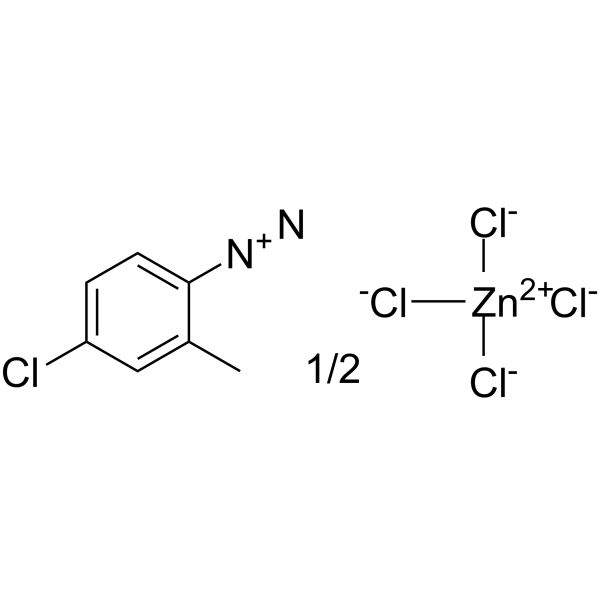
Fast red TR salt hemi zinc chloride is an aryl diazonium salt and chromogenic coupling reagent. Fast red TR salt hemi zinc chloride couples with α-Naphthol released by hydrolysis of α-naphthyl phosphate to form an azo dye complex with maximum absorption at 410 nm and 540 nm. Fast red TR salt hemi zinc chloride supports the chromogenic reaction in spectrophotometric detection of serum acid phosphatase activity .
loading...
    loading...
Cat. No.: HY-181062
Domaines de recherche:  

Cancer

VWK147 is a second-generation HSP90 C-terminal domain (CTD) inhibitor. VWK147 targets the CTD dimerization interface, prevents HSP90 CTD dimerization, disrupts co-chaperone PPID binding to HSP90 CTD, and inhibits HSP90 chaperone function dependent on dimerization. VWK147 reduces protein levels of HSP90 client proteins ULK1, RIPK1, and CDK4 without inducing a heat shock response. VWK147 induces cell death, including apoptosis, in Cisplatin (HY-17394)-sensitive and -resistant urothelial carcinoma cells. VWK147 induces LC3-II accumulation, inhibits autophagosome-lysosome fusion to block canonical autophagy, and induces non-canonical LC3 lipidation independent of ULK1 and PIK3C3 complexes. VWK147 can be used for the research of urothelial carcinoma .
loading...
    loading...
Cat. No.: HY-183583
CAS No.: 2709068-47-1
Domaines de recherche:  

Cancer

HIF-2α-IN-18 is a selective HIF-2α inhibitor with a human IC50 of 8.1 nM. HIF-2α-IN-18 binds to the HIF-2α PAS-B domain, induces conformational perturbations at the HIF-2α/ARNT dimerization interface, destabilizes the HIF-2α/ARNT heterodimer, and blocks HIF-2α-mediated transcriptional activity. HIF-2α-IN-18 inhibits hypoxia-induced expression of HIF-2α target genes EPO and SERPINE1, without inhibiting HIF-1α target genes PGK1 and PDK1. HIF-2α-IN-18 can be used for the research of clear cell renal cell carcinoma, hepatocellular carcinoma[1].
loading...
    loading...
Cat. No.: HY-123798
CAS No.: 25561-30-2
Pureté:  ≥98.0%
N,O-Bis (trimethylsilyl) trifluoroacetamide with trimethylchlorosilane is a versatile silicon-containing electrolyte additive and trimethylsilylation reagent. N,O-Bis (trimethylsilyl) trifluoroacetamide with trimethylchlorosilane is applicable for chromatographic studies .
loading...
    loading...
Cat. No.: HY-179240
Target:  

Dopamine Receptor

Domaines de recherche:  

Neurological Disease

UNC9815 is a D1 dopamine receptor (D1R) orthosteric allosteric modulator (PAM). UNC9815 can dose-dependently enhance the functional efficacy of dopamine in β-inhibitory protein recruitment experiments and cAMP accumulation experiments. When used in combination with other PAMs, UNC9815 exhibits a significant synergistic enhancement effect. UNC9815 can be used to study neurological and psychiatric diseases such as Parkinson's disease and schizophrenia .
loading...
    loading...
Cat. No.: HY-183703
ISR activator-4 is an eIF2B modulator and integrated stress response (ISR) activator with a human eIF2B EC50 of 2.2 μM. ISR activator-4 stabilises the inactive I-state of eIF2B, favours formation of the inhibitory eIF2B-eIF2(αP) complex, and attenuates eIF2B's guanine nucleotide exchange factor activity. ISR activator-4 can be used for the research of cancer, neurologic and metabolic disorders .
loading...
    loading...
Cat. No.: HY-W004864
CAS No.: 288617-73-2
Domaines de recherche:  

Others

Fmoc-(S)-2-(4-pentenyl) Ala-OH is an Fmoc-protected unnatural amino acid. Fmoc-(S)-2-(4-pentenyl) Ala-OH can be used for polypeptide synthesis, such as NYAD-13 (HY-P10834) .
loading...
    loading...
Cat. No.: HY-L942
1,626 compounds

Unlike highly conserved orthosteric sites, allosteric sites exhibit low conservation, high hydrophobicity, weak polarity, confined geometry, and dynamic cryptic properties. Rather than rigid keyhole-like cavities, they typically appear as flexible grooves, subunit interface clefts, or shallow depressions formed by protein conformational changes.

Based on the dynamic, hydrophobic, and elongated nature of allosteric pockets, MCE has carried out targeted fragment modification and screening under strict physicochemical criteria: MW 120–280 Da, HBD ≤ 2, HBA ≤ 3, PSA 30–80 Ų, rotatable bonds ≤ 2, cLogP 1–3.5. High 3D diversity was further ensured by PMI analysis, yielding fragments with excellent shape complementarity to allosteric pockets.

This library contains 1,800 structurally diverse, drug-like fragments, this library supports allosteric drug development and pocket optimization. It significantly improves screening hit rates and enables efficient, precise early-stage R&D of allosteric drugs.

Cat. No.: HY-145539
CAS No.: 145849-32-7
Target:  

Liposome

Domaines de recherche:  

Others

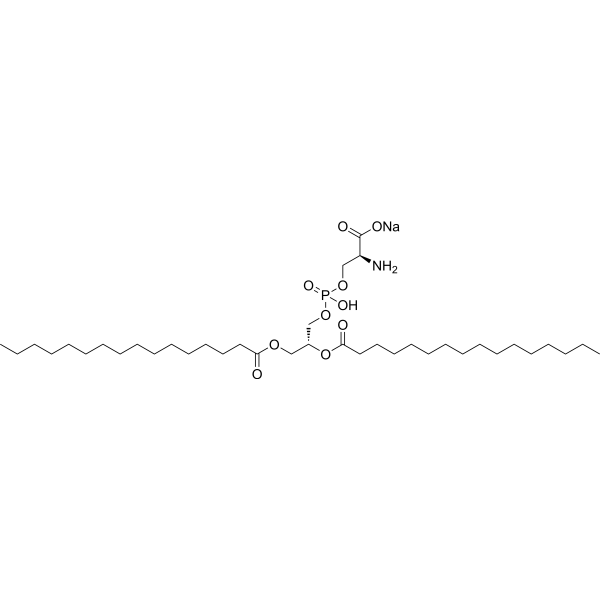
1,2-Dipalmitoyl-sn-glycero-3-PS sodium is a phosphatidylserine phospholipid. 1,2-Dipalmitoyl-sn-glycero-3-PS sodium is used for the preparation of phospholipid bilayers .
loading...
    loading...
Cat. No.: HY-145539A
CAS No.: 40290-42-4
Target:  

Liposome

Domaines de recherche:  

Others

1,2-Dipalmitoyl-sn-glycero-3-PS is a phosphatidylserine phospholipid. 1,2-Dipalmitoyl-sn-glycero-3-PS is used for the preparation of phospholipid bilayers .
loading...
    loading...
Cat. No.: HY-147408
Pureté:  99.60%
Synonyms: SHR9265
Domaines de recherche:  

Cancer

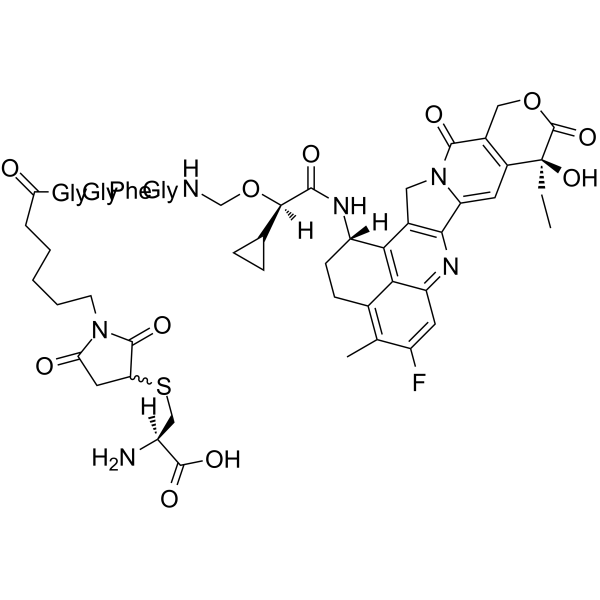
Rezetecan is a topoisomerase I inhibitor with cytotoxicity. Rezetecan can serve as an antibody-drug conjugate payload (ADC Payloads), for example, it participates in the synthesis of Tizetatug rezetecan (HY-177711). Rezetecan is applicable to research related to various cancers such as breast cancer and gastric cancer .
loading...
    loading...
Cat. No.: HY-173521
CAS No.: 3026520-19-1
Domaines de recherche:  

Infection

JNJ-9676 is an orally active Coronavirus M protein inhibitor and selective Sarbecovirus inhibitor. JNJ-9676 binds to the M protein dimer and forces the protein into an alternative conformational state with a compound-induced binding pocket. JNJ-9676 demonstrates in vitro nanomolar antiviral activity against SARS-CoV-2, SARS-CoV and Sarbecovirus strains from bat and pangolin zoonotic origin .
loading...
    loading...
Cat. No.: HY-187535
Target:  

mGluR

Domaines de recherche:  

Neurological Disease

VU6081679 is an orally active positive allosteric modulator of mGlu8 with blood-brain barrier permeability. VU6081679 binds to the extracellular allosteric pocket at the TM6/TM7 junction of mGlu8, and anchors via hydrophobic interactions and water-mediated polar contacts, thereby stabilizing the active state of the receptor and exerting positive allosteric regulatory effects. VU6081679 can be used for research on Parkinson's disease .
loading...
    loading...
Cat. No.: HY-P11422
Target:  

Inhibitory Antibodies

Domaines de recherche:  

Infection

CKS9 is an M cell-targeting polypeptide with the amino acid sequence CKSTHPLSC, forming a 9-mer peptide via cyclization through a disulfide bond between the two cysteine residues. CKS9 is obtained through phage display technology screening and has high affinity for M cells. CKS9 can promote chitosan nanoparticles to cross M cells and enter the follicle-associated epithelium (FAE) of intestinal Peyer's patches (PP). CKS9 can be used in studies related to swine dysentery and oral delivery .
loading...
    loading...
Cat. No.: HY-182023
Domaines de recherche:  

Neurological Disease

Anticonvulsant agent 11 (Compound 8b) is an anticonvulsant agent. Anticonvulsant agent 11 exerts neuroprotective effects by enhancing cell viability and reducing ROS levels. Anticonvulsant agent 11 induces the expression of GABAA α1, resulting in neuronal hyperpolarization. Anticonvulsant agent 11 increases the number of neurite-bearing cells and the length of neurites. Anticonvulsant agent 11 exhibits dose-dependent anticonvulsant effects in mice. Anticonvulsant agent 11 can be used for the research of epilepsy .
loading...
    loading...
Cat. No.: HY-184155
CAS No.: 2756347-51-8
Domaines de recherche:  

Cancer

LC1343 is a human thymidylate synthase (hTS) inhibitor with an IC50 of 7 μM. LC1343 inhibits cancer cell growth and induces apoptosis in cancer cells. LC1343 can be used for the research of ovarian cancer, colorectal cancer, and pancreatic cancer .
loading...
    loading...
Cat. No.: HY-P4371
CAS No.: 177942-21-1
Domaines de recherche:  

Inflammation/Immunology

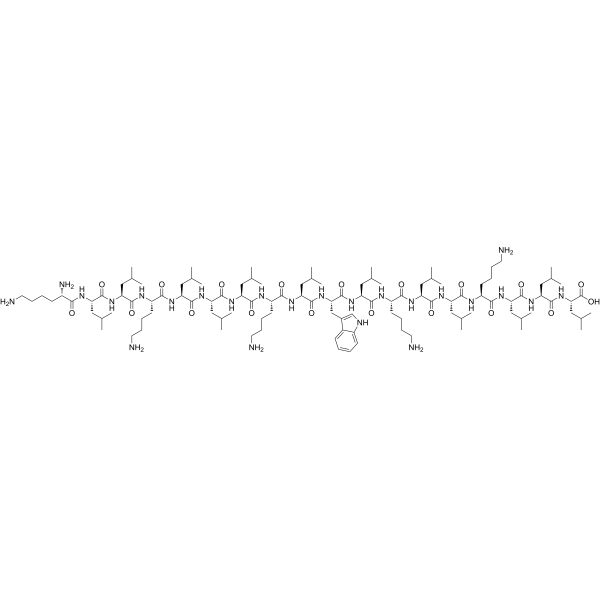
Hel 13-5 is a monomeric, lipophilic, basic amphipathic α-helical synthetic peptide composed of 18 amino acid residues. Hel 13-5 is designed as a substitute for proteins in artificial pulmonary surfactants, and it mimics the interaction between the N-terminal fragment of human pulmonary surfactant protein B and lipids. Hel 13-5 can bind to phospholipids for the development of pulmonary surfactant model systems. Hel 13-5 can be used in studies related to respiratory distress syndrome .
loading...
    loading...
Cat. No.: HY-L948
11,491 compounds

PD-1/PD-L1 are key immune checkpoint targets that suppress T-cell-mediated anti-tumor immunity, representing a major focus in cancer immunotherapy. While antibody drugs dominate the clinic, they are limited by administration challenges and immune-related side effects. Small-molecule PD-1/PD-L1 inhibitors, with oral availability, good tissue penetration and low cost, have emerged as a promising next-generation strategy.

A PD-1/PD-L1 lead-like library was built via a five-step virtual screening process. After collecting 8,947 inhibitors from BindingDB and PubChem and filtering by activity and duplicates, AI similarity screening was performed using GeminiMol. Key pharmacophores were extracted from the PPI interface of co-crystal structures, and molecular was screened via a pharmacophore model, effectively enhancing target activity.

Containing 10,000 structurally diverse and drug-like molecules well-matched to the PD-L1 pocket, the library supports virtual docking, high-throughput screening and hit discovery, enabling efficient and rapid development of small-molecule immunotherapies.

Cat. No.: HY-L109
826 compounds

Protein protein interactions (PPI) have pivotal roles in life processes. The studies showed that aberrant PPI are associated with various diseases, including cancer, infectious diseases, and neurodegenerative diseases. The classic drug targets are usually enzymes, ion channels, or receptors, the PPI indicate new potential therapeutic targets. Therefore, targeting PPI is a new direction in treating diseases and an essential strategy for the development of new drugs.

However, the design of modulators targeting PPI still faces tremendous challenges, such the difficult PPI interfaces for the drug design, lack of ligands reference, lack of guidance rules for the PPI modulators development and high-resolution PPI proteins structures.

With the development of high-throughput technology, high-throughput screening is also gradually used for the identification of PPI inhibitors, but the compound library used for conventional target screening is not very effective in screening PPI inhibitors. To improve screening efficiency, MCE carefully selected 826 PPI inhibitors and mainly targeting MDM2-p53, Keap1-Nrf2, PD-1/PD-L1, Myc-Max, etc. MCE Protein-protein Interaction Inhibitor Library is a useful tool for PPI drug discovery and related research.

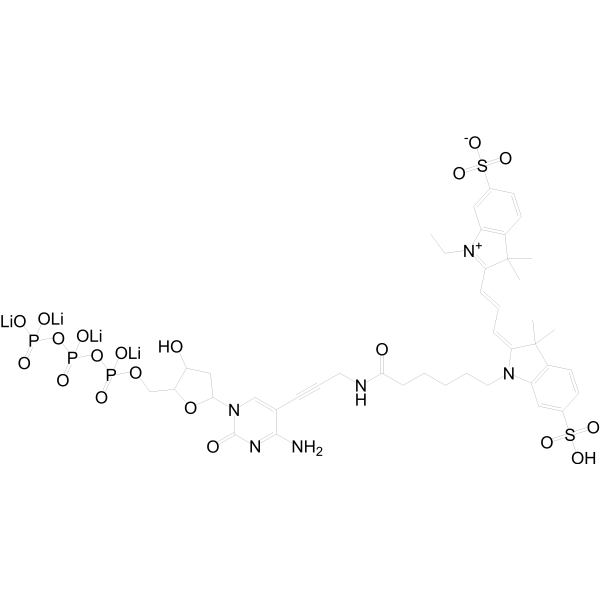
Cat. No.: HY-D1725
Cy3-dCTP is a directly fluorescently labeled deoxyribonucleotide, in which Cy3 is a cyanine fluorescent dye. Cy3-dCTP is used for direct enzymatic labeling of DNA and cDNA: with the aid of DNA polymerases, this modified nucleotide is incorporated into the extending DNA strand during processes such as reverse transcription, PCR, nick translation or random primer labeling .
loading...
    loading...

