170 Results for "

circulating

" in MedChemExpress (MCE) Product Catalog:
Products (170)

170 Results for "circulating" in MCE Product Catalog:

Cat. No.: HY-164236
CAS No.: 119242-44-3
Target:  

Endogenous Metabolite

Research Areas:  

Metabolic Disease

C22 Glucosylceramide (d18:1/22:0) is a bioactive sphingolipid composed of a d18:1 sphingoid base and a 22:0 fatty acid chain. C22 Glucosylceramide (d18:1/22:0) specifically exists in Doxorubicin (HY-15142A)-sensitive cancer cells, and its circulating concentration is positively correlated with the incidence of cardiovascular events. C22 Glucosylceramide (d18:1/22:0) has been widely used in research related to cardiovascular diseases, hypercholesterolemia, metabolic syndrome, breast adenocarcinoma and other fields .
loading...
    loading...
Cat. No.: HY-P992380

Target:  

PD-1/PD-L1

Research Areas:  

Neurological Disease

IBC-Ab002 is a humanized anti-PD-L1 monoclonal antibody with a modified Fc backbone that shortens its circulating half-life. IBC-Ab002 inhibits PD-L1, triggers immune responses by blocking the PD-1/PD-L1 pathway, promotes the recruitment of myeloid-derived immune cells to the brain, enhances the clearance of toxic substances in the brain, improves neuronal function and reduces inflammation. IBC-Ab002 reduces the risk of accelerated onset of autoimmune diabetes in susceptible mice. IBC-Ab002 can be used in research related to Alzheimer's disease .
loading...
    loading...
Cat. No.: HY-123814
CAS No.: 29553-70-6
Purity:  99.64%
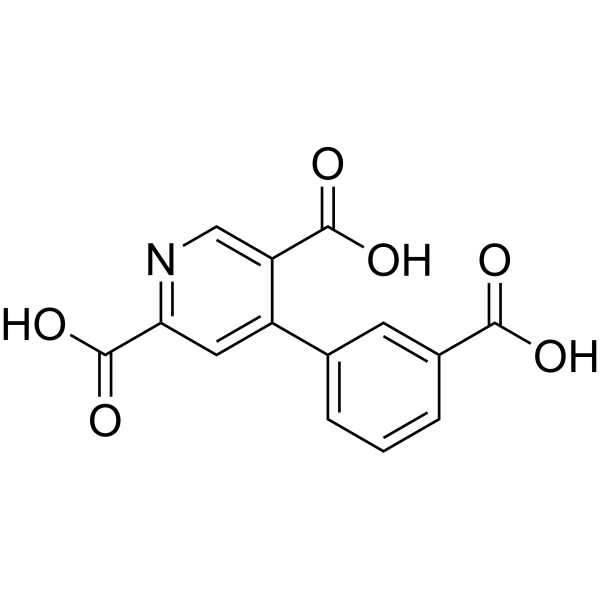
4-CPPC is a selective MIF-2 inhibitor with a Ki of 33 µM. 4-CPPC inhibits the COX2/PGE2 pathway, reduces the levels of COX2 and mPGES-1, and decreases the production of PGE2. 4-CPPC attenuates the formation of early atherosclerotic lesions in hyperlipidemic mice, and lowers the levels of circulating inflammatory cytokines and chemokines. 4-CPPC inhibits MIF-2-triggered cell migration. 4-CPPC improves hindlimb motor function in rats with contusion-induced spinal cord injury. 4-CPPC can be used in studies related to atherosclerosis and spinal cord injury .
loading...
    loading...
Cat. No.: HY-141582S
CAS No.: 1354806-91-9
Synonyms: N-Stearoyl phytosphingosine-d3
Ceramide 3-d3 (N-Stearoyl phytosphingosine-d3) is deuterium labeled Ceramide 3. Ceramide 3 is an orally active major component of intercellular lipids in the stratum corneum of the skin, and belongs to the ceramide family. Ceramide 3 inhibits c-jun and NF-κB activation induced by Histamine (HY-B1204), and suppresses the expression of IL-4 and TNF-α. Ceramide 3 inhibits scratching behavior and vascular permeability in mice, and exhibits antihistamine effects in guinea pig ileum. Ceramide 3 improves skin barrier function, reduces transepidermal water loss, erythema and the number of circulating epidermal cells, and accelerates barrier repair of irritated or dysfunctional skin.
loading...
    loading...
Cat. No.: HY-P992437

Target:  

CD44 Apoptosis

Research Areas:  

Inflammation/Immunology Cancer

PF-03475952 is a fully human IgG2 monoclonal antibody targeting CD44. PF-03475952 binds an epitope in CD44’s constant exons, blocks CD44-hyaluronic acid interaction, reduces cell surface CD44, and does not cross-react with rodent CD44 or LYVE-1. PF-03475952 induces cancer cell apoptosis, inhibits LPS (HY-D1056)-induced leukocyte cytokine release and cancer metastasis, and reduces CD44 expression on circulating CD3+ lymphocytes in cynomolgus monkeys. PF-03475952 can be used for the research of rheumatoid arthritis and hepatocellular carcinoma .
loading...
    loading...
Cat. No.: HY-L239
71 compounds

Steroid hormones (also known as steroidal hormones) are a class of tetracyclic aliphatic hydrocarbon compounds derived from cholesterol. Typical representatives of steroid hormones include cortisol, aldosterone, testosterone, estradiol, among others. These hormones serve diverse regulatory functions within the body. For instance, aldosterone helps maintain the homeostasis of extracellular fluid volume and circulating blood volume; testosterone and estradiol primarily promote the development and maturation of male and female reproductive organs and regulate reproductive functions.

MCE designs a unique collection of 71 steroid hormones. This library can be used for research related to metabolic or immune diseases, investigations into the mechanisms of action of nuclear receptor signaling pathways, as well as identification and quantitative analysis in metabolomics studies.

Cat. No.: HY-126969
CAS No.: 870095-15-1
Target:  

PPAR

Research Areas:  

Metabolic Disease

C333H is a selective PPARγ modulator with insulin-sensitizing and hypoglycemic activities. C333H exhibits similar insulin-sensitizing effects to thiazolidinediones (TZDs) in diabetic mouse models without significantly increasing body weight or adipose tissue weight. C333H increases circulating high molecular weight adiponectin isoform levels in diabetic db/db mice, reduces serine phosphorylation of PPARγ 273 in brown adipose tissue, and selectively modulates the expression of specific PPARγ target genes in adipose tissue. Express. C333H exhibits weak recruitment of co-activators and weak dissociation of co-repressors in vitro. These properties suggest that C333H may be a potential inhibitor of type 2 diabetes .
loading...
    loading...
Cat. No.: HY-175022
CAS No.: 2432992-21-5
PROTAC IRAK4 degrader-13 (Degrader 1) is a selective IRAK4 PROTAC degrader with DC50s of 0.86 and 1.1 nM for monocytes and lymphocytes in PBMCs, respectively. PROTAC IRAK4 degrader-13 significantly induces TIR signal activation, and inhibits the expression of circulating proinflammatory cytokines in Imiquimod (HY-B0180) induced psoriasis mice model. PROTAC IRAK4 degrader-13 can be used for TLR- and IL-1R-driven driven neutrophilic inflammation diseases like hidradenitis suppurativa (HS) and atopic dermatitis (AD) research . Pink: IRAK4 ligand; Blue: E3 ligase ligand; Black: linker
loading...
    loading...
Cat. No.: HY-175420
CAS No.: 2696409-13-7
Research Areas:  

Metabolic Disease

K-757 is an orally active, gut-targeted GPR40 agonist with EC50 values of 2.1 nM, 5.6 nM, 4.2 nM and 166 nM in humans, mice, rats and dogs, respectively. K-757 activates nutrient receptors co-expressed on pancreatic β cells and intestinal enteroendocrine cells. K-757 mediates and induces the secretion of satiety hormones GLP-1 and PYY in multiple in vitro and in vivo models. When used in combination with GPR119 agonist K-833, K-757 acts as a potentiator to elevate circulating levels of satiety hormones. K-757 can be used in the research of type 2 diabetes, weight loss and other related metabolic disorders .
loading...
    loading...
Cat. No.: HY-P11018
Research Areas:  

Cancer

(123B9)2-L2-PTX is an EphA2-agonistic peptide-drug conjugate (PDC). (123B9)2-L2-PTX consists of a dimeric 123B9 (HY-P10579) and Paclitaxel (HY-B0015). (123B9)2-L2-PTX significantly reduces circulating tumor cells and inhibits lung tumor metastasis in breast-cancer-Metastasis mice model. (123B9)2-L2-PTX can be used for cancers research, such as melanomas and ovarian and breast cancers .
loading...
    loading...
Cat. No.: HY-P4827
CAS No.: 521986-14-1
Target:  

PTHR

Research Areas:  

Metabolic Disease

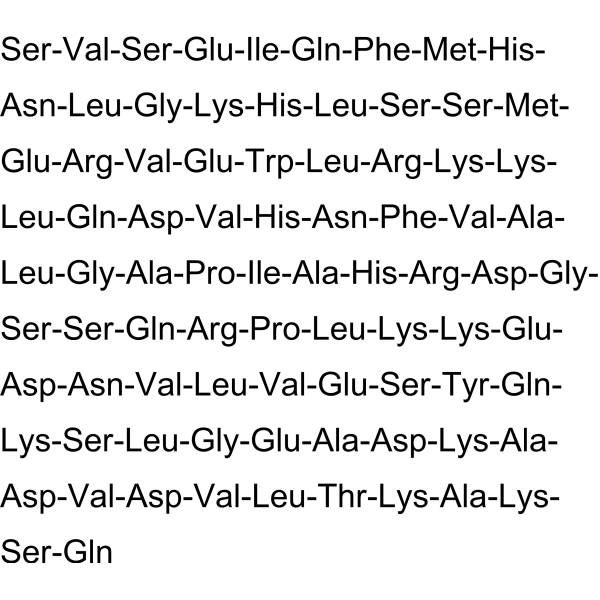
pTH (1-84) dog is a biologically active full-length canine parathyroid hormone, as well as an agonist of PTHR. pTH (1-84) dog can be detected by the "intact" PTH (W-PTH) assay, thus effectively distinguishing inactive C-terminal fragments. In terms of metabolic regulation, it rapidly and persistently stimulates hepatic glucose release, hepatic alanine uptake, and alanine-based gluconeogenesis in conscious fasted dogs, and causes a secondary increase in circulating canine insulin levels due to enhanced glucose release. However, high doses of pTH (1-84) (dog) may induce adverse reactions such as hypercalcemia in dogs. Based on the above characteristics, this hormone can be widely used in studies related to canine hyperadrenocorticism (HAC) .
loading...
    loading...
Cat. No.: HY-L182
417 compounds

Fatty acids (FAs) are the main components of lipids. The synthesis of fatty acids mainly involves the Triglyceride (TG) cycle and De Novo Lipogenesis (DNL). Fatty acids which exist widely in organisms are components of cell membranes and play an indispensable role in cell signaling. In addition, FFAs can be taken up from circulating plasma by all mitochondria-containing cells, and they are metabolized by β-oxidation and the citric acid cycle to release large amounts of energy in the form of ATP. Abnormal fatty acid metabolism is associated with the occurrence and development of cardiovascular diseases, diabetes, fatty liver, hyperthyroidism, and other diseases.

MCE offers a unique collection of fatty acid compounds. Fatty Acids Compound Library is an important tool for the study of energy metabolism and drug development of metabolism-related diseases.

Cat. No.: HY-130581
CAS No.: 86559-73-1
Target:  

Bacterial

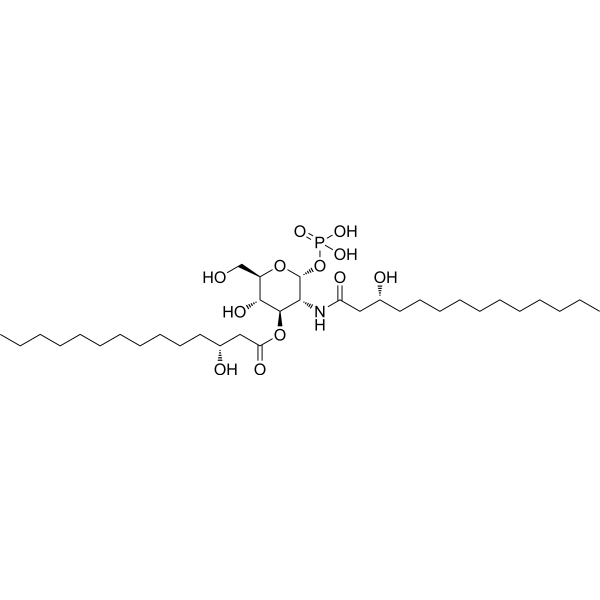
Lipid X is a 2,3-diacylglucosamine-1-phosphate that serves as the monosaccharide precursor of lipid A, possessing both LPS antagonist and weak agonist activities. Lipid X exerts protective effects by inhibiting tumor necrosis factor production, monocyte procoagulant activity, and neutrophil priming. Lipid X may induce transient pulmonary hypertension, neutropenia, and mild pyrogenic effects in laboratory animals. Lipid X has low toxicity and no in vitro antibacterial activity, but it significantly reduces mortality following Gram-negative bacterial infection and endotoxin exposure. Lipid X tends to accumulate in liver tissue, binds to circulating cellular components, and can be converted to lipid Y through transesterification. Lipid X can be used in research on Gram-negative bacterial sepsis, endotoxemia, and associated pulmonary hypertension .
loading...
    loading...
Cat. No.: HY-183569
CAS No.: 3034296-91-5
CSF1R-IN-27 is a CSF1R inhibitor with oral effectiveness, kinome-wide selective profile, low cellular cytotoxicity, and CSF1R IC50 values of 19 nM, 88 nM, 173 nM, 797 nM, 1448 nM, and >3000 nM. CSF1R-IN-27 suppresses M-CSF-induced phosphorylation of CSF1R, AKT, and ERK in macrophages, and inhibits hepatic p-CSF1R/p-AKT/p-ERK signaling. CSF1R-IN-27 reduces serum transaminase levels, improves hepatic histopathology, alleviates inflammatory cell infiltration, and decreases circulating TNF-α and IL-6 levels. CSF1R-IN-27 can be used for the research of acute liver injury .
loading...
    loading...
Cat. No.: HY-18778C
CAS No.: 866399-89-5
Synonyms: TA-8995 hemicalcium; DEZ-001 hemicalcium; AMG-899 hemicalcium
Target:  

CETP PCSK9 LDLR

Research Areas:  

Inflammation/Immunology

Obicetrapib hemicalcium (TA-8995 hemicalcium) is an orally active cholesteryl ester transfer protein (CETP) inhibitor. Obicetrapib hemicalcium shifts the plasma lipoprotein profile toward more HDL-C particles, reduces circulating PCSK9 levels, increases hepatic LDLR expression and LDLR mRNA levels, and promotes hepatic clearance of VLDL remnants. Obicetrapib hemicalcium increases the number of large HDL particles, reduces the number and area of atherosclerotic lesions and alleviates lesion severity, increases the proportion of unaffected arterial segments, improves lesion stability, and promotes regression of aortic root lesions. Obicetrapib hemicalcium also exerts a synergistic effect with Ezetimibe (HY-17376) to reduce non-HDL-C levels and improve atherosclerosis. Obicetrapib hemicalcium can be used in studies related to atherosclerosis and dyslipidemia .
loading...
    loading...
Cat. No.: HY-N3021
CAS No.: 643-12-9
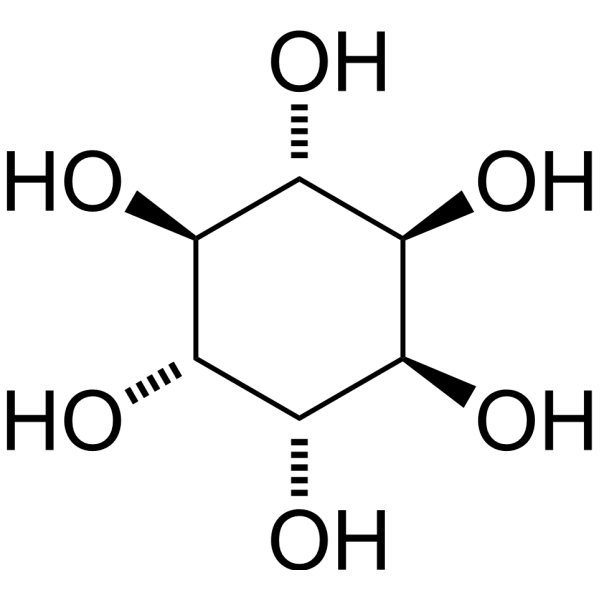
D-chiro-Inositol is a stereoisomer of inositol that exhibits activities such as improving glucose metabolism, anti-tumor effects, anti-inflammatory properties, and antioxidant activity. D-chiro-Inositol effectively alleviates cholestasis by enhancing bile acid secretion and reducing oxidative stress. D-chiro-Inositol improves insulin resistance, lowers hyperglycemia and circulating insulin levels, reduces serum androgen levels, and ameliorates some metabolic abnormalities associated with X syndrome by mimicking the action of insulin. Additionally, D-chiro-Inositol can induce a reduction in pro-inflammatory factors (such as Nf-κB) and cytokines (such as TNF-α), thereby exerting anti-inflammatory effects. D-chiro-Inositol may be used in the study of liver cirrhosis, breast cancer, type 2 diabetes, and polycystic ovary syndrome .
loading...
    loading...
Cat. No.: HY-N3021R
CAS No.: 643-12-9
D-chiro-Inositol is a stereoisomer of inositol that exhibits activities such as improving glucose metabolism, anti-tumor effects, anti-inflammatory properties, and antioxidant activity. D-chiro-Inositol effectively alleviates cholestasis by enhancing bile acid secretion and reducing oxidative stress. D-chiro-Inositol improves insulin resistance, lowers hyperglycemia and circulating insulin levels, reduces serum androgen levels, and ameliorates some metabolic abnormalities associated with X syndrome by mimicking the action of insulin. Additionally, D-chiro-Inositol can induce a reduction in pro-inflammatory factors (such as Nf-κB) and cytokines (such as TNF-α), thereby exerting anti-inflammatory effects. D-chiro-Inositol may be used in the study of liver cirrhosis, breast cancer, type 2 diabetes, and polycystic ovary syndrome .
loading...
    loading...
Cat. No.: HY-147240
CAS No.: 1824609-67-7
Purity:  99.92%
Synonyms: ADX-629
Target:  

Interleukin Related

Research Areas:  

Inflammation/Immunology

Acloproxalap (ADX-629) is an orally active reactive aldehyde species (RASP) inhibitor. Acloproxalap binds covalently to free aldehydes, sequesters reactive aldehyde species, malondialdehyde, acetaldehyde and preformed malondialdehyde-acetaldehyde adducts, and reduces elevated RASP levels. Acloproxalap decreases the formation of aldehyde adducts, reduces liver and serum triglyceride levels, hepatic fat accumulation, circulating anti-malondialdehyde-acetaldehyde adduct antibody levels, and inhibits the release of IL-6 and MCP-1. Acloproxalap improves cell viability of liver slices exposed to ethanol. Acloproxalap blocks ethanol-induced damage in animal models of alcoholic liver disease. Acloproxalap is applicable to research related to alcoholic liver disease, alcoholic fatty liver disease, non-alcoholic steatohepatitis, chronic cough, rheumatoid arthritis, ulcerative colitis and mild atopic asthma .
loading...
    loading...
Cat. No.: HY-164236S
CAS No.: 2738376-81-1
C22 Glucosylceramide (d18:1/22:0)-d4 is deuterium labeled C22 Glucosylceramide (d18:1/22:0) (HY-164236). C22 Glucosylceramide (d18:1/22:0) is a bioactive sphingolipid composed of a d18:1 sphingoid base and a 22:0 fatty acid chain. C22 Glucosylceramide (d18:1/22:0) specifically exists in Doxorubicin (HY-15142A)-sensitive cancer cells, and its circulating concentration is positively correlated with the incidence of cardiovascular events. C22 Glucosylceramide (d18:1/22:0) has been widely used in research related to cardiovascular diseases, hypercholesterolemia, metabolic syndrome, breast adenocarcinoma and other fields .
loading...
    loading...
Cat. No.: HY-175984
Target:  

LPL Receptor

Research Areas:  

Inflammation/Immunology

S1P1 agonist 7 is a potent, orally active, and β-arrestin-biased S1P1 agonist (EC50(G‑protein) = 12.7 nM and EC50(β‑arrestin) = 3.23 nM). S1P1 agonist 7 demonstrates potent immunomodulatory activity and a favorable safety profile. S1P1 agonist 7 exhibits excellent metabolic stability, minimal to moderate CYP inhibition, and S1P3-sparing selectivity. S1P1 agonist 7 shows pharmacokinetics, effectively reduces circulating lymphocytes, and significantly alleviates disease severity in experimental autoimmune encephalomyelitis (EAE) mouse models under both prophylactic and therapeutic regimens. S1P1 agonist 7 can be used for multiple sclerosis (MS) research .
loading...
    loading...

