210 Results for "

Competitive Inhibition

" in MedChemExpress (MCE) Product Catalog:
Products (210)

210 Results for "Competitive Inhibition" in MCE Product Catalog:

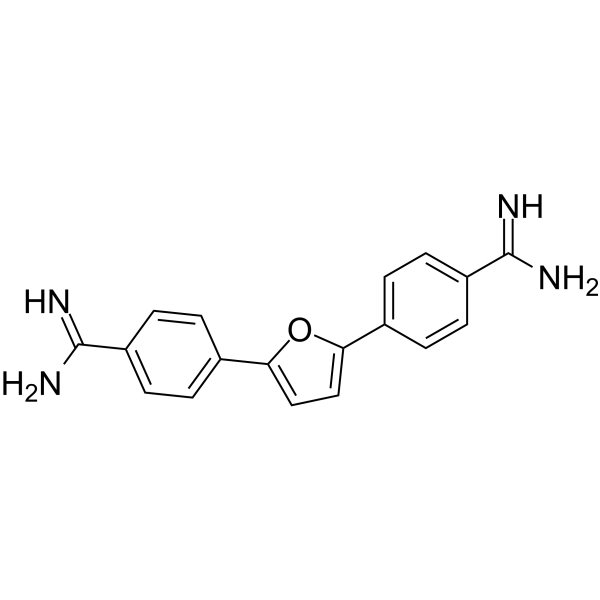
Cat. No.: HY-110137A
CAS No.: 73819-26-8
Synonyms: DB75; NSC 305831
Furamidine (DB75) is a selective protein arginine methyltransferase 1 (PRMT1) inhibitor with an IC50 of 9.4 μM. Furamidine is selective for PRMT1 over PRMT5, PRMT6, and PRMT4 (CARM1) (IC50s of 166 µM, 283 µM, and >400 µM, respectively). Furamidine is a potent, reversible and competitive tyrosyl-DNA phosphodiesterase 1 (TDP-1) inhibitor. Inhibition of TDP-1 by Furamidine is effective both with single- and double-stranded DNA substrates but is slightly stronger with the duplex DNA. Furamidine is also an antiparasite agent .
loading...
    loading...
Cat. No.: HY-120826
CAS No.: 1439488-21-7
Purity:  ≥99.0%
A2AAR/hMAO-B-IN-1 (compoudn 17) is a non-xanthine dual-target inhibitor targeting the A2A adenosine receptor (A2AAR) (IC50: 34.9 nM) andMAO-B (Ki: 39.5 nM, human). A2AAR/hMAO-B-IN-1 inhibits A2AAR-induced cAMP accumulation and exhibits competitive, reversible inhibition of MAO-B. A2AAR/hMAO-B-IN-1 can be used in the study of neurodegenerative diseases such as Parkinson's disease (PD) .
loading...
    loading...
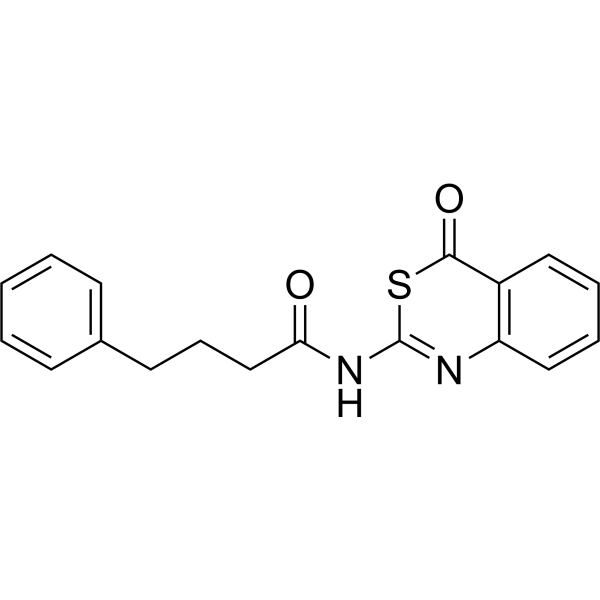
Cat. No.: HY-180506
Tyrosinase-IN-47 (compound 6a) is a potent competitive tyrosinase inhibitor with an IC50 of 1.43 µM and a Ki of 0.1142 μM. Tyrosinase-IN-47 also shows inhibition activity in α-Glucosidase (IC50 = 36.26 μM) and acetylcholinesterase (IC50 = 8.26 μM). Tyrosinase-IN-47 exhibits in vitro antioxidant activity, with good scavenging ability for DPPH (IC50 = 4.75 μM) and ABTS (IC50 = 0.04 μM). Tyrosinase-IN-47 displays anti-browning effect on freshly cut potatoes. Tyrosinase-IN-47 can be used for pharmaceutical research .
loading...
    loading...
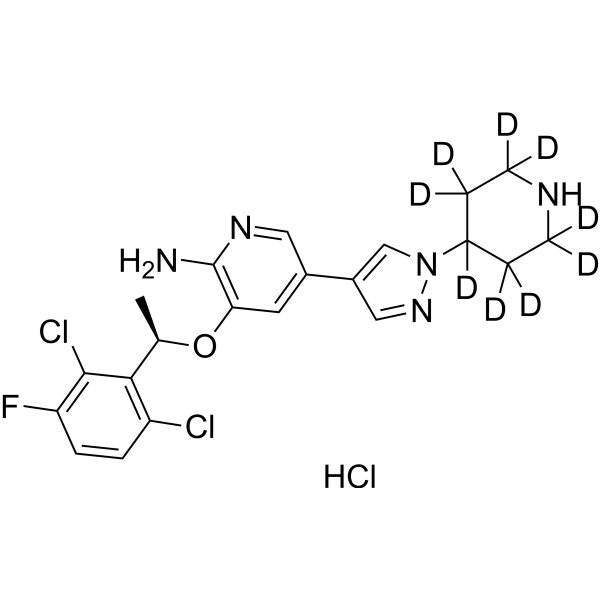
Cat. No.: HY-50878AS
Synonyms: PF-02341066-d9 hydrochloride
Crizotinib-d9 hydrochloride is deuterated labeled Crizotinib hydrochloride (HY-50878A). Crizotinib hydrochloride (PF-02341066 hydrochloride) is an orally bioavailable, selective, and ATP-competitive dual ALK and c-Met inhibitor with IC50s of 20 and 8 nM, respectively. Crizotinib hydrochloride (PF-02341066 hydrochloride) inhibits tyrosine phosphorylation of NPM-ALK and tyrosine phosphorylation of c-Met with IC50s of 24 and 11 nM in cell-based assays, respectively. It is also a ROS proto-oncogene 1 (ROS1) inhibitor. Crizotinib hydrochloride (PF-02341066 hydrochloride) has effective tumor growth inhibition .
loading...
    loading...
Cat. No.: HY-184776
CAS No.: 586-60-7
Synonyms: Dyclocaine
Dyclonine (Dyclocaine) is an orally active, blood-brain barrier-permeable piperidine phenylacetone small molecule commonly used as a local anesthetic. Dyclonine acts as a highly selective allosteric antagonist of TRPV3; it also reversibly inhibits G9a, ALDH2 and ALDH3A1, non-competitively blocks AChE. Dyclonine activates the Nrf2/ARE pathway, relieves the epigenetic silencing of FXN, blocks Aβ42 aggregation, and promotes remyelination and reparative polarization of microglia. Dyclonine alleviates pruritus via TRPV3 inhibition; it is used in studies of neurodegenerative disease models based on its AChE inhibitory, antioxidant and remyelinating effects; it sensitizes drug-resistant tumors through ALDH inhibition, and combined use with protease inhibitors induces more tumor cell apoptosis; it inhibits Candida albicans in vitro. Dyclonine can be used for research on multiple diseases including neurodegenerative diseases, cancer and pruritic dermatitis .
loading...
    loading...
Cat. No.: HY-121998
CAS No.: 220088-42-6
Target:  

Aurora Kinase

Research Areas:  

Others

Binucleine 2 is an isoform-specific and ATP-competitive inhibitor of Drosophila Aurora B kinase (Ki=0.36 μM), a kinase involved in cell division. It is specific for Drosophila Aurora B kinase, inhibiting it in a dose-dependent manner, with minimal inhibition of human or X. laevis Aurora B kinases at concentrations up to 100 μM. Binucleine 2 induces mitotic and cytokinesis defects in Drosophila Kc167 cells. It prevents Drosophila S2 cells from assembling a contractile ring during cell division when used at a concentration of 40 μM but does not affect ring ingression, suggesting that Aurora B kinase activity is not required for that step.
loading...
    loading...
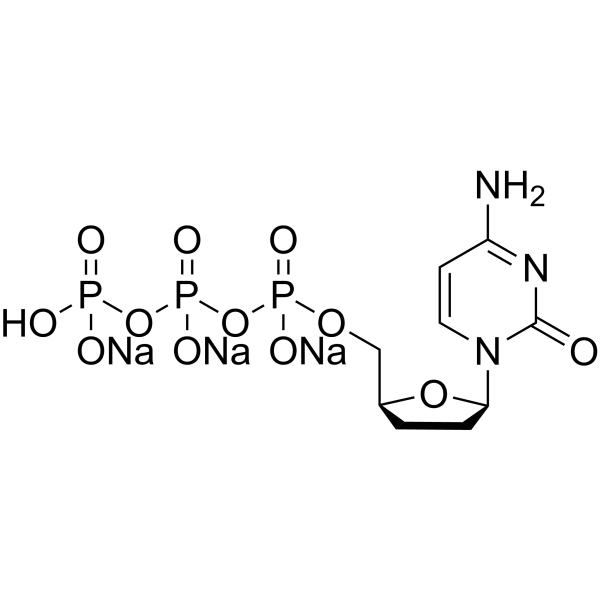
Cat. No.: HY-137697D
Purity:  ≥98.0%
ddCTP trilithium solution (100 mM) is a chain-terminating dideoxynucleotide. ddCTP trilithium is a type of chain-terminating deoxynucleotide. ddCTP trilithium can be incorporated into the extension primer chain that lacks the 3'-hydroxyl group, thereby terminating primer extension, viral genome replication, and DNA synthesis. ddCTP trilithium can distinguish almost identical RNA through distinguishable extension products in primer extension inhibition experiments. ddCTP trilithium is the active metabolite of Zalcitabine (HY-17392), which can competitively inhibit HIV reverse transcriptase, terminate the synthesis of viral DNA chains, and thereby inhibit HIV replication .
loading...
    loading...
Cat. No.: HY-15074
CAS No.: 245063-59-6
Synonyms: NS-1209
Target:  

iGluR

Research Areas:  

Neurological Disease

SPD-502 is a novel glutamate antagonist with potential neuroprotective properties, particularly in brain ischemia. It selectively targets the AMPA receptor, showing high affinity (IC50 = 0.043 μM) and competitive inhibition of AMPA-induced effects in rat cortical membranes and cultured mouse cortical neurons. In vivo, SPD-502 effectively blocks AMPA-evoked spike activity in the hippocampus after intravenous administration, significantly increasing the seizure threshold in mice and demonstrating robust protection against ischemia-induced damage to hippocampal neurons in gerbils. These findings suggest SPD-502 may be promising for studying neurodegenerative conditions associated with glutamate excitotoxicity .
loading...
    loading...
Cat. No.: HY-15076
CAS No.: 205645-02-9
Synonyms: NS-1209 sodium
Target:  

iGluR

Research Areas:  

Neurological Disease

SPD-502 sodium is a novel glutamate antagonist with potential neuroprotective properties, particularly in brain ischemia. It selectively targets the AMPA receptor, showing high affinity (IC50 = 0.043 μM) and competitive inhibition of AMPA-induced effects in rat cortical membranes and cultured mouse cortical neurons. In vivo, SPD-502 sodium effectively blocks AMPA-evoked spike activity in the hippocampus after intravenous administration, significantly increasing the seizure threshold in mice and demonstrating robust protection against ischemia-induced damage to hippocampal neurons in gerbils. These findings suggest SPD-502 sodium may be promising for studying neurodegenerative conditions associated with glutamate excitotoxicity .
loading...
    loading...
Cat. No.: HY-N1584R
CAS No.: 55837-20-2
Synonyms: RU-19110 (Standard)
Halofuginone (Standard) (RU-19110 (Standard)) is the analytical standard of Halofuginone (HY-N1584). This product is intended for research and analytical applications. Halofuginone (RU-19110), a Febrifugine derivative, is a competitive prolyl-tRNA synthetase inhibitor with a Ki of 18.3 nM . Halofuginone is a specific inhibitor of type-I collagen synthesis and attenuates osteoarthritis (OA) by inhibition of TGF-β activity . Halofuginone is also a potent pulmonary vasodilator by activating Kv channels and blocking voltage-gated, receptor-operated and store-operated Ca 2+ channels. Halofuginone has anti-malaria, anti-inflammatory, anti-cancer, anti-fibrosis effects .
loading...
    loading...
Cat. No.: HY-W657887
CAS No.: 154866-92-9
GSK-3β/G9a-IN-1 (Compound T2) is an orally active, selective, blood-brain-barrier permeable, competitive G9a (substrate-competitive, IC50: 1.1 μM) and GSK-3β (ATP competitive, IC50: 0.8 μM) inhibitor. GSK-3β/G9a-IN-1 is a potent H3K9me2 inhibitor that reshapes chromatin landscape. GSK-3β/G9a-IN-1 lowers tau phosphorylation, reduces aggregation. GSK-3β/G9a-IN-1 displays inhibition toward glucocorticoid receptor, androgen receptor, and alpha-2A adrenergic receptor. GSK-3β/G9a-IN-1 also upregulates SAGA complex members such as Eny2 and Sgf29. GSK-3β/G9a-IN-1 markedly improves memory, restores social behaviors, and increases synaptic complexity in late-onset Alzheimer’s disease .
loading...
    loading...
Cat. No.: HY-110137R
CAS No.: 55368-40-6
Synonyms: DB75 dihydrochloride (Standard); NSC 305831 dihydrochloride (Standard)
Furamidine (dihydrochloride) (Standard) is the analytical standard of Furamidine (dihydrochloride). This product is intended for research and analytical applications. Furamidine dihydrochloride (DB75 dihydrochloride) is a selective protein arginine methyltransferase 1 (PRMT1) inhibitor with an IC50 of 9.4 μM. Furamidine dihydrochloride is selective for PRMT1 over PRMT5, PRMT6, and PRMT4 (CARM1) (IC50s of 166 μM, 283 μM, and >400 μM, respectively). Furamidine dihydrochloride is a potent, reversible and competitive tyrosyl-DNA phosphodiesterase 1 (TDP-1) inhibitor. Inhibition of TDP-1 by Furamidine dihydrochloride is effective both with single- and double-stranded DNA substrates but is slightly stronger with the duplex DNA. Furamidine dihydrochloride is also an antiparasite agent .
loading...
    loading...
Cat. No.: HY-116142
CAS No.: 138047-56-0
Target:  

iGluR

Research Areas:  

Neurological Disease

CP-283097 is an orally active and conformationally restricted and NR2B subtype-selective NMDA antagonist. CP-283097 efficiently competitively inhibits the binding of [³H]CP-101,606 to the rat meninges, with an IC50 value of 18 nM. CP-283097 exhibits nearly complete inhibition of the current mediated by the NR2B receptor (IC50 = 206 nM), while the inhibitory effect on the NR2A or NR2C receptors is very weak. CP-283097 demonstrates excellent central nervous system permeability and in vivo efficacy in animal models. CP-283097 can be used for neurological diseases related to excessive activation of NMDA receptors .
loading...
    loading...
Cat. No.: HY-177944
CAS No.: 2829198-49-2
DC-PGKI is an orally active ATP-competitive PGK1 inhibitor(IC50 = 0.16 Μm, Kd = 99.08 nM). DC-PGKI stabilizes PGK1 in vitro and in vivo, and suppresses both glycolytic activity and the kinase function of PGK1. DC-PGKI-mediated inhibition of PGK1 leads to the accumulation of NRF2 (nuclear factor-erythroid factor 2-related factor 2, NFE2L2), which then translocates to the nucleus, binds to the proximal regions of IL-1β and IL-6 genes, and suppresses the LPS-induced expression of these genes. DC-PGKI can be used for the study of colitis .
loading...
    loading...
Cat. No.: HY-N1584BR
CAS No.: 1217623-74-9
Synonyms: RU-19110 hydrochloride (Standard)
Halofuginone hydrochloride (Standard) (RU-19110 hydrochloride (Standard)) is the analytical standard of Halofuginone hydrochloride (HY-N1584B). This product is intended for research and analytical applications. Halofuginone hydrochloride (RU-19110 hydrochloride), a Febrifugine derivative, is a competitive prolyl-tRNA synthetase inhibitor with a Ki of 18.3 nM . Halofuginone hydrochloride is a specific inhibitor of type-I collagen synthesis and attenuates osteoarthritis (OA) by inhibition of TGF-β activity . Halofuginone hydrochloride is also a potent pulmonary vasodilator by activating Kv channels and blocking voltage-gated, receptor-operated and store-operated Ca 2+ channels. Halofuginone hydrochloride has anti-malaria, anti-inflammatory, anti-cancer, anti-fibrosis effects .
loading...
    loading...
Cat. No.: HY-W015464S
CAS No.: 1330037-21-2
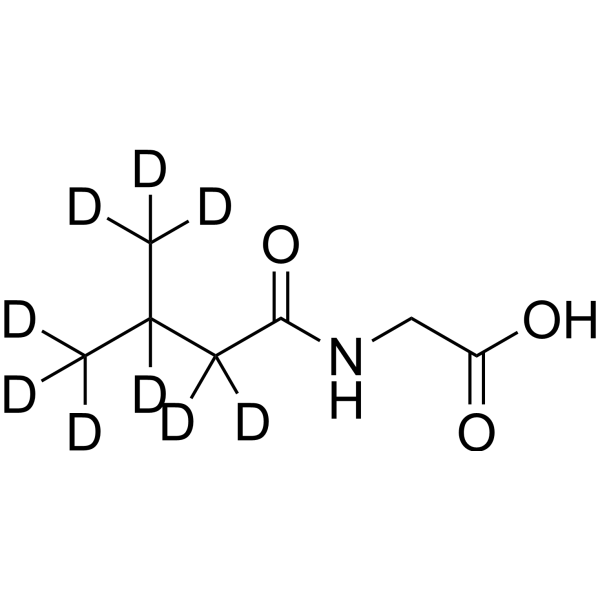
N-Isovalerylglycine-d9 is the deuterium labeled N-Isovaleroylglycine (HY-W015464). N-Isovaleroylglycine is a peptidylglycine α-amidating monooxygenase (PAM) inhibitor with a Ki value of 2.0 mM against human hsPAM. N-Isovaleroylglycine undergoes oxidative cleavage by purified rat PAM to produce fatty acid amide and glyoxylic acid. N-Isovaleroylglycine exerts competitive inhibition by binding to hsPAM, blocking the amidation of dansyl-Tyr-Val-Gly. N-Isovaleroylglycine exhibits lowered urinary abundance in MRSA-infected mice, which qualifies it as a non-invasive biomarker. N-Isovaleroylglycine can be used in studies related to Staphylococcus aureus pneumonia and diabetic foot .
loading...
    loading...
Cat. No.: HY-W015464S1
CAS No.: 1219795-09-1
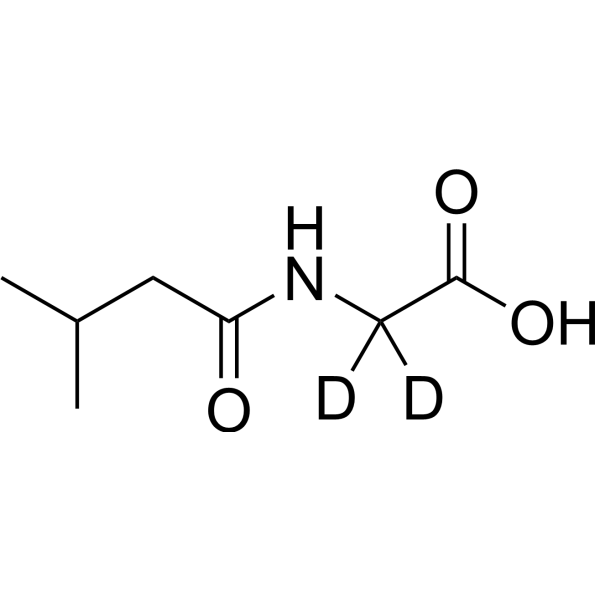
N-Isovaleroylglycine-d2 is the deuterium labeled N-Isovaleroylglycine (HY-W015464). N-Isovaleroylglycine is a peptidylglycine α-amidating monooxygenase (PAM) inhibitor with a Ki value of 2.0 mM against human hsPAM. N-Isovaleroylglycine undergoes oxidative cleavage by purified rat PAM to produce fatty acid amide and glyoxylic acid. N-Isovaleroylglycine exerts competitive inhibition by binding to hsPAM, blocking the amidation of dansyl-Tyr-Val-Gly. N-Isovaleroylglycine exhibits lowered urinary abundance in MRSA-infected mice, which qualifies it as a non-invasive biomarker. N-Isovaleroylglycine can be used in studies related to Staphylococcus aureus pneumonia and diabetic foot .
loading...
    loading...
Cat. No.: HY-W661499
CAS No.: 37338-80-0
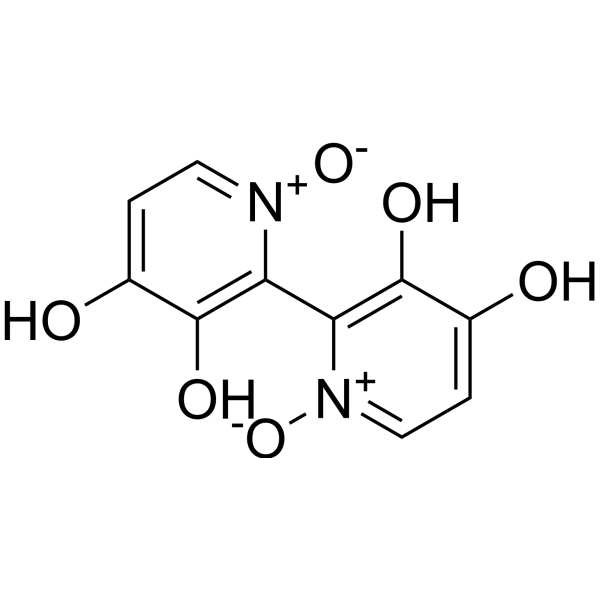
Orellanine, a nephrotoxic alkaloid found in Cortinarius orellanus, is an orally active and selective non-competitive inhibitor of alkaline phosphatase. Orellanine chelates iron, generates reactive oxygen species (ROS), induces DNA scission, forms ortho-semiquinone radicals, downregulates antioxidant defenses, and inhibits mitochondrial function. Orellanine induces caspase 8/9-mediated apoptosis. Orellanine inhibits synthesis of proteins, RNA, DNA, and mitochondrial protein synthesis, with metabolic activation required for cell-free protein synthesis inhibition. Orellanine can be used for the research of metastatic clear cell renal cell carcinoma, acute renal failure, chronic renal insufficiency, and kidney damage .
loading...
    loading...
Cat. No.: HY-W015490R
CAS No.: 130-15-4
1,4-Naphthoquinone is an inhibitor with broad-spectrum inhibitory activity targeting DNA polymerase, NF-κB and monoamine oxidase (MAO-A/B), with antibacterial and anti-biofilm efficacy. 1,4-Naphthoquinone is a competitive inhibitor of MAO-B (Ki=1.4 μM) and a non-competitive inhibitor of MAO-A (Ki=7.7 μM). 1,4-Naphthoquinone inhibits DNA polymerase pol α, β, γ, δ, ε, λ with IC50 ranging from 5.57-128 μM. 1,4-Naphthoquinone inhibits tumor cell proliferation, induces apoptosis and necrosis, and has anti-angiogenic and anti-inflammatory activities by inducing oxidative stress, depleting glutathione (GSH), inhibiting DNA polymerase-mediated DNA synthesis and blocking NF-κB nuclear translocation. 1,4-Naphthoquinone can be used in anti-bacterial , anti-tumor and anti-inflammatory studies, including inhibition of melanoma and colon cancer cell growth and endothelial cell function, as well as LPS-induced inflammation models .
loading...
    loading...
Cat. No.: HY-182513
CAS No.: 459842-29-6
Research Areas:  

Others Inflammation/Immunology

ONO-8539 is an orally active prostanoid EP1 receptor antagonist with competitive, insurmountable binding and slow receptor dissociation for long-duration inhibition. ONO-8539 modulates afferent nerve function related to bladder activity, inhibits detrusor overactivity-related contractions, decreases nonvoiding contractions and voiding duration, and increases uroflow rate with ATP (HY-B2176)-induced detrusor overactivity. ONO-8539 attenuates acid-induced heartburn symptoms, extends time to first heartburn sensation, and prevents primary hypersensitivity after distal esophageal acidification. ONO-8539 can be used for the research of overactive bladder and gastroesophageal reflux disease .
loading...
    loading...

