
12 Results for "

56–3 cell

" in MedChemExpress (MCE) Product Catalog:
Products (12)

12 Results for "56–3 cell" in MCE Product Catalog:

1
1 Cited Publications
Cat. No.: HY-P9923A
CAS No.: 1044511-01-4
Synonyms: MEDI-563 (anti-IL5RA); BIW-8405 (anti-IL5RA); KHK4563 (anti-IL5RA)
Benralizumab (anti-IL5RA) (MEDI-563 (anti-IL5RA); BIW-8405 (anti-IL5RA)) is an interleukin-5 receptor α (IL-5Rα)-directed cytolytic monoclonal antibody that induces direct, rapid and nearly complete depletion of eosinophils via enhanced antibody-dependent cell-mediated cytotoxicity. Benralizumab can be used for severe eosinophilic asthma study .
loading...
    loading...
1
1 Cited Publications
Cat. No.: HY-P9923
CAS No.: 1044511-01-4
Synonyms: MEDI-563; BIW-8405; KHK4563
Benralizumab (MEDI-563) is an interleukin-5 receptor α (IL-5Rα)-directed cytolytic monoclonal antibody that induces direct, rapid and nearly complete depletion of eosinophils via enhanced antibody-dependent cell-mediated cytotoxicity. Benralizumab can be used for severe eosinophilic asthma .
loading...
    loading...
Cat. No.: HY-168615
CAS No.: 2991818-13-2
Research Areas:  

Cancer

MGD-28 is an orally effective cereblon-dependent molecular glue degrader that potently degrades CK1α, IKZF1, IKZF2, and IKZF3, with respective DC50 values of 7.8, 3.8, 56.3, and 7.1 nM. MGD-28 also induces the degradation of multiple novel substrate proteins including ZFP91, DTWD1, ZNFX1, MBD1, and MBD3 via a CRBN/Cullin- and proteasome-dependent mechanism. MGD-28 induces cell apoptosis. MGD-28 is used in the research of multiple myeloma, acute myeloid leukemia, diffuse large B-cell lymphoma, and related malignancies .
loading...
    loading...
Cat. No.: HY-175298
Target:  

STAT Src Apoptosis

Research Areas:  

Cancer

STAT-3/c-Src-IN-1 (Compound 12d) is a dual STAT-3 (IC50=0.844 μM) and c-Src (IC50=0.268 μM) inhibitor. STAT-3/c-Src-IN-1 blocks tumor cell proliferation, migration, and angiogenesis signaling pathways. STAT-3/c-Src-IN-1 exhibits potent anti-proliferative activity against melanoma (SK-MEL-2) and CNS cancer (SNB-75) cell lines (GI50=-5.75 μM and -5.63 μM), inducing tumor cell apoptosis via G0/G1 and G2/M phase cell cycle arrest. STAT-3/c-Src-IN-1 is promising for research of melanoma and glioblastoma .
loading...
    loading...
Cat. No.: HY-123696
CAS No.: 1800205-57-5
Target:  

Fluorescent Dye

Research Areas:  

Others

CDy9 is a highly selective fluorescent probe. CDy9 can be used to detect mouse embryonic stem cells. ( λ exc. / λ em.:563 nm/578 nm) .
loading...
    loading...
Cat. No.: HY-138990
CAS No.: 2351820-19-2
Target:  

Phospholipase Apoptosis

Research Areas:  

Inflammation/Immunology

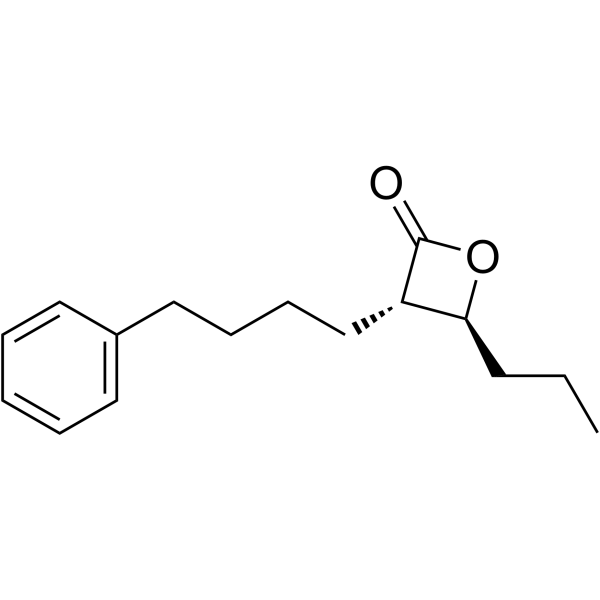
GK563 is a selective Ca 2+-independent phospholipase A2 (GVIA iPLA2) inhibitor with an IC50 value of 1 nM. GK563 is 22000 times more active against GVIA iPLA2 than GIVA cPLA2. GK563 reduces β-cell apoptosis induced by proinflammatory cytokines, raising the possibility that it can be beneficial in countering autoimmune diseases, such as type 1 diabetes .
loading...
    loading...
Cat. No.: HY-D1598
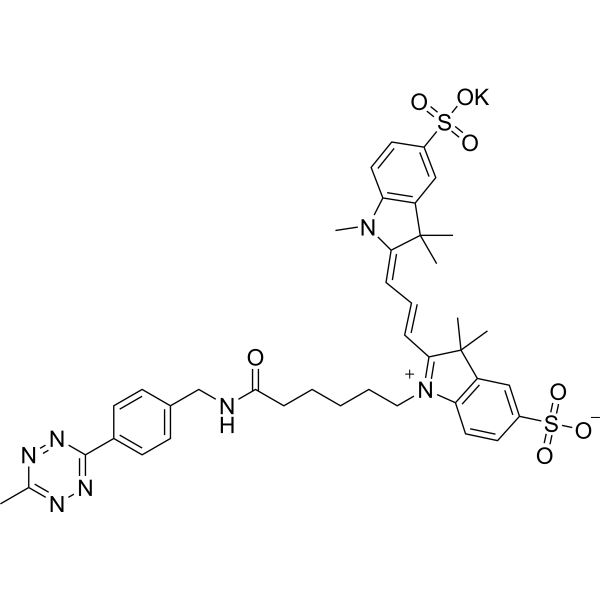
Sulfo-CY3 tetrazine potassium is a sulfo-Cyanine3 derivative that contains methyltetrazine moiety (Ex=548 nm, Em=563 nm). Sulfo-CY3 tetrazine potassium can be used for the labeling of metabolically engineered cell-surface glycoconjugates . Sulfo-CY3 tetrazine (potassium) is a click chemistry reagent, it contains a Tetrazine group that can undergo an inverse electron demand Diels-Alder reaction (iEDDA) with molecules containing TCO groups.
loading...
    loading...
Cat. No.: HY-P5887
Target:  

Potassium Channel

Research Areas:  

Neurological Disease

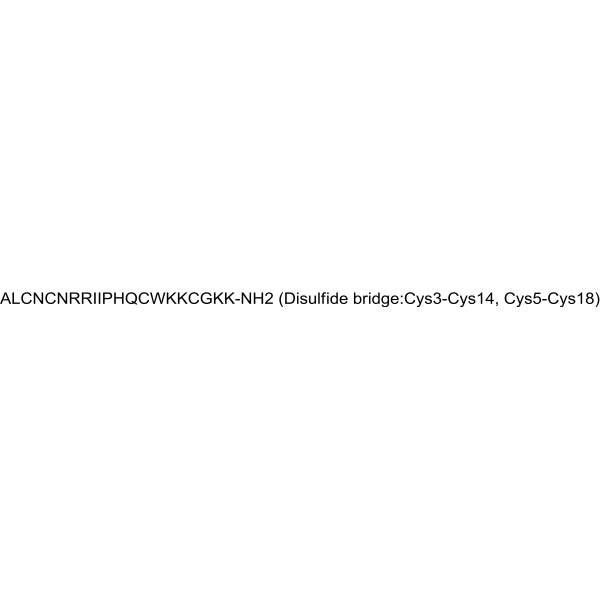
Tertiapin-RQ is an inward rectifier K + channel blocker peptide with antidepressive effect .
loading...
    loading...
Cat. No.: HY-164765
CAS No.: 3048421-42-4
Research Areas:  

Inflammation/Immunology

NLRP3-IN-56 (compound 062) is a NLRP3 inhibitor. NLRP3-IN-56 potently inhibits the level of IL-1β secretion by THP-1 cells with an IC50 of 9.7 nM. NLRP3-IN-56 can be used for the study of NLRP3-mediated symptoms and/or diseases .
loading...
    loading...
Cat. No.: HY-172801
Target:  

CD73

Research Areas:  

Cancer

PSB-24000 (Compound 27) is a selective ecto-5'-nucleotidase (CD73) inhibitor with a Ki value of 563 nM against human CD73 (Ki= 481 nM at membrane-bound CD73 in triple-negative breast cancer cells). PSB-24000 interferes with CD73's recognition and action on the substrate AMP, and prevents the generation of immunosuppressive and cancer-promoting adenosine from AMP. PSB-24000 is promising for research of cancers .
loading...
    loading...
Cat. No.: HY-151443
CAS No.: 3033608-94-2
Target:  

HDAC

Research Areas:  

Cancer

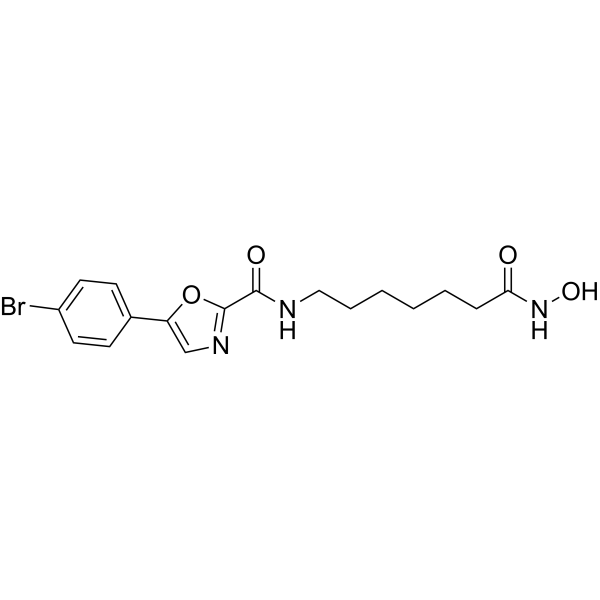
HDAC-IN-47 is an orally active inhibitor of histone deacetylase (HDAC), with IC50s of 19.75 nM (HDAC1), 5.63 nM (HDAC2), 40.27 nM (HDAC3), 57.8 nM (HDAC2), 302.73 nM (HDAC8), respectively. HDAC-IN-47 inhibits autophagy and induces apoptosis via the Bax/Bcl-2 and caspase-3 pathways. HDAC-IN-47 arrests cell cycle at G2/M phase, and shows anti-tumor efficacy in vivo .
loading...
    loading...
Cat. No.: HY-123996
CAS No.: 20041-64-9
3-Ethoxy-5,6-dibromosalicylaldehyde is an IRE1/ERN1 inhibitor, with an IC50 of 0.12 μM, a Ki of 71-88 nM, and a Kd of 100 nM against the ribonuclease activity of hIRE1α, as well as an IC50 of 4.8 μM against yeast Ire1. It shows selectivity toward IRE1 ribonuclease. 3-Ethoxy-5,6-dibromosalicylaldehyde blocks the IRE1/ERN1-mediated unfolded protein response (UPR) signaling pathway, including XBP-1 mRNA splicing, induction of XBP1 target genes, and activation of MAPK8/9/10, but does not alter the phosphorylation level of IRE1α or the PERK/ATF6 pathway. 3-Ethoxy-5,6-dibromosalicylaldehyde inhibits chikungunya virus replication, induces growth arrest, apoptosis and clonogenic inhibition in pancreatic cancer cells, reduces FB1 (Fumonisin B1) (HY-N6719)-induced autophagy and cell death, regulates PGG-induced senescence and apoptosis, and alleviates Sorafenib (HY-10201)-induced vacuolization and damage in hepatic stellate cells. 3-Ethoxy-5,6-dibromosalicylaldehyde can be used in research related to chikungunya virus infection, pancreatic cancer, FB1-induced nephrotoxicity, liver cancer, breast cancer, lung cancer and liver fibrosis .
loading...
    loading...
  • 1

