Search Result
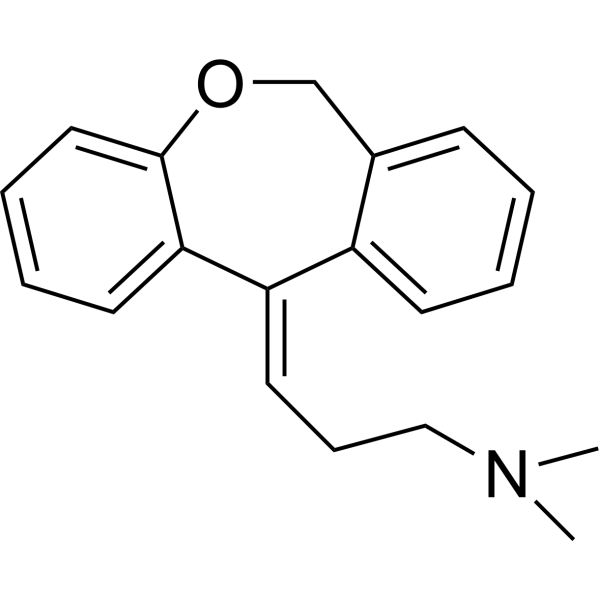
Results for "
Antidepressant activity
" in MedChemExpress (MCE) Product Catalog:
2
Biochemical Assay Reagents
43
Isotope-Labeled Compounds
| Cat. No. |
Product Name |
Target |
Research Areas |
Chemical Structure |
-
- HY-N7204
-
|
|
Monoamine Oxidase
Dopamine β-hydroxylase
Apoptosis
|
Neurological Disease
Inflammation/Immunology
|
|
4-Hydroxyderricin, the major active ingredients of Angelica keiskei Koidzumi, is an orally active, potent selective MAO-B (Monoamine oxidase inhibitors) inhibitor with an IC50 of 3.43 μM. 4-Hydroxyderricin also mildly inhibits dopamine β (DBH)-hydroxylase activity. 4-Hydroxyderricin has antidepressant activity, anti-allergic, anti-diabetic, anti-oxidant, and antitumor effects. 4-Hydroxyderricin promotes apoptosis and cell cycle arrest through regulating PI3K/AKT/mTOR pathway in hepatocellular cells. 4-Hydroxyderricin inhibits osteoclast formation and accelerates osteoblast differentiation . 4-Hydroxyderricin is promising for research of inflammatory diseases .
|
-
-
- HY-N0765
-
-
-
- HY-B0366A
-
|
Cyproheptadine HCl
|
5-HT Receptor
|
Cardiovascular Disease
Neurological Disease
Cancer
|
|
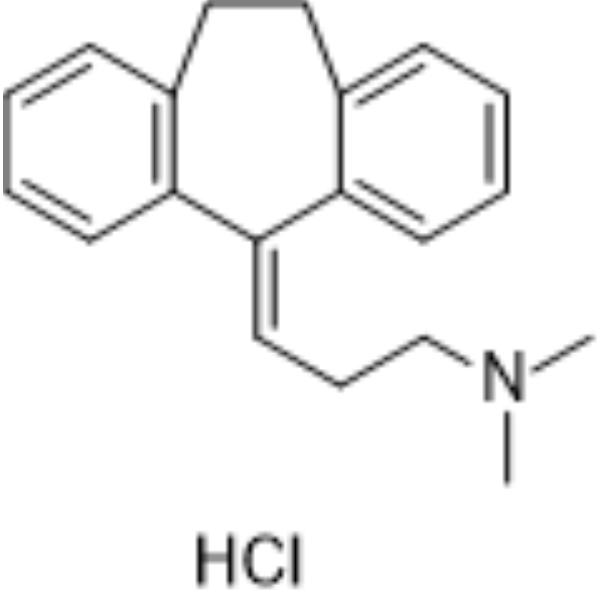
Cyproheptadine hydrochloride is a potent and orally active 5-HT2A receptor antagonist, with antidepressant and antiserotonergic effects. Cyproheptadine hydrochloride has antiplatelet and thromboprotective activities. Cyproheptadine hydrochloride can be used for the research of thromboembolic disorders .
|
-
-
- HY-10864
-
URB-597
5 Publications Verification
KDS-4103
|
FAAH
Autophagy
Mitophagy
|
Neurological Disease
|
|
URB-597 (KDS-4103) is an orally bioavailable and selective FAAH inhibitor. URB-597 inhibits FAAH activity with an IC50s of approximately 5 nM in rat brain membranes, 0.5 nM in intact rat neurons, 3 nM in human liver microsomes. Antidepressant-like effects. Analgesic activity .
|
-
-
- HY-14560C
-
|
FCE20124 mesylate; PNU155950E mesylate
|
Adrenergic Receptor
|
Neurological Disease
|
|
Reboxetine mesylate (FCE20124 mesylate) is a potent, selective, and specific noradrenaline reuptake inhibitor (NARI) for the research of depression. Reboxetine mesylate inhibits the uptake of norepinephrine, with a Ki of 8 nM .
|
-
-
- HY-172420
-
|
GM-2505
|
5-HT Receptor
|
Neurological Disease
|
|
Bretisilocin (GM-2505) is the agonist for 5-HT2A receptor and a serotonin releaser. Bretisilocin exhibits antidepressant activity and can be used in the study of depression .
|
-
-
- HY-B1622
-
-
-
- HY-B0444
-
|
|
Autophagy
Apoptosis
ERK
|
Neurological Disease
Cancer
|
|
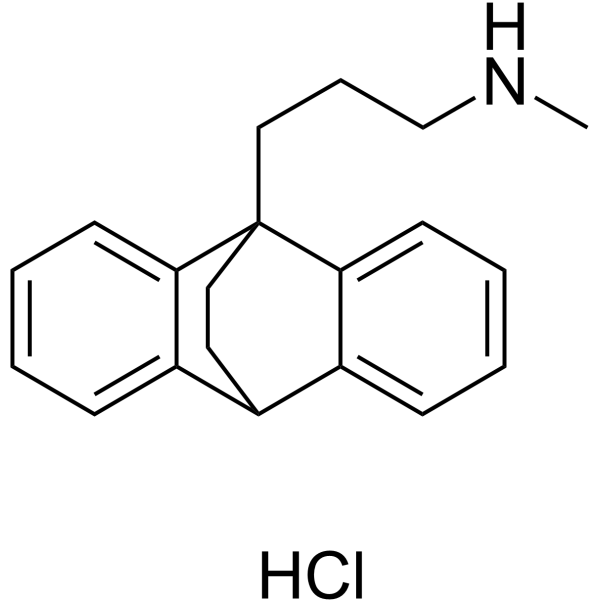
Maprotiline hydrochloride is a highly selective noradrenergic reuptake inhibitor that has strong antidepressant, antitumor and neuropathic pain-relieving effects with oral activity. Maprotiline hydrochloride induces cancer cell apoptosis by targeting the ERK signaling pathway and CRABP1 .
|
-
-
- HY-A0021
-
|
|
5-HT Receptor
Flavivirus
|
Infection
Cardiovascular Disease
Neurological Disease
|
|
Palonosetron hydrochloride is a 5-HT3 antagonist primarily used to prevent acute, delayed, and overall chemotherapy-induced nausea and vomiting. In addition, Palonosetron hydrochloride exhibits moderate anti-flavivirus activity and potent anti-Zika virus activity in mammalian cells. Palonosetron hydrochloride also possesses antidepressant activity .
|
-
-
- HY-N0700
-
|
α-Asarone; trans-Asarone
|
GABA Receptor
|
Neurological Disease
|
|
alpha-Asarone (α-Asarone) is one of the main psychoactive compounds, and possesses an antidepressant-like activity in mice.
|
-
-
- HY-103207
-
-
-
- HY-B0949
-
|
|
Cholinesterase (ChE)
Amyloid-β
|
Neurological Disease
|
|
Protriptyline hydrochloride is a potent tricyclic antidepressant (TCA). Protriptyline hydrochloride inhibits AChE activity with an IC50 value of 0.06 mM and inhibits Aβ self-assembly. Protriptyline hydrochloride can be used for the study of depression and Alzheimers disease .
|
-
-
- HY-12390
-
|
Lopramine
|
5-HT Receptor
Adrenergic Receptor
|
Neurological Disease
|
|
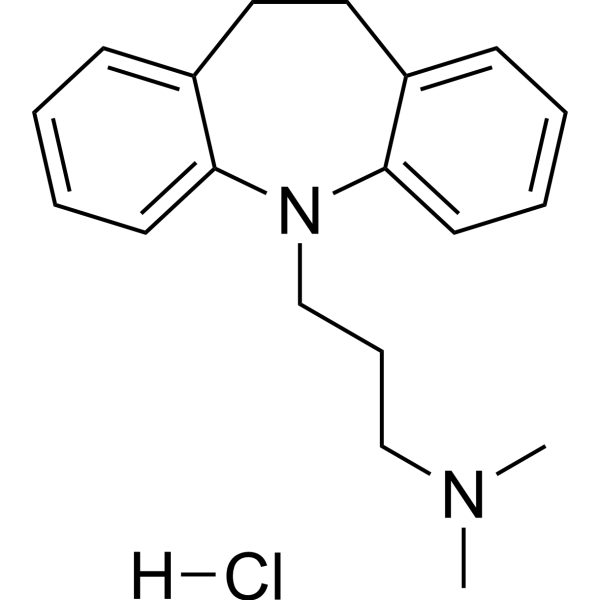
Lofepramine (Lopramine) is a modified tricyclic and orally active antidepressant. Lofepramine inhibits the uptake of Noradrenaline (NA) (HY-13715) and 5-hydroxytryptamine (5-HT) with IC50s of 2.7 μM and 11 μM, respectively. Lofepramine exerts its antidepressant activity by promoting noradrenergic neurotransmission. Lofepramine also enhances serotonergic neurotransmission by inhibiting neuronal uptake of 5-HT and tryptophan pyrrolase. Lofepramine exhibits significant anxiolytic properties. .
|
-
-
- HY-18698
-
|
|
iGluR
|
Neurological Disease
|
|
L-701324 is a potent, orally active NMDA receptor antagonist that antagonizes the activity of the NMDA receptor by blocking its glycine B binding site. L-701324 binds with high affinity to rat brain membranes (IC50=2 nM). L-701324 has antidepressant activity .
|
-
-
- HY-W015635
-
|
|
Environmental Pollutants
|
Cancer
|
|
Diallyl disulfide, an active compound in garlic oil, is an orally active human squalene monooxygenase inhibitor with an IC50 of 400 μM for squalene epoxidation. Diallyl disulfide exhibits obvious anti-inflammatory, anti-oxidative, antidepressant and anti-tumor activities .
|
-
-
- HY-108710
-
|
|
mGluR
|
Neurological Disease
|
|
VU0650786 is a potent and selective CNS penetrant negative allosteric modulator of metabotropic glutamate receptor subtype 3 (mGlu3 NAM), with an IC50 of 392 nM. VU0650786 has antidepressant and anxiolytic activity in rodents .
|
-
-
- HY-N2085
-
|
(S)-(-)-Perillaldehyde; (S)-Perillaldehyde
|
Environmental Pollutants
|
Neurological Disease
|
|
L-Perillaldehyde is a major component in the essential oil containing in Perillae Herba. Inhalation of L-Perillaldehyde shows antidepressant-like activity through the olfactory nervous function .
|
-
-
- HY-B1086
-
|
N-Acetyl-DL-phenylalanine
|
Endogenous Metabolite
|
Neurological Disease
|
|
Afalanine (N-Acetyl-DL-phenylalanine) is an endogenous metabolite of an endophytic fungus with antidepressant activity. Afalanine can be used in combination with antibiotics to prevent renal damage.
|
-
-
- HY-19477
-
-
-
- HY-136146
-
|
|
nAChR
|
Neurological Disease
|
|
SUVN-911 is a potent, selective, brain penetrated and orally bioavailable neuronal nicotinic acetylcholine α4β2 receptor antagonist, with a Ki of 1.5 nM. SUVN-911 has antidepressant activity .
|
-
-
- HY-100769
-
|
YL0919
|
5-HT Receptor
|
Neurological Disease
|
|
Hypidone hydrochloride (YL0919) is an orally active antidepressant agent with dual activity as a highly seletive 5-HT uptake blocker and an effective 5-HT1A receptor agonist (Ki=0.19 nM). Hypidone hydrochloride inhibits the uptake of [ 3H]-5-HT into rat cerebral cortical synaptosomes and HEK293 cells with IC50s of 1.78 nM and 1.93 nM, respectively. Hypidone hydrochloride shows remarkable antidepressant effects in animal models and has the poential for the investigation of depressive disorder .
|
-
-
- HY-W077477
-
|
|
5-HT Receptor
|
Neurological Disease
|
|
IHCH-7113 (Compound 166) is an agonist of 5-HT2A serotonin receptor with antidepressant activity. IHCH-7113 is promising for research of antipsychotic agent .
|
-
-
- HY-14260
-
-
-
- HY-N6648
-
|
|
GABA Receptor
|
Neurological Disease
|
|
Cirsimaritin binds weakly to the benzodiazepine site on GABAA receptors, with antidepressant, anxiolytic and antinociceptive activities.
|
-
-
- HY-107731
-
-
-
- HY-117820
-
-
-
- HY-B0950A
-
|
ANP-297 hydrochloride
|
Dopamine Receptor
|
Neurological Disease
|
|
Mefexamide (ANP-297) hydrochloride is a psychostimulant psychopharmaceutical and aryloxyacetic acid derivative antidepressant with dopaminergic activity. Mefexamide hydrochloride can be used for the research of depression .
|
-
-
- HY-N4161
-
-
-
- HY-111419
-
|
|
Serotonin Transporter
5-HT Receptor
|
Neurological Disease
|
|
DSP-1053, a benzylpiperidine derivative, is a potent Serotonin Transporter (SERT) inhibitor with a Ki of 1.02 nM. DSP-1053 shows partial 5-HT1A receptor agonistic activity with a Ki of 5.05 nM. DSP-1053 has antidepressant activity .
|
-
-
- HY-101169
-
|
|
Monoamine Oxidase
|
Neurological Disease
|
|
Tetrindole mesylate is a selective inhibitor of monoamine oxidase A (MAO A). Tetrindole mesylate inhibits rat brain mitochondrial MAO A in a competitive manner with a Ki value of 0.4 μM and inhibits MAO B with a Ki of 110 μM. Tetrindole mesylate has antidepressant activity .
|
-
-
- HY-12766
-
|
|
Dopamine Transporter
nAChR
|
Neurological Disease
|
|
Bupropion morpholinol (Hydroxy Bupropion) is a major metabolite of Bupropion. Bupropion morpholinol inhibits Dopamine, Norepinephrine transporters and the α4β2 nicotinic receptor in vitro. Bupropion morpholinol contributes to antidepressant and smoking cessation activities .
|
-
-
- HY-107626
-
|
|
MCHR1 (GPR24)
5-HT Receptor
|
Neurological Disease
|
|
ATC0065 is a potent, selective and orally active melanin-concentrating hormone (MCH) receptor 1 (MCHR1) antagonist with an IC50 of 15.7 nM for human MCHR1. ATC0065 does not exhibits significant activity for MCHR2. ATC0065 has anxiolytic and antidepressant activities .
|
-
-
- HY-13047
-
|
Dexmecamylamine hydrochloride; TC-5214 hydrochloride
|
nAChR
|
Neurological Disease
|
|
S-(+)-Mecamylamine (hydrochloride) is a neuronal nicotinic receptor modulator with antidepressant activity.
|
-
-
- HY-116798
-
|
|
FAAH
|
Neurological Disease
|
|
URB524 is an irreversible FAAH inhibitor of O-aryl amino acid esters. URB524 inhibits FAAH by aminoformylation of Ser241. URB524 exhibits analgesic, antidepressant, and anti anxiety activity .
|
-
-
- HY-139748
-
|
|
Antibiotic
Bacterial
|
Infection
|
|
S32212 is a serotonin type 2C receptor inverse agonist and an α2 adrenoceptor antagonist. S32212 exhibits antidepressant activity and can reduce immobility time in forced-swim test in rats .
|
-
-
- HY-101169A
-
|
|
Monoamine Oxidase
|
Neurological Disease
|
|
Tetrindole hydrochloride is a selective inhibitor of monoamine oxidase A (MAO A). Tetrindole hydrochloride inhibits rat brain mitochondrial MAO A in a competitive manner with a Ki value of 0.4 μM and inhibits MAO B with a Ki of 110 μM. Tetrindole hydrochloride has antidepressant activity .
|
-
-
- HY-107626A
-
|
|
MCHR1 (GPR24)
5-HT Receptor
|
Neurological Disease
|
|
ATC0065 free base is a potent, selective and orally active melanin-concentrating hormone (MCH) receptor 1 (MCHR1) antagonist with an IC50 of 15.7 nM for human MCHR1. ATC0065 free base does not exhibits significant activity for MCHR2. ATC0065 free base has anxiolytic and antidepressant activities .
|
-
-
- HY-B0950
-
|
ANP-297
|
Dopamine Receptor
|
Neurological Disease
|
|
Mefexamide (ANP-297) is a psychostimulant psychopharmaceutical and aryloxyacetic acid derivative antidepressant with dopaminergic activity. Mefexamide can be used for the research of depression .
|
-
-
- HY-179063
-
|
|
5-HT Receptor
Dopamine Receptor
Serotonin Transporter
|
Neurological Disease
|
5-HT2A receptor agonist-13 (Compound 28c) is a partial agonist of the 5-HT2A receptor, with an EC50 value of 416.9 nM and a Ki value of 113.9 nM. 5-HT2A receptor agonist-13 exhibits very weak agonistic activity towards the 5-HT2B receptor (EC50 = 120.2 nM), D2 receptor (Ki = 1298 nM), and has no activity towards the 5-HT2C receptor. 5-HT2A receptor agonist-13 exhibits weak inhibitory activity on the serotonin transporter (SERT) (EC50 = 977.2 nM). 5-HT2A receptor agonist-13 has antidepressant activity in mouse models and does not induce hallucinogenic behavior. 5-HT2A receptor agonist-13 can be used for the study of major depressive disorder (MDD) and treatment-resistant depression (TRD) .
|
-
-
- HY-19046
-
|
SC 48274 hydrochloride
|
Tryptophan Hydroxylase
|
Neurological Disease
|
|
AGN-2979 (SC 48274) hydrochloride is a tryptophan hydroxylase activation inhibitor. AGN-2979 hydrochloride exhibits antidepressant and anxiolytic activities .
|
-
-
- HY-107751
-
-
-
- HY-N3204
-
|
|
Apoptosis
|
Neurological Disease
|
|
Neoechinulin A is an isoprenyl indole alkaloid that exhibits scavenging, neurotrophic factor-like, and anti-apoptotic activities. Neoechinulin A induces memory improvements and antidepressant-like effects in mice .
|
-
-
- HY-A0198
-
|
U 41123
|
GABA Receptor
|
Neurological Disease
|
|
Adinazolam (U 41123) is a triazolobenzodiazepine. Adinazolam binds to peripheral-type benzodiazepine receptors which interact allosterically with GABA receptors. Adinazolam has dual anxiolytic and antidepressant activities .
|
-
-
- HY-12132
-
|
|
CRFR
Adenylate Cyclase
|
Neurological Disease
|
|
DMP 904 is a noncompetitive full corticotropin-releasing factor receptor (CRFR) antagonist. DMP 904 can inhibit CRF-stimulated adenylate cyclase activity and ACTH release. DMP 904 exhibits anti-depressant and anti-anxiety activity .
|
-
-
- HY-13974
-
|
|
Adrenergic Receptor
|
Neurological Disease
|
|
S32212 is a serotonin type 2C receptor inverse agonist and an 2 adrenoceptor antagonist. S32212 exhibits antidepressant activity and can reduce immobility time in forced-swim test in rats .
|
-
-
- HY-B0949A
-
|
|
Cholinesterase (ChE)
Amyloid-β
|
Neurological Disease
|
|
Protriptyline is a potent tricyclic antidepressant (TCA). Protriptyline inhibits AChE activity with an IC50 value of 0.06 mM and inhibits Aβ self-assembly. Protriptyline can be used for the study of depression and Alzheimers disease .
|
-
-
- HY-A0018
-
|
|
5-HT Receptor
Flavivirus
|
Infection
Cardiovascular Disease
Neurological Disease
|
|
Palonosetron is a 5-HT3 antagonist primarily used to prevent acute, delayed, and overall chemotherapy-induced nausea and vomiting. Palonosetron exhibits moderate anti-flavivirus activity and potent anti-Zika virus activity in mammalian cells. Palonosetron also possesses antidepressant activity .
|
-
-
- HY-12390A
-
|
Lopramine hydrochloride
|
5-HT Receptor
Adrenergic Receptor
|
Neurological Disease
|
|
Lofepramine (Lopramine) is a modified tricyclic and orally active antidepressant. Lofepramine inhibits the uptake of Noradrenaline (NA) (HY-13715) and 5-hydroxytryptamine (5-HT) with IC50s of 2.7 μM and 11 μM, respectively. Lofepramine exerts its antidepressant activity by promoting noradrenergic neurotransmission. Lofepramine also enhances serotonergic neurotransmission by inhibiting neuronal uptake of 5-HT and tryptophan pyrrolase. Lofepramine exhibits significant anxiolytic properties. .
|
-
-
- HY-W012735
-
|
(+)-β-Homoproline; (+)-Hexahydronicotinic acid; (+)-3-Carboxypiperidine
|
GABA Receptor
|
Neurological Disease
|
|
(+)-Nipecotic acid ((+)-β-Homoproline) is a GABA transport inhibitor with potential antidepressant and anxiolytic activities. (+)-Nipecotic acid can increase the concentration of GABA in the synaptic cleft, thereby enhancing inhibitory neurotransmission. The research on (+)-Nipecotic acid provides a possible direction for the development of new inhibitory compounds for psychiatric diseases .
|
-
-
- HY-106578
-
|
LM 208
|
5-HT Receptor
|
Neurological Disease
|
|
Quinupramine is an orally active antidepressant. Quinupramine can penetrate into the CNS and affect some of the processes of neurotransmission. The antidepressant activity of quinupramine is associated with the central serotonin system, but not with the β-adrenergic system[1][2].
|
-
- HY-145487A
-
|
|
5-HT Receptor
Adrenergic Receptor
|
Neurological Disease
|
|
5-Hydroxy-6-methoxy (S)-duloxetine maleate is an orally active and brain-penetrant serotonin (5-HT) and norepinephrine (NE) reuptake inhibitor with antidepressant and analgesic activities. 5-Hydroxy-6-methoxy (S)-duloxetine maleate is promising for research of psychiatric and neurological disorders such as depression, diabetic neuropathic pain, generalized anxiety disorder, and fibromyalgia .
|
-
- HY-151951
-
-
- HY-151950
-
-
- HY-139723
-
-
- HY-170945
-
|
|
iGluR
Serotonin Transporter
|
Neurological Disease
|
|
Antidepressant agent 9 (Compound 24) is an orally active and BBB-penetrable NMDAR and SERT inhibitor with IC50 values of 3.50 μM and 1044 nM, respectively. Antidepressant agent 9 has good metabolic stability and plasma exposure. Antidepressant agent 9 can exert antidepressant-like activity in the mouse forced swim test .
|
-
- HY-156079
-
|
|
Monoamine Oxidase
|
Neurological Disease
|
|
Antidepressant agent 5 (Compound 3i) is a 7-substituted tetrahydroisoquinolines derivatives. Antidepressant agent 5 exhibits almost equal antidepressant activity compared with magnoflorine. ntidepressant agent 5 can be used for depressive disorder research .
|
-
- HY-123106
-
|
|
Melanocortin Receptor
|
Others
|
|
MCL-0129 is a compound with anxiolytic and antidepressant activity and is a selective MC4 receptor antagonist that exhibits anxiolytic and antidepressant-like behaviors in multiple rodent models.
|
-
- HY-116236
-
|
LY2607540
|
mGluR
|
Others
|
|
THIIC (LY2607540) is a compound with anxiolytic and antidepressant potential. It is a positive allosteric modulator of mGlu receptors, exhibits anxiolytic and antidepressant-like activities in multiple animal models, and can also affect sleep and neurochemical changes.
|
-
- HY-106079
-
-
- HY-19146
-
-
- HY-14560CR
-
|
FCE20124 mesylate (Standard); PNU155950E mesylate (Standard)
|
Reference Standards
Adrenergic Receptor
|
Neurological Disease
|
|
Reboxetine (mesylate) (Standard) is the analytical standard of Reboxetine (mesylate). This product is intended for research and analytical applications. Reboxetine mesylate (FCE20124 mesylate) is a potent, selective, and specific noradrenaline reuptake inhibitor (NARI) for the research of depression. Reboxetine mesylate inhibits the uptake of norepinephrine, with a Ki of 8 nM .
|
-
- HY-122300C
-
|
(Rac)-Levoprotiline hydrochloride
|
Adrenergic Receptor
|
Neurological Disease
|
|
Oxaprotiline hydrochloride is a potent norepinephrine (NA) uptake inhibitor. Oxaprotiline hydrochloride has antidepressant activity .
|
-
- HY-106361A
-
|
CRL 40827 hydrochloride
|
Adrenergic Receptor
|
Neurological Disease
|
|
Flerobuterol hydrochloride is a beta-adrenoceptor agonist with antidepressant activity. Flerobuterol hydrochloride enhances serotonergic neurotransmission .
|
-
- HY-119774
-
-
- HY-12390S
-
|
|
Isotope-Labeled Compounds
|
Neurological Disease
|
|
Lofepramine-d3 (Lopramine-d3) is the deuterium labeled Lofepramine. Lofepramine (Lopramine) is a potent tricyclic antidepressant and is extensively metabolised to Desipramine. The antidepressant activity of Lofepramine stems from the facilitation of noradrenergic neurotransmission by uptake inhibition. Lofepramine may also potentiate serotoninergic neurotransmission by inhibition of the neuronal uptake of serotonin and the enzyme tryptophan pyrrolase. Lofepramine has significant anxiolytic efficacy in addition to its antidepressant properties .
|
-
- HY-106456
-
|
GP 31406
|
Cholinesterase (ChE)
|
Neurological Disease
|
|
Depramine (GP 31406) is a tricyclic antidepressant with pharmacologically activity. Depramine inhibits acetylcholinesterase,Mg 2+-ATPase,and Na+/K+ ATPase activity .
|
-
- HY-116062
-
|
|
Monoamine Transporter
Dopamine Transporter
Adrenergic Receptor
|
Others
|
|
JNJ-7925476 (hydrochloride) is a triple monoamine uptake inhibitor with the ability to regulate neurotransmitter levels and antidepressant activity. JNJ-7925476 (hydrochloride) can be rapidly absorbed into the plasma in rats, with a higher concentration in the brain than in plasma. It can induce an increase in the levels of extracellular serotonin, dopamine, and norepinephrine in the rat cerebral cortex, and exhibits antidepressant activity in the mouse tail suspension test.
|
-
- HY-122300A
-
|
(Rac)-Levoprotiline
|
Adrenergic Receptor
|
Neurological Disease
|
|
Oxaprotiline ((Rac)-Levoprotiline) is a potent Norepinephrine (NE)/Noradrenaline (NA) uptake inhibitor. Oxaprotiline has antidepressant activity .
|
-
- HY-165626
-
|
|
Others
|
Neurological Disease
|
|
Adhyperforin is an active constituent of Hypericum perforatum L.. Adhyperforin has antidepressant activity and can be used for the research of neurological disease .
|
-
- HY-17018A
-
|
ABT 200; A-75200 mesylate
|
Adrenergic Receptor
|
Neurological Disease
|
|
Napitane mesylate (ABT 200 mesylate) is an inhibitor for norepinephrine reuptake and an antagonist for presynaptic α2 receptor. Napitane mesylate exhibits antidepressant activity .
|
-
- HY-129305
-
|
AHR-9377
|
Serotonin Transporter
|
Neurological Disease
|
|
Tampramine fumarate is a potent, selective, noncompetitive NE reuptake inhibitor. Tampramine fumarate has antidepressant activity. Tampramine fumarate can be used in research of depression .
|
-
- HY-167646
-
|
071031B
|
5-HT Receptor
|
Neurological Disease
|
|
Ammuxetine (071031B), a chiral compound, is a 5-HT and norepinephrine reuptake inhibitor (SSRI) with antidepressant activity and can be used in studies related to depression .
|
-
- HY-105127
-
|
CGP 11305A hydrochloride
|
Monoamine Oxidase
|
Neurological Disease
|
Brofaromine (hydrochloride) is a monoamine oxidase A (MAO-A) inhibitor and a 5-HT uptake inhibitor. Brofaromine (hydrochloride) shows antidepressant-like activity in the social conflict test in rats .
|
-
- HY-14260R
-
|
|
Monoamine Oxidase
|
Neurological Disease
|
|
RS 8359 (Standard) is the analytical standard of RS 8359. This product is intended for research and analytical applications. RS 8359 is a selective and reversible MAO-A inhibitor, with antidepressant activity.
|
-
- HY-W979493
-
|
|
nAChR
|
Others
|
|
TC-2216 is a compound with antidepressant and anxiolytic activity that has shown activity in multiple animal models and may exert its effects by acting on α4β2 neuronal nicotinic receptors.
|
-
- HY-130689
-
|
|
Endogenous Metabolite
|
Neurological Disease
|
|
Pinoxepin hydrochloride is an antipsychotic drug with sedative and antidepressant activities. Pinoxepin hydrochloride is used to suppress mental disorders such as schizophrenia and depression. Pinoxepin hydrochloride also has the effect of improving sleep quality .
|
-
- HY-169140
-
|
WY-47846
|
5-HT Receptor
|
Neurological Disease
|
|
Zalospirone (WY-47846) is a novel cyclic imide with 5-HT1A partial agonist activity. Zalospirone shows antidepressant efficacy .
|
-
- HY-121850
-
|
EX-4883
|
HBV
|
Neurological Disease
|
|
Rolicyprine (EX-4883) is an antidepressant with neuroprotective activity. Rolicyprine can improve depressive symptoms and promote neuroregeneration. Rolicyprine also shows potential effectiveness for anxiety suppression .
|
-
- HY-111479
-
-
- HY-122300B
-
|
Levoprotiline
|
Adrenergic Receptor
|
Neurological Disease
|
|
R-(-)-Oxaprotiline (Levoprotiline) is an antidepressant with anticholinergic and sympathostimulatory activities. R-(-)-Oxaprotiline exhibits different abilities to block norepinephrine uptake and anticholinergic activity compared to its enantiomer C 49802 B-Ba. R-(-)-Oxaprotiline in human studies shows physiological effects consistent with those in animals. Administration of R-(-)-Oxaprotiline results in a modest increase in heart rate and arterial blood pressure. Salivation is inhibited with R-(-)-Oxaprotiline, consistent with its anticholinergic properties. R-(-)-Oxaprotiline has similar effects to the established antidepressant compound Levoprotiline and has a shorter onset of action .
|
-
- HY-A0198A
-
|
U 41123F mesylate
|
GABA Receptor
|
Neurological Disease
|
|
Adinazolam (U 41123F) mesylate is a triazolobenzodiazepine. Adinazolam mesylate binds to peripheral-type benzodiazepine receptors which interact allosterically with GABA receptors. Adinazolam mesylate has dual anxiolytic and antidepressant activities .
|
-
- HY-110034
-
|
BTS 54-505
|
Drug Metabolite
|
Metabolic Disease
|
|
Didesmethylsibutramine (BTS 54-505) hydrochloride is the primary amine metabolite of Sibutramine (antidepressant and anti-obesity agent). Didesmethylsibutramine hydrochloride inhibits NMDA-evoked activity. Didesmethylsibutramine hydrochloride is also a reuptake inhibitor. Didesmethylsibutramine hydrochloride induces thermogenesis .
|
-
- HY-111419A
-
|
|
Serotonin Transporter
5-HT Receptor
|
Neurological Disease
|
|
DSP-1053, a benzylpiperidine derivative, is a potent serotonin transporter (SERT) inhibitor with a Ki of 1.02 nM. DSP-1053 shows partial 5-HT1A receptor agonistic activity with a Ki of 5.05 nM. DSP-1053 has antidepressant activity .
|
-
- HY-N0700R
-
|
α-Asarone (Standard); trans-Asarone (Standard)
|
Reference Standards
GABA Receptor
|
Neurological Disease
|
|
alpha-Asarone (Standard) is the analytical standard of alpha-Asarone. This product is intended for research and analytical applications. alpha-Asarone (α-Asarone) is one of the main psychoactive compounds, and possesses an antidepressant-like activity in mice.
|
-
- HY-W020041
-
|
|
Autophagy
|
Neurological Disease
Cancer
|
|
CP 53631 is an autophagy inhibitor (Autophagy) with anticancer activity. Additionally, CP 53631 can be used as an internal standard for Sertraline (HY-B0176A) in research related to selective serotonin reuptake inhibitors (SSRIs) in the field of antidepressants .
|
-
- HY-12390R
-
|
Lopramine (Standard)
|
5-HT Receptor
Adrenergic Receptor
Reference Standards
|
Neurological Disease
|
|
Lofepramine (Standard) is the analytical standard of Lofepramine. This product is intended for research and analytical applications. Lofepramine (Lopramine) is a modified tricyclic and orally active antidepressant. Lofepramine inhibits the uptake of Noradrenaline (NA) (HY-13715) and 5-hydroxytryptamine (5-HT) with IC50s of 2.7 μM and 11 μM, respectively. Lofepramine exerts its antidepressant activity by promoting noradrenergic neurotransmission. Lofepramine also enhances serotonergic neurotransmission by inhibiting neuronal uptake of 5-HT and tryptophan pyrrolase. Lofepramine exhibits significant anxiolytic properties. .
|
-
- HY-N0765R
-
|
|
Reference Standards
Fungal
|
Infection
Neurological Disease
Inflammation/Immunology
|
|
Isoliquiritin (Standard) is the analytical standard of Isoliquiritin. This product is intended for research and analytical applications. Isoliquiritin, isolated from Licorice Root, inhibits angiogenesis and tube formation. Isoliquiritin also exhibits antidepressant-like, anti-oxidative, anti-Inflammatory effects and antifungal activity .
|
-
- HY-108710R
-
|
|
Reference Standards
mGluR
|
Neurological Disease
|
|
VU0650786 (Standard) is the analytical standard of VU0650786 (HY-108710). This product is intended for research and analytical applications. VU0650786 is a potent and selective CNS penetrant negative allosteric modulator of metabotropic glutamate receptor subtype 3 (mGlu3 NAM), with an IC50 of 392 nM. VU0650786 has antidepressant and anxiolytic activity in rodents .
|
-
- HY-106361
-
-
- HY-164649
-
-
- HY-105698
-
-
- HY-106748
-
|
|
Drug Derivative
|
Neurological Disease
|
|
Nictiazem is a 1,5-benzothiazepine derivative. Nictiazem exhibits antidepressant activity and can be used in the research of neurological diseases such as depression .
|
-
- HY-182363
-
|
|
Serotonin Transporter
|
Neurological Disease
|
|
A6CDQ is a human organic cation transporter (hOCT) inhibitor with antidepressant-like activity that can cross the blood-brain barrier. A6CDQ potently inhibits the transport activities mediated by hOCT1, hOCT2 and hOCT3. A6CDQ exhibits significant antidepressant-like effects in the mouse tail suspension test. A6CDQ can be used in studies related to depression .
|
-
- HY-17018
-
|
ABT 200 free acid; A-75200
|
Adrenergic Receptor
|
Neurological Disease
|
|
Napitane (A 75200) is a groundbreaking catecholamine uptake inhibitor that exhibits inhibitory effects on α-adrenergic receptors and shows promise for antidepressant activity in depression research.
|
-
- HY-179579
-
|
|
5-HT Receptor
|
Neurological Disease
|
|
TMU4142 is a selective 5-HT1a agonist with high GoA activity. TMU4142 has weak Gi3 activity, can elicit rapid antidepressant like effects without triggering significant activation of dorsal raphe nucleus (DRN) 5-HT1a R autoreceptors or serotonergic neuron firing. TMU4142 demonstrates fast-acting efficacy in mouse models of depression. TMU4142 can be used for antidepressants research .
|
-
- HY-105334A
-
|
E-6006 citrate
|
Neurokinin Receptor
|
Neurological Disease
|
|
Dilopetine citrate is an inhibitor of substance P release. Dilopetine citrate dose-dependently reduces the vocalizing of isolated guinea pig pups. Dilopetine citrate shows good activity as an antidepressant .
|
-
- HY-182688
-
|
|
Thyroid Hormone Receptor
|
Neurological Disease
|
|
ITYR-DBRMD is a type III deiodinase (DIO3) inhibitor. ITYR-DBRMD shows antidepressant-like activity and reduces latency to feed in mice. ITYR-DBRMD can be used for the research of depression .
|
-
- HY-N6648R
-
|
|
GABA Receptor
Reference Standards
|
Neurological Disease
|
|
Cirsimaritin (Standard) is the analytical standard of Cirsimaritin (HY-N6648). This product is intended for research and analytical applications. Cirsimaritin binds weakly to the benzodiazepine site on GABAA receptors, with antidepressant, anxiolytic and antinociceptive activities.
|
-
- HY-B1086R
-
|
N-Acetyl-DL-phenylalanine (Standard)
|
Endogenous Metabolite
Reference Standards
|
Neurological Disease
|
|
Afalanine (Standard) is the analytical standard of Afalanine. This product is intended for research and analytical applications. Afalanine (N-Acetyl-DL-phenylalanine) is an endogenous metabolite of an endophytic fungus with antidepressant activity. Afalanine can be used in combination with antibiotics to prevent renal damage.
|
-
- HY-W274652
-
|
IEM-1770
|
iGluR
Drug Derivative
|
Neurological Disease
|
|
Benzylaspartic acid (IEM-1770), a derivative of aspartic acid, is a NMDA agonist. Benzylaspartic acid has antidepressant activity. Benzylaspartic acid blocks alcohol-abstinence syndrome (AAS) development in chronic alcohol drinking rat models. Benzylaspartic acid can be used for depression research .
|
-
- HY-110053
-
|
SM-3997 hydrochloride
|
5-HT Receptor
|
Neurological Disease
|
|
Tandospirone (SM-3997) hydrochloride is a potent and selective 5-HT1A receptor partial agonist, with a Ki of 27 nM. Tandospirone hydrochloride has anxiolytic and antidepressant activities. Tandospirone hydrochloride can be used for the research of the central nervous system disorders and the underlying mechanisms .
|
-
- HY-14558
-
|
SM-3997
|
5-HT Receptor
|
Neurological Disease
|
|
Tandospirone (SM-3997) is a potent and selective 5-HT1A receptor partial agonist, with a Ki of 27 nM. Tandospirone has anxiolytic and antidepressant activities. Tandospirone can be used for the research of the central nervous system disorders and the underlying mechanisms .
|
-
- HY-107740
-
|
1,1'-Diethyl-2,2'-cyanine iodide; Decynium 22; Diethylcyanine iodide; Eastman 7851
|
Monoamine Transporter
Serotonin Transporter
|
Neurological Disease
|
|
Pseudoisocyanine iodide (1,1'-Diethyl-2,2'-cyanine iodide) is an inhibitor of organic cation transporters (OCT1, OCT2, OCT3) and plasma membrane monoamine transporter (PMAT). Pseudoisocyanine iodide has antidepressant activity .
|
-
- HY-161896
-
|
|
GABA Receptor
|
Neurological Disease
|
|
Transcription factor-IN-1 (Compound 4e) is an inhibitor for transcription factor. Transcription factor-IN-1 exhibits anticonvulsant activity by antagonism with pentylenetetrazole (PTZ) (ED50 =34.5 mg/kg). Transcription factor-IN-1 exhibits antidepressant effects in rat models .
|
-
- HY-162585
-
|
|
5-HT Receptor
|
Neurological Disease
|
|
5-HT1AR agonist 1 (Compound A3) emerges as a relatively balanced multi-target activity profile, including 5-HT1AR agonist with an EC50 value of 34 nM, SERT reuptake ihibitor (IC50 =12 nM), NET reuptake inhibitor (IC50 =78 nM) and DAT reuptake inhibitor (IC50 =135 nM). 5-HT1AR agonist 1 performs significant antidepressant effects and exhibits excellent bioavailability and low clearance in mice, which is promising for research in the field of antidepressant drugs .
|
-
- HY-12766S
-
|
|
Isotope-Labeled Compounds
nAChR
Dopamine Transporter
|
Neurological Disease
|
|
Bupropion morpholinol-d6 is the deuterated form of Bupropion morpholinol. Bupropion morpholinol is a major metabolite of Bupropion. Bupropion morpholinol inhibits Dopamine, Norepinephrine transporters and the α4β2 nicotinic receptor in vitro. Bupropion morpholinol contributes to antidepressant and smoking cessation activities .
|
-
- HY-B1396
-
|
BMY-13754; MJ-13754-1
|
5-HT Receptor
Adrenergic Receptor
|
Neurological Disease
Endocrinology
|
|
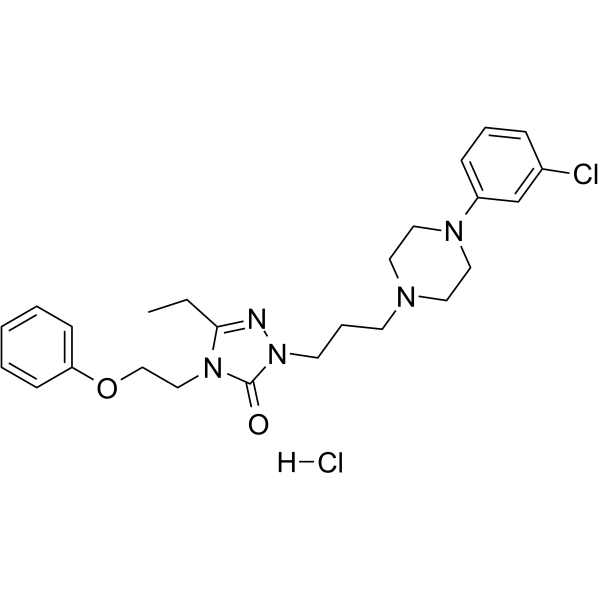
Nefazodone hydrochloride (BMY-13754) is a potent and selective 5HT2A (Ki=5.8 nM) antagonist with moderate inhibition of 5-HT and noradrenaline uptake (IC50 of 290 and 300 nM, respectively). Nefazodone hydrochloride is a phenylpiperazine antidepressant with less alpha-adrenergic blocking activity .
|
-
- HY-121053A
-
|
WY-50324 hydrochloride; SEB-324 hydrochloride
|
5-HT Receptor
|
Neurological Disease
|
|
Adatanserin hydrochloride is a high affinity, selective and partial agonist for the 5-HT1A receptor with a Ki of 1 nM. Adatanserin hydrochloride is a moderate affinity 5-HT2 receptor antagonist with a Ki of 73 nM. Adatanserin hydrochloride shows significant anxiolytic and antidepressant activity in an animal conflict model .
|
-
- HY-105704
-
|
NSC 170955; WA 335
|
5-HT Receptor
|
Neurological Disease
|
|
Danitracen (NSC 170955) is an orally active, CNS penetrant serotonin antagonist with antidepressant activity. Danitracen reduces serotonin levels in the cerebrum, cerebellum, medulla and the whole brain. Danitracen exhibits anticataleptic effects in rat catalepsy models. Danitracen can be used for catalepsy and depression research .
|
-
- HY-110034R
-
|
BTS 54-505 (Standard)
|
Drug Metabolite
Reference Standards
|
Metabolic Disease
|
|
Didesmethylsibutramine (hydrochloride) (Standard) is the analytical standard of Didesmethylsibutramine (hydrochloride). This product is intended for research and analytical applications. Didesmethylsibutramine (BTS 54-505) hydrochloride is the primary amine metabolite of Sibutramine (antidepressant and anti-obesity agent). Didesmethylsibutramine hydrochloride inhibits NMDA-evoked activity. Didesmethylsibutramine hydrochloride is also a reuptake inhibitor. Didesmethylsibutramine hydrochloride induces thermogenesis .
|
-
- HY-A0021S
-
|
|
Isotope-Labeled Compounds
5-HT Receptor
Flavivirus
|
Infection
Cardiovascular Disease
Neurological Disease
|
|
Palonosetron-d3 hydrochloride is the deuterium labeled Palonosetron hydrochloride (HY-A0021). Palonosetron hydrochloride is a 5-HT3 antagonist primarily used to prevent acute, delayed, and overall chemotherapy-induced nausea and vomiting. In addition, Palonosetron hydrochloride exhibits moderate anti-flavivirus activity and potent anti-Zika virus activity in mammalian cells. Palonosetron hydrochloride also possesses antidepressant activity .
|
-
- HY-N0059
-
|
|
Parasite
Bacterial
AMPK
PPAR
|
Infection
Neurological Disease
Metabolic Disease
|
|
D-Arabinose is is an orally active antidepressant and a growth inhibitor of C. elegans (IC50 is 7.5 mM). D-Arabinose can penetrate the blood-brain barrier, selectively interfere with the metabolism of D-ribose and D-fructose, and inhibit the growth of nematodes. D-Arabinose can also inhibit the synthesis of cell biofilm and exert antibacterial activity. D-Arabinose activates the ACSS2-PPARγ/TFEB-CRTC1 axis through the lysosomal AXIN-LKB1-AMPK pathway, inducing CRTC1 transcription, exerts antidepressant-like activity. D-Arabinose is the ring-opened form of the aldopentose D-?Arabinose (HY-N7082) .
|
-
- HY-N0368
-
-
- HY-W284026
-
-
- HY-W753791
-
|
|
TNF Receptor
JNK
|
Neurological Disease
Inflammation/Immunology
|
|
(±)-Perillaldehyde has an antidepressant effect by modulating the olfactory nervous system in a mouse model of stress-induced depression. (±)-Perillaldehyde also has anti-inflammatory activity, inducing JNK activation in RAW264.7 cells and inhibiting the expression of TNF-α, with an IC50 of 171.7 μM .
|
-
- HY-B0061
-
|
SM-3997 citrate
|
5-HT Receptor
|
Neurological Disease
Metabolic Disease
|
|
Tandospirone (SM-3997) citrate is a potent and selective 5-HT1A receptor partial agonist, with a Ki of 27 nM. Tandospirone citrate has anxiolytic and antidepressant activities. Tandospirone citrate can be used for the research of the central nervous system disorders and the underlying mechanisms .
|
-
- HY-W131122
-
|
|
Bacterial
|
Others
|
|
1,3,4-Oxadiazoles are a class of synthetic compounds with important medicinal value, which show a variety of biological activities such as anticonvulsant, antidepressant, analgesic, anti-inflammatory, antiallergic, antipsychotic, antimicrobial, antituberculous, antitumor, and antiviral. 1,3,4-Oxadiazole derivatives need to be further developed .
|
-
- HY-W105505
-
-
- HY-B0949AS
-
|
|
Cholinesterase (ChE)
Isotope-Labeled Compounds
Amyloid-β
|
Neurological Disease
|
|
Protriptyline-d3 is deuterium labeled Protriptyline (HY-B0949). Protriptyline is a potent tricyclic antidepressant (TCA). Protriptyline inhibits AChE activity with an IC50 value of 0.06 mM and inhibits Aβ self-assembly. Protriptyline can be used for the study of depression and Alzheimers disease .
|
-
- HY-B1622R
-
|
|
Reference Standards
5-HT Receptor
Apoptosis
|
Cardiovascular Disease
Neurological Disease
|
|
Cyproheptadine (Standard) is the analytical standard of Cyproheptadine. This product is intended for research and analytical applications. Cyproheptadine is a potent and orally active 5-HT2A receptor antagonist, with antidepressant and antiserotonergic effects. Cyproheptadine has antiplatelet and thromboprotective activities. Cyproheptadine can be used for the research of thromboembolic disorders .
|
-
- HY-137472
-
|
|
GSK-3
|
Neurological Disease
|
|
SAR502250 is a potent, selective, ATP competitive, orally active and brain-penetrant inhibitor of GSK3, with an IC50 of 12 nM for human GSK-3β. SAR502250 displays antidepressant-like activity. SAR502250 can be used for the research of Alzheimer’s disease (AD) .
|
-
- HY-B0366AR
-
|
Cyproheptadine HCl (Standard)
|
Reference Standards
5-HT Receptor
|
Cardiovascular Disease
Neurological Disease
Cancer
|
|
Cyproheptadine (hydrochloride) (Standard) is the analytical standard of Cyproheptadine (hydrochloride). This product is intended for research and analytical applications. Cyproheptadine hydrochloride is a potent and orally active 5-HT2A receptor antagonist, with antidepressant and antiserotonergic effects. Cyproheptadine hydrochloride has antiplatelet and thromboprotective activities. Cyproheptadine hydrochloride can be used for the research of thromboembolic disorders .
|
-
- HY-181110
-
-
- HY-119468
-
|
|
Dopamine Transporter
|
Neurological Disease
|
|
Medifoxamine is an orally active monoamine reuptake inhibitor and antidepressant. Medifoxamine preferentially inhibits presynaptic dopamine reuptake. Medifoxamine acts as an intraocular pressure-lowering agent to reduce intraocular pressure, and also functions as a miotic agent to decrease pupil diameter. Medifoxamine exhibits characteristic properties of antidepressant compounds, including preventing hypothermia induced by Reserpine (HY-N0480) or Apomorphine (HY-12723), potentiating the toxic effects of Yohimbine (HY-N0127) in mice, and reducing immobility behavior in mice and rats in the "behavioral despair" model. Medifoxamine has no anticholinergic activity. Medifoxamine can be used in research related to depression .
|
-
- HY-121053
-
|
WY-50324; SEB-324
|
5-HT Receptor
|
Neurological Disease
|
|
Adatanserin (WY-50324) is a high affinity, selective and partial agonist for the 5-HT1A receptor with a Ki of 1 nM. Adatanserin is a moderate affinity 5-HT2 receptor antagonist with a Ki of 73 nM. Adatanserin shows significant anxiolytic and antidepressant activity in an animal conflict model .
|
-
- HY-B0884
-
|
|
Monoamine Oxidase
Cholinesterase (ChE)
|
Neurological Disease
|
|
Minaprine is a brain-penetrant monoamine oxidase inhibitor. Minaprine also weakly inhibits acetylcholinesterase (AChE) activity. Minaprine reduces intraneuronal dopamine metabolism, lowers striatal homovanillic acid and dihydroxyphenylacetic acid levels, and raises striatal 3-methoxytyramine and 5-hydroxytryptamine levels. Minaprine exhibits convulsant, antidepressant properties .
|
-
- HY-B0884A
-
|
|
Monoamine Oxidase
Cholinesterase (ChE)
|
Neurological Disease
|
|
Minaprine dihydrochloride is a brain-penetrant monoamine oxidase inhibitor. Minaprine dihydrochloride also weakly inhibits acetylcholinesterase (AChE) activity. Minaprine dihydrochloride reduces intraneuronal dopamine metabolism, lowers striatal homovanillic acid and dihydroxyphenylacetic acid levels, and raises striatal 3-methoxytyramine and 5-hydroxytryptamine levels. Minaprine dihydrochloride exhibits convulsant, antidepressant properties .
|
-
- HY-B1558A
-
|
MCI-2016
|
Monoamine Oxidase
|
Neurological Disease
|
|
Bifemelane hydrochloride (MCI-2016) is a potent, selective and competitive inhibitor of monoamine oxidase A (MAO-A), with a Ki of 4.20 μM. Bifemelane hydrochloride also inhibits MAO-B noncompetitively with a Ki of 46.0 μM. Bifemelane hydrochloride has a potent antidepressant activity and can be used for the research of cognitive and emotional disturbances related to cerebrovascular disease .
|
-
- HY-A0198S
-
|
U 41123-d5
|
Isotope-Labeled Compounds
GABA Receptor
|
Neurological Disease
|
|
Adinazolam-d5 (U 41123-d5) is a deuterium labeled Adinazolam (HY-A0198). Adinazolam is a triazolobenzodiazepine. Adinazolam binds to peripheral-type benzodiazepine receptors which interact allosterically with GABA receptors. Adinazolam has dual anxiolytic and antidepressant activities .
|
-
- HY-11084
-
|
|
Endogenous Metabolite
|
Neurological Disease
|
|
SNAP-7941 is a selective antagonist with anxiolytic, antidepressant and appetite suppressant activities. SNAP-7941 showed promising biological activity in initial animal studies. SNAP-7941 targets the melanin concentrating hormone receptor MCH1 and has significant inhibitory potential. SNAP-7941 was shown to inhibit the centrally induced MCH-induced drinking effect in in vivo studies .
|
-
- HY-14348
-
|
|
5-HT Receptor
|
Neurological Disease
|
|
GSK163090 is a potent, selective and orally active 5-HT1A/1B/1D receptor antagonist with pKi values of 9.4, 8.5 and 9.7, respectively. GSK163090 inhibits the functional activity of serotonin reuptake transporter (SerT) with a pKi value of 6.1. GSK163090 has antidepressant and anxiolytic activities .
|
-
- HY-12394
-
|
Dosulepin; Dothep
|
Histamine Receptor
5-HT Receptor
|
Neurological Disease
|
|
Dothiepin (Dosulepin; Dothep) is an antidepressant agent with sedative/anxiolytic activity. Dothiepin is an inhibitor preferring of noradrenaline uptake than serotonin uptake. Dothiepin facilitates noradrenergic neurotransmission via inhibiting the neuronal uptake. Dothiepin is also an antagonist of histamine H1-receptor without cardiotoxicity. Dothiepin exhibits significant analgesic activity in psychogenic facial pain,idiopathic fibromyalgia syndrome or rheumatoid arthritis .
|
-
- HY-111066
-
|
|
Dopamine Receptor
|
Others
|
|
JNJ-37822681 is a fast dissociating D2 antagonist with activity in inhibiting schizophrenia. JNJ-37822681 has high specificity for D2 receptors and is effective in animal models, inducing increased levels of extracellular serotonin, dopamine, and norepinephrine in the rat cerebral cortex, and exhibiting antidepressant activity in the mouse tail suspension test, while having a good brain distribution and lower prolactin release.
|
-
- HY-W665208
-
|
|
Biochemical Assay Reagents
Fungal
Reactive Oxygen Species (ROS)
|
Infection
Neurological Disease
Metabolic Disease
Cancer
|
|
Zapotin is a member of the polymethoxyflavones, which are natural polyphenols from the group of flavonoid. Zapotin exhibits antidepressant, anticancer, antifungal, and antioxidant activity. Zapotin is a chemopreventive and chemotherapeutic agent. Zapotin can result in a reduction of large aberrant crypt foci in CF-1 mouse model. Zapotin inhibits autophagosome formation. Zapotin has inhibitory activity in mouse mammary organ culture with an IC50 of 50 µg/mL .
|
-
- HY-A0021R
-
|
|
Reference Standards
5-HT Receptor
Flavivirus
|
Infection
Cardiovascular Disease
Neurological Disease
|
|
Palonosetron hydrochloride (Standard) is the analytical standard of Palonosetron hydrochloride (HY-A0021). This product is intended for research and analytical applications. Palonosetron hydrochloride is a 5-HT3 antagonist primarily used to prevent acute, delayed, and overall chemotherapy-induced nausea and vomiting. In addition, Palonosetron hydrochloride exhibits moderate anti-flavivirus activity and potent anti-Zika virus activity in mammalian cells. Palonosetron hydrochloride also possesses antidepressant activity .
|
-
- HY-109157
-
|
RO6889450
|
Trace Amine-associated Receptor (TAAR)
5-HT Receptor
Dopamine Receptor
|
Neurological Disease
|
|
Ralmitaront (RO6889450) is an orally active agonist of trace amine-associated receptor 1 (TAAR1) with a EC50 value of 110.4 nM. Ralmitaront has antipsychotic, cognitively improvement, and antidepressant activity in rodents. Ralmitaront can be used as a neurosuppressant in the study of neuro-related diseases, such as schizophrenia (SCZ), schizoaffective disorder .
|
-
- HY-B0949R
-
|
|
Reference Standards
Cholinesterase (ChE)
Amyloid-β
|
Neurological Disease
|
|
Protriptyline hydrochloride (Standard) is the analytical standard of Protriptyline hydrochloride (HY-B0949). This product is intended for research and analytical applications. Protriptyline hydrochloride is a potent tricyclic antidepressant (TCA). Protriptyline hydrochloride inhibits AChE activity with an IC50 value of 0.06 mM and inhibits Aβ self-assembly. Protriptyline hydrochloride can be used for the study of depression and Alzheimers disease .
|
-
- HY-145585
-
|
MIJ-821
|
iGluR
|
Neurological Disease
|
|
Onfasprodil (MIJ-821) is a selective intravenous NMDA receptor NR2B subunit negative allosteric modulator (NAM). Onfasprodil inhibits the activity of NR2B-NMDA receptors. Onfasprodil has a rapid antidepressant effect. Onfasprodil can be used for the research of treatment-resistant depression (TRD) .
|
-
- HY-169786
-
|
|
5-HT Receptor
|
Neurological Disease
|
|
5-HT2A receptor agonist-5 (compound I-3) is a potent 5-HT2A receptor agonist with a Ki value of 0.017 µM. 5-HT2A receptor agonist-5 shows antidepressant activity .
|
-
- HY-B1017
-
|
EN-1733A
|
Dopamine Receptor
|
Neurological Disease
|
|
Molindone hydrochloride (EN-1733A) is an orally active and brain-penetrant dopamine D2/D5 receptor antagonist. Molindone hydrochloride shows antipsychotic and antidepressant-like activities. Molindone hydrochloride suppresses spontaneous locomotion, and antagonizes apomorphine-induced emesis. Molindone hydrochloride can be used for the research of neurological disease .
|
-
- HY-N1414R
-
|
|
Reference Standards
Others
|
Neurological Disease
|
|
(E)-3',6-Disinapoylsucrose (Standard) is the analytical standard of (E)-3',6-Disinapoylsucrose. This product is intended for research and analytical applications. (E)-3',6-Disinapoylsucrose, the index component of Yuanzhi (Polygala tenuifolia Willd), possesses potent antioxidant activity and antidepressant effect .
|
-
- HY-W094474
-
|
hydrate/monohydrateortrihydrate
|
GSK-3
Apoptosis
|
Infection
Neurological Disease
|
|
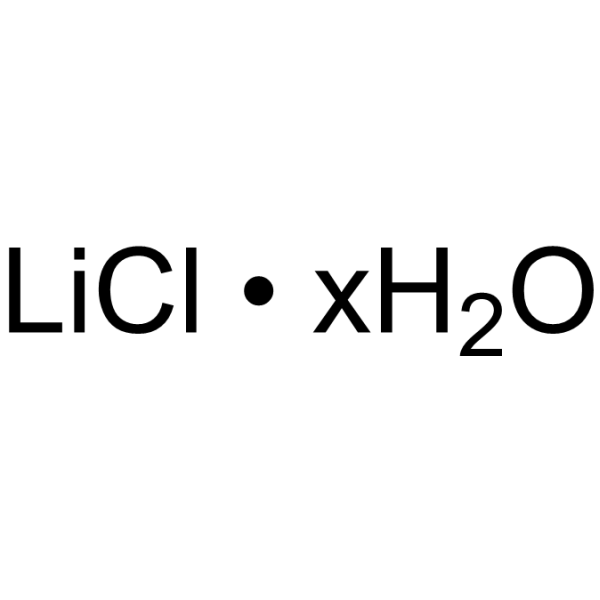
Lithium chloride hydrate, an orally active mood stabilizer, is a potent virus inhibitor and effective immunomodulatory agent. Lithium chloride hydrate has antidepressant activity by inhibiting GSK3β and promoting neurogenesis. Lithium chloride hydrate alleviates cognition dysfunction and the symptoms of acute mania and depression. Lithium chloride hydrate can also be used for research of virus infection and Alzheimer's disease .
|
-
- HY-165387
-
|
|
Biochemical Assay Reagents
|
Neurological Disease
|
|
Nafenodone is an antidepressant agent. Nafenodone can reduce the rate and amplitude of contractions and lengthen sinus node recovery time. Nafenodone can inhibit the spontaneous mechanical activity in portal vein segmens with an IC50 of 1.4 μM in rat isolated vascular smooth muscle. Nafenodone relaxes the contractions induced by high K + and noradrenaline .
|
-
- HY-159106
-
-
- HY-N7082
-
|
|
Parasite
Bacterial
AMPK
PPAR
|
Infection
Neurological Disease
Metabolic Disease
|
|
D-Arabinopyranose is a rare aldehyde pentose, and its ring-opened form is D-arabinose (HY-N0059). D-arabinose is is an orally active antidepressant and a growth inhibitor of C. elegans (IC50 is 7.5 mM). D-arabinose can penetrate the blood-brain barrier, selectively interfere with the metabolism of D-ribose and D-fructose, and inhibit the growth of nematodes. D-arabinose can also inhibit the synthesis of cell biofilm and exert antibacterial activity. D-arabinose activates the ACSS2-PPARγ/TFEB-CRTC1 axis through the lysosomal AXIN-LKB1-AMPK pathway, inducing CRTC1 transcription, exerts antidepressant-like activity. D-arabinose is the ring-opened form of the aldopentose D-?Arabinose (HY-N7082) .
|
-
- HY-N0059S4
-
|
|
Isotope-Labeled Compounds
Parasite
Bacterial
AMPK
PPAR
|
Infection
Neurological Disease
Metabolic Disease
|
|
D-Arabinose-d2 is the deuterium labeled D-Arabinose (HY-N0059). D-Arabinose is is an orally active antidepressant and a growth inhibitor of C. elegans (IC50 is 7.5 mM). D-Arabinose can penetrate the blood-brain barrier, selectively interfere with the metabolism of D-ribose and D-fructose, and inhibit the growth of nematodes. D-Arabinose can also inhibit the synthesis of cell biofilm and exert antibacterial activity. D-Arabinose activates the ACSS2-PPARγ/TFEB-CRTC1 axis through the lysosomal AXIN-LKB1-AMPK pathway, inducing CRTC1 transcription, exerts antidepressant-like activity. D-Arabinose is the ring-opened form of the aldopentose D-?Arabinose (HY-N7082) .
|
-
- HY-N0059S
-
|
|
Isotope-Labeled Compounds
Parasite
Bacterial
AMPK
PPAR
|
Infection
Neurological Disease
Metabolic Disease
|
|
D-Arabinose- 13C is the 13C labeled D-Arabinose (HY-N0059). D-Arabinose is is an orally active antidepressant and a growth inhibitor of C. elegans (IC50 is 7.5 mM). D-Arabinose can penetrate the blood-brain barrier, selectively interfere with the metabolism of D-ribose and D-fructose, and inhibit the growth of nematodes. D-Arabinose can also inhibit the synthesis of cell biofilm and exert antibacterial activity. D-Arabinose activates the ACSS2-PPARγ/TFEB-CRTC1 axis through the lysosomal AXIN-LKB1-AMPK pathway, inducing CRTC1 transcription, exerts antidepressant-like activity. D-Arabinose is the ring-opened form of the aldopentose D-?Arabinose (HY-N7082) .
|
-
- HY-N0059S6
-
|
|
Isotope-Labeled Compounds
Parasite
Bacterial
AMPK
PPAR
|
Infection
Neurological Disease
Metabolic Disease
|
|
D-Arabinose-d6 is the deuterium labeled D-Arabinose (HY-N0059). D-Arabinose is is an orally active antidepressant and a growth inhibitor of C. elegans (IC50 is 7.5 mM). D-Arabinose can penetrate the blood-brain barrier, selectively interfere with the metabolism of D-ribose and D-fructose, and inhibit the growth of nematodes. D-Arabinose can also inhibit the synthesis of cell biofilm and exert antibacterial activity. D-Arabinose activates the ACSS2-PPARγ/TFEB-CRTC1 axis through the lysosomal AXIN-LKB1-AMPK pathway, inducing CRTC1 transcription, exerts antidepressant-like activity. D-Arabinose is the ring-opened form of the aldopentose D-?Arabinose (HY-N7082) .
|
-
- HY-N0059R
-
|
|
Reference Standards
Parasite
Bacterial
AMPK
PPAR
|
Infection
Neurological Disease
Metabolic Disease
|
|
D-Arabinose (Standard) is the analytical standard of D-Arabinose. This product is intended for research and analytical applications. D-Arabinose is is an orally active antidepressant and a growth inhibitor of C. elegans (IC50 is 7.5 mM). D-Arabinose can penetrate the blood-brain barrier, selectively interfere with the metabolism of D-ribose and D-fructose, and inhibit the growth of nematodes. D-Arabinose can also inhibit the synthesis of cell biofilm and exert antibacterial activity. D-Arabinose activates the ACSS2-PPARγ/TFEB-CRTC1 axis through the lysosomal AXIN-LKB1-AMPK pathway, inducing CRTC1 transcription, exerts antidepressant-like activity. D-Arabinose is the ring-opened form of the aldopentose D-?Arabinose (HY-N7082) .
|
-
- HY-N0059S5
-
|
|
Isotope-Labeled Compounds
Parasite
Bacterial
AMPK
PPAR
|
Infection
Neurological Disease
Metabolic Disease
|
|
D-Arabinose-d5 is the deuterium labeled D-Arabinose (HY-N0059). D-Arabinose is is an orally active antidepressant and a growth inhibitor of C. elegans (IC50 is 7.5 mM). D-Arabinose can penetrate the blood-brain barrier, selectively interfere with the metabolism of D-ribose and D-fructose, and inhibit the growth of nematodes. D-Arabinose can also inhibit the synthesis of cell biofilm and exert antibacterial activity. D-Arabinose activates the ACSS2-PPARγ/TFEB-CRTC1 axis through the lysosomal AXIN-LKB1-AMPK pathway, inducing CRTC1 transcription, exerts antidepressant-like activity. D-Arabinose is the ring-opened form of the aldopentose D-?Arabinose (HY-N7082) .
|
-
- HY-14349
-
|
|
5-HT Receptor
Dopamine Receptor
|
Neurological Disease
|
|
GSK-163090 dihydrochloride is a potent, selective and orally active 5-HT1A/1B/1D receptor antagonist with pKi values of 9.4, 8.5 and 9.7, respectively. GSK-163090 dihydrochloride inhibits the functional activity of serotonin reuptake transporter (SerT) with a pKi value of 6.1. GSK-163090 dihydrochloride has antidepressant and anxiolytic activities .
|
-
- HY-13999A1
-
|
NSI-189 phosphate
|
Trk Receptor
|
Neurological Disease
|
|
Amdiglurax (NSI-189) phosphate is an orally active chemical entity with enhanced neurogenic activity. Amdiglurax phosphate up-regulates neurogenic factors such as BDNF (brain derived-neurotrophic factor) and SCF. Amdiglurax phosphate exhibits anti-depressant effect. Amdiglurax enhances synaptic plasticity and reduces cognitive dysfunction. Amdiglurax phosphate holds potential for psychiatric disorder research .
|
-
- HY-B0478
-
|
AF-1161
|
5-HT Receptor
Serotonin Transporter
Histamine Receptor
Adrenergic Receptor
|
Neurological Disease
|
|
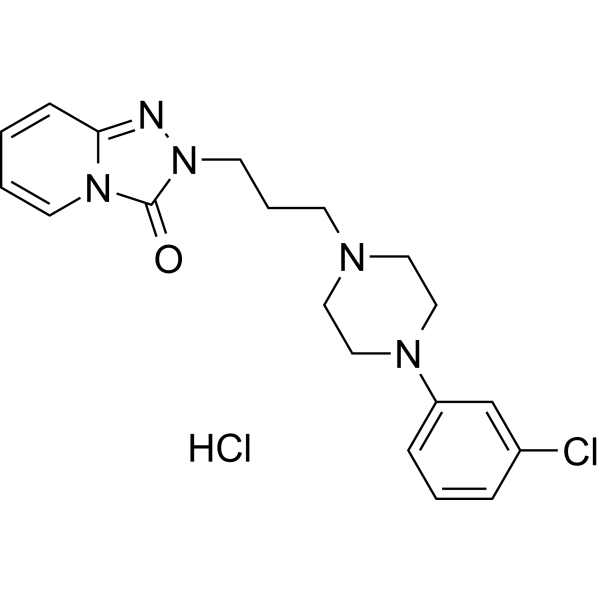
Trazodone hydrochloride (AF-1161) is a triazolopyridine derivative that belongs to the class of serotonin receptor antagonists and reuptake inhibitors (SARIs). Trazodone hydrochloride has anti-depressant and anti-insomnious activity. Trazodone hydrochloride exerts antagonistic properties against a1- and a2-adrenergic receptors and histamine H1 receptors, with minimal anticholinergic effects .
|
-
- HY-B1396S
-
|
BMY-13754-d6; MJ-13754-1-d6
|
Isotope-Labeled Compounds
5-HT Receptor
Adrenergic Receptor
|
Neurological Disease
Endocrinology
|
|
Nefazodone-d6 (hydrochloride) is the deuterium labeled Nefazodone hydrochloride. Nefazodone hydrochloride (BMY-13754) is a potent and selective 5HT2A (Ki=5.8 nM) antagonist with moderate inhibition of 5-HT and noradrenaline uptake (IC50 of 290 and 300 nM, respectively). Nefazodone hydrochloride is a phenylpiperazine antidepressant with less alpha-adrenergic blocking activity .
|
-
- HY-B1396S1
-
|
BMY-13754-d6 dihydrochloride; MJ-13754-1-d6 dihydrochloride
|
Isotope-Labeled Compounds
5-HT Receptor
Adrenergic Receptor
|
Neurological Disease
Endocrinology
|
|
Nefazodone-d6 (dihydrochloride) is deuterium labeled Nefazodone (hydrochloride). Nefazodone hydrochloride (BMY-13754) is a potent and selective 5HT2A (Ki=5.8 nM) antagonist with moderate inhibition of 5-HT and noradrenaline uptake (IC50 of 290 and 300 nM, respectively). Nefazodone hydrochloride is a phenylpiperazine antidepressant with less alpha-adrenergic blocking activity .
|
-
- HY-13999
-
|
NSI-189
|
Trk Receptor
|
Neurological Disease
|
|
Amdiglurax (NSI-189) is an orally active chemical entity with enhanced neurogenic activity. Amdiglurax up-regulates neurogenic factors such as BDNF (brain derived-neurotrophic factor) and SCF. Amdiglurax exhibits anti-depressant effect. Amdiglurax enhances synaptic plasticity and reduces cognitive dysfunction. Amdiglurax holds potential for psychiatric disorder research .
|
-
- HY-W015635R
-
|
|
Reference Standards
Others
|
Cancer
|
|
Diallyl disulfide (Standard) is the analytical standard of Diallyl disulfide. This product is intended for research and analytical applications. Diallyl disulfide, an active compound in garlic oil, is an orally active human squalene monooxygenase inhibitor with an IC50 of 400 μM for squalene epoxidation. Diallyl disulfide exhibits obvious anti-inflammatory, anti-oxidative, antidepressant and anti-tumor activities .
|
-
- HY-B0478A
-
|
AF-1161 free base
|
5-HT Receptor
Serotonin Transporter
Histamine Receptor
Adrenergic Receptor
|
Neurological Disease
|
|
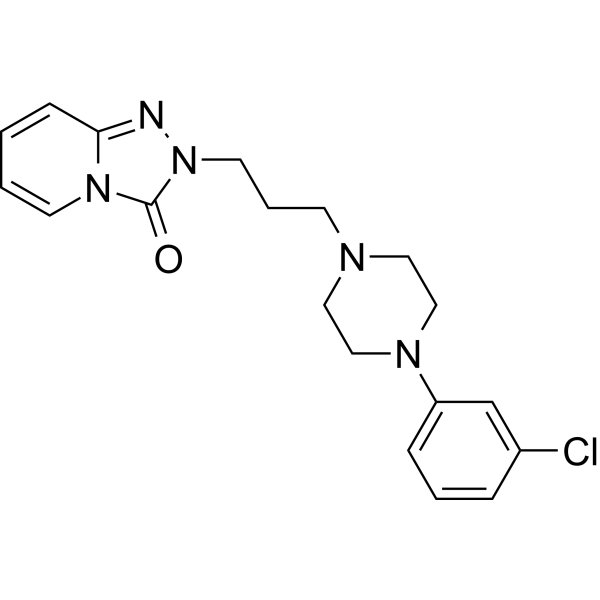
Trazodone (AF-1161 free base) is a triazolopyridine derivative that belongs to the class of serotonin receptor antagonists and reuptake inhibitors (SARIs). Trazodone has anti-depressant and anti-insomnious activity. Trazodone exerts antagonistic properties against a1- and a2-adrenergic receptors and histamine H1 receptors, with minimal anticholinergic effects .
|
-
- HY-172261
-
|
|
iGluR
|
Neurological Disease
|
|
YY-23 is a selective inhibitor of NMDAR (containing GluN2C or GluN2D). YY-23 inhibits GABAergic neurotransmission and enhances excitatory transmission by inhibiting NMDARs containing GluN2D on GABAergic interneurons in the prefrontal cortex. YY-23 has antidepressant activity and can be used for the research of neurological diseases .
|
-
- HY-107670
-
|
DHβE hydrobromide
|
nAChR
|
Neurological Disease
|
|
Dihydro-β-erythroidine (DHβE) hydrobromide is a potent, orally active, and competitive antagonist of neuronal nAChRs. Dihydro-β-erythroidine hydrobromide shows selectivity for α4β4 and α4β2 nAChRs, with IC50s of 0.19 and 0.37 μM, respectively. Antidepressant-like activities .
|
-
- HY-101254
-
|
N-0774
|
Melatonin Receptor
|
Neurological Disease
|
|
Luzindole (N-0774) is a selective melatonin receptor antagonist. Luzindole preferentially targets MT2 (Mel1b) over MT1 (Mel1a) with Ki values of 10.2 and 158 nM for human MT2 and MT1, respectively. Luzindole suppresses experimental autoimmune encephalomyelitis (EAE), and exerts antidepressant-like activity .
|
-
- HY-178573
-
|
|
Vasopressin Receptor
|
Neurological Disease
|
|
V1b receptor antagonist-1 is a potent, selective and brain-penetrant vasopressin 1b (V1b) receptor antagonist. V1b receptor antagonist-1 exhibits anti-depressant activity. V1b receptor antagonist-1 can be used for the research of neurological disease, such as depression .
|
-
- HY-W745430
-
|
Cyproheptadine HCl-d3
|
Isotope-Labeled Compounds
5-HT Receptor
|
Cardiovascular Disease
Neurological Disease
Cancer
|
|
Cyproheptadine hydrochloride-d3 (Cyproheptadine HCl-d3) is the deuterium labeled Cyproheptadine hydrochloride (HY-B0366A). Cyproheptadine hydrochloride is a potent and orally active 5-HT2A receptor antagonist, with antidepressant and antiserotonergic effects. Cyproheptadine hydrochloride has antiplatelet and thromboprotective activities. Cyproheptadine hydrochloride can be used for the research of thromboembolic disorders .
|
-
- HY-W728451
-
|
|
FAAH
|
Cardiovascular Disease
Neurological Disease
|
|
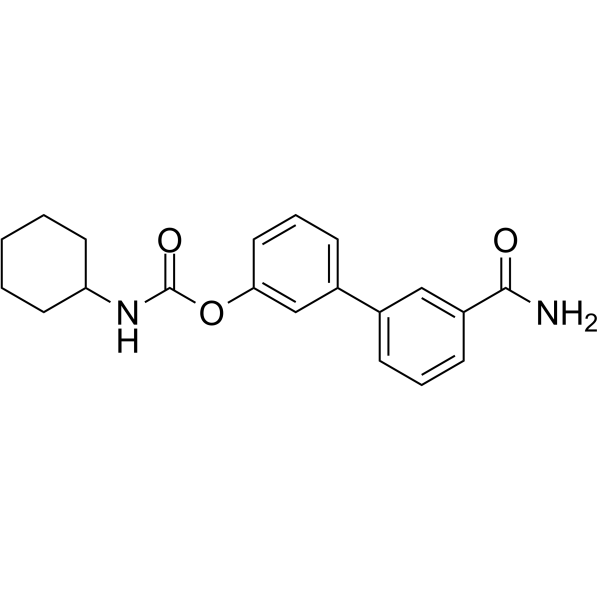
URB694 is a carbamate FAAH inhibitor that irreversibly carbamoylate the nucleophile catalytic serine in FAAH active site. URB694 exhibits antidepressant-like activity and cardioprotective effects. URB694 can be used to prepare 11C-Carbonyl-URB694 for in vivo positron emission tomography (PET) imaging studies of the brain FAAH .
|
-
- HY-19417A
-
|
|
Serotonin Transporter
5-HT Receptor
|
Neurological Disease
|
|
Wf-516 is an inhibitor of 5-HT reuptake, and an antagonist of 5-HT1A and 5-HT2A receptors, with Ki of 5 nM and 40 nM for 5-HT1A receptor and 5-HT2A receptor in humans, respectively, and has potent antidepressant activity.
|
-
- HY-180423
-
|
|
Adenosine Receptor
|
Neurological Disease
|
|
IRFI-165 is a potent and selective A1 adenosine receptor antagonist with a Ki of 7.9 nM for rat A1 AR. IRFI-165 exhibies high selectivity versus A2A and A3 receptors. IRFI-165 induces antidepressant activity in vivo. IRFI-165 can be used for the research of psychiatric and neurological disorders .
|
-
- HY-14558R
-
|
SM-3997 (Standard)
|
Reference Standards
5-HT Receptor
|
Neurological Disease
|
|
Tandospirone (Standard) is the analytical standard of Tandospirone. This product is intended for research and analytical applications. Tandospirone (SM-3997) is a potent and selective 5-HT1A receptor partial agonist, with a Ki of 27 nM. Tandospirone has anxiolytic and antidepressant activities. Tandospirone can be used for the research of the central nervous system disorders and the underlying mechanisms .
|
-
- HY-10864R
-
|
KDS-4103 (Standard)
|
FAAH
Autophagy
Mitophagy
Reference Standards
|
Neurological Disease
|
|
URB-597 (Standard) is the analytical standard of URB-597. This product is intended for research and analytical applications. URB-597 (KDS-4103) is an orally bioavailable and selective FAAH inhibitor. URB-597 inhibits FAAH activity with an IC50s of approximately 5 nM in rat brain membranes, 0.5 nM in intact rat neurons, 3 nM in human liver microsomes. Antidepressant-like effects. Analgesic activity .
|
-
- HY-N0059S1
-
|
|
Isotope-Labeled Compounds
Parasite
Bacterial
AMPK
PPAR
|
Infection
Neurological Disease
Metabolic Disease
|
|
D-Arabinose- 13C-1 is the 13C labeled D-Arabinose (HY-N0059). D-Arabinose is is an orally active antidepressant and a growth inhibitor of C. elegans (IC50 is 7.5 mM). D-Arabinose can penetrate the blood-brain barrier, selectively interfere with the metabolism of D-ribose and D-fructose, and inhibit the growth of nematodes. D-Arabinose can also inhibit the synthesis of cell biofilm and exert antibacterial activity. D-Arabinose activates the ACSS2-PPARγ/TFEB-CRTC1 axis through the lysosomal AXIN-LKB1-AMPK pathway, inducing CRTC1 transcription, exerts antidepressant-like activity. D-Arabinose is the ring-opened form of the aldopentose D-?Arabinose (HY-N7082) .
|
-
- HY-N0059S2
-
|
|
Isotope-Labeled Compounds
Parasite
Bacterial
AMPK
PPAR
|
Infection
Neurological Disease
Metabolic Disease
|
|
D-Arabinose- 13C-2 is the 13C labeled D-Arabinose (HY-N0059). D-Arabinose is is an orally active antidepressant and a growth inhibitor of C. elegans (IC50 is 7.5 mM). D-Arabinose can penetrate the blood-brain barrier, selectively interfere with the metabolism of D-ribose and D-fructose, and inhibit the growth of nematodes. D-Arabinose can also inhibit the synthesis of cell biofilm and exert antibacterial activity. D-Arabinose activates the ACSS2-PPARγ/TFEB-CRTC1 axis through the lysosomal AXIN-LKB1-AMPK pathway, inducing CRTC1 transcription, exerts antidepressant-like activity. D-Arabinose is the ring-opened form of the aldopentose D-?Arabinose (HY-N7082) .
|
-
- HY-N0059S3
-
|
|
Isotope-Labeled Compounds
Parasite
Bacterial
AMPK
PPAR
|
Infection
Neurological Disease
Metabolic Disease
|
|
D-Arabinose- 13C-3 is the 13C labeled D-Arabinose (HY-N0059). D-Arabinose is is an orally active antidepressant and a growth inhibitor of C. elegans (IC50 is 7.5 mM). D-Arabinose can penetrate the blood-brain barrier, selectively interfere with the metabolism of D-ribose and D-fructose, and inhibit the growth of nematodes. D-Arabinose can also inhibit the synthesis of cell biofilm and exert antibacterial activity. D-Arabinose activates the ACSS2-PPARγ/TFEB-CRTC1 axis through the lysosomal AXIN-LKB1-AMPK pathway, inducing CRTC1 transcription, exerts antidepressant-like activity. D-Arabinose is the ring-opened form of the aldopentose D-?Arabinose (HY-N7082) .
|
-
- HY-W012732
-
|
|
Environmental Pollutants
Parasite
Drug Isomer
TNF Receptor
HIV
NF-κB
Interleukin Related
|
Neurological Disease
Cancer
|
|
Isoquinoline is an analog of pyridine. Isoquinoline-based alkaloids, such as p-tolyl bisisoquinoline, phthaloyl isoquinoline, and naphthyl isoquinoline, exhibit anticancer activity.
Berberine, an isoquinoline alkaloid, exerts anti-inflammatory effects in diabetic mice by downregulating the gene expression ratios of pro-/anti-inflammatory and Th1/Th2 cytokines.
Additionally, some isoquinoline-based compounds also possess antidepressant, antibacterial, antimalarial, and anti-HIV activities .
|
-
- HY-165378
-
|
(E)-Dosulepin hydrochloride; (E)-Dothep hydrochloride
|
Histamine Receptor
|
Neurological Disease
|
|
(E)-Dothiepin ((E)-Dosulepin;(E)-Dothep) hydrochloride is an antidepressant agent with sedative/anxiolytic activity. (E)-Dothiepin hydrochloride is an inhibitor preferring of noradrenaline uptake than serotonin uptake. (E)-Dothiepin hydrochloride facilitates noradrenergic neurotransmission via inhibiting the neuronal uptake. (E)-Dothiepin hydrochloride is also an antagonist of histamine H1-receptor without cardiotoxicity. (E)-Dothiepin hydrochloride exhibits significant analgesic activity in psychogenic facial pain,idiopathic fibromyalgia syndrome or rheumatoid arthritis .
|
-
- HY-121793
-
|
(-)-Roemerine
|
Endogenous Metabolite
5-HT Receptor
mGluR
iGluR
Bacterial
Antibiotic
|
Infection
Neurological Disease
Cancer
|
|
Roemerine is an alkaloid that has been identified from the leaves of Fibraurea recisa Pierre. Roemerine exhibits antibacterial, anticancer, and antidepressant activities, can reverse the multidrug resistance phenotype in cultured cells, and exerts antibacterial effects by regulating the cAMP signaling pathway. Additionally, Roemerine influences neuronal activity by increasing BDNF protein expression and modulating the serotonergic and glutamatergic systems. Roemerine holds promise for research in the fields of cancer, infections, and neurological diseases .
|
-
- HY-B1490
-
|
|
Serotonin Transporter
Apoptosis
Autophagy
|
Neurological Disease
Inflammation/Immunology
Cancer
|
|
Imipramine hydrochloride is an orally active tertiary amine tricyclic antidepressant. Imipramine hydrochloride is a Fascin1 inhibitor with antitumor activities. Imipramine hydrochloride also inhibits serotonin transporter with an IC50 value of 32 nM. Imipramine hydrochloride stimulates U-87MG glioma cells autophagy and induces HL-60 cell apoptosis. Imipramine hydrochloride shows neuroprotective and immunomodulatory effects .
|
-
- HY-19417
-
|
|
Serotonin Transporter
5-HT Receptor
|
Neurological Disease
|
|
Wf-516 hydrochloride is an inhibitor of 5-HT reuptake, and an antagonist of 5-HT1A and 5-HT2A receptors, with Ki of 5 nM and 40 nM for 5-HT1A receptor and 5-HT2A receptor in humans, respectively.Wf-516 hydrochloride has potent antidepressant activity.
|
-
- HY-B1490A
-
|
|
Serotonin Transporter
Autophagy
Apoptosis
|
Neurological Disease
Inflammation/Immunology
Cancer
|
|
Imipramine is an orally active tertiary amine tricyclic antidepressant. Imipramine is a Fascin1 inhibitor with antitumor activities. Imipramine also inhibits serotonin transporter with an IC50 value of 32 nM. Imipramine stimulates U-87MG glioma cells autophagy and induces HL-60 cell apoptosis. Imipramine shows neuroprotective and immunomodulatory effects .
|
-
- HY-B1396R
-
|
BMY-13754 (Standard); MJ-13754-1 (Standard)
|
Reference Standards
5-HT Receptor
Adrenergic Receptor
|
Neurological Disease
Endocrinology
|
|
Nefazodone (hydrochloride) (Standard) is the analytical standard of Nefazodone (hydrochloride). This product is intended for research and analytical applications. Nefazodone hydrochloride (BMY-13754) is a potent and selective 5HT2A (Ki=5.8 nM) antagonist with moderate inhibition of 5-HT and noradrenaline uptake (IC50 of 290 and 300 nM, respectively). Nefazodone hydrochloride is a phenylpiperazine antidepressant with less alpha-adrenergic blocking activity .
|
-
- HY-175508
-
|
|
iGluR
|
Neurological Disease
|
|
NMDA receptor modulator 9 is an orally active NMDA receptor positive allosteric modulator (PAM). NMDA receptor modulator 9 enhances GluN2A receptor activity. NMDA receptor modulator 9 demonstrates significant antidepressant-like effects in chronic restraint stress (CRS)-induced depression mice. NMDA receptor modulator 9 can be used for the study of depression .
|
-
- HY-143330
-
|
|
Monoamine Oxidase
|
Neurological Disease
|
|
MAO-B-IN-4 (Compound 26) is an orally active and reversible MAO-B inhibitor with an IC50 of 9 nM. MAO-B-IN-4 has good metabolic stability, safety profile and brain permeability. MAO-B-IN-4 shows antidepressant activity in rats and mice. MAO-B-IN-4 can be used in studies related to Alzheimer's disease .
|
-
- HY-106100
-
|
EMD 49980
|
Dopamine Receptor
Serotonin Transporter
|
Neurological Disease
|
|
Roxindole (EMD 49980), an indot-alkyl-pipenidine, is a potent agonist at dopamine autoreceptors, with an affinity for the D2-like subtype in the low nanomolar range. Roxindole can be used for the research of positive and negative schizophrenic symptoms. Roxindole is a 5-HT1A agonist and 5-HT uptake inhibitor. Antipsychotic and antidepressant activities .
|
-
- HY-14558S
-
|
SM-3997-d8
|
Isotope-Labeled Compounds
5-HT Receptor
|
Neurological Disease
|
|
Tandospirone-d8 (SM-3997-d8) is deuterium labeled Tandospirone. Tandospirone (SM-3997) is a potent and selective 5-HT1A receptor partial agonist, with a Ki of 27 nM. Tandospirone has anxiolytic and antidepressant activities. Tandospirone can be used for the research of the central nervous system disorders and the underlying mechanisms .
|
-
- HY-107740R
-
|
1,1'-Diethyl-2,2'-cyanine iodide (Standard); Decynium 22 (Standard); Diethylcyanine iodide (Standard); Eastman 7851 (Standard)
|
Reference Standards
Monoamine Transporter
Serotonin Transporter
|
Neurological Disease
|
|
Pseudoisocyanine iodide (Standard) is the analytical standard of Pseudoisocyanine (iodide) (HY-107740). This product is intended for research and analytical applications. Pseudoisocyanine iodide (1,1'-Diethyl-2,2'-cyanine iodide) is an inhibitor of organic cation transporters (OCT1, OCT2, OCT3) and plasma membrane monoamine transporter (PMAT). Pseudoisocyanine iodide has antidepressant activity .
|
-
- HY-17573A
-
|
|
Oxytocin Receptor
|
Neurological Disease
Endocrinology
|
|
Carbetocin acetate, an oxytocin (OT) analogue, is an oxytocin receptor agonist with a Ki of 7.1 nM. Carbetocin acetate has high affinity to chimeric N-terminus (E1) of the oxytocin receptor (Ki=1.17 μM). Carbetocin acetate has the potential for postpartum hemorrhage research. Carbetocin acetate can crosse the blood-brain barrier and produces antidepressant-like activity via activation of oxytocin receptors in the CNS .
|
-
- HY-17573
-
|
|
Oxytocin Receptor
|
Neurological Disease
Endocrinology
|
|
Carbetocin, an oxytocin (OT) analogue, is an oxytocin receptor agonist with a Ki of 7.1 nM. Carbetocin has high affinity to chimeric N-terminus (E1) of the oxytocin receptor (Ki=1.17 μM). Carbetocin has the potential for postpartum hemorrhage research. Carbetocin can crosse the blood-brain barrier and produces antidepressant-like activity via activation of oxytocin receptors in the CNS .
|
-
- HY-B0219A
-
|
|
Xanthine Oxidase
|
Infection
Neurological Disease
Inflammation/Immunology
Cancer
|
|
Allopurinol sodium is a potent and orally active xanthine oxidase inhibitor with an IC50 value of 0.2-50 μM. Allopurinol sodium can be used in the research of hyperuricemia and gout. Allopurinol sodium decreases the expression of HIF-1α and HIF-2α protein. Allopurinol sodium shows anti-depressant and anti-nociception activity. Anti-leishmanial effect .
|
-
- HY-W775346
-
|
Δ8-THC acetate; Delta8-tetrahydrocannabinol
|
Cannabinoid Receptor
|
Neurological Disease
Inflammation/Immunology
|
|
Delta8-THC acetate (Delta8-tetrahydrocannabinol) is a psychoactive phytocannabinoid, that binds to cannabinoid receptor 1 (CB1 receptor), and exhibits anti-nausea, appetite-stimulating, and anti-inflammatory activities. Delta8-THC acetate exhibits probably neuroprotective efficacy and can be used in anti-anxiety and antidepressant research .
|
-
- HY-B0219
-
|
|
Xanthine Oxidase
|
Infection
Neurological Disease
Inflammation/Immunology
Cancer
|
|
Allopurinol is a potent and orally active xanthine oxidase inhibitor with an IC50 value of 0.2-50 μM. Allopurinol can be used in the research of hyperuricemia and gout. Allopurinol decreases the expression of HIF-1α and HIF-2α protein. Allopurinol shows anti-depressant and anti-nociception activity. Anti-leishmanial effect .
|
-
- HY-N0368S1
-
|
|
Apoptosis
Endogenous Metabolite
iGluR
Bacterial
Isotope-Labeled Compounds
|
Cancer
|
|
Linalool- 13C3 is 13C labeled Linalool (HY-N0368). Linalool is a natural monoterpene which is a competitive NMDA receptor antagonist. Linalool is orally active and crosses the blood-brain barrier. Linalool has anticancer, antibacterial, anti-inflammatory, neuroprotective, anxiolytic, antidepressant, anti-stress, cardioprotective, hepatoprotective, nephroprotective and pulmonary protective activities .
|
-
- HY-152052S
-
|
|
Isotope-Labeled Compounds
|
Others
|
|
Linalool-d5 is the deuterium labeled Linalool (HY-N0368). Linalool is a natural monoterpene which is a competitive NMDA receptor antagonist. Linalool is orally active and crosses the blood-brain barrier. Linalool has anticancer, antibacterial, anti-inflammatory, neuroprotective, anxiolytic, antidepressant, anti-stress, cardioprotective, hepatoprotective, nephroprotective and pulmonary protective activities .
|
-
- HY-N7082S
-
|
|
Isotope-Labeled Compounds
Parasite
Bacterial
AMPK
PPAR
|
Infection
Neurological Disease
Metabolic Disease
|
|
D-Arabinopyranos- 13C5 is 13C labeled D-Arabinopyranos (HY-N7082). D-Arabinopyranose is a rare aldehyde pentose, and its ring-opened form is D-arabinose (HY-N0059). D-arabinose is is an orally active antidepressant and a growth inhibitor of C. elegans (IC50 is 7.5 mM). D-arabinose can penetrate the blood-brain barrier, selectively interfere with the metabolism of D-ribose and D-fructose, and inhibit the growth of nematodes. D-arabinose can also inhibit the synthesis of cell biofilm and exert antibacterial activity. D-arabinose activates the ACSS2-PPARγ/TFEB-CRTC1 axis through the lysosomal AXIN-LKB1-AMPK pathway, inducing CRTC1 transcription, exerts antidepressant-like activity. D-arabinose is the ring-opened form of the aldopentose D-?Arabinose (HY-N7082) .
|
-
- HY-135096
-
|
|
Serotonin Transporter
5-HT Receptor
Histamine Receptor
mAChR
Adrenergic Receptor
Sodium Channel
Trk Receptor
|
Neurological Disease
|
|
Amitriptyline-d3 hydrochloride is the deuterium labeled Amitriptyline (hydrochloride). Amitriptyline hydrochloride is an inhibitor of serotonin reuptake transporter (SERT) and noradrenaline reuptake transporter (NET), with Kis of 3.45 nM and 13.3 nM for human SERT and NET, respectively. Amitriptyline hydrochloride also weakly binds to dopamine reuptake transporter (DAT) with a Ki of 2.58 μM. Amitriptyline hydrochloride also inhibits adrenergic, muscarinic, histamine and 5-HT receptors. Amitriptyline hydrochloride is a TrkA and TrkB receptors agonist with potent neurotrophic activity. Amitriptyline hydrochloride has antidepressant activity .
|
-
- HY-107811A
-
|
|
Autophagy
α-synuclein
Apoptosis
Monoamine Oxidase
Mitosis
|
Neurological Disease
Cancer
|
|
Harmol hydrochloride is an orally active β-carboline alkaloid. Harmol hydrochloride is a TFEB activator and monoamine oxidase inhibitor. Harmol hydrochloride can induce cell mitosis, Autophagy and Apoptosis. Harmol hydrochloride promotes the degradation of α-synuclein by regulating the autophagy-lysosomal pathway. Harmol hydrochloride has anti-tumor, anti-depressant and anti-aging activities. Harmol hydrochloride improves motor impairment in a mouse Parkinson's disease model .
|
-
- HY-W644305
-
|
3β-Androstenol
|
GABA Receptor
Endogenous Metabolite
|
Neurological Disease
|
Androst-16-en-3-ol is a pheromone derived from boars that triggers mating responses in estrous sows. It also exists in human urine, plasma, saliva and sweat. As an endogenous neurosteroid, Androst-16-en-3-ol acts as a positive allosteric modulator of GABAA receptors (GABAA receptor) and exerts anxiolytic, antidepressant and anticonvulsant activities in mice.
|
-
- HY-107811
-
Harmol
1 Publications Verification
|
Autophagy
α-synuclein
Apoptosis
Monoamine Oxidase
Mitosis
|
Neurological Disease
Cancer
|
|
Harmol is an orally active β-carboline alkaloid. Harmol is a TFEB activator and monoamine oxidase inhibitor. Harmol can induce cell mitosis, Autophagy and Apoptosis. Harmol promotes the degradation of α-synuclein by regulating the autophagy-lysosomal pathway. Harmol has anti-tumor, anti-depressant and anti-aging activities. Harmol improves motor impairment in a mouse Parkinson's disease model .
|
-
- HY-100679B
-
|
|
Monoamine Oxidase
|
Neurological Disease
|
|
(R)-Pirlindole mesylate is selective and reversible a Monoamine oxidase A (MAO-A) inhibitor with an IC50 of 0.43 μM for MAO-A over MAO-B. (R)-Pirlindole mesylate has an antidepressant activity. (R)-Pirlindole mesylate significantly decreases immobility time of the forced swim test and inhibits Reserpine (HY-N0480)-induced palpebral ptosis in behavioural mice models. (R)-Pirlindole mesylate can be used for depression research .
|
-
- HY-106838A
-
|
|
Adrenergic Receptor
|
Neurological Disease
|
|
Org 6906 is a monoamine reuptake inhibitor that promotes monoaminergic neurotransmission by inhibiting the reuptake of noradrenaline, dopamine, and serotonin. Org 6906 is also an α2 Adrenergic Receptor antagonist, with a pKi value of 6.3 (using the selective α2 adrenergic receptor ligand [ 3H]rauwolscine as a ligand). Org 6906 exhibits antidepressant activity and can be used in research related to neurological disorders .
|
-
- HY-N0231
-
|
Broussochalcone B
|
Bacterial
Antibiotic
NF-κB
PERK
Akt
Autophagy
Apoptosis
|
Infection
Neurological Disease
Inflammation/Immunology
Cancer
|
|
Bavachalcone is a potent inducer of apoptosis. Bavachalcone exerts anticancer activity by promoting autophagy and apoptosis in HepG2 cells. Bavachalcone acts as an anti-neuroinflammatory and antidepressant through the NF-κB pathway. Bavachalcone inhibits osteoclasts by interfering with ERK and Akt signaling pathways and the expression of c-Fos and NFATc1. Bavachalcone exhibits a significant inhibitory effect on baculovirus-expressed BACE-1 in vitro .
|
-
- HY-B1396S3
-
|
BMY-13754-d; MJ-13754-1-d
|
Isotope-Labeled Compounds
Adrenergic Receptor
5-HT Receptor
|
Neurological Disease
Endocrinology
|
|
Nefazodone-d4 (hydrochloride) (BMY-13754-d4) is deuterium labeled Nefazodone (hydrochloride). Nefazodone hydrochloride (BMY-13754) is a potent and selective 5HT2A (Ki=5.8 nM) antagonist with moderate inhibition of 5-HT and noradrenaline uptake (IC50 of 290 and 300 nM, respectively). Nefazodone hydrochloride is a phenylpiperazine antidepressant with less alpha-adrenergic blocking activity .
|
-
- HY-N15574
-
|
|
LXR
Bacterial
PPAR
|
Infection
Neurological Disease
Metabolic Disease
Inflammation/Immunology
|
|
Saringosterol is an orally active steroid found in Sargassum muticum. Saringosterol is a LXR agonist. Saringosterol can lower cholesterol levels and inhibit the mRNA and protein expression of peroxisome proliferator-activated receptor γ (PPARγ) and CCAAT enhancer-binding protein α (C/EBPα). Saringosterol has anti-obesity, anti-atherosclerosis, anti-Mycobacterium tuberculosis and anti-depressant activities .
|
-
- HY-186170B
-
|
|
5-HT Receptor
|
Neurological Disease
|
|
(R,S)-MDMA acts as a partial agonist of 5-HT2A, 5-HT2B and 5-HT2C receptors. (R,S)-MDMA belongs to psychoactive substances. (R,S)-MDMA exhibits antidepressant activity. (R,S)-MDMA can be used for research on mental disorders such as post-traumatic stress disorder and depression .
|
-
- HY-105857
-
|
|
GABA Receptor
|
Neurological Disease
|
|
Thiazesim is a benzothiazepine compound with a thiophene structure and acts as a GABAA receptor inhibitor, exerting anticonvulsant and antidepressant effects. Thiazesim exhibits specific pharmacological properties in animal experiments. Thiazesim reduces motor activity in rats and effectively inhibits rat killing responses, with a ratio of 2.1 between the ED50 in rotarod tests and the ED50 for anti-killing behavior. Thiazesim can be widely used in basic and clinical studies related to epilepsy .
|
-
- HY-N6947
-
Lutein
4 Publications Verification
Xanthophyll
|
Endogenous Metabolite
Apoptosis
Reactive Oxygen Species (ROS)
|
Neurological Disease
Inflammation/Immunology
|
|
Lutein (Xanthophyll) is a carotenoid with reported anti-inflammatory properties. A large body of evidence shows that lutein has several beneficial effects, especially on eye health . Lutein exerts its biological activities, including anti-inflammation, anti-oxidase and anti-apoptosis, through effects on reactive oxygen species (ROS) . Lutein is able to arrive in the brain and shows antidepressant-like and neuroprotective effects. Lutein is orally active .
|
-
- HY-182247
-
|
|
Serotonin Transporter
Dopamine Transporter
|
Neurological Disease
|
|
D-473 is an orally active, blood-brain barrier penetrant and serotonin-preferring reuptake inhibitor. D-473 inhibits serotonin, dopamine and norepinephrine transporters, and significantly elevates the extracellular levels of these three neurotransmitters in rat brain regions. D-473 exhibits definite antidepressant-like activity without inducing motor activation. D-473 is widely used in studies related to major depressive disorder .
|
-
- HY-B1359
-
|
C.I. Basic Blue 9 trihydrate
|
Guanylate Cyclase
Monoamine Oxidase
NO Synthase
Parasite
|
Infection
Neurological Disease
Cancer
|
|
Methylene blue trihydrate (C.I. Basic Blue 9 trihydrate) is a guanylyl cyclase (sGC), monoamine oxidase A (MAO-A) and NO synthase (NOS) inhibitor. Methylene blue trihydrate is a vasopressor and is often used as a dye in several medical procedures. Methylene blue trihydrate has antinociception, antimalarial, antidepressant and anxiolytic activity effects. Methylene Blue trihydrate has the potential for methemoglobinemias, neurodegenerative disorders and ifosfamide-induced encephalopathytreatment .
|
-
- HY-B0884AR
-
|
|
Reference Standards
Monoamine Oxidase
Cholinesterase (ChE)
|
Neurological Disease
|
|
Minaprine dihydrochloride (Standard) is the analytical standard of Minaprine dihydrochloride (HY-B0884A). This product is intended for research and analytical applications. Minaprine dihydrochloride is a brain-penetrant monoamine oxidase inhibitor. Minaprine dihydrochloride also weakly inhibits acetylcholinesterase (AChE) activity. Minaprine dihydrochloride reduces intraneuronal dopamine metabolism, lowers striatal homovanillic acid and dihydroxyphenylacetic acid levels, and raises striatal 3-methoxytyramine and 5-hydroxytryptamine levels. Minaprine dihydrochloride exhibits convulsant, antidepressant properties .
|
-
- HY-105857A
-
|
|
GABA Receptor
|
Neurological Disease
|
|
Thiazesim hydrochloride is a benzothiazepine compound with a thiophene structure and acts as a GABAA receptor inhibitor, exerting anticonvulsant and antidepressant effects. Thiazesim hydrochloride exhibits specific pharmacological properties in animal experiments. Thiazesim hydrochloride reduces motor activity in rats and effectively inhibits rat killing responses, with a ratio of 2.1 between the ED50 in rotarod tests and the ED50 for anti-killing behavior. Thiazesim hydrochloride can be widely used in basic and clinical studies related to epilepsy .
|
-
- HY-N7085
-
|
5,7-Dimethoxycoumarin; Limettin
|
Environmental Pollutants
ERK
p38 MAPK
JNK
|
Neurological Disease
Inflammation/Immunology
Cancer
|
|
Citropten (5, 7-dimethoxycoumarin) is one of the coumarin derivatives. Citropten is an effective oral anticancer agent. Citropten has anti-proliferative activity against A2058 and B16 melanoma cells. Citropten exerts anti-inflammatory effects through the NFκB and MAPK signaling pathways. Citropten acts as an antidepressant through heat shock protein-70, monoamine oxidase-A and inhibition of apoptosis .
|
-
- HY-169870
-
|
(+)-Mecamylamine; TC-5214
|
nAChR
|
Neurological Disease
|
|
Dexmecamylamine ((+)-Mecamylamine) is the antagonist for nicotinic acetylcholine receptor (nAChR), that antagonises the α3β4/α4β2/α7/α1β1γδ receptor with IC50 of micromolare levels. Dexmecamylamine exhibits anxiolytic and antidepressant-like activities .
|
-
- HY-W012732S2
-
|
|
Isotope-Labeled Compounds
Environmental Pollutants
Parasite
Drug Isomer
TNF Receptor
HIV
NF-κB
Interleukin Related
|
Neurological Disease
Cancer
|
|
Isoquinoline- 15N is the 15N-labeled Isoquinoline (HY-W012732). Isoquinoline is an analog of pyridine. Isoquinoline-based alkaloids, such as p-tolyl bisisoquinoline, phthaloyl isoquinoline, and naphthyl isoquinoline, exhibit anticancer activity. Berberine, an isoquinoline alkaloid, exerts anti-inflammatory effects in diabetic mice by downregulating the gene expression ratios of pro-/anti-inflammatory and Th1/Th2 cytokines. Additionally, some isoquinoline-based compounds also possess antidepressant, antibacterial, antimalarial, and anti-HIV activities.
|
-
- HY-101254R
-
|
N-0774 (Standard)
|
Reference Standards
Melatonin Receptor
|
Neurological Disease
|
|
Luzindole (Standard) is the analytical standard of Luzindole. This product is intended for research and analytical applications. Luzindole (N-0774) is a selective melatonin receptor antagonist. Luzindole preferentially targets MT2 (Mel1b) over MT1 (Mel1a) with Ki values of 10.2 and 158 nM for human MT2 and MT1, respectively. Luzindole suppresses experimental autoimmune encephalomyelitis (EAE), and exerts antidepressant-like activity .
|
-
- HY-B1490AS1
-
|
|
Serotonin Transporter
Isotope-Labeled Compounds
Apoptosis
Autophagy
|
Others
|
|
Imipramine-d4 is deuterium labeled Imipramine. Imipramine is an orally active tertiary amine tricyclic antidepressant. Imipramine is a Fascin1 inhibitor with antitumor activities. Imipramine also inhibits serotonin transporter with an IC50 value of 32 nM. Imipramine stimulates U-87MG glioma cells autophagy and induces HL-60 cell apoptosis. Imipramine shows neuroprotective and immunomodulatory effects .
|
-
- HY-B0478AR
-
|
AF-1161 free base (Standard)
|
Reference Standards
5-HT Receptor
Histamine Receptor
Adrenergic Receptor
Serotonin Transporter
|
Neurological Disease
|
|
Trazodone (AF-1161 free base) (Standard) is the analytical standard of Trazodone. This product is intended for research and analytical applications. Trazodone is a triazolopyridine derivative that belongs to the class of serotonin receptor antagonists and reuptake inhibitors (SARIs). Trazodone has anti-depressant and anti-insomnious activity. Trazodone exerts antagonistic properties against a1- and a2-adrenergic receptors and histamine H1 receptors, with minimal anticholinergic effects .
|
-
- HY-B1490AS
-
|
|
Isotope-Labeled Compounds
Serotonin Transporter
|
Neurological Disease
Inflammation/Immunology
Cancer
|
|
Imipramine-d6 is the deuterium labeled Imipramine hydrochloride. Imipramine is an orally active tertiary amine tricyclic antidepressant. Imipramine is a Fascin1 inhibitor with antitumor activities. Imipramine also inhibits serotonin transporter with an IC50 value of 32 nM. Imipramine stimulates U-87MG glioma cells autophagy and induces HL-60 cell apoptosis. Imipramine shows neuroprotective and immunomodulatory effects .
|
-
- HY-18332B
-
|
|
Dopamine Transporter
Adrenergic Receptor
5-HT Receptor
|
Neurological Disease
|
|
DOV-102,677 is an orally sctive triple monoamine neurotransmitter reuptake inhibitor that simultaneously inhibits the dopamine (DAT) (IC50 = 129 nM; Ki = 222 nM), norepinephrine (NET) (IC50 = 103 nM; Ki = 1030 nM), and serotonin (SERT) (IC50 = 133 nM; Ki = 740 nM) transporters. DOV-102,677 demonstrated significant antidepressant-like activity and sensory-motor gating regulatory effects in mouse experiments. DOV-102,677 can be used for research on depression .
|
-
- HY-B1490S1
-
-
- HY-B1490S
-
|
|
Serotonin Transporter
Apoptosis
Autophagy
|
Neurological Disease
Inflammation/Immunology
Cancer
|
|
Imipramine-d4 (hydrochloride) is the deuterium labeled Imipramine hydrochloride. Imipramine hydrochloride is an orally active tertiary amine tricyclic antidepressant. Imipramine hydrochloride is a Fascin1 inhibitor with antitumor activities. Imipramine hydrochloride also inhibits serotonin transporter with an IC50 value of 32 nM. Imipramine hydrochloride stimulates U-87MG glioma cells autophagy and induces HL-60 cell apoptosis. Imipramine hydrochloride shows neuroprotective and immunomodulatory effects .
|
-
- HY-B1017R
-
|
EN-1733A (Standard)
|
Reference Standards
Dopamine Receptor
|
Neurological Disease
|
|
Molindone hydrochloride (Standard) is the analytical standard of Molindone hydrochloride (HY-B1017). This product is intended for research and analytical applications. Molindone hydrochloride (EN-1733A) is an orally active and brain-penetrant dopamine D2/D5 receptor antagonist. Molindone hydrochloride shows antipsychotic and antidepressant-like activities. Molindone hydrochloride suppresses spontaneous locomotion, and antagonizes apomorphine-induced emesis. Molindone hydrochloride can be used for the research of neurological disease .
|
-
- HY-W739056
-
|
|
Isotope-Labeled Compounds
Biochemical Assay Reagents
|
Neurological Disease
|
|
SAMe-1,4-Butanedisulfonate-d3 is the deuterium labeled SAMe-1,4-Butanedisulfonate (HY-W105505). SAMe-1,4-Butanedisulfonate, a natural compound, is a methyl donor in the central nervous system. SAMe-1,4-Butanedisulfonate has antidepressant activity. SAMe-1,4-Butanedisulfonate can be used for research of CNS disorders
|
-
- HY-122272
-
|
BRL29060
|
Serotonin Transporter
Adrenergic Receptor
P2X Receptor
Apoptosis
|
Neurological Disease
Cancer
|
|
Paroxetine is an oral inhibitor that falls under the category of selective serotonin reuptake inhibitors (SSRIs). Paroxetine is also a very weak norepinephrine (NE) reuptake inhibitor, capable of inducing cell apoptosis and having anti-tumor activity. Paroxetine has antidepressant, anti-anxiety, and pain-relieving effects, and it can help improve conditions like obsessive-compulsive disorder, panic disorder, post-traumatic stress disorder, premenstrual anxiety, and chronic headaches .
|
-
- HY-W010410S
-
|
|
Isotope-Labeled Compounds
|
Metabolic Disease
|
|
Oct-1-en-3-ol-d3 is deuterated labeled Linalool (HY-N0368). Linalool is a natural monoterpene which is a competitive NMDA receptor antagonist. Linalool is orally active and crosses the blood-brain barrier. Linalool has anticancer, antibacterial, anti-inflammatory, neuroprotective, anxiolytic, antidepressant, anti-stress, cardioprotective, hepatoprotective, nephroprotective and pulmonary protective activities .
|
-
- HY-B1490AR
-
|
|
Serotonin Transporter
Autophagy
Apoptosis
Reference Standards
|
Neurological Disease
Inflammation/Immunology
Cancer
|
|
Imipramine (Standard) is the analytical standard of Imipramine. This product is intended for research and analytical applications. Imipramine is an orally active tertiary amine tricyclic antidepressant. Imipramine is a Fascin1 inhibitor with antitumor activities. Imipramine also inhibits serotonin transporter with an IC50 value of 32 nM. Imipramine stimulates U-87MG glioma cells autophagy and induces HL-60 cell apoptosis. Imipramine shows neuroprotective and immunomodulatory effects .
|
-
- HY-B0219R
-
|
|
Reference Standards
Xanthine Oxidase
|
Infection
Neurological Disease
Inflammation/Immunology
Cancer
|
|
Allopurinol (Standard) is the analytical standard of Allopurinol. This product is intended for research and analytical applications. Allopurinol is a potent and orally active xanthine oxidase inhibitor with an IC50 value of 0.2-50 μM. Allopurinol can be used in the research of hyperuricemia and gout. Allopurinol decreases the expression of HIF-1α and HIF-2α protein. Allopurinol shows anti-depressant and anti-nociception activity. Anti-leishmanial effect .
|
-
- HY-B1490AS3
-
-
- HY-116594A
-
|
|
Sigma Receptor
5-HT Receptor
|
Neurological Disease
|
|
OPC-14523 hydrochloride is an orally active sigma and 5-HT1A receptor agonist, with high affinity for sigma receptors (σ1/2 IC50=47/56 nM), the 5-HT1A receptor (IC50=2.3 nM), and the 5-HT transporter (IC50=80 nM). OPC-14523 hydrochloride shows antidepressant-like activity .
|
-
- HY-N0698
-
|
|
Endogenous Metabolite
α-synuclein
|
Neurological Disease
Cancer
|
|
Crocin II is an inhibitor targeting α-synuclein aggregation, with a IC50 of 0.541 μM and a EC50 of 3.63 μM. Crocin II inhibits α-synuclein aggregation and dissociates pre-formed α-synuclein fibrils. Crocin II possesses antioxidant, anticancer and antidepressant activities. Crocin II is applicable to research related to neurological disorders such as Parkinson's disease, dementia with Lewy bodies and multiple system atrophy, as well as cancers .
|
-
- HY-15978
-
|
|
Others
|
Neurological Disease
|
|
P7C3-A20 is a derivative of P7C3 with potent proneurogenic and neuroprotective activity. P7C3-A20 exerts an antidepressant-like effect. P7C3-A20 can cross the blood-brain barrier and therefore has the potential for brain injury treatment .
|
-
- HY-N0265
-
-
- HY-120717
-
|
|
mGluR
Cytochrome P450
|
Neurological Disease
|
|
VU6001966 is a brain-penetrant and selective mGlu2 receptor inhibitor. VU6001966 blocks mGlu2 receptor activity, counteracts LY379268 (HY-103558)-mediated blood-brain barrier protection and inflammatory cytokine dampening in microglia under inflammatory conditions. VU6001966 enhances antidepressant effects when combined with Scopolamine (HY-N0296). VU6001966 can be used for the research of major depressive disorder .
|
-
- HY-123411
-
|
BCI 632
|
mGluR
|
Neurological Disease
|
MGS0039 is a type II group mGluR antagonist. MGS0039 has a high affinity for mGluR2 and mGluR3, with Ki values of 2.2 nM and 4.5 nM, respectively. MGS0039 can attenuate the inhibitory effect of glutamate-induced cyclic AMP formation triggered by Forskolin (HY-15371) in CHO cells expressing mGluR2/mGluR3. MGS0039 shows antidepressant-like activity in rats .
|
-
- HY-B1490R
-
|
|
Reference Standards
Serotonin Transporter
Apoptosis
Autophagy
|
Neurological Disease
Inflammation/Immunology
Cancer
|
|
Imipramine (hydrochloride) (Standard) is the analytical standard of Imipramine (hydrochloride). This product is intended for research and analytical applications. Imipramine hydrochloride is an orally active tertiary amine tricyclic antidepressant. Imipramine hydrochloride is a Fascin1 inhibitor with antitumor activities. Imipramine hydrochloride also inhibits serotonin transporter with an IC50 value of 32 nM. Imipramine hydrochloride stimulates U-87MG glioma cells autophagy and induces HL-60 cell apoptosis. Imipramine hydrochloride shows neuroprotective and immunomodulatory effects .
|
-
- HY-B1272A
-
-
- HY-B1272
-
-
- HY-NP009
-
|
|
Bacterial
|
Infection
Neurological Disease
|
|
α-Lactalbumin is a globular whey protein that exists in milk. α-Lactalbumin binds Ca 2+, Mg 2+, Mn 2+, Na +, K + and Zn 2+ ions; among these, Ca 2+ binding enhances protein stability, while Zn 2+ binding reduces stability and induces aggregation. α-Lactalbumin forms amyloid fibrils, amorphous aggregates, nanoparticles and nanotubes depending on external conditions. α-Lactalbumin exhibits bactericidal and antiviral activities. α-Lactalbumin has anxiolytic and antidepressant activities, and its effects are enhanced under stress conditions .
|
-
- HY-14794A
-
|
(1S,2R)-Milnacipran; F2695
|
Serotonin Transporter
Trk Receptor
PI3K
mTOR
P-glycoprotein
Akt
|
Neurological Disease
Inflammation/Immunology
|
|
Levomilnacipran ((1S,2R)-Milnacipran) is the enantiomer of Milnacipran (HY-B0168) and a strong substrate of P-gp that can cross the blood-brain barrier. Levomilnacipran is a serotonin and norepinephrine reuptake inhibitor, with IC50 values of 10.5 nM and 19.0 nM, and Ki values of 92.2 nM and 1.2 nM for human norepinephrine transporter (NET) and serotonin transporter (SERT), respectively. Levomilnacipran has antidepressant and anxiolytic activities. Levomilnacipran hydrochloride can be used for the research of depression .
|
-
- HY-106100A
-
|
EMD 38362
|
Dopamine Receptor
Serotonin Transporter
|
Neurological Disease
|
|
Roxindole hydrochloride (EMD 38362), an indot-alkyl-pipenidine, is a potent agonist at dopamine autoreceptors, with an affinity for the D2-like subtype in the low nanomolar range. Roxindole can be used for the research of positive and negative schizophrenic symptoms. Roxindole is a 5-HT1A agonist and 5-HT uptake inhibitor with high affinity for 5-HT1A (IC50=0.9 nM). Antipsychotic and antidepressant activities .
|
-
- HY-N7085R
-
|
5,7-Dimethoxycoumarin (Standard); Limettin (Standard)
|
ERK
JNK
p38 MAPK
Reference Standards
|
Neurological Disease
Inflammation/Immunology
Cancer
|
|
Citropten (Standard) is the analytical standard of Citropten. This product is intended for research and analytical applications. Citropten (5, 7-dimethoxycoumarin) is one of the coumarin derivatives. Citropten is an effective oral anticancer agent. Citropten has anti-proliferative activity against A2058 and B16 melanoma cells. Citropten exerts anti-inflammatory effects through the NFκB and MAPK signaling pathways. Citropten acts as an antidepressant through heat shock protein-70, monoamine oxidase-A and inhibition of apoptosis .
|
-
- HY-B0168B
-
|
(1S,2R)-Milnacipran hydrochloride; F-2695 hydrochloride
|
Serotonin Transporter
Trk Receptor
PI3K
Akt
mTOR
P-glycoprotein
|
Neurological Disease
Inflammation/Immunology
|
|
Levomilnacipran ((1S,2R)-Milnacipran) hydrochloride is the enantiomer of Milnacipran (HY-B0168) and a strong substrate of P-gp that can cross the blood-brain barrier. Levomilnacipran hydrochloride is a serotonin and norepinephrine reuptake inhibitor, with IC50 values of 10.5 nM and 19.0 nM, and Ki values of 92.2 nM and 1.2 nM for human norepinephrine transporter (NET) and serotonin transporter (SERT), respectively. Levomilnacipran hydrochloride has antidepressant and anxiolytic activities. Levomilnacipran hydrochloride can be used for the research of depression .
|
-
- HY-116594
-
|
|
Sigma Receptor
5-HT Receptor
|
Neurological Disease
|
|
OPC-14523 free base is an orally active sigma and 5-HT1A receptor agonist, with high affinity for sigma receptors (σ1/2 IC50=47/56 nM), the 5-HT1A receptor (IC50=2.3 nM), and the 5-HT transporter (IC50=80 nM). OPC-14523 free base shows antidepressant-like activity .
|
-
- HY-N0231R
-
|
Broussochalcone B (Standard)
|
Reference Standards
Bacterial
Antibiotic
NF-κB
PERK
Apoptosis
Autophagy
|
Infection
Neurological Disease
Inflammation/Immunology
Cancer
|
|
Bavachalcone (Standard) is the analytical standard of Bavachalcone. This product is intended for research and analytical applications. Bavachalcone is a potent inducer of apoptosis. Bavachalcone exerts anticancer activity by promoting autophagy and apoptosis in HepG2 cells. Bavachalcone acts as an anti-neuroinflammatory and antidepressant through the NF-κB pathway. Bavachalcone inhibits osteoclasts by interfering with ERK and Akt signaling pathways and the expression of c-Fos and NFATc1. Bavachalcone exhibits a significant inhibitory effect on baculovirus-expressed BACE-1 in vitro .
|
-
- HY-113468A
-
|
3-Methoxy-L-tyrosine; 3-O-Methyl-L-DOPA
|
Drug Derivative
Interleukin Related
|
Neurological Disease
Inflammation/Immunology
|
|
3-O-Methyldopa (3-Methoxy-L-tyrosine) is a metabolite of L-DOPA (HY-N0304) that can cross the blood-brain barrier (BBB). 3-O-Methyldopa inhibits the astrocyte-mediated protective effect of L-DOPA (HY-N0304) on dopaminergic neurons. In addition, 3-O-Methyldopa has certain antidepressant and neuroprotective activities. 3-O-Methyldopa can be used in the research of nervous system diseases such as depression and Parkinson's disease .
|
-
- HY-B1272AS
-
-
- HY-B1272AS1
-
-
- HY-107811R
-
|
|
Apoptosis
Monoamine Oxidase
Autophagy
α-synuclein
Mitosis
Reference Standards
|
Neurological Disease
Cancer
|
|
Harmol (Standard) is the analytical standard of Harmol (HY-107811). This product is intended for research and analytical applications. Harmol hydrochloride is an orally active β-carboline alkaloid. Harmol hydrochloride is a TFEB activator and monoamine oxidase inhibitor. Harmol can induce cell mitosis, Autophagy and Apoptosis. Harmol promotes the degradation of α-synuclein by regulating the autophagy-lysosomal pathway. Harmol has anti-tumor, anti-depressant and anti-aging activities. Harmol improves motor impairment in a mouse Parkinson's disease model .
|
-
- HY-182597
-
|
|
Imidazoline Receptor
5-HT Receptor
Adrenergic Receptor
|
Neurological Disease
|
|
Tracizoline is an orally active I2-imidazoline receptor agonist. Tracizoline functionally modulates I2-imidazoline receptors, regulates hippocampal FADD cell fate adaptor, attenuates mechanical and thermal hyperalgesia, activates α2A-adrenergic receptors with very weak partial agonism, and induces antidepressant-like activity via 5-HT1A receptor activation. Tracizoline can be used for the research of inflammatory pain, neuropathic pain, and depression .
|
-
- HY-108043
-
|
|
Opioid Receptor
|
Neurological Disease
|
|
AZD-2327 is a potent and selective δ-opioid receptor agonist. AZD-2327 binds to the human opioid receptor (Ki of 0.49 and 0.75 nM and EC50 of 24 and 9.2 nM at the C27 and F27 isoforms, respectively). AZD-2327 shows selectivity of >1000-fold over the human μ- and κ-opioid receptor subtypes as well as >130 other receptors and channels. AZD-2327 exhibits antidepressant and anxiolytic activities and can be used for the research of neurological disease .
|
-
- HY-146202
-
|
|
Phosphodiesterase (PDE)
|
Others
|
|
5-HT1A/5-HT7 receptor antagonist (5-HT1A Ki = 8 nM, Kb = 0.04 nM; 5-HT7 Ki = 451 nM, Kb = 460 nM) with PDE4B/PDE7A inhibitory activity (PDE4B IC50 = 80.4 μM; PDE7A IC50 = 151.3 μM) , its antidepressant like effect is stronger than that of escitalopram as a reference agent.
|
-
- HY-N0698R
-
|
|
Reference Standards
Endogenous Metabolite
α-synuclein
|
Neurological Disease
Cancer
|
|
Crocin II (Standard) is the analytical standard of Crocin II. This product is intended for research and analytical applications. Crocin II is an inhibitor targeting α-synuclein aggregation, with a IC50 of 0.541 μM and a EC50 of 3.63 μM. Crocin II inhibits α-synuclein aggregation and dissociates pre-formed α-synuclein fibrils. Crocin II possesses antioxidant, anticancer and antidepressant activities. Crocin II is applicable to research related to neurological disorders such as Parkinson's disease, dementia with Lewy bodies and multiple system atrophy, as well as cancers.
|
-
- HY-122272R
-
|
BRL29060 (Standard)
|
Serotonin Transporter
Adrenergic Receptor
P2X Receptor
Apoptosis
Reference Standards
|
Neurological Disease
Cancer
|
|
Paroxetine (Standard) is the analytical standard of Paroxetine. This product is intended for research and analytical applications. Paroxetine is an oral inhibitor that falls under the category of selective serotonin reuptake inhibitors (SSRIs). Paroxetine is also a very weak norepinephrine (NE) reuptake inhibitor, capable of inducing cell apoptosis and having anti-tumor activity. Paroxetine has antidepressant, anti-anxiety, and pain-relieving effects, and it can help improve conditions like obsessive-compulsive disorder, panic disorder, post-traumatic stress disorder, premenstrual anxiety, and chronic headaches .
|
-
- HY-B0219S1
-
|
|
Isotope-Labeled Compounds
Xanthine Oxidase
|
Infection
Neurological Disease
Inflammation/Immunology
Cancer
|
|
Allopurinol- 13C, 15N2 is the 13C- and 15N-labeled labeled Allopurinol (HY-B0219). Allopurinol is a potent and orally active xanthine oxidase inhibitor with an IC50 value of 0.2-50 μM. Allopurinol can be used in the research of hyperuricemia and gout. Allopurinol decreases the expression of HIF-1α and HIF-2α protein. Allopurinol shows anti-depressant and anti-nociception activity. Anti-leishmanial effect .
|
-
- HY-W394935
-
|
Disulfide,bis(2,4-dimethylphenyl)
|
Biochemical Assay Reagents
|
Others
|
|
Dixylyl disulphide (Disulfide, bis(2,4-dimethylphenyl)) is a 1,2-bis(2,4-dimethylphenyl) thioether that can serve as an impurity reference standard for hydrobromide vortioxetine, used for monitoring impurities in the synthesis process. Hydrobromide vortioxetine is a 5-HT3, 5-HT7, and 5-HT1D receptor antagonist and a 5-HT1A receptor agonist, exhibiting antidepressant activity .
|
-
- HY-B1272R
-
|
|
Reference Standards
Adrenergic Receptor
ERK
JNK
p38 MAPK
NF-κB
AP-1
Apoptosis
Reactive Oxygen Species (ROS)
Mitochondrial Metabolism
TNF Receptor
|
Neurological Disease
Inflammation/Immunology
Cancer
|
|
Desipramine hydrochloride (Standard) is the analytical standard of Desipramine hydrochloride (HY-B1272). This product is intended for research and analytical applications. Desipramine hydrochloride is a first-generation tricyclic antidepressant. Desipramine hydrochloride selectively binds to norepinephrine transporter and blocks neuronal norepinephrine reuptake. Desipramine hydrochloride activates MAPK signaling via ERK1/2, JNK, and p38, represses NF-κB and AP-1 activity, and induces apoptosis via ROS elevation, mitochondrial membrane potential reduction, and intracellular calcium increase. Desipramine hydrochloride also shows anyi-inflammatory activity, inhibiting TNF-α production. Desipramine hydrochloride can be used for the research of hepatocellular cancer, inflammation, and neurological diseases .
|
-
- HY-B0527A
-
|
|
Serotonin Transporter
5-HT Receptor
mAChR
Histamine Receptor
Adrenergic Receptor
Trk Receptor
Sodium Channel
Potassium Channel
Dopamine Transporter
Apoptosis
|
Neurological Disease
Inflammation/Immunology
Endocrinology
|
|
Amitriptyline hydrochloride is an orally active tricyclic antidepressant (TCA). Amitriptyline hydrochloride mainly exerts its antidepressant effect by blocking SERT (Ki = 3.45 nM) and NET (Ki = 13.3 nM), thereby increasing the concentrations of 5-hydroxytryptamine (5-HT) and norepinephrine (NE) in the synaptic cleft. Amitriptyline hydrochloride is also an agonist at α2A and TrkA/TrkB receptors, thereby exerting analgesic and neurotrophic activities (inhibiting cell apoptosis). Amitriptyline hydrochloride can reduce inflammation, angiogenesis and fibrosis. Amitriptyline hydrochloride binds to DAT (with Ki = 2.58 μM). Amitriptyline hydrochloride has high affinity for a series of receptors and can antagonize muscarinic cholinergic receptors (M1/M2/M3/M4/M5 receptors) (Ki = 11-24 nM), H1 receptors (Ki = 0.5-1.1 nM), adrenergic α1 receptors (Ki = 4.4 nM), etc., resulting in a series of side effects. Amitriptyline hydrochloride can block sodium channels and hERG potassium channel (IC50 = 4.78 μM) and it has cardiotoxicity .
|
-
- HY-B0527
-
|
|
Serotonin Transporter
Trk Receptor
Sodium Channel
5-HT Receptor
Histamine Receptor
Adrenergic Receptor
mAChR
Potassium Channel
Dopamine Transporter
Apoptosis
|
Neurological Disease
Inflammation/Immunology
Endocrinology
|
|
Amitriptyline is an orally active tricyclic antidepressant (TCA). Amitriptyline mainly exerts its antidepressant effect by blocking SERT (Ki = 3.45 nM) and NET (Ki = 13.3 nM), thereby increasing the concentrations of 5-hydroxytryptamine (5-HT) and norepinephrine (NE) in the synaptic cleft. Amitriptyline is also an agonist at α2A and TrkA/TrkB receptors, thereby exerting analgesic and neurotrophic activities (inhibiting cell apoptosis). Amitriptyline can reduce inflammation, angiogenesis and fibrosis. Amitriptyline binds to DAT (with Ki = 2.58 μM). Amitriptyline has high affinity for a series of receptors and can antagonize muscarinic cholinergic receptors (M1/M2/M3/M4/M5 receptors) (Ki = 11-24 nM), H1 receptors (Ki = 0.5-1.1 nM), adrenergic α1 receptors (Ki = 4.4 nM), etc., resulting in a series of side effects. Amitriptyline can block sodium channels and hERG potassium channel (IC50 = 4.78 μM) and it has cardiotoxicity .
|
-
- HY-N0265R
-
|
Akebia saponin D (Standard)
|
Reference Standards
Caspase
Apoptosis
PERK
Akt
p38 MAPK
HIF/HIF Prolyl-Hydroxylase
PPAR
|
Cardiovascular Disease
Neurological Disease
|
|
Asperosaponin VI (Standard) is the analytical standard of Asperosaponin VI. This product is intended for research and analytical applications. Asperosaponin VI is a saponin component from Dipsacus asper. Asperosaponin VI induces osteoblast differentiation through the BMP-2/p38 and ERK1/2 signaling pathways. Asperosaponin VI protects against hypoxia-induced cardiomyocyte apoptosis by activating the PI3K/Akt and CREB pathways. Additionally, Asperosaponin VI also has antidepressant and wound-healing-promoting activities .
|
-
- HY-111124
-
|
BRL29060-d2
|
Isotope-Labeled Compounds
Serotonin Transporter
Adrenergic Receptor
P2X Receptor
Apoptosis
|
Neurological Disease
Cancer
|
|
Paroxetine-d2 (CTP 347) is a deuterium labeled Paroxetine (HY-122272). Paroxetine is an oral inhibitor that falls under the category of selective serotonin reuptake inhibitors (SSRIs). Paroxetine is also a very weak norepinephrine (NE) reuptake inhibitor, capable of inducing cell apoptosis and having anti-tumor activity. Paroxetine has antidepressant, anti-anxiety, and pain-relieving effects, and it can help improve conditions like obsessive-compulsive disorder, panic disorder, post-traumatic stress disorder, premenstrual anxiety, and chronic headaches .
|
-
- HY-12716A
-
|
|
Adrenergic Receptor
ERK
p38 MAPK
Dopamine Receptor
|
Cardiovascular Disease
Neurological Disease
|
|
BRL-44408 maleate is a selective, blood-brain barrier-permeable α2A-adrenergic receptor antagonist with a Ki value of 8.56 nM against human targets. BRL-44408 maleate exhibits activities such as antidepressant, analgesic effects and attenuation of sepsis-induced acute lung injury by regulating the release of neurotransmitters such as norepinephrine and dopamine, or inhibiting signaling pathways including ERK1/2, p38MAPK and p65. BRL-44408 maleate can be used in studies related to acute respiratory distress syndrome, depression and visceral pain .
|
-
- HY-12716
-
|
|
Adrenergic Receptor
p38 MAPK
Dopamine Receptor
ERK
|
Cardiovascular Disease
Neurological Disease
|
|
BRL-44408 is a selective, blood-brain barrier-permeable α2A-adrenergic receptor antagonist with a Ki value of 8.56 nM against human targets. BRL-44408 exhibits activities such as antidepressant, analgesic effects and attenuation of sepsis-induced acute lung injury by regulating the release of neurotransmitters such as norepinephrine and dopamine, or inhibiting signaling pathways including ERK1/2, p38MAPK and p65. BRL-44408 can be used in studies related to acute respiratory distress syndrome, depression and visceral pain .
|
-
- HY-118285
-
|
|
mGluR
|
Neurological Disease
|
|
Ro4491533 is a selective, negative allosteric mGluR2/3 receptor modulator that is equally effective on both subtypes. Ro4491533 can completely block glutamate-induced calcium mobilization and glutamate-induced [35S]GTPγS binding accumulation. Ro4491533 has good pharmacokinetic properties in mice and rats, high oral bioavailability, and can pass through the blood-brain barrier. Ro4491533 can also reverse the motor inhibition effect of LY379268 in mice and show antidepressant activity in the forced swim test and tail suspension test.
|
-
- HY-106100AR
-
|
EMD 38362 (Standard)
|
Reference Standards
Dopamine Receptor
Serotonin Transporter
|
Neurological Disease
|
|
Roxindole (hydrochloride) (Standard) is the analytical standard of Roxindole (hydrochloride). This product is intended for research and analytical applications. Roxindole hydrochloride (EMD 38362), an indot-alkyl-pipenidine, is a potent agonist at dopamine autoreceptors, with an affinity for the D2-like subtype in the low nanomolar range. Roxindole can be used for the research of positive and negative schizophrenic symptoms. Roxindole is a 5-HT1A agonist and 5-HT uptake inhibitor with high affinity for 5-HT1A (IC50=0.9 nM). Antipsychotic and antidepressant activities .
|
-
- HY-B0765
-
|
DHEA sulfate sodium; Prasterone sulfate sodium
|
GABA Receptor
Sigma Receptor
iGluR
PPAR
NF-κB
|
Neurological Disease
Metabolic Disease
Inflammation/Immunology
|
|
Dehydroepiandrosterone sulfate (DHEA sulfate; Prasterone sulfate) sodium salt is a neurosteroid and the main secretion product of the adrenal gland. Dehydroepiandrosterone sulfate sodium salt has both non-competitive antagonist activity of GABAA receptor and agonist activity of σ1 receptor. Dehydroepiandrosterone sulfate sodium salt can partially penetrate the blood-brain barrier, inhibit GABAA receptor-mediated chloride influx, enhance NMDA receptor activity through σ1 receptors, exert anti-inflammatory, anti-glucocorticoid and antidepressant effects, and increase convulsive sensitivity. Dehydroepiandrosterone sulfate sodium salt participates in neuroprotection, neurite growth regulation and catecholamine secretion regulation, and can be used in the study of depression, post-traumatic stress disorder (PTSD), Alzheimer's disease, etc. Dehydroepiandrosterone sulfate sodium salt may also be a biomarker for cardiovascular disease mortality, and its concentration is independently and negatively correlated with mortality .
|
-
- HY-113416
-
|
DHEA sulfate; Prasterone sulfate
|
GABA Receptor
Sigma Receptor
iGluR
PPAR
NF-κB
|
Neurological Disease
Metabolic Disease
Inflammation/Immunology
|
|
Dehydroepiandrosterone sulfate (DHEA sulfate; Prasterone sulfate) is a neurosteroid and the main secretion product of the adrenal gland. Dehydroepiandrosterone sulfate has both non-competitive antagonist activity of GABAA receptor and agonist activity of σ1 receptor. Dehydroepiandrosterone sulfate can partially penetrate the blood-brain barrier, inhibit GABAA receptor-mediated chloride influx, enhance NMDA receptor activity through σ1 receptors, exert anti-inflammatory, anti-glucocorticoid and antidepressant effects, and increase convulsive sensitivity. Dehydroepiandrosterone sulfate participates in neuroprotection, neurite growth regulation and catecholamine secretion regulation, and can be used in the study of depression, post-traumatic stress disorder (PTSD), Alzheimer's disease, etc. Dehydroepiandrosterone sulfate may also be a biomarker for cardiovascular disease mortality, and its concentration is independently and negatively correlated with mortality .
|
-
- HY-122272S
-
|
BRL29060-d4
|
Isotope-Labeled Compounds
Serotonin Transporter
Adrenergic Receptor
Apoptosis
P2X Receptor
|
Neurological Disease
Cancer
|
|
Paroxetine-d4 (BRL29060-d4) is deuterium labeled Paroxetine. Paroxetine is an oral inhibitor that falls under the category of selective serotonin reuptake inhibitors (SSRIs). Paroxetine is also a very weak norepinephrine (NE) reuptake inhibitor, capable of inducing cell apoptosis and having anti-tumor activity. Paroxetine has antidepressant, anti-anxiety, and pain-relieving effects, and it can help improve conditions like obsessive-compulsive disorder, panic disorder, post-traumatic stress disorder, premenstrual anxiety, and chronic headaches .
|
-
- HY-173398
-
|
|
iGluR
Monoamine Transporter
Serotonin Transporter
Dopamine Transporter
|
Neurological Disease
|
|
NMDAR antagonist 5 (Compound A17) is a multi-target antagonist against NMDAR and monoamine transporters (SERT、DAT and NET). NMDAR antagonist 5 shows good NMDAR antagonistic potency (IC50 = 0.3 μM) and monoamine transporter activities (SERT IC50 = 1.1 μM、DAT IC50 = 0.7 μM、NET IC50 = 2.7 μM). NMDAR antagonist 5 is highly safe and has low toxicity (hepatotoxicity and nephrotoxicity (IC50 > 100 μM); cardiotoxicity (IC50 = 24.5 μM)). NMDAR antagonist 5 has antidepressant effects and can be used in the study of depression .
|
-
- HY-B0527AS
-
|
|
Isotope-Labeled Compounds
Serotonin Transporter
5-HT Receptor
Histamine Receptor
mAChR
Adrenergic Receptor
Trk Receptor
Sodium Channel
Potassium Channel
Dopamine Transporter
Apoptosis
|
Neurological Disease
Inflammation/Immunology
Endocrinology
|
|
Amitriptyline-d6 hydrochloride is the deuterium labeled Amitriptyline hydrochloride (HY-B0527A). Amitriptyline hydrochloride is an orally active tricyclic antidepressant (TCA). Amitriptyline hydrochloride mainly exerts its antidepressant effect by blocking SERT (Ki = 3.45 nM) and NET (Ki = 13.3 nM), thereby increasing the concentrations of 5-hydroxytryptamine (5-HT) and norepinephrine (NE) in the synaptic cleft. Amitriptyline hydrochloride is also an agonist at α2A and TrkA/TrkB receptors, thereby exerting analgesic and neurotrophic activities (inhibiting cell apoptosis). Amitriptyline hydrochloride can reduce inflammation, angiogenesis and fibrosis. Amitriptyline hydrochloride binds to DAT (with Ki = 2.58 μM). Amitriptyline hydrochloride has high affinity for a series of receptors and can antagonize muscarinic cholinergic receptors (M1/M2/M3/M4/M5 receptors) (Ki = 11-24 nM), H1 receptors (Ki = 0.5-1.1 nM), adrenergic α1 receptors (Ki = 4.4 nM), etc., resulting in a series of side effects. Amitriptyline hydrochloride can block sodium channels and hERG potassium channel (IC50 = 4.78 μM) and it has cardiotoxicity.
|
-
- HY-B0527AR
-
|
|
Reference Standards
Serotonin Transporter
5-HT Receptor
Histamine Receptor
mAChR
Adrenergic Receptor
Trk Receptor
Sodium Channel
Potassium Channel
Dopamine Transporter
Apoptosis
|
Neurological Disease
Inflammation/Immunology
Endocrinology
|
|
Amitriptyline hydrochloride (Standard) is the analytical standard of Amitriptyline hydrochloride (HY-B0527A). This product is intended for research and analytical applications. Amitriptyline hydrochloride is an orally active tricyclic antidepressant (TCA). Amitriptyline hydrochloride mainly exerts its antidepressant effect by blocking SERT (Ki = 3.45 nM) and NET (Ki = 13.3 nM), thereby increasing the concentrations of 5-hydroxytryptamine (5-HT) and norepinephrine (NE) in the synaptic cleft. Amitriptyline hydrochloride is also an agonist at α2A and TrkA/TrkB receptors, thereby exerting analgesic and neurotrophic activities (inhibiting cell apoptosis). Amitriptyline hydrochloride can reduce inflammation, angiogenesis and fibrosis. Amitriptyline hydrochloride binds to DAT (with Ki = 2.58 μM). Amitriptyline hydrochloride has high affinity for a series of receptors and can antagonize muscarinic cholinergic receptors (M1/M2/M3/M4/M5 receptors) (Ki = 11-24 nM), H1 receptors (Ki = 0.5-1.1 nM), adrenergic α1 receptors (Ki = 4.4 nM), etc., resulting in a series of side effects. Amitriptyline hydrochloride can block sodium channels and hERG potassium channel (IC50 = 4.78 μM) and it has cardiotoxicity.
|
-
- HY-W052508R
-
|
N-Desalkylquetiapine (Standard)
|
5-HT Receptor
Reference Standards
|
Neurological Disease
|
|
Norquetiapine is an antidepressant and neuroprotective agent and is the active metabolic component of Quetiapine (HY-14544). Norquetiapine is also a partial 5-HT1A receptor agonist, and a presynaptic α2, 5-HT2C and 5-HT7 b> Receptor antagonist. Norquetiapine can also selectively inhibit norepinephrine transporter (NET), inhibit norepinephrine reuptake, and has potential inhibitory effects on bipolar depression, major depressive disorder, and generalized anxiety disorder. Norquetiapine demonstrated in vivo activity in forced swimming in mice and learned helplessness tests in rats .
|
-
- HY-173024
-
|
|
TRP Channel
|
Neurological Disease
|
|
TRPC4/5-IN-3 (Compound 32) is the orally active inhibitor for transient receptor potential canonical channel 4/5 (TRPC4/5) with IC50 of 3.6 nM and 5.5 nM. TRPC4/5-IN-3 inhibits hERG channel with IC50 of 6.5 µM. TRPC4/5-IN-3 exhibits good metabolic stability in human/rat/mouse liver microsomes. TRPC4/5-IN-3 exhibits antidepressant and anxiolytic activity in mouse models, exhibits good pharmacokinetic characteristics in mouse with an oral bioavailability of 87% .
|
-
- HY-113468AS1
-
|
3-Methoxy-L-tyrosine-d3 hydrate; 3-O-Methyl-L-DOPA-d3 hydrate
|
Isotope-Labeled Compounds
Drug Metabolite
Interleukin Related
|
Neurological Disease
Inflammation/Immunology
|
|
3-O-Methyldopa-d3 (hydrate) is the deuterium labeled 3-O-Methyldopa. 3-O-Methyldopa (3-Methoxy-L-tyrosine) hydrate is a metabolite of L-DOPA (HY-N0304) that can cross the blood-brain barrier (BBB). 3-O-Methyldopa hydrate inhibits the astrocyte-mediated protective effect of L-DOPA (HY-N0304) on dopaminergic neurons. In addition, 3-O-Methyldopa hydrate has certain antidepressant and neuroprotective activities. 3-O-Methyldopa hydrate can be used in the research of nervous system diseases such as depression and Parkinson's disease .
|
-
- HY-179568
-
|
|
Monoamine Transporter
|
Neurological Disease
|
|
F3288-0031 is a brain-penetrant norepinephrine transporter (NET) allosteric inhibitor with inhibitory rates of 73.5% at 20 μM. F3288-0031 binds within the inner vestibule of NET, stabilizing the inward-open state and has a preferential NET/SERT inhibition with pIC50 = 5.9. F3288-0031 shows no detectable off-target functional activity in vitro. F3288-0031 demonstrates robust antidepressant-like efficacy in vivo without confounding locomotor effects, F3288-0031 can be used for depressive disorder and related neuropsychiatric conditions .
|
-
- HY-116062A
-
|
|
Histone Methyltransferase
|
Neurological Disease
|
|
JNJ-7925476 is a triple reuptake inhibitor that selectively and potently inhibits the activity of the serotonin transporter (SERT), norepinephrine transporter (NET), and dopamine transporter (DAT). JNJ-7925476 is rapidly absorbed into the blood and its concentration in the brain is 7-fold higher than that in plasma. The occupancy ED(50) values of JNJ-7925476 for SERT, NET, and DAT in the rat brain are 0.18, 0.09, and 2.4 mg/kg, respectively. JNJ-7925476 rapidly induces a significant increase in the levels of extracellular serotonin, dopamine, and norepinephrine in the rat cerebral cortex in a dose-dependent manner. JNJ-7925476 exhibits potent antidepressant-like activity in the mouse tail suspension test. These results suggest that JNJ-7925476 has in vivo efficacy in biochemical and behavioral models of depression .
|
-
- HY-186169
-
|
|
5-HT Receptor
Drug Derivative
|
Neurological Disease
|
|
R-MDDMA, 4-methylenedioxymethamphetamine (MDMA) analogue, is a 5-HT2A/5-HT2C receptor modulator. R-MDDMA shows antagonistic activity against 5-HT2A/5-HT2C with IC50 values of 642 and 137 nM, and also shows partial agonist activity with EC50 values of 24.5 and 14.4 nM, but does not activate 5-HT2B receptors. R-MDDMA promotes cortical neuron growth. R-MDDMA facilitates fear extinction learning and produces antidepressant-like effects in preclinical rodent models. R-MDDMA can be used for the researches of post-traumatic stress disorder and depression .
|
-
- HY-14794AS
-
|
(1S,2R)-Milnacipran-d10 hydrochloride; F2695-d10 hydrochloride
|
Isotope-Labeled Compounds
Serotonin Transporter
Trk Receptor
PI3K
mTOR
P-glycoprotein
Akt
|
Neurological Disease
Inflammation/Immunology
|
|
Levomilnacipran-d10 ((1S,2R)-Milnacipran-d10) hydrochloride is deuterium labeled Levomilnacipran hydrochloride (HY-B0168B). Levomilnacipran ((1S,2R)-Milnacipran) hydrochloride is the enantiomer of Milnacipran (HY-B0168) and a strong substrate of P-gp that can cross the blood-brain barrier. Levomilnacipran hydrochloride is a serotonin and norepinephrine reuptake inhibitor, with IC50 values of 10.5 nM and 19.0 nM, and Ki values of 92.2 nM and 1.2 nM for human norepinephrine transporter (NET) and serotonin transporter (SERT), respectively. Levomilnacipran hydrochloride has antidepressant and anxiolytic activities. Levomilnacipran hydrochloride can be used for the research of depression .
|
-
- HY-B0168BS
-
|
(1S,2R)-Milnacipran-d5 hydrochloride; F-2695-d5 hydrochloride
|
Isotope-Labeled Compounds
Serotonin Transporter
Trk Receptor
PI3K
Akt
mTOR
P-glycoprotein
|
Neurological Disease
Inflammation/Immunology
|
|
Levomilnacipran-d5 ((1S,2R)-Milnacipran-d5) hydrochloride is deuterium labeled Levomilnacipran hydrochloride (HY-B0168B). Levomilnacipran ((1S,2R)-Milnacipran) hydrochloride is the enantiomer of Milnacipran (HY-B0168) and a strong substrate of P-gp that can cross the blood-brain barrier. Levomilnacipran hydrochloride is a serotonin and norepinephrine reuptake inhibitor, with IC50 values of 10.5 nM and 19.0 nM, and Ki values of 92.2 nM and 1.2 nM for human norepinephrine transporter (NET) and serotonin transporter (SERT), respectively. Levomilnacipran hydrochloride has antidepressant and anxiolytic activities. Levomilnacipran hydrochloride can be used for the research of depression .
|
-
- HY-P10405
-
|
|
Dopamine Receptor
|
Neurological Disease
|
|
TAT-D1 peptide is a dopamine D1-D2 receptor heterodimer inhibitor. TAT-D1 peptide disrupts the function of dopamine D1-D2 receptor heteromers, enhances subchronic amphetamine-induced locomotor activity, and exacerbates the expression of amphetamine-induced locomotor sensitization. TAT-D1 peptide produces rapid anxiolytic and antidepressant-like effects in rat models of depression and anxiety, and inhibits c-fos expression in the nucleus accumbens of rats. TAT-D1 peptide can be used in the research of psychostimulant addiction, depression and anxiety disorders .
|
-
- HY-P10405A
-
|
|
Dopamine Receptor
|
Neurological Disease
|
|
TAT-D1 peptide acetate is a dopamine D1-D2 receptor heterodimer inhibitor. TAT-D1 peptide acetate disrupts the function of dopamine D1-D2 receptor heteromers, enhances subchronic amphetamine-induced locomotor activity, and exacerbates the expression of amphetamine-induced locomotor sensitization. TAT-D1 peptide acetate produces rapid anxiolytic and antidepressant-like effects in rat models of depression and anxiety, and inhibits c-fos expression in the nucleus accumbens of rats. TAT-D1 peptide acetate can be used in the research of psychostimulant addiction, depression and anxiety disorders .
|
-
- HY-113416AS
-
|
DHEA sulfate-d6 sodium dihydrate; Prasterone sulfate-d6 sodium dihydrate
|
Isotope-Labeled Compounds
GABA Receptor
Sigma Receptor
iGluR
PPAR
NF-κB
|
Neurological Disease
Metabolic Disease
Inflammation/Immunology
|
|
Dehydroepiandrosterone sulfate sodium dihydrate-d6 sodium dihydrate is the deuterium labeled Dehydroepiandrosterone sulfate sodium dihydrate. Dehydroepiandrosterone sulfate (DHEA sulfate; Prasterone sulfate) sodium dihydrate is a neurosteroid and the main secretion product of the adrenal gland. Dehydroepiandrosterone sulfate sodium dihydrate has both non-competitive antagonist activity of GABAA receptor and agonist activity of σ1 receptor. Dehydroepiandrosterone sulfate sodium dihydrate can partially penetrate the blood-brain barrier, inhibit GABAA receptor-mediated chloride influx, enhance NMDA receptor activity through σ1 receptors, exert anti-inflammatory, anti-glucocorticoid and antidepressant effects, and increase convulsive sensitivity. Dehydroepiandrosterone sulfate sodium dihydrate participates in neuroprotection, neurite growth regulation and catecholamine secretion regulation, and can be used in the study of depression, post-traumatic stress disorder (PTSD), Alzheimer's disease, etc. Dehydroepiandrosterone sulfate sodium dihydrate may also be a biomarker for cardiovascular disease mortality, and its concentration is independently and negatively correlated with mortality .
|
-
- HY-113416R
-
|
DHEA sulfate (Standard); Prasterone sulfate (Standard)
|
Reference Standards
GABA Receptor
Sigma Receptor
iGluR
PPAR
NF-κB
|
Neurological Disease
Metabolic Disease
Inflammation/Immunology
|
|
Dehydroepiandrosterone sulfate (DHEA sulfate; Prasterone sulfate) (Standard) is the analytical standard of Dehydroepiandrosterone sulfate (HY-113416). This product is intended for research and analytical applications. Dehydroepiandrosterone sulfate (DHEA sulfate; Prasterone sulfate) is a neurosteroid and the main secretion product of the adrenal gland. Dehydroepiandrosterone sulfate has both non-competitive antagonist activity of GABAA receptor and agonist activity of σ1 receptor. Dehydroepiandrosterone sulfate can partially penetrate the blood-brain barrier, inhibit GABAA receptor-mediated chloride influx, enhance NMDA receptor activity through σ1 receptors, exert anti-inflammatory, anti-glucocorticoid and antidepressant effects, and increase convulsive sensitivity. Dehydroepiandrosterone sulfate participates in neuroprotection, neurite growth regulation and catecholamine secretion regulation, and can be used in the study of depression, post-traumatic stress disorder (PTSD), Alzheimer's disease, etc. Dehydroepiandrosterone sulfate may also be a biomarker for cardiovascular disease mortality, and its concentration is independently and negatively correlated with mortality .
|
-
- HY-113468AS
-
|
3-Methoxy-L-tyrosine-d3; 3-O-Methyl-L-DOPA-d3
|
Isotope-Labeled Compounds
Drug Metabolite
Interleukin Related
|
Neurological Disease
Inflammation/Immunology
|
|
3-O-Methyldopa-d3 (3-Methoxy-L-tyrosine-d3) is deuterium labeled 3-O-Methyldopa (HY-113468A). 3-O-Methyldopa (3-Methoxy-L-tyrosine) is a metabolite of L-DOPA (HY-N0304) that can cross the blood-brain barrier (BBB). 3-O-Methyldopa inhibits the astrocyte-mediated protective effect of L-DOPA (HY-N0304) on dopaminergic neurons. In addition, 3-O-Methyldopa has certain antidepressant and neuroprotective activities. 3-O-Methyldopa can be used in the research of nervous system diseases such as depression and Parkinson's disease .
|
-
- HY-15446
-
|
RG7090; RO4917523
|
mGluR
|
Neurological Disease
|
|
Basimglurant (RG7090; RO4917523) is a selective, orally active, blood-brain barrier permeable negative allosteric modulator of metabotropic glutamate receptor 5 (mGluR5), with a Ki of 1.4 nM (against [ 3H]-ABP688 (HY-110141)) and 35.6 nM (against [ 3H]-MPEP (HY-14609A)). Basimglurant inhibits mGlu5-mediated signaling pathways and receptor constitutive activity, regulates dopamine levels in the nucleus accumbens, exerts anxiolytic, antidepressant-like, analgesic and arousal-promoting effects, and alters δ-wave power during non-rapid eye movement sleep. Basimglurant can be used in research on depression, fragile X syndrome, anxiety disorders, etc .
|
-
- HY-179724
-
|
|
5-HT Receptor
Dopamine Receptor
MMP
Cytochrome P450
|
Neurological Disease
|
|
PZ-1657 (Compound 57) is an orally active, blood-brain barrier permeable, highly selective, and metabolically stable 5-HT7 receptor inverse agonist with a Ki value of 5 nM. PZ-1657 inhibits constitutive cyclic adenosine monophosphate (cAMP) production mediated by the Gs signaling pathway (EC50 value of 2.93 nM). PZ-1657 inhibits CYP3A4 P450 (IC50 = 12.2 μM) and hERG channels. PZ-1657 reduces 5-HT7 receptor-mediated MMP-9 activity. PZ-1657 reverses Phencyclidine-induced cognitive impairment. PZ-1657 possesses antidepressant properties .
|
-
- HY-114515
-
|
RG7090 sulfate; RO4917523 sulfate
|
mGluR
|
Neurological Disease
|
|
Basimglurant (RG7090; RO4917523) sulfate is a selective, orally active, blood-brain barrier permeable negative allosteric modulator of metabotropic glutamate receptor 5 (mGluR5), with a Ki of 1.4 nM (against [ 3H]-ABP688 (HY-110141)) and 35.6 nM (against [ 3H]-MPEP (HY-14609A)). Basimglurant sulfate inhibits mGlu5-mediated signaling pathways and receptor constitutive activity, regulates dopamine levels in the nucleus accumbens, exerts anxiolytic, antidepressant-like, analgesic and arousal-promoting effects, and alters δ-wave power during non-rapid eye movement sleep. Basimglurant sulfate can be used in research on depression, fragile X syndrome, anxiety disorders, etc .
|
-
- HY-101392
-
Harmane
1 Publications Verification
|
Imidazoline Receptor
Monoamine Oxidase
Adrenergic Receptor
nAChR
GABA Receptor
Opioid Receptor
|
Neurological Disease
Inflammation/Immunology
|
|
Harmane is a benzodiazepine receptor inhibitor (IC50=7 μM), with IC50 values for mACh, Opioid Receptor, MAO-A/B, and α2-adrenergic receptor of 24 μM, 2.8 μM, 0.5 μM, 5 μM, and 18 μM, respectively. Harmane inhibits the I1 imidazoline receptor (IC50 = 30 nM) to reduce blood pressure and has antidepressant, anti-anxiety, anticonvulsant, and analgesic effects. Harmane inhibits dopamine biosynthesis by decreasing tyrosine hydroxylase (TH) activity and enhancing L-DOPA-induced cytotoxicity in PC12 cells. Additionally, Harmane can increase the mutagenic effect induced by 2-acetylaminofluorene (AAF) .
|
-
- HY-101392A
-
|
|
Imidazoline Receptor
Monoamine Oxidase
Adrenergic Receptor
nAChR
GABA Receptor
Opioid Receptor
|
Neurological Disease
Inflammation/Immunology
|
|
Harmane hydrochloride is a benzodiazepine receptor inhibitor (IC50=7 μM), with IC50 values for mACh, Opioid Receptor, MAO-A/B, and α2-adrenergic receptor of 24 μM, 2.8 μM, 0.5 μM, 5 μM, and 18 μM, respectively. Harmane hydrochloride inhibits the I1 imidazoline receptor (IC50 = 30 nM) to reduce blood pressure and has antidepressant, anti-anxiety, anticonvulsant, and analgesic effects. Harmane hydrochloride inhibits dopamine biosynthesis by decreasing tyrosine hydroxylase (TH) activity and enhancing L-DOPA-induced cytotoxicity in PC12 cells. Additionally, Harmane hydrochloride can increase the mutagenic effect induced by 2-acetylaminofluorene (AAF) .
|
-
- HY-141921S
-
|
DHEA sulfate sodium-d6; Prasterone sulfate sodium-d6
|
Isotope-Labeled Compounds
GABA Receptor
Sigma Receptor
iGluR
PPAR
NF-κB
|
Neurological Disease
Metabolic Disease
Inflammation/Immunology
|
|
Dehydroepiandrosterone sulfate sodium salt-d6 (DHEA sulfate sodium salt-d6; Prasterone sulfate sodium salt-d6) is the deuterium labeled Dehydroepiandrosterone sulfate sodium salt (HY-B0765). Dehydroepiandrosterone sulfate (DHEA sulfate; Prasterone sulfate) sodium salt is a neurosteroid and the main secretion product of the adrenal gland. Dehydroepiandrosterone sulfate sodium salt has both non-competitive antagonist activity of GABAA receptor and agonist activity of σ1 receptor. Dehydroepiandrosterone sulfate sodium salt can partially penetrate the blood-brain barrier, inhibit GABAA receptor-mediated chloride influx, enhance NMDA receptor activity through σ1 receptors, exert anti-inflammatory, anti-glucocorticoid and antidepressant effects, and increase convulsive sensitivity. Dehydroepiandrosterone sulfate sodium salt participates in neuroprotection, neurite growth regulation and catecholamine secretion regulation, and can be used in the study of depression, post-traumatic stress disorder (PTSD), Alzheimer's disease, etc. Dehydroepiandrosterone sulfate sodium salt may also be a biomarker for cardiovascular disease mortality, and its concentration is independently and negatively correlated with mortality .
|
-
- HY-B0765R
-
|
DHEA sulfate sodium (Standard); Prasterone sulfate sodium (Standard)
|
Reference Standards
GABA Receptor
Sigma Receptor
iGluR
PPAR
NF-κB
|
Neurological Disease
Metabolic Disease
Inflammation/Immunology
|
|
Dehydroepiandrosterone sulfate (DHEA sulfate; Prasterone sulfate) sodium salt (Standard) is the analytical standard of Dehydroepiandrosterone sulfate sodium salt (HY-B0765). This product is intended for research and analytical applications. Dehydroepiandrosterone sulfate (DHEA sulfate; Prasterone sulfate) is a neurosteroid and the main secretion product of the adrenal gland. Dehydroepiandrosterone sulfate has both non-competitive antagonist activity of GABAA receptor and agonist activity of σ1 receptor. Dehydroepiandrosterone sulfate can partially penetrate the blood-brain barrier, inhibit GABAA receptor-mediated chloride influx, enhance NMDA receptor activity through σ1 receptors, exert anti-inflammatory, anti-glucocorticoid and antidepressant effects, and increase convulsive sensitivity. Dehydroepiandrosterone sulfate participates in neuroprotection, neurite growth regulation and catecholamine secretion regulation, and can be used in the study of depression, post-traumatic stress disorder (PTSD), Alzheimer's disease, etc. Dehydroepiandrosterone sulfate may also be a biomarker for cardiovascular disease mortality, and its concentration is independently and negatively correlated with mortality .
|
-
- HY-N0008
-
|
|
Wnt
p38 MAPK
mTOR
Keap1-Nrf2
TGF-β Receptor
|
Neurological Disease
Metabolic Disease
|
|
Orcinol glucoside is an orally active, blood-brain barrier permeable osteoblast proliferation promoter that targets the Nrf2/Keap1, mTOR and p38 signaling pathways. Orcinol glucoside promotes Nrf2 nuclear translocation, upregulates antioxidant enzyme levels, enhances the phosphorylation of mTOR and p70S6K, and inhibits the enzymatic activity of HAS2 as well as the nuclear translocation of GR. Orcinol glucoside also alleviates oxidative stress, inhibits autophagic flux, osteoclastogenesis and TGF-β1-induced M2 polarization, while reducing collagen deposition and effectively promoting the proliferation, differentiation and mineralization of osteoblasts. Orcinol glucoside also exhibits anti-pulmonary fibrosis, anxiolytic and antidepressant activities. Orcinol glucoside can be used in the research of senile and glucocorticoid-induced osteoporosis, idiopathic pulmonary fibrosis (IPF), anxiety and other related diseases .
|
-
- HY-15446R
-
|
RG7090 (Standard); RO4917523 (Standard)
|
Reference Standards
mGluR
|
Neurological Disease
|
|
Basimglurant (RG7090; RO4917523) (Standard) is the analytical standard of Basimglurant. This product is intended for research and analytical applications. Basimglurant is a selective, orally active, blood-brain barrier permeable negative allosteric modulator of metabotropic glutamate receptor 5 (mGluR5), with a Ki of 1.4 nM (against [ 3H]-ABP688 (HY-110141)) and 35.6 nM (against [ 3H]-MPEP (HY-14609A)). Basimglurant inhibits mGlu5-mediated signaling pathways and receptor constitutive activity, regulates dopamine levels in the nucleus accumbens, exerts anxiolytic, antidepressant-like, analgesic and arousal-promoting effects, and alters δ-wave power during non-rapid eye movement sleep. Basimglurant can be used in research on depression, fragile X syndrome, anxiety disorders, etc.
|
-
- HY-A0139
-
|
NSC 108165; Navan; Navane
|
Sigma Receptor
mAChR
Histamine Receptor
Dopamine Receptor
Adrenergic Receptor
|
Others
|
|
Thiothixene is a typical antipsychotic. It selectively binds to dopamine D2 over D1, D3, and D4 receptors (Kis=0.417, 338, 186.2, and 363.1 nM, respectively). Thiothixene also binds to various serotonin (5-HT), histamine H1, α1- and α2-adrenergic, muscarinic acetylcholine, and sigma receptors (Kis=15-5,754 nM) as well as the dopamine, norepinephrine, and serotonin transporters (Kis=3.16-30 μM). In vivo, thiothixene reduces spontaneous and amphetamine-induced locomotor activity in rats. It enhances latent inhibition, as measured by a decreased lick latency in response to light and foot shock stimuli, which is a measure of selective attention in rats.3 Thiothixene also increases competitive behavior in submissive mice, indicating antidepressant-like behavior.
|
-
- HY-W700834
-
|
|
Isotope-Labeled Compounds
|
Neurological Disease
Inflammation/Immunology
|
|
Harman-d3 is deuterium labeled Harmane. Harmane is a benzodiazepine receptor inhibitor (IC50=7 μM), with IC50 values for mACh, Opioid Receptor, MAO-A/B, and α2-adrenergic receptor of 24 μM, 2.8 μM, 0.5 μM, 5 μM, and 18 μM, respectively. Harmane also inhibits haloperidol and serotonin, with IC50 values of 163 μM and 101 μM, respectively. Harmane inhibits the I1 imidazoline receptor (IC50=30 nM) to reduce blood pressure and has antidepressant, anti-anxiety, anticonvulsant, and analgesic effects. Harmane inhibits dopamine biosynthesis by decreasing tyrosine hydroxylase (TH) activity and enhancing L-DOPA-induced cytotoxicity in PC12 cells. Additionally, Harmane can increase the mutagenic effect induced by 2-acetylaminofluorene (AAF) .
|
-
- HY-103117
-
|
|
5-HT Receptor
|
Neurological Disease
|
|
S 32212 hydrochloride is an inverse agonist of 5-HT receptors 5-HT2(CINI) and 5-HT2(CVSV) (Kis=6.6, 8.9 nM) and an antagonist of 5-HT2A and α2β-adrenergic receptors (Ki=5.8, 5.8 nM). S 32212 hydrochloride can reduce the binding of GTPγS to Gαq, and reduce the activity of phospholipase C (PLC) in HEK293 cells expressing 5-HT2(CINI) receptor and CHO cells expressing 5-HT2(CVSV) receptor (EC50=38 and 18.6 nM, respectively). S 32212 hydrochloride (2.5 mg/kg) reduces 5-HT receptor agonist-induced head twitches and penile erections in mice and rats. S 32212 hydrochloride (10, 40 mg/kg) reduces immobility time in the forced swim test and marble burying behavior in mice and rats, exerting antidepressant and anxiolytic activities.
|
-
- HY-W777360
-
|
|
Isotope-Labeled Compounds
Adrenergic Receptor
Monoamine Oxidase
nAChR
Opioid Receptor
Imidazoline Receptor
GABA Receptor
|
Neurological Disease
Inflammation/Immunology
|
|
Harman- 13C2, 15N is 13C and 15N labeled Harmane. Harmane is a benzodiazepine receptor inhibitor (IC50=7 μM), with IC50 values for mACh, Opioid Receptor, MAO-A/B, and α2-adrenergic receptor of 24 μM, 2.8 μM, 0.5 μM, 5 μM, and 18 μM, respectively. Harmane also inhibits haloperidol and serotonin, with IC50 values of 163 μM and 101 μM, respectively. Harmane inhibits the I1 imidazoline receptor (IC50=30 nM) to reduce blood pressure and has antidepressant, anti-anxiety, anticonvulsant, and analgesic effects. Harmane inhibits dopamine biosynthesis by decreasing tyrosine hydroxylase (TH) activity and enhancing L-DOPA-induced cytotoxicity in PC12 cells. Additionally, Harmane can increase the mutagenic effect induced by 2-acetylaminofluorene (AAF) .
|
-
- HY-W748758
-
|
NSC 108165-d8; Navan-d8; Navane-d8
|
Isotope-Labeled Compounds
Dopamine Receptor
Histamine Receptor
mAChR
Adrenergic Receptor
Sigma Receptor
|
Others
|
|
(Z)-Thiothixene-d8 (NSC 108165-d8; Navan-d8; Navane-d8) is the deuterium labeled Thiothixene (HY-A0139). Thiothixene is a typical antipsychotic. It selectively binds to dopamine D2 over D1, D3, and D4 receptors (Kis=0.417, 338, 186.2, and 363.1 nM, respectively). Thiothixene also binds to various serotonin (5-HT), histamine H1, α1- and α2-adrenergic, muscarinic acetylcholine, and sigma receptors (Kis=15-5,754 nM) as well as the dopamine, norepinephrine, and serotonin transporters (Kis=3.16-30 μM). In vivo, thiothixene reduces spontaneous and amphetamine-induced locomotor activity in rats. It enhances latent inhibition, as measured by a decreased lick latency in response to light and foot shock stimuli, which is a measure of selective attention in rats.3 Thiothixene also increases competitive behavior in submissive mice, indicating antidepressant-like behavior.
|
-
-
-
HY-L108
-
|
|
2,857 compounds
|
|
Depression is a serious global affective disorder and one of the most common neurological diseases whose clinical manifestations are low mood, loss of interest, anhedonia, loss of energy, and fatigue, people with major depressive disorder (MDD) can even have suicidal thoughts and behaviors.
Currently available antidepressants have significant limitations, including a long time lag for a therapeutic response (weeks to months) and low response rates. This is particularly problematic for a disease with a high suicide rate. Therefore, the development of new antidepressant drugs is particularly urgent.
MCE offers a unique collection of 2,857 compounds with antidepressant activities or targeting the unique targets of depression. MCE Antidepressant Compound Library is a useful tool for exploring the mechanism of depression and discovering new drugs for depression.
|
| Cat. No. |
Product Name |
Type |
-
- HY-NP009
-
|
|
Biochemical Assay Reagents
|
|
α-Lactalbumin is a globular whey protein that exists in milk. α-Lactalbumin binds Ca 2+, Mg 2+, Mn 2+, Na +, K + and Zn 2+ ions; among these, Ca 2+ binding enhances protein stability, while Zn 2+ binding reduces stability and induces aggregation. α-Lactalbumin forms amyloid fibrils, amorphous aggregates, nanoparticles and nanotubes depending on external conditions. α-Lactalbumin exhibits bactericidal and antiviral activities. α-Lactalbumin has anxiolytic and antidepressant activities, and its effects are enhanced under stress conditions .
|
-
- HY-W105505
-
|
|
Biochemical Assay Reagents
|
|
SAMe-1,4-Butanedisulfonate, a natural compound, is a methyl donor in the central nervous system. SAMe-1,4-Butanedisulfonate has antidepressant activity. SAMe-1,4-Butanedisulfonate can be used for research of CNS disorders .
|
| Cat. No. |
Product Name |
Target |
Research Area |
-
- HY-17573
-
|
|
Oxytocin Receptor
|
Neurological Disease
Endocrinology
|
|
Carbetocin, an oxytocin (OT) analogue, is an oxytocin receptor agonist with a Ki of 7.1 nM. Carbetocin has high affinity to chimeric N-terminus (E1) of the oxytocin receptor (Ki=1.17 μM). Carbetocin has the potential for postpartum hemorrhage research. Carbetocin can crosse the blood-brain barrier and produces antidepressant-like activity via activation of oxytocin receptors in the CNS .
|
-
- HY-105042A
-
|
Selanc diacetate; TP-7 diacetate
|
Peptides
|
Neurological Disease
|
|
Selank (Selanc) acetate is a synthetic peptide derived from tuftsin. Selank acetate has anxiolytic activity, and is a nootropic, neuropsychotropic, antidepressant, and antistress compound .
|
-
- HY-17573A
-
|
|
Oxytocin Receptor
|
Neurological Disease
Endocrinology
|
|
Carbetocin acetate, an oxytocin (OT) analogue, is an oxytocin receptor agonist with a Ki of 7.1 nM. Carbetocin acetate has high affinity to chimeric N-terminus (E1) of the oxytocin receptor (Ki=1.17 μM). Carbetocin acetate has the potential for postpartum hemorrhage research. Carbetocin acetate can crosse the blood-brain barrier and produces antidepressant-like activity via activation of oxytocin receptors in the CNS .
|
-
- HY-122794
-
|
Tyr-Leu
|
Peptides
|
Neurological Disease
|
|
Tyrosylleucine (Tyr-Leu, YL), an orally active dipeptide, exhibits a potent antidepressant-like activity .
|
-
- HY-122794A
-
|
Tyr-Leu TFA
|
Peptides
|
Neurological Disease
|
|
Tyrosylleucine (Tyr-Leu, YL) TFA, an orally active dipeptide, exhibits a potent antidepressant-like activity .
|
-
- HY-P10405A
-
|
|
Dopamine Receptor
|
Neurological Disease
|
|
TAT-D1 peptide acetate is a dopamine D1-D2 receptor heterodimer inhibitor. TAT-D1 peptide acetate disrupts the function of dopamine D1-D2 receptor heteromers, enhances subchronic amphetamine-induced locomotor activity, and exacerbates the expression of amphetamine-induced locomotor sensitization. TAT-D1 peptide acetate produces rapid anxiolytic and antidepressant-like effects in rat models of depression and anxiety, and inhibits c-fos expression in the nucleus accumbens of rats. TAT-D1 peptide acetate can be used in the research of psychostimulant addiction, depression and anxiety disorders .
|
-
- HY-P10405
-
|
|
Dopamine Receptor
|
Neurological Disease
|
|
TAT-D1 peptide is a dopamine D1-D2 receptor heterodimer inhibitor. TAT-D1 peptide disrupts the function of dopamine D1-D2 receptor heteromers, enhances subchronic amphetamine-induced locomotor activity, and exacerbates the expression of amphetamine-induced locomotor sensitization. TAT-D1 peptide produces rapid anxiolytic and antidepressant-like effects in rat models of depression and anxiety, and inhibits c-fos expression in the nucleus accumbens of rats. TAT-D1 peptide can be used in the research of psychostimulant addiction, depression and anxiety disorders .
|
| Cat. No. |
Product Name |
Category |
Target |
Chemical Structure |
-
- HY-N6947
-
-
-
- HY-N0265
-
-
-
- HY-113416
-
|
DHEA sulfate; Prasterone sulfate
|
Human Gut Microbiota Metabolites
Microorganisms
Disease markers
Endocrine diseases
Nervous System Disorder
Endogenous metabolite
Source Classification
|
GABA Receptor
Sigma Receptor
iGluR
PPAR
NF-κB
|
|
Dehydroepiandrosterone sulfate (DHEA sulfate; Prasterone sulfate) is a neurosteroid and the main secretion product of the adrenal gland. Dehydroepiandrosterone sulfate has both non-competitive antagonist activity of GABAA receptor and agonist activity of σ1 receptor. Dehydroepiandrosterone sulfate can partially penetrate the blood-brain barrier, inhibit GABAA receptor-mediated chloride influx, enhance NMDA receptor activity through σ1 receptors, exert anti-inflammatory, anti-glucocorticoid and antidepressant effects, and increase convulsive sensitivity. Dehydroepiandrosterone sulfate participates in neuroprotection, neurite growth regulation and catecholamine secretion regulation, and can be used in the study of depression, post-traumatic stress disorder (PTSD), Alzheimer's disease, etc. Dehydroepiandrosterone sulfate may also be a biomarker for cardiovascular disease mortality, and its concentration is independently and negatively correlated with mortality .
|
-
-
- HY-101392
-
Harmane
1 Publications Verification
|
Alkaloids
other families
Pyridine Alkaloids
Plants
Indole Alkaloids
Source Classification
|
Imidazoline Receptor
Monoamine Oxidase
Adrenergic Receptor
nAChR
GABA Receptor
Opioid Receptor
|
|
Harmane is a benzodiazepine receptor inhibitor (IC50=7 μM), with IC50 values for mACh, Opioid Receptor, MAO-A/B, and α2-adrenergic receptor of 24 μM, 2.8 μM, 0.5 μM, 5 μM, and 18 μM, respectively. Harmane inhibits the I1 imidazoline receptor (IC50 = 30 nM) to reduce blood pressure and has antidepressant, anti-anxiety, anticonvulsant, and analgesic effects. Harmane inhibits dopamine biosynthesis by decreasing tyrosine hydroxylase (TH) activity and enhancing L-DOPA-induced cytotoxicity in PC12 cells. Additionally, Harmane can increase the mutagenic effect induced by 2-acetylaminofluorene (AAF) .
|
-
-
- HY-N7204
-
|
|
Chalcones
Monophenols
Flavonoids
Phenols
Umbelliferae
Plants
Ondetia linearis Benth.
|
Monoamine Oxidase
Dopamine β-hydroxylase
Apoptosis
|
|
4-Hydroxyderricin, the major active ingredients of Angelica keiskei Koidzumi, is an orally active, potent selective MAO-B (Monoamine oxidase inhibitors) inhibitor with an IC50 of 3.43 μM. 4-Hydroxyderricin also mildly inhibits dopamine β (DBH)-hydroxylase activity. 4-Hydroxyderricin has antidepressant activity, anti-allergic, anti-diabetic, anti-oxidant, and antitumor effects. 4-Hydroxyderricin promotes apoptosis and cell cycle arrest through regulating PI3K/AKT/mTOR pathway in hepatocellular cells. 4-Hydroxyderricin inhibits osteoclast formation and accelerates osteoblast differentiation . 4-Hydroxyderricin is promising for research of inflammatory diseases .
|
-
-
- HY-N0765
-
-
-
- HY-B0765
-
|
DHEA sulfate sodium; Prasterone sulfate sodium
|
Classification of Application Fields
Metabolic Disease
Endogenous metabolite
Disease Research Fields
Steroids
Source Classification
|
GABA Receptor
Sigma Receptor
iGluR
PPAR
NF-κB
|
|
Dehydroepiandrosterone sulfate (DHEA sulfate; Prasterone sulfate) sodium salt is a neurosteroid and the main secretion product of the adrenal gland. Dehydroepiandrosterone sulfate sodium salt has both non-competitive antagonist activity of GABAA receptor and agonist activity of σ1 receptor. Dehydroepiandrosterone sulfate sodium salt can partially penetrate the blood-brain barrier, inhibit GABAA receptor-mediated chloride influx, enhance NMDA receptor activity through σ1 receptors, exert anti-inflammatory, anti-glucocorticoid and antidepressant effects, and increase convulsive sensitivity. Dehydroepiandrosterone sulfate sodium salt participates in neuroprotection, neurite growth regulation and catecholamine secretion regulation, and can be used in the study of depression, post-traumatic stress disorder (PTSD), Alzheimer's disease, etc. Dehydroepiandrosterone sulfate sodium salt may also be a biomarker for cardiovascular disease mortality, and its concentration is independently and negatively correlated with mortality .
|
-
-
- HY-N0059
-
-
-
- HY-N0368
-
-
-
- HY-107670
-
-
-
- HY-107811
-
-
-
- HY-N0700
-
-
-
- HY-W015635
-
-
-
- HY-N0231
-
-
-
- HY-N7085
-
-
-
- HY-N2085
-
-
-
- HY-N7082
-
|
|
Infection
Microorganisms
Classification of Application Fields
Disease Research Fields
Saccharides
Monosaccharides
Source Classification
|
Parasite
Bacterial
AMPK
PPAR
|
|
D-Arabinopyranose is a rare aldehyde pentose, and its ring-opened form is D-arabinose (HY-N0059). D-arabinose is is an orally active antidepressant and a growth inhibitor of C. elegans (IC50 is 7.5 mM). D-arabinose can penetrate the blood-brain barrier, selectively interfere with the metabolism of D-ribose and D-fructose, and inhibit the growth of nematodes. D-arabinose can also inhibit the synthesis of cell biofilm and exert antibacterial activity. D-arabinose activates the ACSS2-PPARγ/TFEB-CRTC1 axis through the lysosomal AXIN-LKB1-AMPK pathway, inducing CRTC1 transcription, exerts antidepressant-like activity. D-arabinose is the ring-opened form of the aldopentose D-?Arabinose (HY-N7082) .
|
-
-
- HY-W012732
-
|
|
Marine natural products
Source Classification
|
Environmental Pollutants
Parasite
Drug Isomer
TNF Receptor
HIV
NF-κB
Interleukin Related
|
|
Isoquinoline is an analog of pyridine. Isoquinoline-based alkaloids, such as p-tolyl bisisoquinoline, phthaloyl isoquinoline, and naphthyl isoquinoline, exhibit anticancer activity.
Berberine, an isoquinoline alkaloid, exerts anti-inflammatory effects in diabetic mice by downregulating the gene expression ratios of pro-/anti-inflammatory and Th1/Th2 cytokines.
Additionally, some isoquinoline-based compounds also possess antidepressant, antibacterial, antimalarial, and anti-HIV activities .
|
-
-
- HY-N15574
-
-
-
- HY-N0698
-
-
-
- HY-113468A
-
|
3-Methoxy-L-tyrosine; 3-O-Methyl-L-DOPA
|
Monophenols
Ketones, Aldehydes, Acids
Phenols
Endogenous metabolite
Source Classification
|
Drug Derivative
Interleukin Related
|
|
3-O-Methyldopa (3-Methoxy-L-tyrosine) is a metabolite of L-DOPA (HY-N0304) that can cross the blood-brain barrier (BBB). 3-O-Methyldopa inhibits the astrocyte-mediated protective effect of L-DOPA (HY-N0304) on dopaminergic neurons. In addition, 3-O-Methyldopa has certain antidepressant and neuroprotective activities. 3-O-Methyldopa can be used in the research of nervous system diseases such as depression and Parkinson's disease .
|
-
-
- HY-N0008
-
|
|
Curculigo orchioides Gaertn.
Structural Classification
Monophenols
Phenols
Plants
Amaryllidaceae
Source Classification
|
Wnt
p38 MAPK
mTOR
Keap1-Nrf2
TGF-β Receptor
|
|
Orcinol glucoside is an orally active, blood-brain barrier permeable osteoblast proliferation promoter that targets the Nrf2/Keap1, mTOR and p38 signaling pathways. Orcinol glucoside promotes Nrf2 nuclear translocation, upregulates antioxidant enzyme levels, enhances the phosphorylation of mTOR and p70S6K, and inhibits the enzymatic activity of HAS2 as well as the nuclear translocation of GR. Orcinol glucoside also alleviates oxidative stress, inhibits autophagic flux, osteoclastogenesis and TGF-β1-induced M2 polarization, while reducing collagen deposition and effectively promoting the proliferation, differentiation and mineralization of osteoblasts. Orcinol glucoside also exhibits anti-pulmonary fibrosis, anxiolytic and antidepressant activities. Orcinol glucoside can be used in the research of senile and glucocorticoid-induced osteoporosis, idiopathic pulmonary fibrosis (IPF), anxiety and other related diseases .
|
-
-
- HY-121793
-
-
-
- HY-101392A
-
|
|
Apocynaceae
Alkaloids
Other Alkaloids
Plants
Rauwolfia canescens
Source Classification
|
Imidazoline Receptor
Monoamine Oxidase
Adrenergic Receptor
nAChR
GABA Receptor
Opioid Receptor
|
|
Harmane hydrochloride is a benzodiazepine receptor inhibitor (IC50=7 μM), with IC50 values for mACh, Opioid Receptor, MAO-A/B, and α2-adrenergic receptor of 24 μM, 2.8 μM, 0.5 μM, 5 μM, and 18 μM, respectively. Harmane hydrochloride inhibits the I1 imidazoline receptor (IC50 = 30 nM) to reduce blood pressure and has antidepressant, anti-anxiety, anticonvulsant, and analgesic effects. Harmane hydrochloride inhibits dopamine biosynthesis by decreasing tyrosine hydroxylase (TH) activity and enhancing L-DOPA-induced cytotoxicity in PC12 cells. Additionally, Harmane hydrochloride can increase the mutagenic effect induced by 2-acetylaminofluorene (AAF) .
|
-
-
- HY-N6648
-
-
-
- HY-N4161
-
-
-
- HY-N7085R
-
-
-
- HY-N0265R
-
-
-
- HY-113416R
-
|
DHEA sulfate (Standard); Prasterone sulfate (Standard)
|
Human Gut Microbiota Metabolites
Microorganisms
Disease markers
Endocrine diseases
Nervous System Disorder
Endogenous metabolite
Source Classification
|
Reference Standards
GABA Receptor
Sigma Receptor
iGluR
PPAR
NF-κB
|
|
Dehydroepiandrosterone sulfate (DHEA sulfate; Prasterone sulfate) (Standard) is the analytical standard of Dehydroepiandrosterone sulfate (HY-113416). This product is intended for research and analytical applications. Dehydroepiandrosterone sulfate (DHEA sulfate; Prasterone sulfate) is a neurosteroid and the main secretion product of the adrenal gland. Dehydroepiandrosterone sulfate has both non-competitive antagonist activity of GABAA receptor and agonist activity of σ1 receptor. Dehydroepiandrosterone sulfate can partially penetrate the blood-brain barrier, inhibit GABAA receptor-mediated chloride influx, enhance NMDA receptor activity through σ1 receptors, exert anti-inflammatory, anti-glucocorticoid and antidepressant effects, and increase convulsive sensitivity. Dehydroepiandrosterone sulfate participates in neuroprotection, neurite growth regulation and catecholamine secretion regulation, and can be used in the study of depression, post-traumatic stress disorder (PTSD), Alzheimer's disease, etc. Dehydroepiandrosterone sulfate may also be a biomarker for cardiovascular disease mortality, and its concentration is independently and negatively correlated with mortality .
|
-
-
- HY-N3204
-
-
-
- HY-N0059R
-
|
|
Structural Classification
Human Gut Microbiota Metabolites
Microorganisms
Endogenous metabolite
Saccharides
Source Classification
|
Reference Standards
Parasite
Bacterial
AMPK
PPAR
|
|
D-Arabinose (Standard) is the analytical standard of D-Arabinose. This product is intended for research and analytical applications. D-Arabinose is is an orally active antidepressant and a growth inhibitor of C. elegans (IC50 is 7.5 mM). D-Arabinose can penetrate the blood-brain barrier, selectively interfere with the metabolism of D-ribose and D-fructose, and inhibit the growth of nematodes. D-Arabinose can also inhibit the synthesis of cell biofilm and exert antibacterial activity. D-Arabinose activates the ACSS2-PPARγ/TFEB-CRTC1 axis through the lysosomal AXIN-LKB1-AMPK pathway, inducing CRTC1 transcription, exerts antidepressant-like activity. D-Arabinose is the ring-opened form of the aldopentose D-?Arabinose (HY-N7082) .
|
-
-
- HY-165626
-
-
-
- HY-N0700R
-
-
-
- HY-N0765R
-
-
-
- HY-N1414R
-
-
-
- HY-W015635R
-
-
-
- HY-N0231R
-
-
-
- HY-107811R
-
-
-
- HY-N0698R
-
-
-
- HY-B0765R
-
|
DHEA sulfate sodium (Standard); Prasterone sulfate sodium (Standard)
|
Structural Classification
Endogenous metabolite
Steroids
Source Classification
|
Reference Standards
GABA Receptor
Sigma Receptor
iGluR
PPAR
NF-κB
|
|
Dehydroepiandrosterone sulfate (DHEA sulfate; Prasterone sulfate) sodium salt (Standard) is the analytical standard of Dehydroepiandrosterone sulfate sodium salt (HY-B0765). This product is intended for research and analytical applications. Dehydroepiandrosterone sulfate (DHEA sulfate; Prasterone sulfate) is a neurosteroid and the main secretion product of the adrenal gland. Dehydroepiandrosterone sulfate has both non-competitive antagonist activity of GABAA receptor and agonist activity of σ1 receptor. Dehydroepiandrosterone sulfate can partially penetrate the blood-brain barrier, inhibit GABAA receptor-mediated chloride influx, enhance NMDA receptor activity through σ1 receptors, exert anti-inflammatory, anti-glucocorticoid and antidepressant effects, and increase convulsive sensitivity. Dehydroepiandrosterone sulfate participates in neuroprotection, neurite growth regulation and catecholamine secretion regulation, and can be used in the study of depression, post-traumatic stress disorder (PTSD), Alzheimer's disease, etc. Dehydroepiandrosterone sulfate may also be a biomarker for cardiovascular disease mortality, and its concentration is independently and negatively correlated with mortality .
|
-
-
- HY-N6648R
-
-
| Cat. No. |
Product Name |
Chemical Structure |
-
- HY-113468AS
-
|
|
|
3-O-Methyldopa-d3 (3-Methoxy-L-tyrosine-d3) is deuterium labeled 3-O-Methyldopa (HY-113468A). 3-O-Methyldopa (3-Methoxy-L-tyrosine) is a metabolite of L-DOPA (HY-N0304) that can cross the blood-brain barrier (BBB). 3-O-Methyldopa inhibits the astrocyte-mediated protective effect of L-DOPA (HY-N0304) on dopaminergic neurons. In addition, 3-O-Methyldopa has certain antidepressant and neuroprotective activities. 3-O-Methyldopa can be used in the research of nervous system diseases such as depression and Parkinson's disease .
|
-
-
- HY-12766S
-
|
|
|
Bupropion morpholinol-d6 is the deuterated form of Bupropion morpholinol. Bupropion morpholinol is a major metabolite of Bupropion. Bupropion morpholinol inhibits Dopamine, Norepinephrine transporters and the α4β2 nicotinic receptor in vitro. Bupropion morpholinol contributes to antidepressant and smoking cessation activities .
|
-
-
- HY-141921S
-
|
|
|
Dehydroepiandrosterone sulfate sodium salt-d6 (DHEA sulfate sodium salt-d6; Prasterone sulfate sodium salt-d6) is the deuterium labeled Dehydroepiandrosterone sulfate sodium salt (HY-B0765). Dehydroepiandrosterone sulfate (DHEA sulfate; Prasterone sulfate) sodium salt is a neurosteroid and the main secretion product of the adrenal gland. Dehydroepiandrosterone sulfate sodium salt has both non-competitive antagonist activity of GABAA receptor and agonist activity of σ1 receptor. Dehydroepiandrosterone sulfate sodium salt can partially penetrate the blood-brain barrier, inhibit GABAA receptor-mediated chloride influx, enhance NMDA receptor activity through σ1 receptors, exert anti-inflammatory, anti-glucocorticoid and antidepressant effects, and increase convulsive sensitivity. Dehydroepiandrosterone sulfate sodium salt participates in neuroprotection, neurite growth regulation and catecholamine secretion regulation, and can be used in the study of depression, post-traumatic stress disorder (PTSD), Alzheimer's disease, etc. Dehydroepiandrosterone sulfate sodium salt may also be a biomarker for cardiovascular disease mortality, and its concentration is independently and negatively correlated with mortality .
|
-
-
- HY-152052S
-
|
|
|
Linalool-d5 is the deuterium labeled Linalool (HY-N0368). Linalool is a natural monoterpene which is a competitive NMDA receptor antagonist. Linalool is orally active and crosses the blood-brain barrier. Linalool has anticancer, antibacterial, anti-inflammatory, neuroprotective, anxiolytic, antidepressant, anti-stress, cardioprotective, hepatoprotective, nephroprotective and pulmonary protective activities .
|
-
-
- HY-B0527AS
-
|
|
|
Amitriptyline-d6 hydrochloride is the deuterium labeled Amitriptyline hydrochloride (HY-B0527A). Amitriptyline hydrochloride is an orally active tricyclic antidepressant (TCA). Amitriptyline hydrochloride mainly exerts its antidepressant effect by blocking SERT (Ki = 3.45 nM) and NET (Ki = 13.3 nM), thereby increasing the concentrations of 5-hydroxytryptamine (5-HT) and norepinephrine (NE) in the synaptic cleft. Amitriptyline hydrochloride is also an agonist at α2A and TrkA/TrkB receptors, thereby exerting analgesic and neurotrophic activities (inhibiting cell apoptosis). Amitriptyline hydrochloride can reduce inflammation, angiogenesis and fibrosis. Amitriptyline hydrochloride binds to DAT (with Ki = 2.58 μM). Amitriptyline hydrochloride has high affinity for a series of receptors and can antagonize muscarinic cholinergic receptors (M1/M2/M3/M4/M5 receptors) (Ki = 11-24 nM), H1 receptors (Ki = 0.5-1.1 nM), adrenergic α1 receptors (Ki = 4.4 nM), etc., resulting in a series of side effects. Amitriptyline hydrochloride can block sodium channels and hERG potassium channel (IC50 = 4.78 μM) and it has cardiotoxicity.
|
-
-
- HY-113416AS
-
|
|
|
Dehydroepiandrosterone sulfate sodium dihydrate-d6 sodium dihydrate is the deuterium labeled Dehydroepiandrosterone sulfate sodium dihydrate. Dehydroepiandrosterone sulfate (DHEA sulfate; Prasterone sulfate) sodium dihydrate is a neurosteroid and the main secretion product of the adrenal gland. Dehydroepiandrosterone sulfate sodium dihydrate has both non-competitive antagonist activity of GABAA receptor and agonist activity of σ1 receptor. Dehydroepiandrosterone sulfate sodium dihydrate can partially penetrate the blood-brain barrier, inhibit GABAA receptor-mediated chloride influx, enhance NMDA receptor activity through σ1 receptors, exert anti-inflammatory, anti-glucocorticoid and antidepressant effects, and increase convulsive sensitivity. Dehydroepiandrosterone sulfate sodium dihydrate participates in neuroprotection, neurite growth regulation and catecholamine secretion regulation, and can be used in the study of depression, post-traumatic stress disorder (PTSD), Alzheimer's disease, etc. Dehydroepiandrosterone sulfate sodium dihydrate may also be a biomarker for cardiovascular disease mortality, and its concentration is independently and negatively correlated with mortality .
|
-
-
- HY-A0021S
-
|
|
|
Palonosetron-d3 hydrochloride is the deuterium labeled Palonosetron hydrochloride (HY-A0021). Palonosetron hydrochloride is a 5-HT3 antagonist primarily used to prevent acute, delayed, and overall chemotherapy-induced nausea and vomiting. In addition, Palonosetron hydrochloride exhibits moderate anti-flavivirus activity and potent anti-Zika virus activity in mammalian cells. Palonosetron hydrochloride also possesses antidepressant activity .
|
-
-
- HY-W739056
-
|
|
|
SAMe-1,4-Butanedisulfonate-d3 is the deuterium labeled SAMe-1,4-Butanedisulfonate (HY-W105505). SAMe-1,4-Butanedisulfonate, a natural compound, is a methyl donor in the central nervous system. SAMe-1,4-Butanedisulfonate has antidepressant activity. SAMe-1,4-Butanedisulfonate can be used for research of CNS disorders
|
-
-
- HY-B0219S1
-
|
|
|
Allopurinol- 13C, 15N2 is the 13C- and 15N-labeled labeled Allopurinol (HY-B0219). Allopurinol is a potent and orally active xanthine oxidase inhibitor with an IC50 value of 0.2-50 μM. Allopurinol can be used in the research of hyperuricemia and gout. Allopurinol decreases the expression of HIF-1α and HIF-2α protein. Allopurinol shows anti-depressant and anti-nociception activity. Anti-leishmanial effect .
|
-
-
- HY-N0059S1
-
|
|
|
D-Arabinose- 13C-1 is the 13C labeled D-Arabinose (HY-N0059). D-Arabinose is is an orally active antidepressant and a growth inhibitor of C. elegans (IC50 is 7.5 mM). D-Arabinose can penetrate the blood-brain barrier, selectively interfere with the metabolism of D-ribose and D-fructose, and inhibit the growth of nematodes. D-Arabinose can also inhibit the synthesis of cell biofilm and exert antibacterial activity. D-Arabinose activates the ACSS2-PPARγ/TFEB-CRTC1 axis through the lysosomal AXIN-LKB1-AMPK pathway, inducing CRTC1 transcription, exerts antidepressant-like activity. D-Arabinose is the ring-opened form of the aldopentose D-?Arabinose (HY-N7082) .
|
-
-
- HY-N0059S3
-
|
|
|
D-Arabinose- 13C-3 is the 13C labeled D-Arabinose (HY-N0059). D-Arabinose is is an orally active antidepressant and a growth inhibitor of C. elegans (IC50 is 7.5 mM). D-Arabinose can penetrate the blood-brain barrier, selectively interfere with the metabolism of D-ribose and D-fructose, and inhibit the growth of nematodes. D-Arabinose can also inhibit the synthesis of cell biofilm and exert antibacterial activity. D-Arabinose activates the ACSS2-PPARγ/TFEB-CRTC1 axis through the lysosomal AXIN-LKB1-AMPK pathway, inducing CRTC1 transcription, exerts antidepressant-like activity. D-Arabinose is the ring-opened form of the aldopentose D-?Arabinose (HY-N7082) .
|
-
-
- HY-N0368S1
-
|
|
|
Linalool- 13C3 is 13C labeled Linalool (HY-N0368). Linalool is a natural monoterpene which is a competitive NMDA receptor antagonist. Linalool is orally active and crosses the blood-brain barrier. Linalool has anticancer, antibacterial, anti-inflammatory, neuroprotective, anxiolytic, antidepressant, anti-stress, cardioprotective, hepatoprotective, nephroprotective and pulmonary protective activities .
|
-
-
- HY-B1490AS
-
|
|
|
Imipramine-d6 is the deuterium labeled Imipramine hydrochloride. Imipramine is an orally active tertiary amine tricyclic antidepressant. Imipramine is a Fascin1 inhibitor with antitumor activities. Imipramine also inhibits serotonin transporter with an IC50 value of 32 nM. Imipramine stimulates U-87MG glioma cells autophagy and induces HL-60 cell apoptosis. Imipramine shows neuroprotective and immunomodulatory effects .
|
-
-
- HY-B1490S1
-
|
|
|
Imipramine-d3 (hydrochloride) is deuterium labeled Imipramine (hydrochloride). Imipramine is an orally active tertiary amine tricyclic antidepressant. Imipramine is a Fascin1 inhibitor with antitumor activities. Imipramine also inhibits serotonin transporter with an IC50 value of 32 nM. Imipramine stimulates U-87MG glioma cells autophagy and induces HL-60 cell apoptosis. Imipramine shows neuroprotective and immunomodulatory effects .
|
-
-
- HY-12390S
-
|
|
|
Lofepramine-d3 (Lopramine-d3) is the deuterium labeled Lofepramine. Lofepramine (Lopramine) is a potent tricyclic antidepressant and is extensively metabolised to Desipramine. The antidepressant activity of Lofepramine stems from the facilitation of noradrenergic neurotransmission by uptake inhibition. Lofepramine may also potentiate serotoninergic neurotransmission by inhibition of the neuronal uptake of serotonin and the enzyme tryptophan pyrrolase. Lofepramine has significant anxiolytic efficacy in addition to its antidepressant properties .
|
-
-
- HY-B0949AS
-
|
|
|
Protriptyline-d3 is deuterium labeled Protriptyline (HY-B0949). Protriptyline is a potent tricyclic antidepressant (TCA). Protriptyline inhibits AChE activity with an IC50 value of 0.06 mM and inhibits Aβ self-assembly. Protriptyline can be used for the study of depression and Alzheimers disease .
|
-
-
- HY-A0198S
-
|
|
|
Adinazolam-d5 (U 41123-d5) is a deuterium labeled Adinazolam (HY-A0198). Adinazolam is a triazolobenzodiazepine. Adinazolam binds to peripheral-type benzodiazepine receptors which interact allosterically with GABA receptors. Adinazolam has dual anxiolytic and antidepressant activities .
|
-
-
- HY-N0059S4
-
|
|
|
D-Arabinose-d2 is the deuterium labeled D-Arabinose (HY-N0059). D-Arabinose is is an orally active antidepressant and a growth inhibitor of C. elegans (IC50 is 7.5 mM). D-Arabinose can penetrate the blood-brain barrier, selectively interfere with the metabolism of D-ribose and D-fructose, and inhibit the growth of nematodes. D-Arabinose can also inhibit the synthesis of cell biofilm and exert antibacterial activity. D-Arabinose activates the ACSS2-PPARγ/TFEB-CRTC1 axis through the lysosomal AXIN-LKB1-AMPK pathway, inducing CRTC1 transcription, exerts antidepressant-like activity. D-Arabinose is the ring-opened form of the aldopentose D-?Arabinose (HY-N7082) .
|
-
-
- HY-N0059S
-
|
|
|
D-Arabinose- 13C is the 13C labeled D-Arabinose (HY-N0059). D-Arabinose is is an orally active antidepressant and a growth inhibitor of C. elegans (IC50 is 7.5 mM). D-Arabinose can penetrate the blood-brain barrier, selectively interfere with the metabolism of D-ribose and D-fructose, and inhibit the growth of nematodes. D-Arabinose can also inhibit the synthesis of cell biofilm and exert antibacterial activity. D-Arabinose activates the ACSS2-PPARγ/TFEB-CRTC1 axis through the lysosomal AXIN-LKB1-AMPK pathway, inducing CRTC1 transcription, exerts antidepressant-like activity. D-Arabinose is the ring-opened form of the aldopentose D-?Arabinose (HY-N7082) .
|
-
-
- HY-N0059S6
-
|
|
|
D-Arabinose-d6 is the deuterium labeled D-Arabinose (HY-N0059). D-Arabinose is is an orally active antidepressant and a growth inhibitor of C. elegans (IC50 is 7.5 mM). D-Arabinose can penetrate the blood-brain barrier, selectively interfere with the metabolism of D-ribose and D-fructose, and inhibit the growth of nematodes. D-Arabinose can also inhibit the synthesis of cell biofilm and exert antibacterial activity. D-Arabinose activates the ACSS2-PPARγ/TFEB-CRTC1 axis through the lysosomal AXIN-LKB1-AMPK pathway, inducing CRTC1 transcription, exerts antidepressant-like activity. D-Arabinose is the ring-opened form of the aldopentose D-?Arabinose (HY-N7082) .
|
-
-
- HY-N0059S5
-
|
|
|
D-Arabinose-d5 is the deuterium labeled D-Arabinose (HY-N0059). D-Arabinose is is an orally active antidepressant and a growth inhibitor of C. elegans (IC50 is 7.5 mM). D-Arabinose can penetrate the blood-brain barrier, selectively interfere with the metabolism of D-ribose and D-fructose, and inhibit the growth of nematodes. D-Arabinose can also inhibit the synthesis of cell biofilm and exert antibacterial activity. D-Arabinose activates the ACSS2-PPARγ/TFEB-CRTC1 axis through the lysosomal AXIN-LKB1-AMPK pathway, inducing CRTC1 transcription, exerts antidepressant-like activity. D-Arabinose is the ring-opened form of the aldopentose D-?Arabinose (HY-N7082) .
|
-
-
- HY-B1396S
-
|
|
|
Nefazodone-d6 (hydrochloride) is the deuterium labeled Nefazodone hydrochloride. Nefazodone hydrochloride (BMY-13754) is a potent and selective 5HT2A (Ki=5.8 nM) antagonist with moderate inhibition of 5-HT and noradrenaline uptake (IC50 of 290 and 300 nM, respectively). Nefazodone hydrochloride is a phenylpiperazine antidepressant with less alpha-adrenergic blocking activity .
|
-
-
- HY-B1396S1
-
|
|
|
Nefazodone-d6 (dihydrochloride) is deuterium labeled Nefazodone (hydrochloride). Nefazodone hydrochloride (BMY-13754) is a potent and selective 5HT2A (Ki=5.8 nM) antagonist with moderate inhibition of 5-HT and noradrenaline uptake (IC50 of 290 and 300 nM, respectively). Nefazodone hydrochloride is a phenylpiperazine antidepressant with less alpha-adrenergic blocking activity .
|
-
-
- HY-W745430
-
|
|
|
Cyproheptadine hydrochloride-d3 (Cyproheptadine HCl-d3) is the deuterium labeled Cyproheptadine hydrochloride (HY-B0366A). Cyproheptadine hydrochloride is a potent and orally active 5-HT2A receptor antagonist, with antidepressant and antiserotonergic effects. Cyproheptadine hydrochloride has antiplatelet and thromboprotective activities. Cyproheptadine hydrochloride can be used for the research of thromboembolic disorders .
|
-
-
- HY-N0059S2
-
|
|
|
D-Arabinose- 13C-2 is the 13C labeled D-Arabinose (HY-N0059). D-Arabinose is is an orally active antidepressant and a growth inhibitor of C. elegans (IC50 is 7.5 mM). D-Arabinose can penetrate the blood-brain barrier, selectively interfere with the metabolism of D-ribose and D-fructose, and inhibit the growth of nematodes. D-Arabinose can also inhibit the synthesis of cell biofilm and exert antibacterial activity. D-Arabinose activates the ACSS2-PPARγ/TFEB-CRTC1 axis through the lysosomal AXIN-LKB1-AMPK pathway, inducing CRTC1 transcription, exerts antidepressant-like activity. D-Arabinose is the ring-opened form of the aldopentose D-?Arabinose (HY-N7082) .
|
-
-
- HY-14558S
-
|
|
|
Tandospirone-d8 (SM-3997-d8) is deuterium labeled Tandospirone. Tandospirone (SM-3997) is a potent and selective 5-HT1A receptor partial agonist, with a Ki of 27 nM. Tandospirone has anxiolytic and antidepressant activities. Tandospirone can be used for the research of the central nervous system disorders and the underlying mechanisms .
|
-
-
- HY-N7082S
-
|
|
|
D-Arabinopyranos- 13C5 is 13C labeled D-Arabinopyranos (HY-N7082). D-Arabinopyranose is a rare aldehyde pentose, and its ring-opened form is D-arabinose (HY-N0059). D-arabinose is is an orally active antidepressant and a growth inhibitor of C. elegans (IC50 is 7.5 mM). D-arabinose can penetrate the blood-brain barrier, selectively interfere with the metabolism of D-ribose and D-fructose, and inhibit the growth of nematodes. D-arabinose can also inhibit the synthesis of cell biofilm and exert antibacterial activity. D-arabinose activates the ACSS2-PPARγ/TFEB-CRTC1 axis through the lysosomal AXIN-LKB1-AMPK pathway, inducing CRTC1 transcription, exerts antidepressant-like activity. D-arabinose is the ring-opened form of the aldopentose D-?Arabinose (HY-N7082) .
|
-
-
- HY-B1396S3
-
|
|
|
Nefazodone-d4 (hydrochloride) (BMY-13754-d4) is deuterium labeled Nefazodone (hydrochloride). Nefazodone hydrochloride (BMY-13754) is a potent and selective 5HT2A (Ki=5.8 nM) antagonist with moderate inhibition of 5-HT and noradrenaline uptake (IC50 of 290 and 300 nM, respectively). Nefazodone hydrochloride is a phenylpiperazine antidepressant with less alpha-adrenergic blocking activity .
|
-
-
- HY-B1490S
-
|
|
|
Imipramine-d4 (hydrochloride) is the deuterium labeled Imipramine hydrochloride. Imipramine hydrochloride is an orally active tertiary amine tricyclic antidepressant. Imipramine hydrochloride is a Fascin1 inhibitor with antitumor activities. Imipramine hydrochloride also inhibits serotonin transporter with an IC50 value of 32 nM. Imipramine hydrochloride stimulates U-87MG glioma cells autophagy and induces HL-60 cell apoptosis. Imipramine hydrochloride shows neuroprotective and immunomodulatory effects .
|
-
-
- HY-B1490AS1
-
|
|
|
Imipramine-d4 is deuterium labeled Imipramine. Imipramine is an orally active tertiary amine tricyclic antidepressant. Imipramine is a Fascin1 inhibitor with antitumor activities. Imipramine also inhibits serotonin transporter with an IC50 value of 32 nM. Imipramine stimulates U-87MG glioma cells autophagy and induces HL-60 cell apoptosis. Imipramine shows neuroprotective and immunomodulatory effects .
|
-
-
- HY-W010410S
-
|
|
|
Oct-1-en-3-ol-d3 is deuterated labeled Linalool (HY-N0368). Linalool is a natural monoterpene which is a competitive NMDA receptor antagonist. Linalool is orally active and crosses the blood-brain barrier. Linalool has anticancer, antibacterial, anti-inflammatory, neuroprotective, anxiolytic, antidepressant, anti-stress, cardioprotective, hepatoprotective, nephroprotective and pulmonary protective activities .
|
-
-
- HY-B1490AS3
-
|
|
|
Imipramine-d4-1 is the deuterium labeled Imipramine (HY-W010179). Imipramine is an orally active tertiary amine tricyclic antidepressant. Imipramine is a Fascin1 inhibitor with antitumor activities. Imipramine also inhibits serotonin transporter with an IC50 value of 32 nM. Imipramine stimulates U-87MG glioma cells autophagy and induces HL-60 cell apoptosis. Imipramine shows neuroprotective and immunomodulatory effects .
|
-
-
- HY-B1272AS
-
|
|
|
Desipramine-d4 is the deuterium labeled Desipramine (HY-B1272A). Desipramine is a first-generation tricyclic antidepressant. Desipramine selectively binds to norepinephrine transporter and blocks neuronal norepinephrine reuptake. Desipramine activates MAPK signaling via ERK1/2, JNK, and p38, represses NF-κB and AP-1 activity, and induces apoptosis via ROS elevation, mitochondrial membrane potential reduction, and intracellular calcium increase. Desipramine also shows anyi-inflammatory activity, inhibiting TNF-α production. Desipramine can be used for the research of hepatocellular cancer, inflammation, and neurological diseases .
|
-
-
- HY-B1272AS1
-
|
|
|
Desipramine-d3 is the deuterium labeled Desipramine (HY-B1272A). Desipramine is a first-generation tricyclic antidepressant. Desipramine selectively binds to norepinephrine transporter and blocks neuronal norepinephrine reuptake. Desipramine activates MAPK signaling via ERK1/2, JNK, and p38, represses NF-κB and AP-1 activity, and induces apoptosis via ROS elevation, mitochondrial membrane potential reduction, and intracellular calcium increase. Desipramine also shows anyi-inflammatory activity, inhibiting TNF-α production. Desipramine can be used for the research of hepatocellular cancer, inflammation, and neurological diseases .
|
-
-
- HY-111124
-
|
|
|
Paroxetine-d2 (CTP 347) is a deuterium labeled Paroxetine (HY-122272). Paroxetine is an oral inhibitor that falls under the category of selective serotonin reuptake inhibitors (SSRIs). Paroxetine is also a very weak norepinephrine (NE) reuptake inhibitor, capable of inducing cell apoptosis and having anti-tumor activity. Paroxetine has antidepressant, anti-anxiety, and pain-relieving effects, and it can help improve conditions like obsessive-compulsive disorder, panic disorder, post-traumatic stress disorder, premenstrual anxiety, and chronic headaches .
|
-
-
- HY-122272S
-
|
|
|
Paroxetine-d4 (BRL29060-d4) is deuterium labeled Paroxetine. Paroxetine is an oral inhibitor that falls under the category of selective serotonin reuptake inhibitors (SSRIs). Paroxetine is also a very weak norepinephrine (NE) reuptake inhibitor, capable of inducing cell apoptosis and having anti-tumor activity. Paroxetine has antidepressant, anti-anxiety, and pain-relieving effects, and it can help improve conditions like obsessive-compulsive disorder, panic disorder, post-traumatic stress disorder, premenstrual anxiety, and chronic headaches .
|
-
-
- HY-113468AS1
-
|
|
|
3-O-Methyldopa-d3 (hydrate) is the deuterium labeled 3-O-Methyldopa. 3-O-Methyldopa (3-Methoxy-L-tyrosine) hydrate is a metabolite of L-DOPA (HY-N0304) that can cross the blood-brain barrier (BBB). 3-O-Methyldopa hydrate inhibits the astrocyte-mediated protective effect of L-DOPA (HY-N0304) on dopaminergic neurons. In addition, 3-O-Methyldopa hydrate has certain antidepressant and neuroprotective activities. 3-O-Methyldopa hydrate can be used in the research of nervous system diseases such as depression and Parkinson's disease .
|
-
-
- HY-14794AS
-
|
|
|
Levomilnacipran-d10 ((1S,2R)-Milnacipran-d10) hydrochloride is deuterium labeled Levomilnacipran hydrochloride (HY-B0168B). Levomilnacipran ((1S,2R)-Milnacipran) hydrochloride is the enantiomer of Milnacipran (HY-B0168) and a strong substrate of P-gp that can cross the blood-brain barrier. Levomilnacipran hydrochloride is a serotonin and norepinephrine reuptake inhibitor, with IC50 values of 10.5 nM and 19.0 nM, and Ki values of 92.2 nM and 1.2 nM for human norepinephrine transporter (NET) and serotonin transporter (SERT), respectively. Levomilnacipran hydrochloride has antidepressant and anxiolytic activities. Levomilnacipran hydrochloride can be used for the research of depression .
|
-
-
- HY-B0168BS
-
|
|
|
Levomilnacipran-d5 ((1S,2R)-Milnacipran-d5) hydrochloride is deuterium labeled Levomilnacipran hydrochloride (HY-B0168B). Levomilnacipran ((1S,2R)-Milnacipran) hydrochloride is the enantiomer of Milnacipran (HY-B0168) and a strong substrate of P-gp that can cross the blood-brain barrier. Levomilnacipran hydrochloride is a serotonin and norepinephrine reuptake inhibitor, with IC50 values of 10.5 nM and 19.0 nM, and Ki values of 92.2 nM and 1.2 nM for human norepinephrine transporter (NET) and serotonin transporter (SERT), respectively. Levomilnacipran hydrochloride has antidepressant and anxiolytic activities. Levomilnacipran hydrochloride can be used for the research of depression .
|
-
-
- HY-W777360
-
|
|
|
Harman- 13C2, 15N is 13C and 15N labeled Harmane. Harmane is a benzodiazepine receptor inhibitor (IC50=7 μM), with IC50 values for mACh, Opioid Receptor, MAO-A/B, and α2-adrenergic receptor of 24 μM, 2.8 μM, 0.5 μM, 5 μM, and 18 μM, respectively. Harmane also inhibits haloperidol and serotonin, with IC50 values of 163 μM and 101 μM, respectively. Harmane inhibits the I1 imidazoline receptor (IC50=30 nM) to reduce blood pressure and has antidepressant, anti-anxiety, anticonvulsant, and analgesic effects. Harmane inhibits dopamine biosynthesis by decreasing tyrosine hydroxylase (TH) activity and enhancing L-DOPA-induced cytotoxicity in PC12 cells. Additionally, Harmane can increase the mutagenic effect induced by 2-acetylaminofluorene (AAF) .
|
-
-
- HY-W748758
-
|
|
|
(Z)-Thiothixene-d8 (NSC 108165-d8; Navan-d8; Navane-d8) is the deuterium labeled Thiothixene (HY-A0139). Thiothixene is a typical antipsychotic. It selectively binds to dopamine D2 over D1, D3, and D4 receptors (Kis=0.417, 338, 186.2, and 363.1 nM, respectively). Thiothixene also binds to various serotonin (5-HT), histamine H1, α1- and α2-adrenergic, muscarinic acetylcholine, and sigma receptors (Kis=15-5,754 nM) as well as the dopamine, norepinephrine, and serotonin transporters (Kis=3.16-30 μM). In vivo, thiothixene reduces spontaneous and amphetamine-induced locomotor activity in rats. It enhances latent inhibition, as measured by a decreased lick latency in response to light and foot shock stimuli, which is a measure of selective attention in rats.3 Thiothixene also increases competitive behavior in submissive mice, indicating antidepressant-like behavior.
|
-
-
- HY-W012732S2
-
|
|
|
Isoquinoline- 15N is the 15N-labeled Isoquinoline (HY-W012732). Isoquinoline is an analog of pyridine. Isoquinoline-based alkaloids, such as p-tolyl bisisoquinoline, phthaloyl isoquinoline, and naphthyl isoquinoline, exhibit anticancer activity. Berberine, an isoquinoline alkaloid, exerts anti-inflammatory effects in diabetic mice by downregulating the gene expression ratios of pro-/anti-inflammatory and Th1/Th2 cytokines. Additionally, some isoquinoline-based compounds also possess antidepressant, antibacterial, antimalarial, and anti-HIV activities.
|
-
-
- HY-W700834
-
|
|
|
Harman-d3 is deuterium labeled Harmane. Harmane is a benzodiazepine receptor inhibitor (IC50=7 μM), with IC50 values for mACh, Opioid Receptor, MAO-A/B, and α2-adrenergic receptor of 24 μM, 2.8 μM, 0.5 μM, 5 μM, and 18 μM, respectively. Harmane also inhibits haloperidol and serotonin, with IC50 values of 163 μM and 101 μM, respectively. Harmane inhibits the I1 imidazoline receptor (IC50=30 nM) to reduce blood pressure and has antidepressant, anti-anxiety, anticonvulsant, and analgesic effects. Harmane inhibits dopamine biosynthesis by decreasing tyrosine hydroxylase (TH) activity and enhancing L-DOPA-induced cytotoxicity in PC12 cells. Additionally, Harmane can increase the mutagenic effect induced by 2-acetylaminofluorene (AAF) .
|
-
Your information is safe with us. * Required Fields.
Inquiry Information
- Product Name:
- Cat. No.:
- Quantity:
- MCE Japan Authorized Agent:

