8 Results for "

Arabidopsis root cells

" in MedChemExpress (MCE) Product Catalog:
Products (8)

8 Results for "Arabidopsis root cells" in MCE Product Catalog:

Cat. No.: HY-136409
CAS No.: 177315-87-6
Purity:  99.43%
Synonyms: C10-HSL
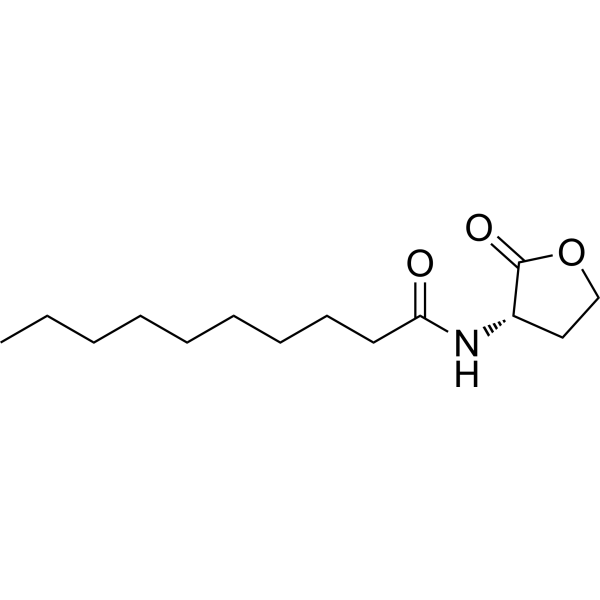
N-decanoyl-L-homoserine lactone (C10-HSL) is a N-acyl-homoserine lactone (AHL) N-decanoyl-L-homoserine lactone can inhibit primary root growth in Arabidopsis. N-decanoyl-L-homoserine lactone triggers a transient and immediate increase in the concentrations of cytosolic free Ca 2+ and reactive oxygen species (ROS), increases the activity of mitogen-activated protein kinase 6 (MPK6), and induces nitric oxide (NO) production in Arabidopsis roots .
loading...
    loading...
Cat. No.: HY-W015810
CAS No.: 617-94-7
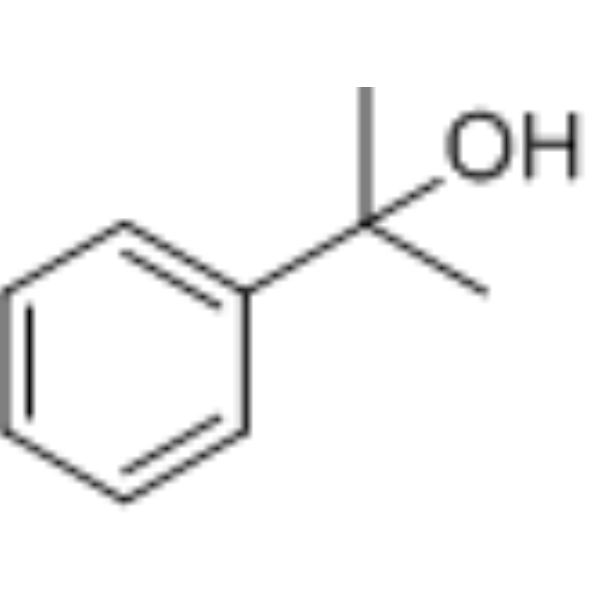
2-Phenyl-2-propanol is a volatile signaling compound released by rhizosphere microorganisms, and also a key product of the selective oxidation of cumene. 2-Phenyl-2-propanol alters primary root structure, regulates the expression of auxin and (±)-Jasmonic acid (HY-122464) responsive genes, and affects cell division. 2-Phenyl-2-propanol reduces the primary root length, lateral root number, lateral root density, and aboveground fresh weight of *Arabidopsis thaliana*. 2-Phenyl-2-propanol is commonly used in research related to cosmetics, pesticides, pharmaceuticals and other fields .
loading...
    loading...
Cat. No.: HY-136409R
CAS No.: 177315-87-6
Synonyms: C10-HSL (Standard)
Formoterol (hemifumarate hydrate) (Standard) is the analytical standard of Formoterol (hemifumarate hydrate). This product is intended for research and analytical applications. Formoterol hemifumarate hydrate is a selective, long-acting beta 2-adrenoceptor agonist. Formoterol is a bronchodilator used for the research of the asthma and chronic obstructive pulmonary disease (COPD). Formoterol hemifumarate hydrate induces mitochondrial biogenesis and promotes cognitive recovery after traumatic brain injury .
loading...
    loading...
Cat. No.: HY-W725041
CAS No.: 403640-27-7
Target:  

Herbicide

Research Areas:  

Others

Methiozolin is an oxazoline herbicide designed for the selective control of annual bluegrass in turfgrass. Methiozolin strongly inhibits the biosynthesis of cellulose and hemicellulose in corn root cells at low concentrations. Methiozolin inhibits recombinant Arabidopsis thaliana tyrosine aminotransferase, with a IC50 of approximately 200 µM. Methiozolin not only effectively controls vegetative growth but also significantly suppresses inflorescence formation, which helps reduce the seed bank .
loading...
    loading...
Cat. No.: HY-182408
CAS No.: 329072-88-0
Target:  

Glycosyltransferase

Research Areas:  

Others

Endosidin7 is a specific inhibitor for plant callose deposition during cytokinesis. Endosidin7 inhibits cytokinesis-specific callose deposition at the cell plate, disrupts cell plate maturation, and alters localization of cell plate-associated proteins during late cell plate development. Endosidin7 slows root growth and induces formation of cell wall stubs in Arabidopsis thaliana seedlings .
loading...
    loading...
Cat. No.: HY-W015810R
CAS No.: 617-94-7
2-Phenyl-2-propanol (Standard) is the analytical standard of 2-Phenyl-2-propanol (HY-W015810). This product is intended for research and analytical applications. 2-Phenyl-2-propanol is a volatile signaling compound released by rhizosphere microorganisms, and also a key product of the selective oxidation of cumene. 2-Phenyl-2-propanol alters primary root structure, regulates the expression of auxin and (±)-Jasmonic acid (HY-122464) responsive genes, and affects cell division. 2-Phenyl-2-propanol reduces the primary root length, lateral root number, lateral root density, and aboveground fresh weight of *Arabidopsis thaliana*. 2-Phenyl-2-propanol is commonly used in research related to cosmetics, pesticides, pharmaceuticals and other fields .
loading...
    loading...
Cat. No.: HY-D3384
AM4-65 is a red fluorescing styryl dye. AM4-65 can incorporate int plasma membranes to outline cell periphery and nascent cell plates .
loading...
    loading...
Cat. No.: HY-E71366
Research Areas:  

Metabolic Disease

Endo-1,4-β-D-glucanase is a glycoside hydrolase that cleaves internal β-1,4-glycosidic bonds in cellulose and related β-D-glucans (β-D-Glucan) (HY-139413). Endo-1,4-β-D-glucanase randomly cuts long, insoluble cellulose polymer chains into shorter, soluble fragments such as oligosaccharides, thereby paving the way for further digestion into glucose .
loading...
    loading...

