
35 Results for "

Aspergillus oryzae

" in MedChemExpress (MCE) Product Catalog:
Products (35)

35 Results for "Aspergillus oryzae" in MCE Product Catalog:

2
2 Cited Publications
Cat. No.: HY-W050154
CAS No.: 501-30-4
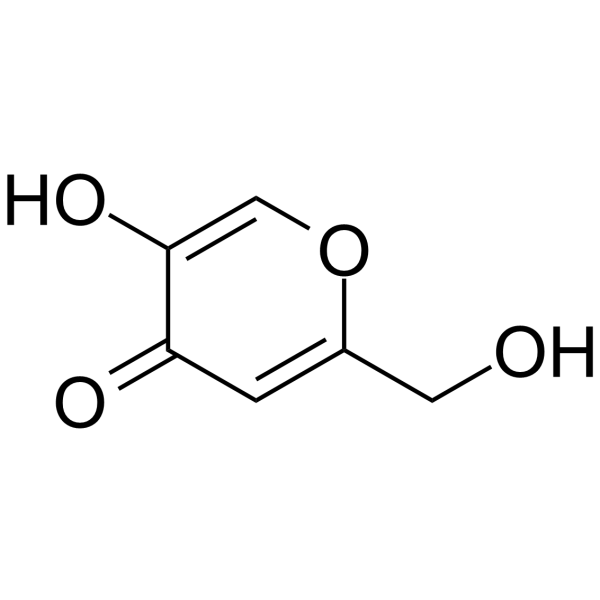
Kojic acid is a substance produced by Aspergillus oryzae that is orally effective and can also be absorbed transdermally. Kojic acid exhibits various biological activities, including anti-aging, anti-nematode, antimicrobial, antioxidant, and anti-inflammatory effects. Kojic acid is a Tyrosinase inhibitor with an Mushroom Tyrosinase IC50 of 182.7 μM. Kojic acid prevents melanin production by capturing copper ions that bind to the tyrosinase active site, thus inhibiting its activation. Kojic acid also suppresses the NF-κB and p21 signaling pathways in human keratinocytes. Kojic acid derivatives have anticancer activity .
loading...
    loading...
2
2 Cited Publications
Cat. No.: HY-101399
CAS No.: 7432-24-8
Purity:  99.82%
Synonyms: H-γ-Glu-Phe-OH; γ-Glutamylphenylalanine
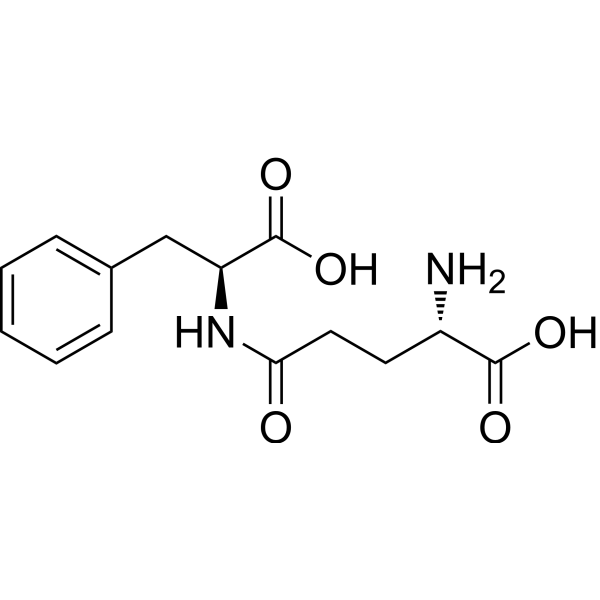
γ-Glu-Phe is synthesized by Bacillus amyloliquefaciens (GBA) and Aspergillus oryzae (GAO). γ-Glu-Phe or the post-enzymatic reaction mixture enhances the umami intensity of commercial soy sauce and model chicken broth .
loading...
    loading...
2
2 Cited Publications
Cat. No.: HY-101399A
CAS No.: 2828432-42-2
Purity:  99.50%
Synonyms: H-γ-Glu-Phe-OH TFA; γ-Glutamylphenylalanine TFA
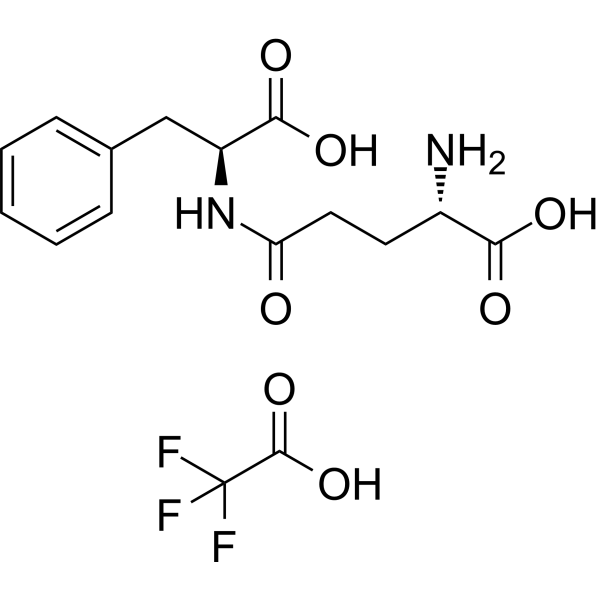
γ-Glu-Phe TFA (γ-Glutamylphenylalanine TFA) is synthesized by Bacillus amyloliquefaciens (GBA) and Aspergillus oryzae (GAO). γ-Glu-Phe TFA or the post-enzymatic reaction mixture enhances the umami intensity of commercial soy sauce and model chicken broth .
loading...
    loading...
1
1 Cited Publications
Cat. No.: HY-B2228
CAS No.: 9001-92-7
Proteinase, Aspergillus oryzae is a serine protease that hydrolyzes peptide bonds in protein substrates, preferring alkaline conditions (optimal pH 10.5). It efficiently degrades casein, poly-L-glutamic acid, and poly-L-lysine, with activity irreversibly inhibited by diisopropylfluorophosphate (DFP) and potato inhibitor. This enzyme catalyzes proteolysis via serine residues in its active site, finding applications in food processing (e.g., soy sauce fermentation), detergents, and leather industries due to its high yield in solid-state fermentation and cost-effective production.
loading...
    loading...
1
1 Cited Publications
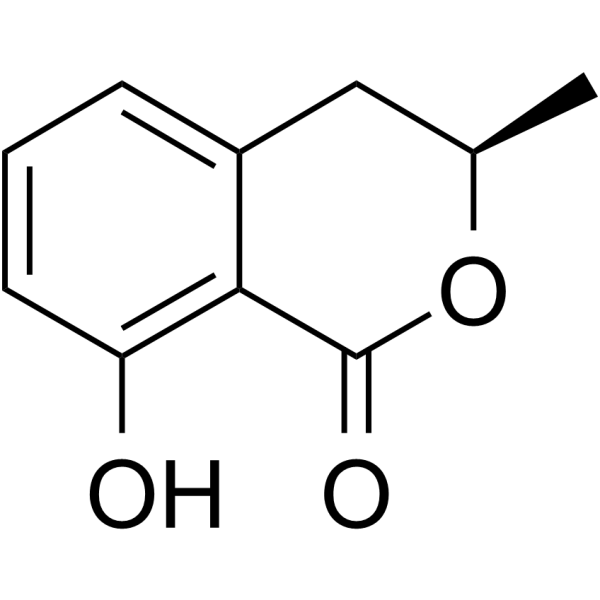
Cat. No.: HY-N3300
CAS No.: 480-33-1
Synonyms: (R)-Mellein
Mellein ((R)-Mellein) is an isocoumarin compound with antibacterial activity. Mellein inhibits the activity of HCV Protease, disrupts the cell wall of Xanthomonas sp., and acts as an insect trail pheromone. Mellein is applicable to research related to fungal infections, bacterial infections, and hepatitis C virus infections .
loading...
    loading...
Cat. No.: HY-P2773
CAS No.: 37288-25-8
Target:  

DNA/RNA Synthesis

Research Areas:  

Others

Nuclease S1, Aspergillus oryzae is a specific endonuclease that degrades single stranded DNA (ssDNA) and RNA. Nuclease S1 can also remove protruding single-strand ends from double-stranded DNA .
loading...
    loading...
Cat. No.: HY-P2762
CAS No.: 9001-19-8
Target:  

Amylases

Research Areas:  

Others

α-Amylase from Aspergillus oryzae is an amylase. α-Amylase from Aspergillus oryzae can be used for various biochemical studies .
loading...
    loading...
Cat. No.: HY-W011654
CAS No.: 5094-33-7
Synonyms: 4-Aminophenyl-beta-D-galactopyranoside, 98%
4-Aminophenyl-β-D-galactopyranoside, 98% is a highly efficient substrate for β-galactosidase. It is specifically hydrolyzed by this enzyme to release galactose and electroactive p-aminophenol. 4-Aminophenyl-β-D-galactopyranoside, 98% is widely used in colorimetric and electrochemical assays for detecting β-galactosidase activity and determining enzyme kinetics, such as in biosensing fields including cellular senescence, pathogen and contaminant detection. In addition, since β-galactosidase is often overexpressed in primary ovarian cancer, 4-Aminophenyl-β-D-galactopyranoside, 98% can also be applied to related research on primary ovarian cancer .
loading...
    loading...
Cat. No.: HY-P0229
CAS No.: 9026-12-4
Synonyms: Rnase T1
Target:  

DNA/RNA Synthesis

Research Areas:  

Others

Ribonulease T1, Aspergillus oryzae (Rnase T1), is commonly used in biochemical research. Ribonuclease T1 is an endonuclease that can specifically degrade single stranded RNA. Ribonuclease T1 can form nucleoside 2 ', 3 '-cyclic phosphoric acid intermediates to cut the phosphodiester bond between 3' -guanosine residues and adjacent nucleoside 5 '-OH groups to produce 3' -GMP terminal oligonucleotides .
loading...
    loading...
Cat. No.: HY-E70004
CAS No.: 9068-59-1
Research Areas:  

Others

Microbial neutral proteinase is a zinc-containing metalloproteinase mainly produced by Bacillus and fungi. Its catalytic activity is highly dependent on divalent cations, and it remains active within the pH range of 5-8. Microbial neutral proteinase can specifically cleave peptide bonds within polypeptide chains, thereby degrading macromolecular proteins into small peptides or amino acids. It can be applied in various industrial fields including food processing, brewing, detergents, and light industry .
loading...
    loading...
Cat. No.: HY-P2973
CAS No.: 9025-49-4
Synonyms: Aspergillus acid protease
Target:  

Proteasome

Research Areas:  

Others

Aspergillopepsin I (Aspergillus acid protease) is a metal-containing aspartic protease that catalyzes the hydrolysis of peptide bonds in soybean 7S globulin, soybean 11S globulin and various proteins, with broad specificity. Aspergillopepsin I is intended for use in wine production, where it hydrolyzes haze-forming proteins into small peptides to prevent turbidity during storage. Aspergillopepsin I can be used in studies related to soybean protein hydrolysis and wine production .
loading...
    loading...
Cat. No.: HY-W011911
CAS No.: 4178-93-2
L-Leucyl-4-nitroanilide is a chromogenic substrate suitable for activity assays of leucine aminopeptidase, and it can be used in studies related to the enzymatic properties of aminopeptidases .
loading...
    loading...
Cat. No.: HY-B2192A
CAS No.: 9000-92-4
Synonyms: Maltin
Research Areas:  

Others

Diastase, Aspergillus oryzae (Maltin) is a starch hydrolase derived from Aspergillus oryzae. Diastase, Aspergillus oryzae catalyzes starch hydrolysis through sequential stages, first producing dextrins, then glucose and maltose .
loading...
    loading...
Cat. No.: HY-137872
CAS No.: 16010-98-3
Purity:  99.97%
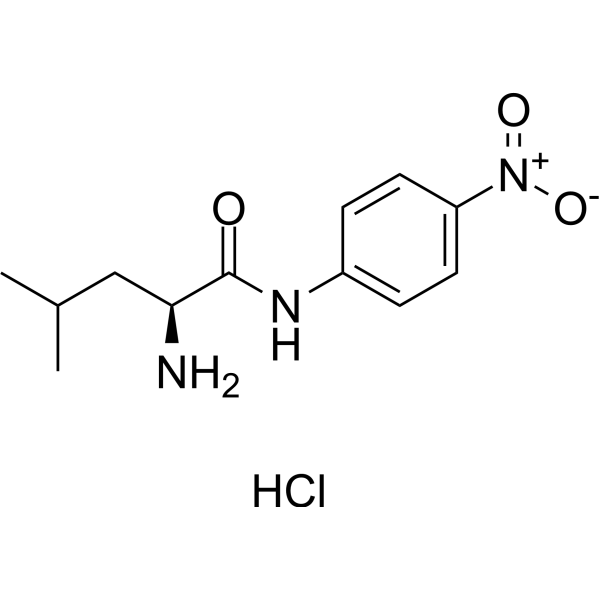
L-Leucyl-4-nitroanilide hydrochloride is a chromogenic substrate suitable for activity assays of leucine aminopeptidase, and it can be used in studies related to the enzymatic properties of aminopeptidases .
loading...
    loading...
Cat. No.: HY-101399R
CAS No.: 7432-24-8
Synonyms: H-γ-Glu-Phe-OH (Standard); γ-Glutamylphenylalanine (Standard)
Ceftezole (sodium) (Standard) is the analytical standard of Ceftezole (sodium). This product is intended for research and analytical applications. Ceftezole sodium (CTZ sodium) is a broad-spectrum cephem antibiotic against many species of gram-positive and gram-negative bacteria. Ceftezole sodium (CTZ sodium) is an alpha-glucosidase inhibitor with in vivo anti-diabetic activity .
loading...
    loading...
Cat. No.: HY-126795
CAS No.: 483305-08-4
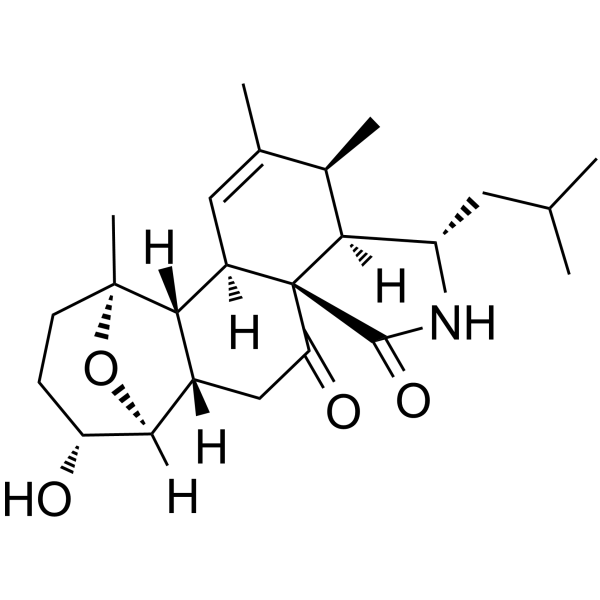
Aspergillin PZ is a novel isoindole-alkaloid from Aspergillus awamori. Aspergillin PZ induces conidia of P. oryzae to deform moderately .
loading...
    loading...
Cat. No.: HY-101399SA
Synonyms: H-γ-Glu-Phe-OH-13C9,15N TFA; γ-Glutamylphenylalanine-13C9,15N TFA
γ-Glu-(Phe-13C9,15N) (γ-Glutamylphenylalanine-13C9,15N) TFA is the 13C- and 15N-labeled γ-Glu-Phe TFA (HY-101399A). γ-Glu-Phe TFA is synthesized by Bacillus amyloliquefaciens (GBA) and Aspergillus oryzae (GAO). γ-Glu-Phe TFA or the post-enzymatic reaction mixture enhances the umami intensity of commercial soy sauce and model chicken broth .
loading...
    loading...
Cat. No.: HY-N7698
CAS No.: 2706-65-2
Research Areas:  

Others

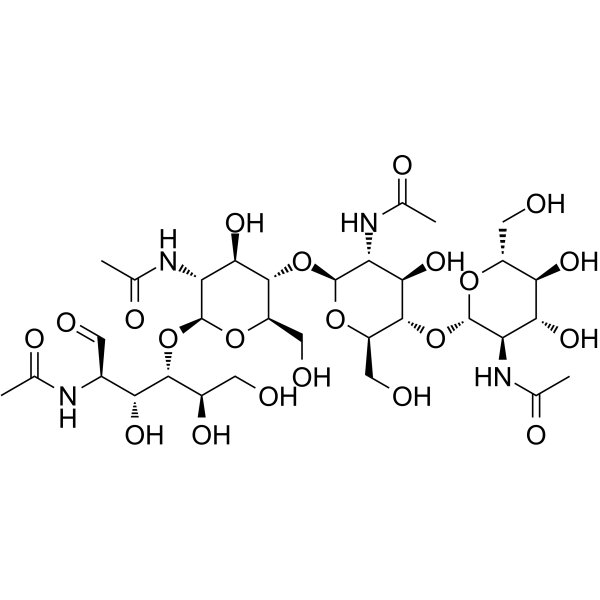
Tetra-N-acetylchitotetraose is a linear chitosan oligosaccharide. Tetra-N-acetylchitotetraose is a component of the hpo-chitoo gosacchaπdes (LCOs) secreted from Rhizobia. Tetra-N-acetylchitotetraose is also a substrate for the Rhizobium leguminosarum nodulation protein NodB, a CO deacetylase .
loading...
    loading...
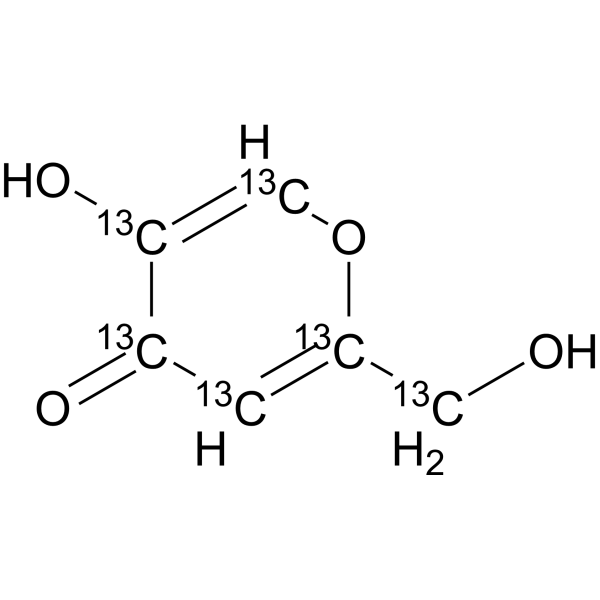
Cat. No.: HY-W050154S
Kojic acid- 13C6 is 13C labeled Kojic acid (HY-W050154). Kojic acid is a substance produced by Aspergillus oryzae that is orally effective and can also be absorbed transdermally. Kojic acid exhibits various biological activities, including anti-aging, anti-nematode, antimicrobial, antioxidant, and anti-inflammatory effects. Kojic acid is a Tyrosinase inhibitor with an Mushroom Tyrosinase IC50 of 182.7 μM. Kojic acid prevents melanin production by capturing copper ions that bind to the tyrosinase active site, thus inhibiting its activation. Kojic acid also suppresses the NF-κB and p21 signaling pathways in human keratinocytes. Kojic acid derivatives have anticancer activity .
loading...
    loading...
Cat. No.: HY-W050154R
CAS No.: 501-30-4
Kojic acid (Standard) is the analytical standard of Kojic acid. This product is intended for research and analytical applications. Kojic acid is a substance produced by Aspergillus oryzae, with various biological activities including antitumor, insecticidal, antibacterial, antioxidant, and radioprotective effects. Kojic acid exhibits tyrosinase inhibition activity by capturing copper ions that bind to the active site of tyrosinase, preventing its activation. Tyrosinase is a key enzyme in the biosynthesis of melanin, so kojic acid can block melanin production. Additionally, kojic acid shows potential inhibition of NF-κB activity in human keratinocytes, which may also be related to the anti-melanogenic effect induced by kojic acid. Kojic acid is effective when administered orally and can also be absorbed transdermally. Nano-carrier systems prepared with kojic acid demonstrate effective delivery of anticancer drugs. Kojic acid holds promise for research in cancer, infectious diseases, and skin whitening among other fields .
loading...
    loading...

