21 Results for "

CDK6/Cyclin D1

" in MedChemExpress (MCE) Product Catalog:
Products (21)

21 Results for "CDK6/Cyclin D1" in MCE Product Catalog:

2
2 Cited Publications
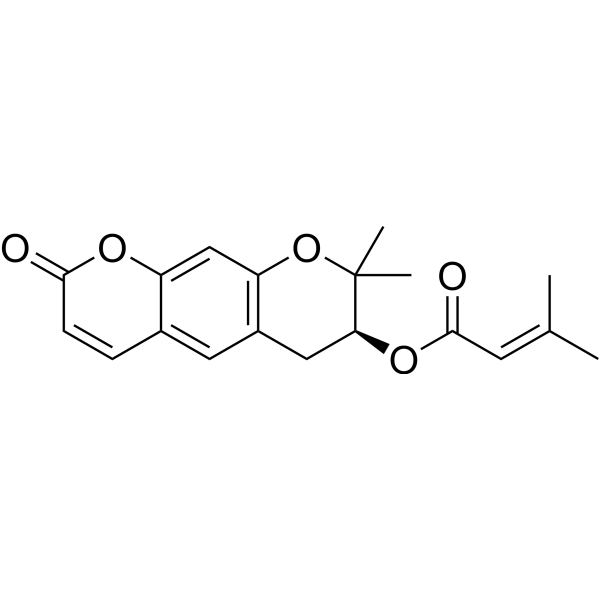
Cat. No.: HY-18981
CAS No.: 5928-25-6
Synonyms: (+)-Decursin
Decursin ((+)-Decursin) is a potent anti-tumor agent. Decursin also is a cytotoxic agent and a potent protein kinase C activator. Decursin induces apoptosis and cell cycle arrest at G1 phase. Decursin decreases the expression of CDK2, CDK4, CDK6, cyclin D1 protein at 48 h. Decursin inhibits cell proliferation and migration. Decursin shows anti-tumor, anti-inflammatory and analgesic activities .
loading...
    loading...
2
2 Cited Publications
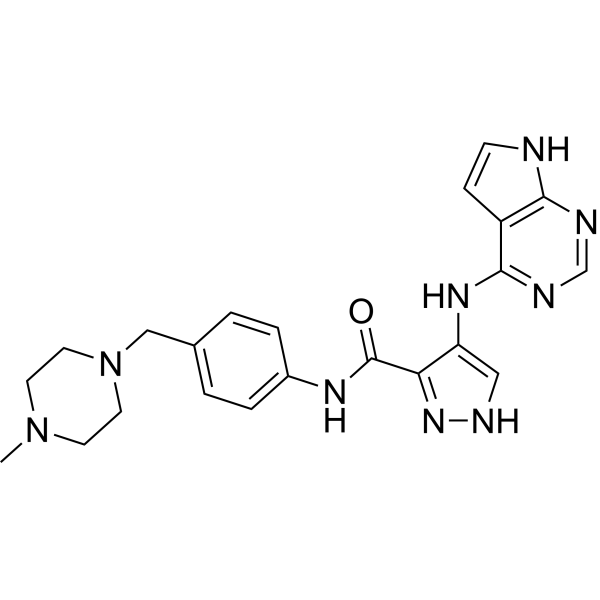
Cat. No.: HY-111361
CAS No.: 1429515-59-2
Purity:  98.72%
Synonyms: LT-171-861
Target:  

CDK FLT3

Research Areas:  

Cancer

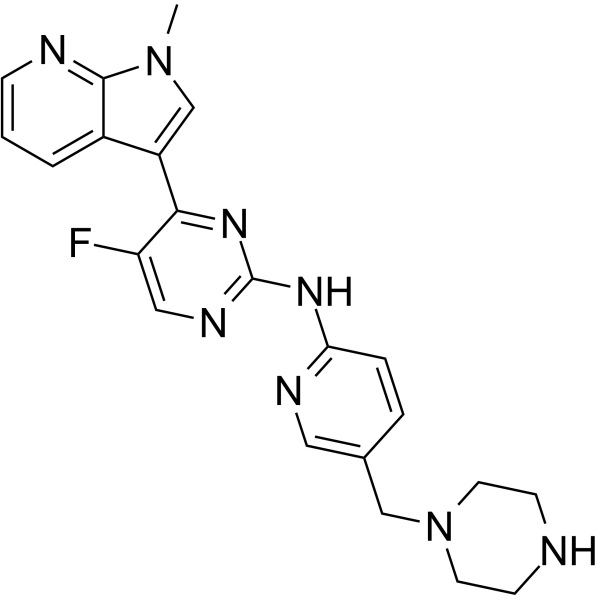
FN-1501 is a potent inhibitor of FLT3 and CDK, with IC50s of 2.47, 0.85, 1.96, and 0.28 nM for CDK2/cyclin A, CDK4/cyclin D1, CDK6/cyclin D1 and FLT3, respectively. FN-1501 has anticancer activity.
loading...
    loading...
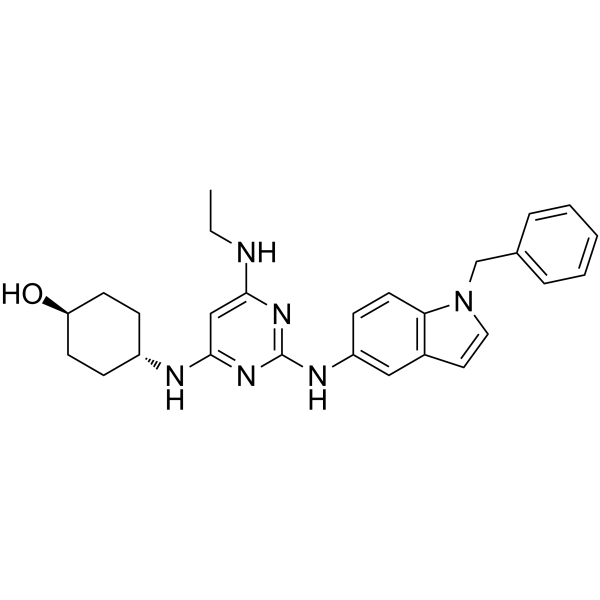
Cat. No.: HY-136726
CAS No.: 359886-84-3
Purity:  98.12%
Synonyms: CINK4
Target:  

CDK

Research Areas:  

Cancer

GP-82996 (CINK4) is a pharmacological inhibitor of CDK4/6. GP-82996 has IC50s of 1.5, 5.6 and 25 μM for CDK4/cyclin D1, CDK6/cyclin D1 and Cdk5/p35, respectively. GP-82996 induces the apoptosis of cancer cells U2OS. GP-82996 can be used in the research of cancer .
loading...
    loading...
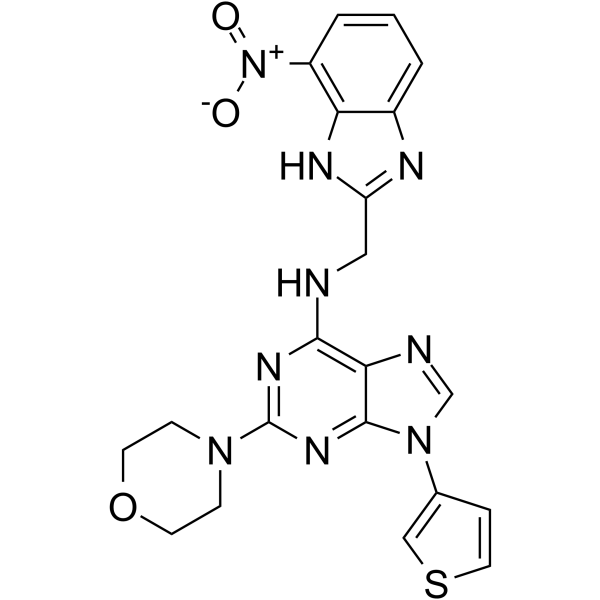
Cat. No.: HY-108907
CAS No.: 1446715-47-4
Target:  

Casein Kinase

Research Areas:  

Cancer

SR-1277 is a potent, selective and ATP competitive CK1δ/ε inhibitor, with IC50s of 49 nM and 260 nM, respectively. SR-1277 also inhibits FLT3, CDK4/cyclin D1, CDK6/cyclin D3 and CDK9/cyclin K, with IC50s of 305 nM, 1340 nM, 311 nM and 109 nM, respectively. SR-1277 can be used for the research of cancer .
loading...
    loading...
Cat. No.: HY-P1109
CAS No.: 189064-08-2
Target:  

CDK

Research Areas:  

Cancer

[Ala92]-p16 (84-103) is a peptide derived from the p16CDKN2/INK4a (p16) tumor suppressor protein. [Ala92]-p16 (84-103) binds to both cdk4 and cdk6 and inhibits cdk4-cyclin D1 kinase activity in vitro (IC50: 1.5 μM). [Ala92]-p16 (84-103) blocks cell cycle progression through the G1 phase .
loading...
    loading...
Cat. No.: HY-115992
CAS No.: 2688098-02-2
Target:  

CDK

Research Areas:  

Cancer

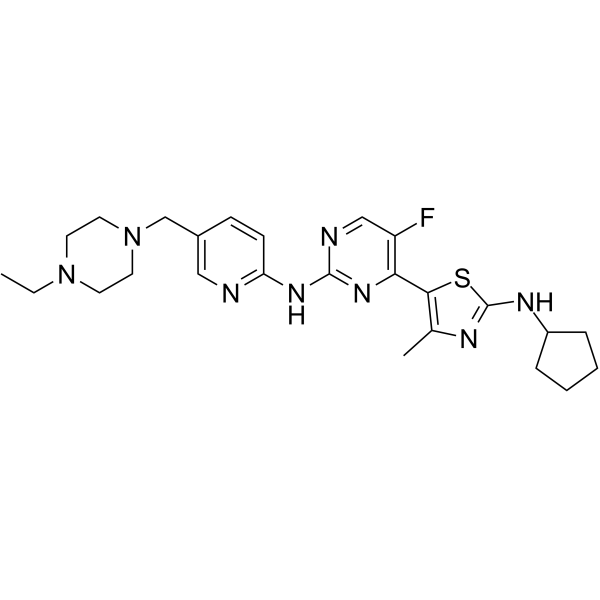
CDK4/6-IN-9 (compound 10) is a selective CDK4/6 inhibitor with an IC50 of 905 nM for CDK6/cyclin D1. CDK4/6-IN-9 has the potential for multiple myeloma (MM) research .
loading...
    loading...
Cat. No.: HY-147409
CAS No.: 2075750-05-7
Target:  

CDK

Research Areas:  

Cancer

Ulecaciclib is an orally activitive inhibitor of cyclin-dependent kinase (CDK), with Ki values of 0.62 μM (CDK2/Cyclin A), 0.2 nM (CDK4/Cyclin D1), 3 nM (CDK6/Cyclin D3), and 0.63 μM (CDK7/Cyclin H), respectively. Ulecaciclib can cross blood brain barrier and has good pharmacokinetic characteristics .
loading...
    loading...
Cat. No.: HY-151898
CAS No.: 2699091-15-9
Target:  

CDK

Research Areas:  

Cancer

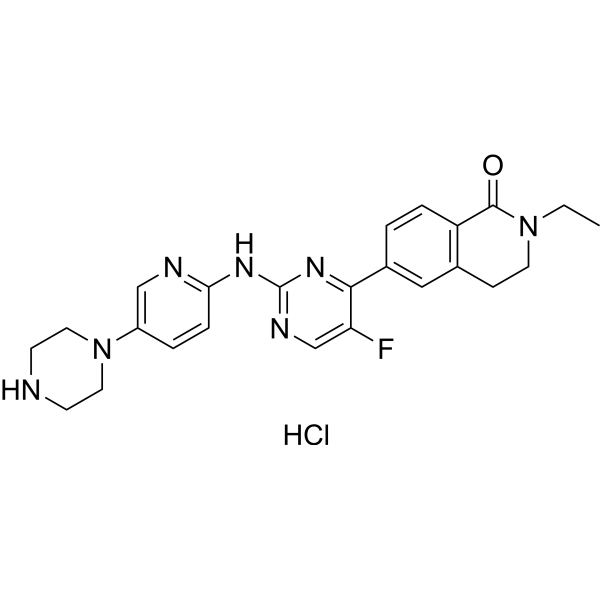
CDK4/6-IN-14 is a potent and highly selective CDK4 and CDK6 (CDK) inhibitor with IC50s of 10 nM and 16 nM, respectively. CDK4/6-IN-14 exhibits more than 60-fold selectivity over CDKs 1, 2, 7, and 9, and shows high selectivity among other 205 kinases .
loading...
    loading...
Cat. No.: HY-172234
CAS No.: 2516247-98-4
Target:  

CDK

Research Areas:  

Cardiovascular Disease Cancer

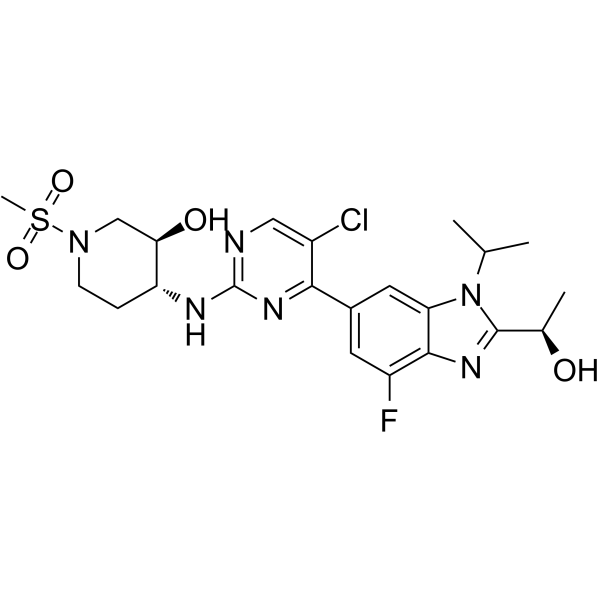
PF-06842874 is a CDK4/Cyclin D1 and CDK6/Cyclin D3 inhibitor (Ki values are 62 and 130 nM, respectively). PF-06842874 can be used in the research of pulmonary arterial hypertension and cancer .
loading...
    loading...
Cat. No.: HY-139449
CAS No.: 2380321-50-4
Target:  

CDK

Research Areas:  

Cancer

CDK4/6-IN-5 is a potent CDK4 and CDK6 inhibitor with Kis of 0.2 and 4.4 nM for CDK4/Cyclin D1 and CDK6/Cyclin D3, respectively . (from patent WO2019207463A1 example A93).
loading...
    loading...
Cat. No.: HY-164906
CAS No.: 2488892-07-3
Target:  

PROTACs CDK

Research Areas:  

Cancer

TMX-2138 is a CDK PROTAC degrader, with IC50 values against different targets as follows: CDK1 (IC50 = 8.7 nM), CDK2 (IC50 = 10.9 nM), CDK5 (IC50 = 7.0 nM), CDK4 (IC50 = 901.0 nM), CDK6 (IC50 = 465.0 nM), CDK7 (IC50 = 286.0 nM), and CDK9 (IC50 = 25.7 nM). TMX-2138 promotes the ubiquitination of CDK and induces its degradation via the proteasomal pathway. TMX-2138 can be used in ovarian cancer research .
loading...
    loading...
Cat. No.: HY-18981R
CAS No.: 5928-25-6
Synonyms: (+)-Decursin (Standard)
Decursin (Standard) is the analytical standard of Decursin. This product is intended for research and analytical applications. Decursin ((+)-Decursin) is a potent anti-tumor agent. Decursin also is a cytotoxic agent and a potent protein kinase C activator. Decursin induces apoptosis and cell cycle arrest at G1 phase. Decursin decreases the expression of CDK2, CDK4, CDK6, cyclin D1 protein at 48 h. Decursin inhibits cell proliferation and migration. Decursin shows anti-tumor, anti-inflammatory and analgesic activities [4].
loading...
    loading...
Cat. No.: HY-111361R
CAS No.: 1429515-59-2
Synonyms: LT-171-861 (Standard)
Research Areas:  

Cancer

FN-1501 (Standard) is the analytical standard of FN-1501 (HY-111361). This product is intended for research and analytical applications. FN-1501 is a potent inhibitor of FLT3 and CDK, with IC50s of 2.47, 0.85, 1.96, and 0.28 nM for CDK2/cyclin A, CDK4/cyclin D1, CDK6/cyclin D1 and FLT3, respectively. FN-1501 has anticancer activity.
loading...
    loading...
Cat. No.: HY-18981S
Synonyms: (+)-Decursin-d6
Decursin-d6 ((+)-Decursin-d6) is the deuterium labeled Decursin (HY-18981). Decursin ((+)-Decursin) is a potent anti-tumor agent. Decursin also is a cytotoxic agent and a potent protein kinase C activator. Decursin induces apoptosis and cell cycle arrest at G1 phase. Decursin decreases the expression of CDK2, CDK4, CDK6, cyclin D1 protein at 48 h. Decursin inhibits cell proliferation and migration. Decursin shows anti-tumor, anti-inflammatory and analgesic activities .
loading...
    loading...
Cat. No.: HY-187643
CAS No.: 304911-07-7
CGC-11144 hydrochloride is a polyamine analog. CGC-11144 hydrochloride reduces the kinase activities of CDK4, CDK2 and CDK6, induces activation of the p53 pathway and p53-dependent p21 expression, and mediates cell cycle regulation, growth inhibition and apoptosis. CGC-11144 hydrochloride induces G1 phase cell cycle arrest, downregulates cyclin D1 and cyclin B1, upregulates cyclin E, induces dephosphorylation of pRb, and inhibits ERα-mediated transcriptional activity by disrupting the DNA binding of Sp1/Sp3 to the ERα promoter, while also stimulating activation of the JNK/AP-1 pathway. CGC-11144 hydrochloride can be used in research related to breast cancer, choroidal neovascularization and cancer .
loading...
    loading...
Cat. No.: HY-113720
CAS No.: 1041469-97-9
RKS262 is an orally active cyclin/CDK inhibitor. RKS262 is also an apoptosis inducer and cell cycle regulator, exhibiting cytotoxic activity against cancer cells. RKS262 induces caspase-3 cleavage, ROS generation, SAPK/JNK activation, and upregulates the expression of p53, Bid, Bad, Bok, and p27. RKS262 inhibits the expression of Bcl-2, Mcl-1, Bcl-xL, p21, cyclin D1, cyclin B1, cdc-2, cyclin D4, and DNA-pk KU-80 subunit. RKS262 suppresses the phosphorylation of the IGF-1R/PI3K/PKC pathway, ras oncogene activity, and Cdk-6, while increasing total Akt expression. RKS262 induces G2/M or S phase cell cycle arrest, disrupts mitochondrial transmembrane potential, and reduces tumor burden in xenograft models. RKS262 is used in research on neuroblastoma and ovarian cancer .
loading...
    loading...
Cat. No.: HY-181727
Research Areas:  

Cancer

AR/AR-V7 degrader-1 is an orally active AR and AR-V7 degrader. AR/AR-V7 degrader-1 disrupts the interaction between AR/AR-V7 and HSP90, leading to their ubiquitination and degradation in castration-resistant prostate cancer cells. AR/AR-V7 degrader-1 regulates the expression of cell cycle-related proteins in prostate cancer cells (downregulates CDK4, CDK6, Cyclin D1, Cyclin E1; upregulates P21) and induces G0/G1 phase arrest. AR/AR-V7 degrader-1 inhibits the proliferation and migration of prostate cancer cells. AR/AR-V7 degrader-1 suppresses the growth of castration-resistant prostate cancer tumors in nude mice and induces the degradation of AR and AR-V7 in tumor tissues. AR/AR-V7 degrader-1 is applicable to the research of castration-resistant prostate cancer .
loading...
    loading...
Cat. No.: HY-N11231
CAS No.: 7176-02-5
Fucoxanthinol, a carotenoid, is a deacetylated Fucoxanthin (HY-N2302) metabolite with oral activity, and inhibits rat pancreatic lipase with an IC50 of 764 nM. Fucoxanthinol reduces expression of Bcl-2, Bcl-xL, survivin, XIAP, cIAP2, cyclin D1, cyclin D2, cyclin E, CDK4, CDK6, β-catenin, JunD, PPARγ, and induces GADD45α expression. Fucoxanthinol activates caspase-3, caspase-8, caspase-9, Nrf2/Keap1/ARE pathway, and inhibits activation of Akt, NF-κB, AP-1, PDPK1, GSK3β phosphorylation. Fucoxanthinol induces apoptosis, G0/G1 cell cycle arrest, inhibits cancer cell viability, proliferation, migration, invasiveness, tumour growth, adipocyte differentiation, oxidative stress, neurotoxicity, triglyceride absorption, angiogenesis, and obesity-induced inflammation. Fucoxanthinol can be used for the research of osteosarcoma, leukemia, lymphoma, adult T-cell leukemia, prostate cancer, colon cancer, breast cancer, hypertriglyceridaemia, Alzheimer’s disease, Parkinson’s disease, obesity, insulin resistance, malignant melanoma, and type II diabetes .
loading...
    loading...
Cat. No.: HY-184884
CAS No.: 2498658-20-9
Target:  

CDK

Research Areas:  

Cancer

CDK2-IN-61 is a highly selective CDK2 inhibitor with a human IC50 of 0.25 nM. CDK2-IN-61 can be used in cancer-related research .
loading...
    loading...
Cat. No.: HY-181130
CAS No.: 1414873-26-9
Target:  

CDK Apoptosis

Research Areas:  

Cancer

Anticancer agent 299 (compound P12) is a cell-cycle inhibitor, senescence inducer, apoptosis inducer, and antiproliferative agent. Anticancer agent 299 exhibits selective activity against cancer cells with minimal effects on non-tumoral chondrocyte cells at relevant concentrations. Anticancer agent 299 can be used for the research of ER+/HER2− breast cancer and BRAF-mutant melanoma .
loading...
    loading...