Search Result
Results for "
Camphor
" in MedChemExpress (MCE) Product Catalog:
3
Biochemical Assay Reagents
2
Isotope-Labeled Compounds
| Cat. No. |
Product Name |
Target |
Research Areas |
Chemical Structure |
-
- HY-N0038
-
Alantolactone
Maximum Cited Publications
10 Publications Verification
(+)-Alantolactone; Alant Camphor; Inula Camphor
|
STAT
Apoptosis
TGF-beta/Smad
|
Cancer
|
|
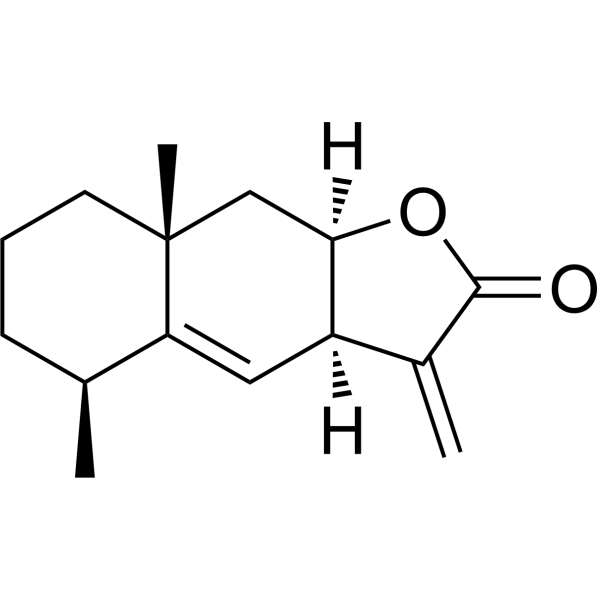
Alantolactone is a selective STAT3 inhibitor, with potent anticancer activity. Alantolactone induces apoptosis in cancer .
|
-
-
- HY-N0808
-
-
-
- HY-122808
-
|
|
mGluR
NF-κB
AP-1
|
Metabolic Disease
|
|
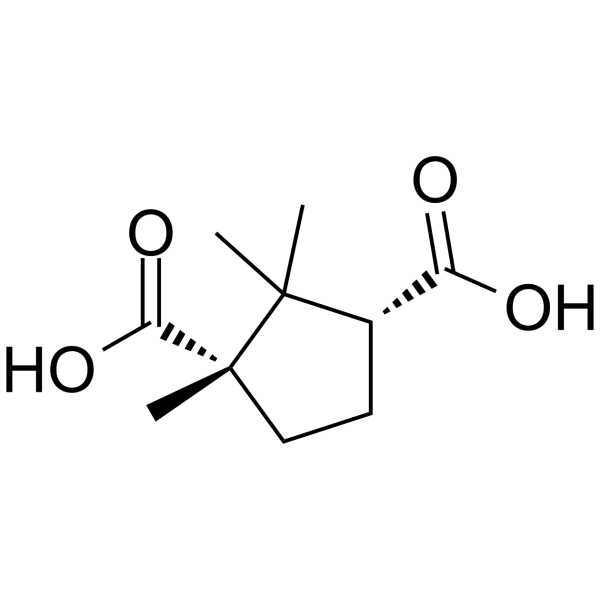
(-)-Camphoric acid is the less active enantiomer of Camphoric acid. Camphoric acid induces glutamate receptor expression. Camphoric acid also significantly induces the activation of NF-κB and AP-1. Camphoric acid significantly stimulates the differentiation of mouse osteoblastic MC3T3-E1 subclone 4 cells. Camphoric acid has weak regulatory function towards glutamate receptors. Camphoric acid can induce mRNA expression of glutamate signaling molecules and activate transcription factors, thereby stimulating osteoblast differentiation .
|
-
-
- HY-B0900
-
|
Anise Camphor; p-Propenylanisole; Isoestragole
|
Environmental Pollutants
Apoptosis
NF-κB
Fungal
Bacterial
MMP
|
Infection
Neurological Disease
Inflammation/Immunology
Cancer
|
|
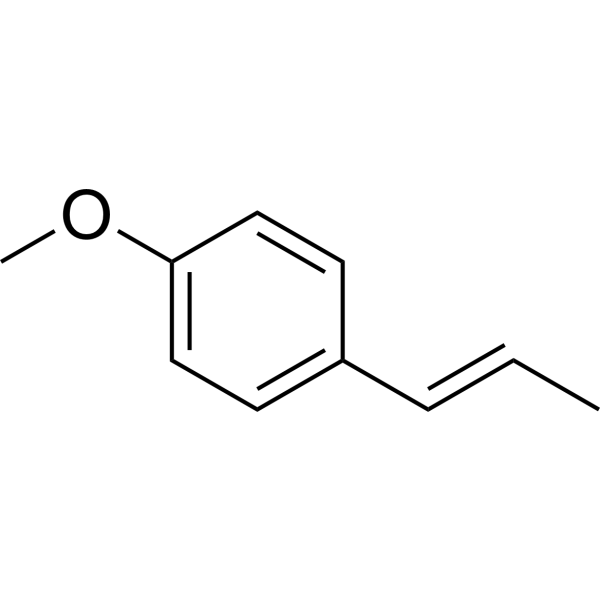
Anethole is a type of orally active aromatic compound that is widely found in nature and used as a flavoring agent. Anethole possesses anticancer, anti-inflammatory, antioxidant, antibacterial, antifungal, anesthetic, estrogenic, central nervous system depressant, hypnotic, insecticidal, and gastroprotective effects. Anethole can be used in the study of oxidative stress-related skin diseases and prostate cancer .
|
-
-
- HY-N0367
-
|
(E)-Anethole
|
Environmental Pollutants
Endogenous Metabolite
|
Cardiovascular Disease
Metabolic Disease
Endocrinology
Cancer
|
|
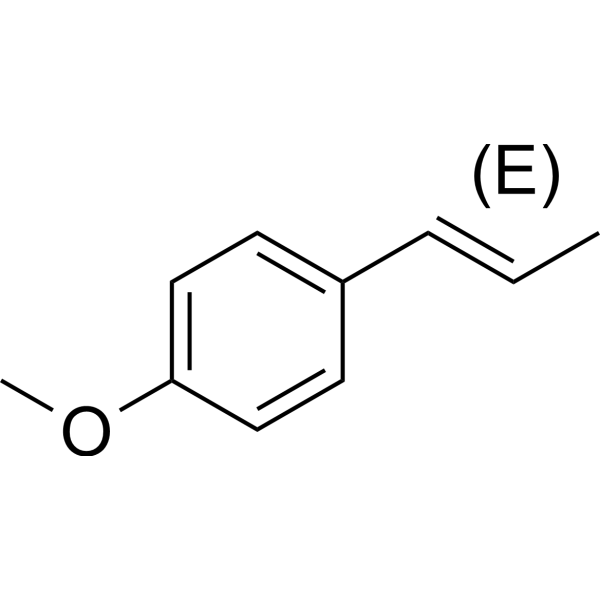
Trans-Anethole ((E)-Anethole) is an orally active phenylpropene derivative found in Foeniculum vulgare that is estrogenic at low concentrations and cytotoxic at high concentrations in tumor cell lines. Trans-Anethole also has anti-aflatoxin, anti-thrombotic and anti-diabetic activities. Trans-Anethole is an important odor component in plants such as fennel, myrtle, liquorice, and camphor .
|
-
-
- HY-17587
-
|
4-MBC; Enzacamene
|
Apoptosis
PI3K
Akt
ERK
|
Metabolic Disease
|
|
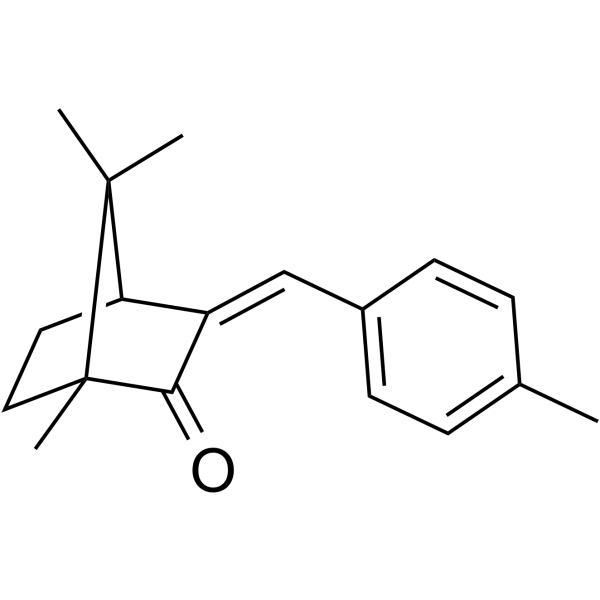
4-Methylbenzylidene camphor (4-MBC) is an endocrine disrupter that produces estrogen-like effects. 4-Methylbenzylidene camphor decreases the proliferation of human trophoblast cells and induces apoptosis. 4-Methylbenzylidene camphor activates PI3K/AKT and ERK1/2 signaling pathways and elevates intracellular ROS production. 4-Methylbenzylidene camphor is a ultraviolet (UV) filter and may hamper normal placental formation during early pregnancy .
|
-
-
- HY-B1173
-
|
D-(+)-Camphor; (1R)-(+)-Camphor
|
Environmental Pollutants
Bacterial
|
Neurological Disease
Inflammation/Immunology
Cancer
|
|
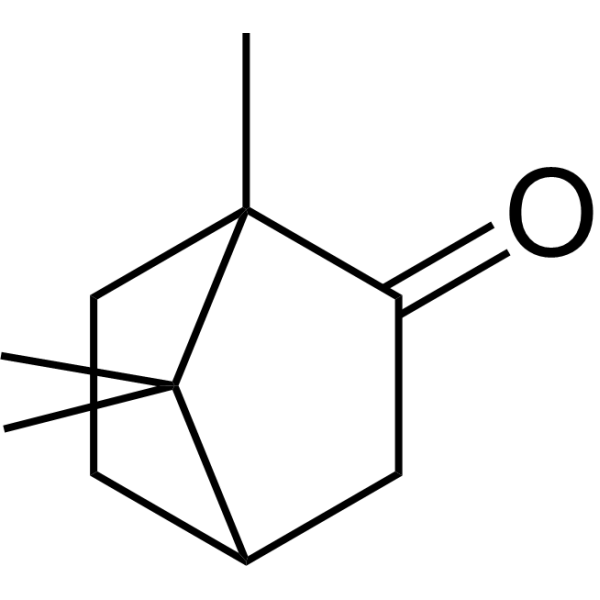
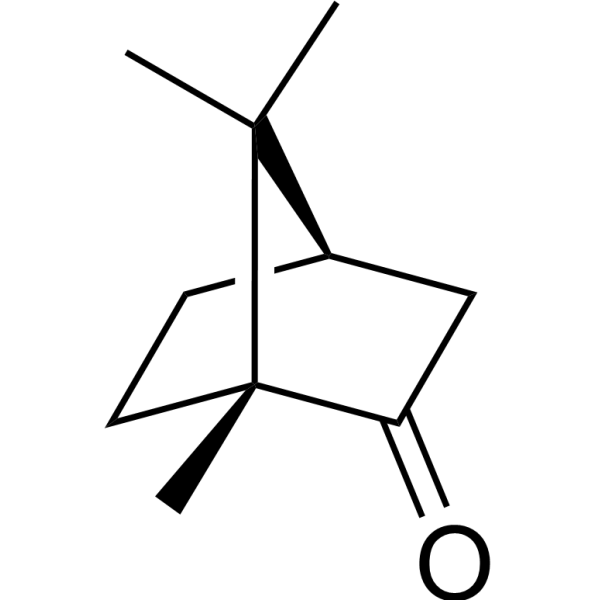
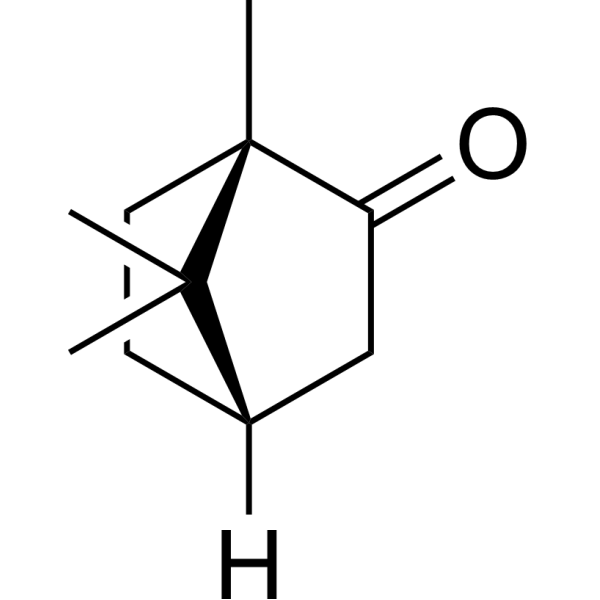
(+)-Camphor (D-(+)-Camphor; (1R)-(+)-Camphor) is an isomer of Camphor. Camphor is an agonist of monoterpenoid transient receptor potential (TRP) channels (such as TRPV1, TRPV3, TRPM8) and an inhibitor of TRPA1 channels. Camphor's derivatives have multiple biological activities, including antibacterial, antiviral, antioxidant, analgesic and anticancer. Camphor can selectively activate cold-sensitive TRP channels and inhibit TRPA1-mediated nociceptive signals. Camphor stimulates the cold-sensing nerve endings in the skin and regulates the activity of ion channels to exert analgesic, anti-inflammatory and anti-itching effects. It also has anti-proliferative and anti-mutagenic activities on tumor cells, which may be related to inhibiting ribosome function or inducing cell apoptosis. Camphor can be absorbed through the skin and (+)-Camphor can be used in the study of muscle and joint pain and inflammation .
|
-
-
- HY-16182
-
|
|
Biochemical Assay Reagents
|
Others
|
|
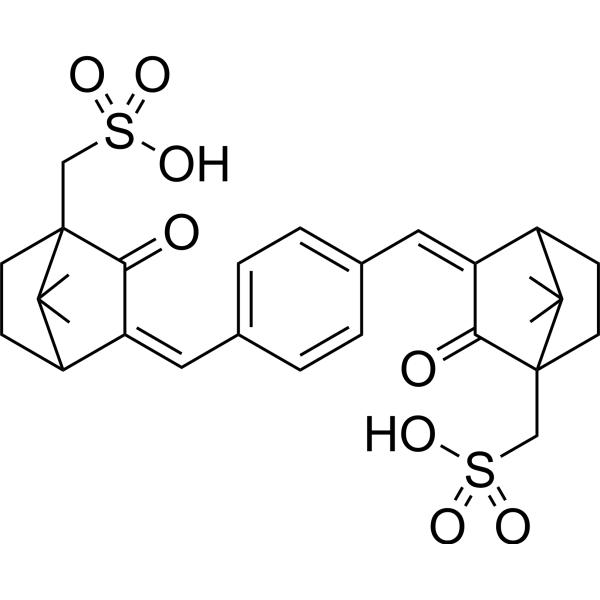
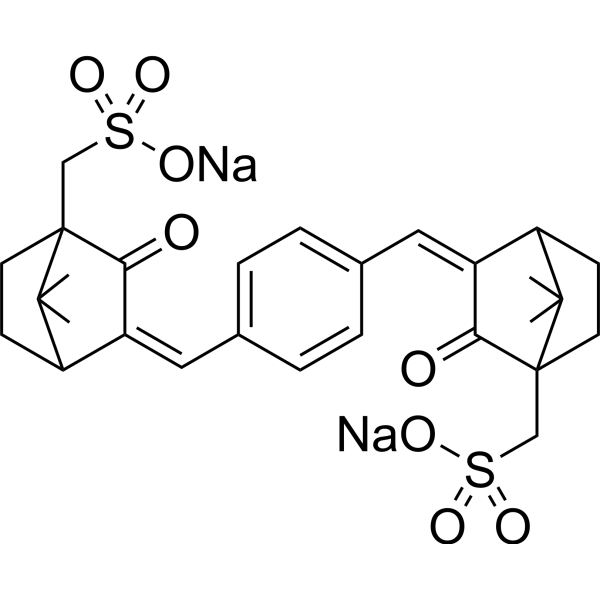
Ecamsule is a broad-spectrum UVA filter that can be used in sunscreen product. Ecamsule reduces biological damage caused by solar radiation such as pyrimidine dimer formation, p53 protein accumula-tion, or collagenase 2 expression. Ecamsule has the potential for the research of polymorphous light eruption (PMLE) .
|
-
-
- HY-16182A
-
|
|
Biochemical Assay Reagents
|
Others
|
|
Ecamsule disodium is a broad-spectrum UVA filter that can be used in sunscreen product. Ecamsule reduces biological damage caused by solar radiation such as pyrimidine dimer formation, p53 protein accumula-tion, or collagenase 2 expression .
|
-
-
- HY-W012218
-
|
(±)-10-Camphorsulfonic acid
|
Biochemical Assay Reagents
|
Others
|
|
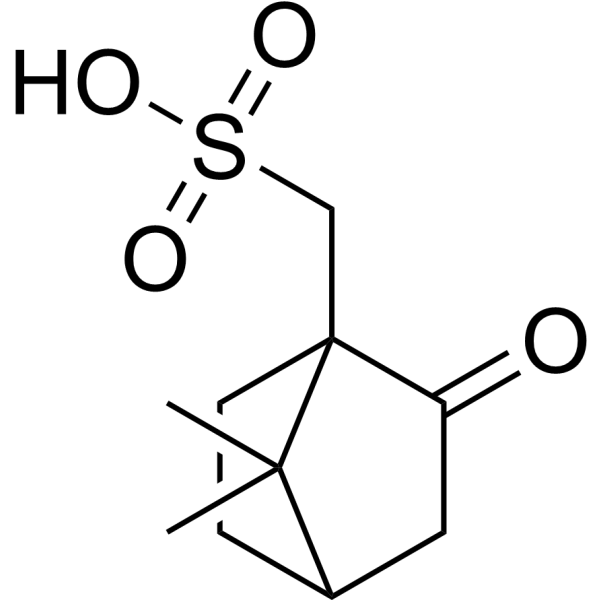
(±)-Camphor-10-sulfonic acid is a racemate of Camphor-10-sulfonic acid. (±)-Camphor-10-sulfonic acid can be used as an organocatalyst in performing a huge array of organic transformations .
|
-
-
- HY-114771
-
|
|
Drug Intermediate
|
Inflammation/Immunology
|
|
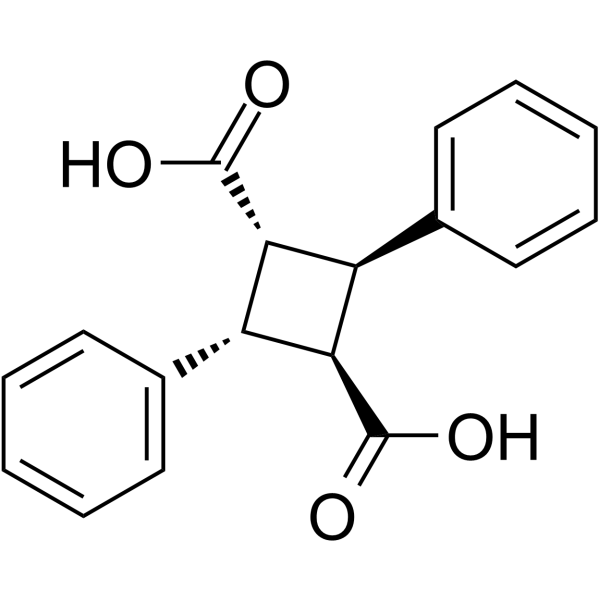
α-Truxillic acid is form by the dimerization of two molecules of α-trans-cinnamic acid, with anti-inflammatory activities. α-Truxillic acid has no analgesic activity, but its derivatives bound to camphor fragments exhibit significant activity in the peripheral analgesic model (writhing test) .
|
-
-
- HY-N0808R
-
|
(±)-Camphor (Standard)
|
Reference Standards
TRP Channel
Influenza Virus
|
Infection
Inflammation/Immunology
Cancer
|
|
Camphor (Standard) is the analytical standard of Camphor. This product is intended for research and analytical applications. Camphor ((±)-Camphor) is a topical anti-infective and anti-pruritic and internally as a stimulant and carminative. However, Camphor is poisonous when ingested. Antiviral, antitussive, and anticancer activities . Camphor is a TRPV3 agonist .
|
-
-
- HY-W587405
-
|
Methyl (1S)-(+)-10-Camphorsulfonate
|
Drug Intermediate
|
Others
|
|
Camphor sulfonic acid methyl ester (Methyl (1S)-(+)-10-camphorsulfonate) is a compound related to Camphor (HY-N0808) and can be used for the synthesis of 1S-(+)-camphorsulfonic acid .
|
-
-
- HY-N0278A
-
|
(Rac)-Pulsatilla Camphor; (Rac)-Anemonine
|
PKC
NO Synthase
|
Inflammation/Immunology
|
|
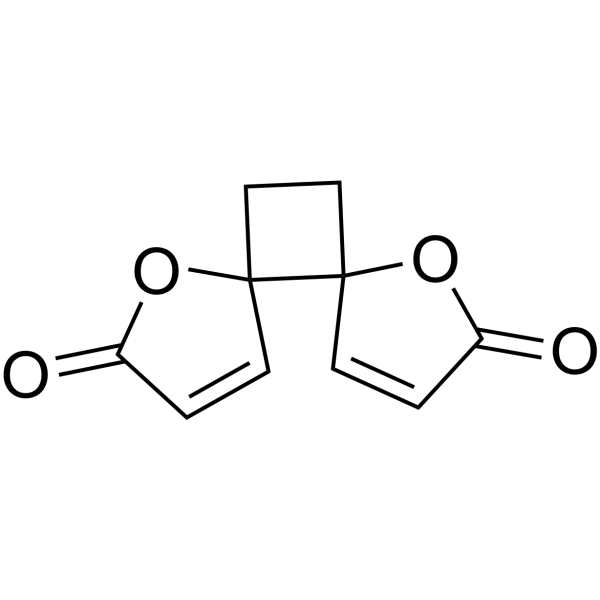
(Rac)-Anemonin ((Rac)-Pulsatilla camphor) is the diastereoisomer of Anemonin (HY-N0278). Anemonin (Pulsatilla camphor), a selective iNOS inhibitor, is also a PKC-θ inhibitor. Anemonin can significantly inhibit the translation or protein stability of PKC-θ protein. Anemonin also ameliorates dextran sodium sulfate-induced acute ulcerative colitis (UC) in mice. Anemonin can be used in the research of inflammation-related diseases .
|
-
-
- HY-N0278
-
|
Pulsatilla Camphor; Anemonine; trans-Anemonin
|
PKC
NO Synthase
|
Inflammation/Immunology
|
|
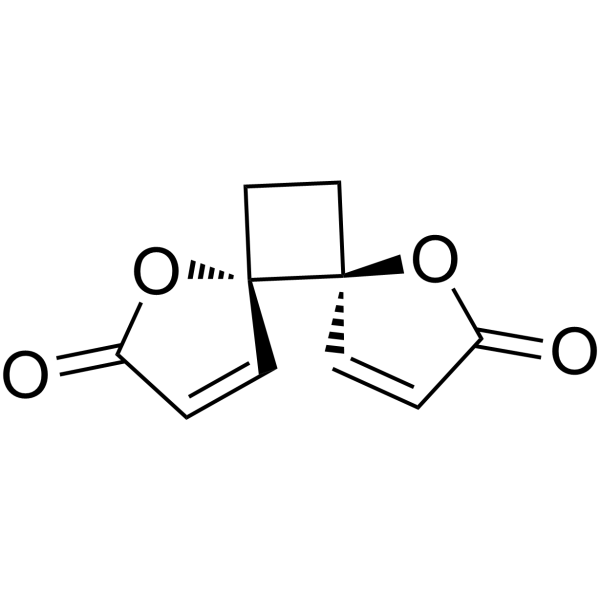
Anemonin (Pulsatilla camphor), a selective iNOS inhibitor, is also a PKC-θ inhibitor. Anemonin can significantly inhibit the translation or protein stability of PKC-θ protein. Anemonin also ameliorates dextran sodium sulfate-induced acute ulcerative colitis (UC) in mice. Anemonin can be used in the research of inflammation-related diseases .
|
-
-
- HY-17587S
-
-
-
- HY-Y0848R
-
|
(R)-(-)-10-Camphorsulfonic acid (Standard)
|
Reference Standards
|
|
|
(R)-Camphor-10-sulfonic acid (Standard) is the analytical standard of (R)-Camphor-10-sulfonic acid. This product is intended for research and analytical applications.
|
-
-
- HY-B1173R
-
|
D-(+)-Camphor (Standard); (1R)-(+)-Camphor (Standard)
|
Reference Standards
Bacterial
|
Neurological Disease
Inflammation/Immunology
Cancer
|
|
(+)-Camphor (Standard) is the analytical standard of (+)-Camphor. This product is intended for research and analytical applications. (+)-Camphor (D-(+)-Camphor; (1R)-(+)-Camphor) is an isomer of Camphor. Camphor is an agonist of monoterpenoid transient receptor potential (TRP) channels (such as TRPV1, TRPV3, TRPM8) and an inhibitor of TRPA1 channels. Camphor's derivatives have multiple biological activities, including antibacterial, antiviral, antioxidant, analgesic and anticancer. Camphor can selectively activate cold-sensitive TRP channels and inhibit TRPA1-mediated nociceptive signals. Camphor stimulates the cold-sensing nerve endings in the skin and regulates the activity of ion channels to exert analgesic, anti-inflammatory and anti-itching effects. It also has anti-proliferative and anti-mutagenic activities on tumor cells, which may be related to inhibiting ribosome function or inducing cell apoptosis. Camphor can be absorbed through the skin and (+)-Camphor can be used in the study of muscle and joint pain and inflammation .
|
-
-
- HY-N12039
-
|
|
Others
|
Others
|
|
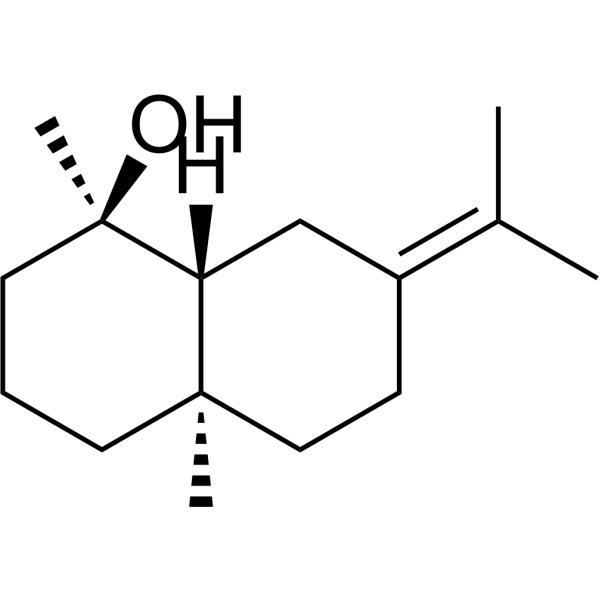
Juniper camphor is a sesquiterpene compound isolated from camphor blue oil, the high-boiling fraction of camphor .
|
-
-
- HY-W087943
-
|
|
Environmental Pollutants
Fungal
|
Infection
|
|
Methyl octanoate is an ester volatile compound with an odor activity value greater than 1. Methyl octanoate helps impart brandy-like and fruity characteristics to persimmon wine. Methyl octanoate has a strong odor of citrus holly, camphor and menthol. Methyl octanoate can serve as an early marker for grape infection by *Coniella vitis*. Methyl octanoate can be used in studies related to grape white rot .
|
-
-
- HY-Y0606
-
|
(+)-10-Camphorsulfonic acid
|
Lipase
|
Metabolic Disease
|
|
(+)-Camphor-10-sulfonic acid ((+)-10-Camphorsulfonic acid) is an effective pancreatic lipase (PL) inhibitor. (+)-Camphor-10-sulfonic acid is promising for research of obesity .
|
-
-
- HY-W015579
-
|
|
TRP Channel
|
Others
|
|
(-)-Camphor is a natural product that can be isolated from A. rnexicana .
|
-
-
- HY-B0900R
-
|
Anise Camphor (Standard); p-Propenylanisole (Standard); Isoestragole (Standard)
|
Apoptosis
Fungal
Bacterial
MMP
NF-κB
Reference Standards
|
Infection
Neurological Disease
Inflammation/Immunology
Cancer
|
|
Anethole (Standard) is the analytical standard of Anethole. This product is intended for research and analytical applications. Anethole is a type of orally active aromatic compound that is widely found in nature and used as a flavoring agent. Anethole possesses anticancer, anti-inflammatory, antioxidant, antibacterial, antifungal, anesthetic, estrogenic, central nervous system depressant, hypnotic, insecticidal, and gastroprotective effects. Anethole can be used in the study of oxidative stress-related skin diseases and prostate cancer .
|
-
-
- HY-16182R
-
|
|
Biochemical Assay Reagents
Reference Standards
|
Others
|
|
Ecamsule (Standard) is the analytical standard of Ecamsule. This product is intended for research and analytical applications. Ecamsule is a broad-spectrum UVA filter that can be used in sunscreen product. Ecamsule reduces biological damage caused by solar radiation such as pyrimidine dimer formation, p53 protein accumula-tion, or collagenase 2 expression. Ecamsule has the potential for the research of polymorphous light eruption (PMLE) .
|
-
-
- HY-W012218R
-
|
(±)-10-Camphorsulfonic acid (Standard)
|
Reference Standards
Biochemical Assay Reagents
|
Others
|
|
(±)-Camphor-10-sulfonic acid (Standard) is the analytical standard of (±)-Camphor-10-sulfonic acid. This product is intended for research and analytical applications. (±)-Camphor-10-sulfonic acid is a racemate of Camphor-10-sulfonic acid. (±)-Camphor-10-sulfonic acid can be used as an organocatalyst in performing a huge array of organic transformations .
|
-
-
- HY-W127838
-
|
|
Biochemical Assay Reagents
|
Others
|
|
(+)-3-(Trifluoroacetyl)camphor is a biochemical reagent that can be used as a biological material or organic compound for life science related research.
|
-
-
- HY-17587R
-
|
4-MBC (Standard); Enzacamene (Standard)
|
Reference Standards
Apoptosis
PI3K
Akt
ERK
|
Metabolic Disease
|
|
4-Methylbenzylidene camphor (Standard) is the analytical standard of 4-Methylbenzylidene camphor. This product is intended for research and analytical applications. 4-Methylbenzylidene camphor (4-MBC) is an endocrine disrupter that produces estrogen-like effects. 4-Methylbenzylidene camphor decreases the proliferation of human trophoblast cells and induces apoptosis. 4-Methylbenzylidene camphor activates PI3K/AKT and ERK1/2 signaling pathways and elevates intracellular ROS production. 4-Methylbenzylidene camphor is a ultraviolet (UV) filter and may hamper normal placental formation during early pregnancy .
|
-
-
- HY-N0038R
-
|
(+)-Alantolactone (Standard); Alant Camphor (Standard); Inula Camphor (Standard)
|
Reference Standards
STAT
Apoptosis
TGF-beta/Smad
|
Cancer
|
|
Alantolactone (Standard) is the analytical standard of Alantolactone. This product is intended for research and analytical applications. Alantolactone is a selective STAT3 inhibitor, with potent anticancer activity. Alantolactone induces apoptosis in cancer .
|
-
-
- HY-155372
-
|
|
Glycosidase
|
Metabolic Disease
|
|
α-Glucosidase-IN-39 is a potent inhibitor of α-glucosidase enzyme with an IC50 of 869.06 ppm. α-Glucosidase-IN-39 can used in study antidiabetic .
|
-
-
- HY-N0367R
-
|
(E)-Anethole (Standard)
|
Reference Standards
Endogenous Metabolite
|
Cardiovascular Disease
Metabolic Disease
Endocrinology
Cancer
|
|
Trans-Anethole (Standard) is the analytical standard of Trans-Anethole. This product is intended for research and analytical applications. Trans-Anethole ((E)-Anethole) is an orally active phenylpropene derivative found in Foeniculum vulgare that is estrogenic at low concentrations and cytotoxic at high concentrations in tumor cell lines. Trans-Anethole also has anti-aflatoxin, anti-thrombotic and anti-diabetic activities. Trans-Anethole is an important odor component in plants such as fennel, myrtle, liquorice, and camphor .
|
-
-
- HY-N0367S
-
|
(E)-Anethole-d3
|
Isotope-Labeled Compounds
Endogenous Metabolite
|
Endocrinology
|
|
Trans-Anethole-d3 is deuterated labeled Trans-Anethole (HY-N0367). Trans-Anethole ((E)-Anethole) is an orally active phenylpropene derivative found in Foeniculum vulgare that is estrogenic at low concentrations and cytotoxic at high concentrations in tumor cell lines. Trans-Anethole also has anti-aflatoxin, anti-thrombotic and anti-diabetic activities. Trans-Anethole is an important odor component in plants such as fennel, myrtle, liquorice, and camphor .
|
-
-
- HY-W585892
-
|
|
Drug Intermediate
|
Others
|
|
Isopropyl (1S)-(+)-10-camphorsulfate is an impurity of Camphor (HY-N0808). Camphor ((±)-Camphor) is a topical anti-infective and anti-pruritic and internally as a stimulant and carminative.
|
-
| Cat. No. |
Product Name |
Type |
-
- HY-W012218
-
|
(±)-10-Camphorsulfonic acid
|
Biochemical Assay Reagents
|
|
(±)-Camphor-10-sulfonic acid is a racemate of Camphor-10-sulfonic acid. (±)-Camphor-10-sulfonic acid can be used as an organocatalyst in performing a huge array of organic transformations .
|
-
- HY-W012218R
-
|
(±)-10-Camphorsulfonic acid (Standard)
|
Biochemical Assay Reagents
|
|
(±)-Camphor-10-sulfonic acid (Standard) is the analytical standard of (±)-Camphor-10-sulfonic acid. This product is intended for research and analytical applications. (±)-Camphor-10-sulfonic acid is a racemate of Camphor-10-sulfonic acid. (±)-Camphor-10-sulfonic acid can be used as an organocatalyst in performing a huge array of organic transformations .
|
-
- HY-W127838
-
|
|
Biochemical Assay Reagents
|
|
(+)-3-(Trifluoroacetyl)camphor is a biochemical reagent that can be used as a biological material or organic compound for life science related research.
|
| Cat. No. |
Product Name |
Category |
Target |
Chemical Structure |
-
- HY-N0038
-
-
-
- HY-N0808
-
-
-
- HY-122808
-
-
-
- HY-B0900
-
|
Anise Camphor; p-Propenylanisole; Isoestragole
|
Structural Classification
Classification of Application Fields
Simple Phenylpropanols
Leguminosae
Phenylpropanoids
Umbelliferae
Plants
Vernonia Schreb.
Glycyrrhiza uralensis Fisch.
Disease Research Fields
Source Classification
Cancer
|
Environmental Pollutants
Apoptosis
NF-κB
Fungal
Bacterial
MMP
|
|
Anethole is a type of orally active aromatic compound that is widely found in nature and used as a flavoring agent. Anethole possesses anticancer, anti-inflammatory, antioxidant, antibacterial, antifungal, anesthetic, estrogenic, central nervous system depressant, hypnotic, insecticidal, and gastroprotective effects. Anethole can be used in the study of oxidative stress-related skin diseases and prostate cancer .
|
-
-
- HY-N0367
-
-
-
- HY-B1173
-
|
D-(+)-Camphor; (1R)-(+)-Camphor
|
Structural Classification
Other Monoterpenes
Classification of Application Fields
Terpenoids
Other Diseases
Plants
Lauraceae
Cinnamomum camphora
Disease Research Fields
Source Classification
|
Environmental Pollutants
Bacterial
|
|
(+)-Camphor (D-(+)-Camphor; (1R)-(+)-Camphor) is an isomer of Camphor. Camphor is an agonist of monoterpenoid transient receptor potential (TRP) channels (such as TRPV1, TRPV3, TRPM8) and an inhibitor of TRPA1 channels. Camphor's derivatives have multiple biological activities, including antibacterial, antiviral, antioxidant, analgesic and anticancer. Camphor can selectively activate cold-sensitive TRP channels and inhibit TRPA1-mediated nociceptive signals. Camphor stimulates the cold-sensing nerve endings in the skin and regulates the activity of ion channels to exert analgesic, anti-inflammatory and anti-itching effects. It also has anti-proliferative and anti-mutagenic activities on tumor cells, which may be related to inhibiting ribosome function or inducing cell apoptosis. Camphor can be absorbed through the skin and (+)-Camphor can be used in the study of muscle and joint pain and inflammation .
|
-
-
- HY-N0808R
-
-
-
- HY-N0278A
-
|
(Rac)-Pulsatilla Camphor; (Rac)-Anemonine
|
Natural Products
Ranunculaceae
Clematis crassifolia Benth.
Plants
Source Classification
|
PKC
NO Synthase
|
|
(Rac)-Anemonin ((Rac)-Pulsatilla camphor) is the diastereoisomer of Anemonin (HY-N0278). Anemonin (Pulsatilla camphor), a selective iNOS inhibitor, is also a PKC-θ inhibitor. Anemonin can significantly inhibit the translation or protein stability of PKC-θ protein. Anemonin also ameliorates dextran sodium sulfate-induced acute ulcerative colitis (UC) in mice. Anemonin can be used in the research of inflammation-related diseases .
|
-
-
- HY-N0278
-
|
Pulsatilla Camphor; Anemonine; trans-Anemonin
|
Natural Products
Ranunculaceae
Clematis crassifolia Benth.
Plants
Source Classification
|
PKC
NO Synthase
|
|
Anemonin (Pulsatilla camphor), a selective iNOS inhibitor, is also a PKC-θ inhibitor. Anemonin can significantly inhibit the translation or protein stability of PKC-θ protein. Anemonin also ameliorates dextran sodium sulfate-induced acute ulcerative colitis (UC) in mice. Anemonin can be used in the research of inflammation-related diseases .
|
-
-
- HY-B1173R
-
|
D-(+)-Camphor (Standard); (1R)-(+)-Camphor (Standard)
|
Structural Classification
Other Monoterpenes
Terpenoids
Plants
Lauraceae
Cinnamomum camphora
Source Classification
|
Reference Standards
Bacterial
|
|
(+)-Camphor (Standard) is the analytical standard of (+)-Camphor. This product is intended for research and analytical applications. (+)-Camphor (D-(+)-Camphor; (1R)-(+)-Camphor) is an isomer of Camphor. Camphor is an agonist of monoterpenoid transient receptor potential (TRP) channels (such as TRPV1, TRPV3, TRPM8) and an inhibitor of TRPA1 channels. Camphor's derivatives have multiple biological activities, including antibacterial, antiviral, antioxidant, analgesic and anticancer. Camphor can selectively activate cold-sensitive TRP channels and inhibit TRPA1-mediated nociceptive signals. Camphor stimulates the cold-sensing nerve endings in the skin and regulates the activity of ion channels to exert analgesic, anti-inflammatory and anti-itching effects. It also has anti-proliferative and anti-mutagenic activities on tumor cells, which may be related to inhibiting ribosome function or inducing cell apoptosis. Camphor can be absorbed through the skin and (+)-Camphor can be used in the study of muscle and joint pain and inflammation .
|
-
-
- HY-N12039
-
-
-
- HY-W087943
-
-
-
- HY-W015579
-
-
-
- HY-B0900R
-
|
Anise Camphor (Standard); p-Propenylanisole (Standard); Isoestragole (Standard)
|
Structural Classification
Simple Phenylpropanols
Leguminosae
Phenylpropanoids
Umbelliferae
Plants
Vernonia Schreb.
Glycyrrhiza uralensis Fisch.
Source Classification
|
Apoptosis
Fungal
Bacterial
MMP
NF-κB
Reference Standards
|
|
Anethole (Standard) is the analytical standard of Anethole. This product is intended for research and analytical applications. Anethole is a type of orally active aromatic compound that is widely found in nature and used as a flavoring agent. Anethole possesses anticancer, anti-inflammatory, antioxidant, antibacterial, antifungal, anesthetic, estrogenic, central nervous system depressant, hypnotic, insecticidal, and gastroprotective effects. Anethole can be used in the study of oxidative stress-related skin diseases and prostate cancer .
|
-
-
- HY-N0038R
-
-
-
- HY-N0367R
-
-
| Cat. No. |
Product Name |
Chemical Structure |
-
- HY-17587S
-
|
|
|
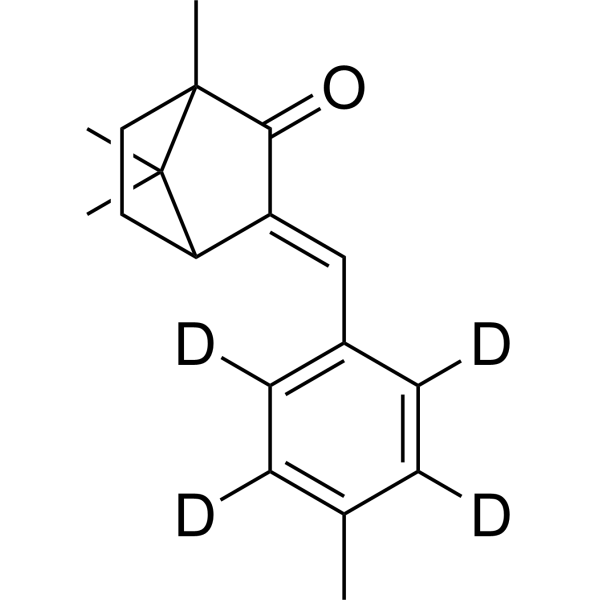
4-Methylbenzylidene camphor-d4 is the deuterium labeled 4-Methylbenzylidene camphor .
|
-
-
- HY-N0367S
-
|
|
|
Trans-Anethole-d3 is deuterated labeled Trans-Anethole (HY-N0367). Trans-Anethole ((E)-Anethole) is an orally active phenylpropene derivative found in Foeniculum vulgare that is estrogenic at low concentrations and cytotoxic at high concentrations in tumor cell lines. Trans-Anethole also has anti-aflatoxin, anti-thrombotic and anti-diabetic activities. Trans-Anethole is an important odor component in plants such as fennel, myrtle, liquorice, and camphor .
|
-
Your information is safe with us. * Required Fields.
Inquiry Information
- Product Name:
- Cat. No.:
- Quantity:
- MCE Japan Authorized Agent:

