



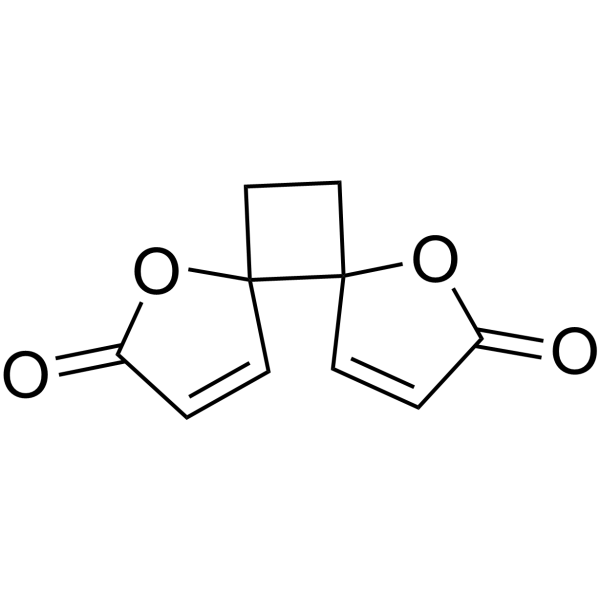
(Rac)-Anemonin

Based on 1 Customer Validation
(Rac)-Anemonin ((Rac)-Pulsatilla camphor; (Rac)-Anemonine) is an isomer of Anemonin. Anemonin is a naturally occurring bislactone small molecule derived from Ranunculaceae with blood-brain barrier permeability, possessing a variety of activities including anti-inflammatory, antioxidant, neuroprotective, melanogenesis-inhibiting, and antiparasitic effects. Anemonin inhibits iNOS to reduce NO release; it inhibits PKC-θ protein expression and downregulates the pro-inflammatory factors TNF-α, IL-1β, and IL-6; it enhances the activities of the antioxidant enzymes SOD, CAT, and GSH-Px, and reduces MDA and ROS levels. Anemonin modulates the Bcl-2 / Bax / caspase-3 pathway to inhibit apoptosis; it downregulates melanogenesis-related molecules including MITF, TYR, TRP1, and TRP2, thereby inhibiting melanin synthesis in human melanocytes. Anemonin inhibits Leishmania and Schistosoma mansoni. Anemonin is used in research related to diseases such as hyperpigmentation, cerebral ischemia/reperfusion injury, inflammation, sepsis-induced acute lung injury, acute ulcerative colitis, leishmaniasis, and schistosomiasis.
Nur für Forschungszwecke. Wir verkaufen nicht an Patienten.
- Reinheit : 98.48%
- CAS. Nr.: 90921-11-2
- Formel: C10H8O4
- Molecular Weight:192.17
-
Speicherung:Powder -20°C, 3 years , 4°C, 2 years ; In solvent -80°C, 6 months , -20°C, 1 month

To place orders, for customer services and technical support, please contact: MedChemExpress USA
Tel: 609-228-6898 E-mail: [email protected] [email protected]


-
 Biologische Aktivität
-
Chemical Information
-
Lösungsmittel & Löslichkeit
- Protokoll
- Reinheit & Dokumentation
- Verweise
-
 Help & FAQs


Alle Parasite Isoform-spezifische Produkte anzeigen
MoreAlle Caspase Isoform-spezifische Produkte anzeigen
MoreAlle TNF Receptor Isoform-spezifische Produkte anzeigen
More

Biologische Aktivität
Beschreibung
In Vitro
Anemonin exhibits low cytotoxicity in human melanocytes, with cell viability remaining above 96% at 50 μM[1].
Anemonin (10-50 μM; 8-48 h) inhibits cellular tyrosinase activity in human melanocytes in a concentration- and time-dependent manner, with an IC50 of 43.4 μM[1].
Anemonin (20-50 μM; 8-48 h) reduces melanin content in human melanocytes; it decreases TYR, TRP1, and TRP2/DCT protein expression in human melanocytes in a dose- and time-dependent manner, particularly affecting TYR and TRP2[1].
Anemonin (20-50 μM; 24 h) downregulates the mRNA expression of TYR, TYRP1, and TYRP2 in human melanocytes in a dose-dependent manner[1].
Anemonin (20-40 μM; 24 h) downregulates MITF mRNA expression in human melanocytes in a dose-dependent manner[1].
Anemonin does not affect the viability of LPS-treated RAW 264.7 macrophages even at 100 μM[3].
Anemonin (2.5-30 μM; 24 h) inhibits LPS-induced NO production in RAW 264.7 macrophages with an IC50 of 5.37 μM[3].
Anemonin (2.5-30 μM; 24 h) inhibits iNOS protein expression in LPS-induced RAW 264.7 macrophages in a concentration-dependent manner[3].
Anemonin (2.5-30 μM; 6 h) inhibits LPS-induced iNOS mRNA expression in RAW 264.7 macrophages in a concentration-dependent manner, without affecting GAPDH mRNA expression[3].
Anemonin (2.5-10 μM; 48 h) shows no cytotoxicity in HT-29 cells and attenuates LPS-induced inflammation in HT-29 cells by downregulating the expression of IL-1β, TNF-α, and IL-6 in a dose-dependent manner[5].
Anemonin (2.5-10 μM; 24 h) is not cytotoxic to LPS-stimulated MH-S and MLE-12 cells[4].
Anemonin (2.5-10 μM; 24 h) dose-dependently inhibits LPS-induced TNF-α, IL-1β, and IL-6 mRNA expression and secretion in MH-S and MLE-12 cells; combination with the NF-κB inhibitor PDTC enhances the inhibition of inflammatory responses; the anti-inflammatory effect is suppressed under Nrf2 knockdown[4].
Anemonin (2.5-10 μM; 24 h) inhibits LPS-induced activation of the NF-κB pathway and enhances activation of the Nrf2/HO-1 pathway in MH-S and MLE-12 cells[4].
Anemonin (2.5-10 μM; 24 h) reverses LPS-induced oxidative stress in MH-S and MLE-12 cells by decreasing MDA content and increasing SOD and CAT activities[4].
Anemonin (2.5-10 μM) inhibits PKC-θ protein expression in a dose-dependent manner in HT-29 cells without affecting PRKCQ gene transcription, significantly reduces TNF-α mRNA levels, and exerts no significant effect on PRKCQ and PTPN2 gene transcription; PRKCQ overexpression reverses the inhibitory effects of Anemonin on cytokine mRNA production and cytokine protein production in HT-29 cells[5].
Anemonin (0.00565-1000 µg/mL; 48 h) exhibits a CC50 of 5.39 µg/mL (28.00 nM) against mouse peritoneal macrophages and shows hemolytic activity against human erythrocytes with an LC50 of 91.00 µg/mL (473.95 nM)[6].
Anemonin (0.000565-100 µg/mL; 72 h) exhibits potent anti-promastigote activity against L. aethiopica and L. donovani with IC50 values of 0.257 µg/mL (1.33 nM) and 0.303 µg/mL (1.58 nM), respectively; and exhibits potent anti-amastigote activity against L. aethiopica and L. donovani with IC50 values of 0.239 µg/mL (1.24 nM) and 0.368 µg/mL (1.91 nM), respectively[6].
Anemonin (1-10 µM; 72 h) exhibits high antischistosomal activity against S. mansoni NTS, with activity of 93.75% at 10 µM and 41.38% at 1 µM; it exhibits moderate antischistosomal activity against adult S. mansoni, with activity of 48.95% at 10 µM[6].
MedChemExpress (MCE) has not independently confirmed the accuracy of these methods. They are for reference only. Further protocols information, click here.
In Vivo
Anemonin (150 mg/kg; i.p.; single administration) penetrates the blood-brain barrier in rats and reaches a maximum brain-to-plasma partition coefficient (Ri) of 0.7 at 90 min after administration[2].
Anemonin (5-100 μM; incubation; 6 h for endothelium-denuded rings, 20 min for endothelium-intact rings) reverses LPS-induced hyporeactivity of blood vessels to phenylephrine without affecting eNOS-mediated endothelium-dependent relaxation, which is consistent with selective inhibition of iNOS[3].
Anemonin (10 mg/kg; i.p.; single injection simultaneously with LPS) attenuates sepsis-induced acute lung injury in mice by inhibiting inflammatory responses and oxidative stress[4].
Anemonin (10 mg/kg; i.p.) reduces LPS-induced mortality in a mouse model of sepsis-induced ALI[4].
Anemonin (2-10 mg/kg; i.p.; daily; 7 days) alleviates DSS-induced acute ulcerative colitis in mice by inhibiting colonic tissue inflammation and suppressing PKC-θ protein expression[5].
MedChemExpress (MCE) has not independently confirmed the accuracy of these methods. They are for reference only.


Chemical Information
-
CAS. Nr. 90921-11-2
-
Appearance Solid
-
Molecular Weight 192.17
-
Formel C10H8O4
-
Color White to off-white
-
SMILES
O=C1C=CC2(C3(CC2)C=CC(O3)=O)O1
-
Synonyms
(Rac)-Pulsatilla camphor; (Rac)-Anemonine
-
Structure Classification
-
Initial Source
-
Versand
Room temperature in continental US; may vary elsewhere.
-
Speicherung
Powder -20°C 3 years 4°C 2 years In solvent -80°C 6 months -20°C 1 month


Lösungsmittel & Löslichkeit
In Vitro:
DMSO : ≥ 200 mg/mL (1040.75 mM; Hygroscopic DMSO has a significant impact on the solubility of product, please use newly opened DMSO)
* "≥" means soluble, but saturation unknown.
Please refer to the solubility information to select the appropriate solvent. Once prepared, please aliquot and store the solution to prevent product inactivation from repeated freeze-thaw cycles.
Storage method and period of stock solution: -80°C, 6 months; -20°C, 1 month. When stored at -80°C, please use it within 6 months. When stored at -20°C, please use it within 1 month.
Please refer to the solubility information to select the appropriate solvent. Once prepared, please aliquot and store the solution to prevent product inactivation from repeated freeze-thaw cycles.
Storage method and period of stock solution: -80°C, 6 months; -20°C, 1 month. When stored at -80°C, please use it within 6 months. When stored at -20°C, please use it within 1 month.
Konzentration (Stammlösung) × Volumen (Stammlösung) = Konzentration (Ziellösung) × Volumen (Ziellösung)
In Vivo:
Select the appropriate dissolution method based on your experimental animal and administration route.
- For the following dissolution methods, please ensure to first prepare a clear stock solution using an In Vitro approach and then sequentially add co-solvents:
- To ensure reliable experimental results, the clarified stock solution can be appropriately stored based on storage conditions. As for the working solution for In Vivo experiments, it is recommended to prepare freshly and use it on the same day.
- The percentages shown for the solvents indicate their volumetric ratio in the final prepared solution. If precipitation or phase separation occurs during preparation, heat and/or sonication can be used to aid dissolution.
Add each solvent one by one: 10% DMSO 40% PEG300 5% Tween-80 45% Saline
Solubility: ≥ 5 mg/mL (26.02 mM); Clear solution
This protocol yields a clear solution of ≥ 5 mg/mL (saturation unknown).
Taking 1 mL working solution as an example, add 100 μL DMSO stock solution (50.0 mg/mL) to 400 μL PEG300, and mix evenly; then add 50 μL Tween-80 and mix evenly; then add 450 μL Saline to adjust the volume to 1 mL.
Preparation of Saline: Dissolve 0.9 g sodium chloride in ddH₂O and dilute to 100 mL to obtain a clear Saline solution.
Add each solvent one by one: 10% DMSO 90% (20% SBE-β-CD in Saline)
Solubility: ≥ 5 mg/mL (26.02 mM); Clear solution
This protocol yields a clear solution of ≥ 5 mg/mL (saturation unknown).
Taking 1 mL working solution as an example, add 100 μL DMSO stock solution (50.0 mg/mL) to 900 μL 20% SBE-β-CD in Saline, and mix evenly.
Preparation of 20% SBE-β-CD in Saline (4°C, storage for one week): 2 g SBE-β-CD powder is dissolved in 10 mL Saline, completely dissolve until clear.
In Vivo Dissolution Calculator
Please enter the basic information of animal experiments:
-
-
-
-
Recommended: Prepare an additional quantity of animals to account for potential losses during experiments.
Please enter your animal formula composition:
-
%DMSO +
Recommended: Keep the proportion of DMSO in working solution below 2% if your animal is weak.
-
%+
-
+%Tween-80 + +
-
%Saline +
The co-solvents required include: DMSO, . All of co-solvents are available by MedChemExpress (MCE). , Tween 80. All of co-solvents are available by MedChemExpress (MCE).
Working solution concentration: 0.22 mg/mL
Method for preparing stock solution: mg drug dissolved in μL DMSO. Stock solution concentration: mg/mL.
1. Take μL DMSO stock solution;
2. Add μL .
μL , mix evenly;
3. Then add μL Tween 80, mix evenly;
4. Then add μL
Please ensure that the stock solution in the first step is dissolved to a clear state, and add co-solvents in sequence. You can use ultrasonic heating (ultrasonic cleaner, recommended frequency 20-40 kHz), vortexing, etc. to assist dissolution.

Protokoll
-
RNA extraction experimental
By lysing cells, releasing RNA, and removing impurities such as proteins and DNA, high-purity RNA products are finally obtained. The commonly used traditional method is the guanidine isothiocyanate/phenol/chloroform method (Trizol), which is suitable for a variety of animal materials including animal tissues, microorganisms, cultured cells, etc., and most plant materials.
-
Western Blot
Western blotting (WB) is a commonly used experimental method in molecular biology, biochemistry, and immunogenetics for identifying and quantifying target proteins. It combines gel electrophoresis with immunoassay, enabling researchers to analyze protein expression, post-translational modifications, and molecular weight.
-
Annexin V plus membrane-impermeant dye apoptosis staining
Annexin V-based apoptosis assays rely on the detection of phosphatidylserine (PS) externalization from the inner leaflet of the plasma membrane to the outer leaflet, an early biochemical hallmark of apoptosis. Fluorescently labeled Annexin V binds PS in a calcium-dependent manner, enabling identification of early apoptotic cells by flow cytometry or fluorescence microscopy. When combined with a membrane-impermeant DNA-binding dye (e. g. , propidium iodide), this approach allows discrimination between viable (Annexin V−/dye−), early apoptotic (Annexin V+/dye−), and late apoptotic or necrotic (Annexin V+/dye+) cell populations by assessing membrane integrity and PS exposure.
-
ROS/oxidative-stress fluorescent staining
ROS/oxidative-stress fluorescent staining uses cell-permeant fluorogenic probes that become fluorescent after oxidation inside cells or tissues; commonly used examples include DCFH-DA/DCFDA for broad cellular oxidant detection, DHE for superoxide-related signal detection, MitoSOX for mitochondrial superoxide-related signal detection, and CellROX probes for oxidative-stress-associated fluorescence readouts. The assay detects probe oxidation rather than a single ROS species unless the probe and analysis method have been chemically validated for that species. DCFH-DA enters cells, is deacetylated by intracellular esterases to DCFH, and produces fluorescent DCF after oxidation, so the readout is used as an operational measure of total cellular oxidative stress rather than a species-specific ROS measurement. DHE and MitoSOX can report superoxide-related oxidation, but red fluorescence alone can include non-specific ethidium-like oxidation products; HPLC or optimized spectral approaches are
-
Research Protocol for Inflammation-related Diseases
The NLRP3 inflammasome is a cytosolic innate immune signaling platform that integrates priming signals and danger-signal activation to promote caspase-1 activation, maturation of IL-1β and IL-18, and gasdermin D-mediated pyroptotic cell death. The core experimental logic is to determine whether inflammatory disease phenotypes are driven by increased NLRP3 expression, ASC-containing inflammasome assembly, caspase-1 cleavage, GSDMD cleavage, and extracellular release of IL-1β/IL-18 rather than by nonspecific cell injury alone. The pathway is strongly linked to inflammation-related disease phenotypes because monosodium urate crystals activate NALP3/NLRP3 inflammasome signaling in gout-like crystal inflammation, cholesterol crystals activate NLRP3 inflammasomes in atherogenesis models, and DSS-induced intestinal inflammation has been reported to involve NLRP3 inflammasome activity. However, experimental colitis studies also show context-dependent protective effects of NLRP3 inflammasome co
-
Protocol For Protein Expression And Purification
Recombinant protein expression in Escherichia coli followed by purification of a His-tagged soluble protein by immobilized metal affinity chromatography (IMAC), with optional MBP fusion and TEV tag removal when the construct includes these elements. The biological readout is production of the encoded target protein, detected as an inducible band at the expected molecular mass by SDS-PAGE and quantified by total protein assay or chromatographic absorbance; the purification readout is enrichment of the target protein in elution fractions after selective binding of polyhistidine residues to immobilized Ni2+/metal-chelate resin and elution by imidazole-containing buffer. Expression is driven by an inducible bacterial expression system, commonly T7/lac-based, in which IPTG or lactose/auto-induction activates transcription and translation of the cloned gene; lower induction temperature, lower inducer concentration, induction timing, and solubility-enhancing fusion tags can influence the frac
-
Detection of Apoptosis
Apoptosis, also called programmed cell death, is generally characterized by distinct morphological characteristics.
-
TUNEL staining for apoptotic DNA fragmentation
TUNEL staining detects DNA strand breaks by using terminal deoxynucleotidyl transferase to add labeled nucleotides to exposed 3′-OH DNA termini, generating either microscopic staining in fixed cells or tissue sections, or fluorescence/cytometric signal in cell suspensions. TUNEL positivity reflects DNA fragmentation but should not be interpreted alone as definitive apoptosis, because TUNEL can also label necrotic, autolytic, mechanically damaged, or DNA-repair-associated DNA breaks.
-
LPS-Induced Endotoxemia/Systemic Inflammation
Lipopolysaccharide (LPS)-induced endotoxemia is a widely used in vivo model of acute systemic inflammation in which LPS, a Gram-negative bacterial endotoxin, activates innate immune signaling primarily through TLR4, leading to rapid and transient induction of pro-inflammatory cytokines such as TNF-α, IL-6, and IL-1β in circulation and tissues. This cytokine surge is commonly used as a measurable readout of systemic inflammatory activation and immune dysregulation, and is typically assessed within hours after intraperitoneal LPS administration in mouse models of endotoxemia. The model captures key features of systemic inflammatory response syndrome, including cytokine release, immune cell activation, and downstream tissue responses, and has been used to evaluate anti-inflammatory interventions such as cytokine modulation, lipid mediators, and immune cell-targeting therapies.
-
DSS-Induced Colitis
Dextran sulfate sodium (DSS)-induced colitis is generated by administering DSS in mouse drinking water, producing epithelial injury, barrier disruption, weight loss, diarrhea, fecal blood, colon shortening, histologic mucosal damage, and inflammatory mediator changes; the model is mainly used to study acute or chronic intestinal inflammation resembling selected features of ulcerative colitis. DSS injury is interpreted through clinical and tissue readouts rather than a single molecular endpoint: daily body weight, stool consistency, and bleeding are combined into a disease activity index, while colon length, histology, cytokines, myeloperoxidase activity, intestinal permeability, and tight-junction markers provide complementary measures of inflammation and barrier damage.
-
TNBS-Induced Colitis
TNBS-induced colitis is produced by intrarectal delivery of 2,4,6-trinitrobenzene sulfonic acid in ethanol, where ethanol disrupts the mucosal barrier and TNBS haptenates colonic proteins, generating immune-mediated colonic inflammation with weight loss, diarrhea, ulceration, transmural injury, inflammatory-cell infiltration, and cytokine responses. The model is used as an experimental intestinal inflammation model with Crohn’s disease–like features, especially when Th1-type responses, IL-12–dependent inflammation, chronic relapsing inflammation, or fibrosis-related endpoints are studied.
-
Transepithelial/transendothelial electrical resistance assay
TEER measures electrical resistance across epithelial or endothelial monolayers cultured on permeable supports, and the readout reflects ionic conductance through the cell barrier, especially the paracellular pathway regulated by junctional integrity. TEER can be measured without destroying the monolayer and is commonly used before or during transport, permeability, barrier-disruption, and barrier-maturation experiments. TEER values are influenced by biological maturation and technical conditions; reported factors include temperature, medium formulation, passage number, electrode geometry, membrane properties, and junctional length during early monolayer maturation. Therefore, TEER should be interpreted with blank-insert subtraction, area normalization, repeated readings, and, when possible, orthogonal barrier readouts such as FITC-dextran flux or tight-junction staining.
-
Apoptosis Solutions
Apoptosis is a regulated, generally non-lytic cell-death pathway that removes unwanted, damaged, infected, or abnormal cells through coordinated morphological changes, caspase activation, DNA fragmentation, and membrane remodeling. The intrinsic apoptosis pathway is controlled mainly by mitochondrial outer membrane permeabilization, BCL-2 family proteins, cytochrome c release, apoptosome formation, caspase-9 activation, and downstream executioner caspase-3/7 activation. The extrinsic apoptosis pathway is initiated by death receptors such as Fas, TNFR, and TRAIL receptors, which recruit adaptor proteins and activate caspase-8 before engaging executioner caspases or mitochondrial amplification through BID cleavage. Apoptosis is linked to many phenotypes, including cancer cell killing, tissue homeostasis, immune regulation, neurodegeneration, infection response, and treatment-induced cytotoxicity; unresolved questions include how apoptosis interacts with necroptosis, pyroptosis, ferroptos
-
Inhalation Toxicity Study
Inhalation toxicity studies expose rodents to a controlled aerosol, vapor, gas, or smoke atmosphere and assess respiratory and systemic toxicity using exposure-atmosphere characterization, clinical observations, body and organ weights, bronchoalveolar lavage fluid, histopathology, blood chemistry, hematology, and, when included, molecular endpoints such as transcriptomics, proteomics, lipidomics, or tissue burden analysis. The primary biological readouts are airway irritation, pulmonary inflammation, cytotoxicity, altered surfactant or lipid homeostasis, impaired particle clearance, and tissue remodeling, reflected by BALF cell differentials, BALF protein, LDH, phosphatase activities, cytokines, lung weight, microscopic respiratory-tract lesions, and retained lung burden.
-
Pyroptosis Solutions
Pyroptosis is a lytic inflammatory cell-death pathway executed by gasdermin pores, most classically through inflammasome-mediated activation of caspase-1, cleavage of gasdermin D, membrane pore formation, LDH release, and secretion of IL-1β and IL-18. The canonical pathway is commonly modeled by priming cells with an inflammatory signal such as LPS to induce pro-IL-1β and inflammasome components, followed by an activation signal such as ATP or nigericin to activate NLRP3, ASC speck formation, caspase-1 cleavage, GSDMD cleavage, cytokine release, and pyroptotic membrane rupture. The non-canonical pathway is triggered when cytosolic LPS activates mouse caspase-11 or human caspase-4/5, leading to GSDMD cleavage and pyroptosis, and this can secondarily activate NLRP3-dependent IL-1β release. Pyroptosis is linked to inflammatory injury, infection, cancer, liver disease, ocular disease, placental inflammation, and other disease phenotypes, but unresolved questions include which gasdermin fam


Reinheit & Dokumentation
-
Data Sheet (306 KB)
-
SDS (394 KB)
- English - EN (394 KB)
- Français - FR (394 KB)
- Deutsch - DE (394 KB)
- Norwegian - NO (394 KB)
- Español - ES (394 KB)
- Swedish - SV (394 KB)
- Italian - IT (394 KB)
- Korean - KR (394 KB)
- Portuguese - PT (394 KB)
-
Handling Instructions (2659 KB)
Verweise
[3]. Lee TH, et al. Anemonin, from Clematis crassifolia, potent and selective inducible nitric oxide synthase inhibitor. Journal of ethnopharmacology. 2008 Mar 28;116(3):518-27. [Content Brief]
[5]. Jiang L, et al. Anti-inflammatory effects of anemonin on acute ulcerative colitis via targeted regulation of protein kinase C-θ. Chinese medicine. 2022 Mar 28;17(1):39. [Content Brief]


Complete Stock Solution Preparation Table
Please refer to the solubility information to select the appropriate solvent. Once prepared, please aliquot and store the solution to prevent product inactivation from repeated freeze-thaw cycles.
Storage method and period of stock solution: -80°C, 6 months; -20°C, 1 month. When stored at -80°C, please use it within 6 months. When stored at -20°C, please use it within 1 month.
| Optional Solvent | Concentration Solvent Mass | 1 mg | 5 mg | 10 mg | 25 mg |
|---|---|---|---|---|---|
| DMSO | 1 mM | 5.2037 mL | 26.0186 mL | 52.0373 mL | 130.0931 mL |
| 5 mM | 1.0407 mL | 5.2037 mL | 10.4075 mL | 26.0186 mL | |
| 10 mM | 0.5204 mL | 2.6019 mL | 5.2037 mL | 13.0093 mL | |
| 15 mM | 0.3469 mL | 1.7346 mL | 3.4692 mL | 8.6729 mL | |
| 20 mM | 0.2602 mL | 1.3009 mL | 2.6019 mL | 6.5047 mL | |
| 25 mM | 0.2081 mL | 1.0407 mL | 2.0815 mL | 5.2037 mL | |
| 30 mM | 0.1735 mL | 0.8673 mL | 1.7346 mL | 4.3364 mL | |
| 40 mM | 0.1301 mL | 0.6505 mL | 1.3009 mL | 3.2523 mL | |
| 50 mM | 0.1041 mL | 0.5204 mL | 1.0407 mL | 2.6019 mL | |
| 60 mM | 0.0867 mL | 0.4336 mL | 0.8673 mL | 2.1682 mL | |
| 80 mM | 0.0650 mL | 0.3252 mL | 0.6505 mL | 1.6262 mL | |
| 100 mM | 0.0520 mL | 0.2602 mL | 0.5204 mL | 1.3009 mL |


(Rac)-Anemonin Related Classifications
HY-N0278A Related Classifications
 Powered by Bioz
Keywords
- (Rac)-Anemonin
- 90921-11-2
- (Rac)-Pulsatilla camphor
- (Rac)-Anemonine
- PKC
- NO Synthase
- Parasite
- Caspase
- Bcl-2 Family
- Reactive Oxygen Species (ROS)
- Tyrosinase
- Interleukin Related
- TNF Receptor
- Drug Isomer
- RAW 264.7 macrophages
- MH-S and MLE-12 cells
- HT-29 cells
- cerebral ischemia/reperfusion injury
- iNOS inhibitor
- tyrosinase inhibitor
- blood-brain barrier-penetrant
- human melanocytes
- Leishmania
- Schistosoma mansoni
- Inhibitor
- inhibitor
- inhibit