



Leishmania Infection
-
Leishmania Infection (53)

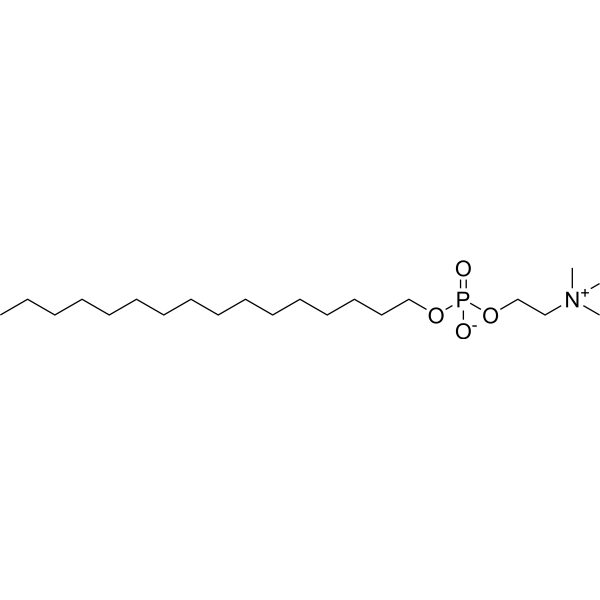
- Formula: C21H46NO4P
- Molecular Weight: 407.57
Miltefosine is a broad spectrum antimicrobial, anti-leishmanial, phospholipid agent acting by inhibiting the PI3K/Akt activity. Miltefosine is an inhibitor of CTP-phosphocholine cytidyltransferase (CCT).
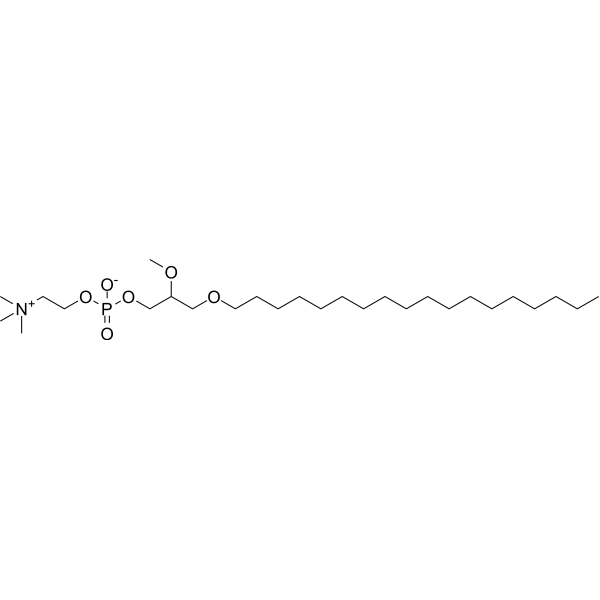
- Formula: C27H58NO6P
- Molecular Weight: 523.73
Edelfosine (ET-18-OCH3) is an orally active lipid raft modulator and apoptosis inducer that alters membrane fluidity and preferentially inserts into tumor cell membranes. Edelfosine recruits death receptor ligands (FasL/CD95L, TRAIL) and Bid to lipid rafts to form death-inducing signaling complexes, thereby initiating mitochondria-dependent apoptosis and inducing cytochrome c release. Edelfosine also exerts anti-inflammatory effects, promotes L-Selectin shedding, and causes no gastrointestinal or organ toxicity. In addition, Edelfosine inhibits nucleic acid and protein synthesis in Leishmania donovani and exhibits antiproliferative activity. Edelfosine can be used in research on multiple myeloma, inflammatory bowel diseases (such as ulcerative colitis and Crohn's disease), and visceral leishmaniasis.
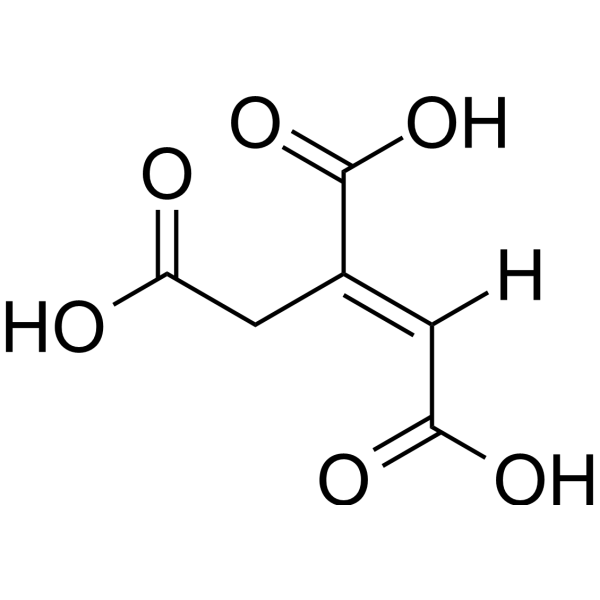
- Formula: C6H6O6
- Molecular Weight: 174.11
trans-Aconitic acid is an orally active aconitase inhibitor that non-competitively inhibits the conversion of citric acid to cis-aconitic acid and competitively inhibits the conversion of cis-aconitic acid to isocitric acid. trans-Aconitic acid inhibits the growth of Leishmania donovani promastigotes, the transformation of Leishmania donovani amastigotes to promastigotes, and the in vitro proliferation of Leishmania donovani amastigotes within macrophages in vitro. trans-Aconitic acid can be used in research related to visceral leishmaniasis (kala-azar).
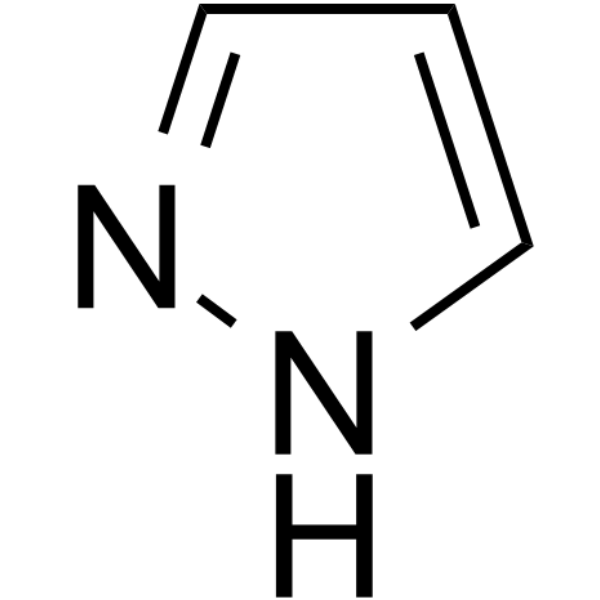
- Formula: C3H4N2
- Molecular Weight: 68.08
1H-pyrazole (Pyrazole) is a five-membered heterocyclic compound, and its derivatives are orally effective antimalarial and antileishmanial agents with the potential to modulate targets such as alcohol dehydrogenase and NMDA receptors. 1H-pyrazole derivatives exhibit inhibitory effects on Plasmodium berghei in infected mice and on promastigotes of Leishmania aethiopica, respectively. 1H-pyrazole can be used in research related to malaria and leishmaniasis.

- Formula: C4H7NO2S
- Molecular Weight: 133.17
(S)-4-Thiazolidinecarboxylic acid (L-4-thioproline) is a glutamate 5-kinase inhibitor with an IC50 of 1.8 mM against LdG5K. (S)-4-Thiazolidinecarboxylic acid can be used in the research of leishmaniasis and Escherichia coli infections.

- Formula: C15H12O3
- Molecular Weight: 240.25
2',4-Dihydroxychalcone is an orally active natural chalcone flavonoid. 2',4-Dihydroxychalcone restores intestinal barrier integrity by upregulating tight junction proteins, regulates intestinal flora balance and alleviates inflammation. 2',4-Dihydroxychalcone induces GPX4 degradation, ferroptosis and apoptosis, triggers cell cycle arrest, and exhibits broad anti-tumor activity. 2',4-Dihydroxychalcone also possesses antifungal activity, antileishmanial activity, and reduces the hemolytic effect and virulence of Vibrio vulnificus.

- Formula: C14H12F3N3O5
- Molecular Weight: 359.26
DNDI-VL-2098 is an orally active antileishmanial agent. DNDI-VL-2098 exhibits high permeability, in vitro metabolic stability, and selective inhibition of CYP2C19 (IC50=0.47 μM). DNDI-VL-2098 does not affect the activities of other major CYP enzymes (CYP1A2, CYP2C9, CYP2D6 and CYP3A4) at concentrations up to 12.5 μM. It shows favorable pharmacokinetic properties in multiple animal models including mice, hamsters, rats and dogs. DNDI-VL-2098 is characterized by moderate to high plasma protein binding and can be used for the research of visceral leishmaniasis.
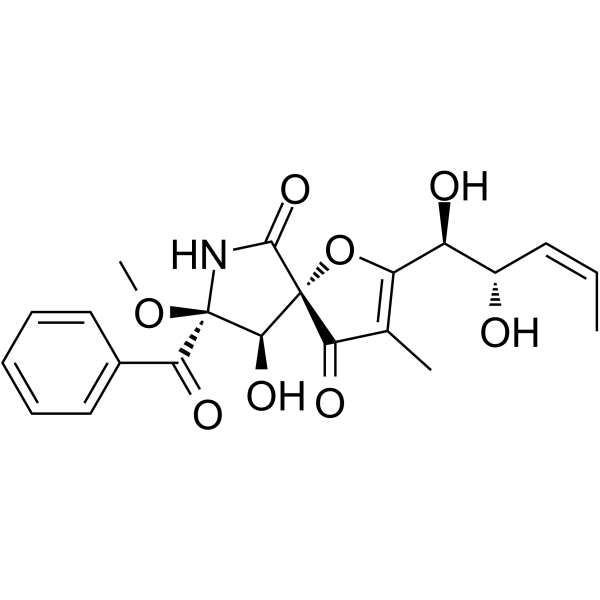
- Formula: C21H23NO8
- Molecular Weight: 417.41
14-Norpseurotin A (14-Norpseurotin) is an Antibacterial, antimalarial, and anticancer agent. 14-Norpseurotin A is isolated from various fungi of the Aspergillus genus. 14-Norpseurotin A induces neurite outgrowth. 14-Norpseurotin A inhibits the growth of Escherichia coli, Bacillus subtilis, and Micrococcus lysoleikticus. 14-Norpseurotin A exhibits antileishmanial activity against L. donovani, antiplasmodial activity against P. falciparum, and shows no activity against T. cruzi. 14-Norpseurotin A exerts anticancer activity against breast cancer. 14-Norpseurotin A is used in research related to leishmaniasis, malaria, and breast cancer.
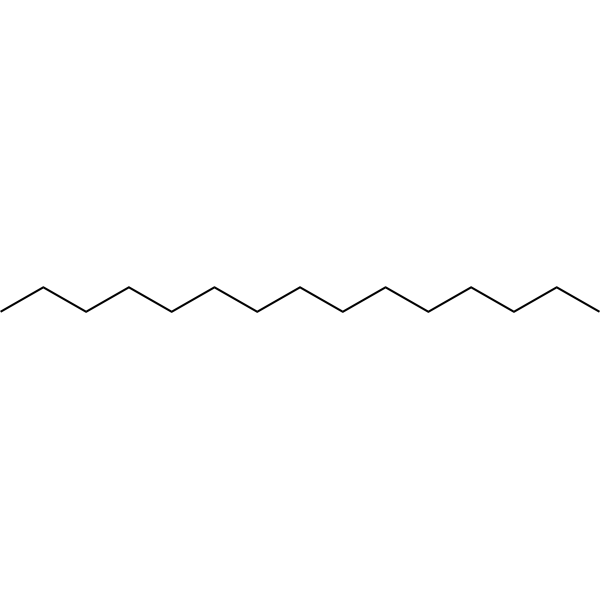
- Formula: C15H32
- Molecular Weight: 212.41
Pentadecane is an orally active natural plant volatile alkane with anti-inflammatory, analgesic, antipyretic and anti-leishmanial activities. Pentadecane presents IC50 values of 65.3 μM, 60.5 μM and 194.8 μM against Leishmania infantum promastigotes, amastigotes and intracellular amastigotes, respectively. Pentadecane downregulates the mRNA expression of TNF-α and IL-12 and inhibits the release of inflammatory mediators. Pentadecane arrests the cell cycle of Leishmania infantum and induces apoptosis. Pentadecane can be applied to the research of inflammation and leishmaniasis.
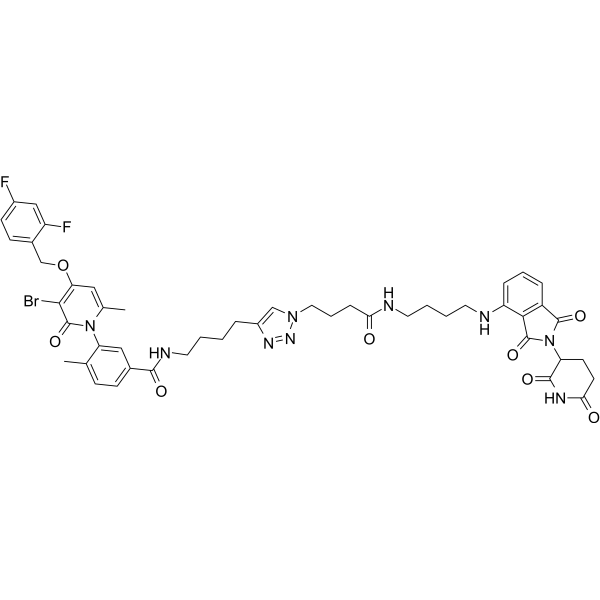
- Formula: C48H50BrF2N9O8
- Molecular Weight: 998.87
NR-7h is a selective p38α/p38β MAPK PROTAC degrader with multiple activities including anti-leishmanial, anti-malarial, and anti-Mayaro virus properties. NR-7h induces specific degradation of p38α/p38β isoforms and p38-MAPK via the ubiquitin-proteasome system. NR-7h reduces the load of Leishmania donovani, modulates the cytokine profile toward a pro-inflammatory phenotype, and enhances the oxidative burst of macrophages. NR-7h inhibits the growth of Plasmodium falciparum in human red blood cells and merozoite invasion. NR-7h reduces the replication of Mayaro virus and the expression of E1 protein in primary human dermal fibroblasts. NR-7h can be used in studies related to parasitic infections, viral infections, and breast cancer.

- Formula: C7H6N2O
- Molecular Weight: 134.14
6-Hydroxyindazole is an anti-parasite agent with an EC50 of 128.9 μM against intracellular amastigotes of Leishmania amazonensis. 6-Hydroxyindazole can be used in the research of leishmaniasis.
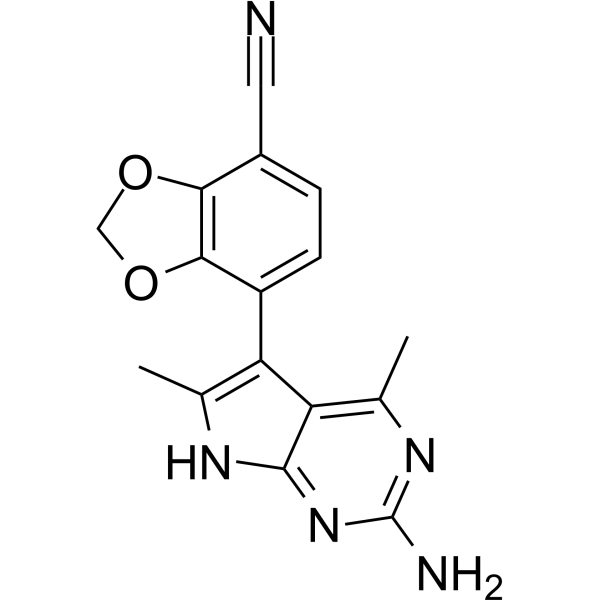
- Formula: C16H13N5O2
- Molecular Weight: 307.31
DNDI-6174 is an orally active Leishmania cytochrome b (Qi site of cytochrome bc1 complex/complex III) inhibitor. DNDI-6174 binds to the Qi site of Leishmania cytochrome b, inhibits cytochrome bc1 complex activity in the parasite's electron transport chain across promastigote and axenic amastigote stages. DNDI-6174 reduces parasite burden in rodent models, inhibits growth of various Leishmania species, drug-resistant clinical isolates, and Trypanosoma cruzi, with marginal activity against Trypanosoma brucei. DNDI-6174 can be used for the research of visceral leishmaniasis, cutaneous leishmaniasis.
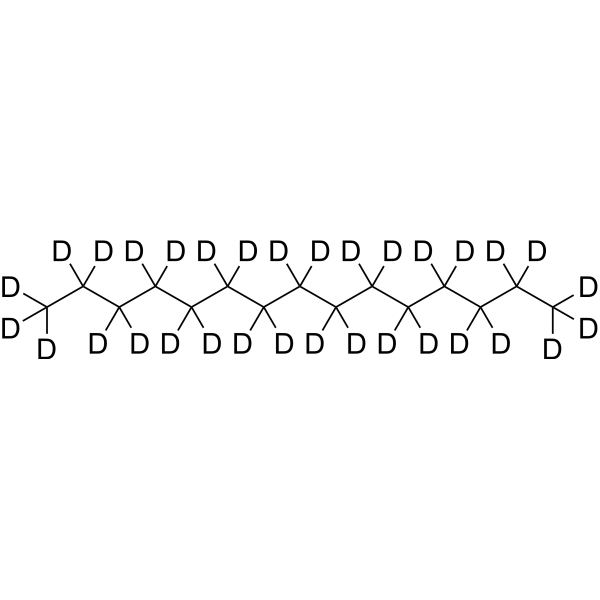
- Formula: C15D32
- Molecular Weight: 244.61
Pentadecane-d32 is the deuterium labeled Pentadecane (HY-N7926). Pentadecane is an orally active natural plant volatile alkane with anti-inflammatory, analgesic, antipyretic and anti-leishmanial activities. Pentadecane presents IC50 values of 65.3 μM, 60.5 μM and 194.8 μM against Leishmania infantum promastigotes, amastigotes and intracellular amastigotes, respectively. Pentadecane downregulates the mRNA expression of TNF-α and IL-12 and inhibits the release of inflammatory mediators. Pentadecane arrests the cell cycle of Leishmania infantum and induces apoptosis. Pentadecane can be applied to the research of inflammation and leishmaniasis.
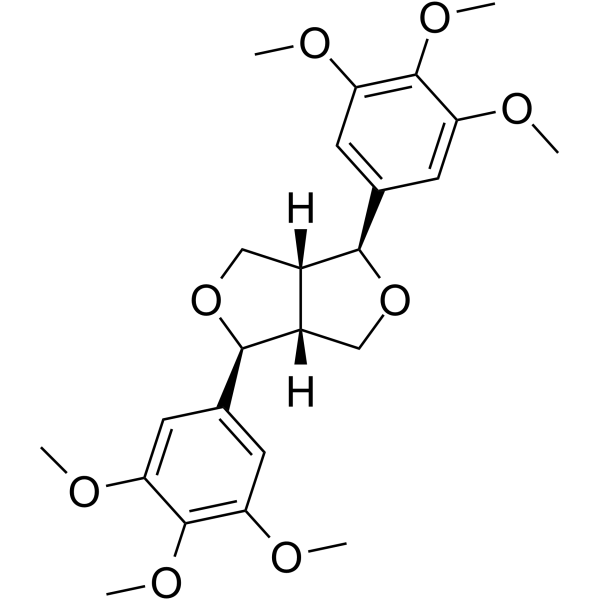
- Formula: C24H30O8
- Molecular Weight: 446.49
Yangambin is a PAF receptor antagonist and UGT1A1/UGT1A3 inhibitor, with an IC50 of 29.7 μM and a Ki of 17.1 μM against human UGT1A1, and an IC50 of 56.5 μM and a Ki of 66.8 μM against human UGT1A3. Yangambin blocks PAF-mediated responses, inhibits LTB4-mediated neutrophil infiltration, and suppresses inflammatory events and anaphylactic contraction. Yangambin acts as a central nervous system inhibitor to reduce spontaneous activity, and also exhibits analgesic, anticonvulsant, antileishmanial, vasodilatory and hypotensive effects. Yangambin blocks voltage-gated Ca2+ channels, reduces the production of NO, TNF-α, IL-6 and PGE2 in cells, increases the production of IL-10, and exerts a protective effect against cardiovascular injury. Yangambin can be used in research related to allergies, cutaneous leishmaniasis, central nervous system diseases and cardiovascular diseases.
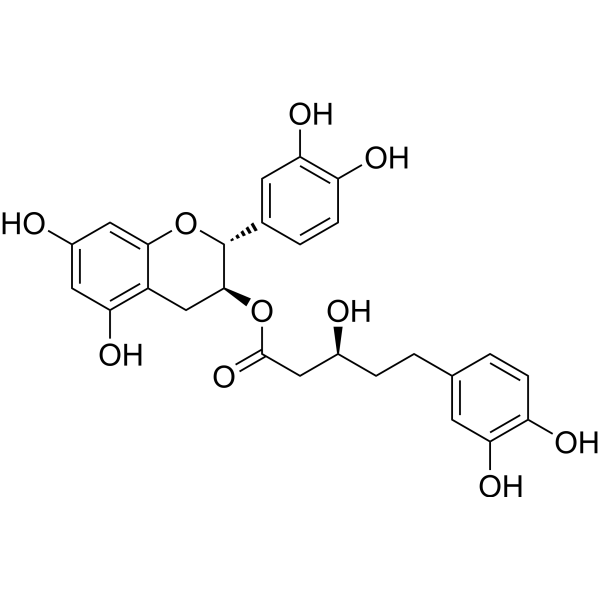
- Formula: C26H26O10
- Molecular Weight: 498.48
Phylloflavan is an antileishmanial (Antileishmanial) agent with an EC50 of 3.2 nM against intracellular amastigotes of Leishmania donovani. Phylloflavan is isolated from Phyllocldus plants. Phylloflavan induces moderate levels of NO release. Phylloflavan also inhibits the cytopathic effect of encephalomyocarditis virus on L929 fibroblasts (38 U/mL).

- Formula: C20H26O5
- Molecular Weight: 346.42
6,11,12,16-Tetrahydroxy-5,8,11,13-abitetetraen-7-one is an abietane diterpenoid with antimicrobial and antiparasitic activities. It exhibits IC50 values of 3.0 and 4.8 μg/mL against Plasmodium falciparum strains D6 and W2, respectively, and inhibits the growth of Leishmania donovani with an IC50 of 12 μg/mL and an IC90 of 22 μg/mL. 6,11,12,16-Tetrahydroxy-5,8,11,13-abitetetraen-7-one can be used in studies related to fungal infections, staphylococcal infections, malaria and leishmaniasis.

- Formula: C41H26O26
- Molecular Weight: 934.63
Castalagin is an orally active natural product with multiple biological activities including antibacterial activity against bacteria and anti-leishmanial activity against Leishmania aethiopica. Castalagin exhibits inhibitory activity against PARP1 and DNA topoisomerase II, with an IC50 of 0.86 μM for bovine PARP1. Castalagin reduces poly (ADP-ribosyl) ation modification in cells. Castalagin binds to the cell envelope of Ruminococcus bromii, increases the ratio of CD8+/FOXP3+CD4+ T cells in the tumor microenvironment, and acts as a prebiotic to enhance the activity of anti-PD-1 therapy. Castalagin induces morphological changes in Leishmania aethiopica promastigotes and inhibits their proliferation. Castalagin inhibits PBP2a-mediated peptidoglycan layer stabilization, disrupts bacterial peptidoglycan assembly, and inhibits and disintegrates bacterial biofilms. Castalagin can be used in research related to diseases such as cancer, leishmaniasis, and bacterial infections.

- Formula: C16H11Cl2F3N4O2
- Molecular Weight: 419.19
LASSBio-1736 is a Cysteine protease inhibitor and antimalarial agent. LASSBio-1736 targets the promastigote form of Leishmania major. LASSBio-1736 can be used in the research of leishmaniasis.

- Formula: C30H28N4
- Molecular Weight: 444.57
Antileishmanial agent-44 is a histone deacetylase inhibitor targeting Leishmania donovani Sir2, with an IC50 of 0.652 μM against amastigotes. Antileishmanial agent-44 elevates ROS levels to induce oxidative stress, which causes mitochondrial membrane potential depolarization, cytochrome c release, phosphatidylserine externalization and DNA fragmentation, triggers apoptosis-like cell death, and arrests the cell cycle. Antileishmanial agent-44 upregulates the expression of Th1-type cytokines and NO in macrophages, reshapes host immune responses to eliminate intracellular parasites. Antileishmanial agent-44 inhibits parasites in infected golden hamsters in vivo. Antileishmanial agent-44 can be used for the research of visceral leishmaniasis.

- Formula: C26H36O11
- Molecular Weight: 524.56
Icariside E3 is a Leishmania donovani DNA Topoisomerase IB (LdTOP1LS) inhibitor. Icariside E3 can be used for the research of leishmaniasis.



