14 Results for "

Ginkgo biloba leaves

" in MedChemExpress (MCE) Product Catalog:
Products (14)

14 Results for "Ginkgo biloba leaves" in MCE Product Catalog:

13
13 Publications Verification
Art. -Nr.: HY-N0889
CAS. Nr.: 481-46-9
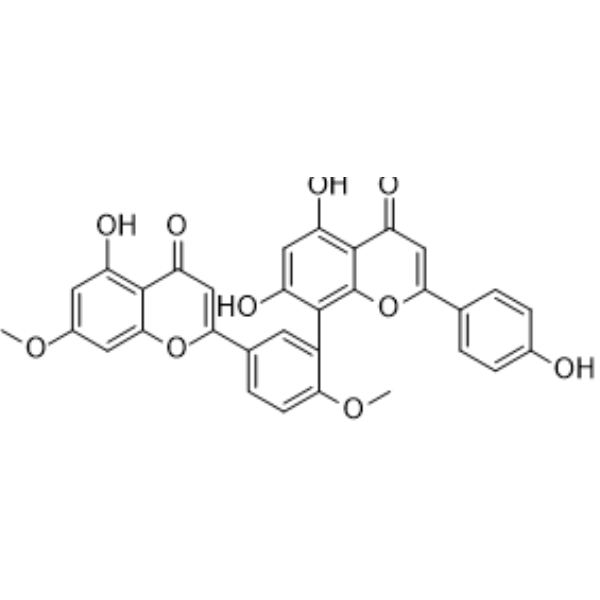
Ginkgetin, a biflavone, is isolated from Ginkgo biloba leaves. Ginkgetin exhibit anti-tumor, anti-inflammatory, neuroprotective, anti-fungal activities. Ginkgetin is also a potent inhibitor of Wnt signaling, with an IC50 of 5.92 μΜ .
loading...
    loading...
4
4 Cited Publications
Art. -Nr.: HY-N2119
CAS. Nr.: 521-34-6
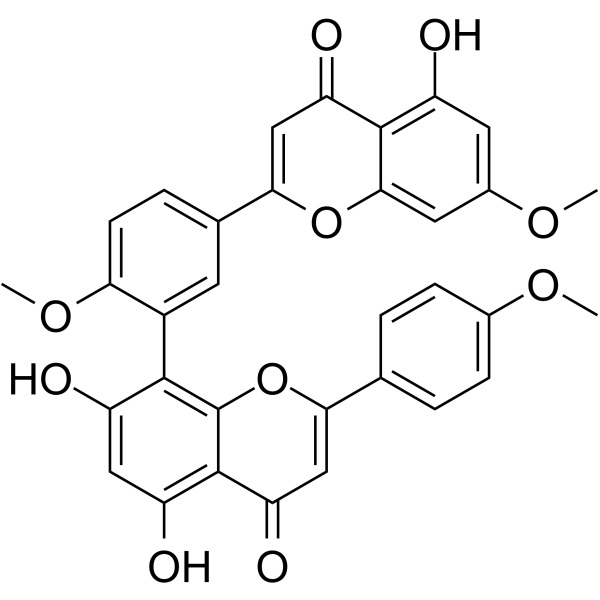
Sciadopitysin is a type of biflavonoids in leaves from ginkgo biloba . Sciadopitysi inhibits RANKL-induced osteoclastogenesis and bone loss by inhibiting NF-κB activation and reducing the expression of c-Fos and NFATc1 .
loading...
    loading...
2
2 Cited Publications
Art. -Nr.: HY-N0785
CAS. Nr.: 15291-76-6
Synonyms: BN-52022
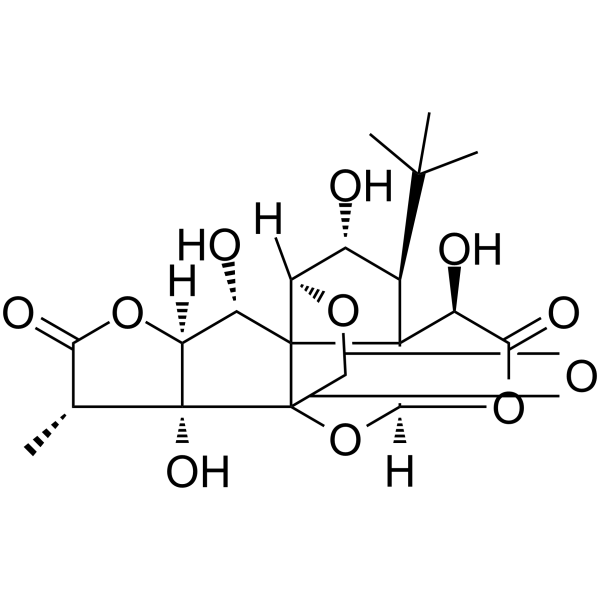
Ginkgolide C is a flavone isolated from Ginkgo biloba leaves, possessing multiple biological functions, such as decreasing platelet aggregation and ameliorating Alzheimer disease.
loading...
    loading...
1
1 Cited Publications
Art. -Nr.: HY-N8157
CAS. Nr.: 1464-33-1
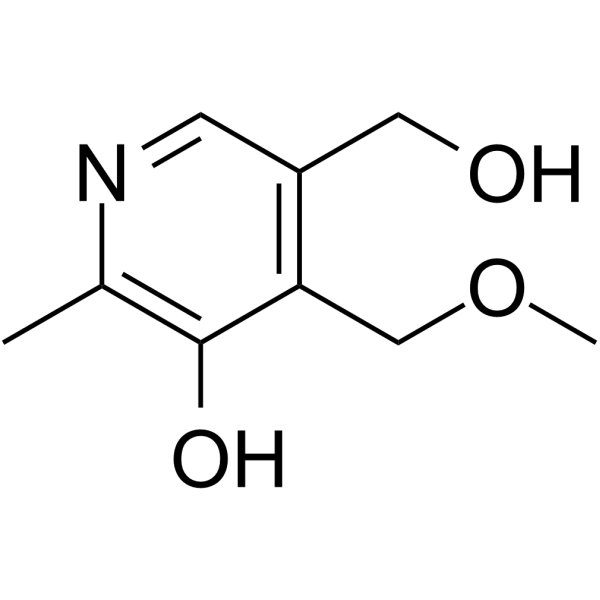
4'-O-Methylpyridoxine is an orally active antivitamin B6 compound found in Ginkgo biloba seeds and leaves. 4'-O-Methylpyridoxine inhibits pyridoxal kinase. 4'-O-Methylpyridoxine reduces brain pyridoxal-5'-phosphate (PLP) levels, decreases gamma-aminobutyric acid/glutamate (GABA/Glu) ratio. 4'-O-Methylpyridoxine increases plasma levels of pyridoxal-5'-phosphate and pyridoxal. 4'-O-Methylpyridoxine induces hyperactivity, convulsions, pathological tissue changes, organ damage in rodent brain and heart .
loading...
    loading...
Art. -Nr.: HY-N12060
CAS. Nr.: 90045-36-6
Ginkgo biloba extract is a natural product that can be isolated from Ginkgo biloba leaves . Ginkgo biloba extract alleviates oxidative stress-induced neuronal apoptosis (Apoptosis) by stabilizing mitochondrial function, regulating Bcl-2 family proteins and inhibiting caspase activation. Ginkgo biloba extract alleviates testicular injury by upregulating SKP2 and inhibiting Beclin1-independent autophagy (Autophagy) . Ginkgo biloba extract alleviates various types of neuronal damage in animal models. Ginkgo biloba extract reduces behavioral sensitization in rats. Ginkgo biloba extract counteracts Aβ-induced neurotoxicity by blocking a series of Aβ-triggered events, including glucose uptake, ROS accumulation, AKT activation, mitochondrial dysfunction, JNK and ERK 1/2 pathways, and apoptosis, and also interferes with the formation of Aβ oligomers. Ginkgo biloba extract is applicable to research related to cerebral hypoperfusion, testicular injury, Alzheimer's disease, Parkinson's disease, multi-infarct dementia, stroke, traumatic brain injury and amyotrophic lateral sclerosis .
loading...
    loading...
Art. -Nr.: HY-N6964
CAS. Nr.: 143061-65-8
Synonyms: Quercetin-3-O-[2-O-(6-O-p-hydroxyl-E-coumaroyl)-D-glucosyl]-(1→2)-L-rhamnoside
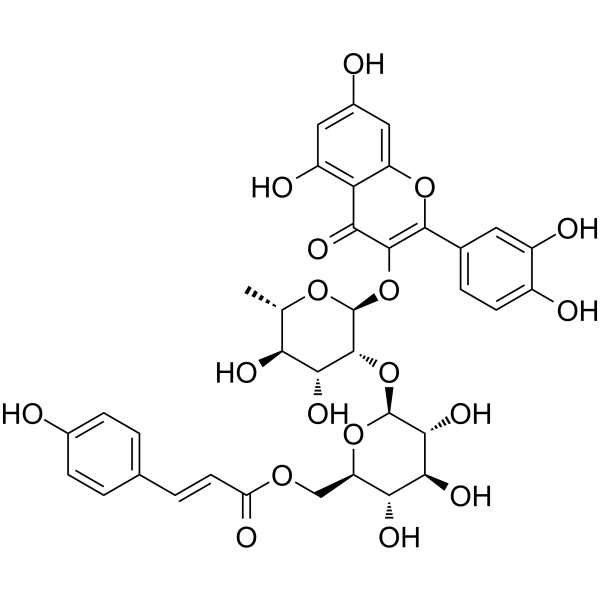
Quercetin 3-O-β-D-(6''-p-coumaroyl) glucopyranosyl (1→2)-α-L-rhamnopyranoside (Quercetin-3-O-[2-O-(6-O-p-hydroxyl-E-coumaroyl)-D-glucosyl]-(1→2)-L-rhamnoside) is a flavonoid glycoside present in Ginkgo biloba leaves, with antioxidant activity. Quercetin 3-O-β-D-(6''-p-coumaroyl) glucopyranosyl (1→2)-α-L-rhamnopyranoside serves as the major antioxidant component in Shuxuening Injection .
loading...
    loading...
Art. -Nr.: HY-N0785R
CAS. Nr.: 15291-76-6
Synonyms: BN-52022 (Standard)
Ginkgolide C (Standard) is the analytical standard of Ginkgolide C. This product is intended for research and analytical applications. Ginkgolide C is a flavone isolated from Ginkgo biloba leaves, possessing multiple biological functions, such as decreasing platelet aggregation and ameliorating Alzheimer disease.
loading...
    loading...
Art. -Nr.: HY-N20898
Ginkgo biloba leaves polysaccharide is a polysaccharide derived from Ginkgo biloba leaves.
loading...
    loading...
Art. -Nr.: HY-N0889R
CAS. Nr.: 481-46-9
Ginkgetin (Standard) is the analytical standard of Ginkgetin. This product is intended for research and analytical applications. Ginkgetin, a biflavone, is isolated from Ginkgo biloba leaves. Ginkgetin exhibit anti-tumor, anti-inflammatory, neuroprotective, anti-fungal activities. Ginkgetin is also a potent inhibitor of Wnt signaling, with an IC50 of 5.92 μΜ .
loading...
    loading...
Art. -Nr.: HY-N2119R
CAS. Nr.: 521-34-6
Sciadopitysin (Standard) is the analytical standard of Sciadopitysin. This product is intended for research and analytical applications. Sciadopitysin is a type of biflavonoids in leaves from ginkgo biloba . Sciadopitysi inhibits RANKL-induced osteoclastogenesis and bone loss by inhibiting NF-κB activation and reducing the expression of c-Fos and NFATc1 .
loading...
    loading...
Art. -Nr.: HY-187039
CAS. Nr.: 1426129-91-0
Target:  

Others

Forschungsgebiete:  

Others

7-Glc-kaempferol 3-(6-cglc)-(1-2)-rhamnoside is a flavonol glycoside that can be found in Ginkgo biloba leaves. 7-Glc-kaempferol 3-(6-cglc)-(1-2)-rhamnoside is present in GBE50 extract, and is detected in rat bile (but not plasma) after oral administration of GBE50 extract to rats .
loading...
    loading...
Art. -Nr.: HY-N17398
CAS. Nr.: 194292-74-5
Kaempherol-3-O-β-D-(2"-O-trans-p-coumaroyl)-rutinoside is an acylated flavonol glycoside found in the leaves of Ginkgo biloba L .
loading...
    loading...
Art. -Nr.: HY-N16448
CAS. Nr.: 61391-08-0
Xanthoascin (Compound 1) is a natural phenolic metabolite with strong anti plant pathogen activity. Xanthoascin can be extracted from the solid fermentation product of endophytic fungus Aspergillus sp. IFB-YXS isolated from Ginkgo biloba leaves. Xanthoascin has a MIC of 0.3125 µg/mL against Clavibacter michiganense subsp. Sepedonicus and moderate inhibitory activity against other pathogens (MIC = 5-20 µg/mL). Xanthoascin can disrupt the permeability of bacterial cell membranes, leading to nucleic acid leakage .
loading...
    loading...
Art. -Nr.: HY-N17388
CAS. Nr.: 2350304-04-8
5,7,5′-Trihydroxy-3′,4′-dimethoxyflavonol-3-O-α-L-rhamnopyranosyl-(1→6)-β-D-glucopyranoside is a flavonol glycoside found in the leaves of Ginkgo biloba. 5,7,5′-Trihydroxy-3′,4′-dimethoxyflavonol-3-O-α-L-rhamnopyranosyl-(1→6)-β-D-glucopyranoside exerts antioxidative and cardioprotective effects. 5,7,5′-Trihydroxy-3′,4′-dimethoxyflavonol-3-O-α-L-rhamnopyranosyl-(1→6)-β-D-glucopyranoside can be used for the research of inflammation and cardiac injury .
loading...
    loading...
  • 1

