5 Results for "

Glycolipid metabolism

" in MedChemExpress (MCE) Product Catalog:
Products (5)

5 Results for "Glycolipid metabolism" in MCE Product Catalog:

1
1 Cited Publications
Cat. No.: HY-126562
CAS No.: 5950-12-9
Purity:  99.31%
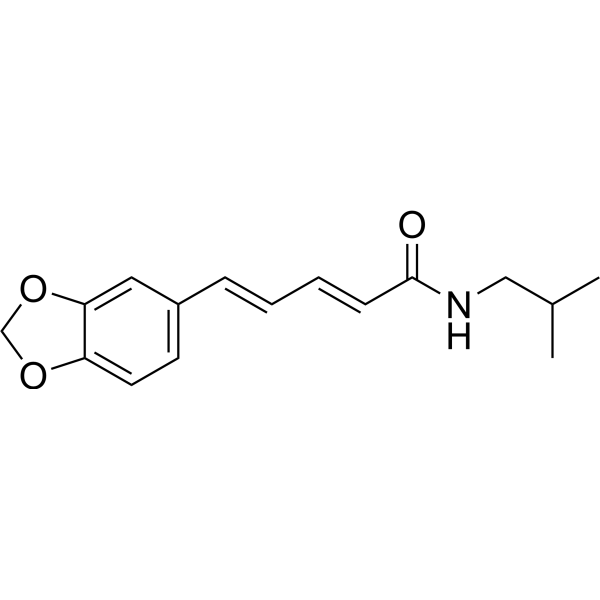
Piperlonguminine is a cytochrome P450 (CYP450) inhibitor. Piperlonguminine also inhibits the growth of epimastigotes and intracellular amastigotes of Trypanosoma cruzi, with IC50 values of 53.8 and 33.9 μM, respectively . Piperlonguminine regulates HMGB1/TLR4-NF-κB/MAPK-related inflammatory responses, endothelial protein C receptor (EPCR) shedding, melanogenesis, glycolipid metabolism, ischemic brain injury and tumor growth. Piperlonguminine can be used in research on hyperlipidemia, sepsis, Chagas disease, ischemic stroke, sarcoma and severe acute pancreatitis-associated lung injury .
loading...
    loading...
Cat. No.: HY-106181A
CAS No.: 299176-11-7
Synonyms: R-106056 hydrochloride
Target:  

PPAR

Research Areas:  

Metabolic Disease

Rivoglitazone hydrochloride (R-106056 hydrochloride) is a peroxisome proliferator-activated receptor-γ (PPAR-γ) agonist. Rivoglitazone hydrochloride (R-106056 hydrochloride) exerts its anti-diabetic effect by activating PPARγ to regulate the expression of a large number of genes related to lipid and glucose metabolism. Rivoglitazone hydrochloride (R-106056 hydrochloride) can be used to study insulin secretion and insulin resistance in animal models of diabetes .
loading...
    loading...
Cat. No.: HY-126562R
CAS No.: 5950-12-9
Piperlonguminine (Standard) is the analytical standard of Piperlonguminine (HY-126562). This product is intended for research and analytical applications. Piperlonguminine is a cytochrome P450 (CYP450) inhibitor. Piperlonguminine also inhibits the growth of epimastigotes and intracellular amastigotes of Trypanosoma cruzi, with IC50 values of 53.8 and 33.9 μM, respectively . Piperlonguminine regulates HMGB1/TLR4-NF-κB/MAPK-related inflammatory responses, endothelial protein C receptor (EPCR) shedding, melanogenesis, glycolipid metabolism, ischemic brain injury and tumor growth. Piperlonguminine can be used in research on hyperlipidemia, sepsis, Chagas disease, ischemic stroke, sarcoma and severe acute pancreatitis-associated lung injury .
loading...
    loading...
Cat. No.: HY-N17773
CAS No.: 491-79-2
Hydrangeic acid is an orally effective stilbene-type glycolipid metabolism regulator that lowers blood glucose and lipids. It can be isolated from processed leaves of Hydrangea macrophylla var. thunbergii. Hydrangeic acid is associated with glycolipid metabolism and insulin sensitivity regulation. Hydrangeic acid does not directly activate PPARγ or PPARα, but instead upregulates the mRNA expression of adiponectin, PPARγ2, GLUT4, and fatty acid-binding protein aP2, and downregulates TNF-α mRNA expression, promoting adipogenesis, glucose uptake, and GLUT4 translocation in 3T3-L1 cells. Simultaneously, Hydrangeic acid inhibits inflammatory factor-induced NO production, exerting activity in improving insulin resistance. Hydrangeic acid can be used in research related to type 2 diabetes and does not cause liver weight gain as a side effect.
loading...
    loading...
Cat. No.: HY-181469
Synonyms: Adamantanyl GluCer (d18:1/2:0); Adamantanyl glucosylceramide (d18:1/2:0); AdaGluCer (d18:1/2:0)
Target:  

Glycosidase

Research Areas:  

Metabolic Disease

C2 Adamantanyl glucosylceramide (d18:1/2:0) (Adamantanyl GluCer (d18:1/2:0)) is an inhibitor of glucocerebrosidase (GCC) and LacCer synthase. At low doses, C2 Adamantanyl glucosylceramide (d18:1/2:0) increases intracellular glycolipid levels by inhibiting glucocerebrosidase. C2 Adamantanyl glucosylceramide (d18:1/2:0) alters glycolipid metabolism. C2 Adamantanyl glucosylceramide (d18:1/2:0) can be used for the research of Gaucher disease and Fabry disease .
loading...
    loading...

