



-
Hydrangeaceae Extract (10)

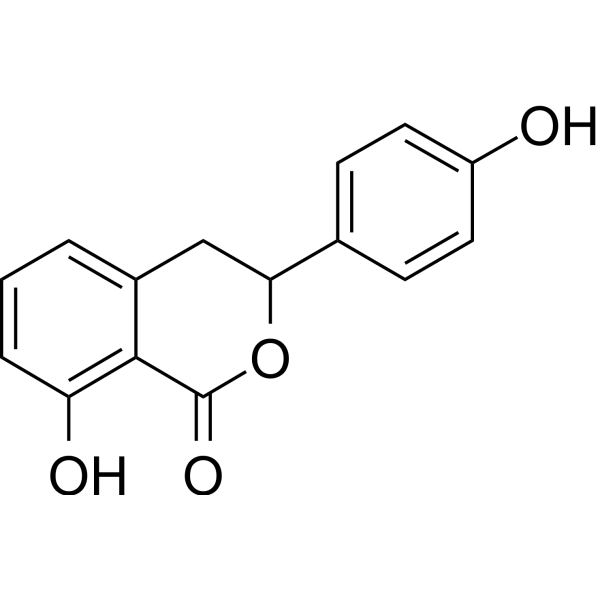
- Formula: C15H12O4
- Molecular Weight: 256.25
Hydrangenol is an orally active antiphotoaging compound. It can be isolated from Hydrangea serrata leaves. Hydrangenol prevents wrinkle formation by reducing MMP and inflammatory cytokine expression and increasing moisturizing factors and antioxidant genes level.

- Formula: C15H12O4
- Molecular Weight: 256.25
Hydrangeic acid is an orally effective stilbene-type glycolipid metabolism regulator that lowers blood glucose and lipids. It can be isolated from processed leaves of Hydrangea macrophylla var. thunbergii. Hydrangeic acid is associated with glycolipid metabolism and insulin sensitivity regulation. Hydrangeic acid does not directly activate PPARγ or PPARα, but instead upregulates the mRNA expression of adiponectin, PPARγ2, GLUT4, and fatty acid-binding protein aP2, and downregulates TNF-α mRNA expression, promoting adipogenesis, glucose uptake, and GLUT4 translocation in 3T3-L1 cells. Simultaneously, Hydrangeic acid inhibits inflammatory factor-induced NO production, exerting activity in improving insulin resistance. Hydrangeic acid can be used in research related to type 2 diabetes and does not cause liver weight gain as a side effect.
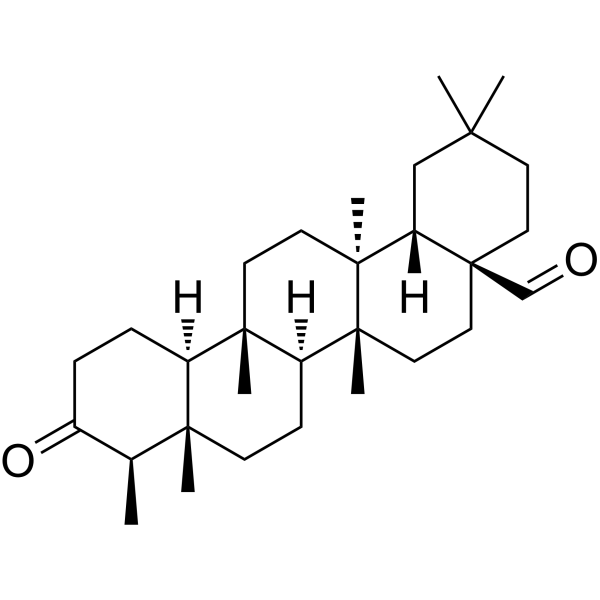
- Formula: C30H48O2
- Molecular Weight: 440.70
Canophyllal is a triterpene that can be isolated from the leaves of Elsholtzia ciliata. Canophyllal weakly inhibits the production of NO.
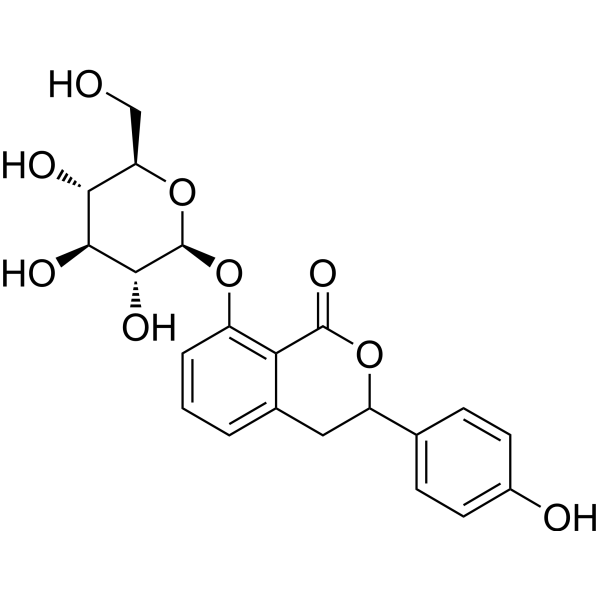
- Formula: C21H22O9
- Molecular Weight: 418.39
Hydrangenol 8-O-glucoside (Hydrangenol 8-O-β-D-glucopyranoside) can be isolated from Hydrangea macrophyllu. Hydrangenol 8-O-glucoside is an AChE inhibitor (IC50: 22.66 μM). Hydrangenol 8-O-glucoside inhibits passive cutaneous anaphylaxis (PCA) reaction.
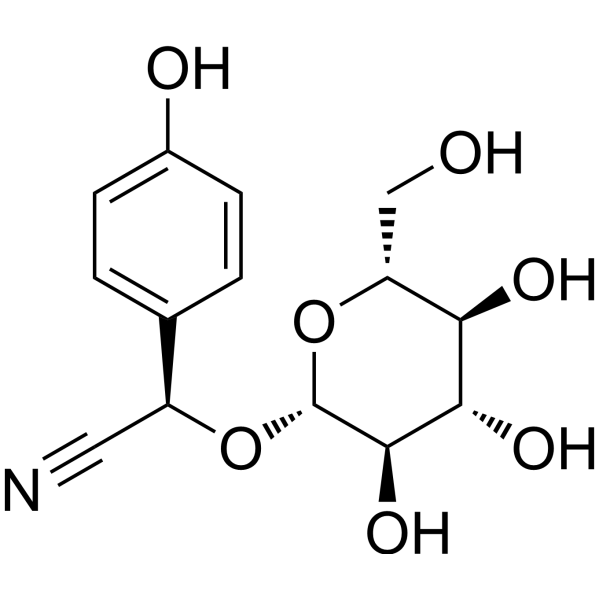
- Formula: C14H17NO7
- Molecular Weight: 311.29
Taxiphyllin (2R-Taxiphyllin) is a plant cyanogenic glycoside, which exhibits inhibitory activity for tyrosinase. Taxiphyllin exhibits cytotoxicity in BRL-3A cellls with an IC50 of 18.75 μm and antimicrobial activities against Staphylococcus aureus with an EC50 of 0.96 μM.

- Formula: C10H20O
- Molecular Weight: 156.27
(±)-Neoisomenthol is a monoterpene. (±)-Neoisomenthol is a volatile constituent of Mentha arvensis with a peppermint odor and taste. (±)-Neoisomenthol is a chiral compound, existing as a racemic mixture of two enantiomers, (+)-Neoisomenthol and (-)-Neoisomenthol.

- Formula: C49H56O26
- Molecular Weight: 1060.95
Hemiphroside B nonaacetate is a Phenols product that can be isolated from the herbs of Hydrangea macrophylla.

- Formula: C31H32O14
- Molecular Weight: 628.58
(3S)-Hydrangenol 8-O-glucoside pentaacetate is a Flavonoids product that can be isolated from the herbs of Hydrangea macrophylla.

- Formula: C31H32O14
- Molecular Weight: 628.58
(3R)-Hydrangenol 8-O-glucoside pentaacetate is a Flavonoids product that can be isolated from the herbs of Hydrangea macrophylla.
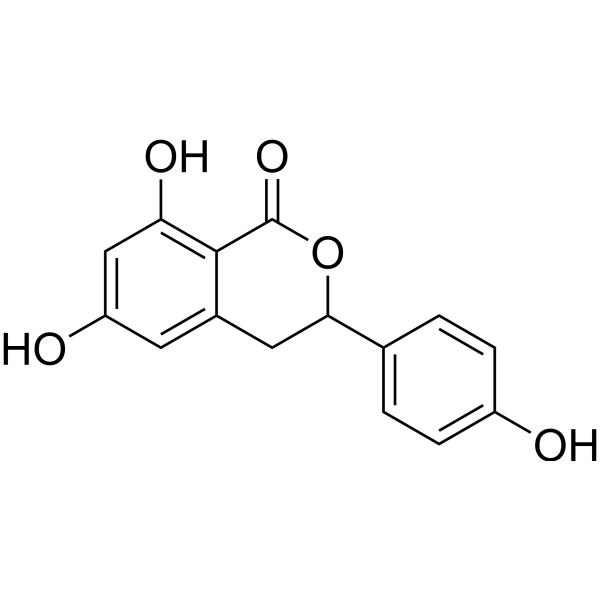
- Formula: C15H12O5
- Molecular Weight: 272.25
Thunberginol C is an orally active, selective, and non-competitive inhibitor of AChE and BChE, with IC50 values of 41.96 and 42.36 μM, respectively. Thunberginol C exerts cytoprotective, pro-collagen type I restorative, MMP-1 inhibitory, hyaluronic acid restorative, anti-photoaging effects in skin cells. Thunberginol C exerts neuroprotective, anxiolytic, TNF-α inhibitory, neuroinflammation inhibitory, and oxidative stress inhibitory effects. Thunberginol C can be used for the research of Alzheimer’s disease, UVB-induced skin photoaging, allergic reactions, oral bacterial infections, and stress-induced anxiety.



