



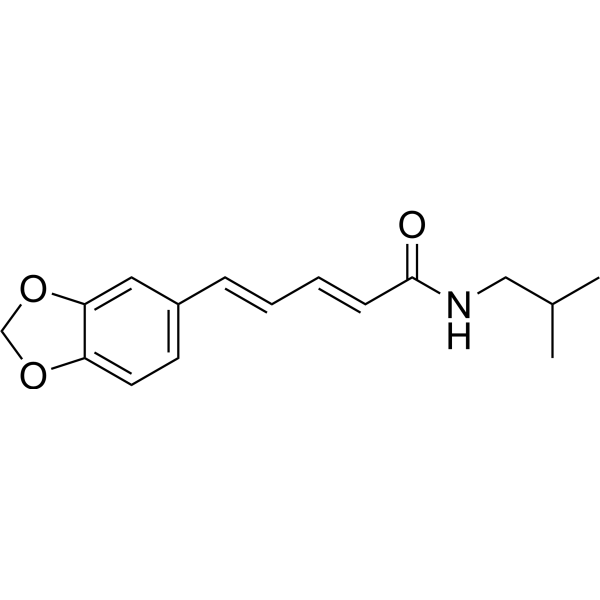
Piperlonguminine
Based on 1 publication(s) in Google Scholar
Piperlonguminine is a cytochrome P450 (CYP450) inhibitor. Piperlonguminine also inhibits the growth of epimastigotes and intracellular amastigotes of Trypanosoma cruzi, with IC50 values of 53.8 and 33.9 μM, respectively. Piperlonguminine regulates HMGB1/TLR4-NF-κB/MAPK-related inflammatory responses, endothelial protein C receptor (EPCR) shedding, melanogenesis, glycolipid metabolism, ischemic brain injury and tumor growth. Piperlonguminine can be used in research on hyperlipidemia, sepsis, Chagas disease, ischemic stroke, sarcoma and severe acute pancreatitis-associated lung injury.
For research use only. We do not sell to patients.
- Purity : 99.81%
- CAS No.: 5950-12-9
- Formula: C16H19NO3
- Molecular Weight:273.33
-
Storage:
4°C, sealed storage, away from moisture and light
* In solvent : -80°C, 6 months; -20°C, 1 month (sealed storage, away from moisture and light)

To place orders, for customer services and technical support, please contact: MedChemExpress USA
Tel: 609-228-6898 E-mail: [email protected] [email protected]


-
 Biological Activity
-
Chemical Information
-
Solvent & Solubility
- Protocols
- Purity & Documentation
- References
-
 Help & FAQs



Publications Citing Use of MedChemExpress (MCE) Piperlonguminine
MoreAll Parasite Isoforms
More

Biological Activity
Description
IC50 & Target
[6]|
CYP3A 23.2 μM (IC50) |
CYP2C9 69 μM (IC50) |
CYP2E1 140.9 μM (IC50) |
CYP2C8 251.5 μM (IC50) |
CYP2D6 359.2 μM (IC50) |
Cellular Effect
|
Cell Line

|
Type | Value | Description | References |
|---|---|---|---|---|
| HCT-116 | IC50 |
>20 μM
Compound: 1a
|
Cytotoxicity against human HCT116 cells after 24 hrs by MTT assay
Cytotoxicity against human HCT116 cells after 24 hrs by MTT assay
|
[PMID: 21745740] |
| HepG2 2.2.15 | CC50 |
0.32 mM
Compound: 11
|
Cytotoxicity against human HepG2(2.2.15) cells
Cytotoxicity against human HepG2(2.2.15) cells
|
[PMID: 23434420] |
| HepG2 2.2.15 | IC50 |
>4.51 mM
Compound: 11
|
Antiviral activity against Hepatitis B virus-infected human HepG2(2.2.15) cells assessed as inhibition of HBeAg secretion
Antiviral activity against Hepatitis B virus-infected human HepG2(2.2.15) cells assessed as inhibition of HBeAg secretion
|
[PMID: 23434420] |
| HepG2 2.2.15 | IC50 |
>4.51 mM
Compound: 11
|
Antiviral activity against Hepatitis B virus-infected human HepG2(2.2.15) cells assessed as inhibition of HBsAg secretion
Antiviral activity against Hepatitis B virus-infected human HepG2(2.2.15) cells assessed as inhibition of HBsAg secretion
|
[PMID: 23434420] |
In Vitro
Piperlonguminine (5-40 μM; 6 h; HUVECs) inhibits LPS (HY-D1056)/HMGB1-induced HMGB1 release and RAGE expression, and reduces the increased endothelial barrier permeability induced by HMGB1[2].
Piperlonguminine (5-40 μM; 6 h; HUVECs) inhibits HMGB1-induced expression of VCAM-1, ICAM-1 and E-selectin, as well as THP-1 cell adhesion and transendothelial migration, and reduces TNF-α, IL-6, and signaling associated with NF-κB, ERK1/2 and p38[2].
Piperlonguminine (5-40 μM; 6 h; HUVECs) inhibits LPS-induced production of TNF-α and IL-6, activation of NF-κB p65 and ERK1/2, reduces the expression of VCAM-1, ICAM-1 and E-selectin, and suppresses monocyte adhesion and migration[5].
Piperlonguminine (0.39-25 μg/mL; 72 h) exhibits no significant cytotoxicity in HL-60, HCT-8, SF-295, and MDA-MB-435 cells, with an IC50 >25 μg/mL for all four cell lines[4].
Piperlonguminine (5-40 μM; 6 h; HUVECs) dose-dependently attenuates LPS (100 ng/mL)-induced endothelial barrier disruption, and inhibits TLR4 expression and p38 MAPK phosphorylation; piperlonguminine does not significantly reduce HUVEC viability at concentrations up to 100 μM[5].
Piperlonguminine (10-40 μM; 6 h; HUVECs) inhibits PMA (HY-18739) (1 μM; 1 h)-induced EPCR shedding and TACE/ADAM17 expression, and reduces the phosphorylation of p38, ERK1/2 and JNK; piperlonguminine also inhibits TNF-α- or IL-1β-induced EPCR shedding[7].
Piperlonguminine (0.1-1000 μM; 30 min preincubation; human liver microsomes) exhibits time-dependent inhibition of CYP3A4, CYP2C9, CYP2E1, CYP2C8, and CYP2D6 in the presence of NADPH, with the IC50 values of CYP3A4 and CYP2C9 decreasing to 23.2 μM and 69.0 μM, respectively[6].
Piperlonguminine (100 μM; rat/human liver microsomes; NADPH) forms O-dealkylation metabolite M1 and hydroxylation metabolite M2, as well as four N-acetylcysteine-trapped conjugates M3-M6 derived from O-quinone; CYP3A4 is the major CYP450 enzyme mediating the metabolic activation of Piperlonguminine[6].
Piperlonguminine (6-25 μM; 72 h; B16 cells) dose-dependently inhibits melanogenesis induced by α-MSH (HY-P0252), IBMX (HY-12318) and protoporphyrin IX (HY-B1247), with IC50 values of 9.6, 9.2 and 9.1 μM, respectively, but does not significantly suppress OAG/PKC-mediated melanogenesis[9].
Piperlonguminine (3-25 μM; B16 cells) dose-dependently reduces α-MSH-induced CREB phosphorylation and MITF expression, and downregulates Tyrosinase transcription/expression, but does not directly inhibit the L-DOPA oxidizing activity of cell-free Tyrosinase[9].
Piperlonguminine (1-30 μM; during 3T3-L1 differentiation) promotes triglyceride accumulation and increases 2-deoxyglucose uptake in a concentration-dependent manner, enhances adiponectin release at 10 and 30 μM, and upregulates the mRNA levels of adiponectin, PPARγ2, GLUT4 and aP2; piperlonguminine does not exhibit significant direct PPARγ agonistic activity in assays without nuclear receptor cofactors[8].
Piperlonguminine (3.6-361 μM; 96 h) inhibits the growth of T. cruzi Y strain epimastigotes with an IC50 of 53.8 μM; it inhibits intracellular amastigotes in LLCMK2 cells at 18-361 μM with an IC50 of 33.9 μM. The CC50 of piperlonguminine against LLCMK2 cells is 303.1 μM, with a selectivity index (SI) of 8.9[10].
Piperlonguminine (34 μM; 24 h; *T. cruzi* extracellular amastigotes) increases MDC-labeled autophagic vacuoles, and this change is partially inhibited by wortmannin; ultrastructural and mitochondrial analyses also show that piperlonguminine induces mitochondrial abnormalities, cytoplasmic vacuolization, and alterations in membrane structures[10].
Piperlonguminine (2.5-40 μM; 12 h; SH-SY5Y) concentration-dependently enhances cell viability and reduces apoptosis after 3 h of oxygen-glucose deprivation (OGD)[11].
Piperlonguminine (20 μM; 12 h; SH-SY5Y) inhibits TNF-α (20 ng/mL; 30 min)-induced phosphorylation of p38 MAPK and NF-κB p65[11].
MedChemExpress (MCE) has not independently confirmed the accuracy of these methods. They are for reference only. Further protocols information, click here.
-
Cell Line:human neuroblastoma SH-SY5Y cells
-
Concentration:2.5 μM (12 h post-OGD); 5 μM (12 h post-OGD); 10 μM (12 h post-OGD); 20 μM (12 h post-OGD, also without OGD); 40 μM (12 h post-OGD)
-
Incubation Time:12 h (post-OGD incubation)
-
Result:Attenuated OGD-induced cytotoxicity in a concentration-dependent manner, increasing cell viability relative to the OGD-only control.
Reduced OGD-induced apoptosis in a concentration-dependent manner, lowering the percentage of apoptotic cells relative to the OGD-only control.
-
Cell Line:human neuroblastoma SH-SY5Y cells
-
Concentration:20 μM (pre-incubation before TNF-α stimulation)
-
Incubation Time:12 h (pre-incubation before TNF-α stimulation)
-
Result:Blocked the TNF-α-induced phosphorylation of p38MAPK, reducing its relative protein expression level.
Inhibited the TNF-α-induced activation of NF-κBp65, reducing its relative protein expression level.
-
Cell Line:primary human umbilical vein endothelial cells (HUVECs)
-
Concentration:5-40 μM
-
Incubation Time:6 h
-
Result:Inhibited HMGB1-mediated upregulation of VCAM-1, ICAM-1, and E-selectin in a concentration-dependent manner.\nSignificantly reduced HMGB1-mediated activation of phosphorylated NF-κB p65 and phosphorylated ERK1/2 in a concentration-dependent manner.
-
Cell Line:primary human umbilical vein endothelial cells (HUVECs), THP-1 monocyte cells
-
Concentration:5-40 μM (pre-treatment; post-treatment)
-
Incubation Time:6 h (pre-treatment; post-treatment)
-
Result:Reduced HMGB1-mediated THP-1 monocyte migration across HUVEC monolayers in a concentration-dependent manner when administered as a pre-treatment or post-treatment.
-
Cell Line:primary human umbilical vein endothelial cells (HUVECs)
-
Concentration:5-40 μM (6 h pre-incubation before LPS treatment); 40 μM (6 h incubation alone, no LPS)
-
Incubation Time:6 h (pre-incubation before LPS treatment); 6 h (incubation alone, no LPS)
-
Result:Did not alter baseline TNF-α and IL-6 secretion at 40 μM alone.
Dose-dependently inhibited LPS-induced production of both cytokines.
-
Cell Line:primary human umbilical vein endothelial cells (HUVECs)
-
Concentration:10-40 μM
-
Incubation Time:6 h (piperlonguminine pretreatment); 1 h (phorbol 12-myristate 13-acetate stimulation)
-
Result:Reduced EPCR shedding and TACE/ADAM17 expression.
-
Cell Line:HL-60 (human leukemia), MDA-MB-435 (human melanoma), SF-295 (human brain cancer), HCT-8 (human colon cancer)
-
Concentration:0.39, 1.56, 3.12, 6.25, 12.5, 25 μg/mL
-
Incubation Time:72 h
-
Result:Showed no cytotoxic activity against all four tested human tumor cell lines, with IC50 values greater than 25 μg/mL.
-
Cell Line:differentiated 3T3-L1 adipocytes
-
Concentration:3, 10, 30 μM
-
Incubation Time:8 days
-
Result:Increased mRNA levels of adiponectin (significantly at 30 μM), PPARγ2 (significantly at 10 and 30 μM), GLUT4 (significantly at all tested concentrations), and aP2 (significantly at 30 μM) relative to vehicle control.
-
Cell Line:α-MSH-stimulated melanoma B16 cells
-
Concentration:3-25 μM
-
Incubation Time:2 h preincubation; 48 h incubation with α-MSH
-
Result:Reduced CREB phosphorylation, MITF expression, and tyrosinase expression.
-
Cell Line:α-MSH-stimulated melanoma B16 cells
-
Concentration:6-25 μM
-
Incubation Time:72 h
-
Result:Inhibited α-MSH-, IBMX-, and protoporphyrin IX-induced melanogenesis with IC50 values of 9.6, 9.2, and 9.1 μM, respectively.
-
Cell Line:LLCMK2 monkey kidney epithelial cells
-
Concentration:3.6-360.0 μM
-
Incubation Time:96 h
-
Result:Showed low toxicity to LLCMK2 cells, with a CC50 of 303.1 μM.
Resulted in a selective index of 8.9, calculated as the ratio of CC50 against LLCMK2 cells to IC50 against intracellular amastigotes.
Parmacokinetics
In Vivo
Piperlonguminine (5.5 or 11.0 μg/mouse; i.v.) reduces LPS-induced increases in vascular permeability and peritoneal leukocyte migration in mice[5].
Piperlonguminine (11 μg/mouse; administered 12 h after CLP or at 12 and 50 h after CLP) reduces CLP-induced serum soluble EPCR (sEPCR) levels[7].
Piperlonguminine (11.0 μg/mouse; i.v.; at 12 and 50 h post-CLP) increases the survival rate from 0% to 40% in CLP-induced septic mice[2].
Piperlonguminine (11.0 μg/mouse; i.v.; 12 and 50 h after LPS) increases the survival rate from 0% to 40% in LPS (15 mg/kg; i.p.)-induced septic mice[5].
Piperlonguminine (10 mg/kg; p.o.; once daily for 14 days) reduces total cholesterol (TC), triglycerides (TG) and low-density lipoprotein cholesterol (LDL-C), while increases high-density lipoprotein cholesterol (HDL-C) in high-fat diet-fed Wistar rats; the levels of TC, TG, LDL-C and HDL-C are 9.67, 1.47, 3.57 and 1.31 mmol/L, respectively, compared with 22.26, 2.86, 5.44 and 0.68 mmol/L in the high-fat diet control group[3].
Piperlonguminine (25 or 50 mg/kg; i.p.; once daily for 7 days) reduces tumor weight in Sarcoma 180 tumor-bearing mice, with tumor growth inhibition rates of 38.71% and 40.68%, respectively[4].
Piperlonguminine (2.4 mg/kg; i.p.; immediately after reperfusion) reduces neurological deficit scores, cerebral infarction volume and brain water content, and alleviates increased blood-brain barrier (BBB) permeability in a rat model of focal cerebral ischemia; the cerebral infarction volume decreases from 22.9% in the vehicle group to 14.7%[11].
Piperlonguminine (5, 10, or 15 mg/kg; i.p.; 24 h) dose-dependently alleviates pancreatic and pulmonary tissue injury, alveolar thickening, and edema in rats with severe acute pancreatitis induced by 4% sodium taurocholate (HY-N0545). A dose of 10 mg/kg achieves the main experimental effect, so 10 mg/kg is used in subsequent mechanism experiments[12].
Piperlonguminine (10 mg/kg; i.p.; 24 h) reduces serum TNF-α, IL-1β and IL-6 by 27.57%, 44.91% and 51.29%, respectively, in rats with severe acute pancreatitis. It also downregulates NOX2, NOX4, ROS, MPO, IL-1β, TLR4 and NF-κB signaling in lung tissues, while decreasing the phosphorylation of IκB-α and p65[12].
MedChemExpress (MCE) has not independently confirmed the accuracy of these methods. They are for reference only.
-
Animal Model:Sprague-Dawley (male, 240-270 g, intraluminal middle cerebral artery occlusion for 1 h followed by 23 h reperfusion)[11]
-
Dosage:2.4 mg/kg
-
Administration:i.p.; single dose
-
Result:Reduced neurological deficit scores to 2.4.
Reduced cerebral infarct volume to 14.7%.
Reduced brain water content to 76.1%.
Attenuated Evans blue extravasation.
Decreased phosphorylated levels of NF-κB p65 and p38MAPK.
-
Animal Model:C57BL/6 (male, 6-7-weeks-old, 18-20 g, CLP-induced sepsis model)[2]
-
Dosage:11.0 µg/mouse
-
Administration:i.v.; single dose (12 h before CLP); two doses (12 h and 50 h after CLP)
-
Result:Increased CLP-induced sepsis survival rate from 0 to 40%.
Prolonged survival of CLP-induced septic mice compared to untreated mice.
-
Animal Model:C57BL/6 (male, 6-7-weeks-old, 18-20 g, HMGB1-induced vascular permeability model)[2]
-
Dosage:5.5-11.0 µg/mouse
-
Administration:i.v.; single dose; pre- or post-HMGB1 injection
-
Result:Significantly inhibited HMGB1-induced peritoneal Evans blue dye leakage.
Significantly reduced HMGB1-induced leukocyte migration into the peritoneal cavity.
-
Animal Model:C57BL/6 (male, 6-7-weeks-old, 18-20 g, CLP-induced sepsis model)[2]
-
Dosage:5.5-11.0 µg/mouse
-
Administration:i.v.; single dose; pre- or post-CLP
-
Result:Significantly inhibited CLP-induced serum HMGB1 release.
-
Animal Model:C57BL/6 (male, 6-7 weeks old, 18-20 g)[5]
-
Dosage:5.5 μg/mouse; 11.0 μg/mouse
-
Administration:i.v.
-
Result:Markedly inhibited LPS-induced peritoneal leakage of Evans blue dye.\nSignificantly reduced LPS-induced leukocyte migration into mouse peritoneal cavities, lowering total leukocyte counts.
-
Animal Model:C57BL/6 (male, 6-7 weeks old, 18-20 g)[5]
-
Dosage:11.0 μg/mouse
-
Administration:i.v.; twice at 12 h and 50 h post-LPS injection
-
Result:Increased the survival rate of LPS-injected mice from 0% to 40%.
-
Animal Model:C57BL/6 (male, 6-7 weeks old, 18-20 g, CLP-induced sepsis model)[7]
-
Dosage:11 μg per mouse
-
Administration:single dose at 12 hours post-CLP; two doses at 12 hours and 50 hours post-CLP
-
Result:Inhibited CLP-induced sEPCR shedding on days 1 and 2 post-CLP with single dose.
Inhibited CLP-induced sEPCR shedding on days 1, 2, 3, and 4 post-CLP with two doses.
-
Animal Model:Wistar (male, initial body weight 182.3 g, high-fat diet-induced hyperlipidaemia)[3]
-
Dosage:10 mg/kg
-
Administration:p.o.; daily; 14 days
-
Result:Reduced rat body weight gain to 66.3 g over 15 days.
Decreased serum total cholesterol to 9.67 mmol/L.
Decreased serum triglyceride to 1.47 mmol/L.
Decreased serum low-density lipoprotein cholesterol to 3.57 mmol/L.
Increased serum high-density lipoprotein cholesterol to 1.31 mmol/L.
-
Animal Model:Swiss mice (male, 25-30 g, subcutaneous implantation of sarcoma 180 ascites tumor cells)[4]
-
Dosage:25 mg/kg; 50 mg/kg
-
Administration:i.p.; daily; 7 days
-
Result:Inhibited tumor growth by 38.71% and 40.68%, respectively.


Chemical Information
-
CAS No. 5950-12-9
-
Appearance Solid
-
Molecular Weight 273.33
-
Formula C16H19NO3
-
Color White to off-white
-
SMILES
O=C(NCC(C)C)/C=C/C=C/C1=CC=C(OCO2)C2=C1
-
Structure Classification
-
Initial Source
-
Shipping
Room temperature in continental US; may vary elsewhere.
-
Storage
4°C, sealed storage, away from moisture and light
* In solvent : -80°C, 6 months; -20°C, 1 month (sealed storage, away from moisture and light)


Publications (1)
-
Journal Impact Factor
-
Most Recent


Solvent & Solubility
In Vitro:
DMSO : ≥ 50 mg/mL (182.93 mM; Hygroscopic DMSO has a significant impact on the solubility of product, please use newly opened DMSO)
* "≥" means soluble, but saturation unknown.
Please refer to the solubility information to select the appropriate solvent. Once prepared, please aliquot and store the solution to prevent product inactivation from repeated freeze-thaw cycles.
Storage method and period of stock solution: -80°C, 6 months; -20°C, 1 month (sealed storage, away from moisture and light). When stored at -80°C, please use it within 6 months. When stored at -20°C, please use it within 1 month.
Please refer to the solubility information to select the appropriate solvent. Once prepared, please aliquot and store the solution to prevent product inactivation from repeated freeze-thaw cycles.
Storage method and period of stock solution: -80°C, 6 months; -20°C, 1 month (sealed storage, away from moisture and light). When stored at -80°C, please use it within 6 months. When stored at -20°C, please use it within 1 month.
Concentration (start) × Volume (start) = Concentration (final) × Volume (final)
In Vivo:
Select the appropriate dissolution method based on your experimental animal and administration route.
- For the following dissolution methods, please ensure to first prepare a clear stock solution using an In Vitro approach and then sequentially add co-solvents:
- To ensure reliable experimental results, the clarified stock solution can be appropriately stored based on storage conditions. As for the working solution for In Vivo experiments, it is recommended to prepare freshly and use it on the same day.
- The percentages shown for the solvents indicate their volumetric ratio in the final prepared solution. If precipitation or phase separation occurs during preparation, heat and/or sonication can be used to aid dissolution.
In Vivo Dissolution Calculator
Please enter the basic information of animal experiments:
-
-
-
-
Recommended: Prepare an additional quantity of animals to account for potential losses during experiments.
Please enter your animal formula composition:
-
%DMSO +
Recommended: Keep the proportion of DMSO in working solution below 2% if your animal is weak.
-
%+
-
+%Tween-80 + +
-
%Saline +
The co-solvents required include: DMSO, . All of co-solvents are available by MedChemExpress (MCE). , Tween 80. All of co-solvents are available by MedChemExpress (MCE).
Working solution concentration: 0.22 mg/mL
Method for preparing stock solution: mg drug dissolved in μL DMSO. Stock solution concentration: mg/mL. * In solvent : -80°C, 6 months; -20°C, 1 month (sealed storage, away from moisture and light)
1. Take μL DMSO stock solution;
2. Add μL .
μL , mix evenly;
3. Then add μL Tween 80, mix evenly;
4. Then add μL
Please ensure that the stock solution in the first step is dissolved to a clear state, and add co-solvents in sequence. You can use ultrasonic heating (ultrasonic cleaner, recommended frequency 20-40 kHz), vortexing, etc. to assist dissolution.

Protocols
-
Cell Cytotoxicity Assay
Cytotoxicity assays are usually based on the assessment of cell membrane damage, which can also be indirectly detected by measuring cell viability. Detection methods include MTT assay, CKK-8 assay, LDH assay and ATP assay, etc.
-
LPS-Induced Endotoxemia/Systemic Inflammation
Lipopolysaccharide (LPS)-induced endotoxemia is a widely used in vivo model of acute systemic inflammation in which LPS, a Gram-negative bacterial endotoxin, activates innate immune signaling primarily through TLR4, leading to rapid and transient induction of pro-inflammatory cytokines such as TNF-α, IL-6, and IL-1β in circulation and tissues. This cytokine surge is commonly used as a measurable readout of systemic inflammatory activation and immune dysregulation, and is typically assessed within hours after intraperitoneal LPS administration in mouse models of endotoxemia. The model captures key features of systemic inflammatory response syndrome, including cytokine release, immune cell activation, and downstream tissue responses, and has been used to evaluate anti-inflammatory interventions such as cytokine modulation, lipid mediators, and immune cell-targeting therapies.
-
Patient-Derived Xenograft (PDX)
Patient-derived xenograft (PDX) models are generated by engrafting primary human tumor tissue directly into immunodeficient mice, allowing in vivo propagation of patient tumor biology without initial in vitro adaptation. These models are used to preserve key histopathological and molecular characteristics of the original tumor and enable assessment of tumor growth dynamics and therapeutic response in a living organism. The biological readout is tumor engraftment and subsequent growth in the murine host, which reflects the ability of human tumor cells to survive, vascularize, and expand in an immunocompromised microenvironment.
-
Patient-Derived Orthotopic Xenograft (PDOX)
Patient-derived orthotopic xenograft (PDOX) modeling implants fresh patient tumor tissue or patient-derived tumor cells into the anatomically corresponding organ or tissue site of immunodeficient mice, usually by surgical orthotopic implantation, to preserve patient tumor histology, local microenvironmental context, invasion, metastatic behavior, and treatment-response features better than subcutaneous implantation. PDOX readouts include tumor engraftment, orthotopic tumor growth, local invasion, metastasis, recurrence after resection, histologic similarity to the donor tumor, biomarker retention, molecular concordance, survival, and response or resistance to therapy. PDOX models are used for preclinical drug testing and individualized therapy evaluation, but engraftment success varies by tumor type and specimen quality.
-
Research Protocol for Inflammation-related Diseases
The NLRP3 inflammasome is a cytosolic innate immune signaling platform that integrates priming signals and danger-signal activation to promote caspase-1 activation, maturation of IL-1β and IL-18, and gasdermin D-mediated pyroptotic cell death. The core experimental logic is to determine whether inflammatory disease phenotypes are driven by increased NLRP3 expression, ASC-containing inflammasome assembly, caspase-1 cleavage, GSDMD cleavage, and extracellular release of IL-1β/IL-18 rather than by nonspecific cell injury alone. The pathway is strongly linked to inflammation-related disease phenotypes because monosodium urate crystals activate NALP3/NLRP3 inflammasome signaling in gout-like crystal inflammation, cholesterol crystals activate NLRP3 inflammasomes in atherogenesis models, and DSS-induced intestinal inflammation has been reported to involve NLRP3 inflammasome activity. However, experimental colitis studies also show context-dependent protective effects of NLRP3 inflammasome co
-
Subcutaneous Cell-Line-Derived Xenograft
Subcutaneous cell-line-derived xenograft (CDX) models are established by implanting cultured human cancer cell lines into immunodeficient mice, where the injected cells form localized tumors that can be monitored in vivo as a measure of tumorigenic potential, growth kinetics, and treatment response. These models are widely used in oncology research because they allow reproducible tumor formation and enable comparative assessment of tumor growth between different cell lines or genetic manipulations in a controlled in vivo microenvironment. Subcutaneous implantation of cancer cells in immunodeficient mice is a standard approach for evaluating tumor growth behavior and therapeutic response across multiple cancer types, including prostate, esophageal, pancreatic, and colon cancer models.
-
Inhalation Toxicity Study
Inhalation toxicity studies expose rodents to a controlled aerosol, vapor, gas, or smoke atmosphere and assess respiratory and systemic toxicity using exposure-atmosphere characterization, clinical observations, body and organ weights, bronchoalveolar lavage fluid, histopathology, blood chemistry, hematology, and, when included, molecular endpoints such as transcriptomics, proteomics, lipidomics, or tissue burden analysis. The primary biological readouts are airway irritation, pulmonary inflammation, cytotoxicity, altered surfactant or lipid homeostasis, impaired particle clearance, and tissue remodeling, reflected by BALF cell differentials, BALF protein, LDH, phosphatase activities, cytokines, lung weight, microscopic respiratory-tract lesions, and retained lung burden.
-
Orthotopic Cell-Line Xenograft
Orthotopic cell-line xenograft models involve implantation of human cancer cell lines into the anatomically corresponding organ of immunodeficient mice to reproduce tumor growth within a native microenvironment, enabling more clinically relevant tumor behavior compared with subcutaneous models. These models are widely used because orthotopic placement better recapitulates tumor progression, including invasion and metastatic spread, which are often underrepresented in heterotopic implantation systems. Compared with conventional xenografts, orthotopic implantation is described as more technically complex but provides improved simulation of tumor-microenvironment interactions and metastatic behavior, making it particularly valuable for translational oncology research. Surgical orthotopic implantation approaches have been emphasized as enabling faithful reproduction of clinical cancer features, including metastasis and disease progression patterns that align with the tumor’s organ of origi


Purity & Documentation
-
Data Sheet (306 KB)
-
SDS (393 KB)
- English - EN (393 KB)
- Français - FR (393 KB)
- Deutsch - DE (393 KB)
- Norwegian - NO (393 KB)
- Español - ES (393 KB)
- Swedish - SV (393 KB)
- Italian - IT (393 KB)
- Korean - KR (393 KB)
- Portuguese - PT (393 KB)
-
Handling Instructions (2659 KB)
References
[4]. Bezerra DP, et al. In vivo growth inhibition of sarcoma 180 by piperlonguminine, an alkaloid amide from the Piper species. Journal of applied toxicology : JAT. 2008 Jul;28(5):599-607. [Content Brief]
[7]. Ku SK, et al. Piperlonguminine downregulates endothelial protein C receptor shedding in vitro and in vivo. Inflammation. 2014 Apr;37(2):435-42. [Content Brief]
[8]. Yamaguchi I, et al. Adipogenic effects of piperlonguminine in 3T3-L1 cells and plasma concentrations of several amide constituents from Piper chaba extracts after treatment of mice. Journal of Natural Medicines. 2013. [Content Brief]
[9]. Kim KS, et al. Inhibitory effect of piperlonguminine on melanin production in melanoma B16 cell line by downregulation of tyrosinase expression. Pigment cell research. 2006 Feb;19(1):90-8. [Content Brief]
[10]. Veiga-Santos P, et al. The natural compounds piperovatine and piperlonguminine induce autophagic cell death on Trypanosoma cruzi. Acta tropica. 2013 Mar;125(3):349-56. [Content Brief]
[11]. Yang T, et al. Piperlonguminine is neuroprotective in experimental rat stroke. International immunopharmacology. 2014 Dec;23(2):447-51. [Content Brief]
[12]. Hu Q, et al. Effects of piperlonguminine on lung injury in severe acute pancreatitis via the TLR4/NF-κB pathway. European journal of histochemistry : EJH. 2023 Mar 20;67(2):3639. [Content Brief]


Complete Stock Solution Preparation Table
Please refer to the solubility information to select the appropriate solvent. Once prepared, please aliquot and store the solution to prevent product inactivation from repeated freeze-thaw cycles.
Storage method and period of stock solution: -80°C, 6 months; -20°C, 1 month (sealed storage, away from moisture and light). When stored at -80°C, please use it within 6 months. When stored at -20°C, please use it within 1 month.
| Optional Solvent | Concentration Solvent Mass | 1 mg | 5 mg | 10 mg | 25 mg |
|---|---|---|---|---|---|
| DMSO | 1 mM | 3.6586 mL | 18.2929 mL | 36.5858 mL | 91.4645 mL |
| 5 mM | 0.7317 mL | 3.6586 mL | 7.3172 mL | 18.2929 mL | |
| 10 mM | 0.3659 mL | 1.8293 mL | 3.6586 mL | 9.1465 mL | |
| 15 mM | 0.2439 mL | 1.2195 mL | 2.4391 mL | 6.0976 mL | |
| 20 mM | 0.1829 mL | 0.9146 mL | 1.8293 mL | 4.5732 mL | |
| 25 mM | 0.1463 mL | 0.7317 mL | 1.4634 mL | 3.6586 mL | |
| 30 mM | 0.1220 mL | 0.6098 mL | 1.2195 mL | 3.0488 mL | |
| 40 mM | 0.0915 mL | 0.4573 mL | 0.9146 mL | 2.2866 mL | |
| 50 mM | 0.0732 mL | 0.3659 mL | 0.7317 mL | 1.8293 mL | |
| 60 mM | 0.0610 mL | 0.3049 mL | 0.6098 mL | 1.5244 mL | |
| 80 mM | 0.0457 mL | 0.2287 mL | 0.4573 mL | 1.1433 mL | |
| 100 mM | 0.0366 mL | 0.1829 mL | 0.3659 mL | 0.9146 mL |


Piperlonguminine Related Classifications
HY-126562 Related Classifications
 Powered by Bioz