
16 Results for "

IL-17 signaling pathway

" in MedChemExpress (MCE) Product Catalog:
Products (16)

16 Results for "IL-17 signaling pathway" in MCE Product Catalog:

Cat. No.: HY-153780
CAS No.: 2467732-66-5
Synonyms: DC-806; LY4100504; S-011806
Target:  

Interleukin Related

Research Areas:  

Inflammation/Immunology

Navepdekinra (DC-806) is an orally active, potent interleukin-17A (IL-17A) inhibitor (IC50 = 10.81 nM). Navepdekinra disrupts the IL-17A protein-receptor interaction, suppressing the downstream pro-inflammatory signaling pathway. Navepdekinra inhibits arthritis in a collage-induced arthritis (CIA) rat model. Navepdekinra can be used for psoriasis, psoriatic arthritis, and ankylosing spondylitis .
loading...
    loading...
Cat. No.: HY-P991598
CAS No.: 2304625-87-2
Synonyms: MOR12743; MOR03207

Research Areas:  

Inflammation/Immunology

MOR-106 (MOR12743) is a humanized anti-IL-17C IgG1 monoclonal antibody. MOR-106 inhibits the NF-κB signaling pathway by specifically binding to IL-17C (IC50 = 59 pM for human IL-17C, IC50 = 55 pM for mouse IL-17C). MOR-106 can effectively inhibit skin inflammation and reduce related inflammatory factors in animal models of psoriasis and atopic dermatitis .
loading...
    loading...
Cat. No.: HY-N0902
CAS No.: 3606-45-9
Synonyms: 13,14-Dihydrosanguinarine
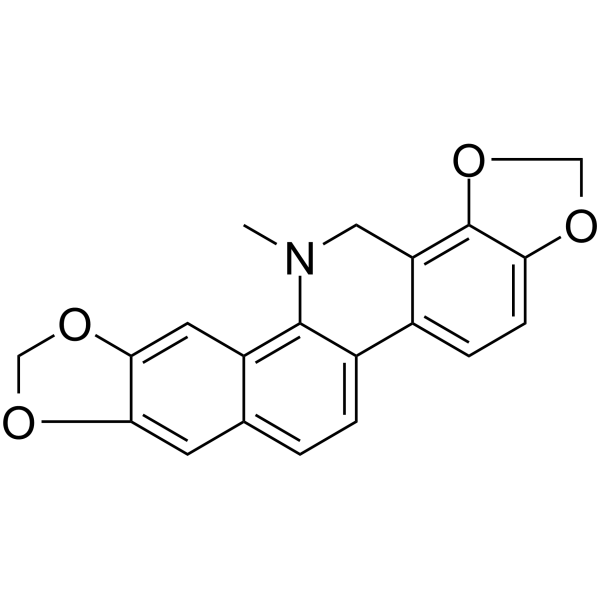
Dihydrosanguinarine (13,14-Dihydrosanguinarine) is an alkaloid with antibacterial and anti-inflammatory activities, and also an important precursor of Sanguinarine (HY-N0052). Dihydrosanguinarine targets and regulates the TNF/IL-17/PI3K signaling pathway, downregulates the levels of pro-inflammatory factors such as IL-17A, TNF-α and IL-6, upregulates the expression of TGF-β, inhibits myeloperoxidase activity, and regulates the transcription of multiple inflammation-related genes. Dihydrosanguinarine exhibits antibacterial activity against a variety of oral microorganisms. Dihydrosanguinarine can be used in research related to liver inflammation and oral flora dysbiosis .
loading...
    loading...
Cat. No.: HY-160040
CAS No.: 1226822-98-5
Research Areas:  

Inflammation/Immunology

Cobitolimod is a DNA oligonucleotide agonist of TLR-9 with anti-inflammatory activity. Cobitolimod suppresses Th17 cells and induces anti-inflammatory FoxP3 and IL-10 expression, inhibiting the IL-17 signaling pathway .
loading...
    loading...
Cat. No.: HY-168971
CAS No.: 1390658-79-3
Synonyms: CP-25
Paeoniflorin-6′-O-benzene sulfonate (CP-25) is the inhibitor for G protein-coupled receptor kinase 2 (GRK2) that inhibits the translocation of GRK2 to the cell membrane, inhibits JAK1/STAT3 signaling pathway. Paeoniflorin-6′-O-benzene sulfonate inhibits IL-17A/CXCL2-induced proliferation of HaCaT. Paeoniflorin-6′-O-benzene sulfonate reduces the levels of inflammatory factors and chemokines such as IL-17A, IL-17F, IFN-γ, TNF-α, IL-22, IL-23, CXCL2, CXCL3 and CXCL9, alleviates Imiquimod (HY-B0180)-induced psoriasis in mouse model .
loading...
    loading...
Cat. No.: HY-N0976
CAS No.: 210537-04-5
Synonyms: 11b-Hydroxy-11b,1-dihydromedicarpin
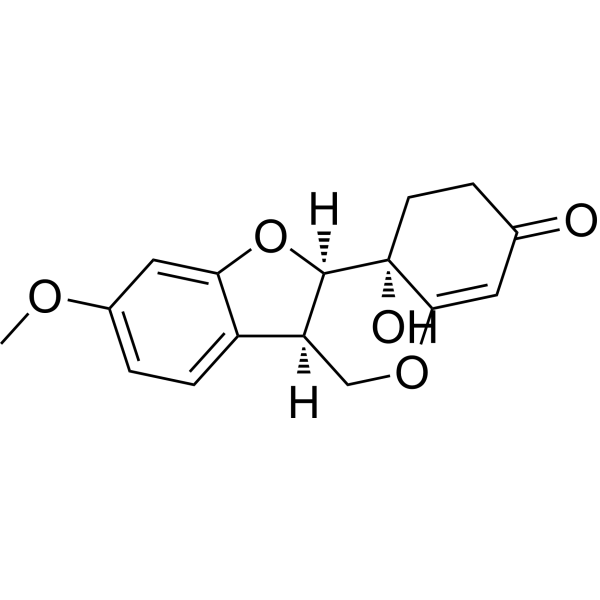
1,11b-Dihydro-11b-hydroxymedicarpin (11b-Hydroxy-11b,1-dihydromedicarpin) is a pterocarpan from Ononis viscosa subsp. breviflora is a Medicarpin derivative . Medicarpin, a natural pterocarpan, heals cortical bone defect by activation of Notch and Wnt canonical signaling pathways . Medicarpin prevents arthritis in post-menopausal conditions by arresting the expansion of TH17 cells and pro-inflammatory cytokines. Medicarpin down-regulates pro-inflammatory cytokines like TNF-α, IL-6 and IL-17A, while up-regulates anti-inflammatory cytokine IL-10 in arthritis (CIA) model of mice .
loading...
    loading...
Cat. No.: HY-160040A
CAS No.: 1527479-55-5
Research Areas:  

Inflammation/Immunology

Cobitolimod sodium is a DNA oligonucleotide agonist of TLR-9 with anti-inflammatory activity. Cobitolimod sodium inhibits Th17 cells and induces anti-inflammatory FoxP3 and IL-10 expression, inhibiting the IL-17 signaling pathway .
loading...
    loading...
Cat. No.: HY-48813
CAS No.: 133429-88-6
Glycoursodeoxycholic acid 3-sulfate is a glycine-conjugated sulfated bile acid 3-sulfate, which is produced by SULT2A1-mediated sulfation of glycoursodeoxycholic acid (HY-N1424) in the liver. Glycoursodeoxycholic acid 3-sulfate attenuates the anti-inflammatory effect of glycoursodeoxycholic acid and impairs the inhibitory effect on the IL-17 and NF-κB signaling pathways. Glycoursodeoxycholic acid 3-sulfate shows a significant correlation with aortic flow velocity and BNP in patients with aortic stenosis. Glycoursodeoxycholic acid 3-sulfate is mainly used in related studies such as quantitative analysis, quality control and biochemical experiments; it often serves as a reagent for metabolomics analysis and can also be applied to research related to aortic stenosis .
loading...
    loading...
Cat. No.: HY-181826
Target:  

Interleukin Related

Research Areas:  

Inflammation/Immunology

IL-17-IN-6 is a IL-17 inhibitor with a pIC50 of 7.6 against human targets. IL-17-IN-6 binds to IL-17A and blocks downstream pro-inflammatory signaling pathways. IL-17-IN-6 inhibits the release of IL-6 from normal human skin fibroblasts stimulated by IL-17A and TNF. IL-17-IN-6 can be used for research on inflammatory and autoimmune diseases .
loading...
    loading...
Cat. No.: HY-P990252
Anti-Mouse Delta-like protein 4/DLL4 Antibody (HMD4-2) is an anti-mouse Delta-like protein 4/DLL4 IgG monoclonal antibody. Anti-Mouse Delta-like protein 4/DLL4 Antibody (HMD4-2) can reduce angiogenesis and density by blocking the DLL4-Notch signaling pathway. Anti-Mouse Delta-like protein 4/DLL4 Antibody (HMD4-2) reduces inflammatory response by decreasing NF-κB activity and pro-inflammatory factors (IL-1β, iNOS, IL-6) levels. Anti-Mouse Delta-like protein 4/DLL4 Antibody (HMD4-2) can inhibit Th17 cell differentiation and IL-17A production. Anti-Mouse Delta-like protein 4/DLL4 Antibody (HMD4-2) can reduce macrophage infiltration and alleviate insulin resistance. Anti-Mouse Delta-like protein 4/DLL4 Antibody (HMD4-2) can be used for researches on inflammation, metabolic conditions and cancer such as atherosclerosis, pancreatic cancer and asthma .
loading...
    loading...
Cat. No.: HY-L156
1,040 compounds

Autoimmune disease is a pathological disease characterized by inflammatory disorders targeting autoantigens. The routine treatment of autoimmune diseases suppresses general immune function to regulate uncontrolled inflammation. The current targeted immunotherapy suppresses the main pro-inflammatory signaling pathways by blocking inflammatory cytokines, cell surface molecules, and intracellular kinases. As key participants in innate immunity, macrophages and dendritic cells (DCs) are crucial for Ag presentation and pro-inflammatory cytokine production, such as TNF and IL-1 β、 IL-6, IL-23, B cell activating factor (BAFF), and the proliferation-inducing ligand (APRIL, also known as TNFSF13A).

MCE designs a unique collection of 1,040 autoimmune disease-related compounds, covering multiple targets and subtypes, such as TNF Receptor, IFNAR, JAK, Btk, TLR, IL-6, IL-17, IL-23, etc. It is a useful tool for screening autoimmune disease drugs.

Cat. No.: HY-12292G
CAS No.: 1129669-05-1
IM-12 GMP is IM-12 (HY-12292) produced by using GMP guidelines. GMP small molecules works appropriately as an auxiliary reagent for cell therapy manufacture. IM-12 is an orally active anti-inflammatory agent that targets and inhibits the NF-κB and STAT3 signaling pathways. IM-12 activates the Wnt signaling pathway and promotes the nuclear translocation of β-catenin by inhibiting GSK3β, while also blocking the tyrosine kinase activity of p210BCR/ABL. IM-12 reduces the levels of IL-6, IL-17, NO, prostaglandin E2, iNOS and COX-2, and induces ER stress, Ca 2+ release, autophagy and apoptosis. IM-12 is heat-sensitive and does not induce autophagy in IM-resistant p210BCR/ABL T315I mutant cells. IM-12 is also a component of the 5iLA medium used for naive pluripotent stem cell research. IM-12 has been applied in studies related to carrageenan (HY-125474)-induced hind paw edema, TNBS-induced colitis, and acute and chronic myeloid leukemia .
loading...
    loading...
Cat. No.: HY-P992521
Target:  

Interleukin Related

Research Areas:  

Inflammation/Immunology

HB-0043 is a IL-17A and IL-36R antagonist. HB-0043 blocks IL-17A- and IL-36R-mediated signaling pathways, inhibits the production of inflammatory cytokines, and reduces the secretion of pro-inflammatory cytokines IL-6 and IL-8. HB-0043 alleviates skin thickening and inflammatory responses in oxazolone-induced and Imiquimod (HY-B0180)-induced skin reaction mouse models. HB-0043 is applicable for the research of atopic dermatitis and psoriasis .
loading...
    loading...
Cat. No.: HY-189218
AhR/PDE4 modulator-1 is a AhR/PDE4D dual-target modulator, with an AhR agonistic EC50 of 0.11 μM and a PDE4D inhibitory IC50 of 2.12 μM. AhR/PDE4 modulator-1 activates the AhR-CYP1A1 signaling pathway, promotes AhR nuclear translocation, and upregulates downstream CYP1A1; it inhibits PDE4D activity, elevates intracellular cAMP levels, and activates the downstream cAMP-PKA-CREB signaling pathway. Topical administration of AhR/PDE4 modulator-1 exerts anti-inflammatory effects in the Imiquimod (HY-B0180)-induced psoriasis-like mouse model, alleviates epidermal hyperplasia and inflammatory infiltration, and suppresses the expression of IL-17A/F. AhR/PDE4 modulator-1 can be used in research related to psoriasis .
loading...
    loading...
Cat. No.: HY-184385
PI3K/AKT/JAK2-IN-1 is a potent multi-target inhibitor of the PI3K/AKT/JAK2 signaling pathway. PI3K/AKT/JAK2-IN-1 suppresses NO production (IC50 = 1.0 μM), reduces pro-inflammatory cytokines (TNF-α, IL-6, IL-1β, IL-17A, IL-22), and inhibits keratinocyte hyperproliferation by downregulating Ki67 and PCNA. PI3K/AKT/JAK2-IN-1 can be used for psoriasis research .
loading...
    loading...
Cat. No.: HY-N21920
CAS No.: 796062-77-6
Dehydrotrametenonic acid is a DNA topoisomerase II inhibitor with an IC50 of 37.5 μM. Dehydrotrametenonic acid inhibits DNA polymerase α and β with IC50 values of 45.5 and 86.5 μM, respectively. Dehydrotrametenonic acid does not intercalate into DNA and exhibits an inhibitory factor-like Topo II inhibition mechanism. Dehydrotrametenonic acid can be used in DNA replication, cell cycle, and cancer-related research .
loading...
    loading...
  • 1

