1. Search Result
Search Result
Pathways Recommended: PI3K/Akt/mTOR
Results for "

K(2P)

" in MedChemExpress (MCE) Product Catalog:

28

Inhibitors & Agonists

2

Natural
Products

2

Isotope-Labeled Compounds

6

Antibodies

Cat. No. Product Name Target Research Areas Chemical Structure
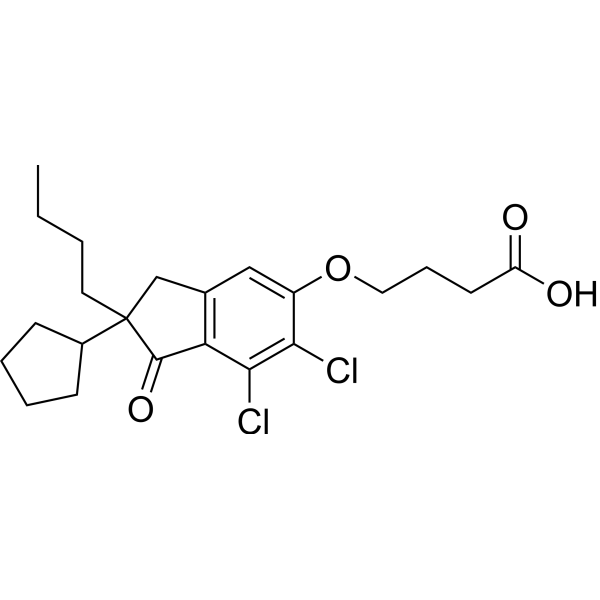
  • HY-103371
    DCPIB
    Maximum Cited Publications
    11 Publications Verification

    Chloride Channel Potassium Channel Neurological Disease
    DCPIB is a selective, reversible and potent inhibitor of volume-regulated anion channels (VRAC). DCPIB voltage-dependently activates potassium channels TREK1 and TRAAK, and inhibits TRESK, TASK1 and TASK3 (IC50s: 0.14, 0.95, 50.72 μM, respectively). DCPIB is also a selective blocker of swelling-induced chloride current (ICl,swell), with an IC50 of 4.1 μM. DCPIB is a useful tool for investigating structure-function studies of K2P channels [2].
    DCPIB
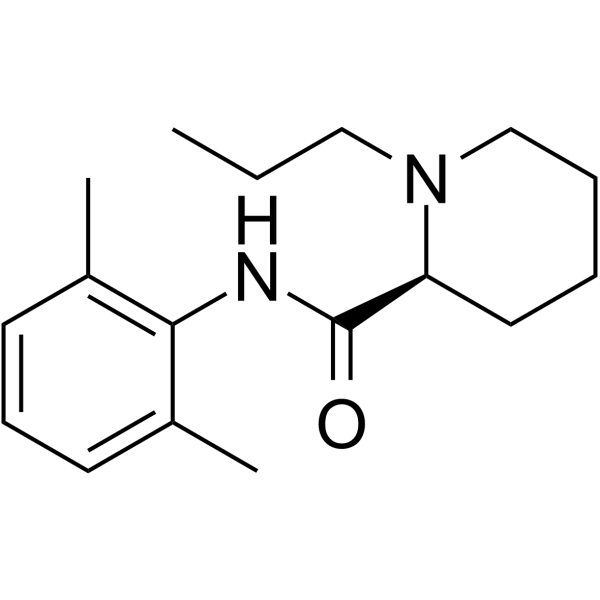
  • HY-B0563
    Ropivacaine
    5+ Cited Publications

    Sodium Channel Potassium Channel Cardiovascular Disease Neurological Disease Cancer
    Ropivacain is a potent sodium channel blocker. Ropivacain blocks impulse conduction via reversible inhibition of sodium ion influx in nerve fibrese [2]. Ropivacaine is also an inhibitor of K2P (two-pore domain potassium channel) TREK-1 with an IC50 of 402.7 μM in COS-7 cell's membrane . Ropivacaine is used for the research of neuropathic pain management .
    Ropivacaine
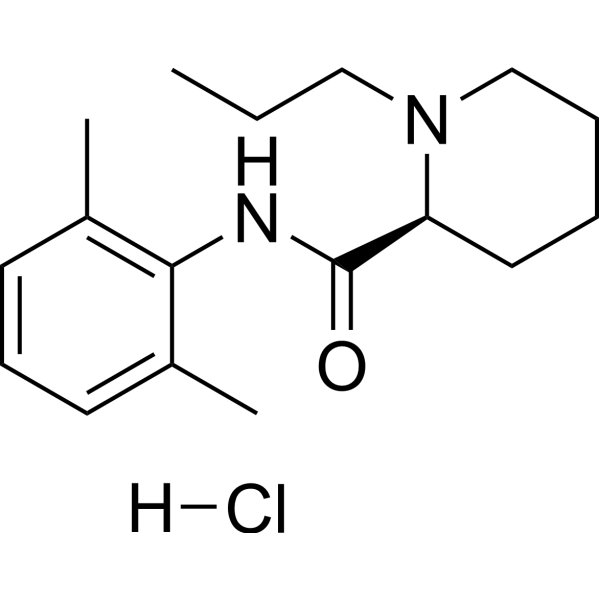
  • HY-B0563B
    Ropivacaine hydrochloride
    5+ Cited Publications

    Sodium Channel Potassium Channel Cardiovascular Disease Neurological Disease Cancer
    Ropivacaine hydrochloride is a potent sodium channel blocker and blocks impulse conduction via reversible inhibition of sodium ion influx in nerve fibrese [2]. Ropivacaine is also an inhibitor of K2P (two-pore domain potassium channel) TREK-1 with an IC50 of 402.7 μM in COS-7 cell's membrane . Ropivacaine is widely used for neuropathic pain management in vivo .
    Ropivacaine hydrochloride
  • HY-B1500
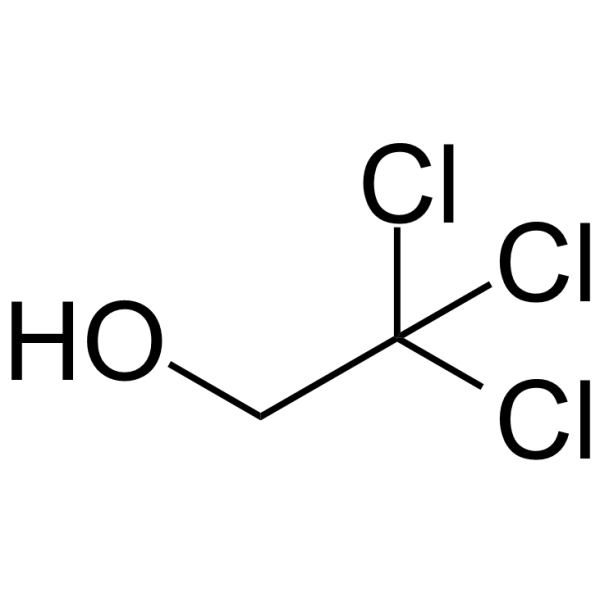
    2,2,2-Trichloroethanol
    2 Publications Verification

    Potassium Channel Endogenous Metabolite Neurological Disease
    2,2,2-Trichloroethanol, the active form of Chloral hydrate, is an agonist for the nonclassical K2P channels TREK-1 (KCNK2) and TRAAK (KCNK4) .
    2,2,2-Trichloroethanol
  • HY-104027
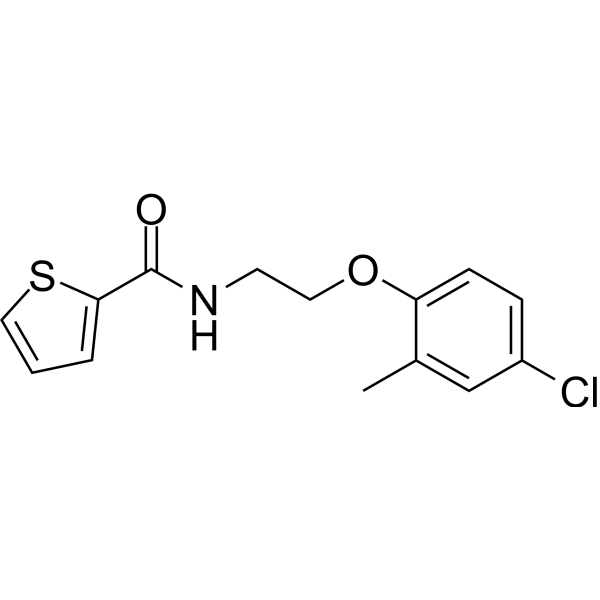
    ML402
    1 Publications Verification

    Potassium Channel Neurological Disease
    ML402, a thiophene-carboxamide, is a selective K2P2.1(TREK-1) and K2P10.1(TREK-2) activator. ML402 is inactive against K2P4.1(TRAAK) .
    ML402
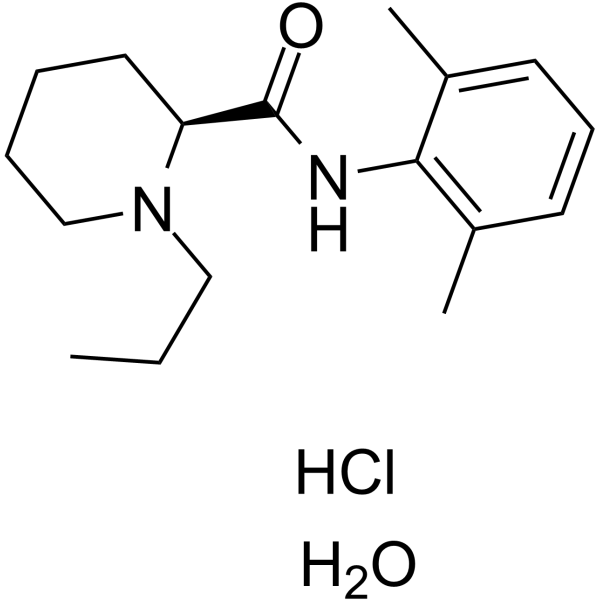
  • HY-B0563A

    Sodium Channel Potassium Channel Cardiovascular Disease Neurological Disease Cancer
    Ropivacaine hydrochloride monohydrate is a potent sodium channel blocker and blocks impulse conduction via reversible inhibition of sodium ion influx in nerve fibrese [2]. Ropivacaine is also an inhibitor of K2P (two-pore domain potassium channel) TREK-1 with an IC50 of 402.7 μM in COS-7 cell's membrane . Ropivacaine is widely used for regional anesthesia and neuropathic pain management in vivo .
    Ropivacaine hydrochloride monohydrate
  • HY-108596

    Potassium Channel Inflammation/Immunology
    BL-1249 is a nonsteroidal anti-inflammatory agent (NSAID) and a potassium channel activator. BL-1249 potently activates K2P2.1 (TREK-1) and K2P10.1 (TREK-2) with EC50 values of 5.5 μM and 8.0 μM, respectively. BL-1249 extracellular application activates all TREK subfamily members but has no effect on other K2P subfamilies. BL-1249 exhibits more selective for the bladder (EC50 of 1.26 μM) than vascular tissue (EC50 of 21.0 μM) [2].
    BL-1249
  • HY-B0563S1

    Isotope-Labeled Compounds Sodium Channel Potassium Channel Cardiovascular Disease Neurological Disease
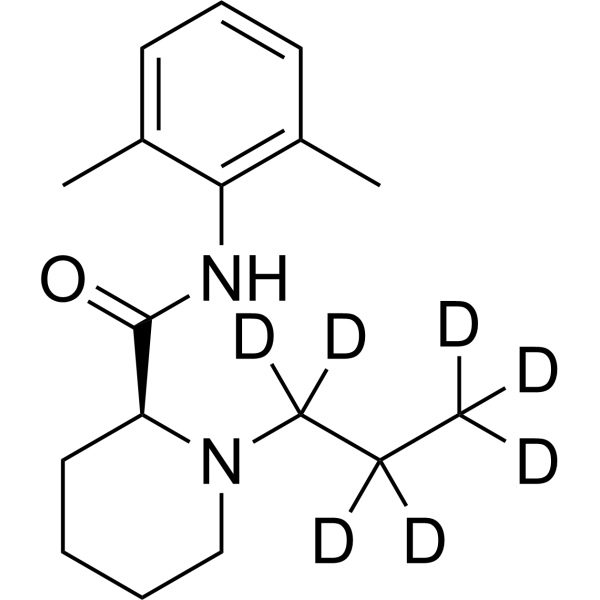
    Ropivacaine-d7 is deuterium labeled Ropivacaine. Ropivacain is a potent?sodium channel?blocker. Ropivacain blocks impulse conduction via reversible inhibition of?sodium ion influx?in nerve fibrese [2]. Ropivacaine is also an inhibitor of K2P (two-pore domain potassium channel) TREK-1 with an IC50 of 402.7 μM in COS-7 cell's membrane . Ropivacaine is used for the research of neuropathic pain?management .
    Ropivacaine-d7
  • HY-110184

    Potassium Channel Neurological Disease
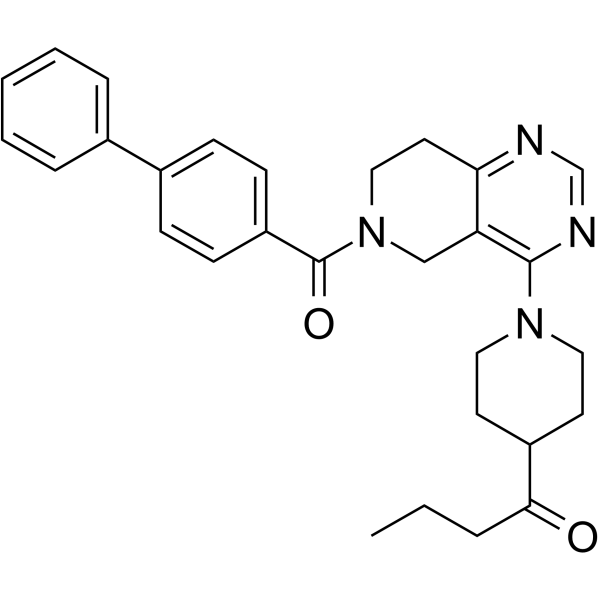
    PK-THPP is a potent and brain-penetrant TWIK-related acid-sensitive K + ion channel (K2P9.1 or TASK-3) blocker with IC50s of 35 nM and 300 nM for TASK-3 and TASK-1, respectively. PK-THPP shows no or less activity against other K + channels. PK-THPP is an effective breathing stimulant and can be used for the study of breathing disorders [2].
    PK-THPP
  • HY-139064

    Potassium Channel Neurological Disease Inflammation/Immunology
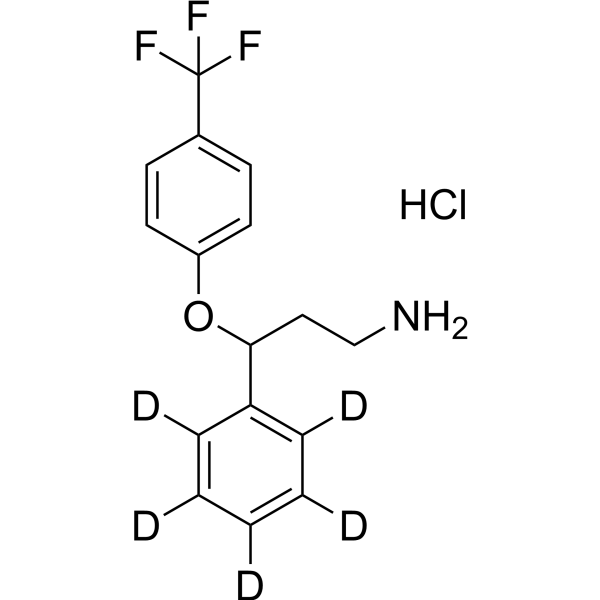
    NPBA, a potassium K2P channel TASK-3 (KCNK9) agonist, is a tandem pore domain weak inward rectifying K + channel (TWIK2) channel blocker. NPBA suppresses NLRP3 inflammasome activation in macrophages .
    NPBA
  • HY-117825

    Potassium Channel Neurological Disease
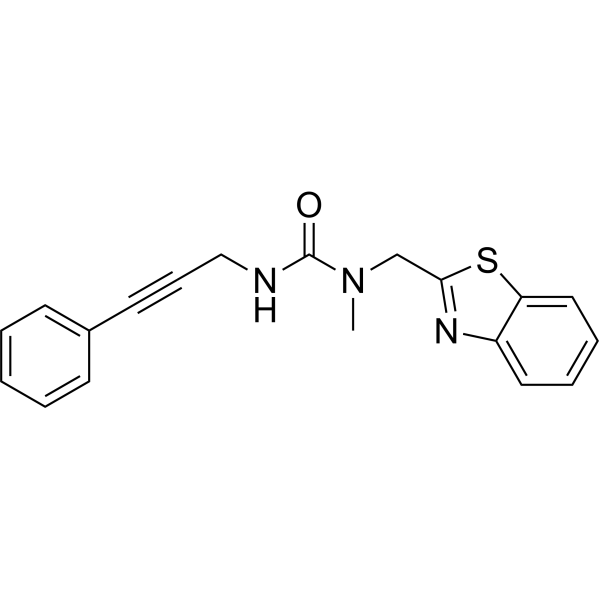
    RU-TRAAK-2 is a completely reversible TRAAK (TWIK-related arachidonic acid-stimulated K + channel) inhibitor. RU-TRAAK-2 exerts no activity for non-K2P channels (Kv1.2, Slo1 and GIRK2) . RU-TRAAK-2 is a click chemistry reagent, it contains an Alkyne group and can undergo copper-catalyzed azide-alkyne cycloaddition (CuAAc) with molecules containing Azide groups.
    RU-TRAAK-2
  • HY-172182

    VU6011887

    Potassium Channel Neurological Disease
    ONO-2920632 is an orally active and central nervous system (CNS)-penetrant TREK activator, with EC50 values of 0.3 µM and 2.8 μM for TREK-1 and TREK-2, respectively. ONO-2920632 exhibits selectivity for other K2P channels (>91-fold selective versus TASK1, TASK2, TASK3, TRAAK, and TWIK2; 31-fold selective versus TRESK). ONO-2920632 possesses analgesic effects and can be used in research on pain, migraine, and neurological disorders.
    ONO-2920632
  • HY-103067

    S20951

    Potassium Channel Cardiovascular Disease Neurological Disease
    A1899 is a potent and highly selective blocker of the K2P channel TASK-1. A1899 has IC50 values of 35.1 nM and 7 nM for TASK-1 channels expressed in oocytes and CHO cells, respectively. A1899 is also an IKur blocker that can be used for the research of cardiovascular diseases [2].
    A1899
  • HY-135809

    Potassium Channel Neurological Disease
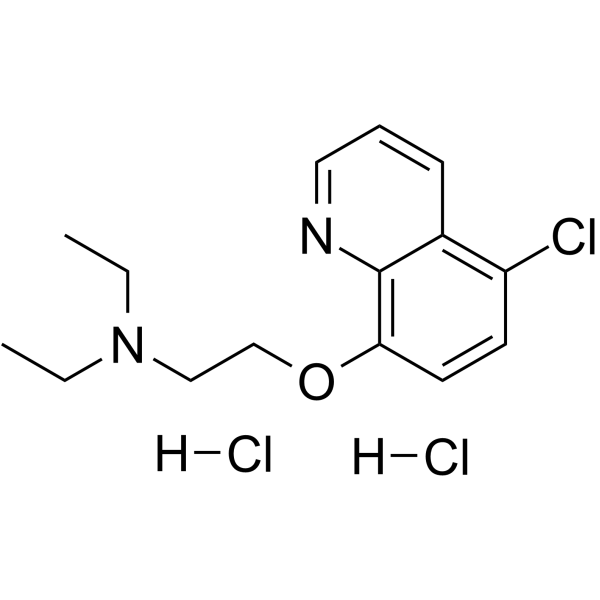
    A2764 dihydrochloride is a highly selective inhibitor of TRESK (TWIK-related spinal cord K + channel, K2P18.1), which has moderate inhibitory effects on TREK-1 and TALK-1. A2764 dihydrochloride is more sensitive to the activated mTRESK channels (IC50=6.8 μM) than the basal current. A2764 dihydrochloride can lead to cell depolarization and increased excitability in native cells, it has the potential for probing the role of TRESK channel in migraine and nociception .
    A2764 dihydrochloride
  • HY-B0563C
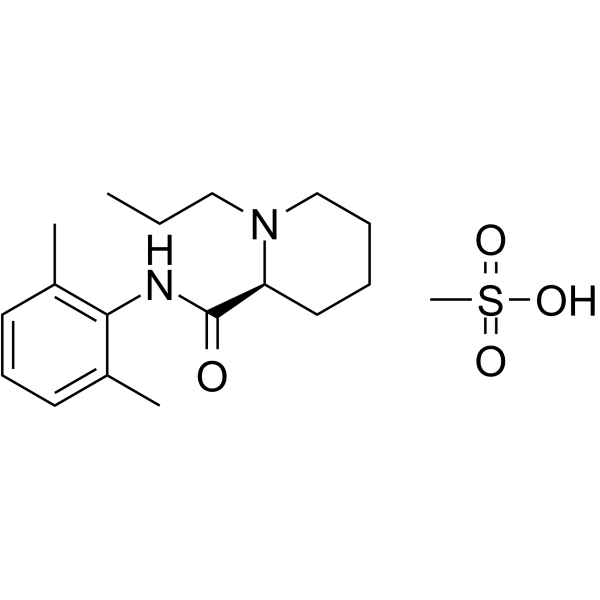
    Ropivacaine mesylate
    5+ Cited Publications

    Sodium Channel Potassium Channel Cardiovascular Disease Neurological Disease Cancer
    Ropivacaine mesylate is a long-acting amide local anaesthetic agent for a spinal block and effectively blocks neuropathic pain. Ropivacaine blocks impulse conduction via reversible inhibition of?sodium ion influx?in nerve fibressup>[1] [2]. Ropivacaine is also an inhibitor of K2P (two-pore domain potassium channel)?TREK-1?with an IC50?of 402.7 μM in COS-7 cell's membrane .
    Ropivacaine mesylate
  • HY-B0563R

    Reference Standards Sodium Channel Potassium Channel Cardiovascular Disease Neurological Disease Cancer
    Ropivacaine (Standard) is the analytical standard of Ropivacaine. This product is intended for research and analytical applications. Ropivacain is a potent sodium channel blocker. Ropivacain blocks impulse conduction via reversible inhibition of sodium ion influx in nerve fibrese [2]. Ropivacaine is also an inhibitor of K2P (two-pore domain potassium channel) TREK-1 with an IC50 of 402.7 μM in COS-7 cell's membrane . Ropivacaine is used for the research of neuropathic pain management .
    Ropivacaine (Standard)
  • HY-B0563AR

    Reference Standards Sodium Channel Potassium Channel Cardiovascular Disease Neurological Disease Cancer
    Ropivacaine (hydrochloride monohydrate) (Standard) is the analytical standard of Ropivacaine (hydrochloride monohydrate). This product is intended for research and analytical applications. Ropivacaine hydrochloride monohydrate is a potent sodium channel blocker and blocks impulse conduction via reversible inhibition of sodium ion influx in nerve fibrese [2]. Ropivacaine is also an inhibitor of K2P (two-pore domain potassium channel) TREK-1 with an IC50 of 402.7 μM in COS-7 cell's membrane . Ropivacaine is widely used for regional anesthesia and neuropathic pain management in vivo .
    Ropivacaine hydrochloride monohydrate (Standard)
  • HY-B0563BS

    Isotope-Labeled Compounds Potassium Channel Sodium Channel Neurological Disease
    Ropivacaine-d7 hydrochloride is a deuterium labeled Ropivacaine (hydrochloride) (HY-B0563B) . Ropivacaine hydrochloride is a potent sodium channel blocker and blocks impulse conduction via reversible inhibition of sodium ion influx in nerve fibrese [2] . Ropivacaine is also an inhibitor of K2P (two-pore domain potassium channel) TREK-1 with an IC50 of 402.7 μM in COS-7 cell's membrane . Ropivacaine is widely used for neuropathic pain management in vivo [2].
    Ropivacaine-d7 hydrochloride
  • HY-116704

    Potassium Channel Neurological Disease
    11-Deoxyprostaglandin F2α is an activator for TREK-2 channels with EC50 of 0.294 μM. 11-Deoxyprostaglandin F2α inhibits the K2P channel TREK-1 .
    11-Deoxyprostaglandin F2α
  • HY-B1500R

    Reference Standards Potassium Channel Endogenous Metabolite Neurological Disease
    2,2,2-Trichloroethanol (Standard) is the analytical standard of 2,2,2-Trichloroethanol. This product is intended for research and analytical applications. 2,2,2-Trichloroethanol, the active form of Chloral hydrate, is an agonist for the nonclassical K2P channels TREK-1 (KCNK2) and TRAAK (KCNK4) .
    2,2,2-Trichloroethanol (Standard)
  • HY-160789

    Potassium Channel Neurological Disease Inflammation/Immunology
    C3001a is a selective TREK-1 and TREK-2 channel activator with EC50 values of 12.81 μM and 11.31 μM, respectively. C3001a does not affect other two-pore domain K + (K2P) channels. C3001a binds to the cryptic binding site formed by P1 and TM4 in TREK-1. C3001a can be used for the study of pain and pancreatitis .
    C3001a
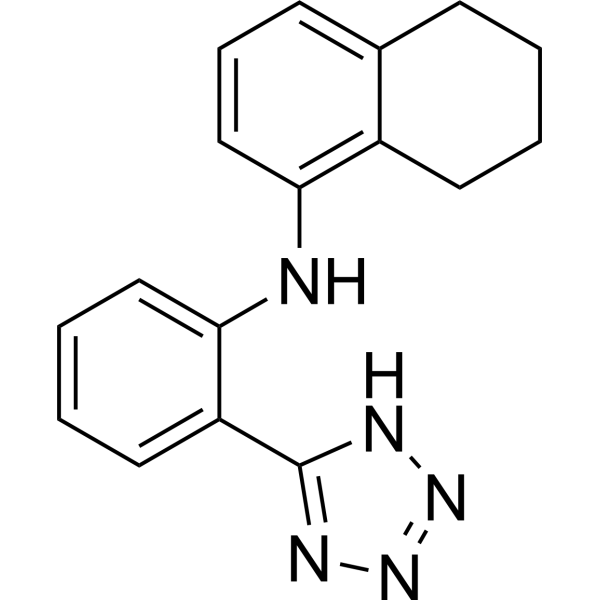
  • HY-168166

    Endogenous Metabolite Neurological Disease
    CHET3 is a sex-selective activator with potent analgesic activity. CHET3 was discovered to be a highly selective omnidirectional modulator of TASK-3-containing K2P channels, including TASK-3 homologues and TASK-3/TASK-1 heterologues. CHET3 exhibited significant analgesic effects in multiple acute and chronic pain models in mice, which could be abolished by pharmacological means or genetic knockout of TASK-3. CHET3 is able to functionally modulate the membrane excitability of specific small sensory neurons, which supports its analgesic effects on thermal hypersensitivity and mechanical hyperalgesia in chronic pain .
    CHET3
  • HY-149536

    Potassium Channel Neurological Disease
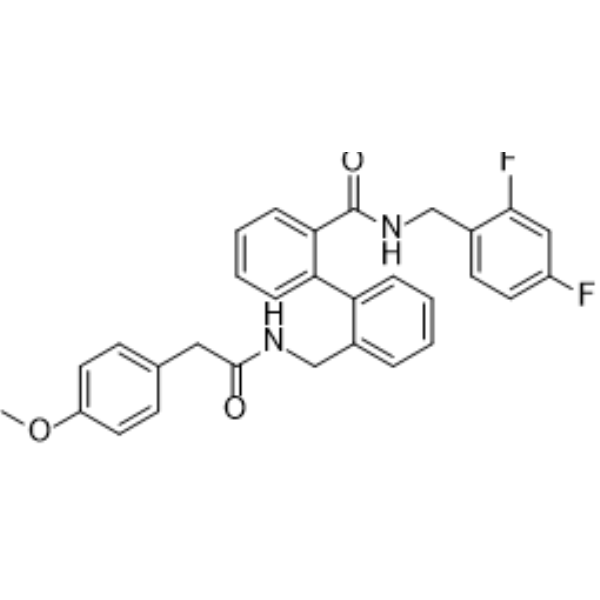
    TWIK-1/TREK-1-IN-1 (compound 2a) is an inhibitor of the TWIK-related potassium channel (Potassium Channel) TREK-1. TREK-1 contains a two-pore domain potassium (K2p) channel that dimerizes into TREK-1 homodimer and TWIK-1/TREK-1 heterodimer, and is an important antidepressant target. TWIK-1/TREK-1-IN-3 targets TREK-1 homodimer and TWIK-1/TREK-1 heterodimer with IC50s of 9.36 μM and 14.6 μM, respectively, and has antidepressant-like effects .
    TWIK-1/TREK-1-IN-1
  • HY-149538

    Potassium Channel Neurological Disease
    TWIK-1/TREK-1-IN-3 (compound 2h) is an inhibitor of TWIK-related potassium channel (Potassium Channel) TREK-1. TREK-1 contains a two-pore domain potassium (K2p) channel that dimerizes into TREK-1 homodimer and TWIK-1/TREK-1 heterodimer, and is an important antidepressant target. TWIK-1/TREK-1-IN-3 targets TREK-1 homodimer and TWIK-1/TREK-1 heterodimer with IC50s of 9.74 μM and 16.5 μM, respectively, and has antidepressant-like effects .
    TWIK-1/TREK-1-IN-3
  • HY-108596R

    Reference Standards Potassium Channel Inflammation/Immunology
    BL-1249 (Standard) is the analytical standard of BL-1249 (HY-108596). This product is intended for research and analytical applications. BL-1249 is a nonsteroidal anti-inflammatory agent (NSAID) and a potassium channel activator. BL-1249 potently activates K2P2.1 (TREK-1) and K2P10.1 (TREK-2) with EC50 values of 5.5 μM and 8.0 μM, respectively. BL-1249 extracellular application activates all TREK subfamily members but has no effect on other K2P subfamilies. BL-1249 exhibits more selective for the bladder (EC50 of 1.26 μM) than vascular tissue (EC50 of 21.0 μM) [2].
    BL-1249 (Standard)
  • HY-129146

    Potassium Channel Others
    Doxapram (hydrochloride) is a ventilatory stimulant. Doxapram (hydrochloride) inhibits TASK Tandem Pore (K2P) potassium channel function. Doxapram (hydrochloride) inhibits TASK-1 and TASK-3 with an EC50 values of 410 and 37 nM, respectively. Doxapram (hydrochloride) inhibits TASK-1/TASK-3 heterodimeric channel function with an EC50 value of 9 μM. Doxapram (hydrochloride) can be studied in research on apnea in preterm infants [2].
    Doxapram hydrochloride
  • HY-103371R

    Reference Standards Chloride Channel Potassium Channel Neurological Disease
    DCPIB (Standard) is the analytical standard of DCPIB (HY-103371). This product is intended for research and analytical applications. DCPIB is a selective, reversible and potent inhibitor of volume-regulated anion channels (VRAC). DCPIB voltage-dependently activates potassium channels TREK1 and TRAAK, and inhibits TRESK, TASK1 and TASK3 (IC50s: 0.14, 0.95, 50.72 μM, respectively). DCPIB is also a selective blocker of swelling-induced chloride current (ICl,swell), with an IC50 of 4.1 μM. DCPIB is a useful tool for investigating structure-function studies of K2P channels [2].
    DCPIB (Standard)
  • HY-104027R

    Reference Standards Potassium Channel Neurological Disease
    ML402 (Standard) is the analytical standard of ML402 (HY-104027). This product is intended for research and analytical applications. ML402, a thiophene-carboxamide, is a selective K2P2.1(TREK-1) and K2P10.1(TREK-2) activator. ML402 is inactive against K2P4.1(TRAAK) .
    ML402 (Standard)

Inquiry Online

Your information is safe with us. * Required Fields.

Salutation


Country or Region *

Applicant Name *


Organization Name *

Department *


Email Address *


Product Name *

Cat. No.


Requested quantity *

Phone Number *


Remarks

Inquiry Online

Inquiry Information

Product Name:
Cat. No.:
Quantity:
MCE Japan Authorized Agent:

