

255 Results for "

KOH/DMSO superbase suspension

" in MedChemExpress (MCE) Product Catalog:
Products (255)

255 Results for "KOH/DMSO superbase suspension" in MCE Product Catalog:

2102
2102 Publications Verification
Cat. No.: HY-K0010

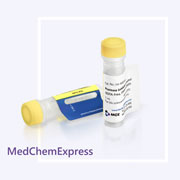
MCE Protease Inhibitor Cocktail (EDTA-Free, 100× in DMSO) is a blend of 6 pan-protease inhibitors for protection of protein integrity.The 1 mL volume is defined as the base specification. All larger sizes correspond to incremental volumes of this base.

loading...
    loading...
743
743 Cited Publications
Cat. No.: HY-K0021

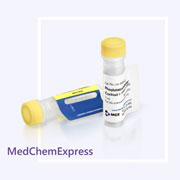
Phosphatase Inhibitor Cocktail I (100× in DMSO) is a blend of 2 phosphatase inhibitors that can effectively inhibit alkaline phosphatases and serine/threonine phosphatases. It is used to maintain the phosphorylation status of proteins.The 1 mL volume is defined as the base specification. All larger sizes correspond to incremental volumes of this base.

loading...
    loading...
387
387 Cited Publications
Cat. No.: HY-Y0320
CAS No.: 67-68-5
Synonyms: DMSO, meets analytical specification of Ch.P.
Dimethyl sulfoxide (DMSO), meets analytical specification of Ch.P. is an aprotic solvent that dissolves polar and non-polar compounds, including water-insoluble therapeutic and toxic agents. Dimethyl sulfoxide (DMSO) has a strong affinity for water and can rapidly penetrate or enhance the penetration of other substances into biological membranes. Dimethyl sulfoxide also has potential free radical scavenging and anticholinesterase effects and may affect coagulation activity. Dimethyl sulfoxide also induces histamine release from mast cells but is thought to have low systemic toxicity. Dimethyl sulfoxide also exhibits antifreeze and antibacterial properties .
MCE provides Dimethyl sulfoxide that complies with the inspection standards (Ch.P) of Part 4 of the Chinese Pharmacopoeia (2020 Edition). Amicrobic, low endotoxin, can be used in various biochemical experiments such as drug dissolution.
loading...
    loading...
307
307 Cited Publications
Cat. No.: HY-10999A
CAS No.: 1187431-43-1
Purity:  99.56%
Synonyms: GSK-1120212 (DMSO solvate); JTP-74057 (DMSO solvate)
Target:  

MEK Apoptosis

Research Areas:  

Cancer

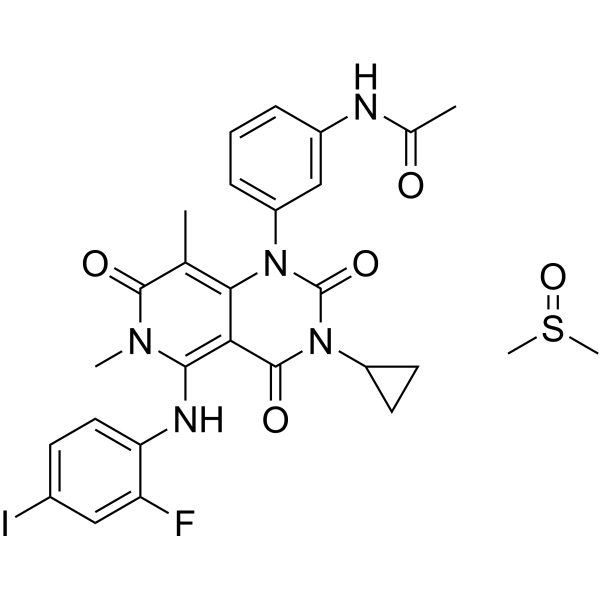
Trametinib (DMSO solvate) (GSK-1120212 (DMSO solvate)) is an orally active MEK inhibitor that inhibits MEK1 and MEK2 with IC50s of about 2 nM. Trametinib (DMSO solvate) activates autophagy and induces apoptosis . This product is in solid form, a DMSO solvate, and a stable crystalline form.
loading...
    loading...
246
246 Cited Publications
Cat. No.: HY-K0023

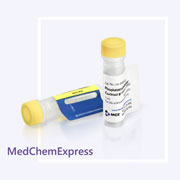
Phosphatase Inhibitor Cocktail Ⅲ (100× in DMSO) is a mixture of multiple phosphatase inhibitors that effectively inhibit serine/threonine phosphatases and alkaline phosphatases, and is used to preserve the phosphorylation status of proteins.The 1 mL volume is defined as the base specification. All larger sizes correspond to incremental volumes of this base.

loading...
    loading...
61
61 Cited Publications
Cat. No.: HY-Y0320C
CAS No.: 67-68-5
Synonyms: DMSO
Dimethyl sulfoxide (DMSO) is an aprotic solvent that can dissolve water-insoluble therapeutic and toxic agents. Dimethyl sulfoxide (DMSO) has a strong affinity for water and has the ability to rapidly penetrate or enhance the penetration of other substances through biological membranes. Dimethyl sulfoxide also has potential free radical scavenging and anticholinesterase effects and may affect coagulation activity. Dimethyl sulfoxide also induces histamine release from mast cells but is thought to have low systemic toxicity .
Low endotoxin, can be used in various biochemical experiments such as drug dissolution.
loading...
    loading...
45
45 Cited Publications
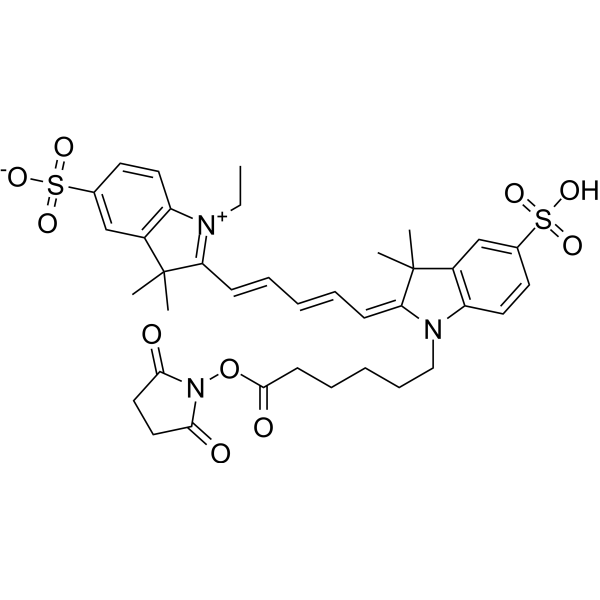
Cat. No.: HY-D0819
CAS No.: 146368-14-1
Synonyms: Cy5 NHS Ester; Sulfo-Cyanine5 Succinimidyl Ester
Cy5-SE (Cy5 NHS Ester) is a reactive dye for the labeling of amino-groups in peptides, proteins, and oligonucleotides. This dye requires small amount of organic co-solvent (such as DMF or DMSO) to be used in labeling reaction. This reagent is ideal for very cost-efficient labeling of soluble proteins, as well as all kinds of peptides and oligonucleotides. This reagent also works well in organic solvents for small molecule labeling. Excitation (nm):649, Emission (nm): 670.
loading...
    loading...
27
27 Cited Publications
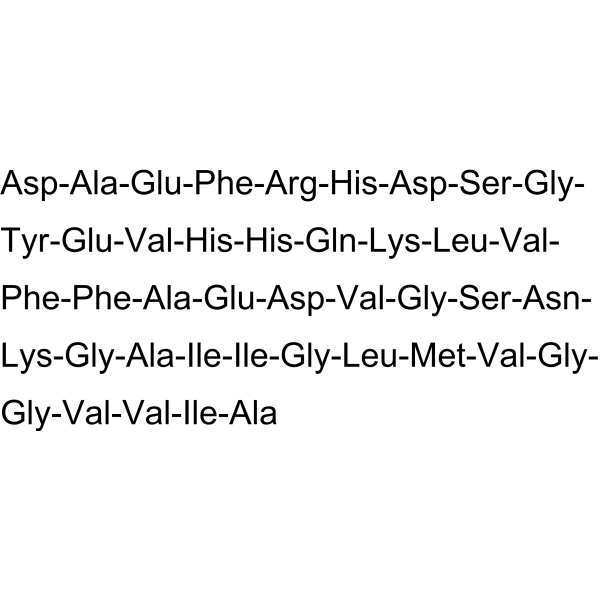
Cat. No.: HY-P1363
Synonyms: Amyloid β-peptide (1-42) (human) TFA
Target:  

Amyloid-β

Research Areas:  

Neurological Disease

β-Amyloid (1-42) (Amyloid β-peptide (1-42), human TFA, a 42-amino acid peptide that has not been treated with HFIP, is a brain-penetrant amyloid protein fragment, which can be used in research on Alzheimer's disease and Down’s syndrome. β-Amyloid (1-42), human TFA remaining as a monomer exhibits antioxidant and neuroprotective effects. β-Amyloid (1-42), human TFA, after being monomericized by HFIP and dissolved in DMSO to form the stock solution, on the one hand, can form soluble oligomers (AβOs) when incubated at 4 °C, which have synaptic toxicity and neurotoxicity; on the other hand, it can be incubated at 37 °C to form insoluble fibrils, with lower neurotoxicity, and participating in the oxidative damage process. Aβ42 oligomers bind to various neuronal surface receptors (such as PrPc, mGluR5, NMDA receptors, etc.), triggering oxidative stress, calcium homeostasis imbalance, and synaptic toxicity via activating downstream signaling pathways, leading to neuronal dysfunction and death .
loading...
    loading...
27
27 Cited Publications
Cat. No.: HY-P1363A
CAS No.: 107761-42-2
Synonyms: Amyloid β-peptide (1-42) (human)
Target:  

Amyloid-β

Research Areas:  

Neurological Disease

β-Amyloid (1-42) (Amyloid β-peptide (1-42)), human, a 42-amino acid peptide that has not been treated with HFIP, is a brain-penetrant amyloid protein fragment, which can be used in research on Alzheimer's disease and Down’s syndrome. β-Amyloid (1-42), human remaining as a monomer exhibits antioxidant and neuroprotective effects. β-Amyloid (1-42), human, after being monomericized by HFIP and dissolved in DMSO to form the stock solution, on the one hand, can form soluble oligomers (AβOs) when incubated at 4 °C, which have synaptic toxicity and neurotoxicity; on the other hand, it can be incubated at 37 °C to form insoluble fibrils, with lower neurotoxicity, and participating in the oxidative damage process. Aβ42 oligomers bind to various neuronal surface receptors (such as PrPc, mGluR5, NMDA receptors, etc.), triggering oxidative stress, calcium homeostasis imbalance, and synaptic toxicity via activating downstream signaling pathways, leading to neuronal dysfunction and death .
loading...
    loading...
27
27 Cited Publications
Cat. No.: HY-P1363B
CAS No.: 107761-42-2
Target:  

Amyloid-β

Research Areas:  

Neurological Disease

β-Amyloid (1-42), human, HFIP-treated, a 42-amino acid peptide that has been treated with HFIP from β-Amyloid (1-42), human (HY-P1363A), is a brain-penetrant amyloid protein fragment, which can be used in research on Alzheimer's disease and Down’s syndrome. β-Amyloid (1-42), human, HFIP-treated remaining as a monomer exhibits antioxidant and neuroprotective effects. β-Amyloid (1-42), human, HFIP-treated, after being dissolved in DMSO to form the stock solution, on the one hand, can form soluble oligomers (AβOs) when incubated at 4°C, which have synaptic toxicity and neurotoxicity; on the other hand, it can be incubated at 37°C to form insoluble fibrils, with lower neurotoxicity, and participating in the oxidative damage process. Aβ42 oligomers bind to various neuronal surface receptors (such as PrPc, mGluR5, NMDA receptors, etc.), triggering oxidative stress, calcium homeostasis imbalance, and synaptic toxicity via activating downstream signaling pathways, leading to neuronal dysfunction and death .
loading...
    loading...
14
14 Cited Publications
Cat. No.: HY-K0012

MCE Protease Inhibitor Cocktail, Bacteria (EDTA-Free, 100× in DMSO) protects proteins from degradation by endogenous proteases released during protein extraction and purification.The 1 mL volume is defined as the base specification. All larger sizes correspond to incremental volumes of this base.

loading...
    loading...
8
8 Cited Publications
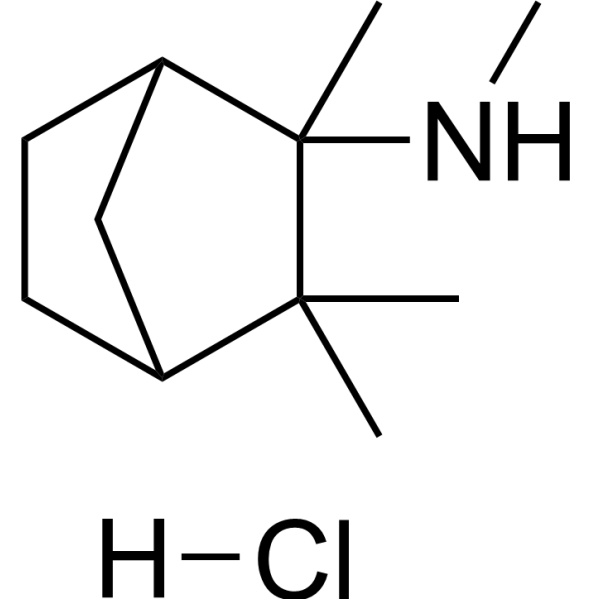
Cat. No.: HY-B1395
CAS No.: 826-39-1
Mecamylamine hydrochloride is an orally active, nonselective, noncompetitive nAChR antagonist. Mecamylamine hydrochloride is also a ganglionic blocker. Mecamylamine hydrochloride can across the blood-brain barrier. Mecamylamine hydrochloride can be used in the research of neuropsychiatric disorders, hypertension, antidepressant area .
loading...
    loading...
2
2 Cited Publications
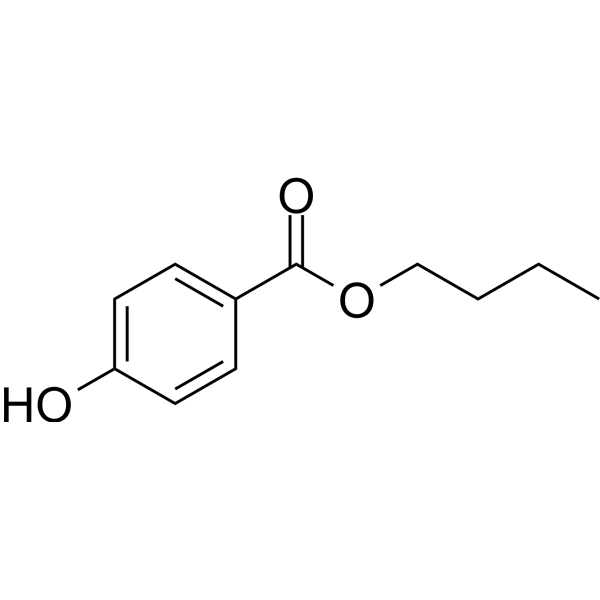
Cat. No.: HY-B1431
CAS No.: 94-26-8
Synonyms: Butyl parahydroxybenzoate; Butyl paraben; Butyl 4-hydroxybenzoate
Butylparaben is an organic compound that has proven to be a very successful antimicrobial preservative in cosmetics, can also be used in active molecule suspensions, and as a food flavoring additive .
loading...
    loading...
2
2 Cited Publications
Cat. No.: HY-W004494
CAS No.: 141120-17-4
Research Areas:  

Others

2-Aminoindan-2-phosphonic acid is an inhibitor of phenylalanine ammonia-lyase (PAL). 2-Aminoindan-2-phosphonic acid reduces the biosynthesis and accumulation of total phenolic compounds in the suspension cell culture system of Cistanche .
loading...
    loading...
2
2 Cited Publications
Cat. No.: HY-K6011

MCE Tumor Tissue Dissociation Solution is able to gently and efficiently dissociate tumor tissue samples into cell suspensions or cell aggregates, which can then be used for the subsequent construction of tumor organoids.

loading...
    loading...
2
2 Cited Publications
Cat. No.: HY-K0310

MCE Mouse CD8+ Cells Positive Selection Kit is designed for the isolation of CD8+ cells from single cell suspensions of mouse spleen cells, lymph nodes or other tissues.

loading...
    loading...
1
1 Cited Publications
Cat. No.: HY-Y0320D
CAS No.: 67-68-5
Synonyms: DMSO, cryoprotectant vitrification agent; Dimethyl sulfoxide vitrification agent
Dimethyl sulfoxide, cryoprotectant vitrification agent (DMSO, cryoprotectant vitrification agent) is a biochemical reagent that can be used as a biological material or organic compound for life science related research . This product has been sterilized and has no endotoxin. It can be used for long-term cell cryopreservation and will not affect the normal growth of cells.
loading...
    loading...
1
1 Cited Publications
Cat. No.: HY-Y0320R
CAS No.: 67-68-5
Synonyms: DMSO, meets analytical specification of Ch.P. (Standard)
Dimethyl sulfoxide (Standard) is the analytical standard of Dimethyl sulfoxide. This product is intended for research and analytical applications. Dimethyl sulfoxide (DMSO) is an aprotic solvent that dissolves both polar and nonpolar compounds. Dimethyl sulfoxide has anti-freezing and bacteriostatic properties .
loading...
    loading...
1
1 Cited Publications
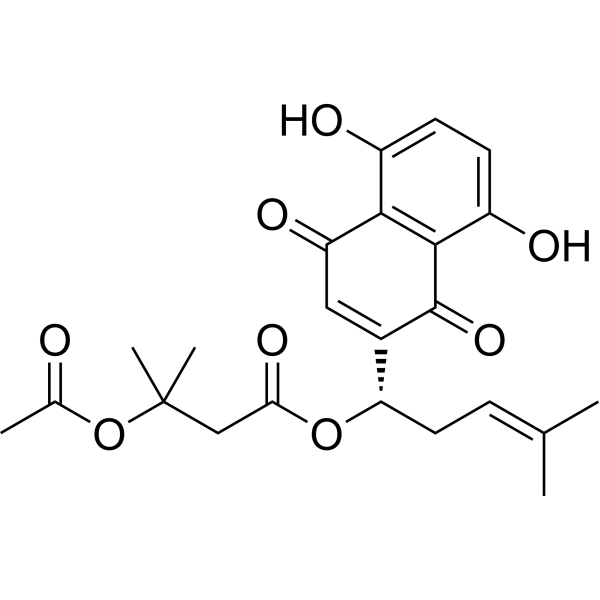
Cat. No.: HY-N2188
CAS No.: 69091-17-4
Beta-Acetoxyisovalerylshikonin is a naturally occurring naphthoquinone-type shikonin derivative that is widely distributed in the roots and cell suspension cultures of *Arnebia euchroma*, *Arnebia guttata*, *Onosma hispidum* and *Lithospermum erythrorhizon*. Beta-Acetoxyisovalerylshikonin exhibits favorable antibacterial, anti-inflammatory, wound-healing promoting and antioxidant activities, and also possesses potential anti-tumor and anti-HIV properties .
loading...
    loading...
1
1 Cited Publications
Cat. No.: HY-DY1002
H2DCFDA (DCFH-DA) (solution) is a cell-permeable probe used to detect intracellular reactive oxygen species (ROS) (Ex/Em=488/525 nm) .
Solvent and concentration: DMSO: 10 mM.
The 1 mL volume is defined as the base specification. All larger sizes correspond to incremental volumes of this base.
loading...
    loading...

