1. Search Result
Search Result
Results for "

MES model

" in MedChemExpress (MCE) Product Catalog:

33

Inhibitors & Agonists

2

Peptides

1

Inhibitory Antibodies

1

Natural
Products

1

Isotope-Labeled Compounds

1

Click Chemistry

1

Oligonucleotides

Cat. No. Product Name Target Research Areas Chemical Structure
  • HY-100421
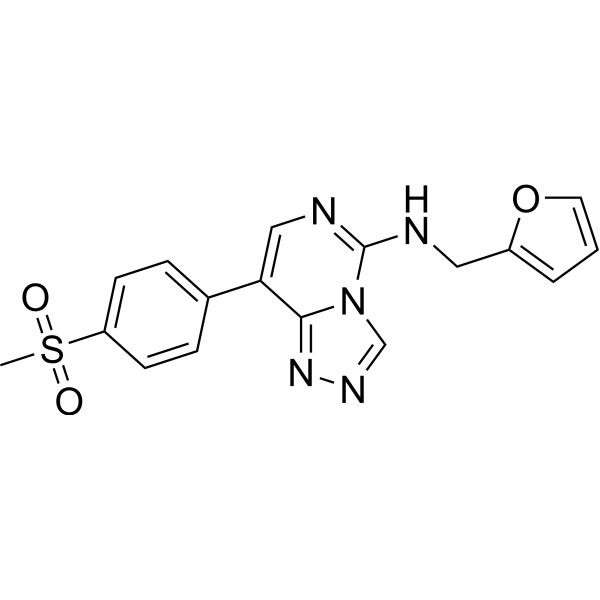
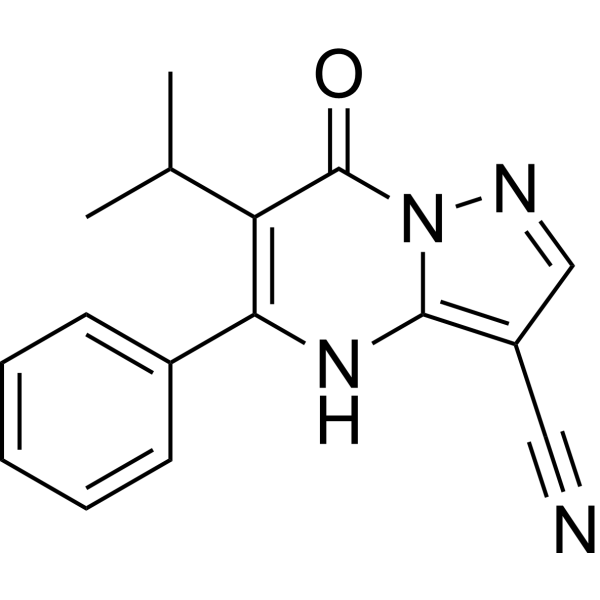
    CPI-455
    10+ Cited Publications

    Histone Demethylase Cancer
    CPI-455 is a specific, pan-KDM5 inhibitor with an IC50 of 10 nM for KDM5A. CPI-455 mediates KDM5 inhibition, elevates global levels of H3K4me3, and decreases the number of drug-tolerant persister cancer cells in multiple cancer cell line models treated with standard chemotherapy or targeted agents .
    CPI-455
  • HY-101117
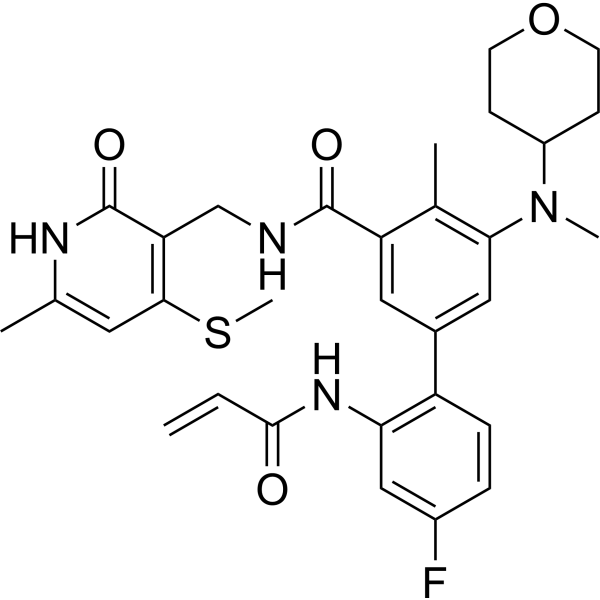
    EED226
    Maximum Cited Publications
    14 Publications Verification

    Histone Methyltransferase Cancer
    EED226 is a polycomb repressive complex 2 (PRC2) inhibitor, which binds to the K27me3-pocket on embryonic ectoderm development (EED) and shows strong antitumor activity in xenograft mice model . EED226 is a potent, selective, and orally bioavailable EED inhibitor . EED226 inhibits PRC2 with an IC50 of 23.4 nM when the H3K27me0 peptide is used as a substrate in the in vitro enzymatic assays .
    EED226
  • HY-172431

    BHV-7000

    Potassium Channel Neurological Disease
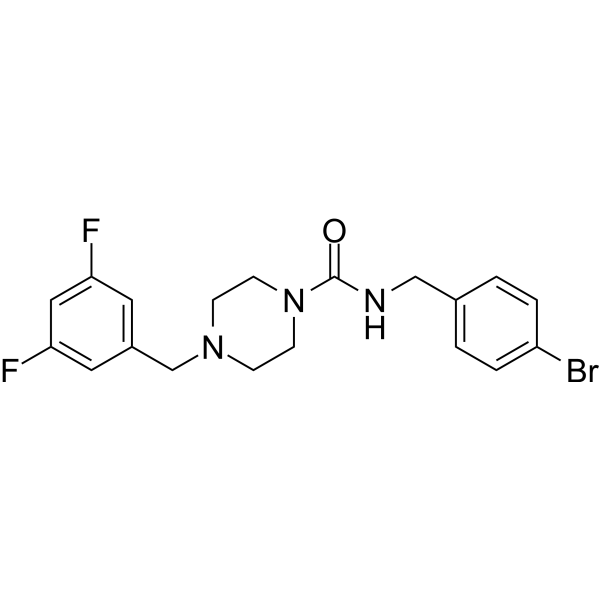
    Opakalim (BHV-7000) is a selective Kv7.2/7.3 potassium channels activator with an EC50 of 0.6 μM. Opakalim shows minimal GABAA receptor activation and exhibits potent anti-seizure efficacy in the maximal electroshock seizure (MES) model. Opakalim can be used for the study of seizures .
    Opakalim
  • HY-100421A
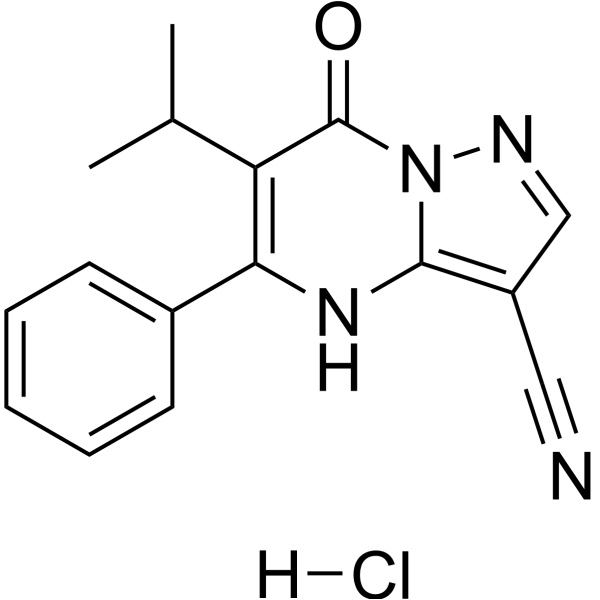
    CPI-455 hydrochloride
    10+ Cited Publications

    Histone Demethylase Cancer
    CPI-455 hydrochloride is a specific, pan-KDM5 inhibitor with an IC50 of 10 nM for KDM5A. CPI-455 hydrochloride mediates KDM5 inhibition, elevates global levels of H3K4me3, and decreases the number of drug-tolerant persister cancer cells in multiple cancer cell line models treated with standard chemotherapy or targeted agents .
    CPI-455 hydrochloride
  • HY-162275

    Histone Demethylase Histone Methyltransferase STAT Cancer
    JMJD1C-IN-1 is an orally active and selective inhibitor of JMJD1C (IC50 = 0.59 μM, Kd = 1.96 μM). JMJD1C-IN-1 inhibits the binding of JMJD1C to H3K9me2 peptide substrate in the HTRF assay (IC50 = 1.47 μM). JMJD1C-IN-1 disrupts intratumoral regulatory T (Treg) cell fitness by dual mechanisms: promoting H3K9me2 accumulation to downregulate PD1 expression and reducing STAT3 demethylation to enhance STAT3 activation. JMJD1C-IN-1 demonstrates dose-dependent antitumor efficacy in multiple mouse tumor models (MCA205 fibrosarcoma, B16-F10 melanoma, LLC lung cancer, Hepa1-6 hepatocellular carcinoma, CT26 colorectal cancer). JMJD1C-IN-1 can be used for the study of tumor immunotherapy by selectively targeting intratumoral Treg cells .
    JMJD1C-IN-1
  • HY-159819

    Sodium Channel Neurological Disease
    Vormatrigine is an orally active sodium channel inhibitor with anti-epileptic activity. Vormatrigine can be used to study human focal and generalized epilepsy .
    Vormatrigine
  • HY-168773

    EAAT Neurological Disease
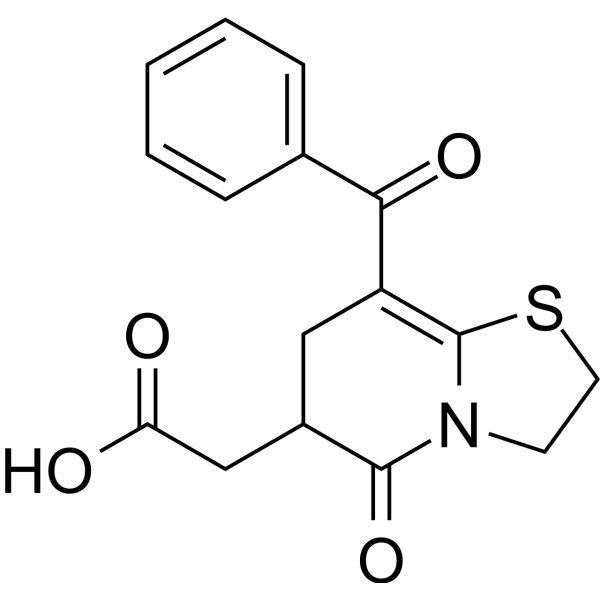
    (R)-AS-1 is a selective positive allosteric modulator of the excitatory amino acid transporter 2 (EAAT2), with an EC50 of 11 nM. (R)-AS-1 (at doses of 60 and 90 mg/kg) increases spontaneous locomotor activity in mice. Additionally, it demonstrates anticonvulsant activity in mouse models of seizures induced by maximal electroshock (MES), pentylenetetrazole (PTZ), or electrical stimuli (32 or 44 mA), with ED50s of 66.3, 36.3, 15.6, and 41.6 mg/kg, respectively. (R)-AS-1 can be used in neurological disease research .
    (R)-AS-1
  • HY-154484

    Nucleoside Antimetabolite/Analog Phosphoramidites Cancer
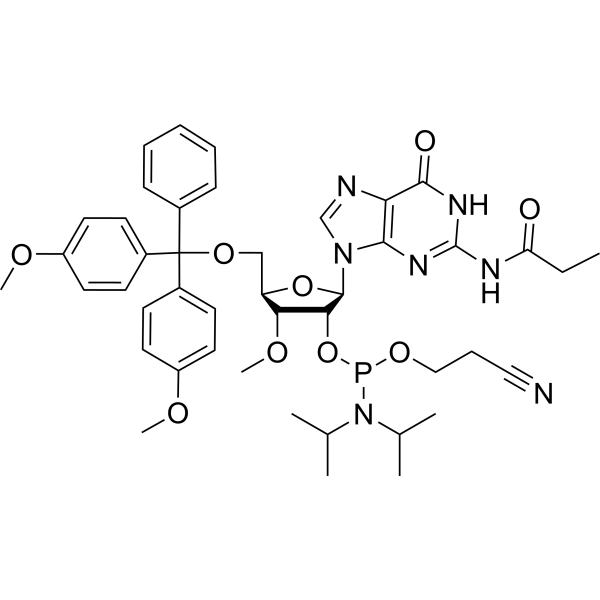
    3’-O-Me-G(iBu)-2’-phosphoramidite is a guanosine analog. Some guanosine analogs have immunostimulatory activity. In some animal models, they also induce type I interferons, producing antiviral effects. Studies have shown that the functional activity of guanosine analogs is dependent on the activation of Toll-like receptor 7 (TLR7) .
    3’-O-Me-G(iBu)-2’-phosphoramidite
  • HY-175370

    PROTACs RIP kinase Cancer
    PROTAC RIPK1 Degrader-1 is a selective RIPK1 PROTAC degrader. PROTAC RIPK1 Degrader-1 degrades RIPK1 in multiple cancer cell lines (e.g., A375, B16F10 cells). PROTAC RIPK1 Degrader-1 enhances the anti-cancer effect of radiotherapy in syngeneic and humanized mouse models. PROTAC RIPK1 Degrader-1 can be used to study cancers such as melanoma. (Pink: RIPK1-ligand-2: HY-175371, Blue: (S,R,S)-AHPC-Me: HY-112078, Pink + Black: RIPK1 ligand-Linker Conjugate-1: HY-175374, Black: Bispiperidin-piperazin-acetater: HY-175373) .
    PROTAC RIPK1 Degrader-1
  • HY-177578

    Antibody-Drug Conjugates (ADCs) c-Kit Apoptosis Microtubule/Tubulin ERK Akt Caspase Cancer
    NN3201 is a c-Kit-targeting antibody-drug conjugate (ADC) with high affinity (KD = 0.19 pM). NN3201 is composed of 4-(3-Tosyl-2-(tosylmethyl)propanoyl)benzoic acid-glu(PEG24-Me)-val-cit-NH-benzyloxyformic acid-MMAE (HY-178219) and an anti-c-Kit human monoclonal antibody NN2101 (HY-P991293). NN3201 rapidly internalizes and inhibits stem cell factor (SCF)-driven signaling, thereby delivering its payload to induce cell cycle arrest and apoptosis. NN3201 exhibits no Fc-mediated effector functions antibody-dependent cell-mediated cytotoxicity (ADCC)/complement-dependent cytotoxicity (CDC) due to reduced FcγR binding. NN3201 exhibits significant c-Kit-dependent anti-tumor efficacies in various tumor models. NN3201 can be used in small cell lung cancer (SCLC) and gastrointestinal stromal tumor (GIST) and acute myeloid leukemia (AML) research [1][2].
    NN3201
  • HY-149677

    Mitochondrial Metabolism Cancer
    ZK53 is a selective activator of mitochondrial caseinolytic protease P (HsClpP) (EC50: 1.37?μM for α-casein hydrolysis by HsClpP). ZK53 is is inactive toward bacterial ClpP proteins. ZK53 induces apoptosis in H1703, H520 and SK-MES-1 cells. ZK53 induces dysregulation of mitochondrial functions in lung squamous cell carcinoma (LUSC) cells. ZK53 inhibits tumor growth in H1703 xenograft mouse model .
    ZK53
  • HY-W012481

    Ethylphenylhydantoin; Phenylethyihydantoin; Desmethylmephenytoin

    Drug Metabolite Neurological Disease
    Nirvanol (Ethylphenylhydantoin) is a metabolite of Mephenytoin (HY-B1184) that exerts anticonvulsant effects in the maximal electroshock (M.E.S.) seizure model in mice. Nirvanol shows potential for research in epilepsy-related neurological disorders .
    Nirvanol
  • HY-N16374

    Antibiotic Bacterial Fungal Infection Cancer
    Mazethramycin B (Compound II) is an antitumor antibiotic. Mazethramycin B can be isolated from the Streptomyces thioluteusM ME561-L4. Mazethramycin B has a broad-spectrum antimicrobial activity (such as MICs of 1.56 and 6.25 μg/mL for the bacteria Bacillus subtilis PCI 219 and the fungus Candida pseudotropicalis, resepectively). Mazethramycin B significantly increases survival in L1210 leukemia mice model .
    Mazethramycin B
  • HY-155313

    Drug-Linker Conjugates for ADC Cancer
    β-Glucuronide-NB-bis[N(Me)-methyl ester]-MMAE (compound 20) is auristatins-glucuronide conjugate. Antitumor agent-122 shows in vitro antiproliferative activities against β-glucuronidase pretreated and untreated cancer cells with an IC50 value of 5.7 nM - 9.7 nM. Antitumor agent-122 shows potent antitumor efficacy in HCT-116 xenograft mouse model without inducing side effects .
    β-Glucuronide-NB-bis[N(Me)-methyl ester]-MMAE
  • HY-171509

    Drug-Linker Conjugates for ADC Apoptosis Cancer
    Mal-N(Me)-C6-N(Me)-PNU-159682 (Compound 27), an agent-linker conjugate for ADC, consists the ADC linker Mal-N(Me)-C6-N(Me) and a potent ADC cytotoxin PNU-159682. Mal-N(Me)-C6-N(Me)-PNU-159682 (Compound 27) selectively delivers the payload to CD46-expressing cells, where the linker is cleaved by cathepsin B to release PNU-159682, inducing DNA damage and apoptosis. Mal-N(Me)-C6-N(Me)-PNU-159682 shows durable tumor regression in xenograft (PDX) models of non-small cell lung cancer (NSCLC) and colorectal cancer (CRC) .
    Mal-N(Me)-C6-N(Me)-PNU-159682
  • HY-W012481R

    Ethylphenylhydantoin (Standard); Phenylethyihydantoin (Standard); Desmethylmephenytoin (Standard)

    Drug Metabolite Reference Standards Neurological Disease
    Nirvanol (Ethylphenylhydantoin) is a metabolite of Mephenytoin (HY-B1184) that exerts anticonvulsant effects in the maximal electroshock (M.E.S.) seizure model in mice. Nirvanol shows potential for research in epilepsy-related neurological disorders .
    Nirvanol (Standard)
  • HY-106424

    Drug Intermediate Neurological Disease
    Soretolide is an antiepileptic agent. Soretolide is effective in maximal electroshock-induced seizure (MES) test in rodents. Soretolide inhibits metabolism of Phenytoin (HY-B0448). Soretolide exhibits a good pharmacokinetic character in rats model .
    Soretolide
  • HY-170833

    GABA Receptor Neurological Disease
    Anticonvulsant agent 8 (compound D4) is an anticonvulsant agent that inhibits GABAA currents with ED50 values of 2.23 and 24.60 mg/kg in the maximum electroshock (MES) and pentylenetetrazol (PTZ) tests in mouse models, respectively .
    Anticonvulsant agent 8
  • HY-114300

    GABA Receptor Neurological Disease
    DSP-0565 (compound 17a) is a strong, broad-spectrum anti-epileptic agent (AED) candidate with unique GABAergic function. DSP-0565 shows anti-convulsant activity in various models (scPTZ, MES, 6 Hz and amygdala kindling) with good safety margin .
    DSP-0565
  • HY-W012481S

    Ethylphenylhydantoin-d5; Phenylethyihydantoin-d5; Desmethylmephenytoin-d5

    Isotope-Labeled Compounds Drug Metabolite Neurological Disease
    Nirvanol-d5 (Ethylphenylhydantoin-d5) is deuterium labeled Nirvanol (HY-W012481) . Nirvanol (Ethylphenylhydantoin) is a metabolite of Mephenytoin (HY-B1184) that exerts anticonvulsant effects in the maximal electroshock (M.E.S.) seizure model in mice. Nirvanol shows potential for research in epilepsy-related neurological disorders .
    Nirvanol-d5
  • HY-P10819

    Histone Demethylase Apoptosis Cancer
    S9-CMC1 TFA is a covalent peptide lysine-specific demethylase 1 (LSD1) inhibitor with an IC50 value of 2.53 μM. S9-CMC1 TFA specifically recognizes Cys360 in the enzyme-active region. S9-CMC1 TFA inhibits LSD1 activity, increasing H3K4me1 and H3K4me2 levels, leading to G1 cell cycle arrest and apoptosis and inhibiting cell proliferation. S9-CMC1 TFA significantly inhibits tumor growth in A549 xenograft animal models .
    S9-CMC1 TFA
  • HY-169919

    Histone Demethylase Fungal Infection
    HDM-IN-1 (Compound A4) is an inhibitor for fungal histone demethylase (HDM), that inhibits the H3K27me3 in Cryptococcus neoformans and in Candida auris with IC50s of 134 and 12 nM. HDM-IN-1 exhibits inhibitory efficacy against C. neoformans and C. auris with MIC80 of 0.5-2 μg/mL, through inhibition of the biofilm and capsule formation. HDM-IN-1 exhibits antifungal activity in ICR mouse model .
    HDM-IN-1
  • HY-108327

    Potassium Channel Neurological Disease
    PF-05020182 is an orally active opener for Kv7 channel, that activates human Kv7.2/7.3, Kv7.4 and Kv7.3/7.5 with EC50 of 334, 625 and 588 nM, respectively. PF-05020182 exhibits anticonvulsant activity in rats corneal electric shock-induced tonic seizure (MES) models. PF-05020182 is blood-brain barrier (BBB) penetrable .
    PF-05020182
  • HY-172887

    Potassium Channel Neurological Disease
    Kv7.2/Kv7.3 activator-2 is a BBB-penetrable Kv7.2/7.3 activator (EC50: 0.25 μM). Kv7.2/Kv7.3 activator-2 has good photostability. Kv7.2/Kv7.3 activator-2 has potently antiepileptic effects in maximal electroshock (MES) and sc-pentylenetetrazol (sc-PTZ)-induced acute mice seizure models .
    Kv7.2/Kv7.3 activator-2
  • HY-178016

    Histamine Receptor Neurological Disease
    H3R antagonist 8 is a selective nonimidazole histamine H3 receptor antagonist (IC50 = 0.35 μM). H3R antagonist 8 exhibits hERG channel blockade activity (IC50 = 0.67 μM). H3R antagonist 8 inhibits seizures by antagonizing H3 receptor. H3R antagonist 8 reduces tonic hind limb extension (THLE) in mice in the maximal electroshock seizure (MES) model (ED50 = 20.21 mg/kg) and and shortens pentylenetetrazol (PTZ)-induced total movement distance in AB strain zebrafish larvae. H3R antagonist 8 can be used for the study of epilepsy .
    H3R antagonist 8
  • HY-P11618

    Glycoprotein VI Cancer
    10P3Me is a Glypican-3 (GPC3)-targeting probe with a Ka of 93.8 nM for the human target. 10P3Me exhibits high binding affinity to GPC3, targets GPC3-positive cells, and serves as an agent for PET imaging. 10P3Me selectively accumulates in GPC3-positive tumor tissues, including subcutaneous xenograft models and orthotopic HepG2-LUC liver cancer models, to achieve precise localization of lesions .
    10P3Me
  • HY-180765

    MMP Metabolic Disease
    Colchicine-O-CO-Enyl(Me)-Enyl-Enyl(Me)-Enyl-1,3,3-trimethylcyclohex-1-ene (compound L2) is a lipophilic colchicinoid formulation targeting hepatic stellate cells (HSC). Colchicine-O-CO-Enyl(Me)-Enyl-Enyl(Me)-Enyl-1,3,3-trimethylcyclohex-1-ene increases the levels of MMP2, MMP8 and MMP9, demonstrating the protective effect in tissue remodeling. Colchicine-O-CO-Enyl(Me)-Enyl-Enyl(Me)-Enyl-1,3,3-trimethylcyclohex-1-ene exhibits anti-fibrotic activity in CCL4-induced liver fibrosis (LF) mouse model. Colchicine-O-CO-Enyl(Me)-Enyl-Enyl(Me)-Enyl-1,3,3-trimethylcyclohex-1-ene can be used for LF research .
    Colchicine-O-CO-Enyl(Me)-Enyl-Enyl(Me)-Enyl-1,3,3-trimethylcyclohex-1-ene
  • HY-101117R

    Histone Methyltransferase Reference Standards Cancer
    EED226 (Standard) is the analytical standard of EED226 (HY-101117). This product is intended for research and analytical applications. EED226 is a polycomb repressive complex 2 (PRC2) inhibitor, which binds to the K27me3-pocket on embryonic ectoderm development (EED) and shows strong antitumor activity in xenograft mice model . EED226 is a potent, selective, and orally bioavailable EED inhibitor . EED226 inhibits PRC2 with an IC50 of 23.4 nM when the H3K27me0 peptide is used as a substrate in the in vitro enzymatic assays .
    EED226 (Standard)
  • HY-182365

    Histone Demethylase Neurological Disease Inflammation/Immunology
    EED-IN-4 is an orally active, EZH2-selective immunomodulator and EED-H3K27me3 inhibitor (EED, IC50=28.21 nM) with anti-inflammatory activity. In mouse models, EED-IN-4 preferentially and persistently accumulates in lymph nodes after oral administration. By reducing the H3K27me3 level of dendritic cells and inhibiting their migration, EED-IN-4 reduces the infiltration of immune cells into the central nervous system and effectively alleviates spinal cord inflammation. EED-IN-4 shows weak inhibitory activity against hERG channels and is non-mutagenic, with no obvious toxicity observed upon long-term oral administration. EED-IN-4 can be used for the research of multiple sclerosis .
    EED-IN-4
  • HY-182366

    Histone Methyltransferase Neurological Disease Inflammation/Immunology
    EED-IN-5 is an orally active, EZH2-selective trisubstituted pyridine-based EED-H3K27me3 inhibitor and immunomodulator with anti-inflammatory activity. The IC50 value of EED-IN-5 against EED is 28.21 nM. In mouse models, EED-IN-5 preferentially and persistently accumulates in lymph nodes after oral administration. By reducing the H3K27me3 level of dendritic cells and inhibiting their migration, EED-IN-5 decreases the infiltration of specific dendritic cells, macrophages and T cells into the spinal cord and brain. EED-IN-5 exhibits hERG inhibitory activity, shows negative results in the Mini-Ames test, and causes no obvious toxicity upon long-term high-dose administration. EED-IN-5 can be used for the research of multiple sclerosis .
    EED-IN-5
  • HY-181849

    Histone Methyltransferase Cancer
    MS2928 is a selective SETD8 inhibitor with an IC50 of 0.14 μM against SETD8 methyltransferase activity. MS2928 reduces cellular H4K20me1 levels and inhibits proliferation of SETD8-overexpressing multiple myeloma cells. MS2928 inhibits tumor growth in xenograft mouse models of SETD8-overexpressing multiple myeloma. MS2928 can be used for the study of SETD8 biological functions and multiple myeloma .
    MS2928
  • HY-100421R

    Histone Demethylase Reference Standards Cancer
    CPI-455 (Standard) is the analytical standard of CPI-455 (HY-100421). This product is intended for research and analytical applications. CPI-455 is a specific, pan-KDM5 inhibitor with an IC50 of 10 nM for KDM5A. CPI-455 mediates KDM5 inhibition, elevates global levels of H3K4me3, and decreases the number of drug-tolerant persister cancer cells in multiple cancer cell line models treated with standard chemotherapy or targeted agents .
    CPI-455 (Standard)
  • HY-P992158

    CD47 Cancer
    VBI-009 is a CD47 and B7-H3 (CD276) bispecific antibody. VBI-009 blocks CD47-SIRPα 'don't eat me' signals and restricts activity to CD47 +/B7-H3 + cells. VBI-009 induces antibody-dependent cellular phagocytosis (ADCP) and antibody-dependent cellular cytotoxicity (ADCC) in CD47 +/B7-H3 + tumor cells. VBI-009 inhibits tumor growth in CD47+/B7-H3+ lung cancer xenograft models. VBI-009 can be used for the research of lung cancer .
    VBI-009

Inquiry Online

Your information is safe with us. * Required Fields.

Salutation


Country or Region *

Applicant Name *


Organization Name *

Department *


Email Address *


Product Name *

Cat. No.


Requested quantity *

Phone Number *


Remarks

Inquiry Online

Inquiry Information

Product Name:
Cat. No.:
Quantity:
MCE Japan Authorized Agent: