7 Results for "

Network pharmacology

" in MedChemExpress (MCE) Product Catalog:
Products (7)

7 Results for "Network pharmacology" in MCE Product Catalog:

2
2 Cited Publications
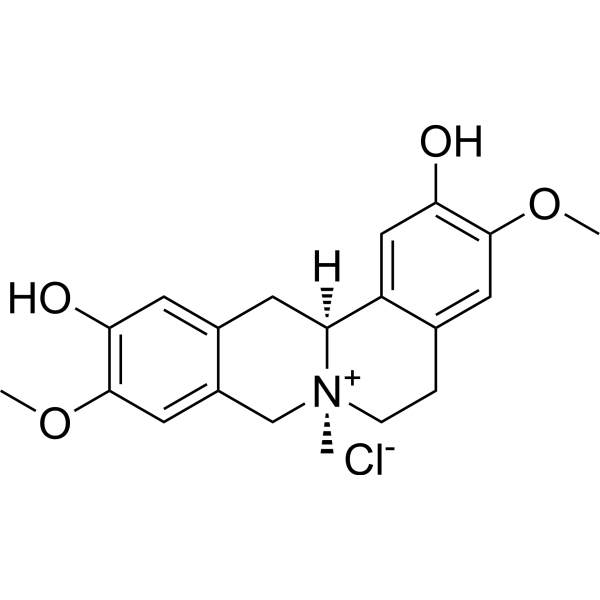
Cat. No.: HY-N0735
CAS No.: 104112-82-5
Phellodendrine chloride is an orally active plant alkaloid. Phellodendrine chloride inhibits the proliferation of KRAS-mutated pancreatic cancer cells by suppressing macropinocytosis and glutamine metabolism, inducing ROS accumulation and mitochondrial apoptosis. Phellodendrine chloride promotes autophagy by activating the AMPK/mTOR pathway, alleviating intestinal damage in ulcerative colitis. Phellodendrine chloride can alleviate gouty arthritis by inhibiting the IL-6/STAT3 signaling pathway. Phellodendrine chloride suppresses allergic reactions by altering the conformation of MRGPRB3/MRGPRX2 protein, thereby inhibiting the activation of PKC and subsequent downstream MAPK and NF-κB signaling. Phellodendrine chloride inhibits the AKT/NF-κB pathway and down-regulates the expression of COX-2, thereby protecting zebrafish embryos from oxidative stress. Phellodendrine chloride has an anti-major depressive disorder (MDD) effect by down-regulating CHRM1, HTR1A, and the PI3K/Akt signaling pathway .
loading...
    loading...
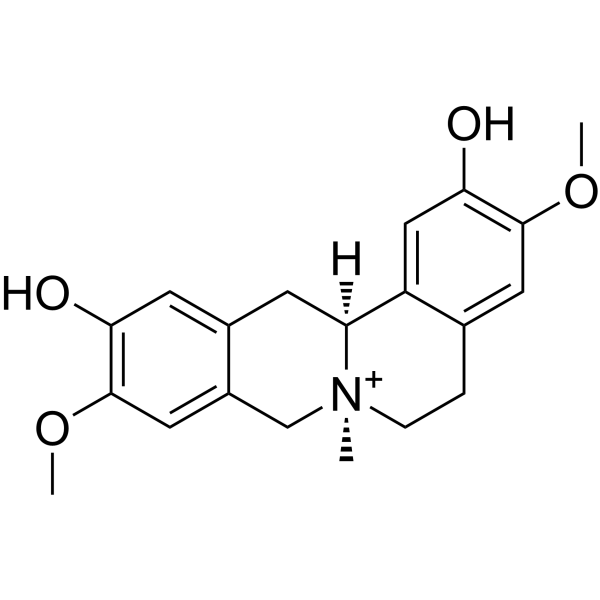
Cat. No.: HY-N0427
CAS No.: 6873-13-8
Phellodendrine is an orally active plant alkaloid. Phellodendrine inhibits the proliferation of KRAS-mutated pancreatic cancer cells by suppressing macropinocytosis and glutamine metabolism, inducing ROS accumulation and mitochondrial apoptosis. Phellodendrine promotes autophagy by activating the AMPK/mTOR pathway, alleviating intestinal damage in ulcerative colitis. Phellodendrine can alleviate gouty arthritis by inhibiting the IL-6/STAT3 signaling pathway. Phellodendrine suppresses allergic reactions by altering the conformation of MRGPRB3/MRGPRX2 protein, thereby inhibiting the activation of PKC and subsequent downstream MAPK and NF-κB signaling. Phellodendrine inhibits the AKT/NF-κB pathway and down-regulates the expression of COX-2, thereby protecting zebrafish embryos from oxidative stress. Phellodendrine has an anti-major depressive disorder (MDD) effect by down-regulating CHRM1, HTR1A, and the PI3K/Akt signaling pathway .
loading...
    loading...
Cat. No.: HY-N0735R
CAS No.: 104112-82-5
Phellodendrine chloride (Standard) is the analytical standard of Phellodendrine chloride (HY-N0735). Phellodendrine chloride is an orally active plant alkaloid. Phellodendrine chloride inhibits the proliferation of KRAS-mutated pancreatic cancer cells by suppressing macropinocytosis and glutamine metabolism, inducing ROS accumulation and mitochondrial apoptosis. Phellodendrine chloride promotes autophagy by activating the AMPK/mTOR pathway, alleviating intestinal damage in ulcerative colitis. Phellodendrine chloride can alleviate gouty arthritis by inhibiting the IL-6/STAT3 signaling pathway. Phellodendrine chloride suppresses allergic reactions by altering the conformation of MRGPRB3/MRGPRX2 protein, thereby inhibiting the activation of PKC and subsequent downstream MAPK and NF-κB signaling. Phellodendrine chloride inhibits the AKT/NF-κB pathway and down-regulates the expression of COX-2, thereby protecting zebrafish embryos from oxidative stress. Phellodendrine chloride has an anti-major depressive disorder (MDD) effect by down-regulating CHRM1, HTR1A, and the PI3K/Akt signaling pathway.
loading...
    loading...
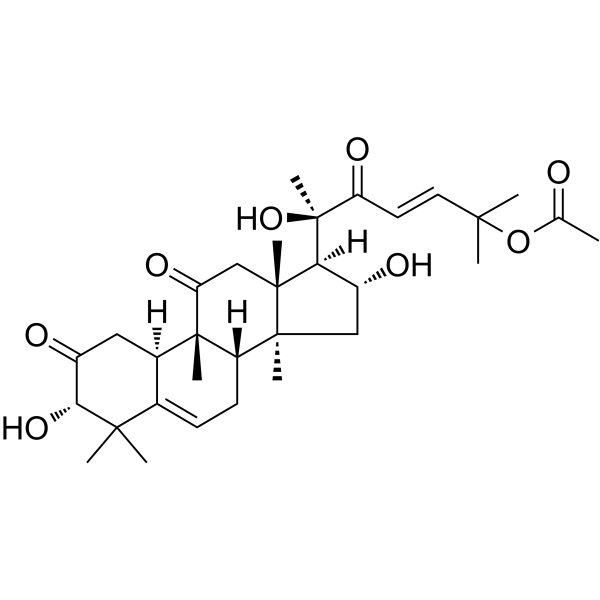
Cat. No.: HY-N4189
CAS No.: 17278-28-3
Isocucurbitacin B is a natural terpenoid compound found in Pedicellus Melo. Isocucurbitacin B can inhibit the PI3K/AKT, MAPK, and STAT3 signaling pathways and downregulate CAV1 expression. Isocucurbitacin B can inhbit cancer cell proliferation, migration and invision. Isocucurbitacin B can induce apoptosis and cause G2/M phase arrest. Isocucurbitacin B can decrease intracellular cholesterol and PH levels and increase intracellular calcium levels. Isocucurbitacin B can be used for the research of cancer, such as glioma [1][2].

loading...
    loading...
Cat. No.: HY-N21559
CAS No.: 67172-84-3
Kuwanon D is a prenylated flavanone found in the root bark of Morus alba L. Kuwanon D is predicted to be a high-affinity binder of SARS-CoV-2 main protease (Mpro), with favorable bioavailability and compliance with Lipinski's Rule of Five. Kuwanon D is an active component of Morus alba root bark identified as a lung cancer-related gene-targeting compound through network pharmacology screening. Kuwanon D is applicable to research related to COVID-19 and lung cancer .
loading...
    loading...
Cat. No.: HY-L215
6,077 compounds

Metabolomics, positioned as the systemic characterization of small-molecule metabolites within biological systems, has emerged as an indispensable analytical platform in both fundamental research and translational applications across plant sciences, microbial biotechnology, and biomedical investigations. Functioning as a critical component in multi-omics integration, this discipline deciphers the intricate molecular networks operating downstream of genomic, transcriptomic, and proteomic regulation, thereby capturing the dynamic biochemical phenotype closest to organismal functionality. The metabolome, comprising endogenous compounds with molecular weights typically below 1500 Da, serves as the functional readout of cellular processes and environmental interactions, where perturbations in metabolic networks are frequently implicated in disease pathogenesis. Such unique attributes have propelled metabolomics into a pivotal role in pharmacological research, particularly in target deconvolution, pharmacodynamic assessment, and mechanistic elucidation of pathological processes.

MCE can provide 6,077 mass spectrometry human metabolites that can be used for metabolite identification and quantification, functional cell detection and phenotypic screening of mass spectrometry.

Cat. No.: HY-L246
1,039 compounds

Tonifying traditional Chinese medicines occupy a central position in the traditional medical system, with their core value lying in the regulation of the body's functional state. Modern pharmacological studies have confirmed that these medicinal materials and their monomeric components possess multiple biological activities, including bidirectional immune regulation, anti-aging and lifespan extension, neuroprotection and cognitive enhancement, as well as hematopoietic and metabolic regulation. According to the traditional Chinese medicine theory of “strengthening the body’s resistance and consolidating the foundation”, tonifying medicines are mainly classified into four major categories: Qi-tonifying, Blood-tonifying, Yin-tonifying, and Yang-tonifying. This compound library strictly follows this classification system for compound collection.

Monomeric compounds derived from traditional Chinese medicines demonstrate excellent drug-like properties. They naturally possess structural diversity and clearly defined pharmacological activities, which help improve screening success rates and make them ideal tools for studying multi-target synergistic effects. This library contains 1,039 compounds, providing a material basis for investigating synergistic interactions among compounds (network pharmacology) and facilitating the development of multi-target therapeutic strategies for complex diseases such as cancer, neurodegenerative disorders, and metabolic syndrome.

