10 Results for "

Orphan GPCR

" in MedChemExpress (MCE) Product Catalog:
Products (10)

10 Results for "Orphan GPCR" in MCE Product Catalog:

4
4 Cited Publications
Cat. No.: HY-113962
CAS No.: 64907-22-8
Purity:  99.88%
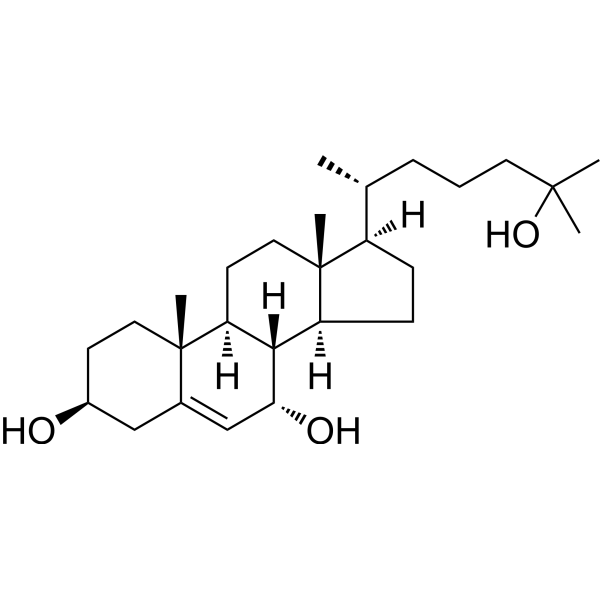
Synonyms: 7α,25-OHC
7α, 25-dihydroxycholesterol (7α,25-OHC) is a potent and selective agonist and endogenous ligand of the orphan GPCR receptor EBI2 (GPR183). 7α, 25-dihydroxycholesterol is highly potent at activating EBI2 (EC50=140 pM; Kd=450 pM). 7α, 25-dihydroxycholesterol can serve as a chemokine directing migration of B cells, T cells and dendritic cells .
loading...
    loading...
Cat. No.: HY-N15721
CAS No.: 1630745-39-9
Synonyms: Trp-CA
Tryptophan-cholic acid (Trp-CA) is a microbial amino acid-conjugated bile acid that acts as an endogenous ligand and agonist (EC50=9.6 μM) for the orphan G protein-coupled receptor (GPCR) MRGPRE (Mas-related G protein-coupled receptor family member E). Tryptophan-cholic acid is orally effective but has poor oral absorption and does not cross the blood-brain barrier. Tryptophan-cholic acid promotes the secretion of glucagon-like peptide GLP-1, thereby improving glucose tolerance in diabetic mice. Tryptophan-cholic acid improves glucose tolerance, promotes insulin secretion, and alleviates high-fat diet-induced hepatic steatosis without causing pruritus side effects. Tryptophan-cholic acid is primarily used in research on type 2 diabetes (T2D) .
loading...
    loading...
Cat. No.: HY-113962S
CAS No.: 2260669-11-0
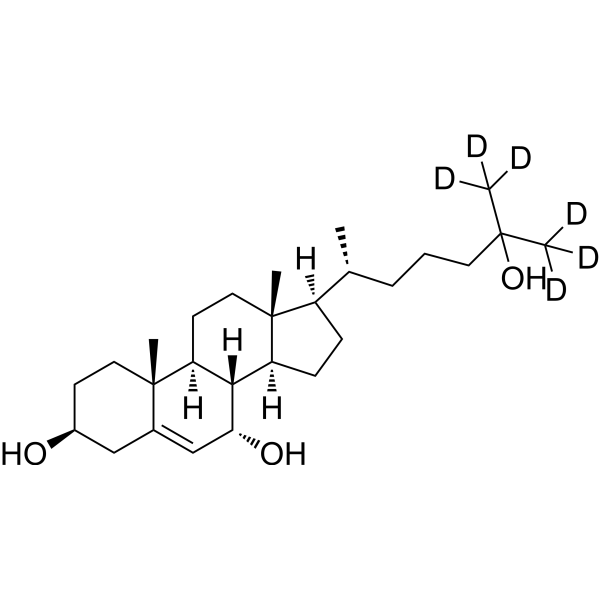
Synonyms: 7α,25-OHC-d6
7α,25-Dihydroxycholesterol-d6 is deuterium labeled 7α,25-Dihydroxycholesterol. 7α, 25-dihydroxycholesterol (7α,25-OHC) is a potent and selective agonist and endogenous ligand of the orphan GPCR receptor EBI2 (GPR183). 7α, 25-dihydroxycholesterol is highly
loading...
    loading...
Cat. No.: HY-P2472
CAS No.: 600171-70-8
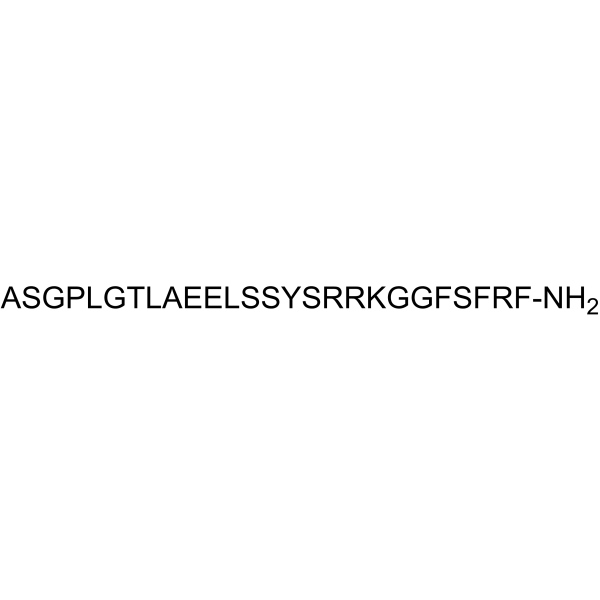
Synonyms: 26RFa (mouse, rat)
Research Areas:  

Metabolic Disease

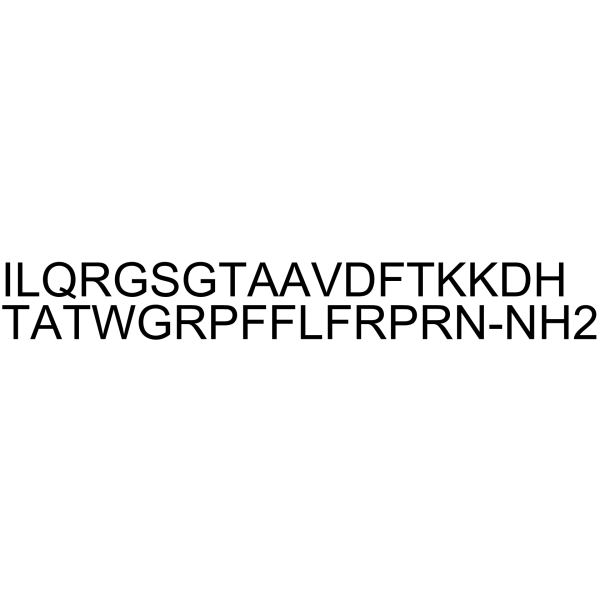
Orphan GPCR SP9155 agonist P550 (mouse, rat) (26RFa (mouse, rat)), a member of the RFamide peptide family with orexigenic effect, is the cognate ligand of the mouse orphan receptor GPR103, also designated SP9155 or AQ27 .
loading...
    loading...
Cat. No.: HY-P10289A
Synonyms: NPW30, rat acetate
Research Areas:  

Neurological Disease

Neuropeptide W-30 (rat) is an important stress mediator in the central nervous system that modulates the hypothalamus-pituitary-adrenal (HPA) axis and sympathetic outflow. Neuropeptide W-30 (rat) is an endogenous ligand for the two structurally related orphan G-protein-coupled receptors (GPCRs) GPR7 and GPR8. NPW-30 activates and binds to both GPR7 and GPR8 at similar effective doses .
loading...
    loading...
Cat. No.: HY-P10287
CAS No.: 383415-80-3
Synonyms: NPW30, human
Research Areas:  

Neurological Disease

Neuropeptide W-30 (human) is an important stress mediator in the central nervous system that modulates the hypothalamus-pituitary-adrenal (HPA) axis and sympathetic outflow. Neuropeptide W-30 (human) is an endogenous ligand for the two structurally related orphan G-protein-coupled receptors (GPCRs) GPR7 and GPR8. Neuropeptide W-30 (human) activates and binds to both GPR7 and GPR8 at similar effective doses .
loading...
    loading...
Cat. No.: HY-400897
CAS No.: 1326612-12-7
Research Areas:  

Cancer

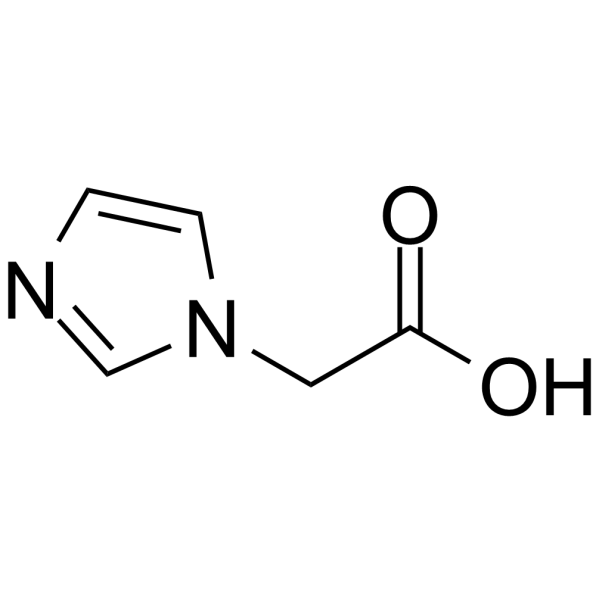
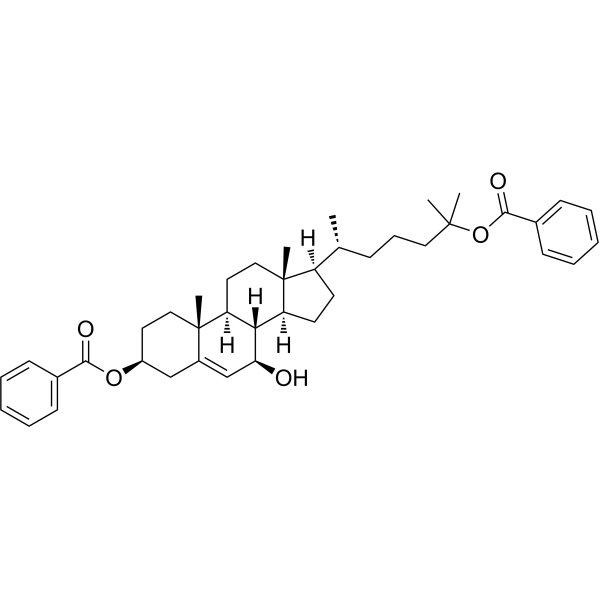
7α,25-Dihydroxycholesterol intermediate-1 is an intermediate in the synthesis of 7α,25-Dihydroxycholesterol (HY-113962). 7α,25-Dihydroxycholesterol (7α,25-OHC) can be used as a ligand to target the orphan GPCR receptor EBI2 (GPR183). body, used to synthesize the corresponding PROTEACs .
loading...
    loading...
Cat. No.: HY-P5084
CAS No.: 1138204-27-9
Neuromedin S (human) is a neuropeptide that contains 33 amino acids. Neuromedin S (human)has been identified in the brain as an endogenous ligand for the orphan G-protein coupled receptor (GPCR) FM-4/TGR-1 and acts on the neuromedin U (NMU) receptor 2 (NMUR2) in the regulation of body weight homeostasis .
loading...
    loading...
Cat. No.: HY-P10289
CAS No.: 383415-90-5
Synonyms: NPW30, rat
Research Areas:  

Neurological Disease

Neuropeptide W-30 (rat) is an important stress mediator in the central nervous system that modulates the hypothalamus-pituitary-adrenal (HPA) axis and sympathetic outflow. Neuropeptide W-30 (rat) is an endogenous ligand for the two structurally related orphan G-protein-coupled receptors (GPCRs) GPR7 and GPR8. NPW-30 activates and binds to both GPR7 and GPR8 at similar effective doses .
loading...
    loading...
Cat. No.: HY-L944
11028 compounds

MCE 18 stands for Medicinal Chemistry Evolution 2018. This metric was established based on structural data of 28,161 patented lead molecules, 1,370 marketed innovative drugs, and nearly 30,000 investigational candidates from preclinical to Phase III stages across 23 major global pharmaceutical companies from 1950 to 2018. After scaffold clustering analysis, a scoring model was constructed by integrating five three dimensional scaffold characteristics, including aromatic rings (AR), non aromatic heterocycles (NAR), chiral centers (CHIRAL), spirocycles (SPIRO), and the sp³ carbon ratio in cyclic and acyclic moieties, enabling quantitative assessment of molecular scaffold novelty and three dimensional complexity.

According to the score distribution of patented molecules, the top 25% of the original patent dataset was defined as the high novelty region. MCE 18 high scoring compounds selected based on this criterion can effectively avoid scaffold patent conflicts and intellectual property risks from the source. Molecules in this range typically feature a high sp³ carbon ratio, abundant chiral centers, spirocycles, and fused heterocycles with prominent three dimensional conformations. Their spatial properties allow precise matching to complex non traditional undruggable target pockets such as PPI interfaces and allosteric sites, making them ideal structural types for early stage screening of First in class drugs.

MCE‑18 Novelty Focused drug‑Like library strictly selects molecules from the aforementioned high scoring range, containing more than 10,000 premium drug like molecules with highly diverse scaffolds and rich 3D diversity. It can be used for high throughput screening of well established targets such as kinases, GPCRs, and proteases, and is especially suitable for hit identification in allosteric modulation, protein–protein interactions, and various undruggable orphan targets, fully supporting early stage drug discovery for cutting edge innovat

