8 Results for "

Post-transcriptional level

" in MedChemExpress (MCE) Product Catalog:
Products (8)

8 Results for "Post-transcriptional level" in MCE Product Catalog:

5
5 Cited Publications
Cat. No.: HY-124593
CAS No.: 1256565-36-2
Purity:  99.89%
Synonyms: Emvododstat
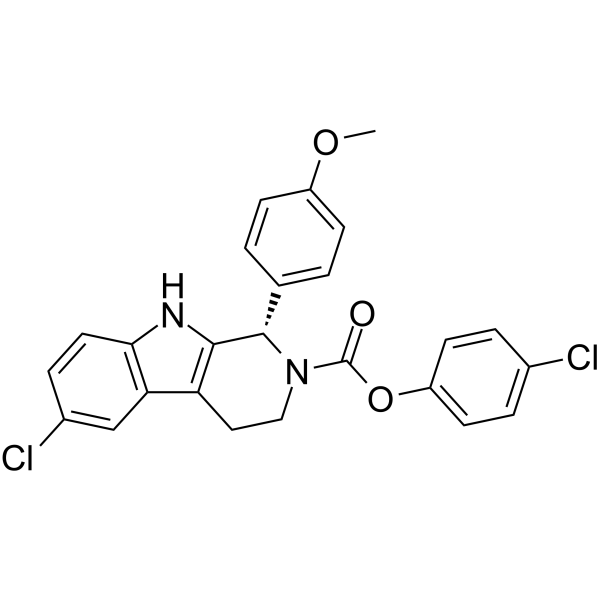
PTC299 is an orally active inhibitor of VEGFA mRNA translation that selectively inhibits VEGF protein synthesis at the post-transcriptional level. PTC299 is also a potent inhibitor of dihydroorotate dehydrogenase (DHODH). PTC299 shows good oral bioavailability and lack of off-target kinase inhibition and myelosuppression. PTC299 can be useful for the research of hematologic malignancies .
loading...
    loading...
Cat. No.: HY-12758
CAS No.: 1346753-00-1
Purity:  99.16%
Target:  

BCRP

Research Areas:  

Cancer

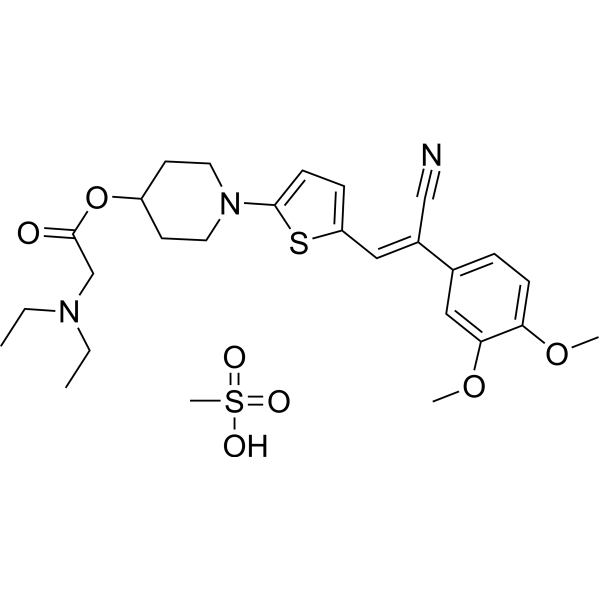
YHO-13351 is an orally active ABCG2 inhibitor . YHO-13351 modulates the function of ABCG2, blocks BCRP-mediated compound efflux, downregulates the expression of breast cancer resistance protein at the post-transcriptional level, and reverses ABCG2-associated tolerance. YHO-13351 restores the toxicity of SN-38 to SN-38-resistant cancer cells and sensitizes cancer cells to Irinotecan. YHO-13351 is a water-soluble prodrug that is rapidly converted to YHO-13177 (HY-12757) in mice. YHO-13351 prolongs the median survival time of mice bearing cancer cell xenografts when combined with IMMU-132. YHO-13351 extends the survival time of tumor-bearing mice and inhibits the growth of xenograft tumors when combined with Irinotecan. YHO-13351 can be used for the research of breast cancer, gastric cancer, BCRP-mediated drug-resistant cancers, and cervical cancer .
loading...
    loading...
Cat. No.: HY-P10414A
Synonyms: KP1 (human) hydrochloride
Target:  

TGF-β Receptor

Research Areas:  

Infection Endocrinology

Klotho-derived peptide 1 hydrochloride (KP1 (human) hydrochloride) is a polypeptide with multiple activities including senescence inhibition and renal protection. Klotho-derived peptide 1 hydrochloride binds to TβR2 and ATAD3A, with a Kd value of 1.41 μM for binding to human TβR2 and a Kd value of 0.319 μM for binding to ATAD3A. By binding to TβR2, Klotho-derived peptide 1 hydrochloride blocks the TGF-β/Smad3 and downstream TGF-β signaling pathways, inhibits the expression of miR-223-3p, induces the expression of lncRNA-TUG1, restores endogenous Klotho at the post-transcriptional level, inhibits cellular senescence markers, fibroblast activation and renal tubular epithelial cell apoptosis, blocks cytochrome c release and caspase activation, maintains the integrity of mitochondrial ultrastructure, and restores mitochondrial protein levels. Klotho-derived peptide 1 hydrochloride enters renal tubular epithelial cells via endocytosis, protects against nephrotoxic and hypoxic injuries, and recapitulates the renal protective and anti-fibrotic effects of full-length Klotho. Klotho-derived peptide 1 hydrochloride can be used in research related to kidney diseases such as chronic kidney disease and SARS-CoV-2-associated acute kidney injury .
loading...
    loading...
Cat. No.: HY-125827
CAS No.: 54260-72-9
Purity:  99.16%
Synonyms: 13-Methylberberinium chloride
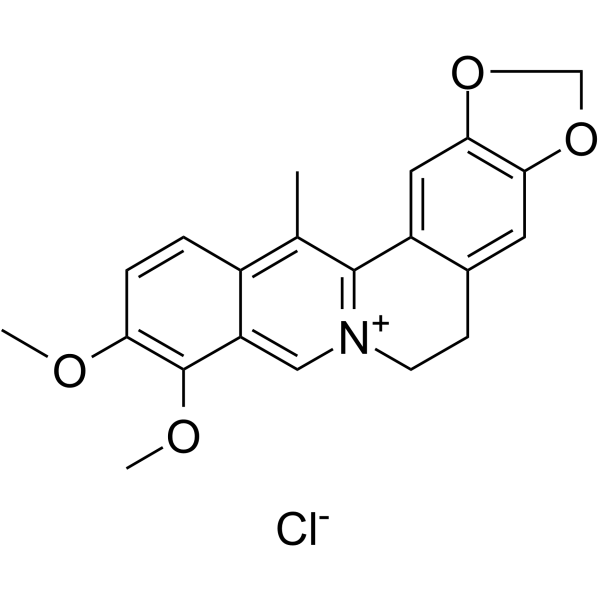
13-Methylberberine chloride (13-Methylberberinium chloride), a berberine analogue, has anti-adipogenic and antitumor activities. 13-Methylberberine chloride (13-Methylberberinium chloride) increases production of IL-12 and inhibits the expression of iNOS at posttranscriptional level in macrophages activated with LPS .
loading...
    loading...
Cat. No.: HY-P10414
Synonyms: KP1 (human)
Target:  

TGF-β Receptor

Research Areas:  

Infection Endocrinology

Klotho-derived peptide 1 (KP1 (human)) is a polypeptide with multiple activities including senescence inhibition and renal protection. Klotho-derived peptide 1 binds to TβR2 and ATAD3A, with a Kd value of 1.41 μM for binding to human TβR2 and a Kd value of 0.319 μM for binding to ATAD3A. By binding to TβR2, Klotho-derived peptide 1 blocks the TGF-β/Smad3 and downstream TGF-β signaling pathways, inhibits the expression of miR-223-3p, induces the expression of lncRNA-TUG1, restores endogenous Klotho at the post-transcriptional level, inhibits cellular senescence markers, fibroblast activation and renal tubular epithelial cell apoptosis, blocks cytochrome c release and caspase activation, maintains the integrity of mitochondrial ultrastructure, and restores mitochondrial protein levels. Klotho-derived peptide 1 enters renal tubular epithelial cells via endocytosis, protects against nephrotoxic and hypoxic injuries, and recapitulates the renal protective and anti-fibrotic effects of full-length Klotho. Klotho-derived peptide 1 can be used in research related to kidney diseases such as chronic kidney disease and SARS-CoV-2-associated acute kidney injury .
loading...
    loading...
Cat. No.: HY-183408
CAS No.: 193809-84-6
Target:  

MMP Apoptosis

Research Areas:  

Cancer

MMI-166 is an orally active selective matrix metalloproteinase (MMP) inhibitor (MMP-2 (IC50 = 2 nM), MMP-9 (IC50 = 53 nM)). MMI-166 can prevent tumor invasion, metastasis and angiogenic, and promotes apoptosis. MMI-166 dose not only directly inhibits the enzymatic activity of MMP-2 and MMP-9 but also downregulates their protein synthesis and expression levels at the post-transcriptional level. MMI-166 can be used in research on colon cancer, head and neck squamous cell carcinoma, microglioma, lung cancer, and pancreatic cancer .
loading...
    loading...
Cat. No.: HY-123303
CAS No.: 75041-32-6
Synonyms: NZ-28
Target:  

HSP

Research Areas:  

Cancer

NSC-134754 (NZ-28) is a dehydroemetine derivative and heat shock protein (HSP) induction inhibitor. NSC-134754 acts at the post-transcriptional level, targets Hsp72 and Hsp27, and does not alter general protein synthesis, HSF-1 transcriptional activity, or Hsp mRNA levels. NSC-134754 can be used for the research of multiple myeloma, prostate carcinoma, colon carcinoma .
loading...
    loading...
Cat. No.: HY-187609
CAS No.: 166981-11-9
CT 2576 is a phospholipid signaling inhibitor as well as a Jak3/STAT5 inhibitor. CT 2576 suppresses gene expression and replication of human immunodeficiency virus (HIV) at the post-transcriptional level by interfering with phospholipid metabolism in host cells, particularly by inhibiting the production of phosphatidic acid PA. CT-2576 completely inhibits the growth and proliferation of malignant T-cell lymphoma cells by suppressing phospholipid signaling and blocking the Jak/STAT signaling pathway associated with IL-2R. CT 2576 can be used in research related to human immunodeficiency virus (HIV) infection and cutaneous T-cell lymphoma (CTCL) .
loading...
    loading...

