18 Results for "

Reduced systemic toxicity

" in MedChemExpress (MCE) Product Catalog:
Products (18)

18 Results for "Reduced systemic toxicity" in MCE Product Catalog:

2
2 Cited Publications
Cat. No.: HY-13679
CAS No.: 19767-45-4
Purity:  99.78%
Synonyms: Mesnum
Research Areas:  

Cancer

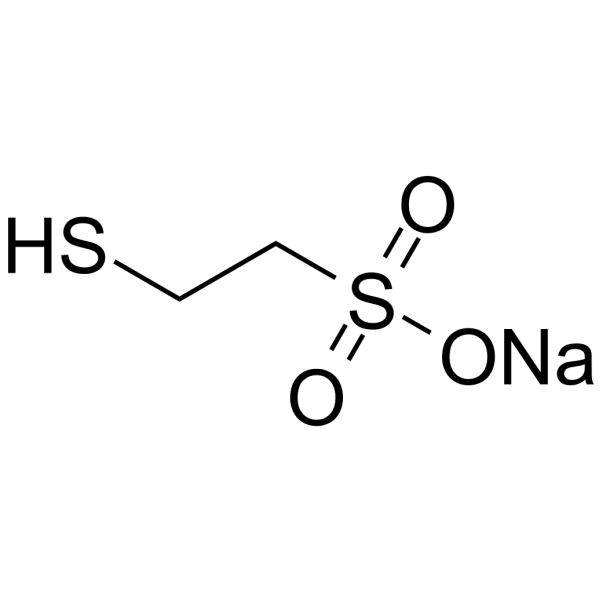
Mesna (Sodium 2-mercaptoethanesulfonate) is an antioxidant which has cytoprotective effects. Mesna is widely used as a systemic protective agent against chemotherapy toxicity. Mesna is also used to reduce hemorrhagic cystitis induced by cyclophosphamide .
loading...
    loading...
Cat. No.: HY-164288
CAS No.: 2287331-29-5
Synonyms: TDI-006570
TDI-6570 (TDI-006570) is a blood-brain barrier-permeable, orally active cGAS inhibitor with an IC50 of 1.64 μM. TDI-6570 exhibits high gastrointestinal absorption and a long brain half-life in mice, and shows no toxicity to primary neurons. By inhibiting the cGAS-STING-IFN signaling pathway, TDI-6570 reduces STING levels and the activation of TBK1, blocks double-stranded DNA-induced cGAS activation and downstream interferon-stimulated gene expression, thereby reducing tau protein spread and improving synaptic loss. TDI-6570 reverses memory deficits, increases the amplitude of long-term potentiation, enhances the MEF2C transcriptional network, restores PSD-95 and vGAT punctate structures, and significantly improves cognitive resilience. TDI-6570 can be applied to the research of Alzheimer's disease, Parkinson's disease, systemic lupus erythematosus, as well as various central nervous system and autoimmune diseases .
loading...
    loading...
Cat. No.: HY-W663938
CAS No.: 400882-07-7
Cyflumetofen is a non-systemic acylacetonitrile Acaricide. Cyflumetofen interferes with the Wnt/β-catenin signaling pathway, induces Apoptosis, and reduces the level of tight junction proteins. Cyflumetofen upregulates the expression of Pink1, Parkin and Lrrk2 genes associated with the pathogenesis of Parkinson's disease in zebrafish larvae. Cyflumetofen induces developmental toxicity and oxidative stress in zebrafish larvae, damages neurons, reduces motor activity, alters brain tissue structure, and disrupts blood-brain barrier structure. Cyflumetofen exhibits acaricidal activity against spider mites. Cyflumetofen can be used in studies related to Parkinson's disease and infestations by spider mites (Tetranychus urticae, Tetranychus kanzawai, Panonychus citri) .
loading...
    loading...
Cat. No.: HY-21200
CAS No.: 375-92-8
Synonyms: 1-Perfluoroheptanesulfonic acid; Perfluoroheptanesulphonic acid; PFHpS
Target:  

PPAR

Perfluoroheptanesulfonic acid (1-Perfluoroheptanesulfonic acid; Perfluoroheptanesulphonic acid; PFHpS) is a per- and polyfluoroalkyl substance (PFAS) that penetrates the skin and induces systemic toxicity and immunotoxicity. Perfluoroheptanesulfonic acid reduces the expression of PPARδ in liver tissue; it induces hepatocyte hypertrophy and necrosis in liver tissue and alters serum biochemical markers associated with liver injury. Perfluoroheptanesulfonic acid upregulates genes related to fatty acid metabolism, cell necrosis and inflammation, reduces the relative weights of the spleen and thymus, suppresses humoral immune responses, and alters the composition of immune cell subsets in the spleen and skin. The plasma concentration of Perfluoroheptanesulfonic acid correlates with food intake. Perfluoroheptanesulfonic acid and perfluorooctanesulfonic acid exhibit synchronous pulse events in influent samples from wastewater treatment plants. Perfluoroheptanesulfonic acid can be used in studies related to liver injury and immune system damage .
loading...
    loading...
Cat. No.: HY-179392
Research Areas:  

Cancer

Sunitinib-platinum(IV) prodrug-1 (Complex A) is a Pt(IV) prodrug based on Cisplatin (HY-17394), and this design aims to enable Pt(IV) to be reduced to active Pt(II) under intracellular reducing conditions, while simultaneously releasing a derivative of Sunitinib (HY-10255A) with tyrosine kinase inhibitor (TKI) activity. Sunitinib-platinum(IV) prodrug-1 exhibits excellent cytotoxicity against renal cell carcinoma (RCC), causing DNA crosslinking and apoptosis. Sunitinib-platinum(IV) prodrug-1 inhibits the VEGFR/PDGFR signaling pathway, suppressing tumor growth and angiogenesis. Sunitinib-platinum(IV) prodrug-1 can be used for research on renal cell carcinoma .
loading...
    loading...
Cat. No.: HY-13679R
CAS No.: 19767-45-4
Synonyms: Mesnum (Standard)
Research Areas:  

Cancer

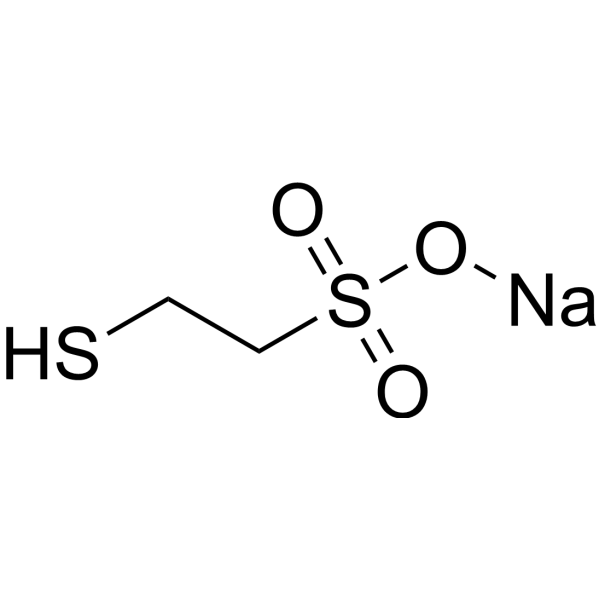
Sodium 2-mercaptoethanesulfonate (Standard) is the analytical standard of Sodium 2-mercaptoethanesulfonate. This product is intended for research and analytical applications. Mesna (Sodium 2-mercaptoethanesulfonate) is an antioxidant which has cytoprotective effects. Mesna is widely used as a systemic protective agent against chemotherapy toxicity. Mesna is also used to reduce hemorrhagic cystitis induced by cyclophosphamide .
loading...
    loading...
Cat. No.: HY-13679S
CAS No.: 1189479-73-9
Synonyms: Mesnum-d4 sodium
2-Mercaptoethanesulfonate-d4 sodium (Mesnum-d4 sodium) is the deuterium labeled Sodium 2-mercaptoethanesulfonate (HY-13679). Mesna (Sodium 2-mercaptoethanesulfonate) is an antioxidant which has cytoprotective effects. Mesna is widely used as a systemic protective agent against chemotherapy toxicity. Mesna is also used to reduce hemorrhagic cystitis induced by cyclophosphamide .
loading...
    loading...
Cat. No.: HY-178028
CAS No.: 3113303-04-8
Research Areas:  

Cancer

PRMT5-IN-53 is a gut-restricted and orally active PRMT5 inhibitor with pIC50s of ≥ 9.7 against hPRMT5 and mPRMT5. PRMT5-IN-53 binds to the PRMT5:MEP50 complex with a KD of 11.3 pM. PRMT5-IN-53 effectively inhibits PRMT5 locally in the intestines of mice, significantly reducing the number and area of polyps, while avoiding systemic hematological toxicity (such as anemia, neutropenia). PRMT5-IN-53 can be used for the study of colorectal cancer especially for familial adenomatous polyposis (FAP) .
loading...
    loading...
Cat. No.: HY-139718
CAS No.: 2928463-41-4
Target:  

NF-κB

Research Areas:  

Inflammation/Immunology

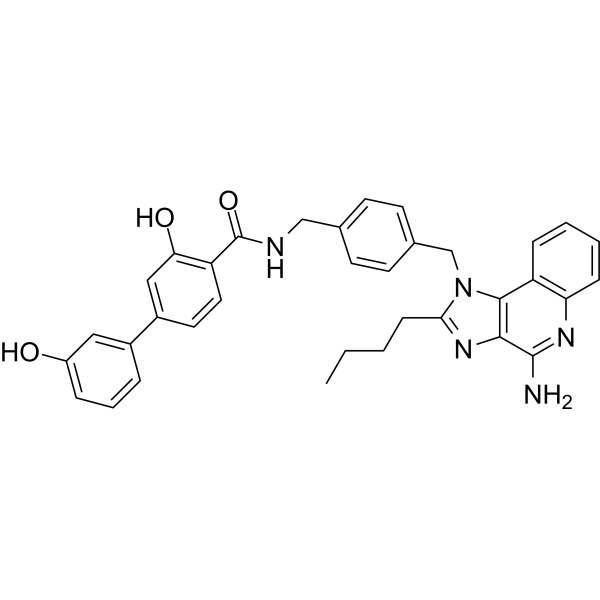
IMD-biphenylB is a potent imidazoquinolinone-NF-κB immunomodulator dimer that inhibits tumor proliferation while induces low systemic inflammation and reduces adjuvant toxicity.
loading...
    loading...
Cat. No.: HY-139719
CAS No.: 2928463-42-5
Target:  

NF-κB

Research Areas:  

Inflammation/Immunology

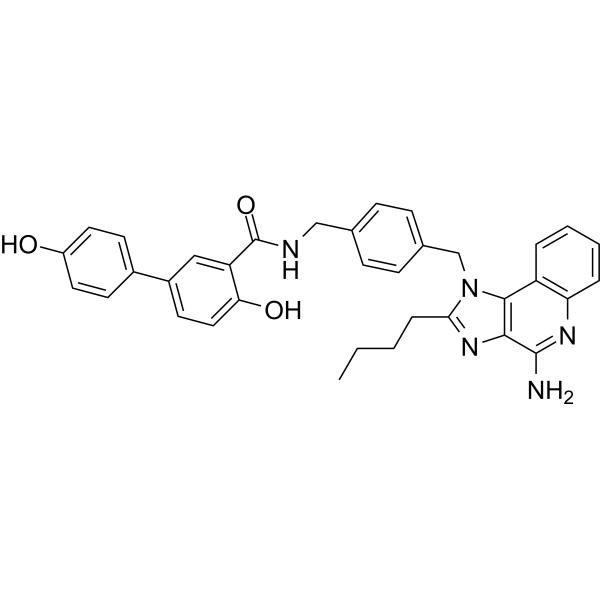
IMD-biphenylC is a novel imidazoquinolinone-NF-κB immunomodulator dimer that inhibits tumor proliferation while induces low systemic inflammation and reduces adjuvant toxicity.
loading...
    loading...
Cat. No.: HY-117630
CAS No.: 129448-97-1
Target:  

Drug Intermediate

Research Areas:  

Cancer

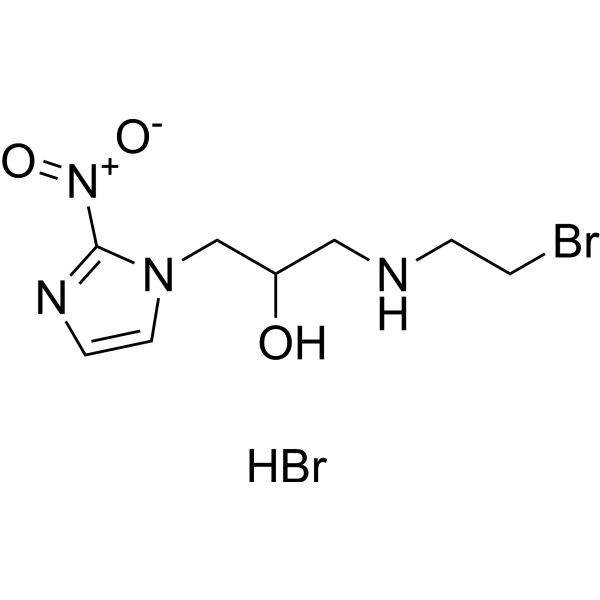
RB-6145 is an orally active pro-drug of the hypoxic cell radiosensitizer RSU 1069. RB-6145 acts a hypoxic cell radiosensitizer and cytotoxin but reduces systemic toxicity in mice .
loading...
    loading...
Cat. No.: HY-W663938R
CAS No.: 400882-07-7
Cyflumetofen (Standard) is the analytical standard of Cyflumetofen (HY-W663938). This product is intended for research and analytical applications. Cyflumetofen is a non-systemic acylacetonitrile Acaricide. Cyflumetofen interferes with the Wnt/β-catenin signaling pathway, induces Apoptosis, and reduces the level of tight junction proteins. Cyflumetofen upregulates the expression of Pink1, Parkin and Lrrk2 genes associated with the pathogenesis of Parkinson's disease in zebrafish larvae. Cyflumetofen induces developmental toxicity and oxidative stress in zebrafish larvae, damages neurons, reduces motor activity, alters brain tissue structure, and disrupts blood-brain barrier structure. Cyflumetofen exhibits acaricidal activity against spider mites. Cyflumetofen can be used in studies related to Parkinson's disease and infestations by spider mites (Tetranychus urticae, Tetranychus kanzawai, Panonychus citri) .
loading...
    loading...
Cat. No.: HY-185398
Synonyms: Amikacin disulfate liposome; Liposomal amikacin
Research Areas:  

Infection

Amikacin liposome is a liposome-encapsulated form of Amikacin disulfate (HY-B0509B), an aminoglycoside antibiotic with antibactericidal avtivity. Amikacin liposome prolongs the release of amikacin in the lungs and reduces systemic exposure, thereby lowering systemic toxicity.
loading...
    loading...
Cat. No.: HY-185928
CAS No.: 2659211-29-5
Research Areas:  

Neurological Disease

Pinzodirsen (Compound ENTR-Oligo-0034) is a dystrophia myotonica protein kinase (DMPK) steric blocker. Pinzodirsen reduces the nuclear sequestration of toxic DMPK mRNA with splicing factors such as MBNL1 via steric blocking/relocation, or interferes with the secondary structure of CUG repeat RNA, instead of being cleaved by RNase H, thereby ameliorating systemic aberrant splicing in DM1. Pinzodirsen is applicable to the research of myotonic dystrophy .
loading...
    loading...
Cat. No.: HY-184497
Target:  

PROTACs EGFR Apoptosis

Research Areas:  

Cancer

PROTAC EGFR degrader 18 is a VHL-based PROTAC degrader targeting EGFR. PROTAC EGFR degrader 18 inhibits tumor cell proliferation and induces apoptosis. When functionalized with hyaluronic acid, PROTAC EGFR degrader 18 achieves specific enrichment at tumor sites via CD44-mediated targeting, exerting anti-tumor activity while significantly reducing systemic toxicity. PROTAC EGFR degrader 18 can be used for the research of non-small cell lung cancer .
loading...
    loading...
Cat. No.: HY-179394
Target:  

Proteasome

Research Areas:  

Inflammation/Immunology

Immunoproteasome-IN-2 is selective immunoproteasome inhibitor with IC50 = 232.3 nM for LMP7, IC50 = 9384.9 nM for β5. Immunoproteasome-IN-2 exhibits ancillary inhibitory activity against LMP2 and MECL-1 subunits. Immunoproteasome-IN-2 demonstrates anti-inflammatory efficacy in a mouse model of arthritis and shows a favorable safety profile in toxicological studies with reduced hepatotoxicity and hematotoxicity. Immunoproteasome-IN-2 has LMP7/β5 selectivity directly correlated with lower systemic toxicity. Immunoproteasome-IN-2 can be employed for research in arthritis .
loading...
    loading...
Cat. No.: HY-179501
PDK1-IN-5 is a selective PDK1 inhibitor. PDK1-IN-5 activaties PDH by diminishing phosphorylation level via PDK1 inhibition. PDK1-IN-5 effectively reverses the Warburg effect and shifts cellular energy metabolism from glycolysis toward oxidative phosphorylation by increased acetyl-CoA, reduced lactate, elevated mitochondrial ROS, and subsequent induction of apoptosis. PDK1-IN-5 robustly inhibits tumor growth in vivo without inducing systemic toxicity. PDK1-IN-5 can be used for lung adenocarcinoma, human non-small cell lung adenocarcinoma and gastric colorectal .
loading...
    loading...
Cat. No.: HY-182360
Cytisine-Platinum(IV) Prodrug-1 is a Pt(IV) prodrug incorporating the natural compound Cytisine (HY-N0175) with antiproliferative activity against tumor cells. Cytisine-Platinum(IV) Prodrug-1 promotes calcium transfer across the IP3R1-GRP75-VDAC1 axis to drive mitochondrial calcium overload. Cytisine-Platinum(IV) Prodrug-1 initiates unfolded protein response via PERK, eIF2α, ATF4, and CHOP to modulate Bcl-2 and Bax, triggering apoptosis. Cytisine-Platinum(IV) Prodrug-1 induces mitochondrial dysfunction, ROS production, reduced ATP synthesis, DNA damage, and S-phase cell cycle arrest. Cytisine-Platinum(IV) Prodrug-1 activates the cGAS-STING pathway, reduces PD-L1 expression, drives immunogenic cell death. Cytisine-Platinum(IV) Prodrug-1 exhibits high physiological stability, efficient cellular accumulation, and enhanced platinum-DNA binding, and inhibits tumor growth in mouse models with reduced systemic toxicity. Cytisine-Platinum(IV) Prodrug-1 can be used for the research of lung cancer .
loading...
    loading...
  • 1

